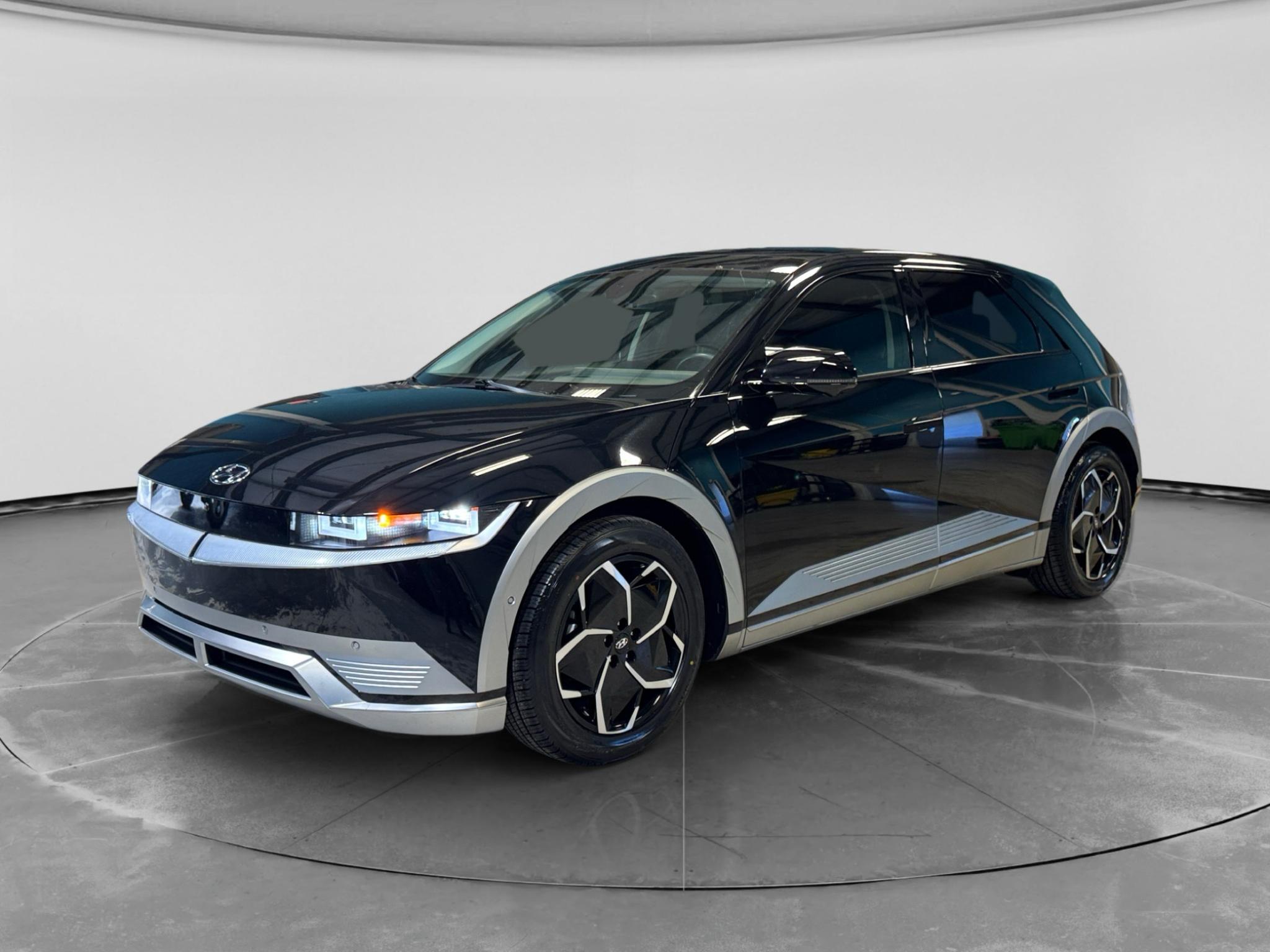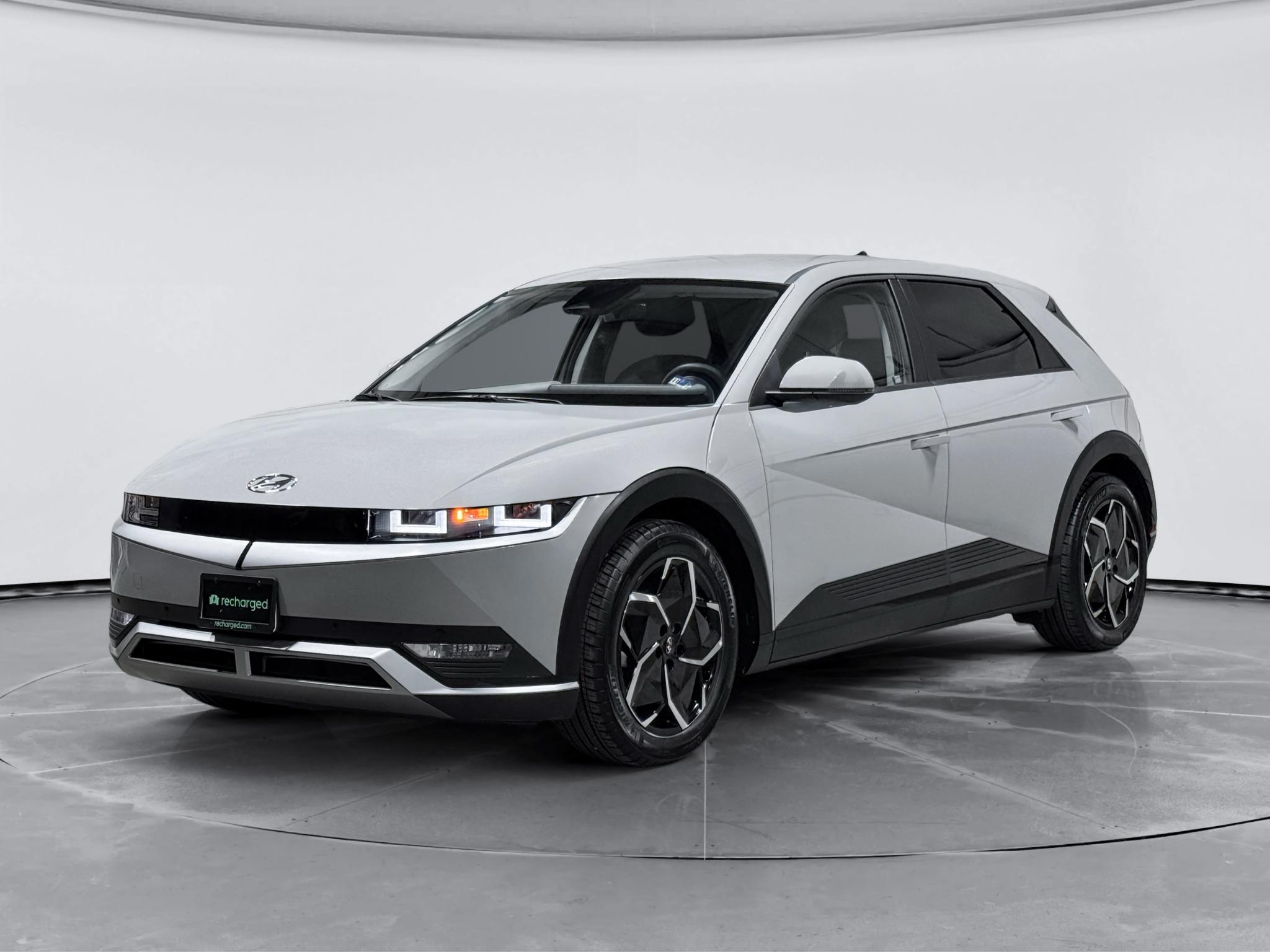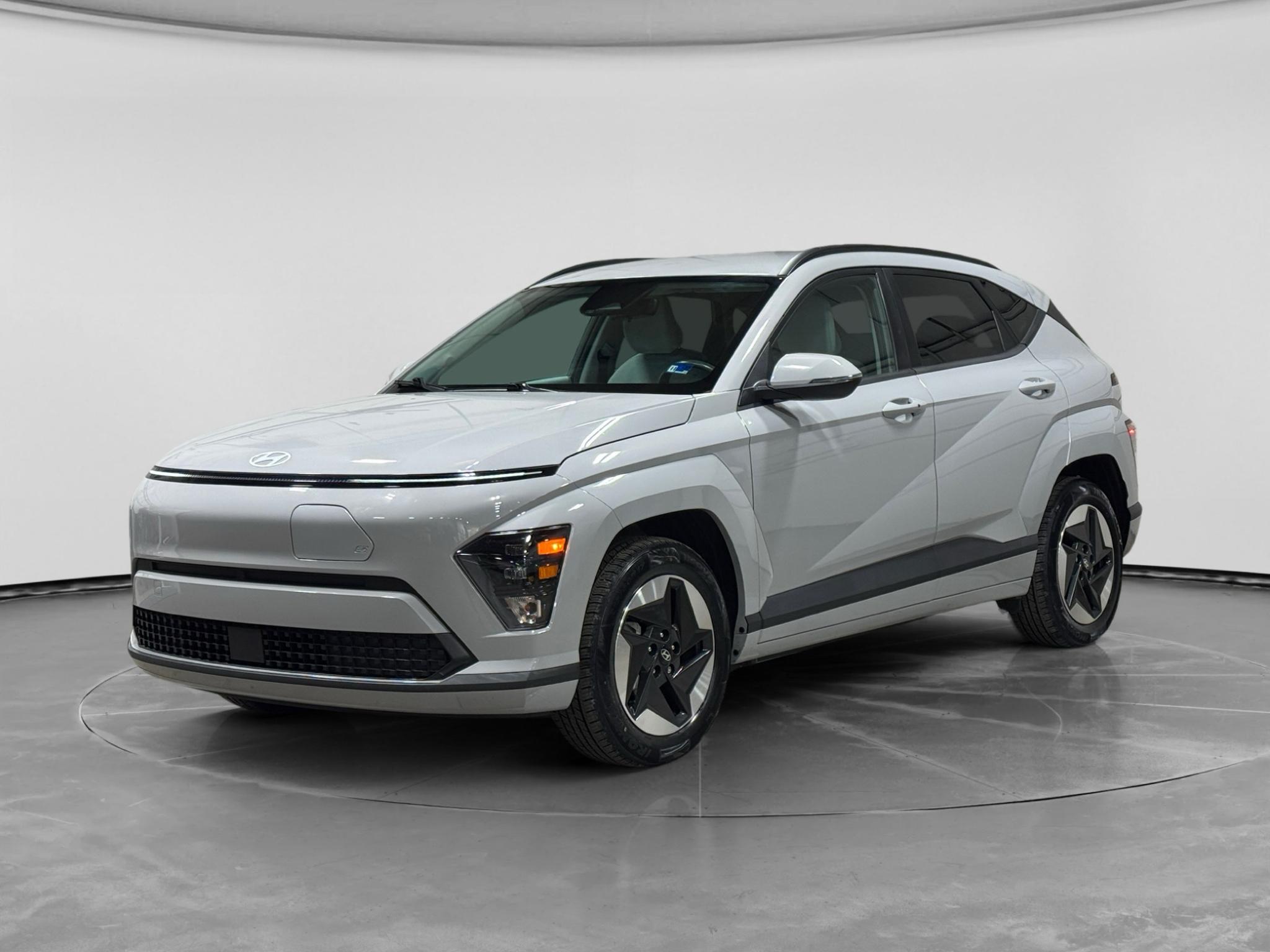
A used IONIQ 5 can be a roomy, practical EV, but the badge and odometer don’t tell you whether a particular car is ready for its next owner. You need evidence from the high-voltage battery, the 12-volt electrical system, a mechanical inspection, and the vehicle’s recall history. That means checking the car itself rather than assuming an open or completed recall tells the whole story. A broader used-EV inspection checklist can help you organize the process.
What our inspection process actually establishes
Recharged’s inspection process establishes a condition baseline before an EV is offered for sale. When a vehicle arrives, the team runs a battery test and performs an initial cosmetic and mechanical review so concerns and needed parts can be identified early. The car then receives a complete inspection covering more than 150 components, followed by reconditioning and a final presentation review. This process can reveal current faults and wear, but no responsible inspection should promise that an electronic component can never fail later.
We have well over 150 components that are checked on these vehicles to make sure that, cosmetically and mechanically, we’re able to deliver the car we want to deliver.
For an IONIQ 5, the strongest file combines a diagnostic battery report, mechanical findings, repair documentation, and a VIN-specific recall lookup. Recharged’s battery assessment gathers information through the diagnostic port and reports battery condition rather than relying only on the range displayed on the dashboard. Learn what those measurements mean in our guide to used-EV battery health. The inspection record should also identify unresolved warning lights, fault codes, or charging concerns.
The ICCU recall is a VIN and documentation check
The ICCU campaign must be checked by VIN because recall status and the required remedy can differ from one vehicle to another. ICCU stands for Integrated Charging Control Unit, a power-electronics module involved in charging and maintaining the car’s low-voltage system. Ask for the current Hyundai recall lookup and a service invoice showing any required campaign work was completed. If the seller can’t produce documentation, contact an authorized Hyundai service department with the VIN before committing to the car.
A verbal assurance isn’t recall documentation
A completed campaign is important, but it isn’t a substitute for testing the vehicle in its present condition. The inspection should still scan the car for stored or active faults, evaluate the 12-volt battery, and confirm normal charging behavior. Warning lights, repeated 12-volt discharge, interrupted charging, or unresolved diagnostic codes deserve investigation before purchase. Our EV recall-checking guide explains how to verify an open campaign without relying on listing copy.
Battery and 12-volt checks are separate
The high-voltage traction battery and the conventional 12-volt battery need separate evaluations. The large battery stores the energy that moves the IONIQ 5, while the smaller battery powers and wakes many of the vehicle’s control systems. A good high-voltage battery result doesn’t automatically prove that the low-voltage battery, charging electronics, or related connections are healthy. Both sides of the system belong in a pre-purchase inspection.
Evidence worth collecting
High-voltage battery report
Review measured battery health, available capacity indicators, cell-voltage balance, and estimated range rather than trusting the dashboard estimate alone.
12-volt battery test
Ask for a measured condition result and check the battery’s age, terminals, connections, and recent replacement history.
Full-system diagnostic scan
Look for active, pending, and stored fault codes. Confirm that cleared codes haven’t replaced a documented repair.
AC and DC charging test
Verify that the car starts and completes a charging session normally when practical. Charging tests supplement, not replace, the diagnostic scan.
Recall completion record
Match the VIN to the manufacturer’s current campaign lookup and obtain the repair order for completed ICCU work.
Mechanical and road-test findings
Check tires, brakes, steering, suspension, underbody condition, driver-assistance warnings, climate control, and normal operation on the road.
What Recharged market data says, and doesn’t
Recharged’s broader fleet data provides useful price context, but it does not establish the value or condition of one IONIQ 5. As of September 22, 2026, 417 current EV listings had an average asking price of $34,803 and a median asking price of $30,997; listed prices ranged from $12,996 to $146,998. Across 1,796 Recharged retail sales during the trailing 12 months, buyers paid an average of $29,901 and a median of $27,297. These are fleet-wide asking and retail transaction figures, not IONIQ 5 inspection results, recall-related discounts, or a prediction of what a specific car should cost.
The takeaway is simple: a market-wide median can orient you, but the correct price for an IONIQ 5 depends on its configuration, mileage, physical condition, battery results, history, and completed campaign work. A cheaper example without records may be a worse buy than a better-documented car at a higher price. Compare the final price only after you’ve normalized those condition differences. For a model-focused framework, see the used Hyundai IONIQ 5 buying guide.
Recharged data
Used EV prices at Recharged
$30,997
median list price
Current list prices for matching inventory at Recharged.
- Lowest
- $12,996
- Average
- $34,803
- Highest
- $146,998
Average Recharged Score on these listings
4.8 / 5
Range
3.7 – 5.0
Based on available listings
Recharged data
Recent EV sold prices
$27,297
median sold price
What buyers actually paid through Recharged, not list price.
- Lowest
- $500
- Average
- $29,901
- Highest
- $129,998
Monthly median sold price
Based on Recharged sales in the last 12 months
Every EV is battery-tested with a Recharged Score. Nationwide delivery.
What should you verify before buying?
Before buying, verify the VIN, recall record, battery report, diagnostic scan, charging behavior, and mechanical condition as one package. Start by matching the VIN on the dashboard, door label, title paperwork, recall lookup, and service invoice. Then review the inspection findings and ask what was repaired, what was merely observed, and whether any codes were cleared. Finish with a road test and charging check instead of treating clean photographs as proof of mechanical health.
- Run the VIN through Hyundai’s current recall lookup and retain the result.
- Request the repair invoice for any completed ICCU campaign work.
- Review the Recharged Score Report and battery-health findings for that specific vehicle.
- Ask for 12-volt battery results and a complete diagnostic scan.
- Confirm that AC charging works normally and request DC charging evidence when available.
- Road-test the car and investigate every warning, unusual noise, or intermittent feature.
- Make recall completion and unresolved repairs written conditions of the transaction when necessary.
Keep a condition file
Instant offer, trade-in, or consignment. Pickup available.
Used IONIQ 5 inspection FAQ
The right used IONIQ 5 is the documented one
The strongest used IONIQ 5 is the one whose condition can be demonstrated, not merely described. Prioritize a measured battery assessment, a separate 12-volt test, a complete diagnostic scan, more than a quick visual inspection, and proof of VIN-specific ICCU campaign completion. If the records are incomplete or the car shows unresolved warnings, pause until a qualified technician or Hyundai service department supplies an answer. Good documentation won’t eliminate every future repair, but it will keep you from buying on guesswork.