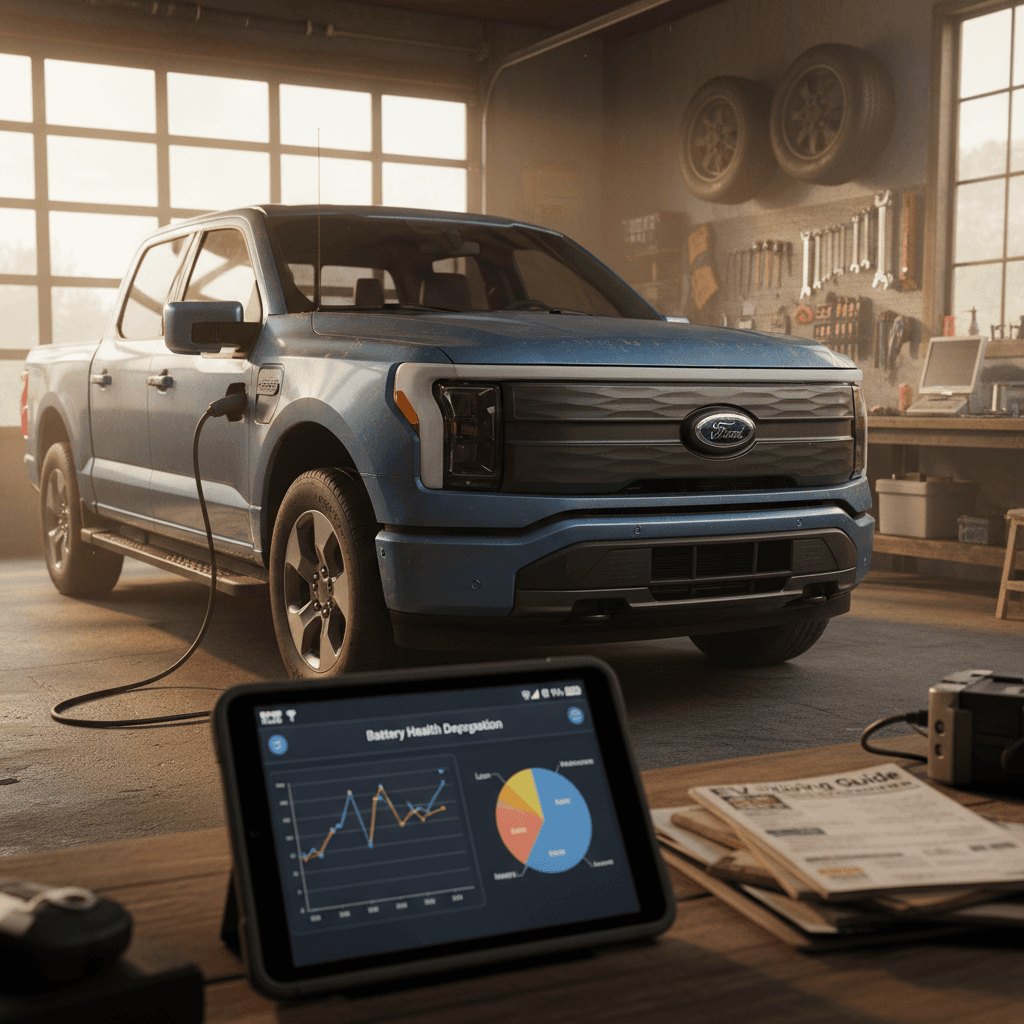
Shopping for a used Ford F-150 Lightning in 2026 puts you at the intersection of two big forces: rapid EV truck innovation and equally rapid market whiplash. Ford has already confirmed that production of the current Lightning ends with the 2025 model year, but thousands of 2022–2025 trucks are now hitting the used market, often at steep discounts compared with their original sticker prices. The opportunity is real, but so are the trade‑offs around towing, range, and long‑term reliability.
Context: The Lightning is already a "legacy" EV truck
Why a used F-150 Lightning makes sense in 2026
F-150 Lightning used-market snapshot for 2026 (big picture)
A new F-150 Lightning was an expensive experiment for many early adopters. As a used truck, it starts to look more rational, especially if you value quiet torque, home charging, and Pro Power Onboard more than 500‑mile towing days. With Ford shifting focus toward hybrids and future EV platforms, the existing Lightning has become a bit of an orphan, which usually means one thing on the secondary market: leverage for buyers who do their homework.
Where the Lightning shines used
Model years and trims to target
The first customer trucks arrived for the 2022 model year, with broadly similar hardware through 2024 and some tweaks for 2025. When you’re shopping used, you’re mostly choosing between equipment levels and battery sizes rather than radically different generations.
Major F-150 Lightning trims you’ll see used
How the popular trims differ in capability and feel
Pro
Who it suits: Value‑focused buyers and fleets.
- Vinyl or cloth interior, basic comforts.
- Often Standard Range battery.
- Best deals but fewer luxury features.
XLT & Flash
Who it suits: Daily drivers who still want some tech.
- More convenience and appearance features.
- Mix of Standard and Extended/Max Range packs.
- Flash (2024–2025) bundles popular options.
Lariat & Platinum
Who it suits: Luxury truck shoppers.
- Leather, premium audio, pano roof options.
- Usually paired with Extended/Max Range battery.
- Highest depreciation but still pricey used.
Fleet-spec reality check
- 2022–2023: First production years; bigger early‑adopter depreciation and more buybacks due to early battery‑module issues, but also plenty of trucks still under deep factory warranty.
- 2024: Mostly incremental changes; some pricing and trim reshuffles, but the core battery and motors remain familiar.
- 2025: Final regular‑production model year; some equipment "right‑sizing" and a slightly smaller usable capacity on the top battery in certain trims, but arguably the most refined build quality.
Battery packs, range, and towing reality
If you remember nothing else from this guide, remember this: in a used F-150 Lightning, the battery pack and your use case matter far more than the color, wheels, or infotainment package. Range, towing capability, and resale all trace back to which battery is under the floor and how it’s been used.
F-150 Lightning battery and range cheat sheet (2022–2025)
Approximate EPA ratings for new trucks; expect some loss with age, climate, and usage. Always verify the exact configuration by VIN.
| Battery pack | Usable capacity (approx.) | Typical trims | EPA range when new* | Max tow rating (properly equipped) |
|---|---|---|---|---|
| Standard Range | ~98 kWh | Pro, some XLT | ~230 miles | Up to ~7,700 lbs |
| Extended Range (early years) | ~131 kWh | XLT, Lariat, Platinum | ~300 miles (varies by trim) | Up to 10,000 lbs |
| Max/Updated Extended Range (2025) | ~120–125 kWh | Flash, Lariat, some fleet | Slightly less than earlier ER packs | Up to 10,000 lbs |
Numbers are rounded; towing, payload, weather, and wheel/tire choices can dramatically reduce real‑world range.
Towing range is a different game
The good news: early real‑world data suggests that Lightning battery degradation has been modest so far. Many owners reporting 30,000–40,000 miles are seeing only a few percent loss in usable capacity, especially when they primarily charge at home and avoid running the pack from 0–100% every day. There isn’t yet 10‑year data, but there’s no sign of systemic rapid fade either.
Quick indicators of battery and range health on a test drive
Compare displayed range to original EPA rating
With the truck at or near 100% state of charge, note the indicated range and compare it to the original EPA figure for that trim and battery. A modest gap is normal; an extreme shortfall can hint at degradation or very aggressive past driving/charging patterns.
Check DC fast charge history (if available)
Ask the seller or dealer for a charging history report. A truck that lived on 150 kW DC fast chargers every day will likely age differently than one that mostly sipped Level 2 at home.
Watch how the guess‑o‑meter behaves
On your test drive, watch whether the range estimate swings wildly with modest accelerations or hills. Some fluctuation is normal, but erratic estimates can point to software that’s still relearning after recent resets or battery work.
Test thermal management under load
If you can, do a highway pull and a short tow/loaded‑bed test. Listen for cooling fans and note any power‑limit warnings. You shouldn’t see derating in normal conditions on a healthy truck.
Pricing, depreciation, and what a fair deal looks like
Used EV trucks live on a different depreciation curve than gas F‑150s. The Lightning launched into a boom, hit the reality of high interest rates and lukewarm charging infrastructure, and then ran into Ford’s pivot away from full‑size EV pickups. By 2026, that cocktail creates opportunity for patient buyers, and risk for anyone who just grabs the cheapest VIN on the lot.
Key factors that move used Lightning prices
Why two similar trucks can be $10,000 apart
Battery & trim combo
Biggest lever. Extended/Max Range batteries and higher trims (Flash, Lariat, Platinum) carry a premium, but they also fall farther from MSRP. A well‑priced Extended‑Range XLT or Flash can be the sweet spot of range and value.
Mileage & usage pattern
A 40,000‑mile truck that mostly commuted on Level 2 may be a safer bet than a 15,000‑mile truck that spent its life towing at high speeds and DC fast charging. Look beyond the odometer: service records and charging history matter.
Accident & repair history
Because the battery pack lives under the floor, any serious underbody hit, flood, or side impact can be a red flag. Clean Carfax/AutoCheck is a start; a proper inspection or a Recharged Score battery health report goes further.
Market overhang & incentives
Local inventory, new‑truck incentives, and regional attitudes toward EVs all matter. In some areas, Lightnings sit longer and transact well below book values. Take your time and compare multiple trucks rather than chasing one unit.
Use total cost of ownership, not just price
Warranty coverage and EV tax credits
Ford’s warranty, combined with recent changes to federal incentives, plays a huge role in how attractive a used Lightning is in 2026. You want to know exactly how much factory coverage is left, and whether any purchase‑time credits are available to you.
Core warranty coverage on 2022–2025 F-150 Lightning
Typical US coverage; always confirm details for the specific truck and in your state.
| Component | Coverage | What it means for a 2022 truck bought in 2026 |
|---|---|---|
| Basic bumper‑to‑bumper | 3 years / 36,000 miles | Likely expired on most 2022–2023 trucks; some low‑mile 2024–2025 examples still covered. |
| Powertrain | 5 years / 60,000 miles | Covers the drive motors and many related components; older low‑mile trucks may still have coverage. |
| Electric vehicle system & battery | 8 years / 100,000 miles (70% capacity minimum) | Even an early‑build 2022 Lightning still has roughly 4 years of battery coverage left in 2026, assuming average mileage. |
Warranty start dates are based on the original in‑service date, not the model year stamped on the door jamb.
About used EV tax credits in 2026
Known problems, recalls, and how to check a VIN
Every first‑generation EV platform has growing pains, and the F-150 Lightning is no exception. The key for a used shopper is not to avoid the truck entirely, but to avoid units where known issues haven’t been addressed.
Common Lightning issues you should know about
Most are manageable, if you verify software and recall status
High‑voltage battery module defects
Some 2022–2024 trucks were affected by battery module production issues that could cause packs to fail or, in rare cases, short‑circuit. Ford issued recalls and replaced packs or modules as needed. You want a truck that is either unaffected or has had the recall work completed and documented.
Parking system roll‑away risk
A late‑2025 recall covered 2022–2026 F-150 Lightning and other Ford EVs for an integrated park module software fault that could fail to hold the truck in Park. The fix is a software update. Confirm that the update was applied; it’s quick and should show as completed in Ford’s service records.
12‑volt battery & software gremlins
Like many EVs, the Lightning depends heavily on its low‑voltage system. A weak 12‑volt battery or buggy software can cause odd warnings or no‑start situations. Proactively replacing an aging 12‑volt battery on a 2022–2023 truck is cheap insurance.
How to run a recall and history check on a used Lightning
Pull the full VIN before you fall in love
Ask the seller or dealer for the complete 17‑digit VIN. If they hesitate, treat that as a red flag and be prepared to walk away.
Run the VIN through NHTSA and Ford
Use the VIN lookup on the National Highway Traffic Safety Administration website and Ford’s own owner site to see all open and completed recalls, including battery and park‑system campaigns.
Request dealer service records
A Ford dealer can often print a history of warranty and recall work tied to that VIN. Look for evidence of battery‑related repairs, control‑module updates, and any notes about high‑voltage faults.
Compare Carfax/AutoCheck against reality
History reports are helpful but not infallible. If the physical condition of the truck looks much rougher than the report suggests, dig deeper or have an independent inspector, and avoid flood or salvage history entirely.
Used F-150 Lightning inspection checklist
A Lightning hides its most valuable component, the battery, under a flat floorpan. That makes pre‑purchase inspection a little different than with a gas truck. You care less about oil leaks and more about software status, charging behavior, and underbody integrity.
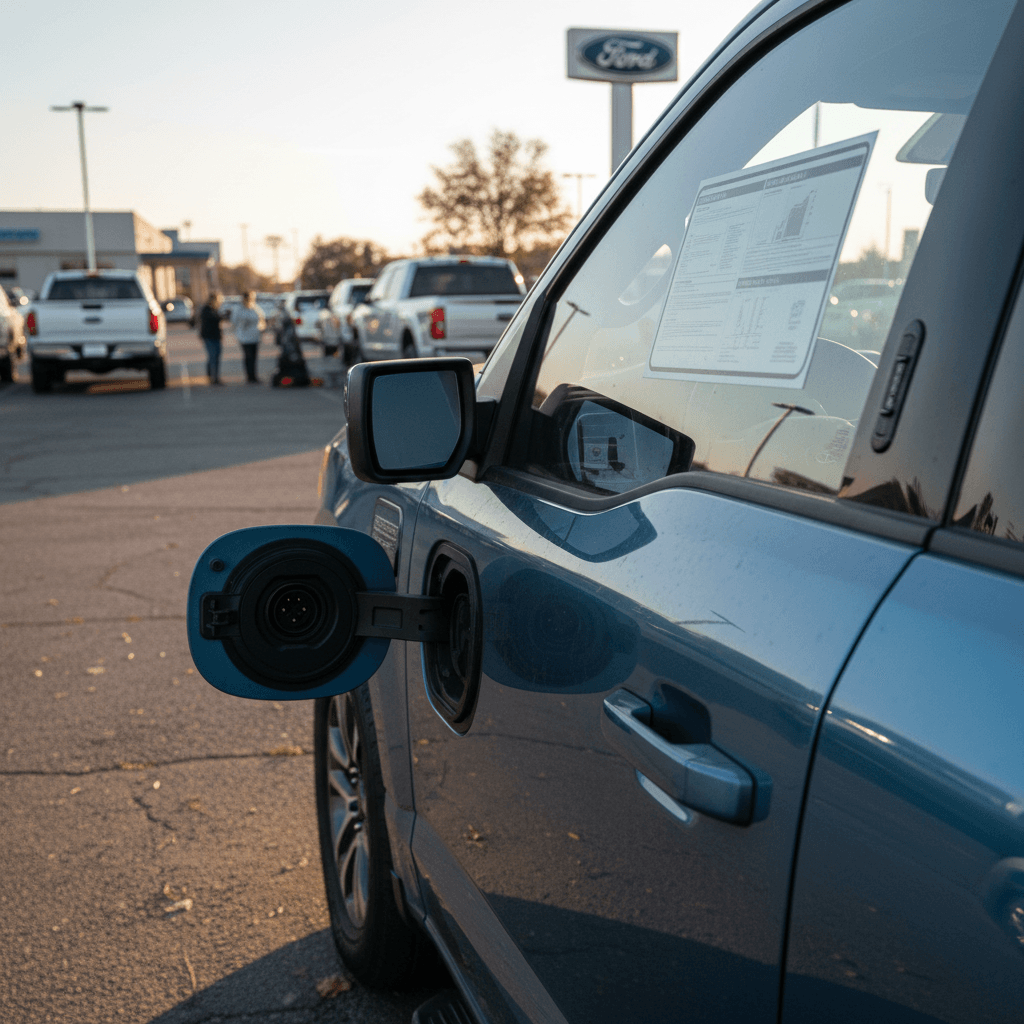
On‑site inspection steps (beyond a normal test drive)
Inspect the underbody and battery shields
Use a flashlight to look along the rocker areas and under the truck for scrapes, crushed shielding, rust, or signs of off‑road impacts. Any visible deformation near the battery enclosure is a major concern.
Charge the truck during your visit
If possible, plug into a Level 2 or DC fast charger. Confirm that charging starts quickly, no warning lights appear, and power levels ramp as expected. An EV that charges inconsistently can be expensive to diagnose.
Cycle drive modes and check Pro Power Onboard
Test different drive modes (Normal, Sport, Tow/Haul) and, if equipped, the Pro Power Onboard outlets. A Lightning’s ability to power tools or a home is a major value add, confirm it actually works.
Scan for software updates and warnings
From the central screen and the FordPass app (if paired), look for pending updates or stored warnings. A truck stuck on very old software or peppered with system faults may need a dealer visit before you buy.
Listen for noises under load
On a highway on‑ramp, accelerate hard and then lift. You should hear motor whine but not grinding, clunks, or vibrations. Any drivetrain noise in an EV deserves extra scrutiny.
Consider a specialist EV inspection
Matching the Lightning to your use case
The F-150 Lightning is an extremely capable electric truck in the right context and a frustrating one outside of it. The trick in 2026 is to buy the truck that matches your actual life, not the one you wish you had two or three times a year.
Which used Lightning fits your life?
Daily driver & family truck
Prioritize comfort trims (XLT, Flash, Lariat) with Extended/Max Range if your budget allows.
Home Level 2 charging is almost mandatory for a smooth experience; plan for a 240V circuit in your garage or driveway.
You probably don’t need max tow, but a bigger battery gives you winter and road‑trip headroom.
Local work truck & job‑site power
A Pro or XLT with Standard Range can be a bargain if your routes are short.
Look specifically for Pro Power Onboard and outlet configurations that match your tools.
Confirm the truck hasn’t been overloaded or abused; bed condition and underbody tell the story.
Weekend towing & camping
Extended/Max Range is strongly recommended; Standard Range can work only for short‑haul trips with careful planning.
Think in terms of 80–120 real‑world towing miles per charge for moderate trailers, less for tall campers.
Map your regular routes to fast chargers now; don’t discover gaps on Memorial Day weekend.
Long‑distance towing & heavy commercial use
Be brutally honest: a used Lightning may not be the right tool if you live on 400‑mile tow days.
Consider a Lightning as a second truck for local work and a separate gas/hybrid truck for long hauls.
If you insist on making it work, budget extra time, carefully plan DCFC stops, and choose the largest battery you can find with solid health data.
How Recharged de‑risks a used F-150 Lightning
Most of the risks with a used F-150 Lightning come down to information asymmetry: the seller knows more about how the truck lived than you do. Recharged exists to compress that information gap, especially around battery health, pricing, and support.
Buying a used Lightning through Recharged
How we make an early EV truck behave like a smart bet, not a gamble
Recharged Score battery health report
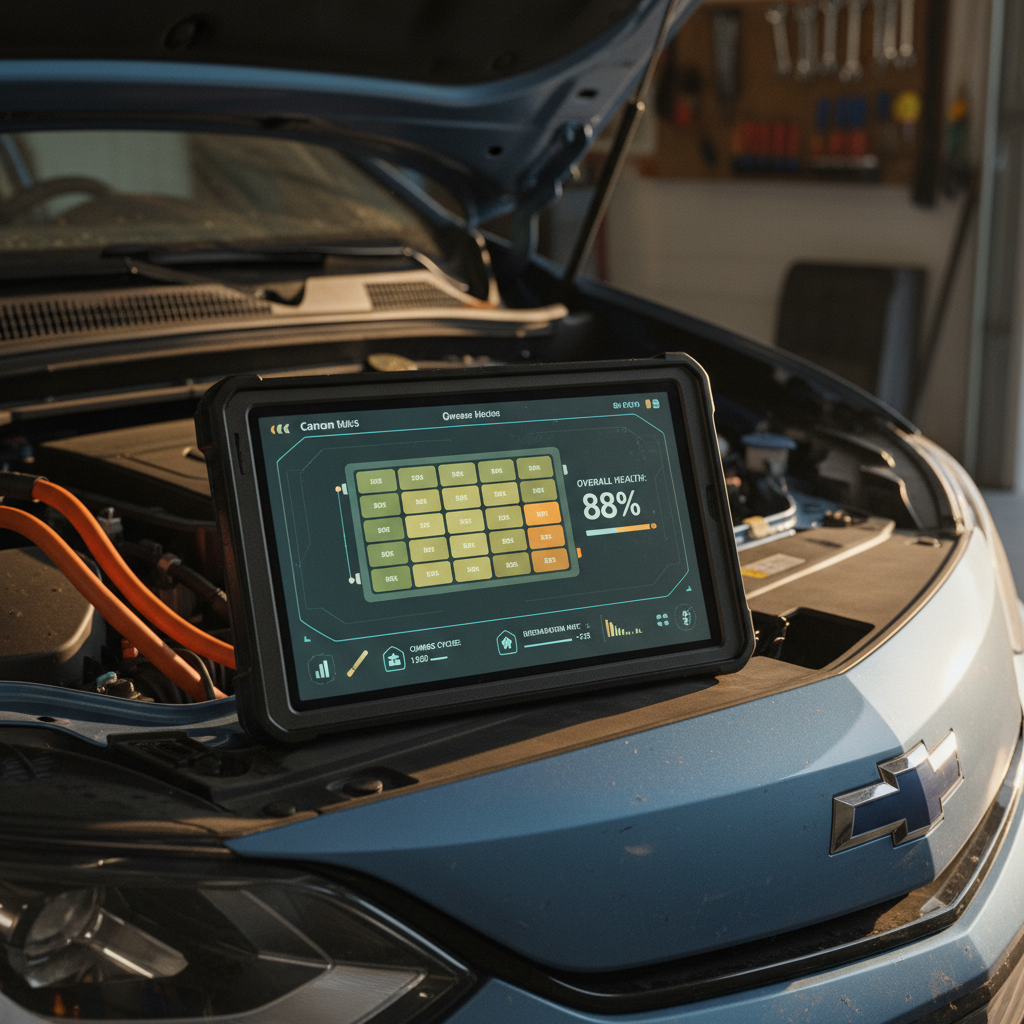
Every Lightning we list includes a Recharged Score that measures and reports verified battery health, charging behavior, and high‑voltage system diagnostics. You see how the pack is aging before you commit, not after your first winter road trip.
Transparent, fair market pricing
We benchmark each truck against broader EV and truck markets so you don’t overpay for a flashy trim with the wrong battery or hidden history. Our pricing tools surface outliers, and our specialists help you contextualize them.
End‑to‑end EV‑savvy support
From financing and trade‑in to consignment and nationwide delivery, our EV specialists walk you through the Lightning’s specifics, what matters, what doesn’t, and how to set up home charging so you’re not dependent on public infrastructure from day one.
Ready to find your next EV?
Browse VehiclesTry before you commit (where available)
FAQ: Buying a used F-150 Lightning in 2026
Frequently asked questions
Bottom line: Is a used F-150 Lightning right for you?
A used Ford F-150 Lightning in 2026 is neither the slam‑dunk deal some listings make it look like nor the ticking time bomb some commentators suggest. It’s a first‑generation electric truck with exceptional torque, quiet refinement, sophisticated power‑export features, and real compromises around long‑distance towing and charging infrastructure. If your world is mostly within a few hundred miles of home, and you’re willing to think like a systems engineer rather than a gas‑station regular, depreciation has turned the Lightning into an intriguing value play.
The keys are straightforward: match the battery and trim to your actual use case, verify battery health and recall status, and be honest about your appetite for planning on road trips and tow days. Whether you buy from a private seller, a franchise dealer, or a specialized marketplace like Recharged, insist on transparency around the high‑voltage system and software, not just shiny paint and big screens. Do that, and a used Lightning can deliver exactly what early adopters were promised, without making you pay new‑truck money for the privilege.