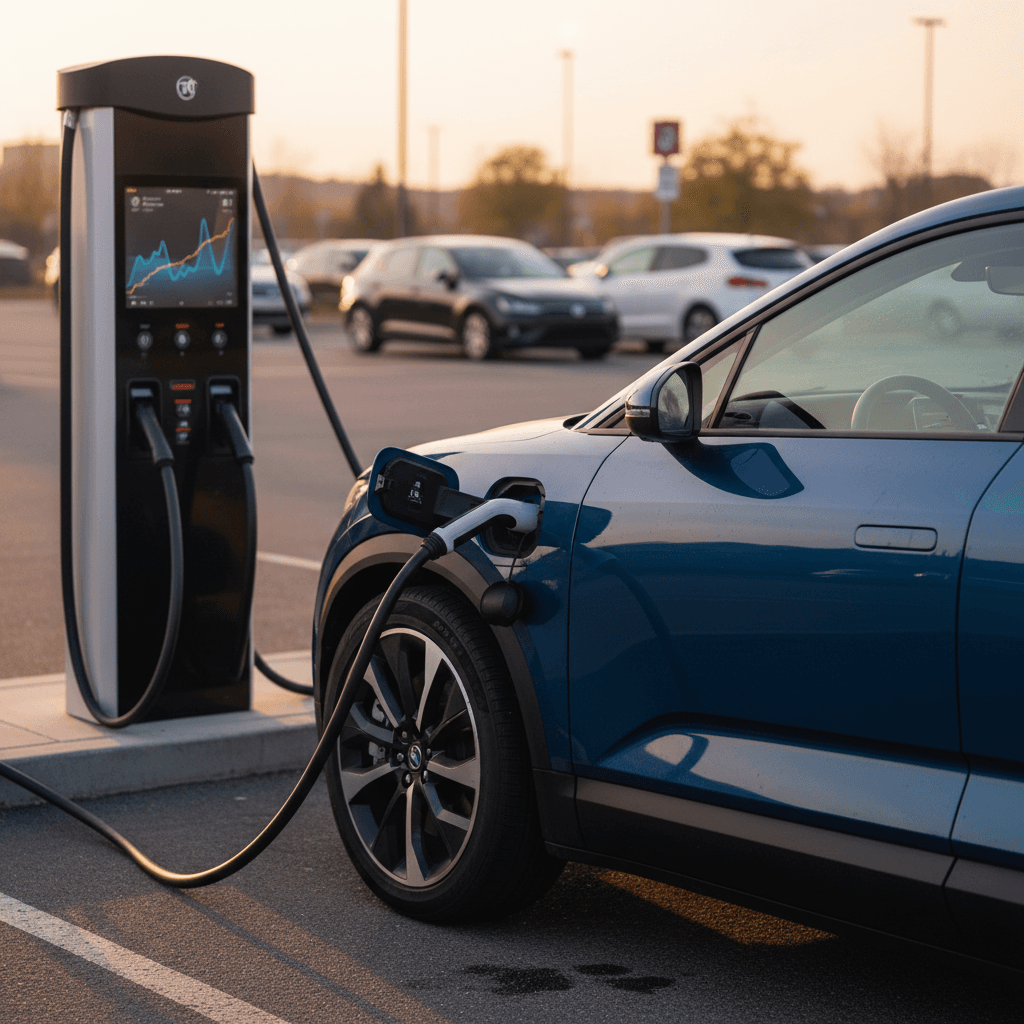
If you own, or are thinking about buying, a Fisker Ocean, you’ve probably seen the claim that it can fast‑charge from around 10–80% in the mid‑30‑minute range. This Fisker Ocean charging speed test guide pulls together independent data and real‑world experiences so you know what to expect at DC fast chargers and at home today, especially if you’re looking at a used Ocean.
Quick takeaway
Fisker Ocean charging overview
Every Fisker Ocean is built around a CCS fast‑charging port (CCS1 in North America) and on‑board AC charging of about **7.4 kW** on Level 2. The important part for road‑trip drivers, though, is DC fast charging: how quickly the battery can absorb power from a 150–350 kW public charger.
Key Fisker Ocean charging specs at a glance
Numbers that matter when you plug in
Battery packs
Sport: smaller LFP “Touring Range” pack (around low‑70 kWh usable).
Ultra / Extreme / One: large NMC “Hyper Range” pack at ~113 kWh gross (about 106 kWh usable).
Max DC fast charge
Industry sources list a **peak DC power around 175–180 kW** on Hyper Range trims, with average power during the sweet‑spot window closer to 110–120 kW.
Official 10–80% time
Fisker and major reviewers quote **about 33–35 minutes** for a 10–80% DC fast‑charge on the larger battery, assuming a powerful charger and ideal conditions.
Bankruptcy context
Battery sizes, trims, and Fisker’s official charging claims
To understand any Fisker Ocean charging speed test, you first need to know which battery and trim you’re looking at. Charging behavior and range differ notably between the entry‑level Sport and the Hyper Range models.
Fisker Ocean trims, batteries, and official range
Approximate EPA/WLTP range and battery configurations relevant to charging tests.
| Trim | Battery | Chemistry | EPA range (approx.) | WLTP range (approx.) | Quoted DC 10–80% |
|---|---|---|---|---|---|
| Sport | Touring Range (smaller pack, ~73 kWh est.) | LFP | ~231 miles | 288 miles | Not widely published |
| Ultra | Hyper Range (~113 kWh gross, ~106 kWh usable) | NMC | ~350 miles | 429 miles | ~33–35 minutes |
| Extreme / One | Hyper Range (~113 kWh gross, ~106 kWh usable) | NMC | ~360 miles | 440 miles | ~33–35 minutes |
Battery size governs both range and how long your Ocean will sit at a fast charger.
Across multiple reviews, the Hyper Range Ocean is consistently quoted at **about 33–35 minutes for 10–80%** on a high‑power DC fast charger, with a claimed peak around **180 kW**. That’s competitive on paper with many midsize electric SUVs, though not as quick as the very fastest 800‑volt systems from Kia or Hyundai.
What 10–80% actually means
Independent Fisker Ocean charging speed tests
Because Fisker didn’t publish a detailed charging curve, third‑party testing is the best way to understand how the Ocean actually charges. Several independent data sources and owner tests have mapped the Hyper Range battery’s behavior on DC fast chargers.
Fisker Ocean Hyper Range charging performance (independent data)
Those numbers line up closely with Fisker’s own 10–80% claim of roughly 34–35 minutes. The takeaway: on a strong DC fast charger, a Hyper Range Ocean can add **roughly 200–250 miles of real‑world highway range in a single 35–40 minute stop**, assuming the charging session behaves normally.
But real‑world experiences vary
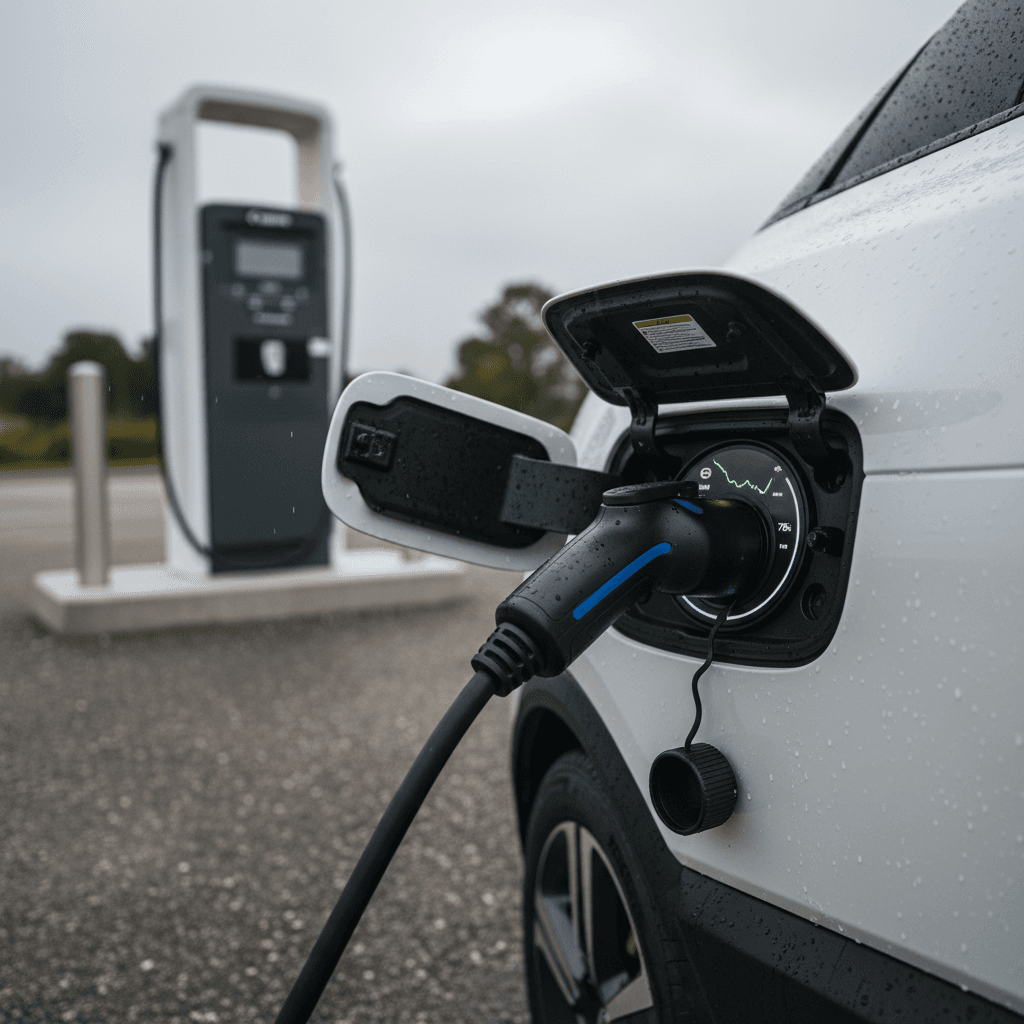
How long does 10–80% really take?
If you’re standing next to a charger, you don’t care about C‑rates and curves, you care about minutes. Here’s what most Fisker Ocean owners can realistically expect at a capable DC fast‑charging station today.
Typical Fisker Ocean DC charging scenarios
1. Ideal Hyper Range 10–80% session
On a 150 kW+ charger with a warm battery and no throttling, expect **about 35–40 minutes** from 10–80% on an Ultra, Extreme, or One. That’s in line with independent curve data and Fisker’s own marketing.
2. Less‑than‑ideal station or cold battery
If the charger is only delivering 80–100 kW, or the pack is cold, that same 10–80% window can stretch to **45–55 minutes**. The car might stay at lower power longer or taper earlier.
3. Topping past 80%
Going from 80–100% is much slower. It can add another **30–40 minutes** or more for the last 20%, which is why it’s smarter on road trips to leave around 70–80% and charge more often instead of waiting for a full battery.
4. Smaller Touring Range pack (Sport)
The Sport’s battery is smaller, so a 10–80% session should take a similar amount of time but deliver fewer miles. Expect **roughly low‑30‑minute** stops under ideal conditions, but real data for Sport DC charging is more limited.
Rule of thumb for planning
What this means for real‑world road trips
On paper, a Fisker Ocean with the large Hyper Range battery offers **excellent rated range**, up to around 440 miles WLTP and about 360 miles EPA in top trims. In practice, most reviewers have seen lower efficiency and **real‑world ranges closer to 250–300 miles**, especially at highway speeds and in cool weather. Pair that with its 35–40 minute fast‑charge times and you get a clear picture of how it behaves on long drives.
Pros for road trips
- Big battery: Even if efficiency isn’t stellar, the Hyper Range pack lets you cover long stretches between charges.
- Comfortable cruising: As a midsize SUV, the Ocean is set up for family road‑trip duty with plenty of cargo space.
- Competitive charge time: A ~35–40 minute 10–80% window is similar to many other CCS midsize SUVs.
Cons you’ll notice
- Not class‑leading speed: It doesn’t match the 18–22‑minute 10–80% times of the very fastest 800‑volt rivals.
- Software variability: Some owners report failed DC sessions or inconsistent power delivery.
- Network dependence: You’re relying on third‑party CCS networks, which vary in reliability by region.
Practical Ocean road‑trip pattern
Home and Level 2 charging performance
Most of your charging will happen at home, and here the Ocean is straightforward. It uses a **7.4 kW onboard AC charger**, which is fairly modest by 2025 standards but adequate if you plug in overnight.
Fisker Ocean home charging expectations
Approximate Level 2 charging times on a 240‑volt home charger.
| Battery / Trim | Outlet & EVSE | Approx. power | 0–100% time | Miles of range per hour |
|---|---|---|---|---|
| Hyper Range (Ultra / Extreme / One) | 240 V, 32 A Level 2 | 7.4 kW | ~18 hours | 15–20 mi/hr |
| Touring Range (Sport) | 240 V, 32 A Level 2 | 7.4 kW | ~12 hours | 15–20 mi/hr |
| Any trim | 120 V household outlet | 1.4 kW | Multiple days | 2–4 mi/hr |
Exact times vary with starting state of charge and charger amperage, but these ballparks are useful for planning.
Match your home setup to your driving
Charging issues and reliability concerns
Fisker’s bankruptcy wasn’t just about finances, reliability and software quality were recurring complaints. Charging is one of the areas where owners have reported serious frustrations, particularly on DC fast chargers.
- Some owners report the Ocean refusing to start a DC fast‑charge session, locking and unlocking the connector repeatedly before timing out.
- Others describe **red status lights at the charge port** and multiple failed attempts before the car finally takes a charge, or not at all.
- There are also reports of **early throttling**, where power drops dramatically well before 50–60% state of charge, stretching charge times far beyond the advertised 35 minutes.
Why it matters more now
Tips to maximize Fisker Ocean charging speed
You can’t change the Ocean’s underlying charging curve, but you can stack the odds in your favor. A few simple habits can shave meaningful time off your stops and help protect the battery over the long run.
Five ways to get the best from your Ocean at the plug
Practical habits that improve both speed and battery health
Pre‑warm the battery
If possible, arrive at the fast charger after **20–30 minutes of highway driving**, not after the car has sat cold. A warm battery accepts higher power sooner.
Aim for 10–60%
The Ocean charges fastest at lower states of charge. On trips, try to **start charging around 10–20% and unplug by 60–80%**, then drive to the next stop.
Prefer higher‑power stalls
Seek out **150 kW or 250–350 kW** stations on CCS networks. Even if the Ocean can’t use the full rating, these units usually deliver more stable power.
Watch the taper
If you see power drop under ~50–60 kW and you’re already above 60–70%, it’s often faster overall to **unplug and get back on the road**.
Keep connectors clean
Make sure the CCS connector and your charge port are clean and dry. Poor contact can trigger communication errors or power limits.
Monitor with the app / screen
Watch the station or in‑car display. If a session won’t start or power is unusually low, **stop the session, re‑plug, or move to another stall**.
Used Fisker Ocean: charging checklist before you buy
Because the Ocean is now effectively an orphaned EV, **charging performance should be front‑and‑center in any used‑buying decision**. A discounted sticker price doesn’t mean much if you can’t trust the car on a road trip.
Used Fisker Ocean charging inspection checklist
1. Verify DC fast‑charging functionality
Meet the seller near a CCS fast charger. Start a session from roughly **20% state of charge** and confirm that it ramps above 80–90 kW and holds strong at least into the 40–50% range.
2. Time a 20–60% session
Even a short test is revealing. Time how long it takes to go from about 20% to 60%. On a healthy Hyper Range Ocean and strong charger, this should take **around 20–25 minutes**, not 45.
3. Check for fault codes or warnings
Look for any **charging‑related warnings** in the instrument cluster or central screen, and ask the seller about previous charging issues or software updates.
4. Inspect the charge port and cable
Examine the CCS inlet for damage, corrosion, or bent pins. Make sure the charge door operates smoothly and seals properly.
5. Ask for charging history
If the previous owner kept logs or app screenshots, look for evidence of **consistent DC charging power** and reasonable session lengths over time.
6. Get a professional battery and charging report
When possible, use a service that provides **independent battery health and charging diagnostics**. This gives you a clearer picture of usable capacity and charging behavior before you commit.
How Recharged can help with orphaned EVs
FAQ: Fisker Ocean charging speed
Frequently asked questions about Fisker Ocean charging speed
Bottom line: Is Fisker Ocean fast enough at the plug?
From a pure numbers perspective, the Fisker Ocean’s charging curve is **solid but not spectacular**. Independent tests confirm that a healthy Hyper Range battery can add serious highway range in a roughly 35–40‑minute 10–80% DC fast charge, which puts it in the middle of the midsize‑SUV pack. The bigger questions are software reliability, long‑term support, and whether a particular used Ocean still delivers those speeds today.
If you already own an Ocean, focus on good charging habits, arrive low, leave around 70–80%, and favor reliable high‑power CCS stations. If you’re shopping used, treat charging performance the way you would a pre‑purchase inspection on an engine in a gas car: **test it, measure it, and get expert help if you’re not sure what you’re seeing**. Platforms like Recharged can simplify that process by pairing each used EV with a verified battery and charging‑health report, so you know exactly how your Ocean will behave when you pull up to the fast charger.