Recharged
EV Stories Feed
Hyundai IONIQ 6 Battery Degradation: Real Data, What’s Normal, and How to Protect It
Photo by Seungmin Yoon on Unsplash
Battery & Charging

Hyundai IONIQ 6 Battery Degradation: Real Data, What’s Normal, and How to Protect It

By Recharged Editorial Team10 min read
hyundai-ioniq-6battery-degradationbattery-healthe-gmp-platformused-ev-buyingev-warrantyfast-chargingrange-loss

If you’re eyeing a Hyundai IONIQ 6, especially a used one, it’s smart to ask how much battery degradation you should expect. The battery is the heart of any EV, and on the IONIQ 6 it’s also the most expensive component. The good news: real‑world data so far suggests the IONIQ 6’s battery is holding up exceptionally well. But there are a few gotchas you should know about, particularly if the car’s been fast‑charged hard or lived in extreme heat.

Quick Take

Most Hyundai IONIQ 6 owners are seeing very little battery degradation in the first 2–3 years, often in the 0–5% range at 20,000–40,000 miles. A heavily used or abused pack can show higher losses, but Hyundai’s 10‑year/100,000‑mile warranty steps in if capacity falls below about 70% of original.

How the Hyundai IONIQ 6 Battery Ages

The IONIQ 6 rides on Hyundai’s E‑GMP platform, shared with the IONIQ 5 and Kia EV6. Under the floor you’ll find a large lithium‑ion pack (77.4 kWh on 2023–2025 U.S. models, and updated capacities on 2026+ facelifts) with an 800‑volt architecture. That high voltage is what lets the car pull off those headline‑grabbing 10–80% fast charges in around 18 minutes, without cooking the battery in the process.

Like any lithium‑ion pack, an IONIQ 6 battery will lose some capacity over time. You’ll usually see a slightly steeper drop in the first year or two, then a long, gentle taper. What matters is *how steep* that early drop is, and the E‑GMP cars have been impressively flat compared with many first‑generation EVs.

Closeup of an electric car dashboard showing battery state of charge and range estimate
On an IONIQ 6, small changes in battery capacity show up first as reduced range estimates rather than obvious performance changes.Photo by Thierry Biland on Unsplash

Real-World IONIQ 6 Battery Degradation: What Owners Are Seeing

Because the IONIQ 6 is still a relatively young model, the best early clues about battery degradation come from owners using OBD2 scanners and apps like Car Scanner to read out State of Health (SoH) and remaining energy. Pull together dozens of these reports and a pattern starts to emerge:

Early IONIQ 6 Battery Degradation Snapshot

~0–3%
Typical loss by ~20,000 miles
Many owners report essentially full capacity or only tiny losses at 1–2 years of ownership.
40k–75k
Miles with minor loss
Reports of IONIQ 6s and sibling E‑GMP cars at 40k+ miles still showing very small degradation.
8–15%
High outliers
A few used IONIQ 6 packs show noticeably higher loss, often with signs of heavy DC fast‑charging or 100% daily charges.

Owner anecdotes paint a consistent picture: - Some IONIQ 6 drivers with around 20,000–30,000 miles are still seeing *near‑new* usable capacity. - One high‑mileage driver reported roughly 75,000 miles in about 18 months with capacity still close to spec after careful analysis. - A handful of used cars show SoH readings in the low‑90% range around 20,000 miles, usually with a history of frequent 100% charges or heavy DC fast charging. On balance, the IONIQ 6 looks more like the later‑generation Tesla and E‑GMP pattern: roughly 5–10% loss over the first 5–7 years is a reasonable expectation for a well‑cared‑for car, with much steeper drops being the exception rather than the rule.

Don’t Panic Over One Data Point

An OBD2 scan that shows 95% or even 92% State of Health on an IONIQ 6 doesn’t automatically mean the pack is failing. Readings can swing a couple of percentage points based on temperature, recent driving, and whether the BMS has been fully calibrated. Look for trends over time, not a single snapshot.

IONIQ 6 Battery Warranty and What 70% Really Means

In the U.S., Hyundai backs the IONIQ 6 battery with a 10‑year/100,000‑mile warranty on defects and excessive capacity loss. The key phrase in the fine print: Hyundai guarantees at least about 70% of the original capacity over that period. If the pack drops below that threshold, Hyundai will repair or replace it under warranty.

Hyundai IONIQ 6 High-Voltage Battery Warranty (U.S.)

How Hyundai’s long battery warranty translates to real capacity and range expectations.

ItemCoverageWhat It Means
Warranty period10 years / 100,000 milesWhichever comes first from original in‑service date
Capacity floor~70% of originalIf usable capacity drops below this, it’s typically a warranty case
What’s coveredBattery pack, modules, BMSDefects and abnormal degradation
Transferable?Yes, typicallyCoverage follows the car, which matters for used buyers
Normal degradationAbove ~70%Considered wear and tear, not a defect

Always confirm exact terms for your model year and region, but this is the general structure for U.S. IONIQ 6 coverage.

That 70% number sounds scary at first glance, losing 30% of capacity could mean a long‑range IONIQ 6 that used to reliably do 300 miles might be down around 210. In practice, though, most modern EVs never come close to that threshold during normal ownership. It’s a backstop for worst‑case scenarios, not a prediction.

Warranty Tip for Used Buyers

When you’re looking at a pre‑owned IONIQ 6, ask for the original in‑service date so you know exactly how much of that 10‑year/100,000‑mile battery warranty you still have. On Recharged, this is part of the vehicle history and ownership story we help you understand up front.

6 Factors That Speed Up or Slow Down Degradation

Battery degradation isn’t just about miles driven. How the car is charged, where it lives, and how it’s stored between drives all matter. Here are the big levers for your Hyundai IONIQ 6 battery:

What Really Affects IONIQ 6 Battery Degradation

Some things you can’t control, but many you can.

1. Heat

High ambient temperatures and parking in direct sun for long periods accelerate chemical aging. A Phoenix commuter’s pack will age faster than a Seattle commuter’s, even with similar mileage.

2. Fast Charging Habits

Occasional DC fast charging is fine, the car is built for it. But relying on 150–350 kW chargers for nearly all your energy, especially to 100%, can add stress over time.

3. Time at 100% Charge

Regularly charging to 100% and letting the car sit full (especially in heat) ages the cells faster. Short, trip‑specific 100% charges are much healthier than leaving it parked at full for days.

4. Daily Charge Window

Keeping your daily use between roughly 20–80% or 30–90% state of charge is gentler on the pack than bouncing off the extremes every day.

5. Driving Style

High‑speed highway slogs don’t directly damage the pack, but they do generate more heat. Aggressive, repeated full‑throttle launches can also contribute modestly over many years.

6. Climate & Storage

Parking in a garage, using scheduled pre‑conditioning, and letting the car cool down after fast charging all reduce thermal stress and help slow long‑term degradation.

Best Practices to Protect Your IONIQ 6 Battery

The IONIQ 6 doesn’t demand babying, but a few simple habits can keep the pack healthier and the range more consistent over the long haul. Think of these as the EV equivalent of oil changes and tire rotations, small rituals that pay off later.

Visitors also read...

Simple Habits to Extend IONIQ 6 Battery Life

1. Use 70–80% as Your Daily Target

Set your charge limit to around 70–80% for everyday use. Only go to 100% the night before a long trip, and start driving soon after it reaches full.

2. Favor Level 2 Charging at Home or Work

Whenever possible, use Level 2 AC charging instead of DC fast charging. Slower charging is gentler on the pack and easier on your wallet.

3. Avoid Letting It Sit at 0–5% or 100%

Deep discharges aren’t lethal in moderation, but don’t make a habit of parking the car at very low or very high state of charge for days at a time.

4. Park in the Shade or a Garage

Heat is the enemy. A simple carport, garage, or shaded spot can meaningfully reduce pack temperatures versus baking on blacktop.

5. Use Scheduled Charging

In the IONIQ 6 settings, schedule charging so it finishes near your departure time. That naturally reduces how long the battery spends at a high state of charge.

6. Let the Car Cool After Hard Use

After a long high‑speed drive or a big DC fast‑charge session, give the car a bit of time to cool before plugging in again, especially in hot weather.

Realistic Expectation

If you follow these best practices, it’s reasonable to expect your IONIQ 6 to lose only a small slice of capacity over a typical 8–10‑year ownership period, often far less than the 30% buffer Hyundai’s warranty allows.

How to Check Battery Health on a Used IONIQ 6

If you’re shopping the used market, battery health moves from "nice to know" to "must know." Two IONIQ 6s with the same mileage can have very different degradation stories depending on how they were charged and where they lived.

Method 1: Range & Real-World Consumption

This is the simplest check, even without tools:

  • Fully charge the car once (ideally to 100%) and note the estimated range.
  • Reset a trip meter, then drive a familiar loop from a known percentage down to a lower one (say, 80% to 20%).
  • Compare the miles driven to the percentage used. If it’s roughly in line with EPA range when new, degradation is likely modest.

Not scientific, but it quickly reveals a pack that’s seriously underperforming.

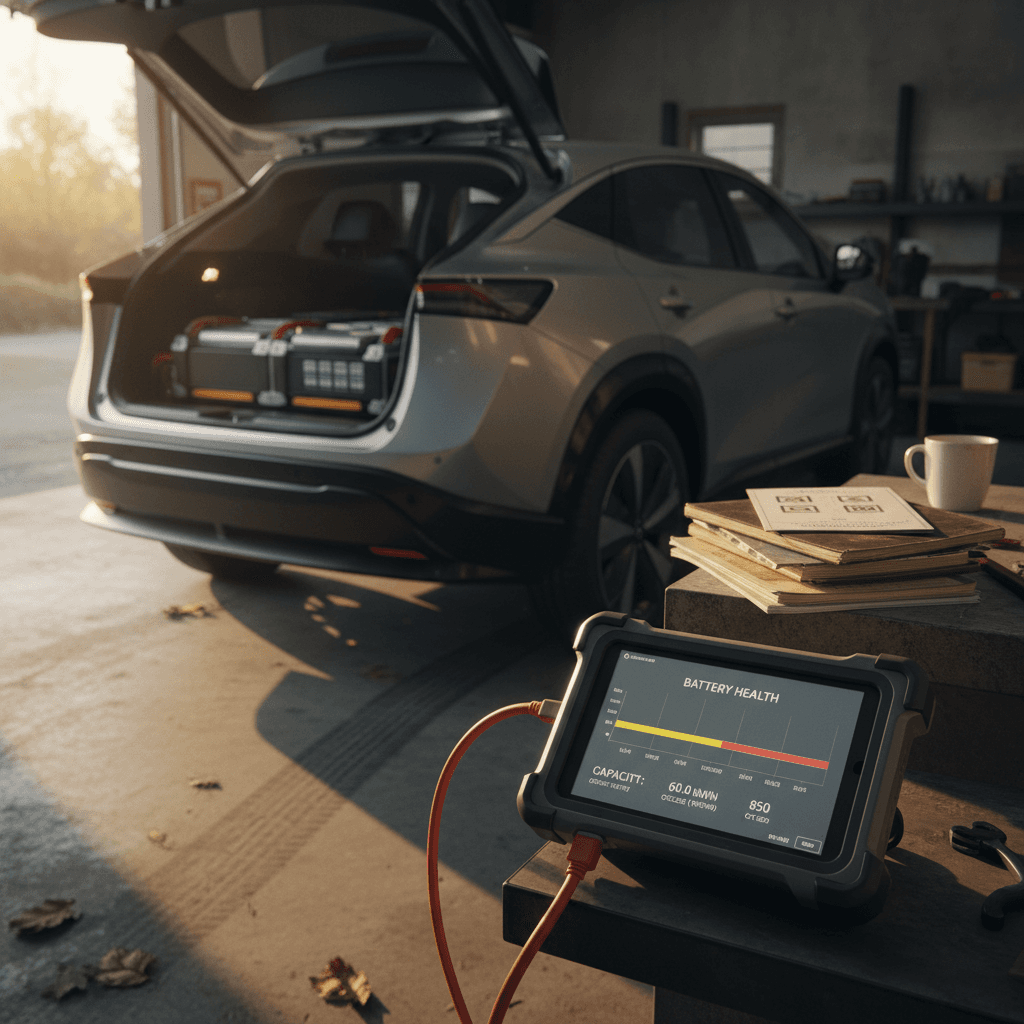
Method 2: OBD2 Scanner & App

For a deeper look, many IONIQ 6 owners use an inexpensive OBD2 dongle plus the Car Scanner app:

  • Select the IONIQ 6 profile in the app so it reads the right parameters.
  • At a high state of charge (90–100%), look at BMS Remaining Energy in kWh.
  • Compare that to the car’s nominal usable capacity (around mid‑70 kWh for the long‑range pack).

A reading a few percent below spec is normal. A pack that’s 10–15% down at low mileage deserves more questions.

Don’t Rely Only on the Guess-O-Meter

The range estimate on the dash is influenced heavily by your recent driving style, weather, and speed. A single 100% charge prediction that’s lower than you expected doesn’t automatically equal permanent battery loss.

At Recharged, every EV we list, including the Hyundai IONIQ 6, comes with a Recharged Score Report that includes a verified view of battery health. That means you’re not left guessing from a random OBD screenshot or a seller’s word; you can compare cars on real, apples‑to‑apples battery data before you commit.

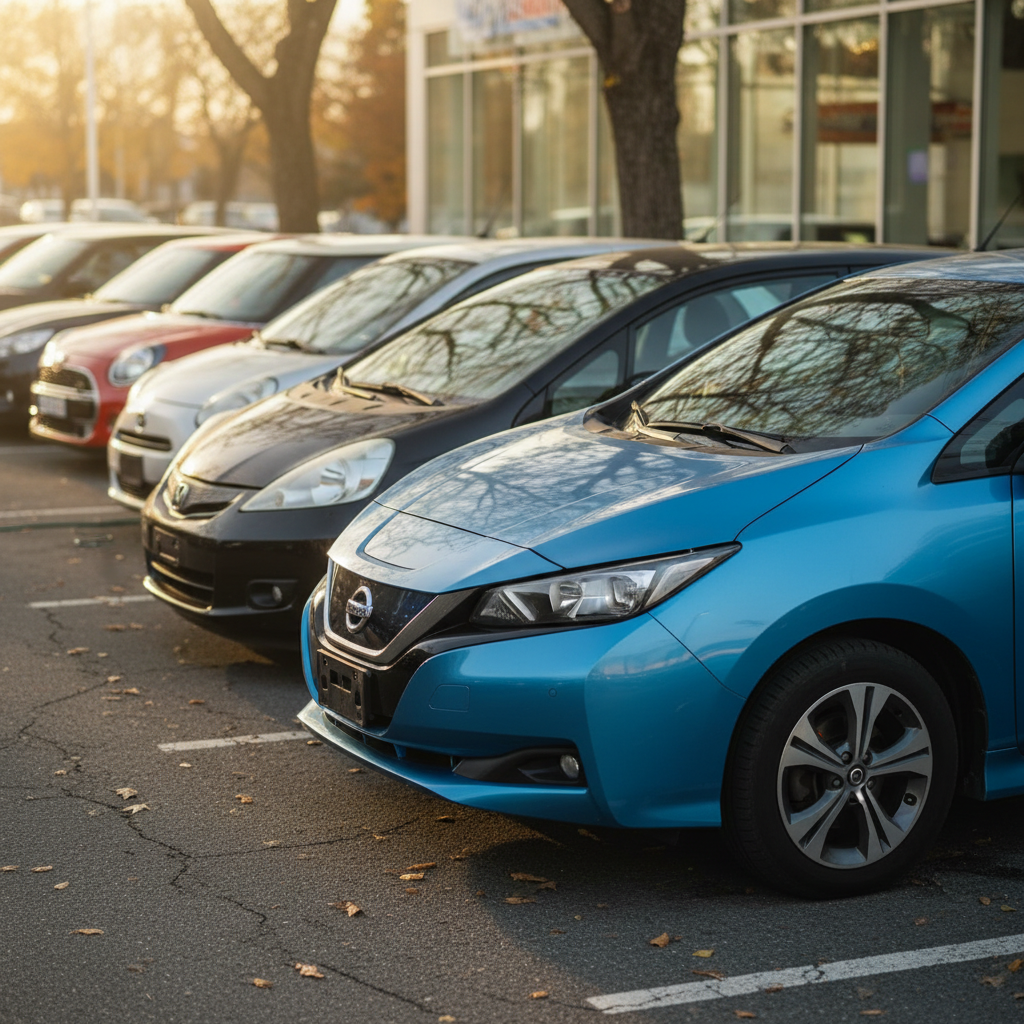
Row of used electric vehicles parked at a dealership, ready for sale
On the used market, two IONIQ 6s that look identical on the outside can have very different battery histories. Independent battery health data helps you choose wisely.Photo by Cecelia Chang on Unsplash

IONIQ 6 vs Other EVs: Battery Longevity

Hyundai’s IONIQ 6 isn’t operating in a vacuum. Tesla, Kia, Ford, and others have already logged millions of EV miles in the real world, so we have a decent playbook for what "normal" looks like.

Compared with Older EV Generations

First‑wave EVs like early Nissan Leafs (with limited thermal management) could see noticeable range fade within just a few years in hot climates. The IONIQ 6 lives in a different world:

  • Active liquid cooling
  • Larger buffers at the top and bottom of the pack
  • More sophisticated fast‑charge control

As a result, we’re seeing much slower degradation curves in E‑GMP cars than those early experiments.

Compared with Tesla & Kia EV6

Tesla data over hundreds of thousands of vehicles suggests roughly 5% loss in the first 50,000 miles, then a slow glide after that. Kia EV6 and Hyundai IONIQ 5 owners on the shared E‑GMP platform are reporting similarly gentle curves, some still near 100% SoH past 40,000 miles.

The IONIQ 6 slots right into that pattern: generally excellent longevity, with outliers mostly explainable by harsh use or climate.

Big Picture

If you’re worried the IONIQ 6 has a "weak" battery, current evidence suggests the opposite. It’s competing with the best in the segment for long‑term capacity retention.

What IONIQ 6 Battery Degradation Means When You’re Buying Used

Battery degradation isn’t just an engineering curiosity, it has a direct impact on what a used Hyundai IONIQ 6 is worth *to you*. The trick is separating harmless, normal wear from the kind of loss that changes your daily experience.

Reading Battery Health as a Used IONIQ 6 Shopper

Think in terms of range, not just percentages.

Normal wear (95–100% SoH)

Feels essentially like a new car. A long‑range IONIQ 6 that started around 300 miles of practical range might still do 285–300 miles in similar conditions.

Moderate loss (85–95% SoH)

You’ll notice a bit less buffer for long trips, but daily commuting is usually unaffected. A good opportunity to negotiate price without sacrificing usability.

Severe loss (<80% SoH)

Range begins to limit how and where you can use the car. This is where you want to understand whether a warranty claim is realistic or whether to walk away.

At Recharged, we bake this into pricing and guidance. If an IONIQ 6 has higher‑than‑average degradation for its age and mileage, that shows up clearly in the Recharged Score and in how we recommend pricing versus the broader market. If you’re trading in or selling your own IONIQ 6, an independently verified, healthy battery can also support a stronger offer.

Hyundai IONIQ 6 Battery Degradation FAQ

Frequently Asked Questions About IONIQ 6 Battery Degradation

The Bottom Line on IONIQ 6 Battery Life

The Hyundai IONIQ 6 is shaping up to be one of the better long‑term battery performers in its class. Most owners are seeing only modest degradation so far, even with fast charging in the mix, and Hyundai’s 10‑year/100,000‑mile warranty stands behind the pack if something goes truly off the rails. Your job as an owner, or future owner, isn’t to obsess over every percentage point, but to understand what’s normal and adopt a few simple habits that keep the chemistry happy.

If you’re stepping into the used market, don’t treat battery health as a mystery. With the right tools, or a trusted partner like Recharged providing a verified battery report, you can shop IONIQ 6s confidently, knowing exactly how much range you’re buying and how long it’s likely to last.


Discover EV Stories & Insights

Dive into our magazine-style feed with expert reviews, industry news, charging guides, and the latest electric vehicle trends, all in one place.

Explore Articles Feed

Related Articles

Kia EV6 Battery Degradation: Real Data, Causes, and How to Slow It Down
Battery & Charging10 min

Kia EV6 Battery Degradation: Real Data, Causes, and How to Slow It Down

Learn how fast the Kia EV6 battery degrades, what Kia’s 10‑year/100k‑mile warranty really covers, and practical habits to protect range, especially on a used EV6.

kia-ev6battery-degradationbattery-health
Chevrolet Bolt EV Battery Degradation: Real Data, What’s Normal & How to Protect It
Battery & Charging11 min

Chevrolet Bolt EV Battery Degradation: Real Data, What’s Normal & How to Protect It

Worried about Chevrolet Bolt EV battery degradation? See real-world data, what GM’s warranty covers, and practical tips to protect range, especially when buying used.

chevy-bolt-evbattery-degradationbattery-health
Ford Mustang Mach-E Battery Degradation: Real Data, Expectations & How to Slow It Down
Battery & Range10 min

Ford Mustang Mach-E Battery Degradation: Real Data, Expectations & How to Slow It Down

Learn how Ford Mustang Mach-E batteries degrade over time, what’s normal, real-world data, and practical tips to protect range, especially when buying used.

mustang-mach-ebattery-degradationbattery-health
Porsche Taycan Battery Degradation: Real Data, What’s Normal, and How to Slow It Down
Battery & Charging10 min

Porsche Taycan Battery Degradation: Real Data, What’s Normal, and How to Slow It Down

Learn how Porsche Taycan battery degradation really behaves, what’s covered by warranty, and practical tips to maximise range and resale value on a new or used Taycan.

porsche-taycanbattery-degradationbattery-health
Porsche Taycan Battery Health Check: 2025 Owner’s Guide
Battery & Charging10 min

Porsche Taycan Battery Health Check: 2025 Owner’s Guide

Learn how to check Porsche Taycan battery health, spot degradation, use dealer reports, DIY tools, and protect your EV investment when buying or owning a Taycan.

porsche-taycanbattery-healthused-ev-buying
Tesla Model S Battery Health Check: 2026 Owner’s Guide
Battery & Charging9 min

Tesla Model S Battery Health Check: 2026 Owner’s Guide

Learn how to check Tesla Model S battery health, what “normal” degradation looks like, and how to evaluate a used Model S battery before you buy.

tesla-model-sbattery-healthbattery-degradation

Big Story


Pre-qualify with no impact to your credit

Fast and easy

Answer a few simple questions, get prequalified.

No hit to your credit

All credit types are welcome. You'll see your approval status shortly after finishing.

Time to browse

Shop with comfort, then get financing through Recharged.

Recharged

Discover EV articles