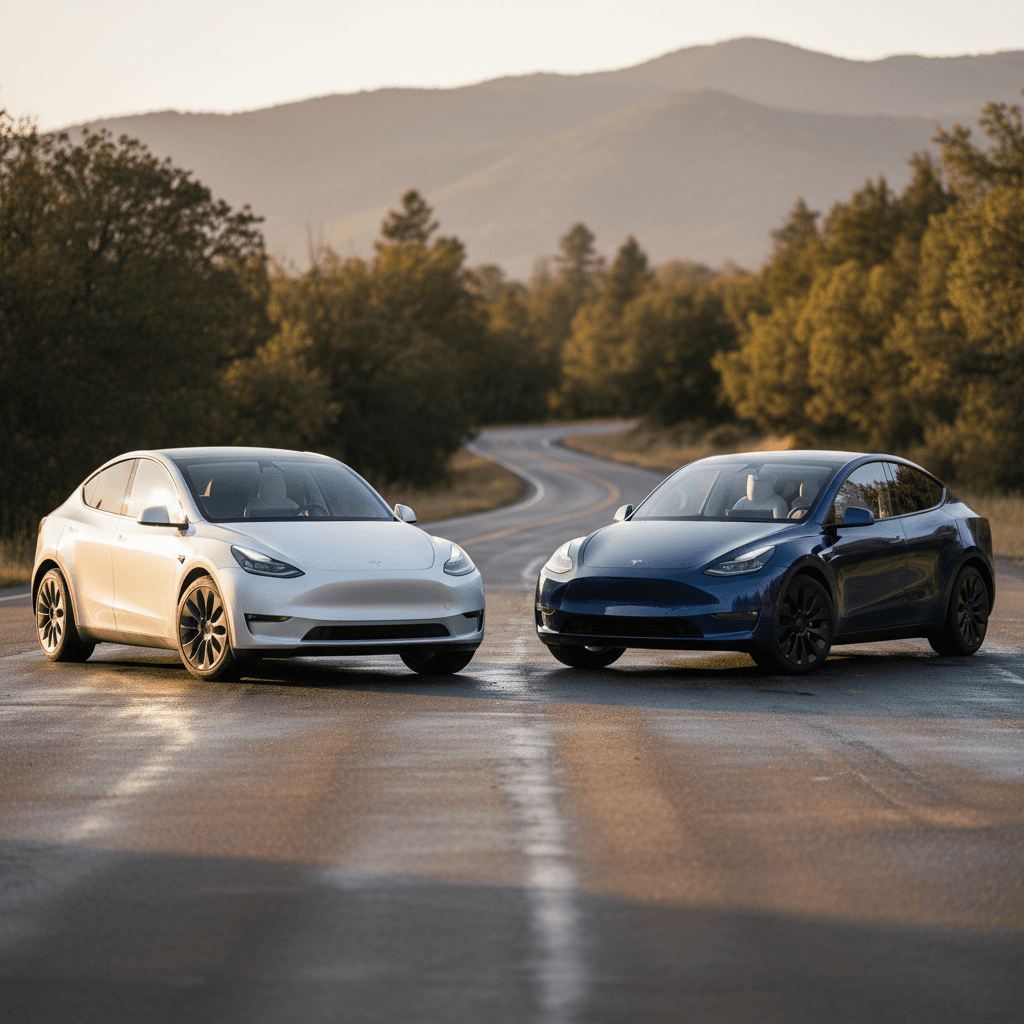
For most used-EV shoppers, RWD is the value choice and AWD is the capability choice. Rear-wheel drive sends propulsion through the rear wheels, while all-wheel drive can power both axles when needed. The right answer depends less on which badge sounds better and more on your weather, roads, performance priorities, and the condition of the individual vehicle. Start with the drivetrain differences below, then use a used Tesla Model Y buying guide to evaluate the complete car.
The RWD-versus-AWD decision at a glance
RWD is the better default for value-focused daily driving, while AWD earns its higher purchase and energy costs when you regularly use the extra traction or want stronger acceleration. Because Model Y specifications and configuration names can change by model year, confirm the exact vehicle rather than relying only on a listing title. Here is the practical comparison:
Tesla Model Y drivetrain comparison
Compare the choices by the factors that matter most in everyday ownership.
| Choice | Best for | Main advantage | Watch for | Used-buy verdict |
|---|---|---|---|---|
| RWD | Mild climates, commuting | Value and efficiency | Rear traction only | Best default choice |
| AWD | Snow, hills, performance | Traction and acceleration | Cost and energy use | Worth it when useful |
| Either drivetrain | Condition-first shoppers | Wider vehicle selection | Verify exact configuration | Buy the better car |
Actual range, equipment, and performance vary by model year, battery, wheels, and software.
Compare exact vehicles, not badges alone
AWD prioritizes traction; RWD prioritizes value
AWD is most useful when you encounter snow, steep grades, slick roads, or situations where stronger acceleration matters to you. Its additional driven axle can improve the car’s ability to put power down, but AWD does not eliminate the need for tires suited to the conditions. If you live in a mild climate and mostly travel on maintained roads, you may rarely benefit from the added hardware. In that case, an RWD Model Y can meet the same basic transportation needs at a potentially lower purchase price.
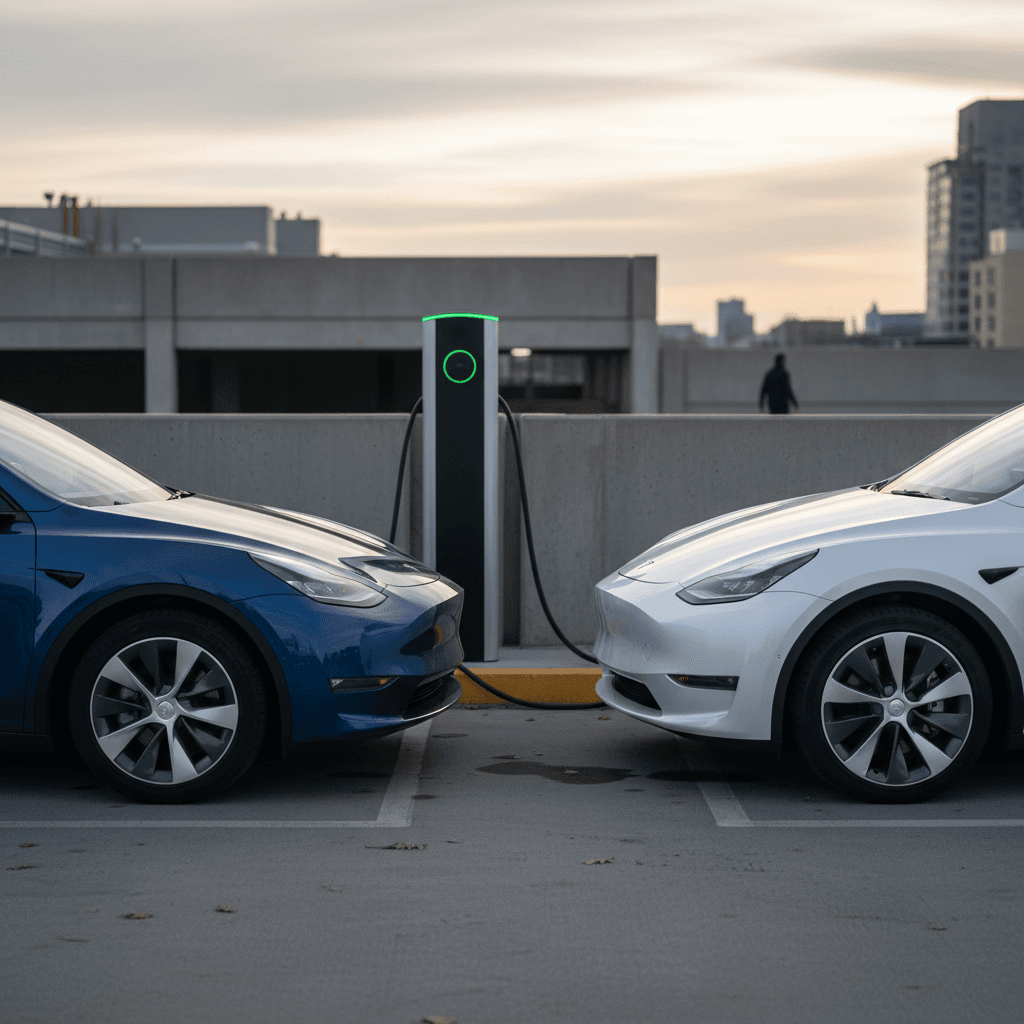
RWD generally favors efficiency because it does not have to operate the same dual-motor system as AWD, but you should not assume that every RWD listing has more range than every AWD listing. Battery size, battery condition, wheel choice, weather, speed, and model year can change the result. Check the individual vehicle’s specifications and real-world Model Y range rather than choosing from drivetrain alone.
What Recharged Model Y data shows
Recharged data shows that battery condition and the individual car’s price deserve as much attention as its drivetrain. Across 316 Model Ys that received Recharged Score battery diagnostics, tested remaining capacity averaged 88.9% of original capacity, with a median of 88.8%. Tested real-world range averaged and had a median of 280 miles, while individual results ranged from 195 to 327 miles. These results cover Model Ys broadly rather than separating RWD from AWD, so they should not be used to claim that one drivetrain preserves its battery better.
Recharged also had 53 Model Y listings in the current-price snapshot, with an average asking price of $35,631 and a median of $33,599. Asking prices extended from $23,599 to $54,998, illustrating how widely value can vary with configuration, age, mileage, condition, equipment, and other factors. Because these listings are not divided into RWD and AWD groups here, the figures do not establish a specific AWD price premium. The practical takeaway is to compare the complete car and its verified EV battery health, not just its motor count.
On a used Model Y, we don’t let the AWD badge settle the decision. We verify the battery, exact configuration, wheel setup, software features, and repair history, because those details can change whether the car is actually the better buy.
Recharged data
Used Tesla Model-Y battery health
89%
avg remaining capacity
From Recharged battery inspections, not manufacturer estimates.
- Lowest
- 77%
- Median
- 89%
- Highest
- 100%
- Est. range
- 280 mi avg
- Cell balance pass
- 100%
- Quick charges
- 22 avg
- Slow charges
- 77 avg
Average cell imbalance: 6.3 mV
Based on vehicles Recharged tested
Recharged data
Used Tesla Model-Y prices at Recharged
$33,599
median list price
Current list prices for matching inventory at Recharged.
- Lowest
- $23,599
- Average
- $35,631
- Highest
- $54,998
Average Recharged Score on these listings
4.7 / 5
Range
4.0 – 5.0
Based on available listings
Every EV is battery-tested with a Recharged Score. Nationwide delivery.
Condition can outweigh the drivetrain badge
A well-documented RWD Model Y can be a smarter purchase than a neglected AWD example, and the reverse is equally true. Recharged’s Model Y conversations routinely cover software features, seating configuration, upgraded wheels, paint condition, accident repairs, sensor recalibration, financing payoffs, and interior color because all can affect desirability or value. Modified cars deserve additional scrutiny: wraps, oversized wheels, spoilers, trim pieces, and interior accessories may appeal to one buyer while narrowing the audience for another. None of those factors automatically makes a vehicle bad, but each should be inspected and priced appropriately.
What to check before buying either drivetrain
Verified battery condition
Review tested remaining capacity and tested real-world range instead of judging the battery from dashboard range alone.
Exact configuration
Confirm drivetrain, battery, seating, wheels, and installed equipment through the vehicle and its records.
Accident and repair history
Look for documented repairs and verify that cameras, sensors, and driver-assistance hardware function correctly.
Wheels and tires
Inspect tire condition and confirm whether upgraded or aftermarket wheels affect ride, efficiency, replacement cost, or clearance.
Software features
Verify which paid features remain with the vehicle and do not assume a feature shown in an old listing will transfer.
Charging equipment
Confirm included cables and plan your home EV charging setup before delivery.
How should you make the final choice?
Choose RWD when your priorities are purchase value, everyday efficiency, and straightforward driving in a mostly mild climate. It is usually the sensible starting point for commuters who do not need to maximize launch performance or all-weather traction. Do not dismiss it solely because AWD is positioned as the more capable configuration; capability has value only when it addresses conditions you actually face.
Choose AWD when you frequently drive through snow, climb steep roads, or place a high value on acceleration and added traction. Then compare AWD candidates by battery condition, tires, wheels, history, and price rather than automatically buying the least expensive one. If two vehicles are close, favor the example with the stronger inspection results and clearer history, even if its drivetrain was not your initial preference.
- Define whether snow, steep grades, or acceleration make AWD genuinely useful to you.
- Set a budget that includes insurance, tires, charging equipment, and financing, not only the purchase price.
- Compare verified battery health and tested range for each actual vehicle.
- Confirm wheels, software, seating, repair history, and included charging equipment.
- Choose the best-condition vehicle that meets your real driving needs.
Instant offer, trade-in, or consignment. Pickup available.
Tesla Model Y RWD vs AWD FAQ
The final verdict
RWD is the rational choice for most value-conscious shoppers, while AWD is the right upgrade when traction, hills, winter weather, or acceleration are meaningful priorities. In the used market, however, the better vehicle can matter more than the preferred drivetrain. Compare verified battery health, tested range, condition, equipment, and history, then buy the Model Y that fits your actual driving rather than the one with the longer feature list.