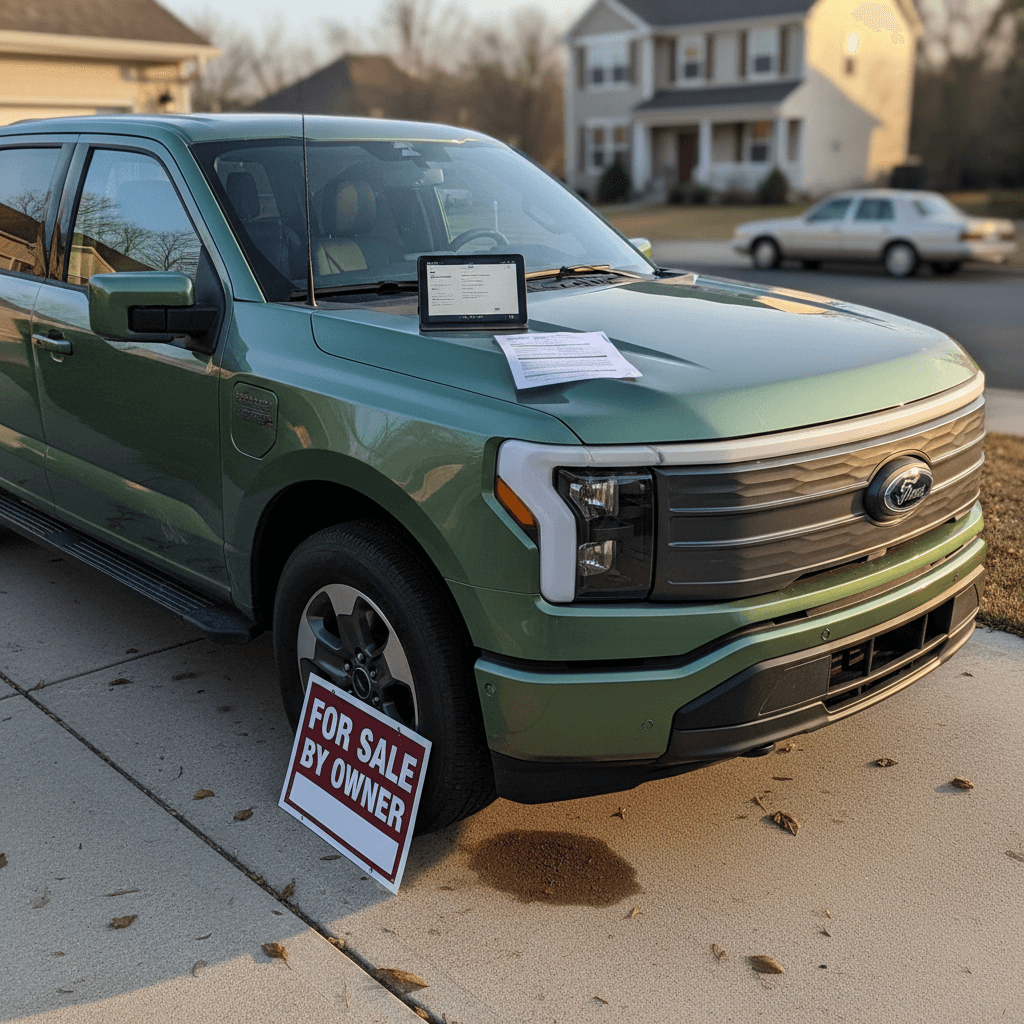
If you’re wondering how to sell a Ford F‑150 Lightning in a private sale, you’re not alone. Early buyers paid new‑truck money for these electric pickups, and now the used market is sorting out what they’re actually worth. The good news: with the right prep, pricing, and documentation, especially around battery health, you can stand out from other sellers and protect yourself in the process.
Big Picture on Lightning Resale
Why Selling a F‑150 Lightning Privately Is Different
EV Truck, Not Just a Truck
The Lightning attracts two overlapping audiences: traditional truck buyers who care about towing, payload, and four‑wheel drive, and EV shoppers who obsess over battery health, range, and charging speeds. Your listing has to speak to both.
On top of that, Ford has pivoted its EV strategy and ended Lightning production, which may make your truck more interesting to enthusiasts but also raises long‑term questions about parts, software support, and value. Buyers will ask about this, be ready.
Fast Depreciation and Incentive Hangover
Unlike a gas F‑150 that often keeps 60%+ of its value after a couple of years, early electric pickups, including the Lightning, have been losing close to half of their value in the first few years. That stings if you bought new, but it also means shoppers know they’re in the driver’s seat.
To get serious buyers to your driveway, you’ll need to back up your asking price with data: recent valuations, a clean history report, and a credible battery‑health story.
Watch Out for Old MSRP Anchors
Check the Market and Set a Realistic Price
Before you write a single line of your ad, you need a grounded sense of what your Lightning is actually worth today. Private‑party buyers are shopping across marketplaces in real time, so if you’re even $3,000–$5,000 out of line, your listing will just sit.
Pricing Your F‑150 Lightning: Step‑by‑Step
1. Pull Multiple Online Valuations
Start with tools like KBB, Edmunds, and CarEdge. Plug in your exact trim (Pro, XLT, Flash, Lariat, Platinum), battery pack, mileage, and your zip code. Pay attention to <strong>private‑party</strong> value, not just trade‑in.
2. Study Real Listings, Not Just Algorithms
Search major used‑car sites, EV‑specific platforms, and local classifieds for F‑150 Lightnings with similar trim, year, mileage, and options. Filter for trucks that have actually sold or show ‘under deposit’, those are your best real‑world benchmarks.
3. Adjust for Equipment and Condition
Extended‑range battery, tow package, tonneau cover, and premium wheels can all move the needle. So can dents, curb rash, or an accident on the vehicle history report. Be honest: is your truck really “excellent,” or is it more “good”?
4. Consider Depreciation Reality
Data from used‑EV analysts shows Lightning values falling faster than gas F‑150s, with many trucks landing around the low‑40% residual range by year five. Price too optimistically and you’ll chase the market down instead of leading it.
5. Choose a Strategy: Fair or Firm
If you need to sell quickly, price your truck at the <strong>lower end of the private‑party range</strong> and say so in the listing. If you’re willing to wait, list toward the middle and leave 2–3% room to negotiate, buyers still want a “win.”
Use a Round Number… Then Sweeten It
Get Your F‑150 Lightning Ready to Sell
Once you’ve got a pricing target, your next job is to make the truck feel like an easy, low‑risk purchase. With the Lightning, that means going beyond a car‑wash.
Prep Checklist: Make Your Lightning Showroom‑Ready
Small steps here can easily be worth $500–$1,000 in sale price or a faster sale.
Detail Inside and Out
Clean is non‑negotiable. Wash, clay, and wax the paint; clean wheels and tires; scrub the bed and frunk. Inside, shampoo carpets, wipe down plastics, clean the touchscreen, and remove all personal items and decals.
Fix the Easy Stuff
Burned‑out bulbs, cracked wiper blades, low‑tread tires, and curb‑rashed wheels are red flags. Fix the cheap, obvious issues so buyers don’t mentally build a ‘to‑do’ list and lowball you.
Assemble a Documentation Folder
Print or PDF your maintenance history, recalls and software‑update records, tire receipts, and any warranty or service contracts. An organized folder screams, “This truck has been cared for.”
Charge Level and Range Preview
Have the truck at 70–90% state of charge for showings so buyers can see a realistic range estimate on the dash. Don’t invite range anxiety by presenting it at 12%.
Check All Power Features
Demonstrate Pro Power Onboard outlets, onboard scales, bed lighting, tailgate functions, and driver‑assist systems. Buyers want to see that the tech they’re paying for actually works.
Stage for Photos
Choose a clean, well‑lit location (driveway or quiet street) and shoot in the morning or late afternoon for softer light. Capture the truck from all angles, plus close‑ups of wheels, bed, frunk, and interior.
Battery Health and Range: What Buyers Want to See
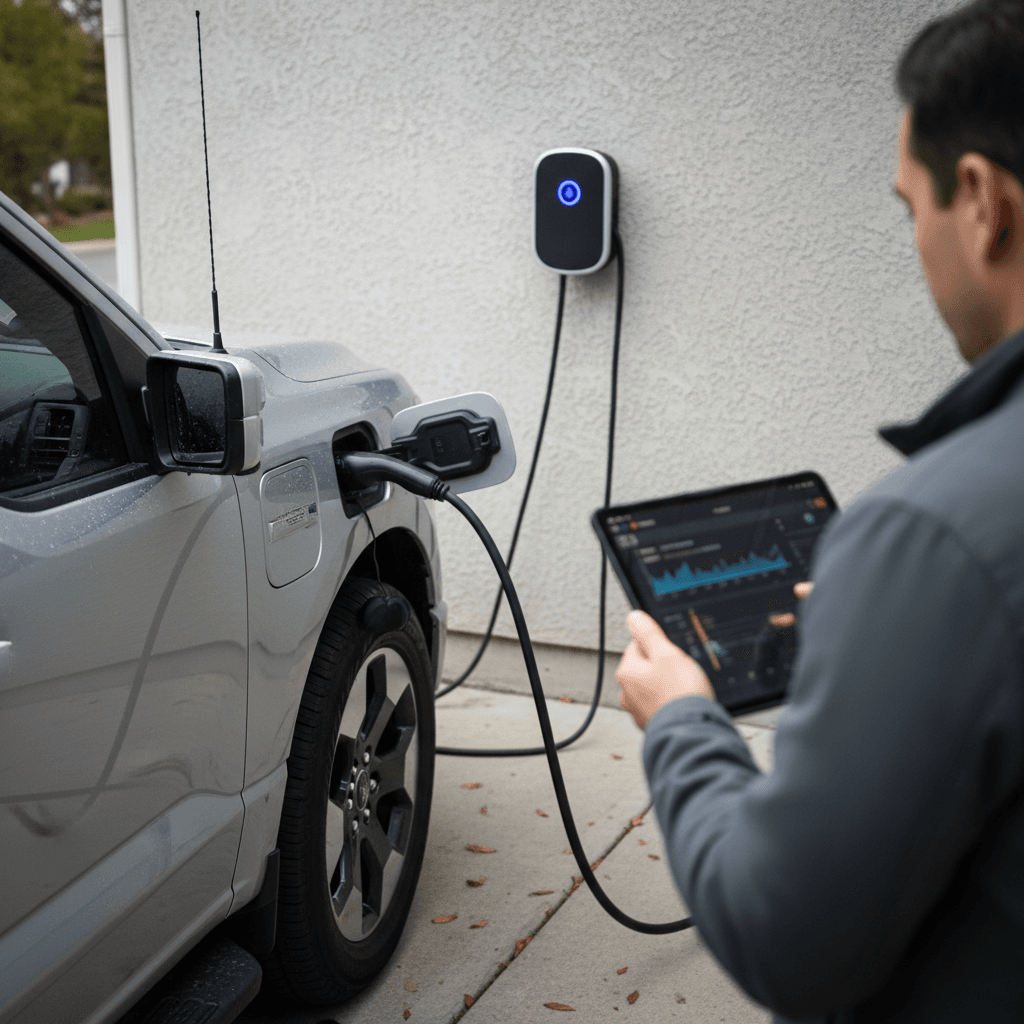
For EV shoppers, battery health is what engine compression and oil analysis are for gas trucks. If you can demonstrate that your F‑150 Lightning’s pack is healthy and performing as expected, you instantly separate yourself from most private sellers.
How to Prove Your Lightning’s Battery Health
Get an Independent Battery Health Report
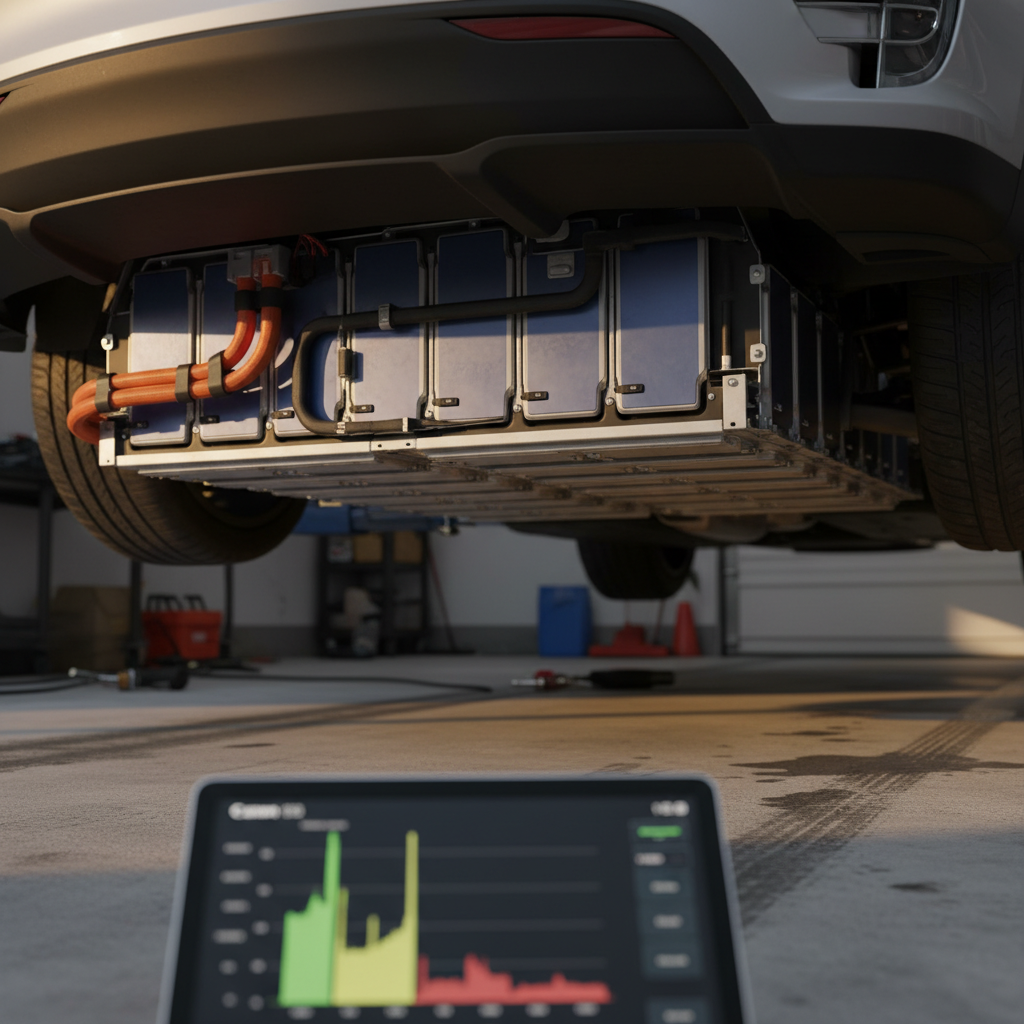
A professional diagnostic, like the <strong>Recharged Score battery health report</strong> used on Recharged listings, measures usable capacity, DC fast‑charging history, and pack consistency. Sharing this with buyers removes a huge unknown.
Document Charging Habits
Buyers prefer trucks that haven’t lived their lives on 150 kW DC fast chargers. If you mostly charged at home on Level 2, mention it in your listing and be ready to show home‑charging equipment and electric bills if asked.
Show Real‑World Range Examples
Record a few recent trips: your typical commute, a highway run, maybe a towing trip. Note starting and ending state of charge, miles driven, weather, and speed. This gives buyers a realistic sense of what they can expect.
Explain Software and Heat‑Pump Updates
Newer model‑year Lightnings and over‑the‑air updates improved cold‑weather efficiency and charging displays. If your truck has those updates, highlight them, they’re range and convenience features, not just tech buzzwords.
Be Honest About Range Limits
Create a Listing That Actually Sells
With pricing, prep, and battery documentation lined up, your next job is marketing. A great private‑sale ad for a Ford F‑150 Lightning addresses the two big questions buyers are asking: “Is this a good truck?” and “Is this a safe EV bet?”
Key Details to Include in Your Lightning Listing
Hit these points clearly and you’ll answer most buyer questions before they ask.
| Category | What to Include | Why It Matters |
|---|---|---|
| Basics | Year, trim (Pro/XLT/Flash/Lariat/Platinum), drivetrain (4x4), color, mileage, VIN | Gives shoppers an apples‑to‑apples comparison vs. other listings. |
| Battery & Range | Standard vs. extended‑range battery, typical range at 70 mph, cold‑weather notes | EV‑focused buyers want to know if it fits their use case. |
| Charging | Home charging setup, included cable or Level 2 charger, public‑charging apps you use | Shows how easy it will be for them to live with the truck day‑to‑day. |
| Towing & Payload | Tow package, max tow rating, actual loads you’ve towed | Attracts traditional truck buyers who care about work capability. |
| Condition & History | Accident history, ownership count, maintenance records, recalls addressed | Reduces risk in buyers’ minds and supports your asking price. |
| Reason for Selling | “Need a three‑row SUV,” “Got a company truck,” etc. | A reasonable story eases fears that you’re dumping a problem child. |
Use clear, plain language, this isn’t the place for marketing fluff.
Sample Lightning Title You Can Steal
Screen Buyers and Manage Test Drives Safely
Interest in electric pickups is high, but not every message is from a serious or safe buyer. A little structure protects you, your time, and your truck.
Safe Test‑Drive Playbook
Start with a Short Phone Call
Before sharing your address, hop on a quick call. Confirm their name, what they drive now, and how they plan to pay. Serious buyers are happy to talk; scammers usually aren’t.
Meet in a Public Place When Possible
If you’re comfortable, meet in a well‑lit public area like a bank or police‑station parking lot. For test drives, you can start and end there and avoid broadcasting where the truck lives.
Check Their License and Insurance
Always photograph or at least visually confirm a valid driver’s license, and ask to see proof of insurance. You can ride along to stay in control of the route and conversation.
Plan a Route That Shows the Truck’s Strengths
Include city streets, a short highway stretch, and if relevant, a hill or two. Demonstrate BlueCruise (if equipped and active), one‑pedal driving, regen modes, and Pro Power Onboard.
Set Boundaries Up Front
No hard launches, no towing tests without prior agreement, no unapproved third‑party drivers. A calm, confident tone goes a long way: “Let’s keep it under the posted limits and avoid full‑throttle runs.”
Never Let the Truck Leave Without You
Handle Financing, Trade‑Ins, and Negotiation
Private buyers have to solve for money and logistics that a dealer would normally handle for them. If you anticipate these roadblocks, you’ll close more deals and waste less time.
Talking Price Without Killing the Deal
- Anchor with your homework. When a buyer lowballs you, refer back to recent comps and your battery‑health report. “I’m priced in line with similar trucks, and this one comes with verified battery health.”
- Know your walk‑away number. Decide in advance what you’ll accept. If you’re at $47,000 and they’re at $45,000, ask for a split at $46,000 and be ready to shake hands or walk.
- Use extras as levers. Home Level 2 charger, winter wheels, or accessories can be thrown in or removed to bridge the last few hundred dollars.
Dealing With Banks and Payoffs
- If you still owe on the truck, call your lender to get the exact payoff and ask how they prefer to handle a private sale. Many will coordinate title release directly with the buyer’s bank.
- Encourage buyers to get pre‑approved. Suggest they talk to their bank or credit union before a test drive, so you both know the budget is real.
- Use a bank branch for payment. For cashier’s checks or wire transfers, meet at the issuing bank. The teller can verify funds on the spot before you sign over anything.
Consider a Marketplace If You Hate Negotiating
Paperwork, Title, and Digital Features Transfer
Closing the deal on a Ford F‑150 Lightning isn’t just a handshake and a title signature. Because it’s an EV loaded with connected tech, you need to think about both traditional paperwork and digital ownership.
Closing Checklist for a Private Lightning Sale
Bill of Sale and Title
Use your state’s recommended bill of sale and include VIN, sale price, mileage, and “as‑is, no warranty” language unless you’re explicitly providing one. Follow your state’s rules for title transfer and notarization.
Odometer and Disclosure Forms
Most states require an odometer statement and disclosures about known issues or branded titles. For EVs, it’s wise to also note any open recalls or software issues you’re aware of.
Cancel or Transfer Service Contracts
If you purchased extended service plans, tire & wheel coverage, or other add‑ons, call the provider. Some can be transferred; others offer prorated refunds. Spell this out in your bill of sale.
Handle BlueCruise and Connected Services
Log into your Ford account and FordPass app to cancel or transfer connected services like BlueCruise and data plans. You don’t want a stranger using features on your dime, or seeing your past trips.
Factory Warranties and Battery Coverage
Explain what’s left of Ford’s bumper‑to‑bumper and battery warranties (often 8 years / 100,000+ miles on the pack, check your documents). Buyers take comfort knowing they’re not on their own if something major fails.
Remove Personal Data and Keys
Factory‑reset the infotainment system, delete phone pairings and garage‑door codes, and remove saved home/work locations. Hand over all physical keys, key cards, and any PIN codes the buyer will need.
Don’t Skip the DMV Notification
Private Sale vs. Selling Through a Marketplace Like Recharged
Selling your Ford F‑150 Lightning privately can net you more than a dealer trade‑in, but it also puts all the work, and risk, on your shoulders. If that sounds like more project than you want, it’s worth comparing against a specialist EV marketplace.
Two Ways to Sell Your F‑150 Lightning
Choose the path that fits your time, risk tolerance, and comfort level.
DIY Private Party Sale
- Pros: Maximum control over price, ability to meet your buyer, potentially the highest net proceeds.
- Cons: You handle everything: pricing, photos, listings, tire‑kickers, test drives, paperwork, and fraud prevention.
- Best for: Sellers who enjoy the process, have time, and are comfortable managing strangers and large transactions.
Selling Through Recharged
- Pros: Recharged specializes in used EVs, provides a Recharged Score battery health report, helps with pricing, marketing, financing, and even trade‑ins or consignment.
- Cons: You may net slightly less than an all‑in private sale, depending on services used, but usually more than a traditional dealer trade.
- Best for: Sellers who want EV‑savvy buyers, less hassle, and expert support from start to finish.
How Recharged Can Help
FAQ: Selling a Ford F‑150 Lightning Privately
Common Questions About Private Lightning Sales
Selling a Ford F‑150 Lightning in a private sale in 2026 is absolutely doable, but it rewards preparation. Nail your pricing with current market data, prep the truck like a pro, invest in a credible battery‑health story, and treat safety and paperwork as seriously as the sale price. Whether you ultimately close the deal in your driveway or decide to lean on an EV marketplace like Recharged, those fundamentals will protect you and help you get fair value for one of the most talked‑about electric trucks of the last few years.