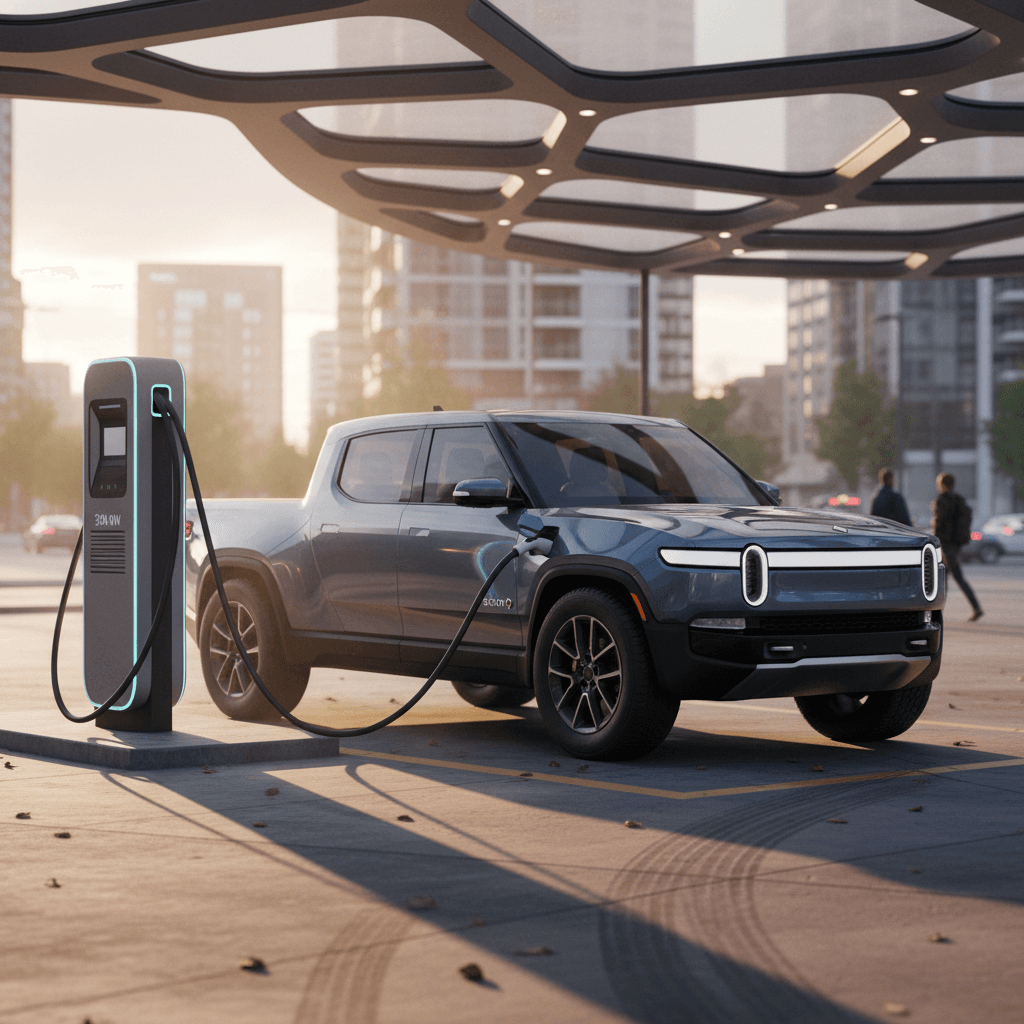
If you drive an EV in California, the electric car charging network is your lifeline. The state has quietly built the largest public EV charging footprint in the U.S., and by late 2025 it had **more charger ports than gas nozzles**. Yet availability on paper doesn’t always match what you experience at a busy grocery store or along I‑5 on a Sunday night. This guide breaks down how California’s network actually looks in 2026, and how to navigate it with confidence.
California is the national bellwether
How big is California’s EV charging network today?
California’s charging network by the numbers
The headline is simple: **California’s electric car charging network is big and growing fast.** The California Energy Commission (CEC) reported around 178,000 public and shared ports at the end of 2024, and by fall 2025 that climbed past **200,000**. Most of these are Level 2 chargers in parking lots and garages, with a smaller but rapidly growing slice of DC fast chargers along highways and freight corridors.
Those public numbers also sit on top of an even larger base of **home charging**. The CEC estimates hundreds of thousands of Level 2 chargers in single‑family garages and driveways statewide. For many owners, that’s still where 70–80% of charging happens, but the public network is what makes longer trips, apartment living, and used‑EV adoption viable.
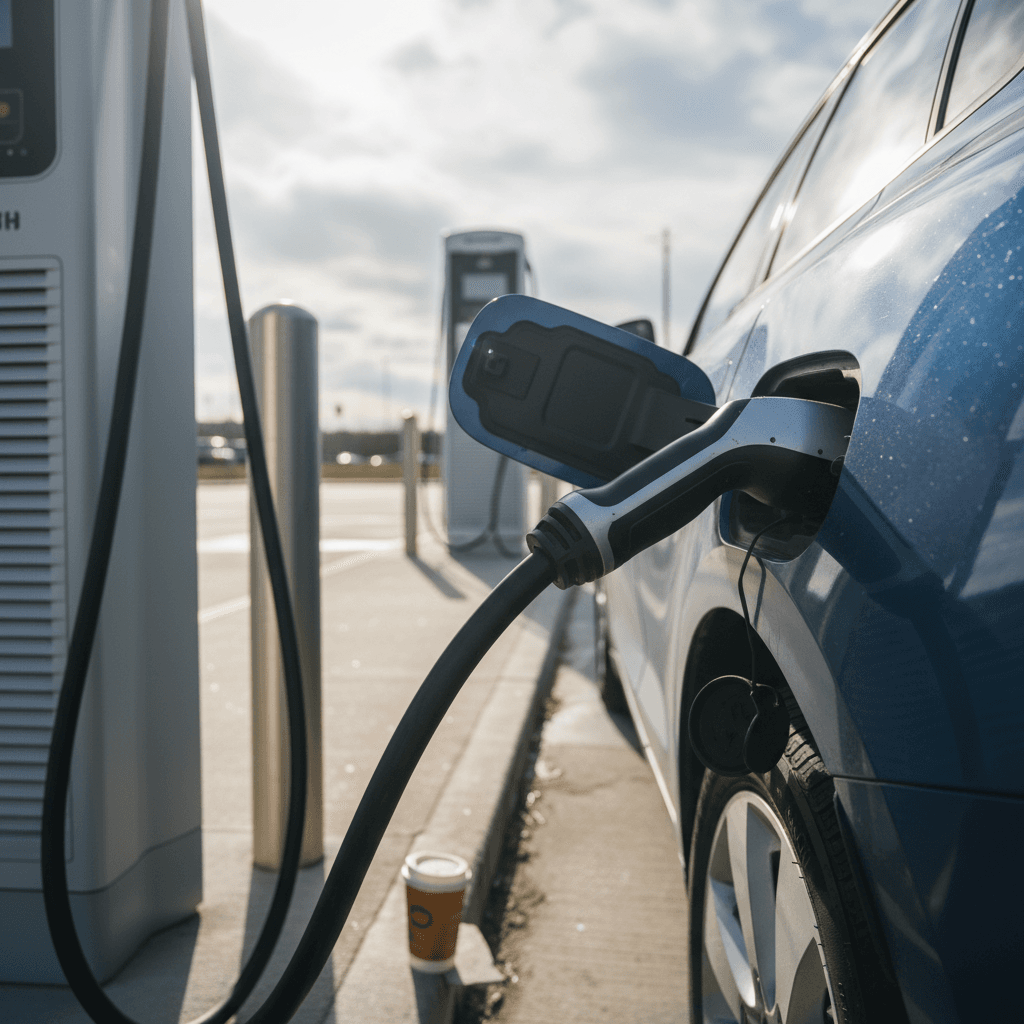
Key players in California’s charging landscape
Major charging networks you’ll use in California
Know who runs the stations before you pull in
Tesla Supercharger & Destination
Where: Highways, travel centers, some city hubs and hotels.
Why it matters: High uptime, simple app experience, and industry‑leading power levels (up to 250 kW and beyond). Most new non‑Tesla EVs now ship with or support NACS access.
Electrify America, EVgo, ChargePoint & more
Where: Major corridors, big‑box retail, grocery stores, urban garages.
Why it matters: Non‑Tesla DC fast charging backbone, with speeds from 50–350 kW depending on site and vehicle.
Utilities, cities & workplace hosts
Where: Office parks, municipal lots, campuses, hospitals.
Why it matters: Mostly Level 2 ports that support daily commuting and long dwell times for employees and residents.
On the ground, California’s electric car charging network is a patchwork of **private networks, utilities, retailers, cities and property owners**. You’ll see Tesla logos along major highways, Electrify America banks at Walmarts and travel plazas, EVgo in dense urban corridors, and ChargePoint hardware almost everywhere, often “white‑labeled” under a local brand.
Download multiple charging apps
Where you’ll find chargers across California
Urban & suburban areas
- Grocery, retail and malls: Rows of Level 2 ports and a smaller set of DC fast chargers, often near store entrances.
- Parking structures: Clusters of Level 2 chargers, sometimes run by cities or universities.
- Workplaces & campuses: Employee‑only Level 2 charging managed by employers or building owners.
In metros like Los Angeles, the Bay Area and San Diego, it’s common to see multiple networks compete in the same neighborhood.
Highways, rural routes & tourism corridors
- Interstates (I‑5, I‑10, I‑15, I‑80): High‑power DC fast chargers roughly every 50–70 miles, increasingly funded by federal NEVI dollars.
- Tourist routes (US‑101, SR‑1, SR‑99): A mix of legacy fast‑charge sites and new hubs at travel centers and hotels.
- National parks & rural towns: Fewer DC fast chargers; you’ll often rely on Level 2 at lodges or visitor centers.
The gaps are shrinking, but for remote desert and mountain regions you still need a deliberate plan.
Don’t assume “one more charger” down the road
Charging speeds: Level 1, Level 2, and DC fast
Common charging options in California
How long you’ll be parked, and what each level is best for.
| Charging level | Typical power | Where you’ll see it | Miles of range per hour* | Best use case |
|---|---|---|---|---|
| Level 1 (120V) | 1–1.5 kW | Older homes, regular outlets | 3–5 | Overnight top‑ups, low‑mileage drivers |
| Level 2 (240V) | 6–19 kW | Homes, workplaces, public lots | 20–40 | Daily charging, destination stays |
| DC fast (50–150 kW) | 50–150 kW | Highways, travel centers, some city hubs | ~100–200 in 30–40 min | Road trips, quick top‑ups |
| High‑power DC (200–350 kW) | 200–350 kW | Select Tesla, EA, and new NEVI sites | Up to 200+ in 15–25 min | Fastest possible highway charging for compatible EVs |
Actual speeds vary by vehicle, battery size, temperature and charger configuration.
For most California drivers, **Level 2 is the everyday workhorse**. It refills a typical commute in a few hours at home or while you’re in the office. **DC fast charging** is what makes long‑distance travel possible, but it’s less gentle on your battery and more expensive, so you’ll want to reserve it for road trips and time‑sensitive situations.
Be careful with repeated 0–100% DC fast charging
Reliability and the broken-charger problem
If you talk to California EV drivers, or read recent national coverage, you’ll hear a common complaint: **too many public chargers simply don’t work when you need them.** Studies have pegged average uptime for many non‑Tesla public networks in the 75–85% range, while Tesla Superchargers routinely report uptimes north of 99%.
Why chargers are out of service (and what’s being done)
California is throwing money and rules at reliability, not just raw port counts
Aging hardware & abuse
Older DC fast chargers, exposed to heat, vandalism and heavy use, tend to fail more often. Many highway‑side units installed in the late 2010s are now being replaced with newer, higher‑power hardware.
Network and payment glitches
Software issues, from cellular dropouts to buggy payment terminals, can make a charger appear available in an app but unusable on arrival. Networks are slowly consolidating hardware and software stacks to reduce those failure points.
Reliability mandates & grants
New federal NEVI funding and California programs require uptime targets around 97% and set aside money specifically to repair or replace broken ports. Caltrans and the CEC are currently deploying funds to fix over a thousand underperforming chargers statewide.
How to hedge against broken chargers
Pricing: What you’ll pay to charge in California
Pricing across California’s electric car charging network is **far from uniform**. Some city‑run Level 2 chargers are free for a few hours; others cost more than your home electricity rate. DC fast chargers are usually billed by the kilowatt‑hour, by the minute, or a hybrid of both, and prices can vary from roughly $0.25/kWh at discounted utility‑partner sites to $0.60/kWh or higher at premium highway locations.
- Home Level 2 charging is still the cheapest option for most households, especially with off‑peak utility rates.
- Public Level 2 often sits in the middle, cheaper than fast charging, but not always cheaper than plugging in at home.
- DC fast charging is typically the most expensive per mile, but the time savings on road trips or for apartment dwellers can be worth the premium.
Watch idle fees at popular sites
Policy, money, and buildout: NEVI, CALeVIP & more
Behind the scenes, California’s charging build‑out is being driven by a **mix of state and federal money** layered on top of private investment. Understanding those funding streams helps explain why you’re suddenly seeing large new charging hubs on highways and in historically underserved neighborhoods.
Key programs shaping California’s charging build‑out
1. CEC Clean Transportation Program & $1.4B plan
In 2024, the California Energy Commission approved a multi‑year, $1.4 billion investment plan aimed at expanding light‑, medium‑, and heavy‑duty charging and hydrogen infrastructure. At least half of that funding is directed toward disadvantaged and low‑income communities, which is why you’re seeing more chargers in places that had little or none five years ago.
2. NEVI: Federal highway fast‑charging build-out
California is receiving roughly $380 million from the National Electric Vehicle Infrastructure (NEVI) program through 2026. The goal: DC fast-charging sites at least every 50 miles along 6,600+ miles of interstates and key U.S. and state highways, each site with at least four 150‑kW ports.
3. Charger Reliability & Accessibility Accelerator
Separate federal reliability funds, administered in California by Caltrans and the CEC, are earmarked to repair or replace more than 1,000 broken or unreliable chargers at roughly 300 sites. That means some legacy units you’ve learned to avoid should gradually improve or disappear.
4. CALeVIP and successor rebate programs
California’s Electric Vehicle Infrastructure Project (CALeVIP) and newer block‑grant programs provide rebates to property owners who install public Level 2 and DC fast chargers, with extra incentives in disadvantaged communities. Those rebates are behind thousands of ports appearing at apartments, workplaces and retail sites.
What all this funding means for you
Planning a California EV road trip
With today’s network, **California road trips in an EV are very doable**, but they still reward planning. Think less like a gas driver and more like an airline dispatcher: build in buffers, check the latest status, and know your alternates.
Step-by-step: Planning a reliable California EV road trip
1. Start with your real-world range
Base your planning on the range you actually see at 70 mph with passengers, climate control, and some elevation changes, not just the EPA label. Many drivers in California use 60–75% of rated range as their highway planning number.
2. Map fast chargers before you leave
Use tools like A Better Routeplanner, your automaker’s native planner, and the Tesla app if you have NACS access. Lay out stops every 100–150 miles at first, then adjust once you know how your car behaves.
3. Aim to arrive with a buffer
Try to reach each fast charger with at least 15–25% state of charge. That gives you flexibility if a station is crowded or down and you need to continue to the next site or double back.
4. Prioritize larger, multi‑port sites
All else equal, stop where there are many stalls on‑site (8–12 Superchargers or 6+ multi‑network DC fast ports). Those locations can better absorb crowds, broken units or a surprise queue.
5. Watch grades, heat and cold
Long climbs over the Grapevine, high desert heat on I‑10, or winter storms in the Sierra all dent your effective range. If weather looks extreme, tighten your spacing between fast‑charge stops.
6. Have a Plan B for each leg
Before you hit the road, bookmark at least one backup charger for each stop. It doesn’t need to be ideal, just reachable from your current leg with 10–15% to spare if your primary plan fails.
Don’t forget Level 2 at your destination
How California’s network affects used EV buyers
For used‑EV shoppers, California’s electric car charging network is both an asset and a filter. The sheer density of chargers makes older, shorter‑range EVs more practical here than in most states, but only if you understand how the car’s **battery health** and charging capabilities intersect with the public network around you.
Why the network helps used EVs
- More options nearby: In dense parts of California, it’s rare to be more than a few miles from at least one public charger, which cushions you against range loss on an older pack.
- Apartment‑friendly: A growing mix of DC fast and Level 2 chargers near multifamily housing means you don’t need a garage to run a used EV.
- Redundancy on popular routes: Along I‑5 or US‑101, there are often multiple networks within a short hop, letting you work around a slower or offline site.
What still makes due diligence critical
- Battery degradation matters: A car that started at 250 miles of range but now gets 180 will interact with the network very differently. You’ll stop more often and rely more heavily on DC fast chargers.
- Charging speed limits: Some older EVs top out at 50–70 kW on DC fast chargers, even when plugged into a 150‑ or 350‑kW unit. That directly affects how long you’ll be parked.
- Connector and adapter support: As California shifts toward the Tesla‑originated NACS connector, adapter availability and native NACS ports on newer EVs will shape how easily you can tap into high‑reliability Supercharger sites.
Use data, not guesswork, on used EV battery health
If you’re weighing a used EV purchase in California, pair local charging‑map research with a vehicle‑specific battery and charging profile. Between the state’s dense network and transparent diagnostics like the Recharged Score, you can quickly separate cars that will work effortlessly from those that would make you a beta tester for every imperfect public charger in the system.
FAQ: California electric car charging network
Frequently asked questions about California’s charging network
Bottom line on California’s EV charging network
California’s electric car charging network is **large, growing, and imperfect**. Statistically, the state offers more public charge ports than gas nozzles, with new DC fast hubs and Level 2 clusters coming online every quarter. Yet reliability gaps, uneven rural coverage and confusing pricing can still turn a simple plan into a white‑knuckle detour if you don’t prepare.
If you treat the network as infrastructure you actively manage, planning road trips, keeping a buffer, and choosing vehicles with verified battery health, California is one of the best places in the country to own a new or used EV. And if you’re shopping for a pre‑owned electric car, working with a specialist like Recharged, with its battery‑health‑focused Recharged Score Report, EV‑savvy advisors, financing options and nationwide delivery, can turn that sprawling, evolving network from a worry into a selling point.