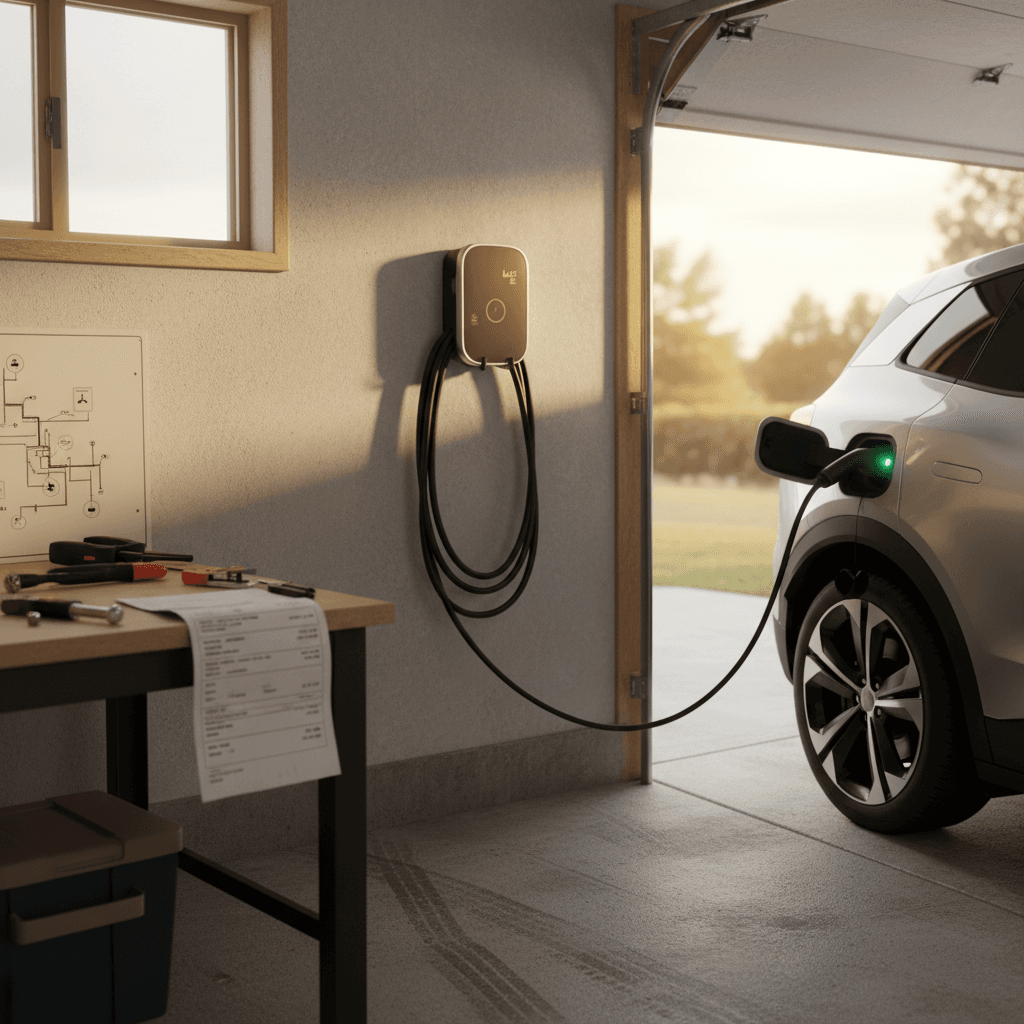
A home charger’s total price depends more on your property than on the vehicle in your driveway. The charger itself is only one part of the bill; electrical capacity, wire routing, labor, permitting, and inspection can matter just as much. Before requesting bids, use this guide alongside our home EV charging guide to define the setup you actually need.
The quote is the real answer
Your installed total is the cost of the charging equipment plus every step required to connect it safely and legally. A straightforward job may use existing electrical capacity and a short wire route, while a complicated project may require panel work, extensive cable routing, conduit, trenching, or surface repairs. Because those conditions differ from one home to another, an electrician’s site-specific quote is more useful than a generic national estimate.
The table below compares common setups by relative cost and complexity rather than assigning unsupported flat prices. If you’re still choosing between charging levels, review Level 1 versus Level 2 charging before asking contractors to quote the project. Give every bidder the same charging requirement so you can compare equivalent installations.
Common home-charging installation scenarios
Relative costs depend on the condition and capacity of your home’s electrical system.
| Installation scenario | Relative cost | Main work involved | Key concern |
|---|---|---|---|
| Existing household outlet | Lowest | Outlet safety check | Slowest charging |
| Level 2, compatible circuit | Lower | Charger and setup | Circuit condition |
| Level 2, new nearby circuit | Medium | Wiring and breaker | Panel capacity |
| Level 2, long wire route | Higher | Cable and added labor | Wall or ceiling access |
| Detached garage or trenching | Highest complexity | Conduit and site work | Surface restoration |
These are relative comparisons, not price estimates; an electrician must inspect your home to establish the actual cost.
Choose the installation before buying hardware
What makes charger installation more expensive?
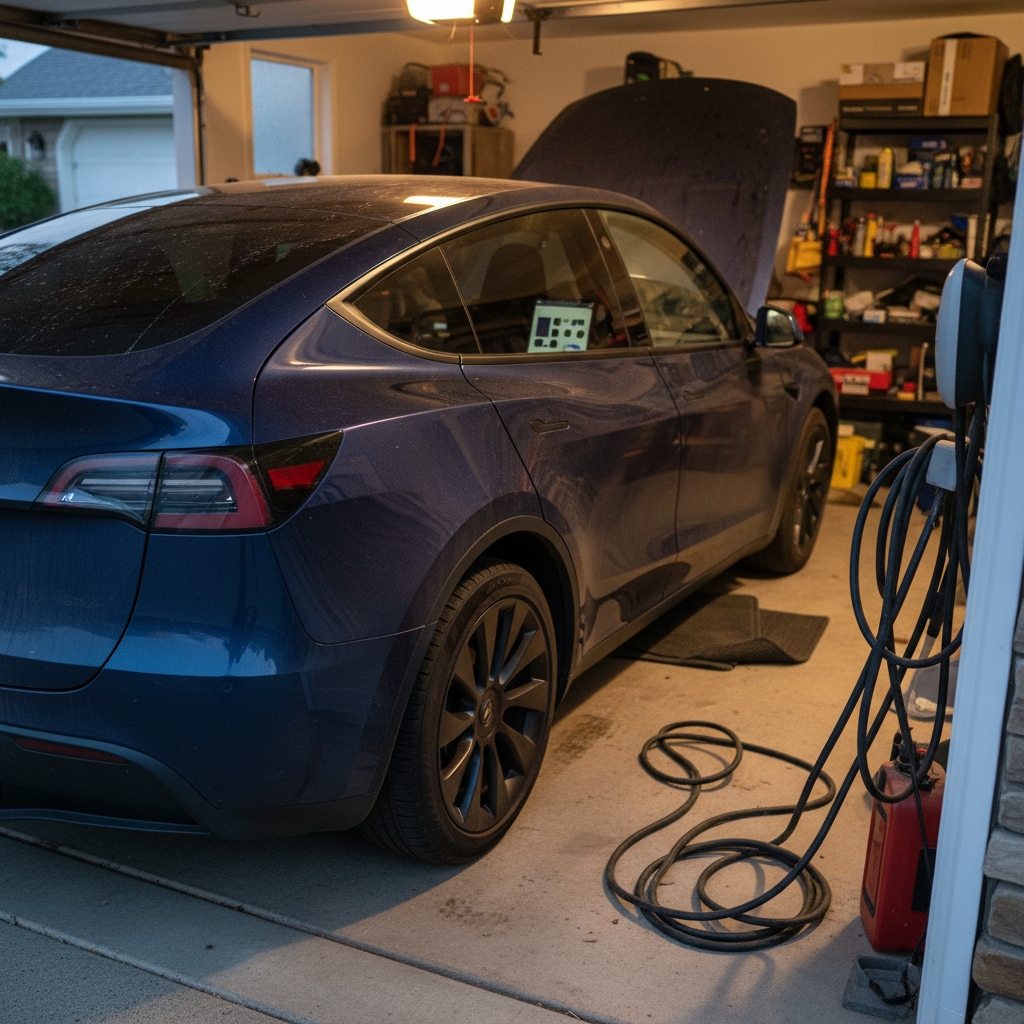
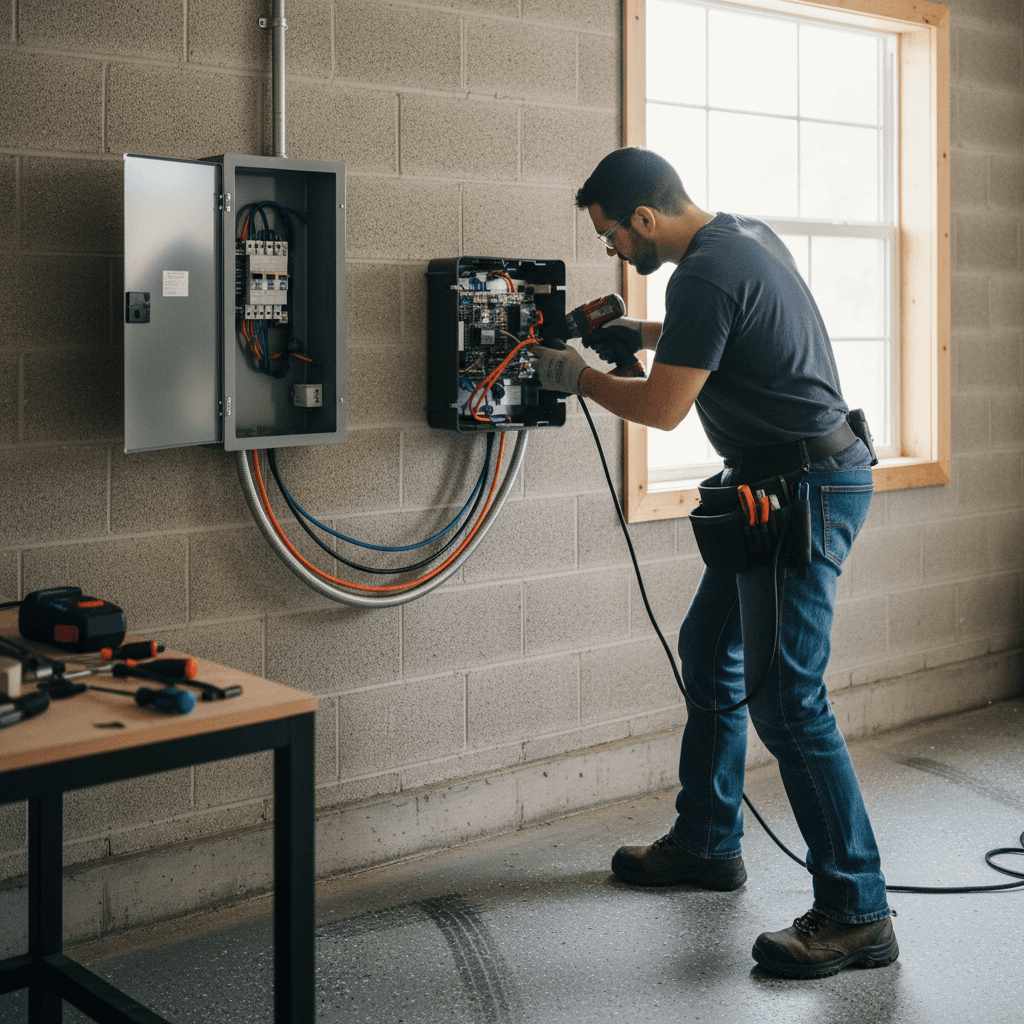
Electrical capacity, cable distance, access, permitting, and site work are the main reasons one home receives a higher quote than another. The charger’s mounting location affects how much wire and labor the project requires, while an undersized or crowded panel may require additional electrical work. A detached garage, finished walls, difficult crawlspaces, or outdoor trenching can add complexity even when the charging hardware stays the same.
Details an electrician should evaluate
Available electrical capacity
The electrician should calculate whether the existing service and panel can support the proposed charging load.
Circuit and cable route
A short, accessible route is generally simpler than running cable through finished rooms, outdoors, or underground.
Charger location
The mounting point should reach the vehicle’s charge port without creating a tripping hazard or requiring awkward parking.
Permit and inspection requirements
Ask which local approvals apply and whether they are included in the written quote.
Repairs and restoration
Clarify who handles drywall, paint, landscaping, pavement, or other surfaces disturbed during installation.
Future charging needs
Discuss whether you may add another EV, change parking locations, or need load-management equipment later.
How should you compare installation quotes?
Compare itemized bids based on the same charger location, charging requirement, and equipment choice. Each quote should identify the charger hardware, circuit work, breaker, wire or conduit, labor, permit handling, inspection, and any wall or ground restoration. A low headline price may not be the best deal if it excludes work that another electrician includes.
- Ask each electrician to quote the same installation plan.
- Request separate line items for hardware, electrical materials, labor, permits, and repairs.
- Confirm whether the charger will be hardwired or connected through an installed receptacle.
- Verify who obtains permits and schedules the final inspection.
- Ask what labor and equipment warranties apply.
- Confirm how change orders will be approved if hidden electrical problems appear.
On our Level 2 charger at work, we generally see around 30 miles of range added per hour, though the actual result varies by vehicle and conditions. That kind of routine charging is why getting the home setup right can make EV ownership much simpler.
What Recharged’s EV data adds to the decision
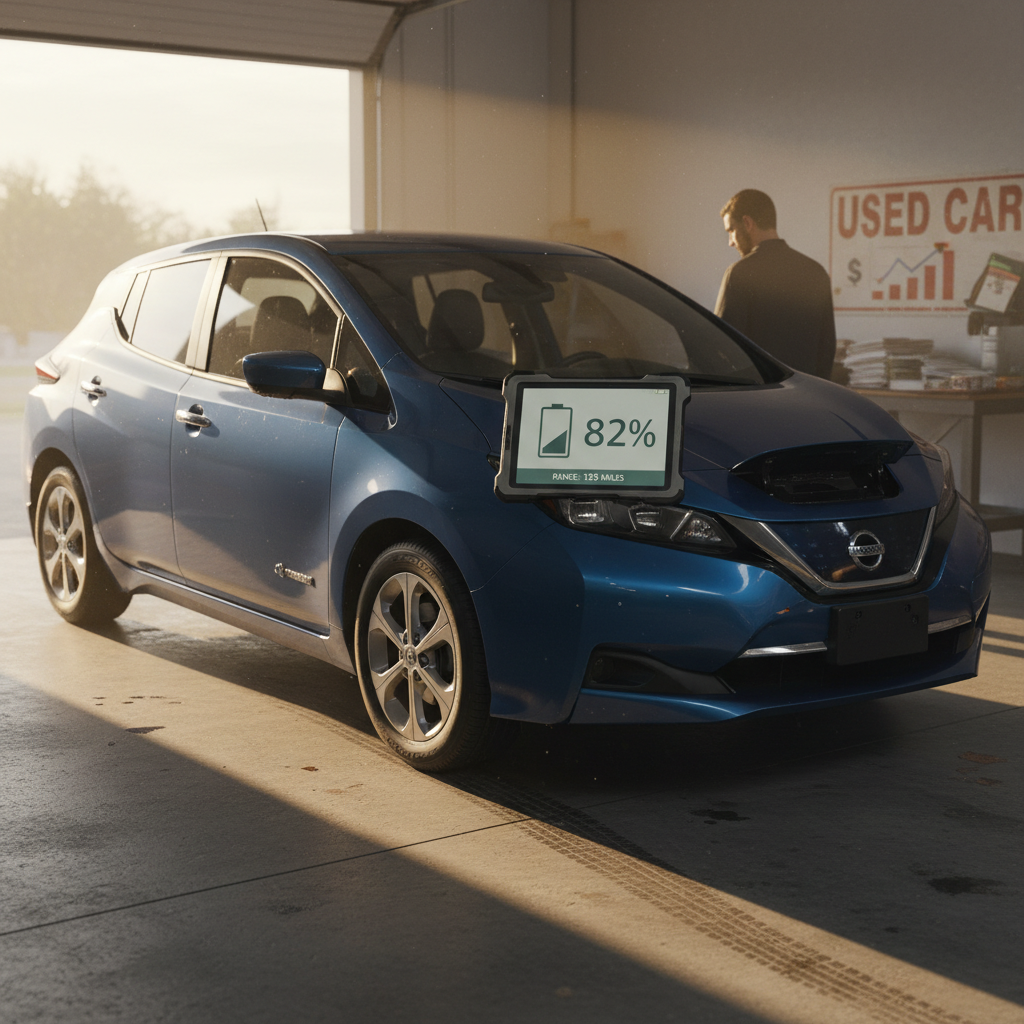
Recharged’s battery inspections show that a dependable home-charging routine can support vehicles with substantial remaining range, although the data does not establish that charging location causes better battery health. Across 2,242 Recharged Score inspections, verified battery health averaged 93.9% of original capacity, and tested real-world range averaged 266 miles. You can learn what those measurements mean in our guide to EV battery health.
The practical takeaway is to evaluate installation cost as part of long-term EV ownership rather than as an isolated accessory purchase. A well-planned charger can reduce your dependence on public charging and make it easier to begin normal trips with the range you expect. When you shop for a used EV through Recharged, its Recharged Score Report provides verified battery-health information so you can match the vehicle, its usable range, and your charging plan.
Recharged data
Used EV battery health
94%
avg remaining capacity
From Recharged battery inspections, not manufacturer estimates.
- Lowest
- 63%
- Median
- 95%
- Highest
- 100%
- Est. range
- 266 mi avg
- Cell balance pass
- 100%
- Quick charges
- 18 avg
- Slow charges
- 65 avg
Average cell imbalance: 7.3 mV
Based on vehicles Recharged tested
Recharged data
Used EV prices at Recharged
$30,997
median list price
Current list prices for matching inventory at Recharged.
- Lowest
- $12,996
- Average
- $34,803
- Highest
- $146,998
Average Recharged Score on these listings
4.8 / 5
Range
3.7 – 5.0
Based on available listings
Every EV is battery-tested with a Recharged Score. Nationwide delivery.
Frequently asked questions
The bottom line
Budget from an itemized, site-specific quote rather than a generic online estimate. The least complicated installations use suitable existing electrical capacity and a short, accessible cable route; panel upgrades, long runs, trenching, permits, and repairs can increase the total. Have a qualified electrician inspect the property, compare equivalent bids, and choose a setup that supports both your current EV and your likely future needs.
Instant offer, trade-in, or consignment. Pickup available.