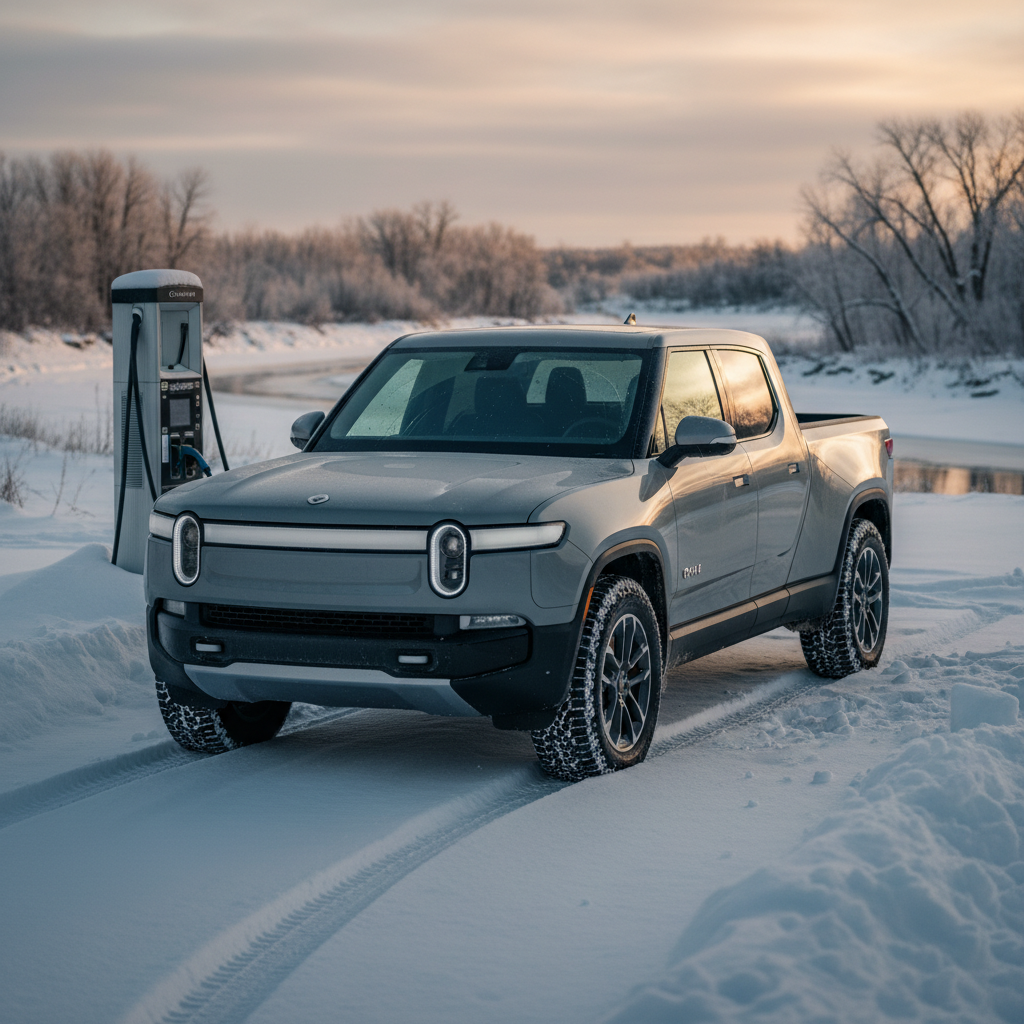
When you ask, “How long does it take to charge an EV at home?” you’re really asking a few different questions at once: Which outlet are you using? How big is your battery? How empty is it? This guide breaks all of that down into simple, real-world numbers so you know what to expect in your own driveway or garage.
The short answer
Home charging basics: Level 1 vs Level 2
Before you can estimate how long it takes to charge an EV at home, you need to know which charging level you’re using. Almost all home setups fall into two buckets: Level 1 (standard 120V outlet) and Level 2 (240V circuit, like an electric dryer).
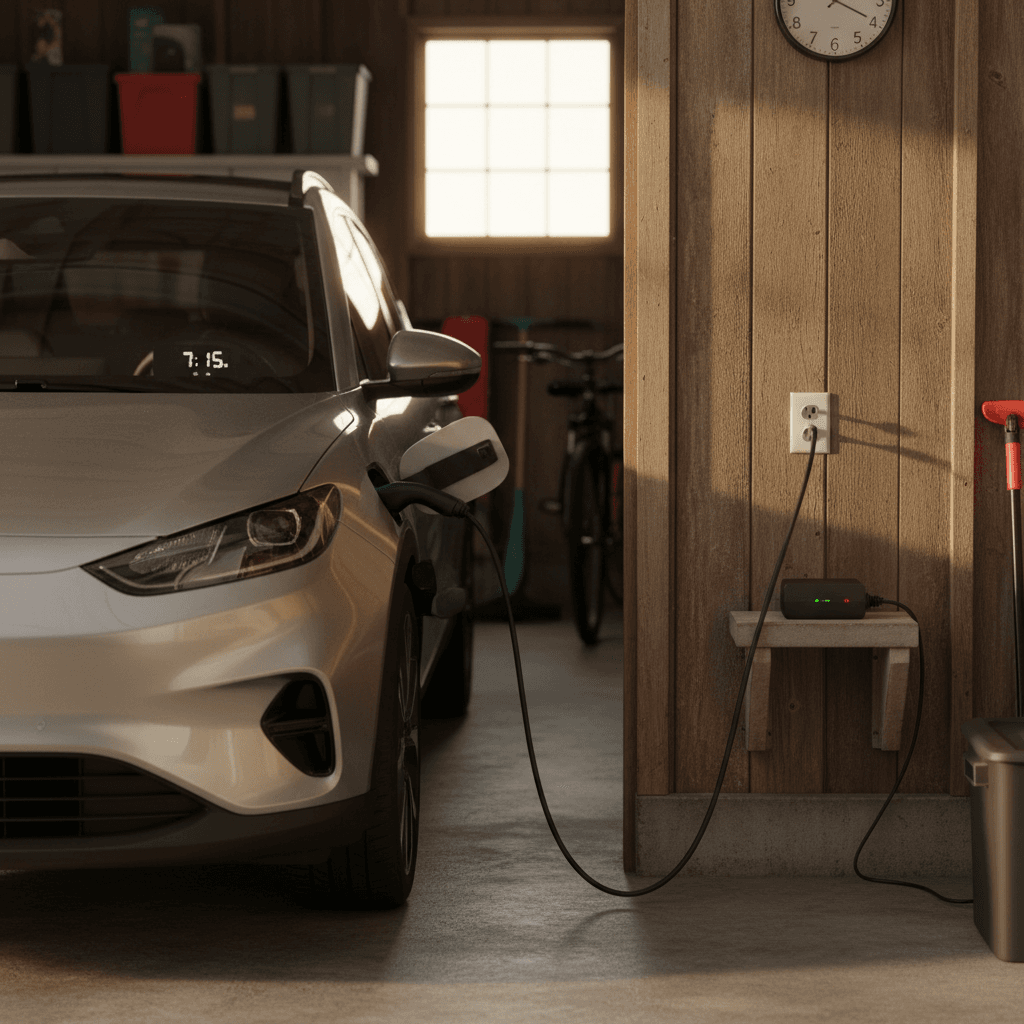
- Level 1 (120V) – Uses a regular household outlet with the portable charger that usually comes with the car. Adds roughly 3–5 miles of range per hour of charging.
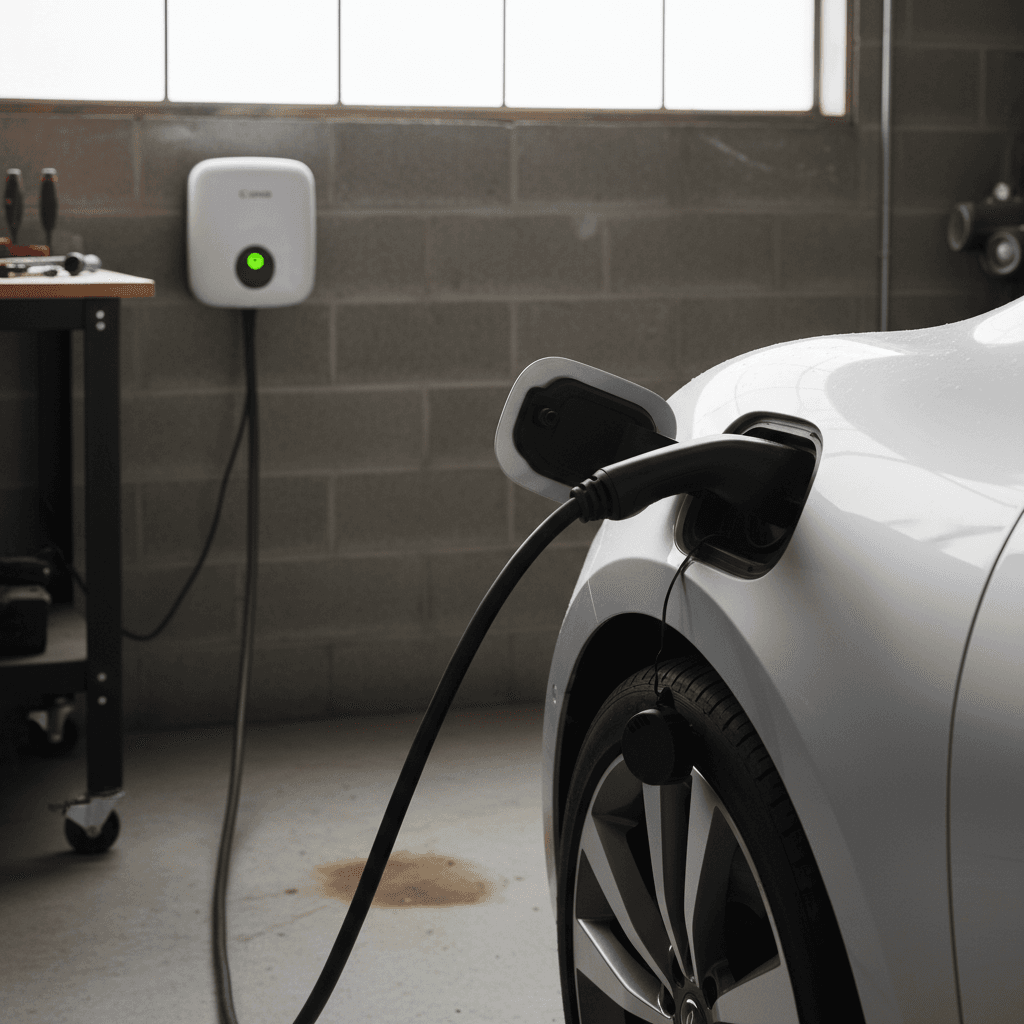
- Level 2 (240V) – Uses a dedicated 240V circuit and a wall-mounted or plug-in EV charger. Adds roughly 20–40 miles of range per hour of charging, depending on the charger and your car.
Think in miles per hour, not 0–100%
When Level 1 is usually enough
- You drive less than about 40–50 miles per day.
- You can leave the car plugged in for 10–12 hours overnight.
- You don’t mind slower "topping up" instead of fast refills.
When Level 2 makes life easier
- You regularly drive 60+ miles per day.
- More than one EV shares the same driveway.
- You want to recover big chunks of range in just a few hours.
Typical home charging times by battery size
Every EV is different, but you can get very close with some ballpark numbers. Below are typical charging times at home assuming the car can use the full power of the charger. Real-world times will vary a bit, but this will get you in the right neighborhood.
Approximate home charging times by battery size
These examples assume you’re charging from about 10% to 80%, which is how most drivers actually charge day to day. Full 0–100% charges take longer, especially the last 10–20%.
| Battery size (usable kWh) | Example vehicle type | Charging level | Miles of range added per hour* | Time 10% → 80% | Time 20% → 100% |
|---|---|---|---|---|---|
| 50 kWh | Smaller hatchback / sedan | Level 1 (120V) | 3–5 mi/hr | ~12–18 hours | ~16–24 hours |
| 50 kWh | Smaller hatchback / sedan | Level 2 (7 kW) | 25–30 mi/hr | ~4–5 hours | ~6–7 hours |
| 75 kWh | Typical compact SUV | Level 1 (120V) | 3–5 mi/hr | ~18–24 hours | ~24–36 hours |
| 75 kWh | Typical compact SUV | Level 2 (7–9 kW) | 25–35 mi/hr | ~6–8 hours | ~8–11 hours |
| 100 kWh | Larger SUV / performance EV | Level 1 (120V) | 3–5 mi/hr | ~24–36 hours | ~36–48 hours |
| 100 kWh | Larger SUV / performance EV | Level 2 (9–11 kW) | 30–40 mi/hr | ~8–10 hours | ~10–14 hours |
Use this table as a guide, then adjust based on your own driving and charger setup.
Why your last 10–20% takes longer
What actually affects how long home charging takes?
Two EVs plugged into the same home charger can charge at very different speeds. That’s because charging time isn’t just about the charger, it’s also about the car and your electrical service.
Main factors that change your home charging time
Same outlet, very different results depending on your EV and home setup.
Battery size
Larger batteries (75–100 kWh) simply take longer to fill than smaller ones. Think of it like fueling a pickup vs a compact car with a small tank.
Onboard charger limit
Your EV has an internal AC charger with a max power rating (e.g., 7.2 kW, 11 kW). Even if your wall unit can go faster, your car may cap the speed.
Circuit amperage
A 40-amp Level 2 circuit usually delivers about 9.6 kW; a 32-amp circuit closer to 7.7 kW. Lower amps = slower charging.
Household voltage
Most U.S. homes run at 120/240V. Actual voltage at your panel can vary slightly, which nudges your real charging rate up or down.
Battery temperature
In very cold or very hot weather, your EV may use energy to heat or cool the battery and may reduce charging power to protect it.
Starting state of charge
Charging from 20% to 70% is usually faster than 80% to 100%. The closer you get to "full," the more the car tapers the power.
Your utility plan matters too
How to estimate your own home charging time
You don’t need a spreadsheet to answer "how long to charge an EV at home" for your specific situation. A quick back‑of‑the‑envelope estimate gets you surprisingly close.
Quick 5‑step charging time estimator
1. Find your battery size (kWh)
Look in your owner’s manual, driver display, or a quick web search for your exact model and year. Note the usable battery capacity if it’s listed.
2. Check your home charger power (kW)
For Level 2, multiply volts × amps × 0.8 (for continuous load). Example: 240V × 40A × 0.8 ≈ 7.7 kW. For Level 1, most EVs pull about 1.4 kW from a 120V outlet.
3. Estimate your car’s AC limit
Search your model’s "onboard charger" spec. If your car has a 7.2 kW onboard charger and your wall unit can do 11 kW, your real max is 7.2 kW.
4. Decide how much charge you need
Are you going from 30% to 80%? That’s 50% of your battery. Multiply 0.5 × your battery kWh to get how many kWh you need to add.
5. Do the simple math
Divide kWh needed by your effective charging power. If you need 25 kWh and your car can charge at 7.2 kW, 25 ÷ 7.2 ≈ 3.5 hours.
Rule-of-thumb shortcut
Choosing the right home charging setup for your life
You don’t need the biggest, baddest home charger on the market. You need the one that fits your driving. Here’s how to match "how long to charge an EV at home" with how you actually live.
Home charging recommendations by driving pattern
Light commuter (under 30 miles per day)
Level 1 charging from a standard 120V outlet is often enough if you can plug in every night.
Expect 8–12 hours to comfortably refill your daily driving.
Level 2 is still nice to have if you plan more road trips or share the outlet with another EV.
Typical driver (30–70 miles per day)
A 32–40 amp Level 2 charger (7–9 kW) hits the sweet spot.
You’ll usually recover a full day’s driving in 2–4 hours each evening.
Overnight 10–80% top‑ups are effortless even on busier weeks.
Heavy driver or multiple EV household
Consider a 40–50 amp Level 2 unit if your car supports it and your panel can handle it.
You may want scheduling features so both EVs can share the circuit overnight.
Aim for at least 30+ miles of range per hour to keep everyone topped up.
Apartment or shared parking
Start with a high‑output Level 1 (if allowed) or a portable Level 2 you can use with existing 240V outlets.
Look for workplace or nearby public Level 2 to supplement home charging.
If installing hardware isn’t an option, plan around a mix of slower home charging and occasional DC fast charging.
Don’t forget about panel capacity
Charging overnight, electricity cost, and daily routines
Most EV owners quickly stop worrying about exact hours and start thinking in terms of routines: plug in at night, wake up to plenty of range. Still, it helps to understand how your charging time and electricity cost play together.
Home charging: time and cost snapshot
Scheduling to save money
If your utility has cheaper rates at night, use your EV’s built‑in scheduler or your smart charger’s app to start charging after off‑peak hours begin. Your charge time won’t really change, but your bill will go down.
Why "full" isn’t the goal
For daily driving, many manufacturers recommend charging to around 80–90% instead of 100% to support long‑term battery health. That also shortens how long you need to be plugged in each night.
Does a used EV charge more slowly at home?
If you’re considering a used EV, you might wonder whether an older battery means longer home charging times. The answer is, "not usually in a way you’ll notice", but it does change how much energy you can store.
Battery age vs charging time
Where condition really matters is in planning your range and charging habits. A healthy used battery will still charge predictably overnight. A battery with significant degradation might still charge at the same rate, but you’ll have fewer total miles to work with between charges.
How Recharged helps with used EV charging expectations
Ready to find your next EV?
Browse VehiclesHome EV charging time: FAQ
Frequently asked questions about how long it takes to charge an EV at home
Key takeaways: How long to charge an EV at home
If you remember only one thing about how long it takes to charge an EV at home, let it be this: match your charging setup to your life. A standard outlet can absolutely work for shorter commutes and patient drivers, while a simple Level 2 charger turns overnight into plenty of range for almost any schedule.
As you shop for your first, or next, EV, don’t just look at the window sticker range. Consider your daily miles, your home’s wiring, and how long you’re parked each night. If you’re exploring used EVs, Recharged’s battery health reports and EV‑specialist support can help you understand exactly what home charging will look like with each vehicle, so your new electric routine fits seamlessly into the life you already live.