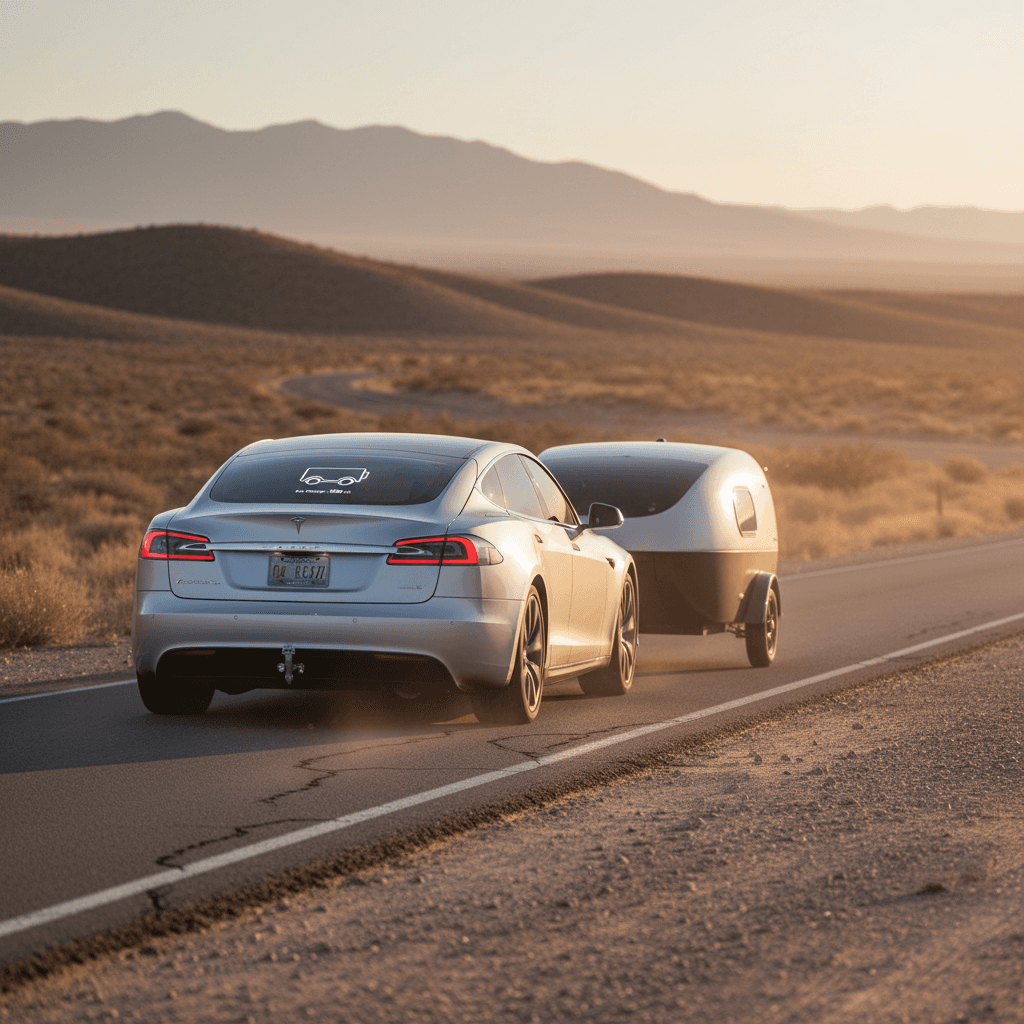
Towing with a Tesla Model S sounds like the ultimate EV party trick: silent torque, instant power, and no gas stops. But once you add a trailer, the two questions that matter most are simple: how much can it tow, and how much range will you lose? This guide breaks down Tesla Model S towing capacity and real‑world range loss so you can decide whether hitching up is a good idea for your trips.
Quick takeaway
Can a Tesla Model S Actually Tow a Trailer?
The first thing to understand is that not every Tesla Model S is tow-rated. For years, Tesla sold the Model S in North America without an official tow rating or factory hitch, even though the platform is mechanically capable of pulling a trailer. Towing was officially supported in some European markets, where a factory tow package and rating were offered, but remained unofficial in the U.S. for a long time.
- Early North American Model S cars: no official tow rating, no factory hitch (aftermarket only).
- European‑market Model S: available factory tow package with a rated capacity (varied by year and trim).
- Later Long Range / Plaid cars: still not widely tow‑rated in North America as of mid‑2020s, but owners frequently use quality aftermarket hitches for light trailers and bike racks.
Warranty & legality reminder
Tesla Model S Towing Capacity by Year and Package
Because Tesla has changed its lineup so often, it helps to think in broad groups instead of obsessing over every year. Here’s how Model S towing capacity generally breaks down where it’s officially rated:
High-Level Tesla Model S Towing Capacity Overview
Approximate braked trailer capacities for tow-rated Model S configurations in markets where Tesla provided official numbers. Always confirm for your exact car and country.
| Configuration | Region (Typical) | Approx. Braked Tow Rating | Tongue Weight (Typical) | Notes |
|---|---|---|---|---|
| RWD / early AWD with factory tow | Mainly Europe | ~1,600–1,850 kg (3,500–4,080 lb) | ~75–90 kg (165–200 lb) | Official tow package required |
| Later Dual Motor Long Range with tow | Selected markets | Up to ~1,600–1,800 kg (3,500–3,970 lb) | ~90 kg (200 lb) | Check VIN and owner’s manual |
| Plaid with tow (where offered) | Very limited | Similar to Long Range in some markets | ~90 kg (200 lb) | Less common, performance‑oriented model |
| North American Model S (no tow rating) | U.S. / Canada | 0 lb official rating | N/A | Aftermarket hitches used at owner’s risk for light duty |
These figures are for tow‑equipped, tow‑rated cars only. Non‑rated North American models may legally be considered to have zero tow capacity.
Don’t forget payload
How Towing Affects Tesla Model S Range
EVs shine around town, but at highway speeds with a trailer, aerodynamics turn into the main villain. With a Tesla Model S, range loss while towing is mostly about pushing a bigger, boxier shape through the air, not just the weight you’re pulling.
Why Towing Slashes Model S Highway Range
Weight matters, but wind resistance matters more once you’re above 50 mph.
Aerodynamic drag
Higher steady load
Hills and regen limits
Typical range loss bands
Real-World Tesla Model S Towing Range Examples
Because Tesla doesn’t publish detailed towing range charts, your best guide is real‑world patterns. The exact numbers vary by battery size, speed, weather, and trailer shape, but here are realistic ballparks for a healthy long‑range Model S pack on flat-ish highways in mild weather.
Illustrative Tesla Model S Towing Range Scenarios
Approximate highway range estimates for a long‑range Tesla Model S at 65 mph starting from an EPA‑rated 350‑mile range. These are not guarantees, use them as directional planning tools, then add a safety buffer.
| Trailer Type & Size | Approx. Trailer Weight | Estimated Range Loss | Usable Highway Range (350 mi baseline) | Notes |
|---|---|---|---|---|
| Low, single‑axle utility trailer with bikes or gear | 1,000–1,500 lb | 25–35% drop | ~225–260 miles | Keep load low in the trailer; avoid tall items. |
| Small teardrop or compact camping trailer | 1,500–2,000 lb | 40–50% drop | ~175–210 miles | Rounded shape helps but frontal area still adds drag. |
| Boxy 6x10 cargo trailer, medium load | 2,000–2,500 lb | 50–60% drop | ~140–175 miles | Tall, flat front hurts efficiency badly at 65–70 mph. |
| Short, lightweight boat on low trailer | 1,500–2,000 lb | 30–45% drop | ~190–245 miles | Surprisingly efficient if the bow sits low behind the car. |
| Overloaded, tall camper at 70+ mph | 3,000+ lb | 60%+ drop | < 140 miles | Easy to run into charging and thermal limits, avoid pushing this edge. |
Assumes starting from 100% charge, no extreme temperatures or strong headwinds, and conservative driving. Always plan with extra margin.
How to reality‑check these numbers
7 Big Factors That Increase Range Loss While Towing
If you understand what hurts efficiency, you can make smarter choices about trailers, routes, and speed. These are the biggest range killers when you’re towing with a Model S:
- Speed: Drag rises roughly with the square of speed. Jumping from 60 mph to 75 mph with a trailer can feel like falling off a range cliff.
- Trailer shape: A tall, flat‑front box is the worst case. A low, rounded, teardrop‑style trailer is much friendlier to your battery.
- Trailer weight: Less critical than shape at highway speeds, but still matters on hills, starts, and stops.
- Headwinds and crosswinds: A 20 mph headwind at 65 mph is like driving 85 mph as far as the air is concerned.
- Elevation changes: Climbing long grades with a trailer can gulp energy; you’ll get some back on the way down, but never all of it.
- Temperature: Very cold or very hot weather makes the battery and cabin conditioning systems work harder, stacking losses on top of the trailer penalty.
- Driving style: Hard accelerations, late braking, and constant lane‑changing all limit your ability to nurse range while towing.
Cold weather compounds towing losses
How to Estimate Your Tesla Model S Range When Towing
You don’t need a PhD in aerodynamics to get a useful towing range estimate. Use this simple framework to get in the ballpark, then refine it with a test drive.
5-Step Range Estimation Shortcut
1. Start from your solo highway range
Think about your real‑world highway range without a trailer, not the brochure number. If you usually see about 280 miles at 70 mph from a full charge, use that.
2. Classify your trailer
Is it low and sleek (bikes, kayaks, teardrop), medium (small camper), or tall and boxy (cargo trailer)? That category will tell you roughly how big a hit to expect.
3. Apply a realistic loss factor
As a starting point: subtract ~30% for low trailers, ~40–50% for compact campers, and ~50–60% for tall boxy trailers at normal highway speeds.
4. Add a safety buffer
After applying the factor, take another 10–15% off the result to build in a buffer for headwinds, traffic, or detours. This is your planning range between fast charges.
5. Confirm with a shakedown run
Before a long trip, do a 50–60 mile test drive at your intended speed, fully loaded. Use the observed Wh/mi to refine your planning range.
Example: Small camper trailer
Say your Model S typically gets 280 miles at 70 mph solo. You hook up a compact teardrop camper.
- Apply a 45% range loss: 280 × 0.55 ≈ 154 miles.
- Add a 15% safety margin: 154 × 0.85 ≈ 131 miles.
You’d plan Supercharger hops of about 120–130 miles between charges, not the 200–220 you might do without the trailer.
Example: Low utility trailer
Same 280‑mile solo range, but this time it’s a low, single‑axle utility trailer with bikes.
- Apply a 30% range loss: 280 × 0.70 ≈ 196 miles.
- Add a 10–15% buffer: ~170–175 miles practical.
Now you can comfortably plan legs in the 160–170 mile range, assuming friendly weather and terrain.
Charging and Route Planning When Towing a Trailer
Towing doesn’t just shrink your range; it also changes how you use public charging. With a Model S and a trailer, the most comfortable trips come when you plan around charger layout and shorter hops.
Smart Charging Strategies While Towing
Plan like a pilot, not a passenger: assume things will go a little bit wrong and you’ll be ready when they do.
Prioritize pull‑through access
Shorter, more frequent stops
Use preconditioning & scheduling
Trailer management at chargers
If your trips regularly take you beyond the Supercharger network or into rural areas, you’ll also want a good handle on Level 2 public charging and backup options at campgrounds or RV parks. Slower charging can still be perfectly workable when you’re parked for the night anyway.
Towing Safely With a Tesla Model S
EVs are naturally good tow vehicles in some ways, their instant torque, low center of gravity, and strong regenerative braking all help. But the Model S is still a unibody sedan, not a three‑quarter‑ton pickup, and it has limits you should respect.
Essential Safety Checks Before You Tow
Confirm your tow rating
Verify in your owner’s manual or official documentation that your Model S is actually rated to tow in your market, and what the maximum trailer and tongue weights are.
Weigh trailer and tongue load
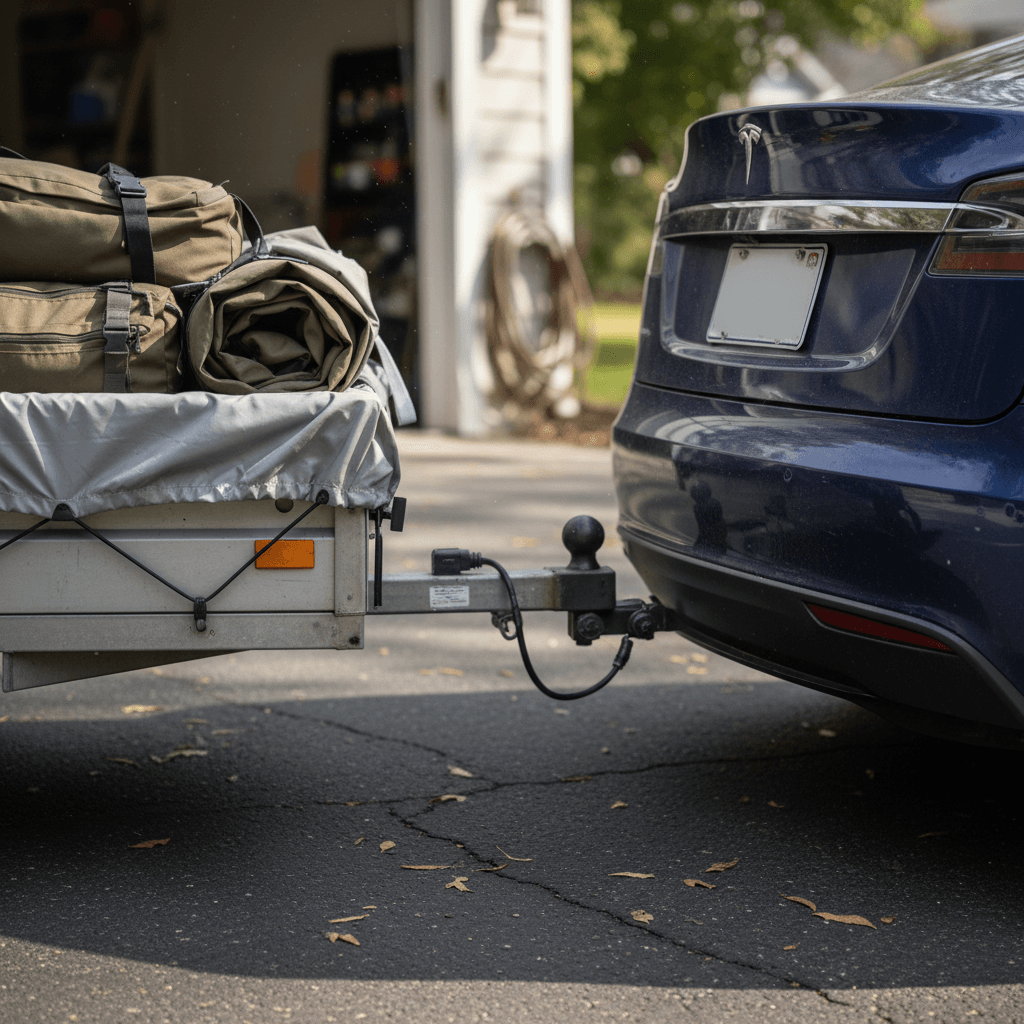
Don’t guess. Use a scale at a truck stop or RV dealer to confirm total trailer weight and tongue weight, and keep tongue weight within both hitch and vehicle specs.
Balance the load carefully
Aim for about 10–15% of the trailer’s weight on the tongue for stability, with heavy items centered low over the axle and properly secured.
Check brakes and lights
If your trailer has its own brakes, make sure the controller is set up correctly and test everything, lights, breakaway cable, wiring, before you hit highway speeds.
Watch temperatures and warnings
On long pulls or hot days, keep an eye on vehicle alerts. If the car suggests reducing speed or taking a break to cool, listen to it.
Know when a Model S isn’t enough
Buying a Used Tesla Model S for Towing
If you’re shopping used specifically because you want a Model S that can tow, you’ve got a narrower target than a typical used‑EV buyer. You’re balancing three things: tow capability, battery health, and overall condition.
1. Verify tow history and hardware
- Look for a properly engineered hitch (factory or high‑quality aftermarket), not a random bolt‑on.
- Inspect for signs of over‑towing: worn suspension bushings, sagging ride height, or damage around the hitch mounting points.
- Ask the seller how often and how heavy they towed. Frequent heavy towing ages components faster.
2. Focus on battery health and efficiency
- A tired battery shrinks your solo range, and a short solo range becomes very short once you add a trailer.
- Review real‑world Wh/mi history if available, not just the displayed rated range.
- On Recharged, every used EV comes with a Recharged Score battery health report, so you can see how much of the original capacity remains before you bet on a towing‑heavy lifestyle.
How Recharged can help
Ready to find your next EV?
Browse VehiclesTesla Model S Towing Capacity & Range Loss FAQ
Frequently Asked Questions About Tesla Model S Towing
Bottom Line: Is Towing With a Tesla Model S Worth It?
Towing with a Tesla Model S is absolutely possible, and often surprisingly pleasant, when you work within the car’s limits and adjust your expectations. You’ll give up a big chunk of range, especially with a tall trailer at highway speeds, and you’ll need to plan your charging stops more carefully than you would on a simple solo road trip. But if you pick a sensible trailer, pay attention to weight and aerodynamics, and do a shakedown run before that big vacation, the Model S can be a capable, quiet, and efficient tow partner for lighter duty.
If you’re shopping the used market, take battery health and tow history seriously. A strong pack and a clean, well‑installed hitch matter more than a specific badge on the trunk. On Recharged, every used EV, including Tesla Model S listings, comes with a Recharged Score battery health report and expert EV guidance, so you can decide whether a particular car, and your towing plans, are a good match before you ever hook up a trailer.