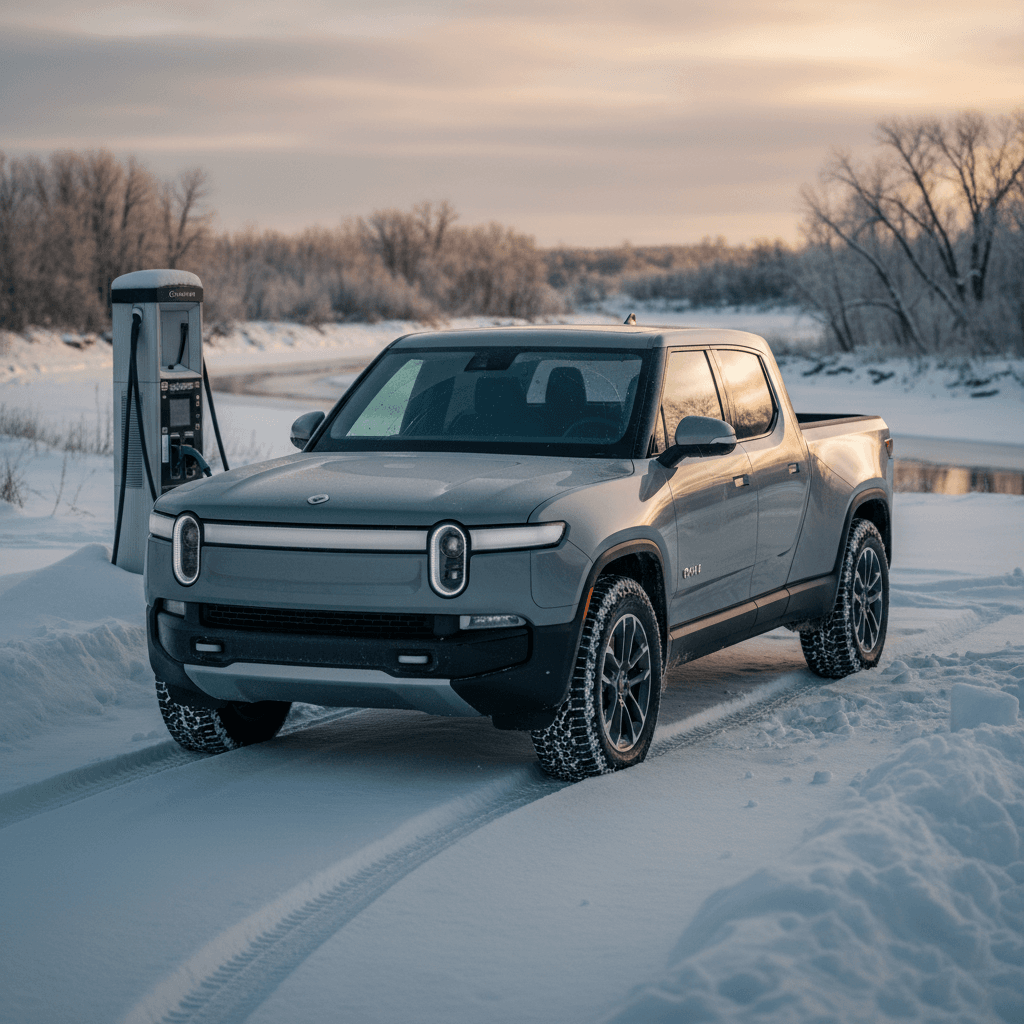
If you live somewhere with real winter, the Rivian R1T’s glossy EPA range numbers feel about as relevant as a sunscreen commercial in January. Your question isn’t “What’s the rating?”, it’s “How far will this thing really go when it’s 10°F, dark at 4:30 p.m., and I’ve got skis, kids, and a headwind?” This guide unpacks Rivian R1T range in cold weather using instrumented tests, owner data, and EV know‑how, then gives you practical tools to make winter range a non‑issue rather than a recurring panic attack.
Quick take
Why cold weather hits Rivian R1T range so hard
All EVs lose range in winter, but the R1T starts with a few strikes against it: it’s tall, heavy, and about as aerodynamic as a ski lodge. Understanding why range drops will help you decide what you can, and can’t, control.
Three reasons your R1T shrinks in winter
Thermodynamics doesn’t care what you paid for the truck
Cold batteries are less efficient
Cabin heat is energy‑hungry
Winter driving conditions add drag
Don’t chase 0–60 when it’s 10°F
Rivian R1T EPA range vs real-world winter range
On paper, the R1T is a long‑legged truck. Dual‑motor models with the Large Pack are rated around 350 miles of EPA range, while Max Pack trucks land around 400–410 miles depending on wheels and options. Quad‑motor versions with the Large Pack sit lower, in the low‑to‑mid‑300s. Those numbers assume mild conditions, modest speeds, and no snow tires, basically, not your life in January.
EPA range vs typical winter reality (high‑level view)
Instrumented tests and owner reports tell a consistent story: in mild conditions, highway range already trails EPA, even before you add winter to the mix. In one well‑documented 75‑mph test, a Quad‑Motor Large Pack R1T on 20‑inch all‑terrain tires managed only about 220 miles from full to empty, roughly two‑thirds of its rating. Swap to 22‑inch all‑season tires and the same powertrain stretched closer to 280 miles. Now overlay 20°F ambient temps and constant heater use, and you can see how 350 miles becomes 230 pretty quickly.
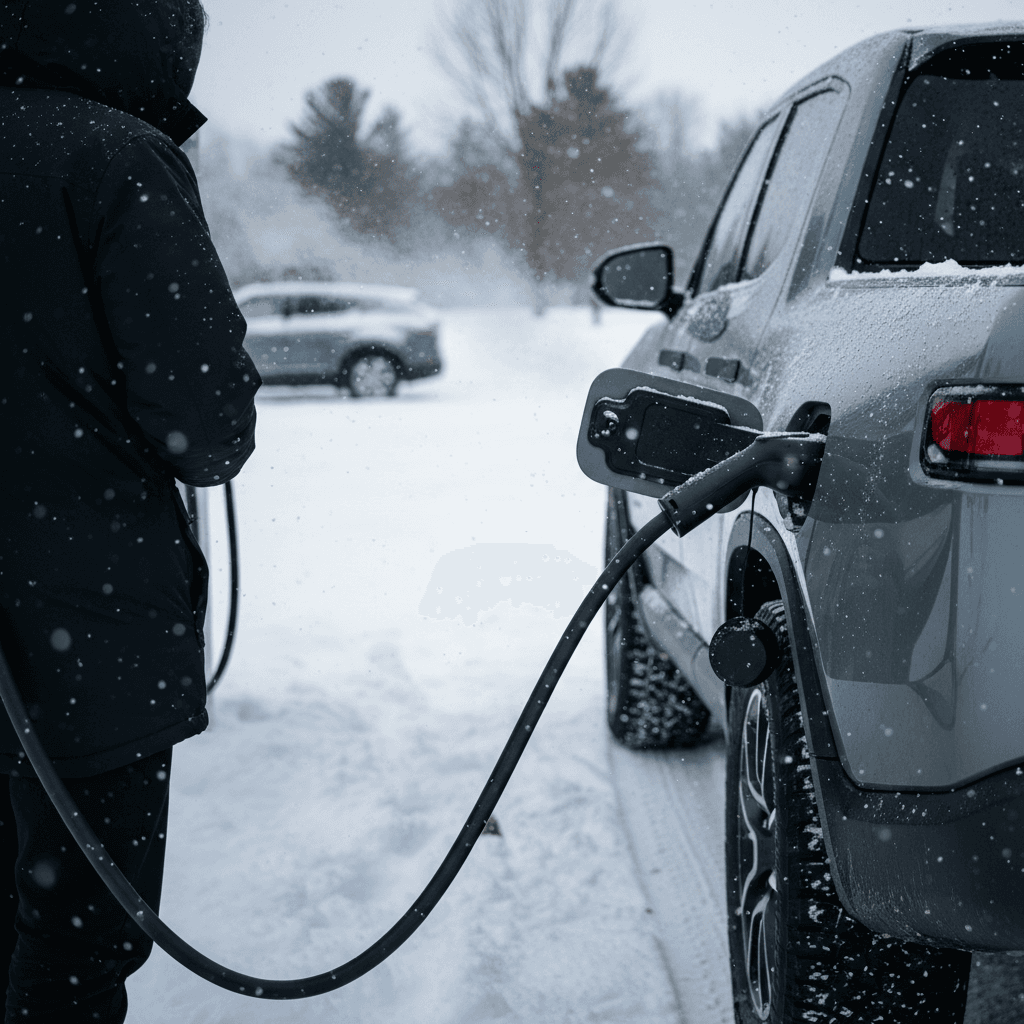
Typical Rivian R1T cold-weather range scenarios
Let’s translate the theory into something you can actually plan around. Below are ballpark expectations for a healthy R1T on all‑season or mild all‑terrain tires, driven reasonably, with the battery preconditioned when possible. Treat these as conservative planning numbers, not promises.
Rivian R1T range in common winter scenarios
Approximate usable highway range from 100% to near empty for a healthy truck. Real‑world results vary by tires, speed, elevation, and wind.
| Scenario | Pack & setup | Temp & conditions | Expected usable range |
|---|---|---|---|
| Cool, not brutal | Dual‑Motor Large Pack on 21" road tires | 25–40°F, dry roads | ~260–280 miles (about 15–25% below EPA) |
| Real winter highway run | Dual‑Motor Large Pack on 21" or 22" tires | 5–25°F, heater on, some wind | ~220–250 miles (20–35% below EPA) |
| Max Pack road trip | Dual‑Motor Max Pack on 21" road tires | 10–30°F, mostly highway | ~270–320 miles (25–35% below EPA) |
| Quad‑Motor + A/T tires | Quad‑Motor Large Pack on 20" all‑terrains | 0–25°F, snowbelt interstate | ~180–220 miles (30–40% below EPA) |
| Short-hop city driving | Any pack, mixed urban/suburban | 0–25°F, many cold starts | Often feels like 120–180 miles from full; efficiency can fall below 2.0 mi/kWh |
Assumes steady 65–70 mph, light cargo, and sensible climate use.
How to sanity‑check your own truck
The biggest factors that kill R1T range in winter
What really eats range on a cold day?
Some you can fix, some you can only plan around
Cold-soaked battery
Aggressive cabin heating
Speed and wind
Elevation, snow, and slush
Drive mode & torque split
Tires and wheels
How to plan trips in your R1T when it’s cold
A big battery plus fast DC charging makes the R1T a solid road‑trip truck, even in the dead of winter, if you plan like an EV driver, not a gas driver. That means baking in winter penalties up front instead of hoping the state‑line welcome center has a magic extension cord.
Cold‑weather trip planning checklist for R1T owners
1. Cut your EPA range by at least 25%
Whatever your truck’s rated range is, assume <strong>75% of that</strong> as your working number for 0–30°F trips. If you’re running 20" all‑terrains, driving 75+ mph, or facing sub‑zero temps, budget closer to 50–60% of EPA just to be safe.
2. Use apps that understand EV winter range
Rivian’s built‑in navigation has improved at estimating consumption, especially when you enter a destination and let it plan charging. Third‑party apps like A Better Routeplanner (ABRP) also let you dial in temperature, speed, and safety buffers for more realistic results.
3. Arrive at fast chargers nearly empty, not half full
DC fast chargers are most effective when your battery is warm and at a lower state of charge. In winter, it’s often smarter to stop more frequently but briefly, say, from 10% to 55%, than to lumber from 40% to 90% on a cold pack.
4. Precondition before highway runs
Use the Rivian app or in‑car nav to warm the battery while you’re still plugged in. Starting a trip with a pre‑warmed pack improves both driving efficiency and DC charging speeds at your first stop.
5. Watch elevation and weather, not just distance
A route that’s 180 miles on flat ground can be trivial; the same 180 miles over a mountain pass at 15°F with a headwind may require an extra charging stop. Zoom out, check topography, and read the weather forecast like a pilot.
6. Keep a healthy buffer in real winter
In true snowbelt conditions, aim to reach chargers with <strong>20–25%</strong> remaining, not 5–10%. If a charger is down or backed up, that buffer is your safety margin, not wasted range.
Don’t count on Level 2 in the middle of nowhere
Driving and climate settings that actually help range
Smart use of drive modes
- Conserve mode: Great for clear highways. It runs primarily on the front motors and drops the ride height, trimming drag and consumption. Don’t use it if roads are slick enough that you regularly see wheelspin, the stability trade‑off isn’t worth a few miles of range.
- Snow mode: Calms throttle response, tweaks ABS/traction logic, and optimizes the air suspension for grip. It’s designed for plowed, wintry roads, not off‑roading. Expect a small efficiency penalty versus Conserve, but a big gain in stability.
- All‑Purpose mode: Your default for mixed conditions. In deep snow or icy backroads, you may also lean on Off‑Road modes, accepting higher consumption in exchange for control.
Climate control without the range hangover
- Preheat while plugged in: Use scheduled departure or remote start to warm the cabin and battery from shore power, not the high‑voltage pack.
- Trust the seats and wheel: Heated touch‑points use far less energy than cranking cabin temp. You’ll feel warmer at a 68–70°F setpoint with seats on high than at 75°F without them.
- Use Defrost strategically: Full defrost is a kW hog. Run it to clear the glass, then switch back to a normal airflow pattern and lower fan speed.
- Recirculate when appropriate: On very cold, dry days, recirculation can reduce how much frigid air the HVAC must heat. Avoid it when the cabin is damp and windows start to fog.
A simple cold‑start ritual
Protecting your R1T’s battery health in winter
Winter range loss often gets conflated with permanent battery degradation. They’re related but not the same. Cold‑weather inefficiency is mostly temporary. True degradation accrues slowly over years of cycling, fast charging, and high‑temperature exposure.
- Avoid storing the truck at 100% for long periods, especially in a heated garage. Daily driving is happiest in the 30–80% window.
- In deep cold, it’s actually better to leave the truck plugged in so the thermal management system can keep things within a safe band.
- Don’t stress about occasional DC fast charges in winter. If anything, brief fast charges on a cold day are less stressful than hammering the pack at high state of charge on a summer road trip.
- Use the energy screen and trip data to spot real issues: if your mi/kWh is consistently terrible in mild temps, not just in blizzards, it may be worth a checkup.
- If you’re shopping used, look for a documented history of regular charging and software updates, not a life spent at 0–100% yo‑yoing.
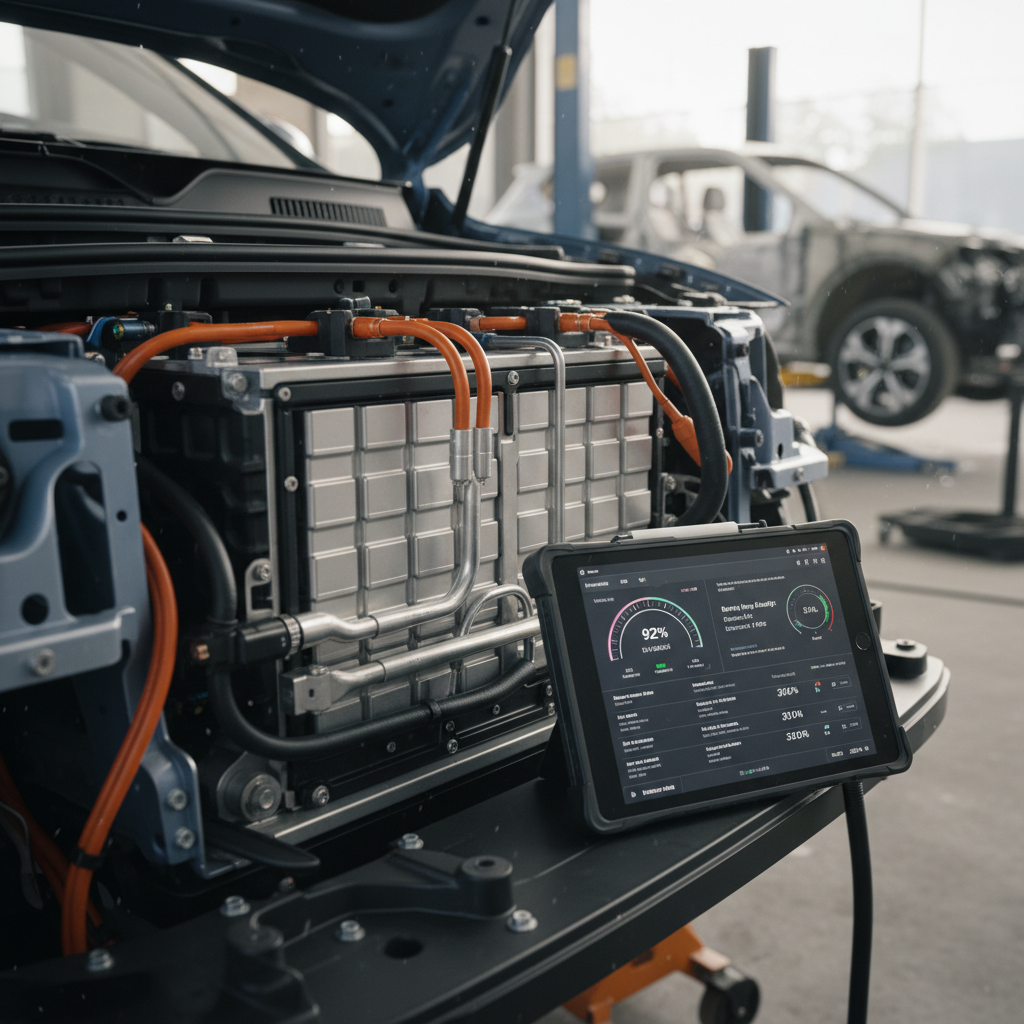
How Recharged checks winter‑ready battery health
Used Rivian R1T buyers: what winter range really means
If you’re shopping for a used Rivian R1T, winter range isn’t an abstract engineering question. It’s the difference between “this truck can replace my gas pickup year‑round” and “this was a very expensive three‑season toy.” The calculus changes a bit depending on which pack and motor configuration you’re eyeing.
Choosing the right R1T configuration for cold climates
What matters most if you live where snowplows have nicknames
Standard & Standard+ packs
Large Pack sweet spot
Max Pack as winter insurance
Where to shop and what to ask
Rivian R1T cold-weather range: FAQ
Frequently asked questions about R1T range in cold weather
Bottom line: is the R1T a good winter truck?
If you buy a Rivian R1T expecting the EPA label to hold true in January, you’ll be disappointed. If you buy it understanding that winter will shave a third off the range, but that you’re getting a wildly capable electric truck with superb snow manners and a giant battery to work with, you’ll be delighted. Set your expectations around realistic cold‑weather range, learn how to use preconditioning and drive modes, and you’ll find the R1T is one of the few EVs that feels more at home on a snowy backroad than under a palm tree.
And if you’re eyeing a used R1T, don’t guess. A Recharged specialist can help you pick the right pack and configuration for your climate, decode a truck’s Recharged Score battery report, and even arrange nationwide delivery right to your (icy) driveway. Winter isn’t a deal‑breaker for this truck, it’s the whole point.