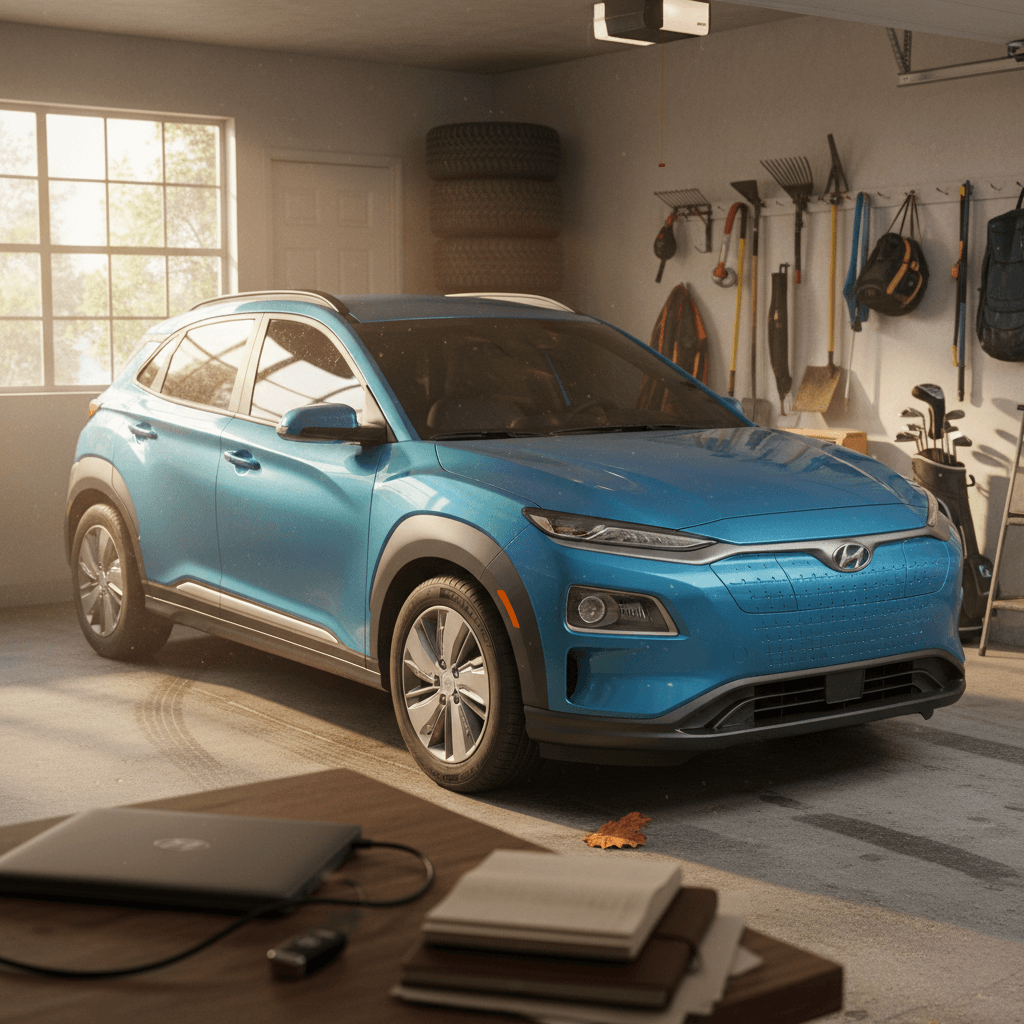
If you own a 2021 Hyundai Kona Electric, you’re holding one of the most efficient small EVs on the road, now sitting squarely in its high‑stakes resale years. Figuring out how to sell a 2021 Hyundai Kona Electric for the best value in 2026 means understanding not just mileage and trim, but battery health, warranty, and how skittish (or savvy) today’s used‑EV shoppers really are.
Quick take
Why 2021 Kona Electric value matters now
For early EV adopters, the Kona Electric was the sensible sweater in a closet of loud tech T‑shirts: not flashy, but shockingly efficient, compact, and practical. By 2026, your 2021 is five model years old, right when depreciation slows down and the car starts looking like a smart buy for second and third owners rather than a risky science project.
Hyundai Kona Electric value snapshot
What is a 2021 Hyundai Kona Electric worth in 2026?
Every car is its own little economy, but by 2026 there’s enough market data on the Kona Electric to speak in realistic ranges, not fantasy asking prices. On pricing sites and dealer lots, 2020–2021 Kona Electrics with the larger 64 kWh pack commonly show up with retail listings in the roughly $14,000–$19,000 band for average‑mileage SEL/Ultimate models, with trade‑in values a few thousand lower for the same cars in similar condition.
Typical 2021 Kona Electric value ranges (United States, 2026)
Illustrative ranges based on mainstream pricing guides, dealer listings, and Recharged market data. Your actual value will depend on your VIN, battery health, location, and condition.
| Condition & mileage | Likely sale channel | Typical price range | What this usually looks like |
|---|---|---|---|
| Excellent, under 30k miles | Retail / online marketplace | $17,000–$20,000 | One‑owner, clean history, strong battery health report, Limited trim may push top of range. |
| Good, 30k–60k miles | Retail or dealer CPO | $14,000–$18,000 | Normal wear, up‑to‑date maintenance, no major accidents, SEL or Limited. |
| Fair, 60k–90k miles | Dealer trade‑in / wholesale | $11,000–$15,000 | Higher miles, cosmetic flaws or prior minor damage; strong battery still helps. |
| High miles or issues | Auction / as‑is sale | $8,000–$12,000 | Prior damage, notable battery degradation, or warning lights; buyers will discount heavily. |
Use this as a starting point, then refine with a VIN‑specific appraisal and a battery health report.
Don’t anchor on asking prices
Key factors that shape your Kona Electric’s value
The 5 big levers on your 2021 Kona Electric’s value
You can’t change the model year, but you can influence almost everything else.
Mileage & use
Battery health
Accident & title history
Trim & options
Where you live
Sale channel
Battery health: the make‑or‑break number
In the EV resale world, range is the new compression test. The 2021 Kona Electric’s 64 kWh pack gained a reputation for excellent efficiency, owners regularly report real‑world range well beyond modest EPA figures, so any hint of serious degradation is a red flag for shoppers who’ve done their homework.
What most buyers quietly fear
How buyers judge your battery
- Displayed range vs. original: How full‑charge range compares to when the car was new.
- Any battery‑related recalls or repairs: Whether modules or the full pack have been replaced.
- Charging history: Lots of DC fast charging, always to 100%, makes some buyers nervous.
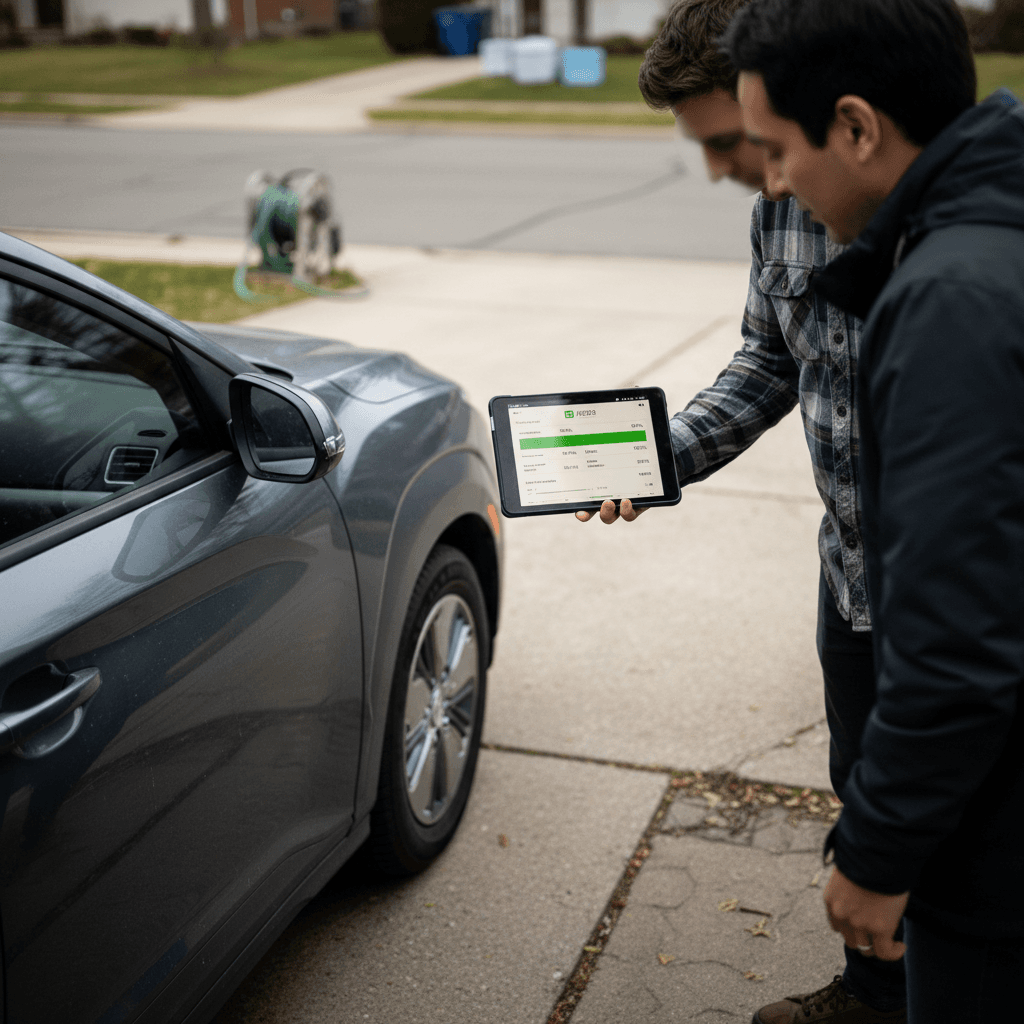
- Diagnostic reports: A third‑party or dealer report showing state of health (SOH) in %.
Why a battery report pays for itself
If your 2021 Kona Electric still shows healthy capacity, many do, documenting that fact can nudge a buyer from cautious to confident, and confidence shows up in the offer.
Every vehicle listed on Recharged includes a Recharged Score with verified battery diagnostics. That takes the guesswork (and haggling) out of what your pack is really worth.
Simple pre‑sale battery routine
Warranty and recalls: how they affect what buyers pay
Hyundai’s long warranties are a quiet asset when you go to sell. The 2021 Kona Electric came with a 10‑year/100,000‑mile battery warranty in the U.S. (for most private‑use vehicles). In 2026, that means a typical 2021 example still has several years of battery coverage left, reassuring for buyers who are stretching to get into an EV.
- If your Kona EV had a battery‑related recall or pack replacement, keep all documentation, some buyers will actually pay more for a car with a newer pack under warranty.
- Confirm with a Hyundai dealer which portions of the warranty are still transferable to the next owner; be ready to show that in writing.
- If the car was used commercially (rideshare, fleet), battery warranty terms may be shorter, which will tug values downward.
Be honest about recall history
Where to sell your 2021 Kona Electric
The 2021 Kona Electric is niche enough that where you sell it matters almost as much as the number on the window. Some outlets know and value small EVs; others just see a compact crossover with a weird fuel gauge.
Sale options for a 2021 Kona Electric
What you gain, and give up, with each route.
Private sale
Best for: Maximizing price if you’re patient and comfortable screening strangers.
- Often yields the highest sale price.
- Requires detailed listing, photos, and test drives.
- You handle paperwork, payment safety, and scams.
Traditional dealer trade‑in
Best for: Convenience when you’re already buying something else.
- Lowest friction; value applied straight to your next car.
- Trade‑in offers on EVs can be conservative.
- Dealers without EV expertise may undervalue battery health.
EV‑specialist platforms (like Recharged)
Best for: Balancing value, speed, and EV‑savvy buyers.
- Instant offer or consignment options for used EVs.
- Battery health verified with a Recharged Score.
- Nationwide buyer pool that actually searches for Kona Electrics.
How Recharged can help you sell
Ready to find your next EV?
Browse VehiclesHow to price your 2021 Kona EV confidently
Pricing a used EV is a bit like setting ticket prices for a small indie concert. Price too high and the room is empty. Price too low and you sell out fast, but leave money on the table. The goal is a number that attracts real buyers in the first two weeks while still rewarding you for taking care of the car.
Step‑by‑step: set a smart asking price
1. Start with guide values, not vibes
Run your VIN and mileage through at least two major pricing tools (KBB, Edmunds, etc.) and note retail and trade‑in targets for a 2021 Kona Electric in your condition.
2. Adjust for your trim and options
Limited trims, premium audio, and desirable colors can justify being toward the upper end of the range. A base SEL with basic equipment belongs closer to the middle.
3. Factor in battery health proof
If you have a recent, credible battery health report showing strong capacity, aim slightly higher than similar cars without documentation, buyers will pay for peace of mind.
4. Compare local listings honestly
Search for other 2020–2021 Kona Electrics within a few hundred miles. Ignore outliers and focus on actually pending or recently sold listings when you can see them.
5. Decide your floor and wiggle room
Pick a walk‑away number (your minimum) and list the car <strong>$500–$1,000</strong> above that for private sale. With dealers or instant offers, expect less room to negotiate.
6. Re‑evaluate if it sits
If you get no serious interest in 2–3 weeks, the market is telling you something. Drop in small increments, update your photos, or widen your search radius.
Use three numbers, not one
Prep checklist to boost your sale price
You can’t turn a Kona Electric into a Taycan with a sponge and a Saturday afternoon. But small, concrete steps will move your 2021 car toward the top of its value band, especially when buyers have multiple similar EVs bookmarked.
Pre‑sale prep for your 2021 Kona Electric
Document everything you can
Gather service records, recall paperwork, charging equipment receipts, and any battery diagnostics. Scan or photograph them so you can share easily with online shoppers.
Fix the cheap, visible stuff
Address burnt‑out bulbs, cracked windshield chips, curb‑rashed wheels, and disgusting floor mats. These don’t change the battery, but they absolutely color buyer perception.
Detail the interior like a pro
Deep‑clean cloth or leather, remove odors, scrub touchpoints, and clean the charge port area. EV buyers are often more tech‑oriented and picky about interior feel.
Stage great photos
Shoot in soft daylight with a clean background. Capture a full exterior walk‑around, interior front and back, instrument cluster with mileage, and close‑ups of wheels and tires.
Show the EV‑specific gear
Photograph the charge port open, included Level 1 or Level 2 cable, and any adapters. A simple labeled photo of what’s included reduces buyer anxiety and back‑and‑forth.
Clear warning lights first
If there are any warning lights or obvious issues, get them diagnosed before listing. "Needs nothing" is a powerful phrase in an EV listing, especially if it’s true.
Tax credits and paperwork to know about
From 2023 onward, many used‑EV buyers in the U.S. became eligible for a federal tax credit on qualifying used EVs, as long as the car met price caps, age rules, and a few other conditions. A 2021 Kona Electric bought under that program before late‑2025 could make your car more attractive, if the buyer is able to claim it and the deadlines still apply where they live.
What this means when you sell
- Used‑EV credits (when available) go to the buyer, not you, but they can underpin a stronger sale price.
- There are income limits, price caps, and date cutoffs. Don’t promise a credit; point buyers to official IRS guidance or a tax professional.
- Some local utility or state rebates still apply to used EVs; buyers may ask for documentation like a bill of sale and VIN.
Paperwork basics to get right
- Clean title in your name, or payoff letter from your lender if you’re still financing.
- Accurate odometer disclosure, bill of sale, and any state‑specific EV forms.
- Written note on what charging equipment and accessories are included.
If you sell through Recharged, our team walks you through lien payoff, title transfer, and delivery logistics so you’re not learning the process on the fly.
FAQ: 2021 Kona Electric resale and selling
Frequently asked questions about selling a 2021 Hyundai Kona Electric
Bottom line: should you sell your 2021 Kona Electric now?
If you bought a 2021 Hyundai Kona Electric when small EVs were still a curiosity, you now own a known quantity, quirks and all. Its story in the used market isn’t about flash; it’s about quiet competence, miserly energy use, and a battery that, when healthy, still punches above its weight. If you can document that health, present the car cleanly, and price it where real buyers live, you can sell your 2021 Hyundai Kona Electric for strong value in 2026 without feeling like you’re giving it away.
If you’d like help with pricing, battery diagnostics, or just avoiding the Craigslist circus, consider starting with an instant offer or consignment evaluation from Recharged. You’ll get a transparent Recharged Score battery report, expert guidance on value, and the option to have your 2021 Kona Electric marketed directly to shoppers who already know exactly what they’re looking for.