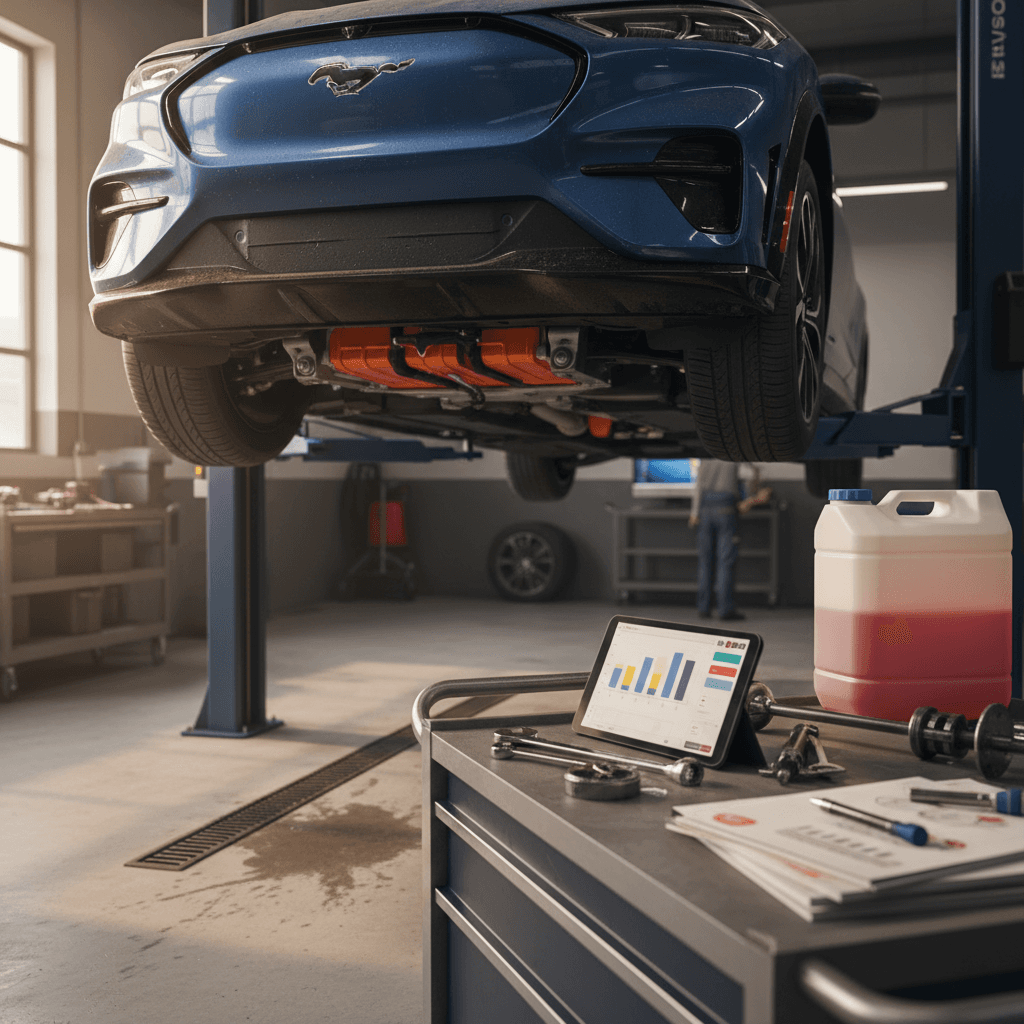
If you’re considering a Ford Mustang Mach-E in 2026, or you already own one, you’re probably asking a simple question: **what does Mach-E maintenance actually cost** compared with a gasoline SUV? The good news is that the Mach-E’s maintenance schedule is light, and real-world data shows its annual service costs are far lower than a comparable gas crossover. The trick is knowing where the money really goes, mainly **tires, brakes, and a few fluids**, so you can budget with confidence.
Quick takeaway
2026 Mustang Mach-E maintenance costs at a glance
Ford Mustang Mach-E maintenance cost snapshots (2026)
Independent cost-to-own tools for 2025–2026 model years peg **5‑year Ford Mustang Mach-E maintenance** in the ballpark of **$2,600–$4,100**, depending on trim, mileage, and where you live. That pencils out to low hundreds per year in the early years, ramping up later as tires, brake service, and fluid changes come due. For many owners, **your tire bill will be your single biggest maintenance expense.**
How much does Mustang Mach-E maintenance cost per year and per mile?
Typical annual maintenance cost in 2026
Looking across real‑world owner reports and cost‑to‑own calculators for recent model years, a realistic **post‑warranty annual maintenance budget** for a Mustang Mach-E in 2026 is:
- Conservative owner, modest miles (≤10k/year): about $350–$500 per year
- Average owner, 12k–15k miles/year: about $450–$650 per year
- High‑mileage or aggressive driving: $650+ per year, mainly from faster tire and brake wear
Cost per mile, not just per year
If you drive roughly 15,000 miles per year, that same budget works out to:
- About $0.02–$0.04 per mile in pure maintenance costs
- That’s typically **half or less** of what you’d spend to maintain a similarly‑sized gasoline SUV, thanks to no oil changes, no spark plugs, and far fewer moving parts.
Keep in mind this doesn’t include insurance, charging, or depreciation, just the service work you’ll pay a shop or dealer to do.
Think 5 years, not 12 months
Scheduled maintenance: what Ford actually requires
One reason the **Ford Mustang Mach-E maintenance cost in 2026** looks attractive is that Ford’s official schedule is simple. When you look at the 2023–2025 Mach-E maintenance guides, there’s **no engine oil, no timing belt, and no traditional transmission service** to worry about. Most of what Ford recommends comes down to inspections and a few wear or fluid items.
Core Mustang Mach-E scheduled maintenance items
These items appear consistently in Ford’s published maintenance schedules for recent Mach-E model years. Exact intervals can vary slightly by model year and market; always confirm with your owner’s manual.
| Service item | Typical interval (miles / time) | Notes |
|---|---|---|
| Multi-point inspection | Every 10,000 mi or 1 year | Visual check of brakes, suspension, steering, coolant level, and safety items |
| Tire rotation | Every 10,000 mi or 1 year | Crucial for even wear, especially on dual‑motor and performance trims |
| Cabin air filter | ~20,000 mi or 2 years | More often in dusty or urban environments |
| Brake system inspection | Every 10,000 mi or 1 year | Pads and rotors usually last longer than on gas SUVs thanks to regen |
| Brake fluid replacement | About every 3 years | Hydraulic fluid absorbs moisture over time; interval is time‑based |
| High‑voltage coolant service | Often 8–10 years / high mileage | Covers battery, inverter, and drive-unit cooling circuits; long‑interval item |
Key scheduled items that drive Mach-E maintenance cost, not including unplanned repairs.
Follow the manual, not myths
Common Mach-E service items and typical 2026 prices
Because the official schedule is lean, most of what you’ll spend in 2026 breaks down into a predictable set of items. Here’s what typical U.S. shop and dealer pricing looks like this year.
Typical 2026 Mustang Mach-E maintenance items and price ranges
Approximate U.S. retail pricing at independent shops and dealers; local labor rates and taxes will vary.
Tire rotation & inspection
Interval: ~10,000 miles / 1 year
Typical cost: $40–$90
Often free or discounted if bundled with other work or included in a tire purchase package.
Cabin air filter
Interval: ~20,000 miles / 2 years
Typical cost: $60–$150 installed
DIY owners can often do this for **$25–$40 in parts** with basic tools.
Brake fluid flush
Interval: about every 3 years
Typical cost: $150–$260
An easy item to neglect but important for consistent pedal feel and corrosion protection.
High-voltage coolant service
Interval: ~8–10 years / high mileage
Typical cost: $350–$800
Major service covering battery, motor, and power electronics cooling circuits; many 2021–2022 cars will hit this late this decade.
General inspection only
Interval: every year
Typical cost: $0–$150
Many dealers include multi‑point inspections with other work or as part of service specials.
Misc. wear items
Interval: As needed
Typical cost: Highly variable
Wiper blades, 12‑volt battery replacement, alignment corrections, or suspension bushings as mileage climbs.
Big-ticket items: tires, brakes, and coolant
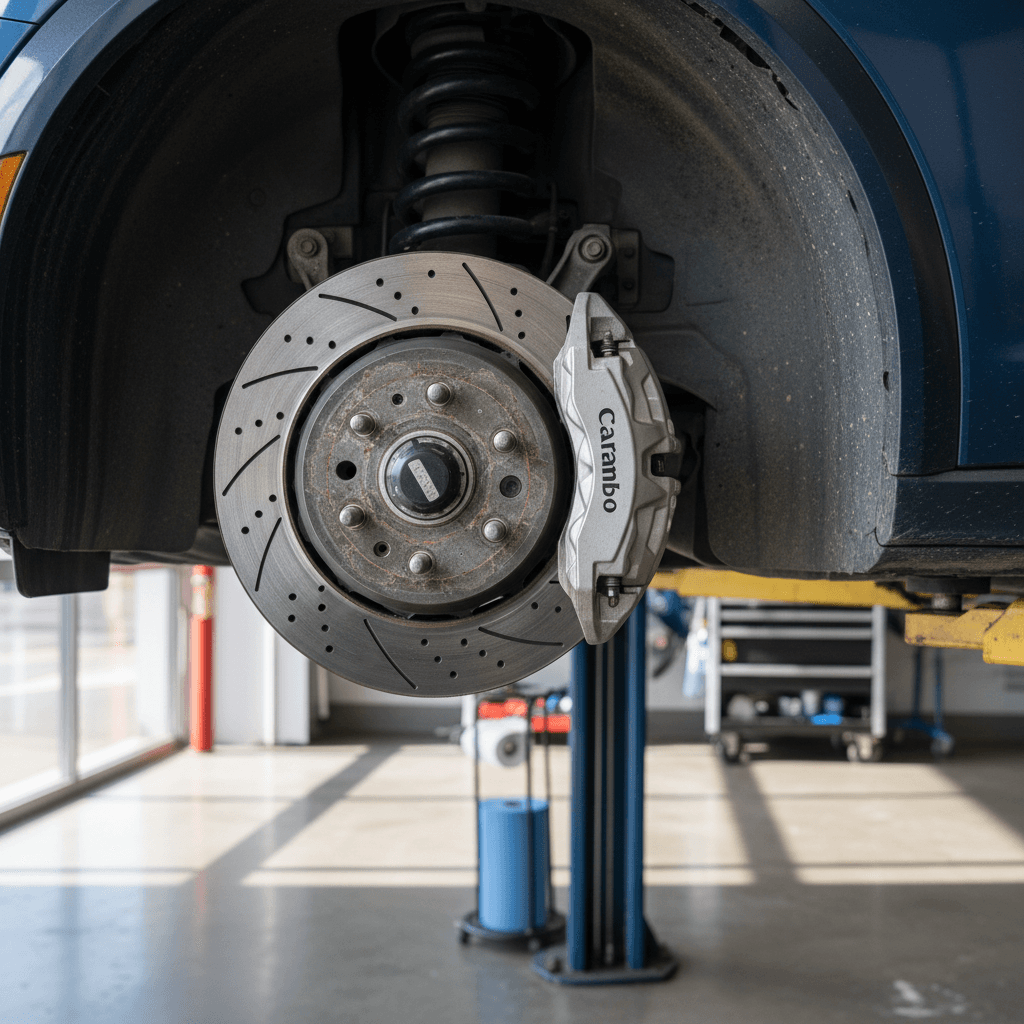
When people complain that their **Ford Mustang Mach-E maintenance cost in 2026** feels high, they’re usually talking about **tires** or, less often, **brakes**. A heavy, high‑torque EV running on wide, sticky rubber will always be harder on tires than a compact sedan, and that’s true for the Mach-E as well.
High-impact Mach-E maintenance items
Typical U.S. retail pricing in 2026 for common big-ticket wear items on Ford Mustang Mach-E models. Performance trims and 20" wheels trend toward the higher end of each range.
| Item | Typical interval | 2026 cost range | What drives the range |
|---|---|---|---|
| Four tires (18–20") | 30,000–45,000 miles | $900–$1,600 installed | Brand, size, load rating, and whether you choose all-season vs. performance tires |
| Front brake pads & rotors | 40,000–80,000+ miles | $400–$800 | Driving style and terrain; lots of gentle regen can make factory pads last a very long time |
| Rear brake pads & rotors | Often 60,000+ miles | $350–$700 | Rear brakes work less hard; aggressive driving or corrosion can shorten life |
| Full brake job (all corners) | Higher mileage or rusty climates | $800–$1,500+ | Salted roads, infrequent driving, and cheap parts can push toward the high end |
| High-voltage coolant service | 8–10 years / high mileage | $350–$800 | Dealer vs. independent shop pricing; how many circuits are serviced at once |
These are the line items that tend to drive big swings in year-to-year Mach-E maintenance cost.
Beware cheap, no-name tires
Do software updates and BlueCruise count as maintenance costs?
The Mach-E blurs the line between **maintenance** and **software services**. Over‑the‑air updates are typically free and aimed at improving features or fixing bugs. But Ford’s **BlueCruise hands‑free driving system** is subscription‑based, and by 2026 many owners roll that into their mental cost of ownership, right alongside tires and brake fluid.
BlueCruise subscription pricing in 2026
As of late 2024, Ford significantly lowered BlueCruise subscription pricing and expanded options. In 2026, Mach-E owners commonly see:
- ~$49.99 per month for a monthly plan
- ~$495 per year for an annual subscription
- In some cases, a one-time “lifetime” purchase option in the low‑$2,000 range may appear at order time for new vehicles.
If you keep BlueCruise active, you’re effectively adding about **$500 per year** to your ownership costs, though this is best thought of as a driver-assistance feature cost, not traditional maintenance.
What about regular software updates?
Routine over‑the‑air updates for the infotainment system, drive systems, and battery management are typically provided at no additional charge. They’re more like **digital tune‑ups** than billable services.
One area where software and maintenance meet is if a module fails out of warranty. A replacement control unit plus programming can run into the **hundreds of dollars**, but for most owners this is a rare event, not an every‑year line item.
Subscriptions vs. maintenance
Warranty coverage and when costs really start to rise
Another reason the **2026 Ford Mustang Mach-E maintenance cost** story looks good is that many examples on the road are still under some portion of Ford’s factory warranty. That keeps genuine repair bills low, leaving you mostly with wear items and scheduled services.
Typical U.S. warranty coverage on Ford Mustang Mach-E
Always confirm exact coverage for the model year and vehicle you’re looking at, especially on a used EV.
Bumper-to-bumper warranty
Recent Mach-E models generally include around 3 years / 36,000 miles of comprehensive coverage. Many owners see minimal out‑of‑pocket repair costs during this window.
High-voltage battery & electric drivetrain
Ford’s EV battery and electric powertrain warranty is typically around 8 years / 100,000 miles in the U.S. That’s a huge shield against the most expensive potential repair on the car.
Corrosion & emissions
Supplemental coverage for corrosion and other components can extend beyond the 3‑year window. These protections don’t eliminate all costs, but they temper the risk of large surprise bills early in ownership.
When do costs ramp up?
For most Mach-E owners, **years 4–8** are when maintenance spending rises. Tires, brake fluid, potentially brakes, and eventually coolant service all show up here, while bumper‑to‑bumper coverage tapers off.
Why this matters for used buyers
Used Mustang Mach-E owners: how to budget smart
Used EV shoppers worry, rightly, about what happens after the first owner. With the Mustang Mach-E, the playbook in 2026 is straightforward: verify the basics, understand what’s coming due based on mileage and age, and build a line‑item budget for the next 3–5 years instead of guessing.
Checklist: budgeting for a used Mach-E in 2026
1. Check where you are in the warranty window
Confirm in‑service date, odometer, and warranty status. A car with 30,000 miles and three years on the clock likely has some bumper‑to‑bumper coverage left and years of battery warranty ahead of it.
2. Ask for prior tire and brake invoices
If the original tires are nearly worn at 30,000–40,000 miles, budget **$1,000+** soon. If front pads and rotors haven’t been touched by 60,000+ miles, assume a brake job is coming.
3. Look for recent brake fluid and coolant service
A brake fluid change about every three years is ideal. If you’re buying an early‑build Mach-E approaching 8–10 years old later this decade, ask when the high‑voltage coolant circuits were serviced, or plan to do it soon after purchase.
4. Budget a realistic 3-year maintenance fund
For a typical used Mach-E, setting aside **$1,500–$2,000 total for three years** (excluding tires) will comfortably cover normal maintenance at today’s prices in most markets.
5. Get a battery and high-voltage health check
While outright pack failures are rare, it’s wise to document **battery health and thermal system performance** up front. A professional report also helps resale value.
6. Factor subscriptions and charging into your math
If you plan to pay for BlueCruise or public fast charging regularly, keep those in a separate “services and energy” bucket so you don’t underestimate total ownership cost.
How Recharged can help
Saving money with DIY and smarter shop choices
You don’t have to be an engineer to trim your **Ford Mustang Mach-E maintenance cost in 2026**. A few strategic decisions about where you service the car, and what you choose to do yourself, can shave hundreds of dollars off long‑term costs without sacrificing safety.
1. Separate EV-specialist work from generic work
Not every job requires a Ford EV specialist. It makes sense to use a dealer or certified EV shop for:
- High‑voltage coolant service
- Software or control‑module diagnostics
- Warranty repairs and recalls
But you can often use a trusted independent shop for tires, alignments, and even basic brake work, often at lower hourly rates.
2. Learn a few ultra-simple DIY tasks
You don’t need a full toolbox to handle:
- Cabin filter replacement (usually 15–30 minutes)
- Wiper blades and washer fluid
- Basic visual checks for tire wear and damage
Knocking out even one or two of these yourself keeps routine visits shorter and cheaper.
3. Shop tires by total value, not sticker price
Focus on:
- Reputation and user reviews (especially from EV owners)
- Rolling resistance and noise ratings
- Included services like free rotations, flat repair, and road‑hazard protection
A tire that lasts longer and preserves range is often the **true bargain**, even if its upfront price is higher.
Don’t experiment with high-voltage systems
Ford Mustang Mach-E maintenance cost 2026: FAQ
Frequently asked questions about Mach-E maintenance in 2026
Bottom line: is the Mustang Mach-E cheap to maintain?
Stack the numbers side‑by‑side and a clear picture emerges: **the Ford Mustang Mach-E is one of the more affordable compact electric SUVs to maintain in 2026**, especially when you account for the absence of oil changes, spark plugs, and complex transmission service. If you budget **around $450–$650 per year for maintenance after the basic warranty, plus a healthy tire fund every 30,000–45,000 miles**, you’ll be well prepared for real‑world costs.
The key is to treat tires, brakes, and long‑interval coolant service as predictable expenses, not surprises, and to separate optional subscriptions like BlueCruise from true maintenance. Whether you’re buying new or cross‑shopping used EVs, a **clean service history and solid battery health report** should sit high on your checklist. And if you’d like a clearer picture before you commit, shopping through Recharged gives you transparent battery diagnostics, a Recharged Score Report, and EV‑savvy guidance so you understand not just the price on the window, but the cost of ownership over the years to come.