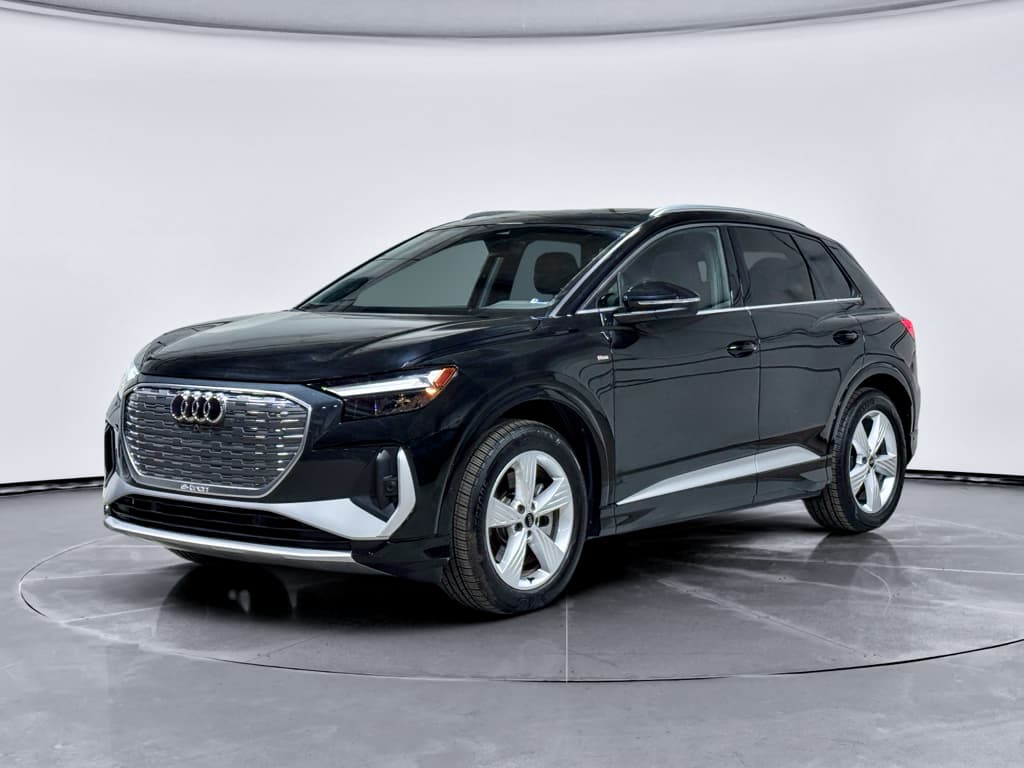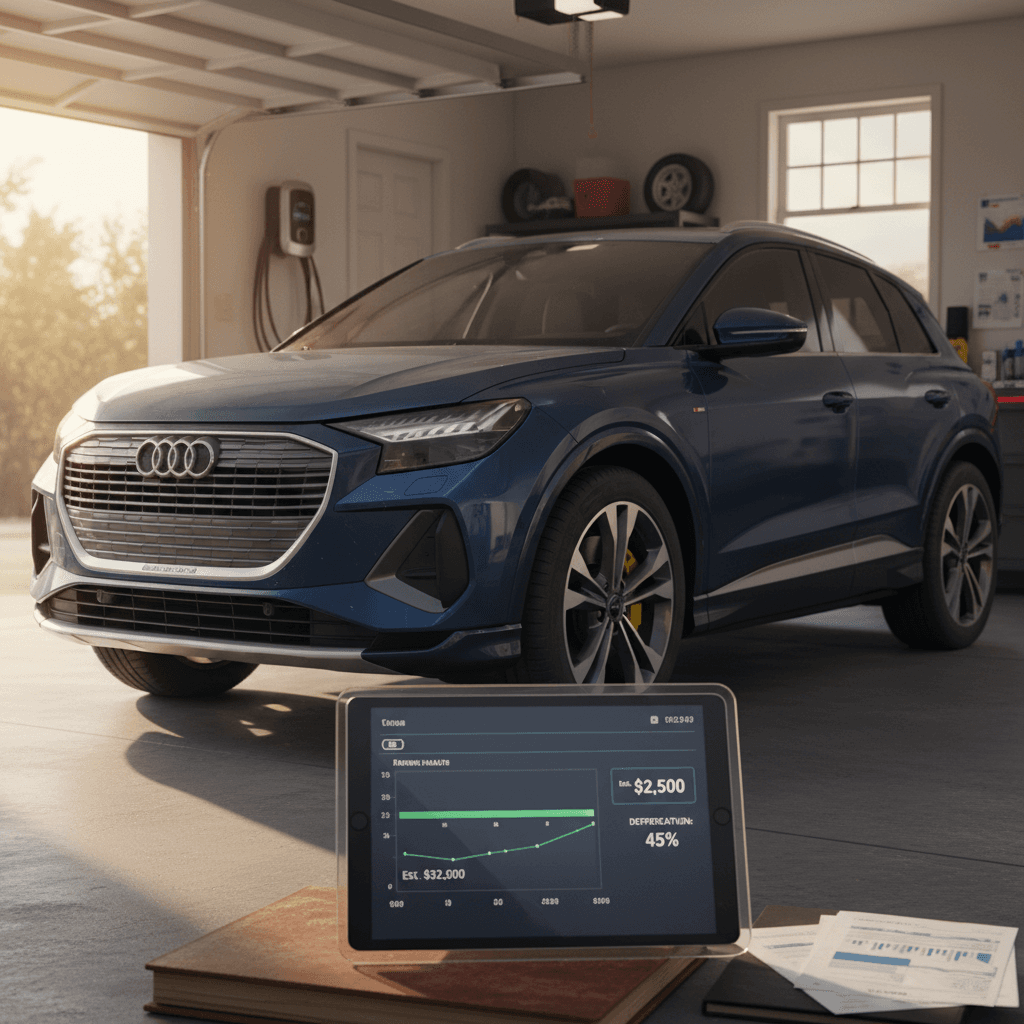
If you own, or are eyeing, a used Audi Q4 e-tron, the big question is what this compact luxury EV is worth after 5 years. Between rapid EV price swings, new incentives and fast-changing tech, 5‑year value on the Q4 e-tron looks very different in 2026 than it did when the model launched.
Context: why we’re talking about 5 years
Why Audi Q4 e-tron 5‑year value matters
Depreciation is the single largest ownership cost on most EVs, and the Audi Q4 e-tron is no exception. Insurance, charging and maintenance matter, but how far the Q4 falls in value in its first 5 years can easily outweigh everything else combined. Understanding that curve helps you decide whether to lease, buy new and sell early, or skip straight to a 3–5‑year‑old used Q4 where someone else already took the big hit.
Audi Q4 e-tron value picture at 5 years (2026 snapshot)
Audi Q4 e-tron value after 5 years: the quick answer
Putting real‑world data and 2025–2026 forecast work together, a typical Audi Q4 e-tron is likely to be worth around 35–40% of its original MSRP after 5 years in normal U.S. market conditions. That implies roughly 60–65% depreciation from new.
Illustrative 5‑year value curve for an Audi Q4 e-tron
Example based on a Q4 e-tron that originally stickered for $55,000 including destination and common options. Real values depend on trim, mileage, incentives and local demand.
| Vehicle age | Estimated value retention | Illustrative value | What’s going on |
|---|---|---|---|
| New (MSRP) | 100% | $55,000 | You’re paying full price; you’ll absorb all future depreciation. |
| 1 year | ≈70–75% | $38,500–$41,250 | Early EV depreciation and incentives push buyers toward nearly new or used inventory. |
| 3 years | ≈45–50% | $24,750–$27,500 | Many off‑lease Q4s arrive; newer EVs offer more range and faster charging. |
| 5 years | ≈35–40% | $19,250–$22,000 | Most of the value drop has happened; battery health and charging standards drive price spread. |
Directional estimates to frame expectations, not guaranteed resale numbers.
Don’t treat the table as a promise
How the Audi Q4 e-tron depreciates over 5 years
The Q4 e-tron arrived for the 2022 model year in the U.S. and shares a lot of hardware with Volkswagen’s ID.4. By early 2026 we’re only just starting to see true 4‑year-old examples, so any 5‑year outlook blends real resale data, broader EV trends and forecasts from residual‑value services.
- Years 0–2: The steepest drop. Incentives, price cuts on new EVs, and rapid tech improvements make 1–2‑year‑old Q4s significantly cheaper than new. Many guides show total depreciation above 40% by year 2–3.
- Years 3–5: Depreciation slows but doesn’t stop. As more off‑lease Q4s hit the market and rival EV SUVs add range and tech, prices continue to grind down, especially on higher‑trim Q4s that were expensive new.
- After year 5: Value starts to hinge less on being “the latest thing” and more on battery health, warranty remaining and how the Q4 compares to newer EVs on range and charging. Q4s that age well can plateau a bit here.
Q4 e-tron vs average EV depreciation
How battery health and warranty affect 5‑year value
On a 5‑year‑old electric Audi, buyers are no longer just asking “Has it been serviced?” They’re asking “How healthy is the battery and how much warranty is left?” Those answers can easily move a Q4 e-tron’s value thousands of dollars in either direction.
Battery and warranty factors that move 5‑year value
These are the levers that make one 5‑year‑old Q4 worth far more than another.
High-voltage battery warranty
Most U.S. Q4 e-tron models carry an 8‑year/100,000‑mile battery warranty. At 5 years, you still have roughly 3 years of coverage left, which reassures buyers and supports pricing, especially on higher‑mileage examples.
Measured battery health
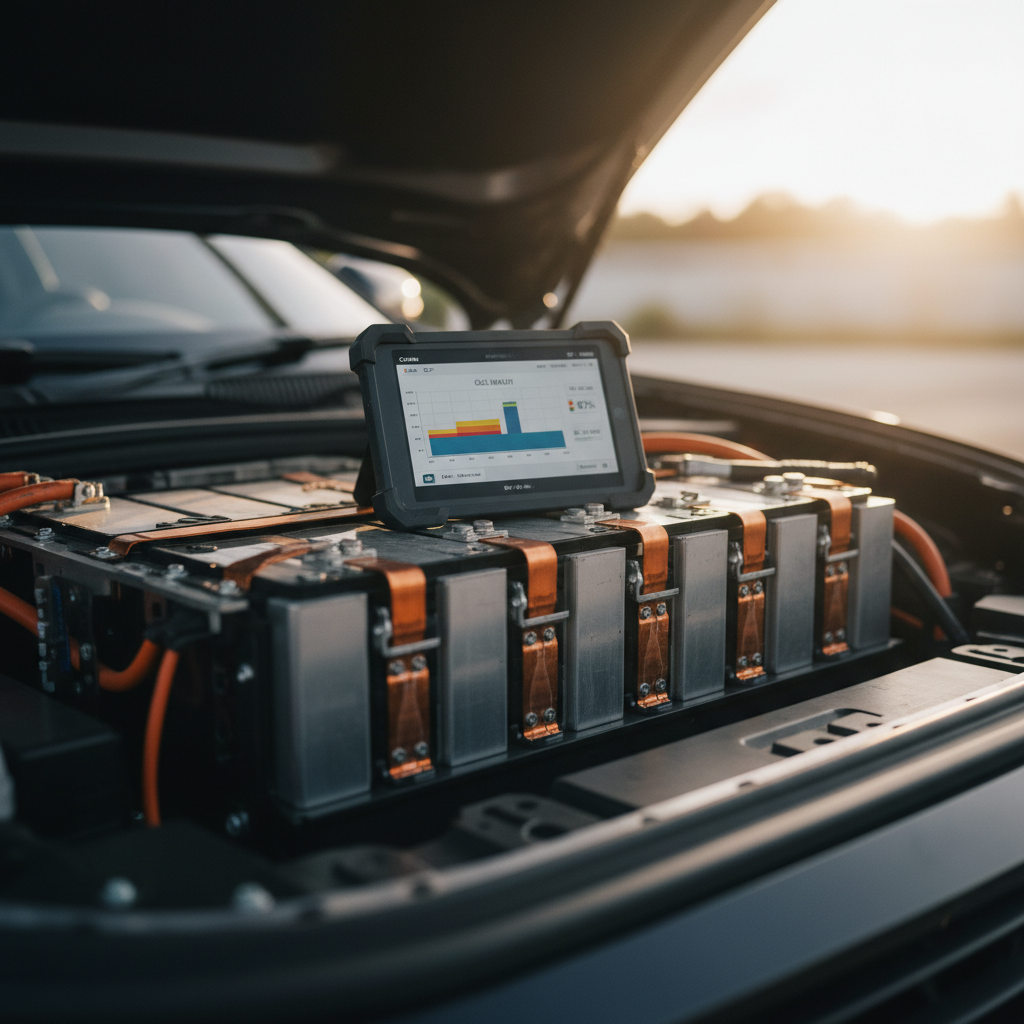
A Q4 with an independently verified pack showing close to original usable capacity will command a premium. If health has slipped significantly, expect buyers and dealers to discount more aggressively.
Charging experience
Cars that consistently DC fast‑charged at very high rates or live in hot climates may show more degradation. Service records and charging habits matter when a buyer is deciding between two 5‑year‑old Q4s.
How Recharged handles battery risk
Market forces pushing Q4 e-tron prices up, or down
Macro trends pushing values down
- Faster tech cycles: New EV SUVs arriving for 2025–2027 are adding range, faster charging and slicker software, which makes 4–5‑year‑old Q4s feel older sooner than a 5‑year‑old gas Q5.
- Used EV supply: Lease returns, fleet disposals and early adopters trading out of first‑gen EVs are feeding more inventory into the used market.
- Incentive whiplash: Federal and state incentives, plus aggressive discounts on new EVs, pull some shoppers away from 4–5‑year‑old cars.
Forces that can support Q4 prices
- Luxury positioning: The Q4 sits in the compact luxury EV segment. Shoppers cross‑shopping premium gas SUVs may see a well‑equipped 5‑year‑old Q4 as a bargain.
- Brand familiarity: Audi’s dealer network and service reputation help some buyers feel safer with an older EV than with a niche brand.
- Battery warranty runway: With several years of battery coverage left at year 5, many buyers are willing to pay more than they would for a similar‑age EV whose pack warranty is nearly gone.
Wild cards to watch
What to expect if you sell your Q4 e-tron around year 5
If you’re holding a 2022 Q4 e-tron today, 5 years out lands you around 2027. For a 2023 model, you’re looking at 2028. In both cases you’ll be selling into a market where newer EVs are meaningfully better, but your Q4 still has luxury cachet and usable range.
Realistic 5‑year expectations for Q4 sellers
1. Expect 60–65% of value gone
From what we see in EV‑focused valuation data, a Q4 e-tron is likely to have lost roughly 60–65% of its original MSRP by year 5. You may do better or worse depending on options, mileage and local demand, but plan with that range in mind.
2. Mileage matters more than you think
A 5‑year‑old Q4 with 35,000 miles and one careful owner will look far better to the market than one with 85,000 miles and spotty records. Staying under 12,000 miles per year is one of the simplest ways to protect resale.
3. Clean history is non‑negotiable
A major accident, lemon buyback or branded title will push you below the typical 5‑year value range. Buyers are especially cautious about structural repairs on EVs that could affect pack safety or alignment.
4. Timing your sale
Selling just before a big Q4 refresh or a major wave of off‑lease Q4s hits your region can support pricing. If you’re flexible, consider listing in late spring or early summer, when road‑trip‑season demand helps EV crossovers.
5. Getting multiple exit options
In 2026 you’re not limited to the local Audi store. You can get instant offers, trade‑in bids and consignment options online. Recharged, for example, can provide an instant offer or help you net more via consignment while handling the EV‑specific details for you.
Is a 5‑year‑old Audi Q4 e-tron a good buy?
For the right buyer, a 5‑year‑old Q4 e-tron can be one of the better value plays in the compact luxury EV space. You’re trading cutting‑edge range and the newest software for a substantial discount off new, while still getting a usable daily‑driver range, a refined cabin and several years of battery coverage.
Pros and cons of buying a 5‑year‑old Q4 e-tron
Where the value shows up, and where it doesn’t.
Why a 5‑year‑old Q4 can be a smart buy
- Big discount vs. new: If depreciation runs 60–65% by year 5, you’re paying 35–40 cents on the dollar for a still‑modern luxury SUV.
- Battery still under warranty: With 3 or so years of pack coverage left, you’re buffered against worst‑case battery failures.
- Known reliability pattern: By year 5 the major issues for that generation tend to be well‑documented, so you can shop with eyes open.
Where a 5‑year‑old Q4 might disappoint
- Range vs. newer rivals: Newer compact EV SUVs will likely offer more range and faster charging for similar money by the late 2020s.
- Software feel and features: The in‑car tech stack may feel a generation behind, especially on early‑build Q4s.
- Unknown long‑term depreciation: If EV prices keep sliding, a 5‑year‑old Q4 bought in 2027–2028 could still lose meaningful value over the next 3–5 years.

Checklist: evaluating a used Audi Q4 e-tron around year 5
When you’re staring at a 4–6‑year‑old Q4 on a lot or online listing, you’re really trying to answer two questions: “Is this specific car healthy?” and “Is the price fair for its condition?” Use this checklist to cover both.
Key checks for a 5‑year‑old Q4 e-tron
Confirm build year and trim
Verify the exact model year, drivetrain (rear‑drive vs. quattro) and trim level. A loaded Prestige model that was $10,000 more new won’t necessarily fetch that same premium used, especially if buyers prioritize range over options.
Pull battery health data
Ask for a recent battery health report. On Recharged, the <strong>Recharged Score</strong> includes third‑party diagnostics so you can see usable capacity and any warning signs before you commit.
Review warranty status
Check in‑service date to see how much of the 8‑year/100,000‑mile battery warranty and 4‑year/50,000‑mile bumper‑to‑bumper coverage is left, or if an extended plan is in place.
Scan charging and range behavior
Test drive with an eye on range estimates and charging behavior. A car that charges abnormally slowly on DC or shows big swings in estimated range at steady speeds may need closer inspection.
Inspect tires, brakes and suspension
EVs are heavy; a 5‑year‑old Q4 can be on its second or third set of tires and may be due for brake work if mostly driven in highway traffic. Build that into your evaluation of value.
Check for accident and corrosion issues
Run a history report and look underneath for impact damage or corrosion near high‑voltage components. Repairs in these areas can be much more expensive than on a gas SUV.
How Q4 e-tron 5‑year value compares to other EV SUVs
The Q4 e-tron doesn’t live in a vacuum. Buyers are cross‑shopping it against Tesla’s Model Y, Volvo’s XC40 Recharge, Mercedes’ EQB and various mainstream EV crossovers. Most of those vehicles have seen heavy 3–5‑year depreciation under the weight of price cuts, incentives and rapid tech changes.
Approximate 5‑year depreciation in the compact EV SUV segment
High‑level view using typical U.S. market data for 5‑year‑old compact electric SUVs with average miles and clean histories.
| Model/segment | Approx. 5‑yr depreciation | Notes at year 5 |
|---|---|---|
| Audi Q4 e-tron | ≈60–65% | Luxury badge helps, but tech moves fast; battery warranty still active. |
| Tesla Model Y | ≈55–65% | Very sensitive to Tesla’s new‑vehicle price cuts; strong brand pull helps demand. |
| Mainstream compact EV SUV (e.g., ID.4 segment) | ≈60–70% | Heavier dependence on incentives and discounts; less brand‑driven demand. |
| Comparable gas compact luxury SUV | ≈45–55% | Slower tech obsolescence; stronger familiarity with long‑term ownership. |
The Q4 sits near the segment average for electric SUV depreciation.
Where the Q4 holds its own
Tips to protect your Q4 e-tron’s value over 5 years
If you’re buying or already own a Q4 e-tron, you can’t control macro EV pricing, but you can absolutely influence where your individual SUV lands on the 5‑year value spectrum.
- Keep mileage in check. Staying near or below 10,000–12,000 miles per year will put you in a stronger position than high‑mileage Q4s when it’s time to sell.
- Document everything. Maintain clear records of scheduled service, tire rotations, software updates and any warranty work. Organized paperwork still translates into higher offers in 2026.
- Be kind to the battery. Favor Level 2 charging, avoid living at 100% state of charge, and minimize repeated 0–5% deep discharges. Those habits protect long‑term capacity and, by extension, value.
- Stay ahead of cosmetic issues. Fix curb rash, paint scuffs and cracked glass as they happen. A clean, well‑presented Q4 signals careful ownership and narrows a buyer’s negotiation leverage.
- Consider timing your exit. If you’re open to selling before year 5, years 2–4 often offer the best balance between remaining value and what a used buyer is willing to pay for “late‑model” tech. Recharged can help you evaluate timing and options with real offers, not just estimates.
FAQ: Audi Q4 e-tron value after 5 years
Frequently asked questions about 5‑year Q4 e-tron value
Bottom line: who wins with a 5‑year‑old Q4 e-tron?
After 5 years, the Audi Q4 e-tron will probably have shed a clear majority of its original sticker price. That’s painful if you bought new and are bailing out late, but it’s a gift if you’re shopping used: you get a premium electric SUV, meaningful battery warranty and a big discount for tolerating slightly older tech.
If you’re an owner, your play is to protect battery health, document care and be strategic about timing. If you’re a shopper, focus on verified battery diagnostics and realistic pricing rather than chasing the absolute cheapest example. In both cases, a data‑driven partner like Recharged, backed by battery health reports, fair market pricing and EV‑specialist support, can make a 5‑year‑old Q4 e-tron feel like a smart move instead of a gamble.