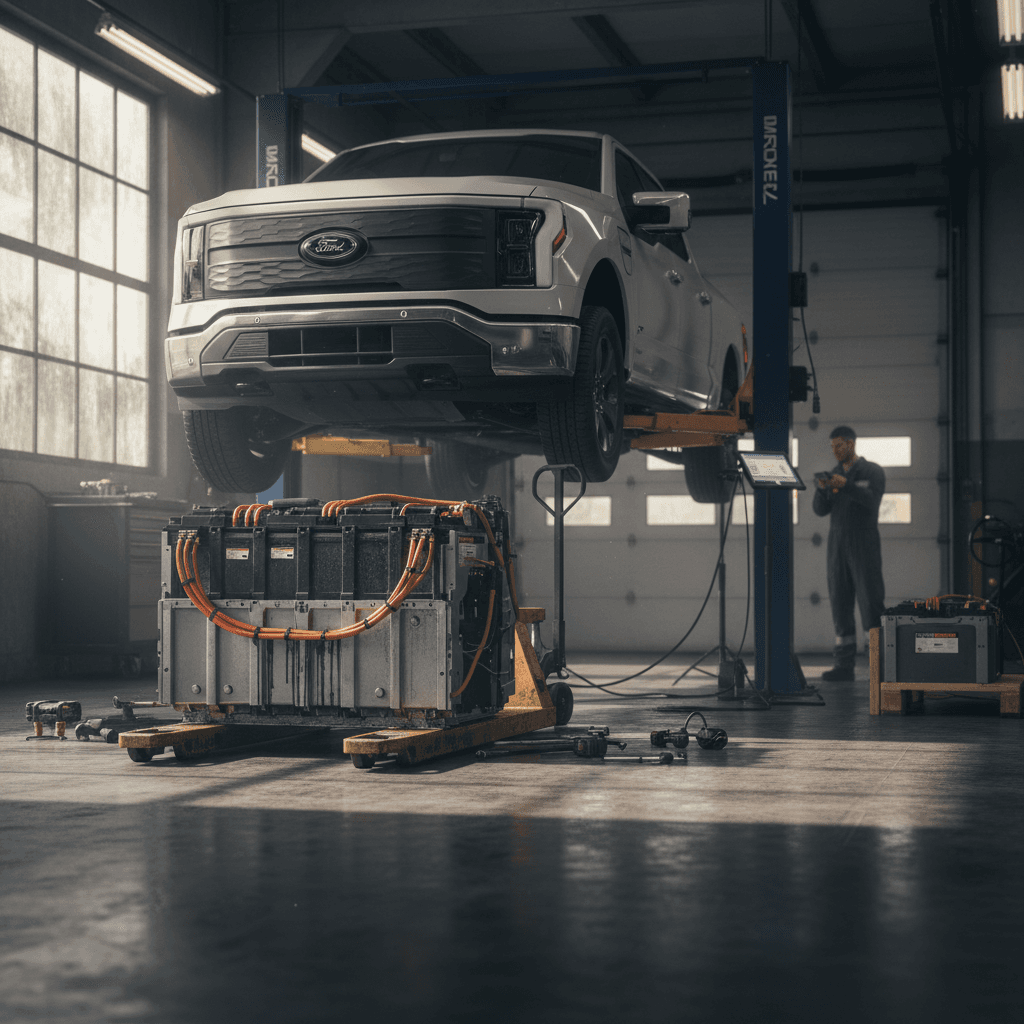
If you’re eyeing a Ford F-150 Lightning in 2026, especially a used one, you’re probably wondering what happens when that big battery eventually needs work. Stories about $20,000+ EV battery bills make the rounds fast. The truth for Ford F-150 Lightning battery replacement cost in 2026 is more nuanced: full pack replacements are rare, prices are high when they do happen, and the factory warranty covers more than most shoppers realize.
Key takeaway for 2026
Overview: What F-150 Lightning Battery Replacement Really Costs in 2026
2026 F-150 Lightning Battery Cost Snapshots
Those headline numbers can be intimidating, but they don’t tell the whole story. First, full-pack failures are rare in the truck’s first decade, especially while the factory warranty is in play. Second, dealers increasingly repair individual battery modules rather than swapping the entire pack. And third, 2026 brings some changes to the Lightning lineup that actually simplify the battery story for future owners.
Sticker shock vs. real risk
How Much Does a Ford F-150 Lightning Battery Replacement Cost in 2026?
Let’s put real numbers on it. Pulling together Ford parts data, dealer quotes, and industry-wide EV repair trends as of late 2025 and early 2026, here’s the realistic picture for F-150 Lightning battery replacement cost in 2026 when you’re outside warranty:
Ford F-150 Lightning Battery Replacement Cost Estimates (2026)
Approximate 2026 retail pricing for common Lightning high-voltage battery repairs. Actual quotes vary by dealer, region, parts availability, and whether Ford contributes goodwill coverage.
| Repair type | What’s included | Estimated parts cost | Estimated labor | Typical out-the-door total |
|---|---|---|---|---|
| Full pack replacement – Extended Range (2022–2026) | Entire high‑voltage battery pack replaced with new Ford unit | $15,000–$22,000 | $2,000–$4,000 | $17,000–$26,000 |
| Full pack replacement – older Standard Range (2022–2025) | Smaller-capacity pack on early trucks | $13,000–$18,000 | $2,000–$3,500 | $15,000–$21,000 |
| Module replacement (1–2 modules) | Only the failed module(s) inside the pack replaced | $4,000–$7,000 | $1,500–$3,000 | $5,500–$10,000 |
| High-voltage harness or contactor repair | Electronics or wiring fault, pack stays in truck | $1,000–$2,500 | $800–$1,500 | $1,800–$4,000 |
| Diagnostic + software updates only | No hardware replacement, just testing and reflashing | $0–$300 | $300–$800 | $300–$1,100 |
These figures are directional, not official Ford pricing, but they reflect where Lightning battery repair quotes tend to land in 2025–2026.
You’ll sometimes see a single, scary number quoted, $50,000 or more for a Lightning battery. That’s typically based on list price of a brand-new pack plus hypothetical labor, before any warranty, goodwill, or core-credit adjustments. In the real world, retail customers who actually pay out of pocket are seeing totals far closer to the $17,000–$26,000 band for full pack work, and much less when only modules are replaced.
Don’t treat the worst case as the norm
What Actually Fails: Full Pack vs. Module Replacement
When you hear “battery replacement,” it’s easy to picture the entire 1,600‑pound pack dropping out of the chassis and being swapped for a brand-new one. That does happen, but with the F-150 Lightning there are several layers to the story:
- Individual module failures – A Lightning pack is made up of multiple modules. If one or two fail or fall out of spec, Ford can replace only those modules and then re-seal and reinstall the pack.
- Electronics and contactors – Some issues that look like “battery problems” are actually related to the high‑voltage contactors, sensors, or wiring. Those jobs are often cheaper and may not require pack removal.
- Full pack replacement – Reserved for severe internal damage, safety recalls, or cases where repair isn’t economically sensible. This is where you see total bills north of $20,000 without warranty help.
Recent recall context
From the owner’s seat, the difference between a $7,000 module job and a $23,000 full-pack swap is night and day. That’s why, if your Lightning throws a high‑voltage fault once it’s older, you want a shop that’s experienced with Ford EVs and willing to pursue repair options, not just quote a new pack and call it a day.
Ford F-150 Lightning Battery Warranty Coverage
Before you lose sleep over five‑figure repair bills, it’s worth reading Ford’s warranty language closely. For all current F-150 Lightning model years, Ford backs the high‑voltage battery with its Electric Vehicle Component Coverage:
- 8 years or 100,000 miles (whichever comes first) from the original in-service date.
- Coverage if the battery does not retain at least 70% of its original usable capacity over that period.
- Coverage follows the truck, which means a used Lightning still enjoys the remaining balance of the original battery warranty.
Why this matters for used buyers
There are the usual fine-print exclusions for abuse, improper modifications, or damage from collisions and flooding. But under normal use, Ford is on the hook for significant battery defects and excessive capacity loss during those first eight years. That includes replacing modules, arrays, or the entire pack when necessary.
Warranty start date matters
2026 Updates: Standard-Range vs. Extended-Range Packs
For 2026, Ford has quietly simplified the Lightning lineup. The entry‑level Pro trim sees a price bump of about $5,000 and, crucially, drops the smaller Standard Range pack in favor of extended-range batteries only. That has ripple effects on long‑term battery cost and availability.
What 2026 Changes Mean for Future Battery Costs
Ford’s move to all extended-range packs reshapes the replacement landscape.
Earlier trucks (2022–2025)
These came in both Standard Range and Extended Range configurations. The smaller packs are a bit cheaper to replace, but there are also fewer of them out there.
As the fleet ages, pack and module availability for specific early builds may depend heavily on Ford’s remanufactured and refurbished parts pipeline.
New trucks (2026+)
From 2026 onward, Ford focuses on Extended Range packs for the Lightning Pro and up. That means a more unified battery family and, over time, better economies of scale for parts and remanufactured packs.
For long‑term ownership, that simplification is a quiet win, more trucks sharing similar hardware usually makes support easier.
You don’t need to memorize pack sizes to shop smart, but understanding which trucks use which batteries helps set your expectations. A 2026 Pro with an extended‑range pack will likely be more expensive to replace in absolute dollars than an early Standard Range truck, but it also carries more usable energy and capability for the miles in between.
Cost Breakdown: Parts, Labor, and Dealer Variation
High-voltage battery work isn’t just a parts line and a couple hours on the lift. A Lightning battery replacement invoice, especially out of warranty, is really three separate stories:
What You’re Actually Paying For
1. The battery pack or modules
This is the heart of the bill. A new Lightning high‑voltage pack can easily be a five‑figure line item. Module-only repairs reduce the parts hit but still involve expensive components.
2. Specialized labor and equipment
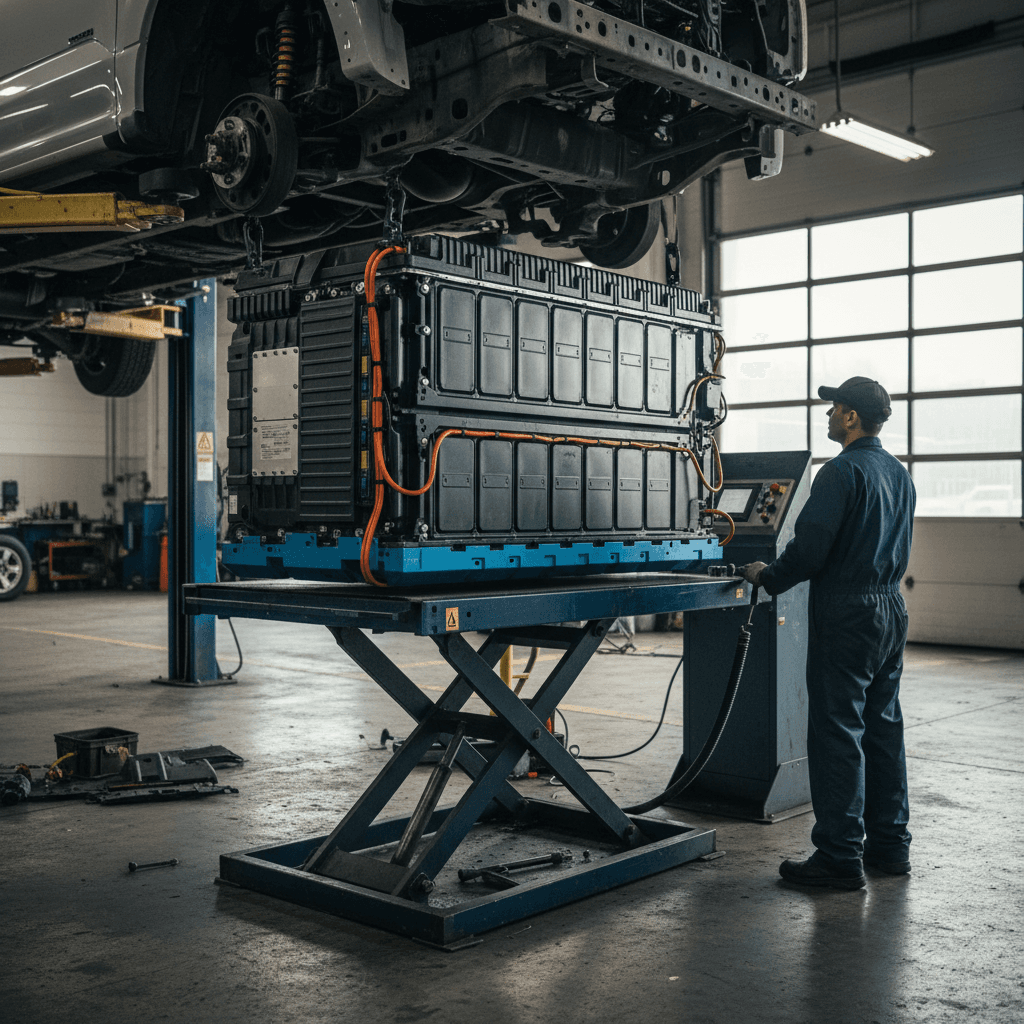
Dropping a battery from a full‑size pickup requires an EV‑certified technician, a high‑capacity lift table, and proper high‑voltage safety procedures. Labor rates reflect that expertise and equipment.
3. Diagnostics, programming, and road testing
Modern EVs rely on precise software calibration. After any major battery work, the truck needs intensive diagnostics, module programming, and validation drives to confirm everything plays nicely together.
Ford’s published flat-rate times plus real-world shop practices mean that two dealers can give you very different quotes for the same job. One might push immediately for a new pack; another might pursue a warranty claim, a recall remedy, or a localized repair.
Always get more than one quote
Real-World Owner Experiences and Quotes
Early F-150 Lightning owners are now putting serious mileage on their trucks, and a few have seen high-voltage work, mostly under warranty. The pattern so far is encouraging for anyone scared of instant battery death:
- Owners with 40,000–50,000 miles reporting minimal capacity loss when the trucks are driven and charged reasonably.
- Instances of battery modules replaced under warranty for driveability or fault-code issues, with estimated out-of-warranty costs in the high four to low five figures.
- Plenty of drivers choosing to align their trade-in or sale with the end of the 8‑year/100,000‑mile battery warranty, treating that schedule like the old “keep it till 150,000 miles” rule on a gas truck.
The battery was really the only potential big expense and given that it’s covered for eight years, I passed on extended warranty options.
Is that scientific data? No. But it lines up with Ford’s own testing targets, designing the Lightning’s battery system for well over 200,000 miles of useful life, and with what we’ve seen from other first‑generation EV pickups. The big out‑of‑pocket battery bills are the exception, not the rule, especially in this first decade of Lightning production.
How Likely Is Battery Replacement on an F-150 Lightning?
Here’s the uncomfortable truth for anyone who likes simple odds: we don’t yet have a full life‑cycle curve for the F-150 Lightning. The truck only launched for the 2022 model year. But combining what we know from Ford’s design targets, real-world degradation reports, and broader EV data, a picture emerges.
Scenario 1: You keep it 5–8 years
If you buy new or nearly new and drive typical mileage, you’ll own the truck almost entirely under Ford’s battery warranty. The chance you’ll pay for a full out-of-pocket pack replacement in that window is extremely low.
You may see software updates, charging quirks, or a module replaced under warranty, but not a catastrophic bill.
Scenario 2: You keep it 10–15 years
Now you’re in uncharted territory. Replacement risk rises as the truck gets older and Ford gradually shifts engineering focus to newer platforms.
In this window, planning for the possibility of a mid‑five‑figure battery job is rational, much like budgeting for a transmission or engine on an aging work truck.
The real risk for 2026 shoppers
Planning Ahead: Budgeting and Financing Options
You don’t need to squirrel away $25,000 just in case your Lightning needs a pack after year nine. But you should treat the battery like the modern equivalent of a diesel engine: extremely durable, expensive to replace, and worth thinking about in your ownership plan.
Smart Ways to Protect Yourself From Big Battery Bills
You’ve got more options than “hope it never fails.”
Time your exit
Plan to sell or trade the truck before the 8‑year/100,000‑mile battery warranty expires. That’s the simplest, cleanest way to avoid end‑of‑life risk.
Consider coverage
Some drivers weigh extended service contracts, but remember: Ford’s factory battery warranty already runs to 8 years/100k. Focus any extra coverage on components that aren’t protected that long.
Buy with proof of health
When shopping used, look for a third‑party battery health report or detailed diagnostic history, not just “drives fine” in the ad.
On Recharged, every used Lightning includes a Recharged Score battery report so you aren’t guessing about pack condition.
If you’re financing a used Lightning, it’s worth thinking about how your loan term lines up with the warranty timeline. You don’t want to be making payments on a 9‑year‑old truck that’s just rolled past its battery warranty if you don’t have the appetite for big repairs.
How Recharged can help
Ready to find your next EV?
Browse VehiclesTips to Extend Battery Life and Delay Replacement
The best way to avoid a battery bill is to treat the pack kindly from day one. Lightning owners have an advantage here: Ford’s software does a lot of the protection work for you. But your habits still matter, especially if you want this truck to be a 10‑plus‑year partner.
Everyday Habits That Help Your Lightning’s Battery Last
Charge mostly on Level 2 at home
Regular overnight Level 2 charging is easier on the pack than constant DC fast charging. Save fast chargers for road trips or genuine needs.
Avoid living at 100% charge
Ford already builds in some buffers, but you can help even more by not leaving the truck parked at full charge for days at a time, especially in hot weather.
Watch your towing and fast-charging combo
Towing heavy loads and then immediately hammering fast chargers raises pack temperature. Give the truck a chance to cool, and use Ford’s built‑in preconditioning and charge limits when you can.
Keep software up to date
Over‑the‑air updates can tweak thermal management and charging behavior, both of which affect long‑term battery health. Don’t ignore update prompts.
Respect thermal limits
If the truck warns you about battery temperature or limits power, listen. Those protections exist to save the pack from avoidable damage.
Drive it like a truck, charge it like a laptop
Buying a Used F-150 Lightning: Battery Checks That Matter
Used Lightnings are starting to show up in serious numbers, and that’s great news if you love the idea of an electric truck but not the new‑sticker price. To make a smart move in 2026, you want to focus on three things: remaining warranty, real battery health, and repair history.
Battery Checklist for Used F-150 Lightning Shoppers
Confirm the original in-service date
This tells you exactly how much of the 8‑year/100,000‑mile battery warranty is left. A truck first sold in 2023 has battery coverage through at least 2031, regardless of when you buy it.
Get a real battery health report
Ask for documented state‑of‑health data from a scan tool or third‑party report. On Recharged, the Recharged Score includes measured battery health so you’re not guessing.
Review high-voltage service history
Look for records of recalls, software updates, and any prior battery module or pack work. A properly repaired truck isn’t a red flag, but a mystery history can be.
Check how it was used
A work truck that towed daily and fast‑charged every night will age differently than a commuter that lived on Level 2 at home. Ask how the previous owner used and charged it.
If the seller can’t answer basic questions about battery health or warranty, price that uncertainty into your offer, or walk away. There are enough Lightnings out there now that you don’t need to roll the dice on a mystery truck.
FAQ: Ford F-150 Lightning Battery Replacement Cost 2026
Common Questions About F-150 Lightning Battery Costs
Bottom Line: Should Battery Costs Scare You Off?
If you only remember one thing, make it this: the Ford F-150 Lightning’s battery is expensive to replace, but unlikely to blindside you if you buy and own wisely. In 2026, full-pack jobs live in the high‑teens to mid‑twenties in thousands of dollars, yet they remain rare, and the first 8 years or 100,000 miles of battery life are Ford’s responsibility, not yours.
Where you can really stack the deck in your favor is by choosing the right truck and the right partner. That means checking battery health, verifying warranty dates, understanding how the truck was used, and aligning your ownership horizon with the warranty window. It’s exactly why Recharged builds every used Lightning listing around a transparent Recharged Score battery report and fair, data‑backed pricing.
Do that, and the Lightning stops looking like a ticking time bomb and starts looking like what it is: a groundbreaking electric pickup that can shoulder real‑world work, cut your fuel spend, and still hold its own when the pavement ends. The battery is the beating heart of that experience, but with the right information in hand, it doesn’t have to be the thing that keeps you up at night.