If you’re eyeing a Lucid Air, or already have one, the big money question isn’t just sticker price. It’s **what the Lucid Air charging cost per mile actually looks like** in day‑to‑day driving. The good news: thanks to the Air’s standout efficiency, its energy cost per mile is among the lowest of any luxury car on the road.
At-a-glance cost per mile
How much does it cost to drive a Lucid Air per mile?
Typical Lucid Air electricity cost per mile (U.S. averages)
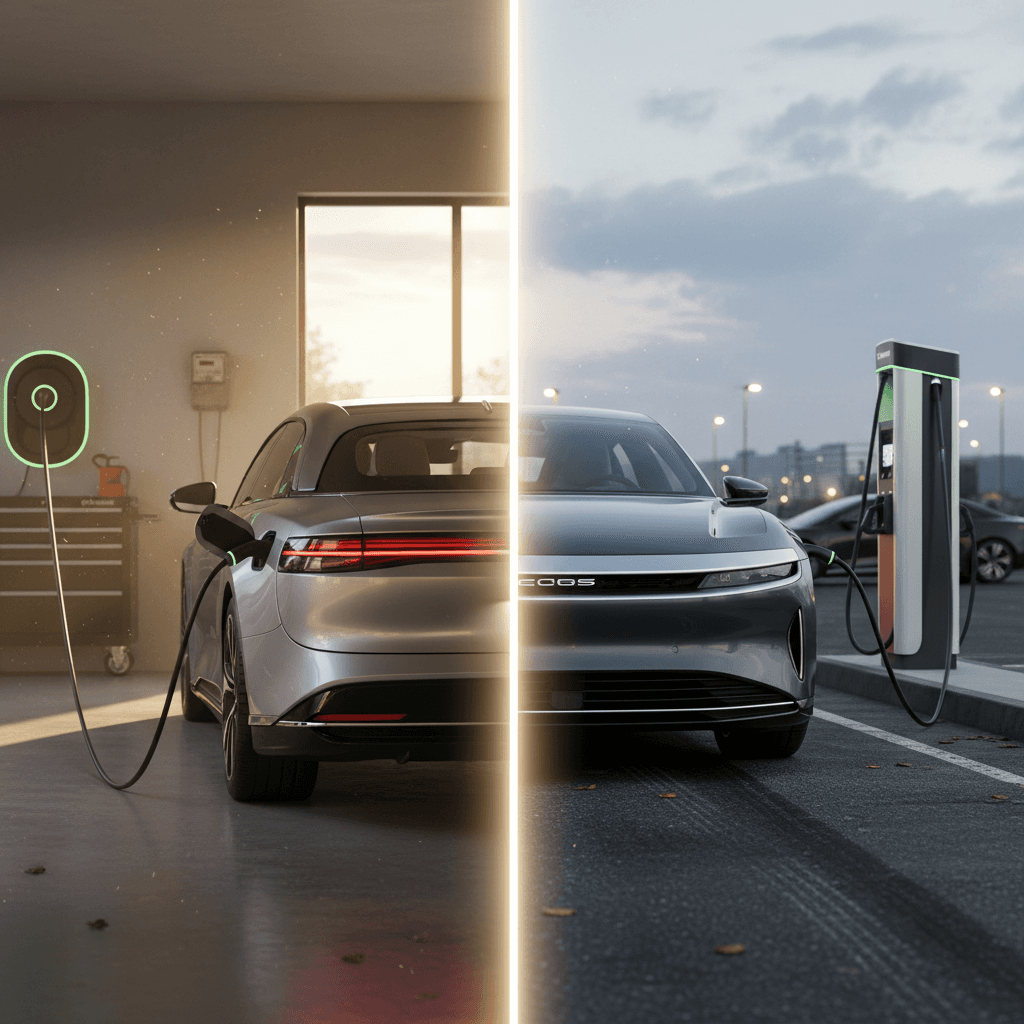
Let’s put some numbers on it using **national averages** and realistic efficiency. - Recent federal and industry data put **average U.S. residential electricity** in the high‑teens cents per kWh; using **$0.19/kWh** is a fair, slightly conservative national estimate. - Lucid’s own data and independent testing show many Air trims can hit **4–5 miles per kWh** in favorable conditions, with **3.3–4.0 mi/kWh** common in everyday mixed driving. If you assume **4 mi/kWh** and **$0.19/kWh at home**: - **Cost per mile = $0.19 ÷ 4 ≈ $0.048 per mile** (about 4.8 cents) If you mainly road‑trip on **DC fast chargers around $0.45/kWh**: - **Cost per mile = $0.45 ÷ 4 ≈ $0.11 per mile** (about 11 cents) We’ll refine that by trim and driving style, but this gives you the ballpark: **home charging a Lucid Air usually costs only a few pennies per mile**.
Rule-of-thumb shortcut
Lucid Air efficiency: why cost per mile is so low
Cost per mile is simply **electricity price ÷ miles per kWh**. Lucid made the Air obsessively efficient, so it squeezes more miles out of every kWh than most rivals.
Lucid Air efficiency in plain English
How the Air turns kilowatt‑hours into miles
Slippery aerodynamics
The Air’s cab‑forward design and ultra‑low drag coefficient mean it slices through the air, wasting less energy at highway speeds.
Efficient motors + electronics
Lucid’s in‑house drive units and 900+V architecture reduce electrical losses, so more of each kWh reaches the wheels.
Fine‑tuned software
Smart thermal management and drive modes help the car stay in its sweet spot, especially in Pura and Smooth modes.
In testing and owner reports, that translates into **real‑world efficiencies** roughly like this: - **Air Pure** (RWD, lighter, very aero‑focused): often **4.0–4.5 mi/kWh**, and 5+ on gentle highway runs. - **Air Touring & Grand Touring**: commonly **3.4–4.0 mi/kWh** depending on wheels, speeds, and climate. - **Dream / Sapphire / performance trims**: more power and wider tires knock that down to roughly **3.0–3.3 mi/kWh**, still strong for their performance class. Those numbers are what we’ll use to build **trim‑specific cost‑per‑mile estimates** later in this guide.
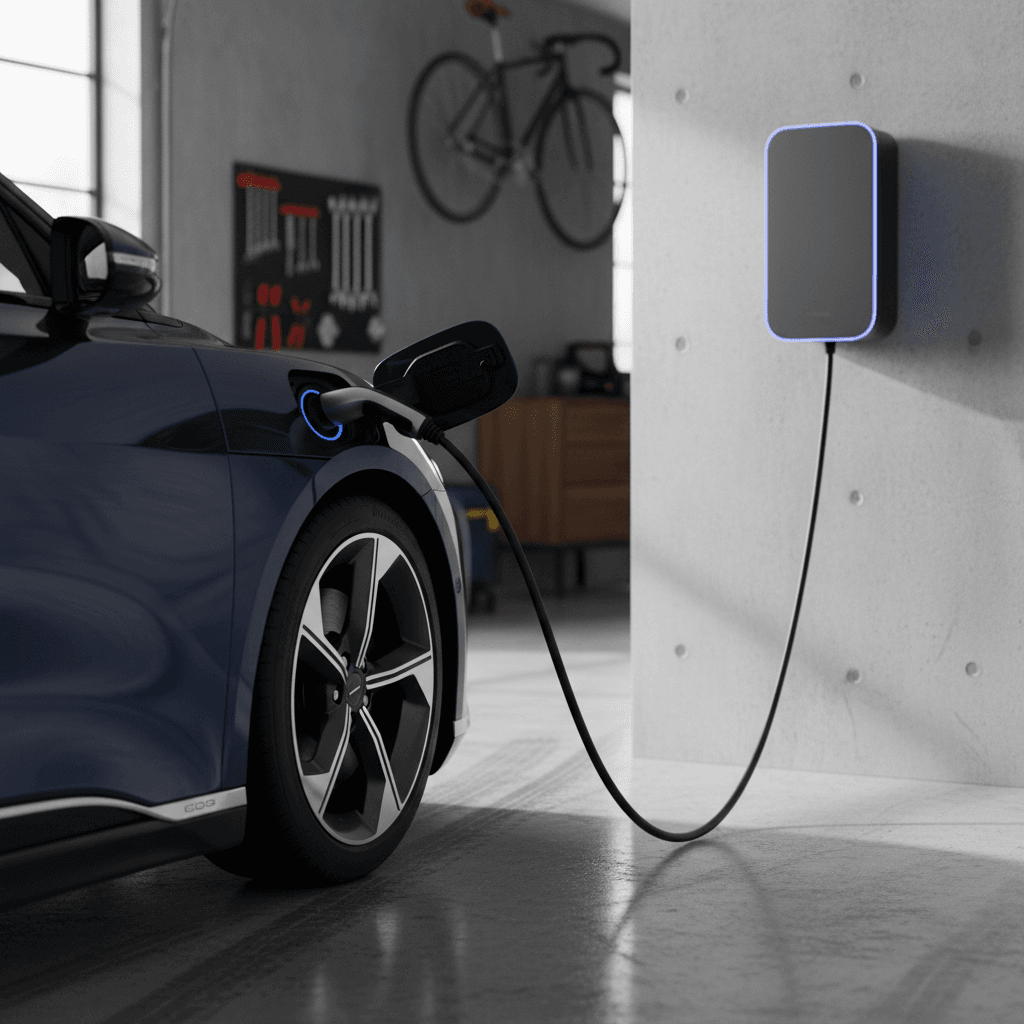
Home charging: Lucid Air cost per mile
For most owners in the U.S., **home charging is where the Lucid Air really shines on running costs**. You’re bypassing network fees and demand charges and just paying your local residential rate.
Estimated Lucid Air home charging cost per mile
Assumes mixed driving and typical real‑world efficiency for each scenario. Electricity prices shown in U.S. dollars per kWh.
| Scenario | Electricity price (per kWh) | Assumed efficiency (mi/kWh) | Approx. cost per mile |
|---|---|---|---|
| Low-cost region or off‑peak rate | $0.13 | 4.2 | ≈$0.03 |
| Average U.S. residential rate | $0.19 | 4.0 | ≈$0.05 |
| High‑cost coastal metro | $0.28 | 3.7 | ≈$0.08 |
Use this as a guide, your actual numbers depend on your exact rate plan and driving style.
A few key takeaways from the table: - Even in **expensive electricity markets**, a Lucid Air at home is often **under 10 cents per mile**. - If you live in a lower‑cost state or use **off‑peak EV rates**, you can realistically see **2–3 cents per mile**. - Your **driving style matters as much as your rate**. Gentle highway cruising at 65 mph can add a whole extra mile per kWh versus 80+ mph hammering.
Watch for demand and “delivery” charges
Simple ways to lower your Lucid Air home charging cost per mile
1. Enable scheduled charging
Most utilities offer cheaper electricity late at night. Use your Lucid’s charging schedule or wall‑box scheduler so the car charges during off‑peak windows.
2. Confirm a 240V Level 2 setup
Level 1 (120V) works, but a **proper Level 2 (240V) charger** is more efficient and lets you stay in the sweet spot of the pack, topping off more frequently instead of deep cycling.
3. Track mi/kWh in the car
Reset a trip computer every month and watch your **miles per kWh**. Small tweaks, tire pressure, speed, climate settings, can shift cost per mile noticeably.
4. Consider EV‑specific utility plans
Many utilities now offer **time‑of‑use or EV plans**. If you can shift most charging to cheap hours, your effective cost per mile can drop by 30–40%.
Public DC fast charging cost per mile
Public DC fast charging, whether CCS stations or Tesla Superchargers via adapter, is about **convenience and speed**, not rock‑bottom cost. You’re paying for infrastructure, reliability, and location. For a Lucid Air, that still usually works out cheaper per mile than a comparable gas sedan, but it’s nowhere near home‑charging cheap.
Typical DC fast pricing
- Many big‑name networks, and some Tesla Superchargers for non‑Tesla EVs, fall in the **$0.35–$0.55/kWh** range in the U.S.
- Some sites add **per‑minute**, idle, or session fees, which effectively raise the per‑kWh price.
- State taxes and local fees can nudge prices even higher in specific markets.
Lucid Air cost per mile at those rates
- At **$0.40/kWh** and **3.7 mi/kWh** (Touring/GT style driving): roughly **$0.11 per mile**.
- At **$0.50/kWh** and **3.3 mi/kWh** (performance trims, fast driving): roughly **$0.15 per mile**.
- Even at those prices, road‑tripping a Lucid Air usually undercuts a thirsty V8 sedan on fuel cost.
Lucid Air and Tesla Superchargers
Lucid Air vs. gas luxury sedan cost per mile
To really feel what those pennies per mile mean, compare the Lucid Air to a typical gas luxury sedan, think BMW 7 Series, Mercedes‑Benz S‑Class, or Audi A8 on premium fuel.
Energy cost per mile: Lucid Air vs gas luxury sedan
All numbers are approximate, using realistic assumptions for daily driving and national average prices.
| Vehicle & scenario | Energy price assumption | Efficiency assumption | Approx. cost per mile |
|---|---|---|---|
| Lucid Air, home charging | $0.19/kWh | 4.0 mi/kWh | ≈$0.05 |
| Lucid Air, DC fast charging | $0.45/kWh | 3.7 mi/kWh | ≈$0.12 |
| Gas luxury sedan (premium), city/highway mix | $4.25/gal | 24 mpg | ≈$0.18 |
| Gas performance sedan (premium), spirited driving | $4.25/gal | 18 mpg | ≈$0.24 |
This table is about energy cost only, maintenance and depreciation tilt even further in the EV’s favor over time.
What this looks like over 12,000 miles
Trim-by-trim Lucid Air cost per mile estimates
Lucid Air trims share the same basic platform, but weight, wheel size, and power output change efficiency. Here’s how that translates into **rough cost‑per‑mile bands** using average U.S. home electricity prices (~$0.19/kWh) and mixed driving.
Estimated cost per mile by Lucid Air trim (home charging)
Assumes mild weather, mixed driving, and stock wheels
Air Pure (RWD)
Typical efficiency: ~4.2–4.6 mi/kWh
Approx. cost per mile:
At $0.19/kWh → ≈$0.04–$0.045
Lightest and most efficient; owners often see high 4s mi/kWh on relaxed highway trips.
Air Touring
Typical efficiency: ~3.6–4.1 mi/kWh
Approx. cost per mile:
At $0.19/kWh → ≈$0.046–$0.053
All‑wheel drive and more power nibble at efficiency, especially with larger wheels.
Air Grand Touring
Typical efficiency: ~3.5–3.9 mi/kWh
Approx. cost per mile:
At $0.19/kWh → ≈$0.049–$0.054
Big‑battery range champ; real‑world cost per mile still hovers around a nickel when charged at home.
Performance‑oriented Dream Edition and Sapphire models, with wide performance tires and massive power, usually land a bit lower in efficiency, **around 3.0–3.3 mi/kWh in day‑to‑day use**. At $0.19/kWh, that’s roughly **$0.06–$0.065 per mile at home**, still far under a gas performance sedan.
Big wheels, big hit
Real-world variables that change your cost per mile
- **Speed**: Aero drag climbs quickly above 70 mph. A Lucid Air that does 4.3 mi/kWh at 65 mph might drop to ~3.4 mi/kWh at a fast‑paced 80+ mph cruise.
- **Temperature**: Very cold or very hot weather means more energy spent heating or cooling the cabin and battery, often trimming efficiency by **10–30%** in winter.
- **Terrain and wind**: Long climbs and headwinds quietly chew through kilowatt‑hours; long downhill or tailwind stretches do the opposite.
- **Tire choice and pressure**: Aggressive performance tires and low pressures add rolling resistance; stick with appropriately rated, low‑rolling‑resistance tires and check pressures monthly.
- **Battery state of charge window**: Fast charging is most efficient when you stay in the **10–70%** window on road trips. Pushing to 100% often adds time and a bit of extra energy overhead for little usable range.
Track your real-world cost
How to estimate your own Lucid Air charging costs
You don’t need a spreadsheet full of formulas to get close on what your Lucid Air will cost per mile. Here’s a simple step‑by‑step method you can adapt to your home rate and driving style.
5-step DIY Lucid Air cost-per-mile calculator
1. Find your real all-in kWh price
Grab a recent electric bill, divide **total electricity charges** (including taxes and fees) by **total kWh used**. That’s your true **$/kWh**, not just the advertised rate.
2. Pick a realistic efficiency number
If you already drive the car, use your average **mi/kWh** from the dash. Shopping used? Assume **4.2 mi/kWh** for a Pure, **3.7–3.9** for Touring/Grand Touring, **3.1–3.3** for performance trims.
3. Do the simple division
Cost per mile = **(price per kWh) ÷ (mi per kWh)**. Example: $0.17 ÷ 3.8 mi/kWh ≈ $0.045 per mile.
4. Layer in public charging
Estimate **what share of your miles** will be on DC fast charging (say 20%). Use a higher kWh price like **$0.40–$0.50** for those miles, then blend the two costs based on your mix.
5. Sanity-check against your current car
Run the same math for your gas car: fuel price ÷ mpg. Comparing the two side‑by‑side over **10,000–15,000 miles/year** gives you a realistic savings picture.
Buying a used Lucid Air? Running costs to check
If you’re shopping for a **used Lucid Air**, cost per mile is one of its biggest advantages over gas, but only if you understand the full picture, battery health, charging access, and your local electricity rates.
Used Lucid Air: 4 things that affect real cost per mile
What to check before you buy
1. Battery health & usable capacity
A Lucid Air with a healthy battery can maintain excellent efficiency and range for years. A degraded pack means more frequent charging and higher cost per mile.
Every EV listed on Recharged includes a Recharged Score battery health report, so you know the pack’s condition before you buy.
2. Your charging mix
Will you charge mostly at home, or are you relying on workplace and public DC fast charging? A car that lives on fast chargers will cost more per mile than one that mostly sips cheap home energy.
3. Wheel/tire setup
That used Air on 21‑inch wheels might look fantastic, but it will typically cost more per mile in energy. If efficiency is your priority, look for cars on 19‑inch aero‑oriented wheels.
4. Your home electrical setup
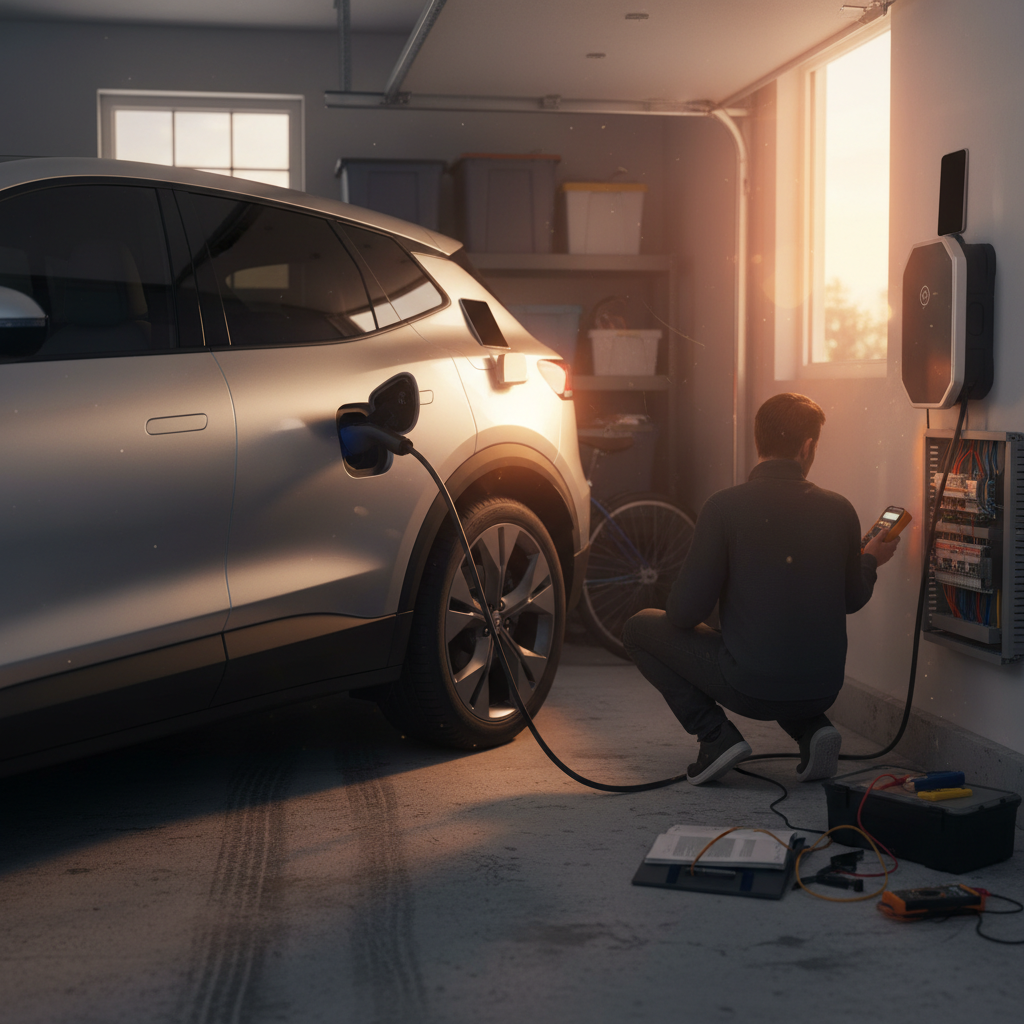
Do you already have a 240V circuit in your garage or carport? If not, budget for an installation. Recharged’s EV specialists can help you understand home charging options and costs as part of the buying process.
How Recharged can help
Ready to find your next EV?
Browse VehiclesLucid Air charging cost per mile: FAQ
Common questions about Lucid Air charging costs
Key takeaways on Lucid Air charging costs
When you boil it down, the **Lucid Air charging cost per mile** is one of its superpowers. Charged mostly at home on a typical U.S. rate, you’re often looking at **around a nickel per mile**, sometimes less. Even when you lean on public DC fast chargers, the Air usually undercuts comparable gas luxury sedans by a healthy margin, especially if you drive a lot of miles each year.
- Figure out your true **all‑in electricity rate** from your bill, not just the advertised cents per kWh.
- Pick a realistic **mi/kWh** number based on your trim and driving, higher for Pure, slightly lower for Touring/Grand Touring and performance models.
- Use the simple formula **cost per mile = (price per kWh) ÷ (mi per kWh)** to sanity‑check your numbers.
- Remember that **wheel choice, speed, climate, and charging mix** can swing your real cost per mile by several cents.
- If you’re shopping used, lean on tools like the **Recharged Score battery health report** and EV‑savvy support to understand not just what you’ll pay for the car, but what it’ll cost to drive every mile.
If you’re ready to put real numbers to your own situation, grab a power bill and your current car’s fuel log, then run the math. And if a used Lucid Air is on your shortlist, Recharged can help you **compare options, evaluate battery health, line up financing, and arrange nationwide delivery**, so you know exactly what each mile will cost before you ever plug in.