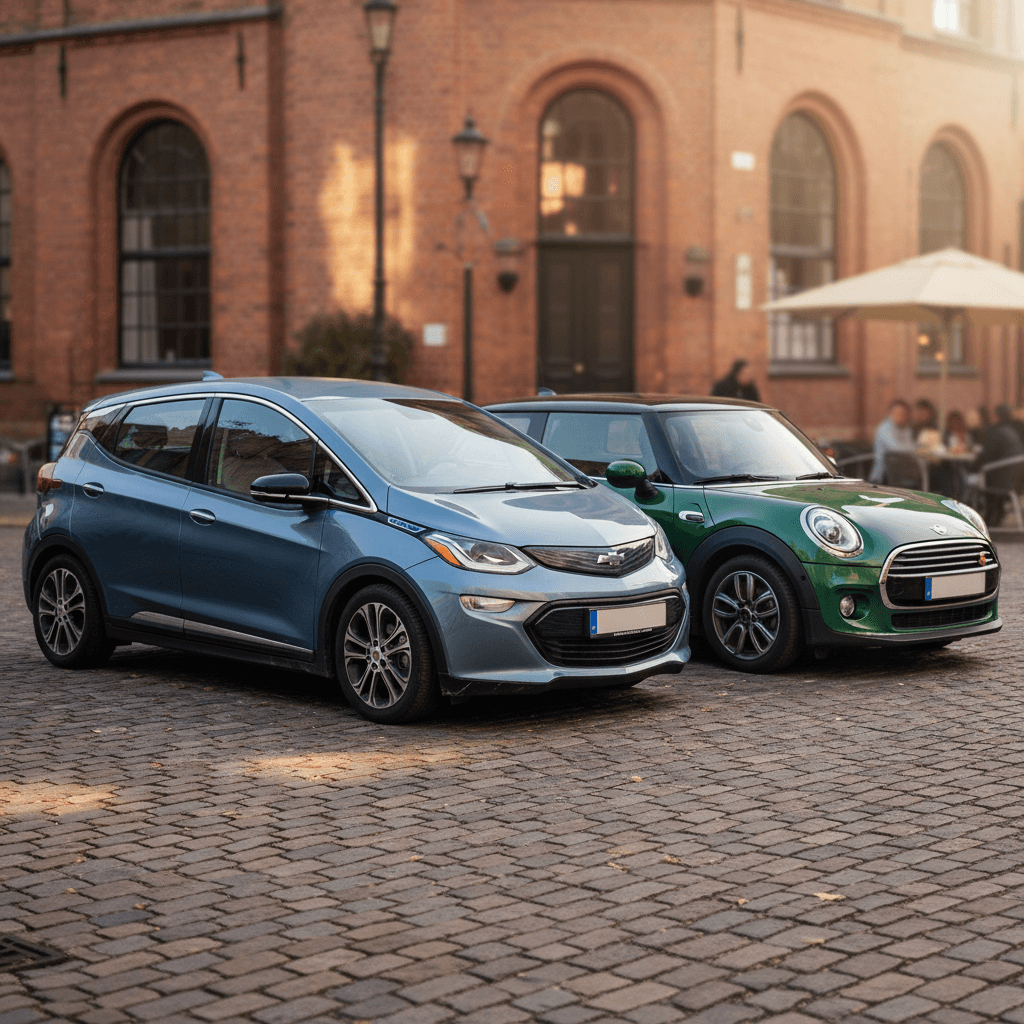
You’re choosing between a Chevrolet Bolt EV and a Mini Cooper SE because you want a small electric car that’s easy to park, cheap to run, and actually fun to drive. On paper they look similar, compact hatchbacks with zippy electric torque. But once you start living with them, their personalities couldn’t be more different. This guide walks through Chevrolet Bolt EV vs Mini Cooper SE in the real world so you can decide which used EV actually fits your life.
Both are now primarily used‑market plays
Overview: Bolt EV vs Mini Cooper SE in the real world
Chevrolet Bolt EV: The practical overachiever
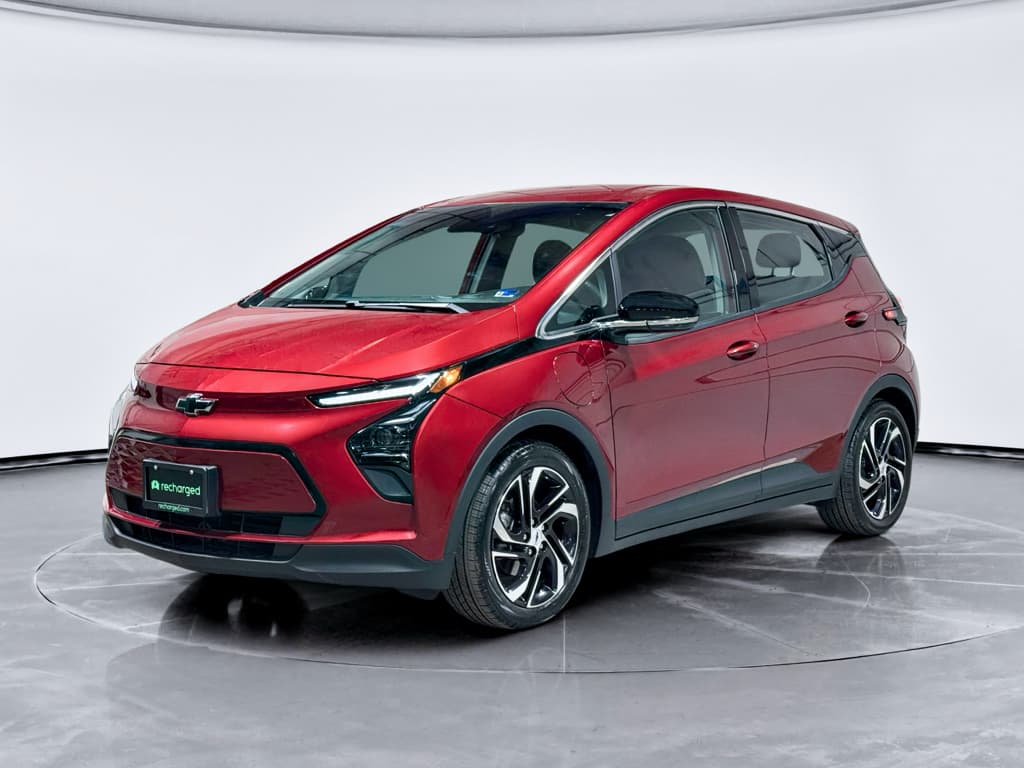
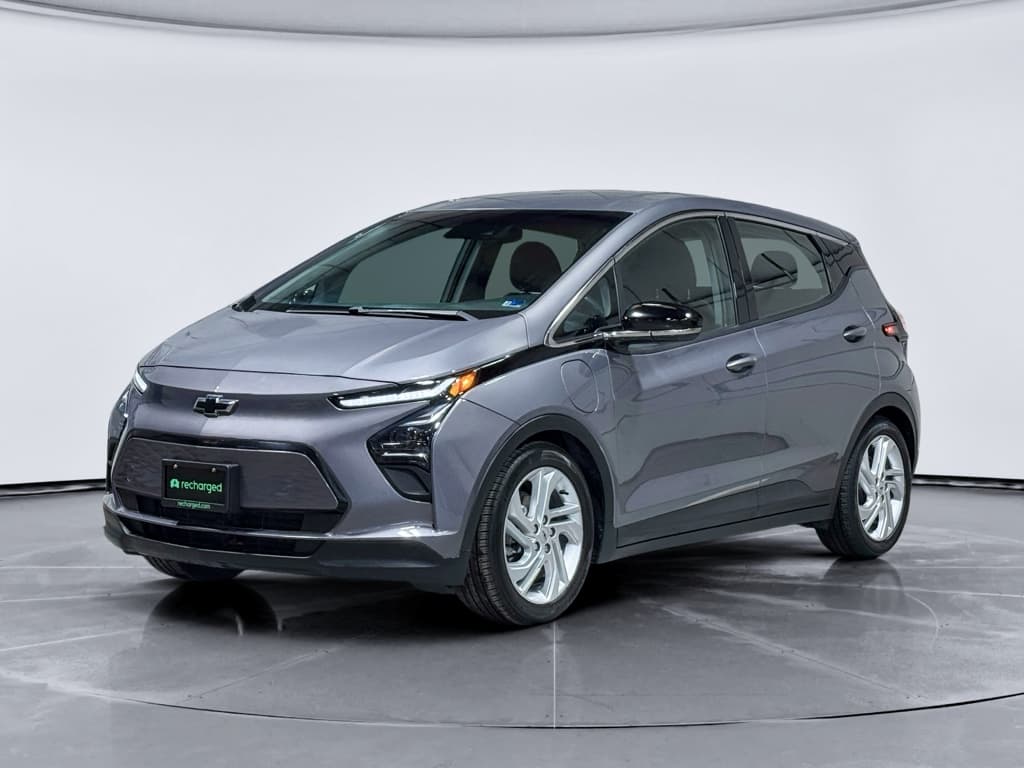
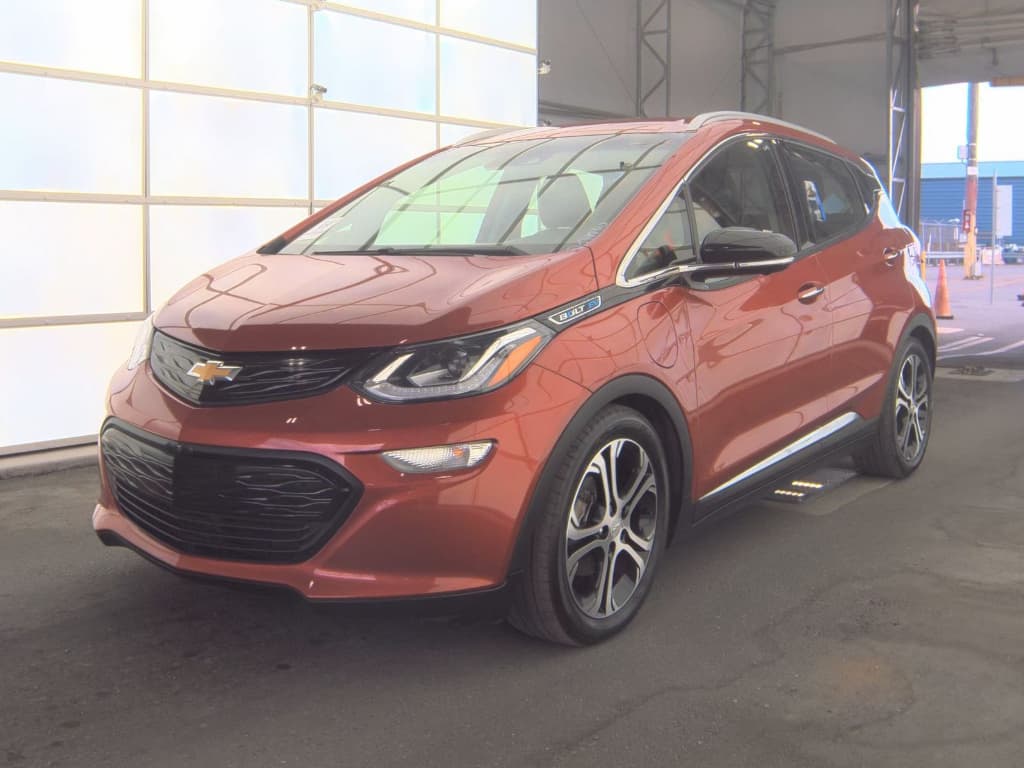
The Bolt EV is the kid in class who quietly aces every test. It offers much more range, real four‑door practicality, and useful cargo space in a footprint not much bigger than a subcompact. It’s easy to live with, efficient on the highway, and shockingly affordable on the used market.
- Best for: Long commutes, one‑car households, budget‑conscious shoppers, light road‑trippers.
- Weak spots: Interior feels more mainstream than special, DC fast charging is slow by modern standards.
Mini Cooper SE: The urban charmer
The Mini Cooper SE is the one that makes you take the long way home. It has short real‑world range but delivers joy every mile: quick steering, a playful chassis, and that unmistakable Mini style. Think of it as an electric hot hatch built for the city, not the interstate.
- Best for: Short city commutes, second‑car households, style‑first buyers who want a premium feel.
- Weak spots: Limited highway range, tight rear seat and cargo, new it depreciated quickly.
Used EV tip
Quick specs: Chevrolet Bolt EV vs Mini Cooper SE
Core specs: Bolt EV vs Mini Cooper SE (U.S.‑market, typical trims)
Exact numbers vary by model year and test cycle, but this gives you the shape of the two cars.
| Spec | Chevrolet Bolt EV (2017–2023) | Mini Cooper SE (2020–2024) |
|---|---|---|
| Body style | 5‑door hatchback | 3‑door hatchback |
| Battery capacity (approx. gross) | 66 kWh (later years) | ~32–33 kWh (F56 generation) |
| EPA range | Up to ~259 miles (2023) | ~110–114 miles EPA equivalent |
| Motor output | ~200 hp, FWD | ~181 hp, FWD |
| 0–60 mph (approx.) | 6.5–6.9 seconds | 6.9 seconds |
| DC fast‑charge peak | ~55 kW | ~50 kW |
| Level 2 AC charging | Up to 7.2 kW (later years 11.5 kW) | Up to 7.4 kW |
| Cargo space (rear seats up) | ~16.6 cu ft | ~8–9 cu ft |
| Seating | 5 seats | 4 seats |
| Typical used price (US, early 2020s) | Often mid‑teens to low‑20s, trim/year dependent | Often high‑teens to mid‑20s, spec/condition dependent |
Bolt EV dominates on range and space; Mini Cooper SE counters with premium feel and performance punch.
About the numbers
Range and battery: commuter confidence vs city fun
If you’re comparing Chevrolet Bolt EV vs Mini Cooper SE, range is the first fork in the road. One is a true do‑almost‑anything compact EV. The other is honest about being a city car.
Real‑world range expectations
What you can reasonably plan for with a healthy battery
Chevrolet Bolt EV
- EPA up to ~259 miles on later 66 kWh cars.
- Many owners report ~220–240 miles at 70 mph in mild weather.
- Winter highway range can dip toward ~170–190 miles depending on climate and heater use.
For most commuters, that’s several days of driving on a single charge.
Mini Cooper SE
- EPA roughly 110–114 miles for the earlier F56‑generation SE sold in the U.S.
- At 70 mph you may see 80–95 miles of comfortable range.
- Cold‑weather highway stints can feel short, closer to 60–75 miles before you’d like a recharge.
Perfectly workable for short daily routes and city use, but you need to be honest about your habits.
Cold‑weather reality check
Battery technology is only half the story. The Bolt EV’s pack simply has more usable energy, which buys you flexibility, detours, weather, unexpected errands. The Mini asks you to plan around its limits. If your daily drive is 25 miles round‑trip with reliable home charging, that plan can work beautifully. If you’re at 70–80 miles a day, the Bolt starts looking like the obvious choice.
Charging and road trips: how far can you actually go?
Both cars support DC fast charging and Level 2 AC charging, but they behave differently out on the road. Neither is a modern 200 kW road‑trip monster, and that matters if you’re dreaming of cross‑country adventures.
Charging at a glance
On the highway in a Bolt EV
The Bolt’s range means you can often skip every other charger. On a 250‑mile trip, you might not need to stop at all if you leave with a full battery and drive reasonably. On a 400‑mile day, you’re looking at one or two ~30–40‑minute DC fast‑charge stops, depending on temperature and speed.
The downside: fast‑charge rates top out in the mid‑50 kW range, so a deep recharge isn’t quick. When newer EVs are pulling 150–250 kW next to you, the Bolt feels like the early‑adopter it was.
On the highway in a Mini Cooper SE
In the Mini, the limiting factor isn’t charging speed, it’s how soon you need to plug in again. A 150‑mile day with highway speeds and some heater use can easily need two short charging stops. The upshot is that the small battery refills relatively quickly, but you’re hopping from charger to charger.
For occasional weekend trips that can be charming. For regular long‑distance duty, it gets old in a hurry.
Home charging is the great equalizer
Space, comfort, and practicality for daily life
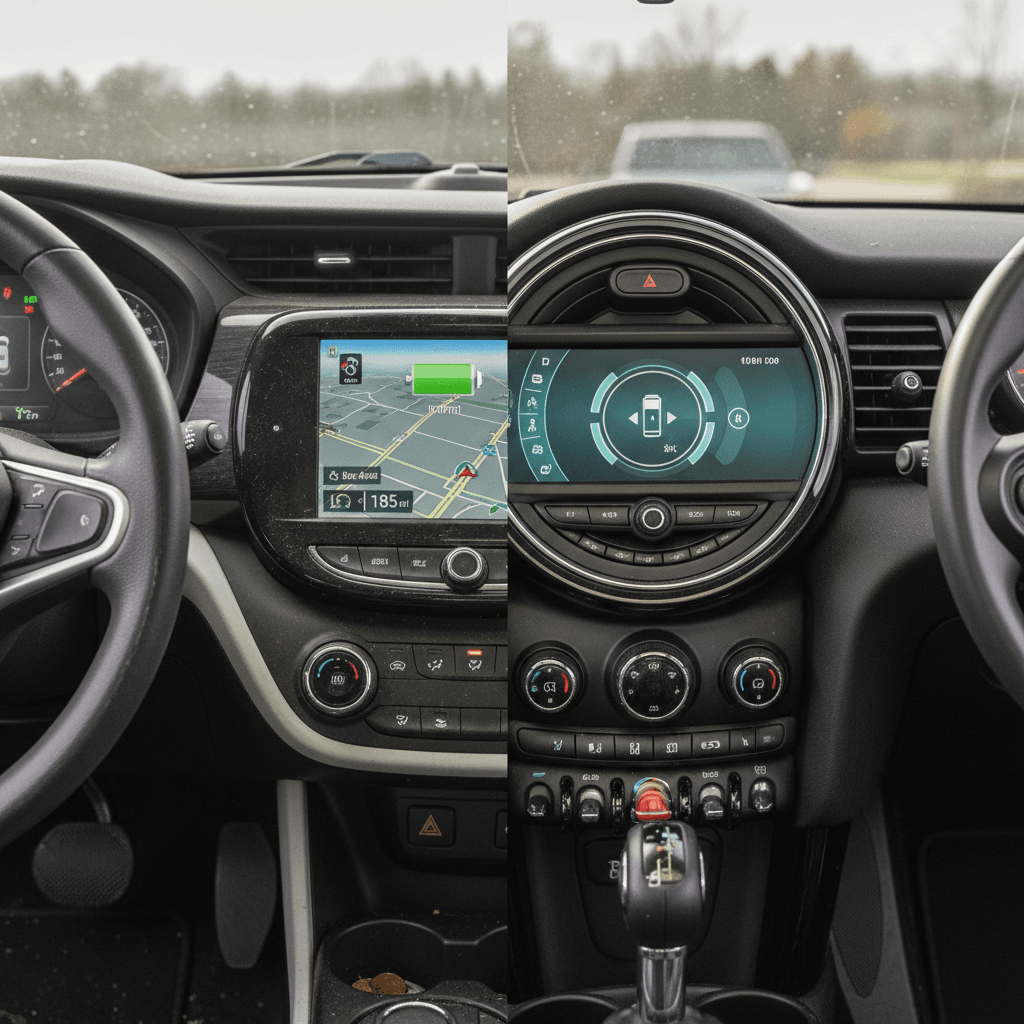
This is where the Chevrolet Bolt EV quietly pulls away. You may buy an EV for the drivetrain, but you live with it as a car, grocery runs, passengers, car seats, Costco, the dog crate that never quite fits.
Practicality: where the inches matter
How each car handles the boring but important stuff
Chevrolet Bolt EV
- Four real doors and a surprisingly roomy back seat for adults.
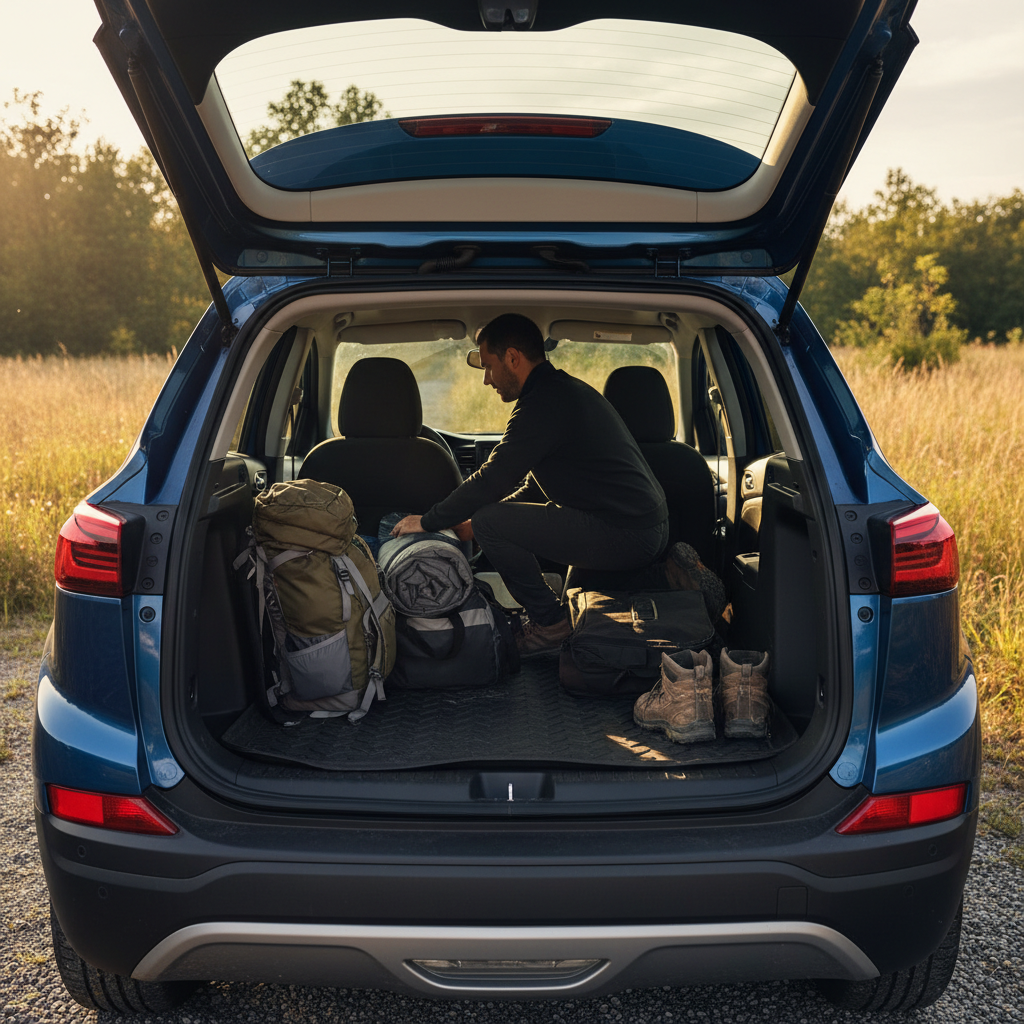
- Cargo space around the mid‑teens in cubic feet with seats up, and over 50 cu ft seats folded.
- Upright seating position and big windows make it easy to see out of and easy to park.
- Rear doors and hatch opening make installing child seats or loading bulky items much less of a wrestling match.
Mini Cooper SE
- Three‑door layout is charming but less convenient if you regularly carry rear passengers.
- Back seat is adult‑capable for short trips, but tight on legroom and headroom.
- Cargo space is modest; think city errands and weekend bags, not IKEA furniture runs.
- Feels special inside: distinctive design, materials, and that big circular center display.
Family use snapshot
Driving experience: quiet competence vs go‑kart grin
Both of these cars are quick enough to surprise passengers, but they serve different moods. The Bolt EV is tuned to be calm, predictable, and efficient. The Mini Cooper SE leans into its brand promise of a go‑kart feel.
Behind the wheel of a Bolt EV
In a Bolt, the steering is light, the ride is generally comfortable, and the cabin is quiet around town. You feel the instant torque when you pull away from lights, but it settles into a relaxed groove. One‑pedal driving is well‑tuned, so stop‑and‑go traffic is almost meditative once you get the hang of it.
It’s not a performance car, and it doesn’t pretend to be. The Bolt is about making every commute less stressful, not about carving on‑ramps for fun.
Behind the wheel of a Mini Cooper SE
The Mini SE wakes up the moment you nudge the wheel. Steering is quick, the suspension is firmer, and bends in the road suddenly look like opportunities. That short wheelbase and low‑set battery make it feel planted and playful in a way few small EVs manage.
The tradeoff is ride comfort on broken pavement and highway stability. It’s perfectly safe and capable, but you’re more aware of expansion joints and crosswinds than you are in the Bolt.
The Bolt is the EV you forget about because it just works. The Mini is the one you find excuses to drive.
Ownership costs, reliability, and recalls
On the used market, both the Chevrolet Bolt EV and Mini Cooper SE can be bargains compared with new EVs, but they come with different backstories.
- Bolt EV battery recall: Earlier Bolt EVs were subject to a high‑profile battery recall and pack replacements. Many cars on the road today have newer replacement battery packs and updated software. That can be a blessing, newer packs and extended battery warranties, but only if you confirm the work was done correctly.
- Mini Cooper SE depreciation: The Mini’s limited range and high new‑car prices meant it depreciated quickly. As a used car, that works in your favor if you’re comfortable with the range limits and potential out‑of‑warranty maintenance from a premium brand.
- Routine costs: Both benefit from EV basics: no oil changes, less brake wear thanks to regen, and simple daily charging. Tires may wear a bit faster thanks to instant torque and curb‑weight, particularly on the Mini if you drive it like the hot hatch it is.
- Insurance and repairs: Premium‑brand parts and labor can make Mini repairs pricier than those for a mainstream Chevy, though local market conditions vary. Checking quotes for your ZIP code and driving record is worth the five‑minute call or online form.
Why a battery health report matters
Which used EV fits you better? Scenarios and recommendations
Specs are one thing; mornings in February and late‑night airport runs are another. Here’s how Chevrolet Bolt EV vs Mini Cooper SE shakes out when you plug real lives into the equation.
Match your life to the right EV
1. The one‑car household with a mixed commute
You’ve got school runs, grocery duty, and a 35–60‑mile round‑trip commute a few times a week. You’d like the freedom to take 200–300‑mile weekend trips without sweating every charger. Here, the <strong>Bolt EV</strong> is the easy recommendation. It offers the range buffer and cargo space to be your do‑almost‑everything car.
2. The urban couple with short miles and street parking
You walk and bike a lot, drive 20–40 miles a day, and rarely leave the metro area. The car lives on the street or in a shared garage, but you’ve got access to Level 2 charging a few nights a week. The <strong>Mini Cooper SE</strong> starts to shine here: easy to park, a joy to thread through tight streets, and stylish enough that you glance back as you walk away.
3. The EV‑curious enthusiast
You have another car available for long highway trips, and you want something that makes commuting feel like play. You care about steering feel and interior character more than ultimate practicality. That’s Mini Cooper SE territory. The limited range is less painful when there’s a second vehicle in the driveway.
4. The budget hawk watching every dollar
You want the lowest total cost of ownership you can get without sacrificing usefulness. Here, a <strong>used Bolt EV</strong> with a clean recall history and strong battery health is hard to beat. Its combination of range, practicality, and low running costs makes it one of the best value plays in the used EV market.
5. The growing family planning ahead
Today it’s just you (maybe a partner); tomorrow it’s car seats, strollers, and weekend trips to see grandparents. Even if you don’t need the space yet, the <strong>four‑door Bolt EV</strong> gives you flexibility the three‑door Mini simply can’t match.
The simplest rule of thumb
How Recharged makes buying a used Bolt EV or Mini SE easier
Shopping used EVs shouldn’t feel like homework for a graduate‑level battery course. At Recharged, every Chevrolet Bolt EV and Mini Cooper SE listing includes a Recharged Score Report with verified battery health, pricing transparency, and an easy‑to‑read summary of the car’s history and condition.
Why shop your Bolt EV or Mini SE through Recharged?
Built for EV buyers from the ground up
Verified battery diagnostics
Fair, transparent pricing
Digital‑first, nationwide
Ready to find your next EV?
Browse VehiclesIn the end, the Chevrolet Bolt EV vs Mini Cooper SE decision is less about which car is “better” and more about what your days actually look like. The Bolt EV is the quiet overachiever that covers long commutes, grocery duty, and the occasional road trip without drama. The Mini Cooper SE is the short‑range charmer that trades miles for smiles. Get honest about your driving, let the battery health and pricing guide your shortlist, and either one can be a terrific first, or next, step into electric driving.