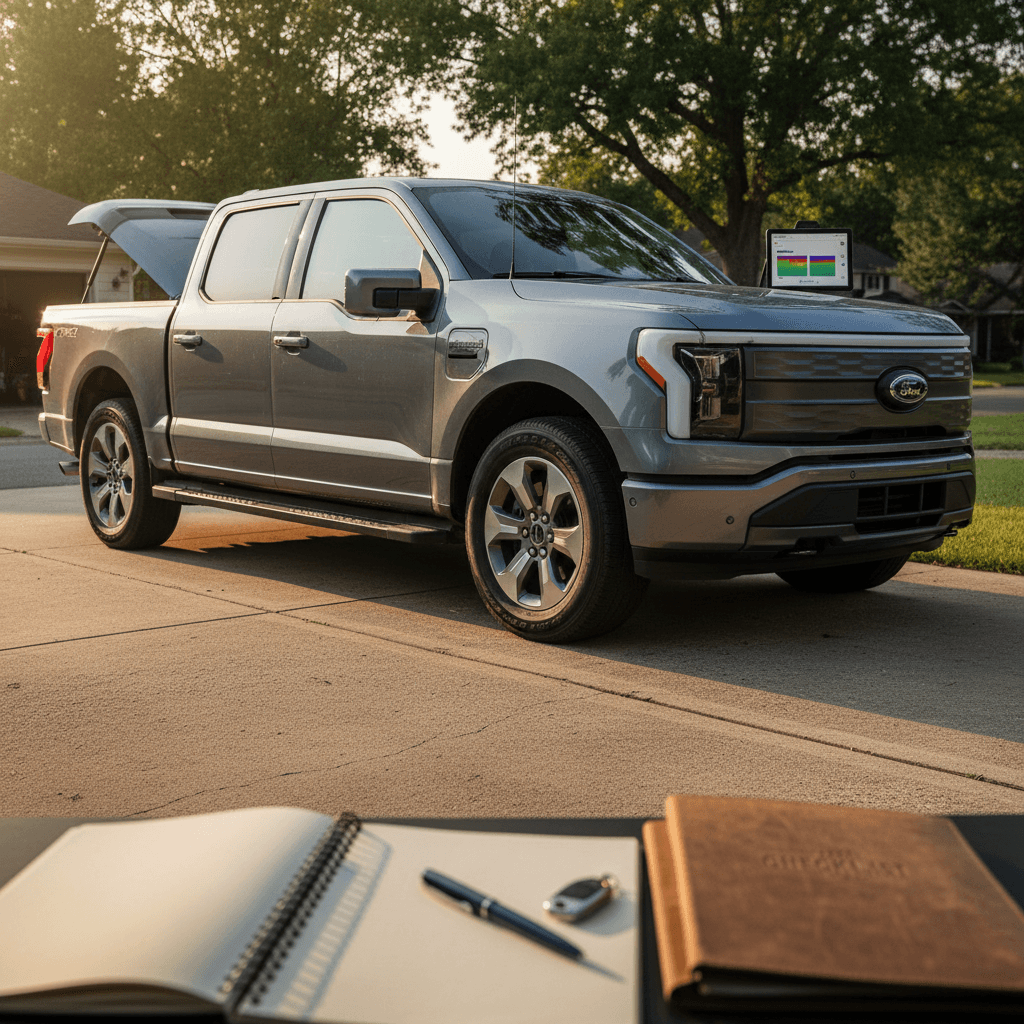
If you’re thinking about selling your Ford F-150 Lightning in 2026, you’re not alone. Prices have shifted quickly, Ford has announced a move away from the current all‑electric Lightning toward a range‑extended successor, and used EV truck buyers are getting more selective. This Ford F-150 Lightning selling checklist walks you step‑by‑step through timing, pricing, prep, paperwork, and safety so you can maximize value and avoid surprises.
Who this checklist is for
Why a Lightning‑specific selling checklist matters
EV trucks don’t sell like gas F-150s. Buyers ask different questions: real‑world range when towing, fast‑charging reliability, battery health, software features, and how the truck has been used.
At the same time, the F-150 Lightning sits in a fast‑moving market. New‑truck discounts and Ford’s strategic pivot away from the current Lightning generation mean pricing and buyer expectations can change month to month.
This checklist focuses on:
- Timing your sale around warranty coverage and market news
- Documenting battery health and charging behavior
- Preparing the truck so range and tech features show well on a test drive
- Making smart decisions about charging equipment and accessories
- Protecting yourself on payment and paperwork
Step 1: Decide when to sell your F-150 Lightning
Before you worry about photos or pricing, decide if now is actually the right time to sell. The F-150 Lightning’s factory warranties and Ford’s product roadmap both play a big role in value.
Key timing factors for Lightning sellers
These often matter more than the exact odometer reading
Warranty window
The Lightning’s high‑voltage battery is covered for 8 years or 100,000 miles, typically with a minimum 70% capacity guarantee. Trucks still well inside that window are easier to sell and command stronger prices.
Model years & news
Model years 2022–2025 are the core Lightning fleet. As Ford transitions to its next‑generation electrified truck, buyers watch headlines closely. Many owners aim to sell years 2–4 of ownership, before warranties roll off and while supply of clean, low‑mile trucks remains limited.
Local incentives & demand
State incentives, utility rebates, and commercial fleet demand can all pull values up or down in specific regions. If your state is rolling out new EV truck incentives, that can be a good window to list.
Practical timing rule of thumb
Step 2: Understand value and set a pricing strategy
The Lightning’s used values have moved faster than many owners expected. Early trucks were sold at high MSRPs; later price cuts and incentives on new inventory reset the baseline. Today, you need to price against the current new‑truck deals, not the sticker that was on your window in 2022.
F-150 Lightning value snapshot (2025–2026 market)
- Check several sources: online appraisal tools, dealer trade‑in offers, and EV‑focused marketplaces. Don’t rely on a single number.
- Compare against new: search advertised prices on new Lightnings in similar trim. If a new truck after discounts is close to your asking price, buyers will expect a big reason to choose yours instead.
- Adjust for trim and battery: extended‑range packs, higher trims, and desirable options (tow package, Max Trailer Tow, Pro Power Onboard) should all move your price up relative to base Pro/STX trucks.
- Account for mileage and condition: heavy towing, commercial wraps, or visible bed damage will push you below clean retail values. Document gentle use if that’s your story.
- Build in negotiation room: price slightly above your walk‑away number, but not so high that you never get serious inquiries. EV shoppers tend to be research‑heavy and will sense unrealistic pricing quickly.
Don’t anchor to your original MSRP
Step 3: Document battery health and warranty coverage
For EV shoppers, battery health is the new engine compression test. The good news: the F-150 Lightning’s pack is engineered for long life, and many owners report limited degradation with normal use. Your job as a seller is to prove it.
Battery health & warranty checklist
Confirm factory battery warranty dates
Pull your in‑service date from the Ford account or original paperwork and calculate the remaining high‑voltage battery warranty (typically 8 years/100,000 miles). Note the exact expiration month and mileage in your listing.
Capture real‑world range data
Before listing, drive your normal mix of city and highway and note typical consumption and projected range at 80–90% charge. Buyers care about ‘what it actually does,’ not just EPA figures, especially if they tow or drive in cold climates.
Avoid selling with a warning light on
If you have any battery‑ or charging‑related warning messages, get them diagnosed and, ideally, repaired under warranty before listing. Unresolved HV system warnings will scare off most retail buyers and drag your price down with dealers.
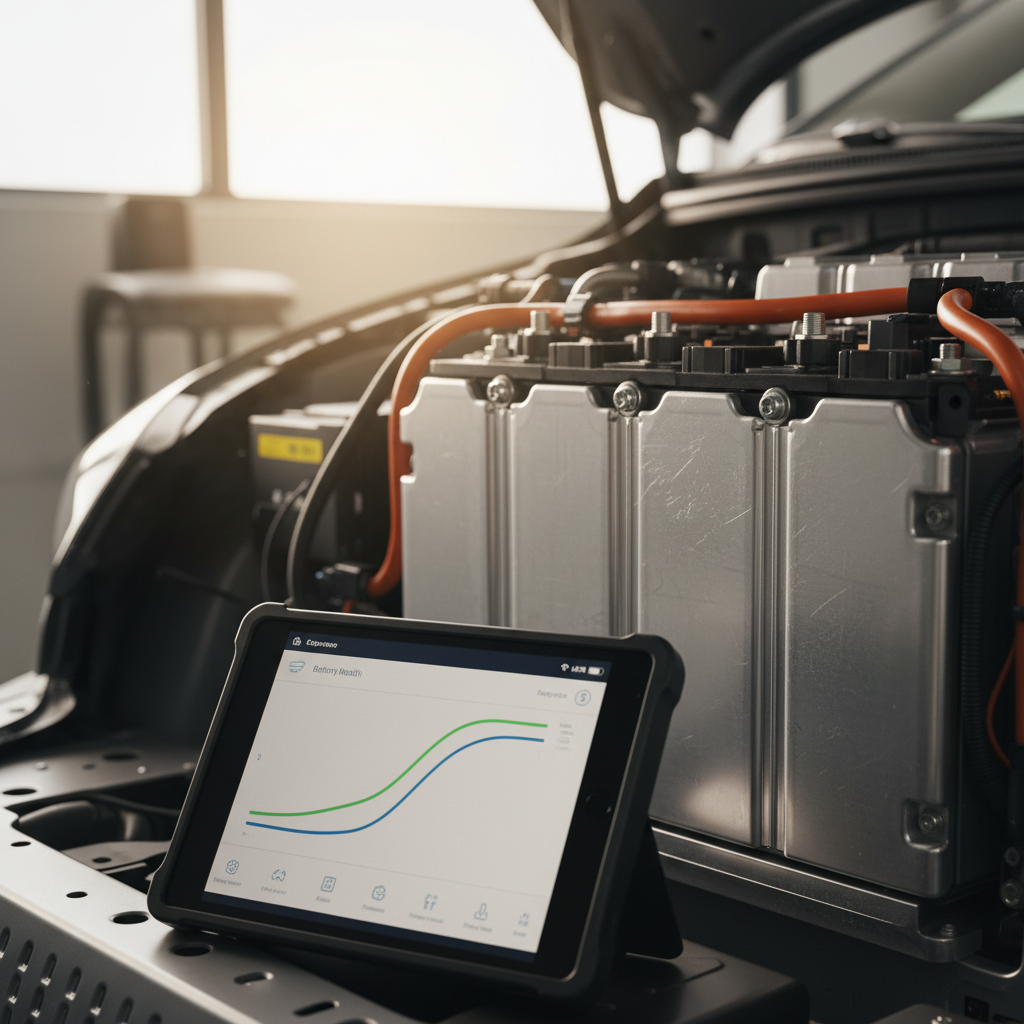
Get a third‑party battery health report
Services like the <strong>Recharged Score</strong> use advanced diagnostics to measure usable battery capacity and charging behavior. Including a recent report in your listing can make your Lightning stand out against trucks with only generic range screenshots.
Explain your charging habits
In your description, mention whether you mostly charged at home, how often you fast‑charged, and if you routinely charged to 100% or capped at 80–90%. Thoughtful charging habits reassure battery‑conscious buyers.
How Recharged can help
Ready to find your next EV?
Browse VehiclesStep 4: Service records, repairs, and recalls
Next up: proving you’ve taken care of the truck. EVs skip oil changes, but service history still matters, especially for software updates, recalls, and any high‑voltage repairs.
Lightning service & history items to pull
Use this table as a mini‑checklist while you gather documentation.
| Item | Why buyers care | Where to find it |
|---|---|---|
| Maintenance & repair invoices | Shows how issues were handled and whether work was done at a Ford dealer or reputable shop. | FordPass/Ford account history, glovebox folder, email receipts. |
| Recall & software update status | Open recalls or overdue software updates can delay registration or reduce features. | Ford owner portal, NHTSA recall lookup, dealer service advisor. |
| Tire and brake history | Heavy towing or aggressive driving shows up in tire and pad wear. | Tire invoices, inspection reports, recent service visit printouts. |
| Collision repair records | EV buyers worry about structural damage and high‑voltage safety after crashes. | Body shop invoices, Carfax/AutoCheck, insurance claim summaries. |
| Charging‑related repairs | Any replaced modules, onboard chargers, or charge ports should be documented. | Dealer service history printouts, warranty repair orders. |
You don’t need a perfect record, but more paperwork almost always equals more buyer confidence.
Be honest about accident history
Step 5: Prep the truck – cosmetics, range, and software
You only get one first impression. With an EV truck, that impression includes how the truck looks, how many miles of range are on the screen, and whether the tech feels up to date.
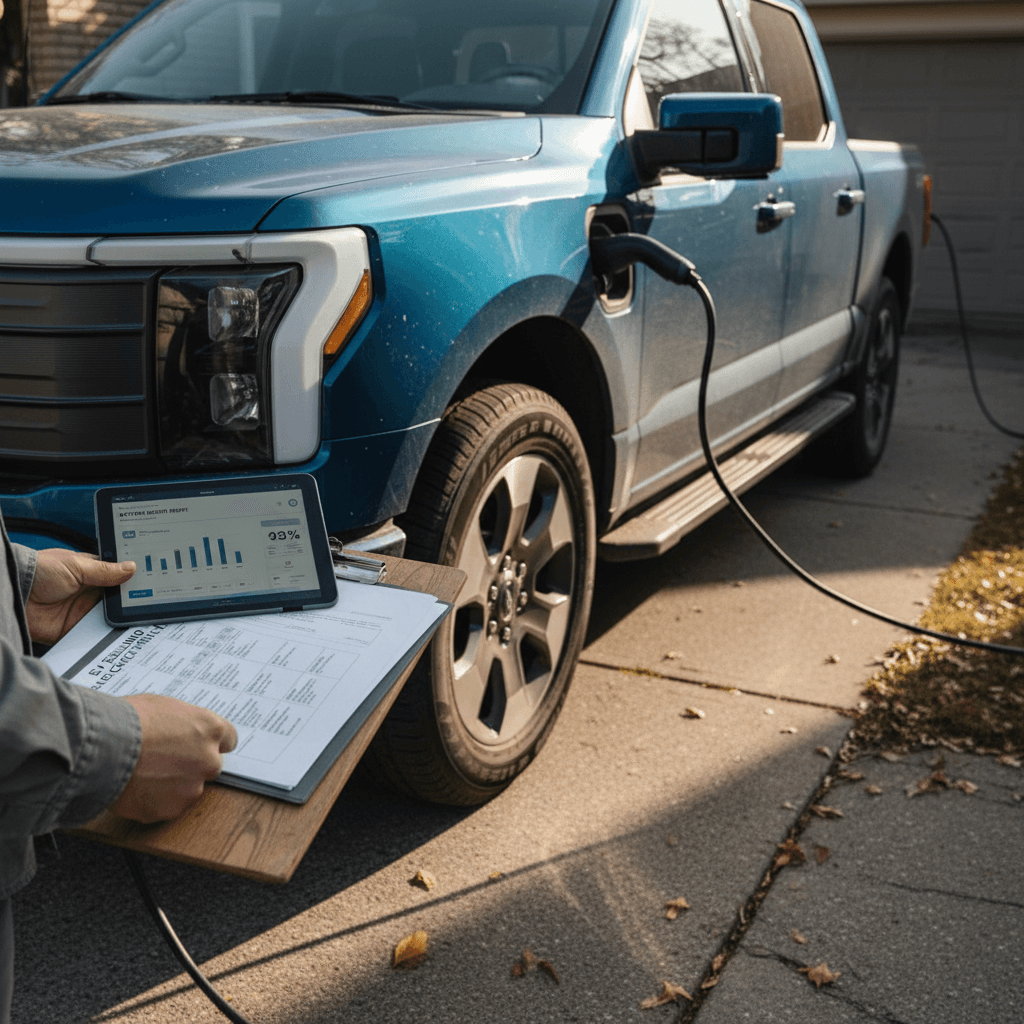
Pre‑sale prep checklist for your Lightning
Detail the exterior and bed
Wash, clay, and wax the paint; clean wheels and glass; address obvious scratches. Clean the frunk and bed thoroughly, truck buyers look there first. A spray‑in liner in good shape is a selling point; a gouged‑up bed is a negotiation lever.
Clean and deodorize the cabin
Steam‑clean or shampoo seats and carpets, wipe down all touchpoints, and remove personal items. EV shoppers expect a quiet, refined cabin; squeaks, rattles, and clutter break the spell.
Set a realistic state of charge for showings
Aim to greet buyers with <strong>60–80% charge</strong>, not 5% or 100%. That gives you enough buffer for a test drive and shows a real‑world range estimate without the ‘showroom full‑charge’ illusion.
Update Ford Power‑Up software
Connect to Wi‑Fi and install any available over‑the‑air updates. Up‑to‑date software improves feature stability and shows that the truck has been maintained digitally, not just mechanically.
Check all EV‑specific features live
Before your first showing, verify that BlueOval Charge Network access, Plug & Charge (if used), Pro Power Onboard outlets, and driver‑assist systems (BlueCruise where equipped) work as expected.
Fix low‑cost items proactively
Replace wiper blades, burned‑out bulbs, and cabin air filters. Deal‑killers like cracked glass, damaged tires, or obvious warning lights are usually cheaper to fix yourself than to ‘discount around’ later.
Step 6: Decide what to include – chargers, accessories, and add‑ons
EV buyers care a lot about how they’ll charge on day one. For a Lightning, that usually means a home Level 2 solution plus the mobile charge cord and any adapters. Decide early which items you’ll include, which you’ll keep, and which you’ll use as negotiation tools.
Common Lightning add‑ons to consider including
Some sweeten the deal; others are better kept for your next EV
Ford Charge Station Pro / home EVSE
If you installed a hard‑wired Ford Charge Station Pro or other Level 2 charger, decide whether to sell the house with it, leave it for the buyer as part of the deal, or remove and reuse it. For many buyers, ‘charger included’ is a big plus, especially if they’re new to EVs.
Mobile charge cord & adapters
Include the OEM mobile charger and any common adapters unless you need them for another EV. Make sure cords are coiled neatly and not damaged. Missing cables are an easy way for buyers to ask for a price cut.
Racks, bed storage, and protection
Bed covers, crossbars, toolboxes, floor liners, and mud flaps are often worth more on the truck than on a classifieds site. If they’re in good shape and match the buyer profile you’re targeting, plan to leave them on and highlight them in the listing.
Use accessories as negotiation levers
Step 7: Create a listing that speaks to EV truck buyers
Your online listing is your first sales pitch. For an F-150 Lightning, generic ‘loaded, runs great’ language won’t cut it. You’re selling a tool, a work truck, and an EV all at once.
Must‑have listing details
- Exact trim, battery, and drive configuration (e.g., 2023 Lariat ER, dual‑motor, extended‑range)
- Current mileage and whether it’s a one‑owner truck
- Remaining factory warranty dates, especially the 8‑year/100,000‑mile battery coverage
- How the truck was used – commuting, light hauling, commercial work, towing
- Charging habits and typical home charging setup
- Recent maintenance, repairs, and software updates
Photos that sell a Lightning
- Front three‑quarter and rear three‑quarter exterior shots in good light
- Close‑ups of wheels, tires, bed, and frunk storage
- Cabin overview plus detail shots (center screen, steering wheel, rear seats)
- A clear photo of the instrument cluster showing mileage and range at a realistic state of charge
- Photos of included charging equipment and accessories
Pro photo tip
Step 8: Safety, test drives, and payment protection
Once your listing is live, the biggest risks aren’t depreciation, they’re personal safety and getting paid. Treat test drives and payments like a professional dealer would, especially if you go the private‑sale route.
Safe selling & payment checklist
Screen buyers before meetings
Ask a few basic questions by phone or message: how they plan to use the truck, how they’ll pay, and whether they’ve owned an EV before. Serious buyers will answer; scammers usually won’t.
Meet in a safe, public place
Choose a bank parking lot, well‑lit public area, or even a police‑station ‘safe exchange’ zone if your city offers one. Avoid inviting strangers to your home unless you’re comfortable and can control the environment.
Control the test drive
Check the buyer’s license, set clear expectations for route and duration, and ride along. For a powerful EV truck, remind first‑time EV drivers about instant torque and regenerative braking before they mash the pedal.
Protect your Ford accounts
Don’t hand over a truck still linked to your FordPass/Ford app. For test drives, temporarily disable remote features if you’re concerned, and <strong>fully remove the vehicle from your account</strong> once the sale is final.
Insist on verified payment
For large sums, use a cashier’s check that you verify at the issuing bank, a wire transfer you see clear, or a transaction completed inside a bank branch. Avoid peer‑to‑peer payment limits and never release the truck on a screenshot alone.
Use a bill of sale
Even in states where the title transfer is the main legal document, a signed bill of sale that lists price, VIN, mileage, and ‘sold as‑is’ language can protect both sides and reduce disputes later.
Step 9: Handle paperwork, titles, tax, and digital accounts
Paperwork on an EV truck looks similar to a gas F‑150, with a few extra digital steps. Check your state’s DMV site for specifics, but plan on handling at least the following items.
- Locate the physical title or payoff information if you still have a loan. Some lenders will only release the title directly to you or to a dealer, which can affect whether private sale is practical.
- Prepare a signed bill of sale with VIN, sale price, mileage, and date. Many states offer simple templates on their DMV websites.
- Remove license plates where required and complete a release‑of‑liability or notice‑of‑transfer form so you’re not on the hook for tickets or tolls after the sale.
- Factory‑reset the infotainment system to wipe your Bluetooth pairings, navigation history, and garage‑door codes.
- Unlink the Lightning from your FordPass / Ford app and make sure features tied to your Ford account, like BlueOval Charge Network billing or Plug & Charge profiles, are no longer associated with the truck. The new owner should set up their own Ford account and payment methods.
Don’t forget the digital handoff
Ford F-150 Lightning selling checklist (printable version)
Here’s a condensed, step‑by‑step Ford F-150 Lightning selling checklist you can screenshot or print. Check off each item as you go.
Lightning selling checklist – quick reference
1. Confirm timing
Note in‑service date, remaining battery warranty, and current mileage. Decide whether you’re selling now or targeting a specific month/season.
2. Research value
Pull estimates from at least two appraisal tools, one dealer trade‑in quote, and one EV‑specific marketplace. Compare against current new‑truck deals in similar trims.
3. Gather records
Collect title or payoff info, service and repair invoices, recall and software‑update confirmations, and any prior inspection or battery‑health reports.
4. Prep the truck
Detail inside and out, fix easy issues, verify EV features (charging, Pro Power Onboard, driver‑assist), and charge to 60–80% before photos or showings.
5. Decide what’s included
List which chargers, adapters, racks, liners, and other accessories are part of the sale, and which you want to keep or use as negotiation tools.
6. Build your listing
Write a detailed description focused on battery health, range, charging habits, and use case. Upload clear photos of the exterior, interior, bed, frunk, and screens.
7. Plan test‑drive logistics
Choose safe meeting spots, set rules for test drives, and decide in advance which payment methods you’ll accept and how you’ll verify them.
8. Finalize paperwork and digital access
Complete the title transfer and bill of sale, file any required DMV forms, remove plates if required, factory‑reset the truck, and unlink it from your Ford and charging accounts.
Should you trade in, sell privately, or sell to Recharged?
Once your Lightning is ready, you still have to choose how to sell it. Each route, dealer trade‑in, private sale, or EV‑focused marketplace like Recharged, has different trade‑offs in price, speed, and effort.
Selling channels for your F-150 Lightning
Match the method to your priorities: time, money, or simplicity
Dealer trade‑in
Best for: Convenience and tax savings when buying another vehicle.
- Fast, one‑stop transaction.
- Potential sales‑tax advantage in many states.
- Typically the lowest dollar amount, especially if the dealer is wary of used EV trucks.
Private sale
Best for: Maximizing price if you’re willing to do the work.
- Often yields the highest selling price.
- You manage listing, test drives, and paperwork.
- Requires strong screening and payment precautions.
Sell through Recharged
Best for: EV‑savvy buyers, fair pricing, and less hassle.
- Lightning‑specific pricing data and Recharged Score battery diagnostics.
- Options for instant offers, trade‑ins, or consignment‑style selling.
- EV specialist support, digital paperwork, and nationwide buyer reach.
Where Recharged fits in your plan
Ford F-150 Lightning selling FAQ
Frequently asked questions about selling a Ford F-150 Lightning
The Ford F-150 Lightning is still one of the most capable and interesting trucks on the road, but the used market around it is changing quickly. By following this checklist, documenting battery health and service history, and choosing the right selling channel for your situation, you give yourself the best shot at a smooth sale and a strong price. If you’d like expert help along the way, Recharged can provide a Lightning‑specific valuation, a Recharged Score battery report, and a streamlined digital selling experience that’s built from the ground up for EVs.