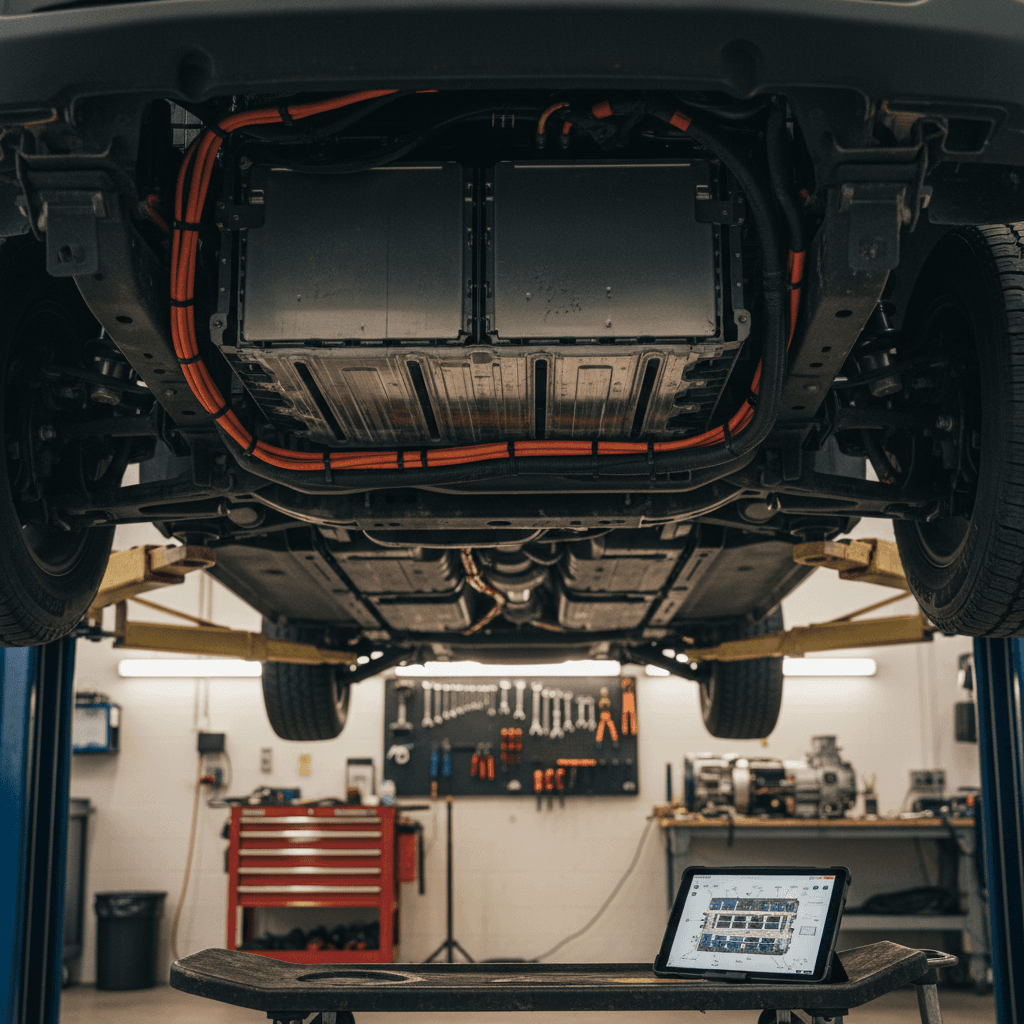
If you’re looking at a Ford F‑150 Lightning, new or used, the big question is simple: what does the Lightning’s battery warranty actually cover? Ford advertises “8 years/100,000 miles,” but the fine print around capacity loss, abuse, and what counts as a defect can be confusing. Let’s break it down like you would across the dealer’s desk, minus the pressure.
Quick answer
Overview: F‑150 Lightning battery warranty in plain English
Key Ford F‑150 Lightning warranty numbers
Ford slices the Lightning’s protection into several layers. For the battery, the most important is the Electric Vehicle Component Coverage: 8 years or 100,000 miles, whichever comes first. That’s on top of the standard 3‑year/36,000‑mile bumper‑to‑bumper and 5‑year/60,000‑mile powertrain coverage the truck shares with gas F‑150s. Where the Lightning is different is the promise that the high‑voltage battery will keep at least 70% of its original capacity during those 8 years/100,000 miles.
Model year note
Core coverage terms: Years, miles, and the 70% rule
Factory warranty coverage on the Ford F‑150 Lightning
How the battery warranty fits alongside the rest of the truck’s factory coverage.
| Coverage type | Term (years/miles) | What it focuses on |
|---|---|---|
| Electric vehicle component (battery & EV hardware) | 8 years / 100,000 miles | High‑voltage battery pack, electric drive unit, and EV‑unique components |
| Battery capacity retention | 8 years / 100,000 miles | Retention of at least ~70% of original usable capacity |
| Powertrain limited warranty | 5 years / 60,000 miles | Motor‑equivalent components, driveline, select electronics |
| Bumper‑to‑bumper | 3 years / 36,000 miles | Most non‑wear parts, interior, electronics, paint defects |
| Corrosion (perforation) | 5 years / unlimited miles | Rust‑through of body panels |
| EV roadside assistance | 5 years / 60,000 miles | Towing for breakdowns, including running the battery flat |
Terms are measured from the original in‑service date, not the model year.
Two clocks matter most for the Lightning’s battery: time and miles. The warranty starts on the truck’s original in‑service date, when it was first sold or put into demo/service use, and runs until either 8 years have passed or the odometer hits 100,000 miles. Hit either limit and the high‑voltage battery warranty expires, regardless of how the pack looks on a diagnostic screen.
Coverage is not “8 years for you,” it’s 8 years from new
What the F‑150 Lightning battery warranty actually covers
Battery warranty coverage: the big buckets
Think of the warranty as protection against defects and excessive capacity loss, not a guarantee the battery will never age.
1. Defects in materials or workmanship
If the high‑voltage battery pack or EV‑specific hardware fails because something was built or assembled wrong at the factory, Ford is on the hook during the 8‑year/100,000‑mile window.
That can include:
- Internal pack faults
- Bad cells or modules
- Battery junction boxes or contactors
- EV control modules related to the pack
2. EV‑specific components, not just the pack
The Electric Vehicle Component Coverage isn’t limited to the big metal box under the floor. It also extends to many supporting components unique to EVs, such as:
- Electric drive unit (e‑motor assembly)
- On‑board charger
- DC‑DC converter
- Some high‑voltage wiring and connectors
The exact parts list can vary by model year, so the warranty guide is the final word.
3. Excessive capacity loss (below ~70%)
All lithium‑ion batteries lose some capacity over time. Ford draws the line at about 70% of original usable capacity within 8 years/100,000 miles.
If your pack drops below that threshold under normal use, and there’s no sign of abuse or excluded damage, Ford may repair or replace it under warranty.
In practical terms, if your Lightning is within 8 years and 100,000 miles and the battery fails outright or clearly drops below the 70% capacity line under normal use, Ford typically treats that as a warranty event. That could mean replacing individual modules, or in many real‑world cases, swapping in a remanufactured or new pack.
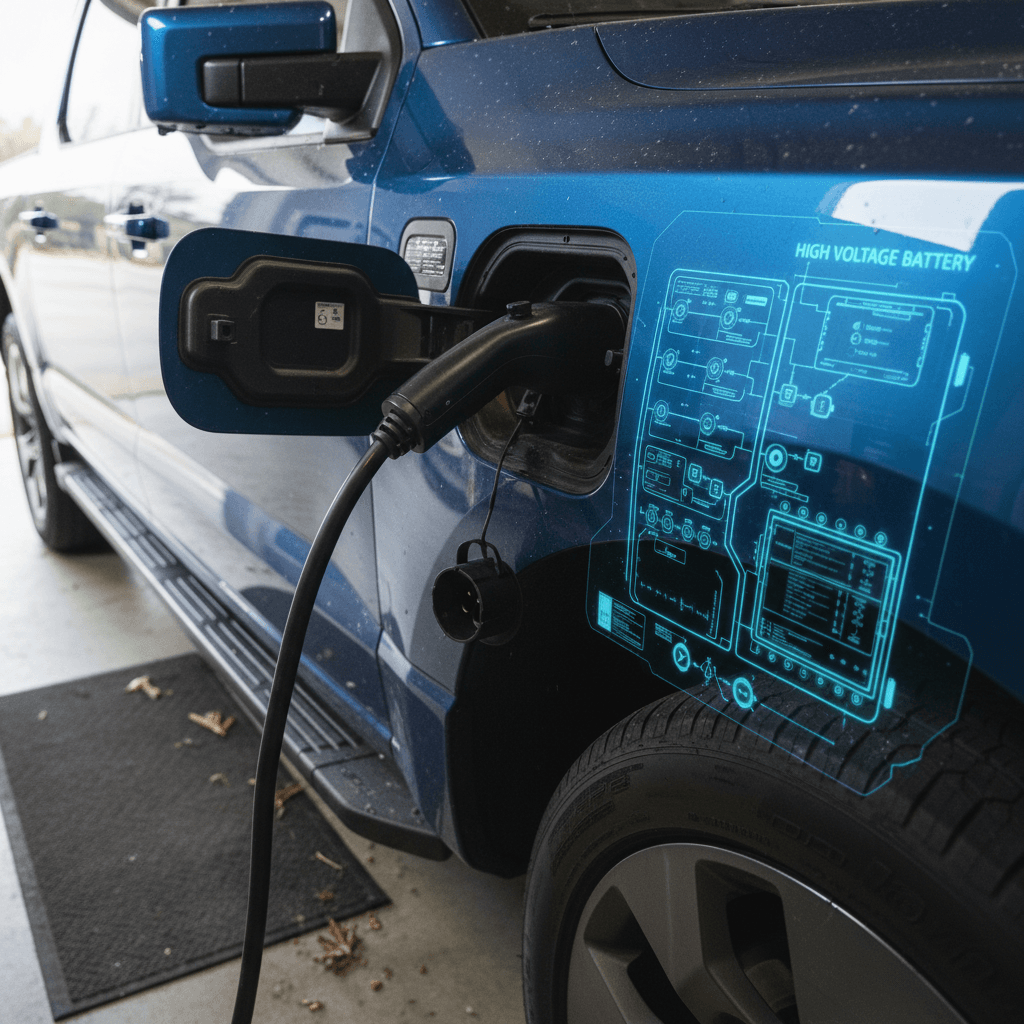
What the Lightning battery warranty does NOT cover
- Normal, gradual battery degradation that still leaves you above ~70% capacity within 8 years/100,000 miles.
- Damage from accidents, impacts, road debris, or improper lifting/towing that harms the pack or high‑voltage hardware.
- Damage from improper storage, for example, leaving the truck parked for months at 0% or at 100% contrary to Ford’s storage guidance.
- Modifications to the high‑voltage system, like aftermarket battery taps, unauthorized repairs, or non‑Ford software/hardware tampering.
- Misuse or abuse, such as repeated gross overloading, off‑label commercial use not allowed by Ford, or ignoring warning lights and continued driving in a faulted state.
- Routine wear items elsewhere on the truck (tires, brakes, wipers) and cosmetic issues that don’t affect function.
The big misconception
Battery degradation and the 70% capacity threshold
Lithium‑ion batteries are chemistry, not magic. You should expect some capacity loss as the miles and years add up. Ford’s Lightning warranty simply draws a line in the sand: if the battery falls below roughly 70% of its original usable capacity within the warranty period under normal use, that’s considered excessive, not normal aging.
What “normal” aging tends to look like
- Early years: It’s common to see a small drop (a few percent) in the first 1–2 years as the pack settles in.
- Middle years: Degradation usually slows; many owners report still seeing well above 80–90% capacity at moderate mileage.
- High mileage: By the time you’re pushing 80,000–100,000 miles, it’s reasonable to see more noticeable loss, but still above Ford’s 70% line in most cases.
Those patterns are consistent with other large‑pack EVs used normally and charged sensibly.
When the warranty might come into play
- If diagnostics show capacity below ~70% within 8 years/100,000 miles.
- If there’s a clear, abnormal drop over a short period (for instance, a sudden big loss over just a few months).
- If the pack has a defective module or internal fault that forces Ford to derate it substantially.
In those cases, Ford can choose to replace modules or the entire pack. It’s not automatic; the dealer has to document the condition and get authorization.
Don’t obsess over every mile of range
How the battery warranty works on used F‑150 Lightnings
Here’s the good news if you’re shopping used: the F‑150 Lightning’s high‑voltage battery warranty is transferable. Coverage follows the truck, not the first owner. That’s a big deal in a used‑EV market where a replacement pack can cost as much as a good used compact car.
Used Lightning + battery warranty: 3 scenarios
How much coverage you actually have depends on the truck’s age and miles.
1. Young, low‑mile truck
Example: 2‑year‑old Lightning with 20,000 miles.
- Battery warranty time left: ~6 years
- Miles left: ~80,000
- Plenty of protection remaining; capacity should still be high.
2. Middle‑aged daily driver
Example: 4‑year‑old Lightning with 70,000 miles.
- Battery warranty time left: ~4 years
- Miles left: ~30,000
- Still under coverage, but you’ll likely hit the mileage limit first.
3. High‑mile workhorse
Example: 6‑year‑old Lightning with 105,000 miles.
- Battery warranty has expired (over 100k miles).
- Any battery issues now are on you or your insurer.
- Price should reflect the lack of coverage.
Always verify the in‑service date
How Ford handles battery warranty claims and repairs
Typical steps if you suspect a battery warranty issue
1. Document symptoms and conditions
Make notes on when you see the issue: major range loss, charging problems, warnings on the dash, sudden changes in state‑of‑charge behavior. Screenshots from apps and photos of warnings help.
2. Schedule a visit with a Ford EV‑certified dealer
Not every Ford store is equally experienced with EVs. When possible, choose a dealer that sells and services a lot of Lightnings and Mach‑Es; they’ll be more efficient with diagnostics and approvals.
3. Let the dealer run diagnostics
The dealer will pull logs from the truck, run state‑of‑health tests on the pack, and compare results to Ford’s thresholds. This is where they determine if you’re dealing with normal aging or a warrantable defect/excessive loss.
4. Ford reviews and authorizes repairs
For major work, especially a full pack replacement, the dealer typically needs Ford’s authorization. That can add time, but it’s how Ford keeps warranty decisions consistent across the network.
5. Repair, module swap, or pack replacement
If the claim is approved, Ford decides whether to repair wiring or components, replace modules within your pack, or swap in a remanufactured or new pack. Your cost should be $0 for covered work, aside from any diagnostic fees if it’s ultimately deemed non‑warrantable.
6. Updated warranty on replacement parts
Replacement parts carry their own warranty coverage, often the balance of your original term or a separate parts warranty, depending on Ford’s policy at the time of service.
Expect some downtime
Maintenance and habits that help you stay within coverage
The warranty doesn’t require you to baby the truck, but Ford does expect you to follow basic care and storage guidance. That’s good for the battery and avoids giving the manufacturer a reason to deny coverage if something goes wrong.
- Avoid regularly storing the truck at 0% or 100% state of charge for long periods; aim for the middle when you park it for weeks.
- Use DC fast charging when you need it, but mix in plenty of Level 2 home or workplace charging for daily use.
- Keep software up to date; updates can improve thermal management and battery behavior.
- Follow Ford’s storage instructions if you’ll park the truck for months (for example, snowbird situations or seasonal work use).
- Fix warning lights promptly, don’t keep driving for weeks with high‑voltage or thermal warnings lit.
- Avoid unapproved modifications to the high‑voltage system, tuning, or aftermarket taps into the pack.
Good news for typical owners
Battery warranty vs extended warranties and insurance
Dealers love to sell extended warranties, and Lightning buyers are prime targets. The key is understanding where the factory battery warranty stops and what, if anything, an extended contract truly adds.
What most extended warranties actually cover
- Extended warranties (even Ford‑backed plans) typically do not extend the 8‑year/100,000‑mile battery warranty.
- They focus on non‑battery components: electronics, infotainment, sensors, ADAS hardware, interior features, and other expensive items.
- They may mirror or extend bumper‑to‑bumper‑style coverage out to 6–10 years, depending on the plan.
That can be worthwhile, but it’s not a second battery safety net.
Where insurance fits in
- Your auto insurance, not the battery warranty, covers collision, fire, flood, or vandalism damage to the pack.
- Comprehensive coverage is particularly important on an EV, because out‑of‑pocket pack replacement after a severe incident can be eye‑watering.
- If you’re shopping used, confirm there’s no salvage or flood history that could compromise future coverage.
Ask this before you sign any extended warranty
Shopping used Lightning? How Recharged helps you de‑risk the battery
When you’re buying a used F‑150 Lightning, you’re not just buying a truck, you’re buying a gigantic, expensive battery with a countdown timer on its warranty. That’s exactly the kind of risk Recharged was built to make more transparent.
How Recharged takes the guesswork out of used Lightning batteries
Every truck on Recharged comes with data you rarely get on a traditional used‑car lot.
Independent battery health data
Each vehicle includes a Recharged Score Report with verified battery health, so you’re not guessing about capacity or relying on vague range impressions from a short test drive.
Clear view of warranty time left
We track the original in‑service date and mileage so you can see, at a glance, how much of that 8‑year/100,000‑mile battery warranty is left on any Lightning you’re considering.
EV‑specialist guidance
Recharged’s EV‑focused team can walk you through battery reports, warranty timelines, and how degradation might affect your use case, work truck, family hauler, or long‑distance tow rig.
Ready to find your next EV?
Browse VehiclesRecharged also offers financing, trade‑in options, consignment, and nationwide delivery, all wrapped around a fully digital buying experience. And if you’d rather kick the tires in person, our Experience Center in Richmond, VA lets you compare used EVs side‑by‑side with expert guidance.
FAQ: Ford F‑150 Lightning battery warranty
Common questions about the F‑150 Lightning battery warranty
Bottom line: How much protection does the Lightning battery warranty give you?
Viewed through a shopper’s eyes, the Ford F‑150 Lightning’s battery warranty is quietly robust. You get 8 years or 100,000 miles of protection against manufacturing defects and excessive capacity loss, plus coverage for key EV components that don’t even exist on a gas F‑150. It won’t freeze your range in time or pay for abuse, but it does draw a clear line between normal aging and genuine problems, and it follows the truck to future owners.
If you’re comparing a new Lightning to other full‑size trucks, that coverage is a meaningful part of the value story. If you’re shopping used, the real play is to combine the remaining factory warranty with hard battery‑health data so you’re not buying a mystery pack. That’s what Recharged’s diagnostics, Recharged Score Reports, and EV‑specialist support are built to do: turn a complicated warranty into a clear, confident yes‑or‑no decision on the truck sitting in front of you.