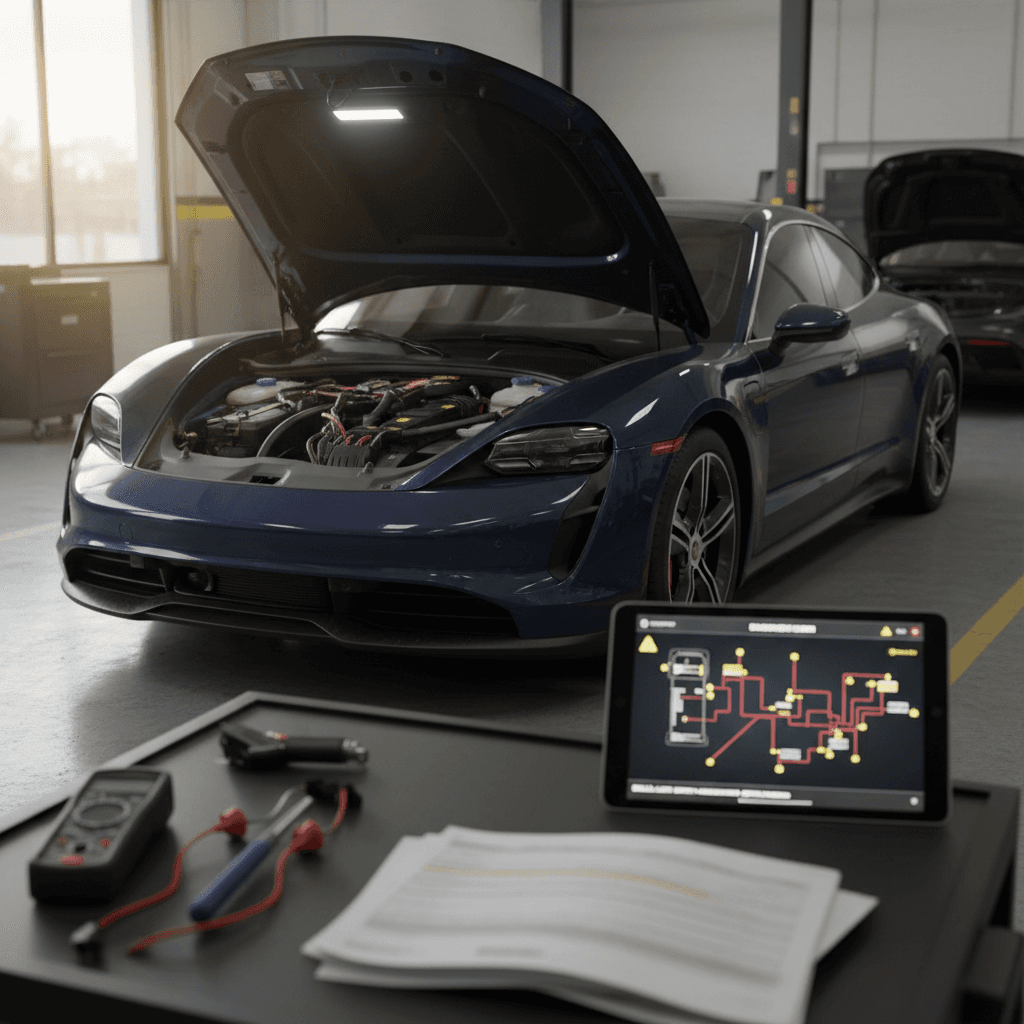
If you own or are shopping for a 2023 Porsche Taycan, you’ve probably heard about recalls tied to high-voltage battery risks and front brake hose failures. This 2023 Porsche Taycan recalls list pulls the major U.S. safety campaigns into one place, explains how serious they are, and shows you how to verify that a specific car has been fixed.
Model-year note
Overview: 2023 Taycan recalls at a glance
Key recall themes for 2020–2025 Taycans (includes 2023 MY)
For 2023 Taycan owners, the headline issues are a high‑voltage battery defect that can cause short circuits and fires and a front brake hose design that can crack and leak fluid. Both are serious enough that you should confirm recall status before you put many miles on the car, or before you buy one used.
Safety first
2023 Porsche Taycan recalls list (major campaigns)
The official way to see every recall tied to a specific 2023 Taycan is to run its VIN through the NHTSA or Porsche recall tools. But most 2023 cars you’ll see in the U.S. will be touched by the same big campaigns. Here are the major ones shoppers and owners ask about most, presented in plain language. (Campaign numbers are simplified summaries of NHTSA notices and Porsche internal codes.)
Major U.S. recalls that typically include 2023 Porsche Taycan
Always confirm by VIN, recall coverage can depend on build date, trim and previous repairs.
| Recall topic | Approx. NHTSA campaign | Model years covered | What can happen | Core fix |
|---|---|---|---|---|
| High‑voltage battery short‑circuit / fire risk | Late‑2023 to 2024 campaigns (e.g., 23V/24V series) | 2020–2024+ Taycan; many 2023 builds included | Internal battery-module defect can lead to short circuit, loss of power, and in rare cases thermal event (fire). | Inspect HV battery modules; update battery control software; replace affected modules or pack as needed. |
| Front brake hose cracking / fluid leak | Mid‑2024 brake recall (e.g., 24V455000 series) | 2020–2025 Taycan built roughly Oct 2019–Jun 2024 | Front brake hoses may crack over time, leaking fluid and lengthening stopping distances. | Replace both front brake hoses with a redesigned part; refill/bleed brake system; software update if required. |
| Battery monitoring / communication fault | Follow‑on battery monitoring campaigns (e.g., 25V‑221000 series) | Select 2022–2023 Taycan | Battery monitoring system may not correctly detect certain high‑voltage battery issues, raising risk of sudden shutdown. | Update battery management software; in some cases replace monitoring components or harnesses. |
| Prior powertrain / software recalls (carry‑over) | Early‑generation Taycan recalls (2020–2022) | Some 2023s built with updated parts; others still covered depending on VIN | Issues like sudden loss of drive power or incorrect warning lights from early builds may still be open on certain cars. | Apply updated control‑unit software, replace affected components where needed. |
Summary of the most significant Taycan recalls that can touch 2023 model‑year cars.
Why this list is a guide, not gospel
High-voltage battery recall: fire risk and shutdowns
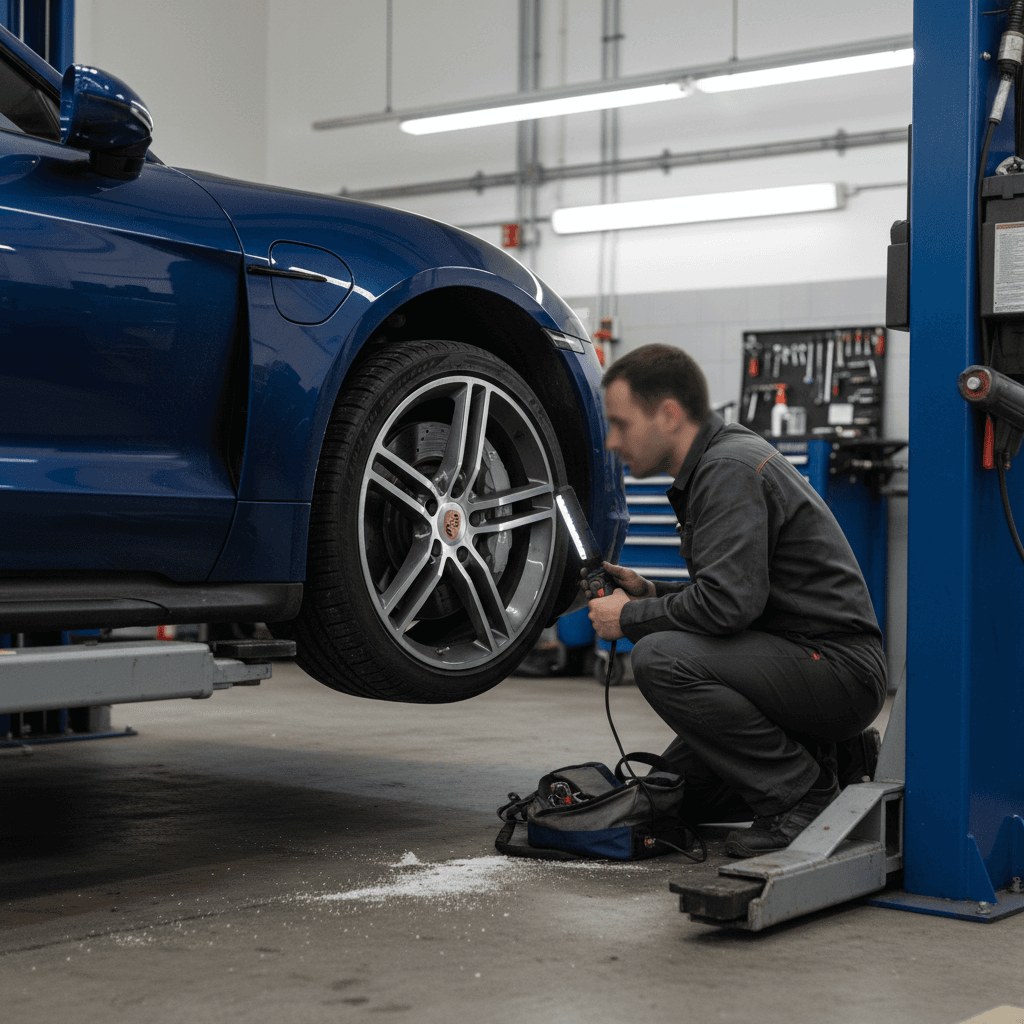
The most attention‑grabbing Taycan campaign is the high‑voltage battery recall that started surfacing publicly in late 2023 and expanded through 2024. It covers tens of thousands of Taycans worldwide, including many 2023 U.S. cars, because the underlying issue isn’t about software, it’s about how some battery modules were built.
- Certain cells or modules inside the pack can develop internal damage over time.
- That damage can lead to a short circuit, sudden loss of power, or in worst cases, a thermal event (fire).
- Owners have reported red “electrical system error” messages and vehicles shutting down or refusing to restart.
- Because the problem lives inside sealed battery modules, you can’t see or smell it during a test drive.
Fire risk is low, but not zero
What the dealer actually does for the battery recall
Owners sometimes hear “battery recall” and assume the entire pack is ripped out and replaced. In reality, Porsche dealers usually follow a step‑by‑step process guided by detailed factory instructions:
Typical steps in a Taycan high-voltage battery recall visit
1. Diagnostic scan and history review
Technicians pull detailed fault codes and review stored data from the battery control modules to see if the pack has shown any unusual behavior.
2. Visual and leak inspection
They inspect the underbody, cooling lines and high‑voltage connectors for signs of leaks, corrosion or damage that might accelerate battery issues.
3. Software updates
Porsche often pushes updated <strong>battery management software</strong> during recall work, improving diagnostics and sometimes adjusting how the pack charges or discharges.
4. Module‑level checks
If diagnostics flag certain modules, the pack may be dropped and inspected at the module level. Out‑of‑spec modules are replaced, not just reset.
5. Post‑repair testing & road test
After any hardware work, the system goes through charging, balancing and real‑world drive tests to confirm no new warnings appear.
Smart question for the service advisor
Front brake hose recall: fluid leaks and longer stopping distances
In mid‑2024, Porsche launched a major recall on roughly 32,000 Taycans in the U.S. built between October 2019 and June 2024. That pool includes most 2023 model‑year cars. The issue: front brake hoses that can crack, leak fluid and reduce braking performance over time.
- Hoses at the front axle can develop microscopic cracks at stress points.
- Those cracks can eventually seep brake fluid, lowering pressure in the front circuit.
- The car may still stop, but the pedal can feel softer and stopping distances can stretch, especially in emergency braking.
- In a worst‑case scenario, the driver might not have enough braking power to avoid a crash.
Why this matters for shoppers
What a proper brake hose recall repair includes
Parts and labor
- Replace both front brake hoses with updated parts that are less prone to cracking.
- Inspect front calipers, lines and fittings for any signs of prior leakage or contamination.
- Refill and bleed the brake system to remove air and ensure even pressure.
Checks and paperwork
- Document the recall campaign number and date on the repair order.
- Road‑test the car to confirm pedal feel and stopping performance.
- Update digital service records so future owners see the recall as “completed.”
Good news
Other notable Taycan campaigns affecting 2023 models
Beyond the headliner battery and brake recalls, several smaller or more targeted campaigns can also touch 2023 Taycans. These usually aren’t as dramatic, but they still matter for reliability and resale value.
Smaller campaigns you may see on a 2023 Taycan
Exact coverage varies by VIN, build date and trim.
Control-unit software updates
Early Taycans had recalls for sudden loss of drive power or erroneous warnings. Later cars like many 2023s may still need specific ECU software updates under recall, especially if they sat on a lot before sale.
Charging & HV component checks
Some campaigns target high‑voltage contactors, onboard chargers or cooling hardware. They often involve a quick inspection and parts swap if your VIN falls inside a certain batch.
Instrument cluster & warning logic
Software campaigns can refine how the cluster displays range, warnings and limp‑home messages so drivers get clearer information if something goes wrong.
How to read a recall printout
How to check your 2023 Taycan for open recalls
Because campaigns change and sometimes expand over time, the only authoritative way to see if a particular 2023 Taycan still needs recall work is to check its 17‑digit VIN. Here’s how to do that from your couch before you sign anything.
Step-by-step: verify recall status by VIN
1. Find the VIN in multiple places
You’ll see it on the lower driver‑side windshield, the driver‑door jamb label, and on the title or registration. For a used‑car listing, ask the seller to send a clear photo of the door label.
2. Run the VIN on NHTSA’s recall site
Go to NHTSA’s official recall lookup tool and plug in the VIN. It will show all <strong>open safety recalls</strong> that still need to be performed in the U.S.
3. Cross‑check on Porsche’s recall portal
Porsche’s own recall page may show additional campaigns or regional programs. Enter the same VIN there to confirm the list matches NHTSA’s view.
4. Call a Porsche service advisor
Give a dealer the VIN and ask for a printout of all open and completed recalls. This is a quick way to verify that the online data has actually been turned into real repairs.
5. Keep copies of all recall documents
Save PDFs or photos of the recall reports and dealer repair orders. They’re useful leverage when negotiating on a used 2023 Taycan and reassuring for future buyers.
Use tech to automate it
Recalls vs. warranty repairs vs. service bulletins
Shopping used EVs, you’ll hear three terms over and over: recalls, warranty repairs and technical service bulletins (TSBs). They’re not the same thing, and mixing them up can cost you money or peace of mind.
Safety recalls
Ordered or overseen by NHTSA when a defect affects safety, like brake fluid leaks or battery‑fire risk.
- Cost: Free, regardless of owner or warranty status.
- Expiration: No mileage limit; can run for many years.
- Priority: Highest. Fix these first.
Warranty repairs
Fixes covered by Porsche’s new‑car or CPO warranty when specific parts fail.
- Cost: Free only while warranty is active.
- Scope: Broader than recalls; can include infotainment, trim and wear items.
- Impact: Good warranty history can support resale value.
Technical service bulletins (TSBs)
Guidance from Porsche telling dealers how to diagnose or fix known issues.
- Cost: Not automatically free; may be covered if you’re under warranty.
- Visibility: Not all TSBs show up in public VIN recall tools.
- Use: Helps explain patterns like recurring warning lights.
Why this matters for price negotiations
Impact on value: buying or selling a 2023 Taycan
Recalls can spook buyers, especially when they involve batteries or brakes. But in today’s EV market, recalls are common, even among top‑tier brands. What matters more is whether they’ve been handled correctly and what the service history looks like afterward.
How recall history usually affects 2023 Taycan value
Think of recalls as one data point in the bigger used‑EV picture.
Completed recalls, clean service records
A 2023 Taycan with battery and brake recalls **completed promptly**, plus documented dealer visits, can still command strong money. Many informed buyers actually prefer cars where the big campaigns are already done.
Open recalls, patchy history
Multiple open recalls, especially on the battery, plus long gaps in service records, will push serious buyers to either negotiate hard or walk away. It suggests the car hasn’t been carefully managed.
At Recharged, we see both sides of this as a retailer and marketplace for used EVs. Our pricing models treat serious unresolved recalls as a real headwind, especially when they’re tied to battery health or braking. When recalls are complete with strong documentation, they’re more like a software update, important, but not a deal‑breaker.
Use recall docs to your advantage
How these recalls relate to Taycan battery health
Recalls are about safety, not day‑to‑day degradation. But on an EV like the Taycan, safety campaigns and long‑term battery health are tightly intertwined, and that matters a lot in the used market.
- A properly addressed battery recall can actually extend the useful life of the pack by replacing weak modules before they fail catastrophically.
- Updated battery management software may improve how the car monitors and balances cells over time, which can slow uneven wear.
- On the flip side, long downtime for HV battery work can be a sign of deeper issues, especially if the car has repeat visits for similar faults.
- Prospective buyers care not just that the recall is closed, but that the car’s current battery health is strong today.
Where Recharged fits in
Recall checklist for 2023 Taycan owners and shoppers
Whether you’re already driving a 2023 Taycan or eyeing one at a dealer, you can work through a simple recall‑focused checklist in under an hour and dramatically lower your risk.
Quick recall due diligence on a 2023 Taycan
Confirm all open recalls by VIN
Run the VIN through NHTSA and Porsche recall tools. Save the results, and make sure you see the big battery and front‑brake campaigns noted one way or another.
Ask for dealer repair orders
Request copies of <strong>every recall repair</strong>, especially anything involving the high‑voltage battery, brake hoses or control‑unit software. Look for dealer letterhead and campaign numbers.
Check dates vs. mileage
Were recalls handled promptly, or did the car drive tens of thousands of miles while a safety issue lingered? Quick response usually signals a more careful owner.
Review test‑drive behavior
On your drive, pay close attention to pedal feel, ABS behavior, and any electrical or battery warnings. Even after recalls, a car with new symptoms deserves another inspection.
Ask about downtime history
If a seller mentions months in the shop for battery work, probe for details. Was it a one‑time recall repair, or are there repeat visits tied to the same issue?
Layer in independent battery health data
Whenever possible, supplement recall status with a third‑party battery health report, like the Recharged Score, so you understand how the pack is performing today, not just what was repaired in the past.
FAQ: 2023 Porsche Taycan recalls
Frequently asked questions about 2023 Taycan recalls
Bottom line for 2023 Taycan shoppers and owners
The 2023 Porsche Taycan is a genuinely impressive EV, but like most cutting‑edge models, it hasn’t had a recall‑free life. The big stories are a high‑voltage battery campaign and a front brake hose recall that can touch a wide slice of 2023 production. Neither has to be a deal‑breaker, as long as you confirm the work is done correctly and the car’s battery health and braking performance are strong today.
If you already own a 2023 Taycan, make sure your VIN shows no open recalls and keep copies of every repair order. If you’re shopping, especially in the used market, combine VIN‑level recall checks with a detailed inspection and a battery‑health report like the Recharged Score. That way, you’re not just buying a fast EV with a great badge, you’re buying one whose history and safety you actually understand.