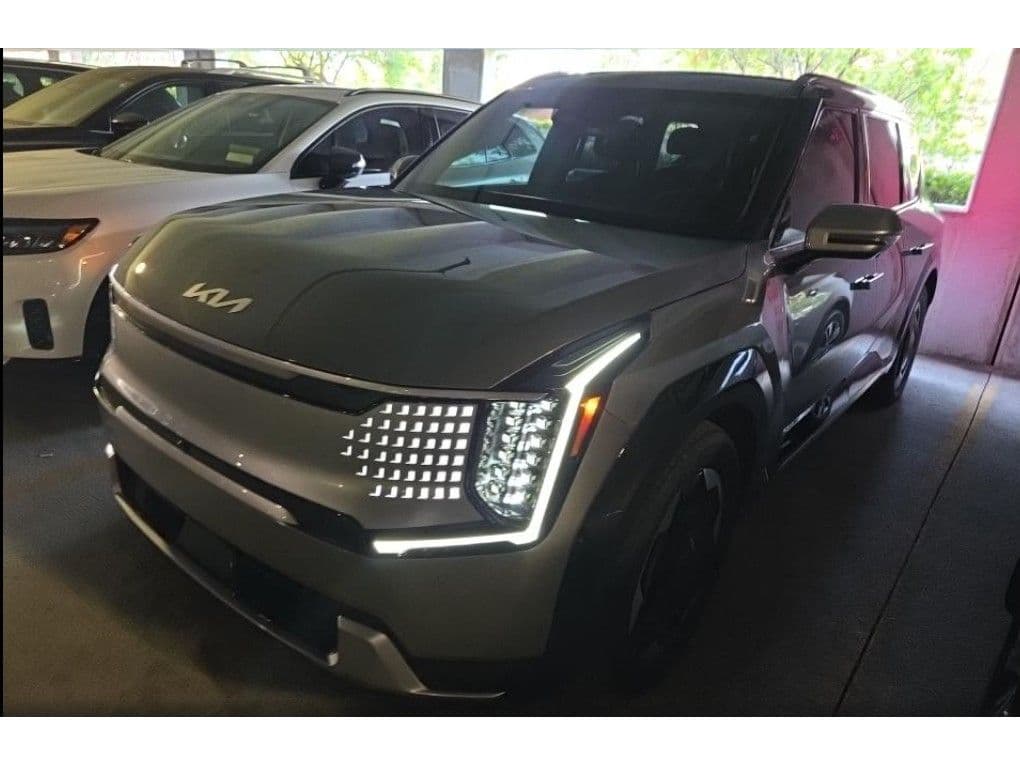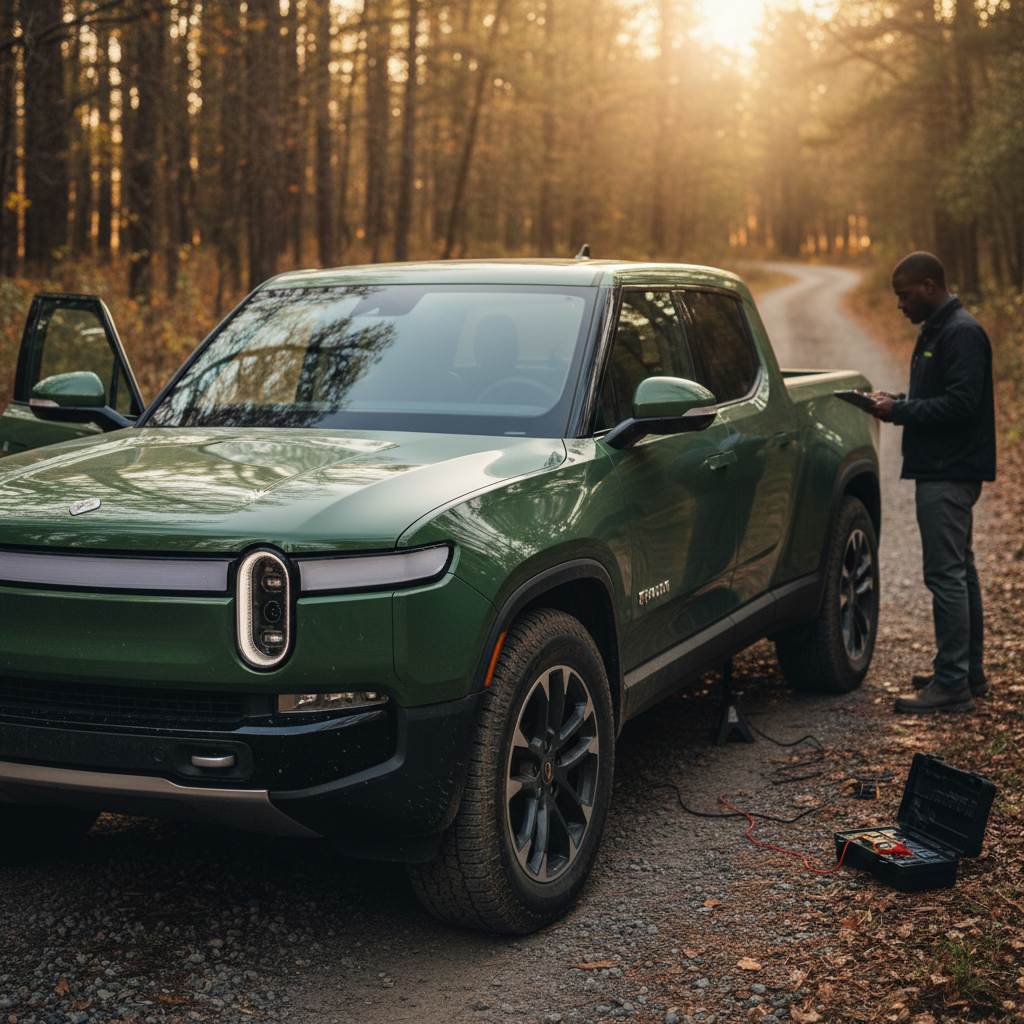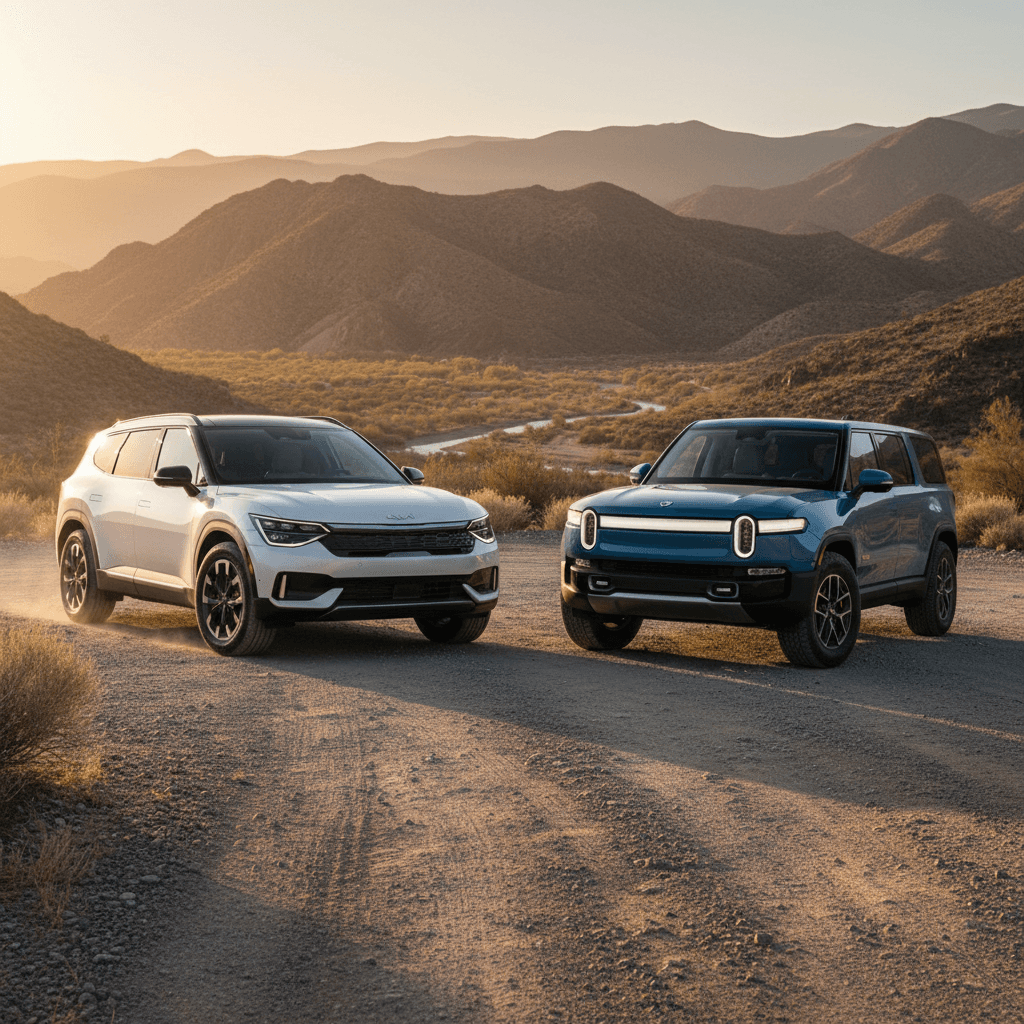
You don’t cross‑shop the Kia EV9 and Rivian R1S by accident. Both are big, three‑row electric SUVs. Both can tow, haul kids, and crush highway miles. And both can empty a bank account with impressive efficiency. So when you ask, “Kia EV9 vs Rivian R1S – which is better?” what you’re really asking is: am I buying a family appliance or an adventure toy that can do school runs on the side?
Same idea, very different personalities
Kia EV9 vs Rivian R1S: quick overview
At a glance: who each SUV is really for
Strip away the specs and look at the personalities.
Kia EV9: the rational choice
- Lower entry price than R1S, especially used
- More family‑friendly interior with easier third‑row access
- Smoother, quieter ride tuned for comfort
- Excellent driver‑assist tech and highway manners
- Feels like a very modern minivan in SUV cosplay
Rivian R1S: the emotional choice
- More power and range available, especially with larger packs
- Serious off‑road capability, standard air suspension
- Iconic design and brand cachet
- Big frunk and clever storage for gear
- Feels like a shrunken electric Land Rover with a sense of humor
Start with your use case
Pricing & value: which hurts your wallet less?
New, both of these SUVs live in premium territory. As of 2026, a new Kia EV9 typically stickers in the mid‑$50,000s to mid‑$70,000s depending on trim and options, while a new Rivian R1S generally starts in the high‑$70,000s and climbs well into the $90,000s with larger batteries and more motors. On paper, the Rivian is the pricier date, and the first round is never cheap.
Typical U.S. price brackets (new & used)
Ballpark prices; exact numbers vary by trim, options, incentives, and local market. This is where a used marketplace like Recharged can help you see real‑world pricing in one place.
| Model | New price ballpark | Used price ballpark | Notes |
|---|---|---|---|
| Kia EV9 | Mid‑$50ks to mid‑$70ks | High‑$40ks to mid‑$60ks | Lower entry price; more traditional depreciation curve |
| Rivian R1S | High‑$70ks to $90k+ | Mid‑$60ks to high‑$80ks | Holds value well; higher buy‑in for similar space |
Price ranges are approximate and for guidance only.
Watch the options creep
From a pure dollars‑and‑sense standpoint, the EV9 wins on value. You’re getting three rows, solid range, and strong tech for significantly less money, especially in the used market. The R1S counters with performance and capability you simply can’t option onto the Kia, but you pay for it up front and at replacement time (those 34‑inch tires don’t grow on trees).
Range, battery, and charging: road‑trip reality check
Range & charging highlights
On paper, Rivian wins the maximum range game. Dual‑motor R1S trims with the largest “Max” battery can push comfortably past 350 miles in ideal conditions, and even the mid‑pack batteries do better than many EV9 configurations. If you’re staring down long stretches of rural interstate or tow a trailer often, that extra buffer matters.
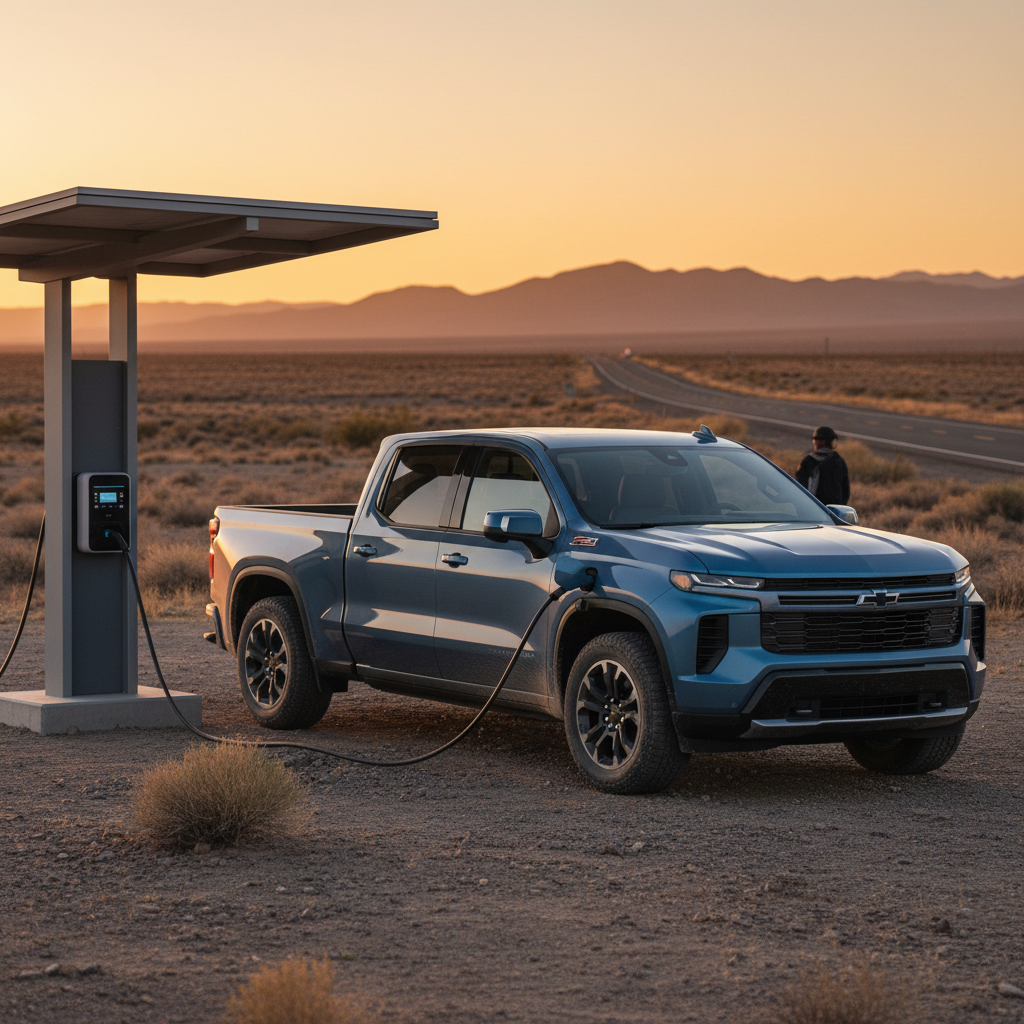
But the Kia EV9 fights back with charging speed. Built on an 800‑volt architecture, it can jump from a low state of charge to about 80% remarkably quickly on a capable DC fast charger. In real road‑trip math, that can mean shorter overall stops even if your range number is a bit lower. For many families, shaving 10–15 minutes off every bathroom‑snack‑dog‑walk stop is worth more than another 40 miles of theoretical range.
Don’t forget networks and adapters
Space, comfort, and practicality: kids vs cargo
Kia EV9: family first
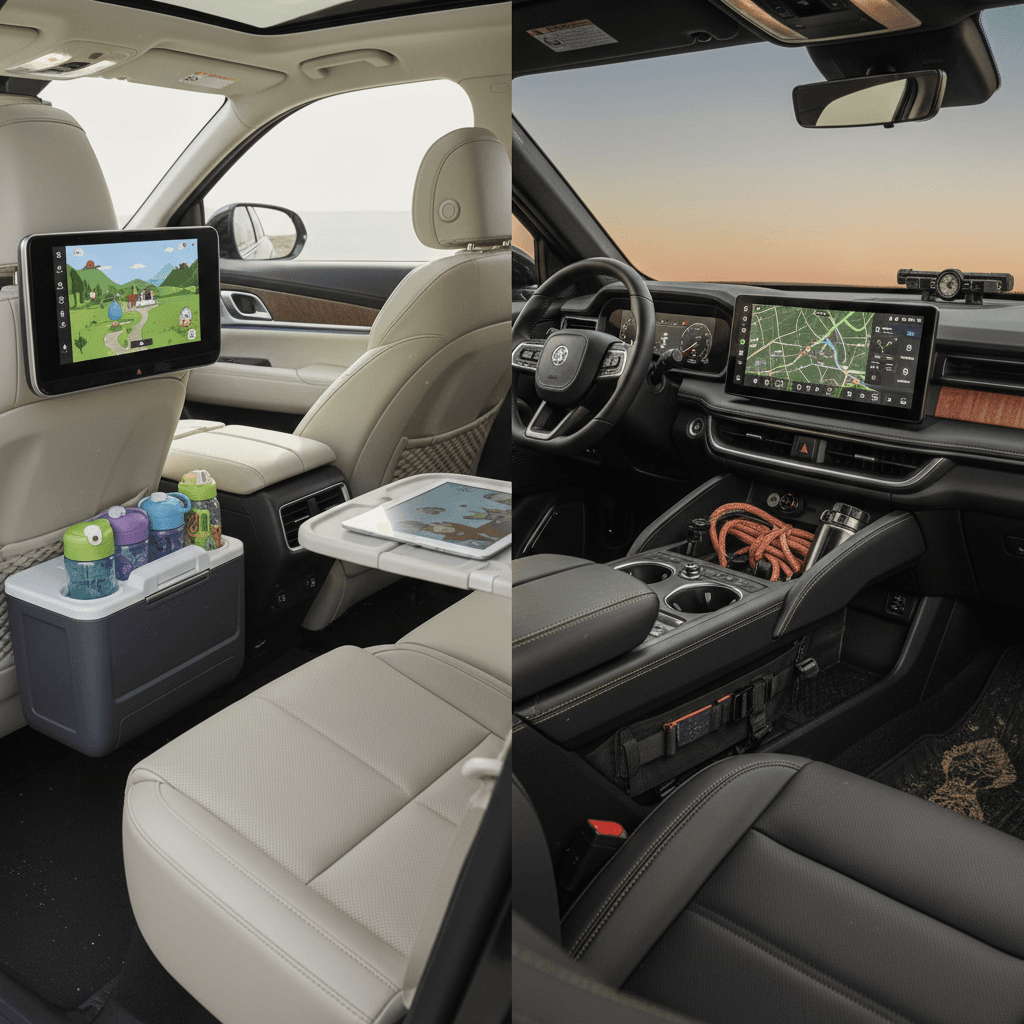
- Very adult‑friendly second row, especially with captain’s chairs
- Third row is usable for kids and short adults, with easier access
- Cabin design leans bright and modern, with lots of storage cubbies
- Ride quality and noise levels favor comfort over drama
Rivian R1S: gear and people
- Plenty of room for five adults, but third row is tighter than the EV9’s
- Huge front trunk (frunk) that’s more like a traditional car trunk
- Flat load floor with the seats down, plus under‑floor storage in back
- Interior materials feel more boutique‑outdoorsy than family‑crossover
If you have three kids in car seats, a stroller, a dog, and a Costco habit, the EV9 makes your life easier. Its packaging is more minivan‑clever: easier third‑row access, generous rear‑seat legroom, and a straightforward cargo area. The R1S can absolutely do family duty, but it feels like a rugged SUV that’s been adapted to kid duty, not designed around it.
Where the kids actually sit
Performance and driving character: minivan or mountain goat?
How they feel from behind the wheel
Both are quick. Only one feels like it’s itching for the Rubicon.
Kia EV9
- Quick enough to surprise passengers, especially in dual‑motor trims
- Steering and suspension tuned for stability and comfort
- Low‑drama, easygoing highway cruiser
- Feels like a refined family SUV, not a sports car
Rivian R1S
- Available power borders on absurd in higher‑spec trims
- Standard air suspension and multiple drive modes
- Real off‑road geometry and capability, not just tough styling
- More body motion and road feel, livelier, but less calming
Driven back‑to‑back, the R1S feels more special. The steering has more heft, the suspension breathes with the road, and the whole thing carries a sense of latent athleticism, especially in higher‑power configurations. It’s the one that makes you take the long way home “for testing purposes.”
The EV9 is content to be invisible. That’s not an insult; it’s a compliment. On the interstate, it just disappears under you, quiet, stable, and efficient. If you drive most of your miles on pavement and prize a calm cabin over corner‑carving antics, the Kia’s restraint is a feature, not a bug.
Reality check on performance
Towing and adventure gear: who hauls it better?
This is where the R1S’s brief reads like a brochure for people who own at least one Patagonia duffel. Properly equipped, the Rivian R1S is rated to tow around 7,700 pounds, enough for many camper trailers, boats, and toys. It also offers serious off‑road modes, adjustable ride height, and those party‑trick floodlights and camp‑friendly features that make sense when the pavement ends.
The Kia EV9 can tow, figures around 5,000 pounds are typical for U.S.‑spec models, which is plenty for small campers, jet skis, or a compact utility trailer. But it’s not playing the same game. Its mission is to get your family and their stuff where they’re going, on roads somebody actually maintains.
If towing or overlanding is on the menu…
Confirm realistic trailer weight
Forget the sticker fantasy. Add up the trailer, water, gear, bikes, and food. Many “5,000 lb” campers are closer to 6,000 lb once loaded.
Factor in range loss
Pulling a trailer with either SUV can slash range dramatically, often 30–50%. The R1S’s bigger packs give you more buffer here.
Consider departure angles and clearance
If you’re actually leaving pavement, the Rivian’s off‑road geometry and adjustable height are worth real money.
Check hitch and wiring setup
On a used EV, make sure any aftermarket hitch is installed correctly and rated for what you plan to tow.
Tech, safety, and driver assistance
Kia EV9 tech
- Clean, wide screens with intuitive menus once you live with them
- High‑confidence driver‑assist systems that feel polished and predictable
- Camera‑based blind‑spot views that light up when you signal
- Plenty of USB‑C ports and family‑oriented conveniences
Rivian R1S tech
- Beautiful, tablet‑like central display and slick UI
- Rivian’s driver‑assist suite keeps getting smarter via OTA updates
- Off‑road and adventure‑focused screens, including pitch/roll and trail modes
- Fewer hard buttons; more functions live in the screen
Safety isn’t just about crash tests
If your stress triggers involve dense traffic, merging semis, and night driving in the rain, the EV9’s driver‑assist tech may feel more confidence‑inspiring out of the box. The R1S is catching up quickly with new hardware and software, but like any young automaker, Rivian is still iterating its way toward Toyota‑grade polish.
Ownership experience, reliability, and service
Owning a Rivian R1S vs a Kia EV9 is not just a choice between two vehicles, it’s a choice between two ecosystems.
What living with each brand really feels like
Dealer network vs direct‑to‑consumer, and how that plays out in the real world.
Kia ownership
- Large, traditional dealer network across the U.S.
- Easier access to basic service, tires, alignments, and warranty work
- Experience can vary wildly by dealership, some great, some… not
- Parts and collision repair generally straightforward thanks to volume
Rivian ownership
- Direct‑to‑consumer sales, with service centers in major metros
- Mobile service can come to you for many repairs
- Less dense network; rural owners may be far from a facility
- Over‑the‑air updates meaningfully improve the vehicle over time
How Recharged fits in
On long‑term reliability, the EV9 benefits from Kia’s experience building millions of cars, plus a traditional dealer footprint for support. The R1S offers a more concierge‑like experience when things go right, but you are betting on a younger company that’s still scaling factories, suppliers, and service. If you live far from a Rivian service center, that’s not an academic concern.
Side‑by‑side specs: Kia EV9 vs Rivian R1S
Key specs comparison (representative trims)
Representative configurations to show how these SUVs differ. Always confirm exact specs for the specific year and trim you’re shopping.
| Spec | Kia EV9 (typical long‑range) | Rivian R1S (dual‑motor, large/max pack) |
|---|---|---|
| Seating | 6–7 passengers | 7 passengers |
| Max EPA range (approx.) | Around 300+ miles | Mid‑300s to high‑300s miles possible |
| Drivetrain | RWD or AWD | Standard AWD |
| Max DC fast‑charge rate | Very high (800V architecture) | High (strong but not class‑leading) |
| Towing capacity (approx.) | Up to ~5,000 lb | Up to ~7,700 lb |
| Off‑road focus | Light off‑road, mostly on‑road | Serious off‑road hardware and software |
| Starting price (new, ballpark) | Mid‑$50ks | High‑$70ks |
| Character | Comfort‑first family SUV | Adventure‑first performance SUV |
Specs shown are typical ranges for mainstream dual‑motor / long‑range trims, not every configuration.
How to choose: EV9 vs R1S decision guide
Five questions that basically answer "which is better?"
1. What do your next 3 years really look like?
If most miles are school commutes, errands, and highway trips, the EV9 is probably smarter. If your calendar is full of ski trips, national parks, and trailheads, the R1S starts to make sense.
2. How often will you tow or go off‑road?
“Once a year, maybe” is EV9 territory. Monthly trips with a camper, boat, or serious off‑roading argue strongly for the R1S.
3. Is there a Rivian service center near you?
If you’re hours from the nearest Rivian facility, that should weigh heavily. Kia’s broad dealer network can be a major de‑stressor for road‑trippers and rural owners.
4. How sensitive is your budget, today and later?
Purchase price, insurance, tire costs, and wheel repairs will generally be lower with the EV9. The R1S costs more to buy and to feed, even if electricity is cheap.
5. Are you shopping new or used?
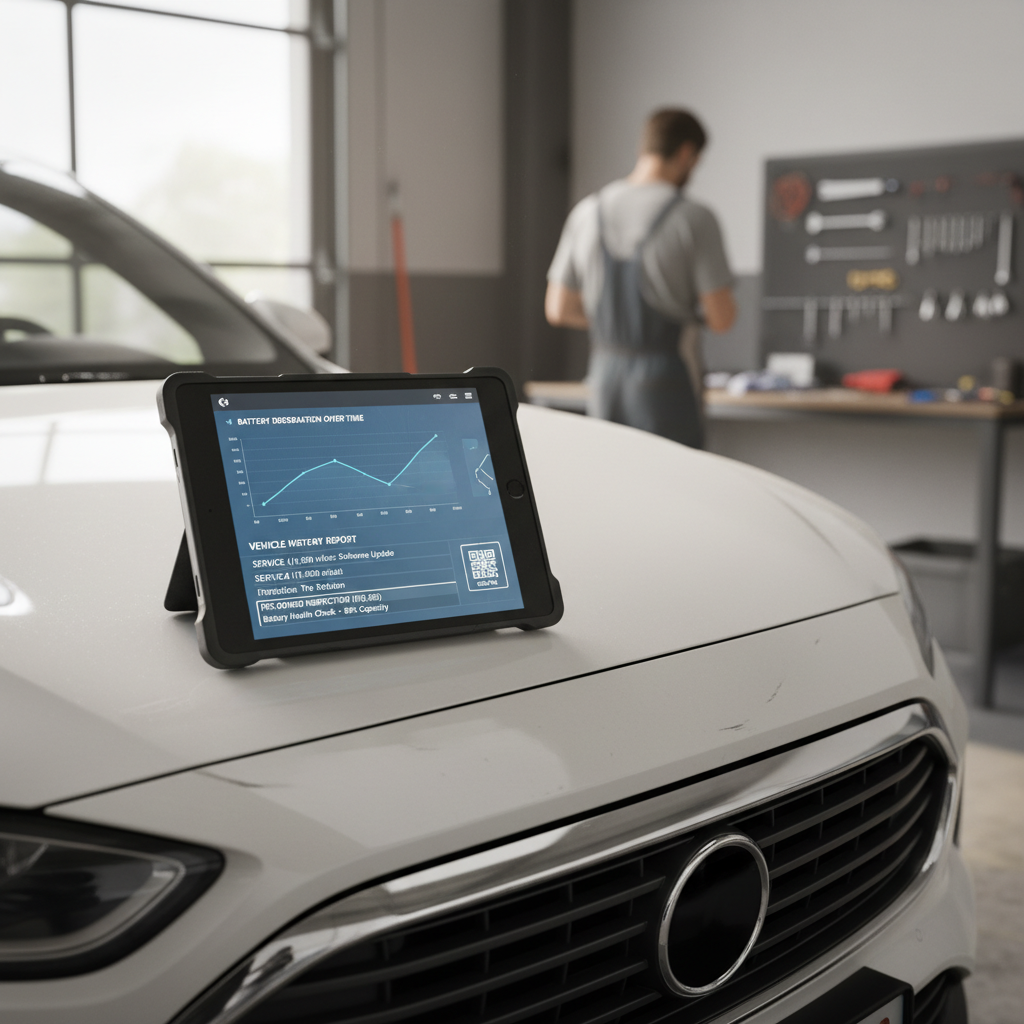
On the used market, a well‑specced EV9 and an earlier‑build R1S can land at similar prices. That’s where a battery health report, like the Recharged Score, can be the tie‑breaker.
Kia EV9 vs Rivian R1S: FAQ
Frequently asked questions
Verdict: so which is better, Kia EV9 or Rivian R1S?
If you force a verdict, here it is: for most American households, the Kia EV9 is the better choice. It’s more affordable, easier to live with, more comfortable for kids, and backed by a giant service network. It does the boring stuff brilliantly, which, in real life, is what you actually need three hundred days a year.
But if you’re the kind of driver who looks at forest‑service roads as invitations rather than warnings, who tows something heavier than a pair of jet skis, and who is willing to trade some comfort and convenience for capability and character, the Rivian R1S is the one that will haunt your dreams. It’s the more special object, the one you’ll still be excited to look back at ten years from now.
Next step: drive them, and get the data
Ready to find your next EV?
Browse Vehicles