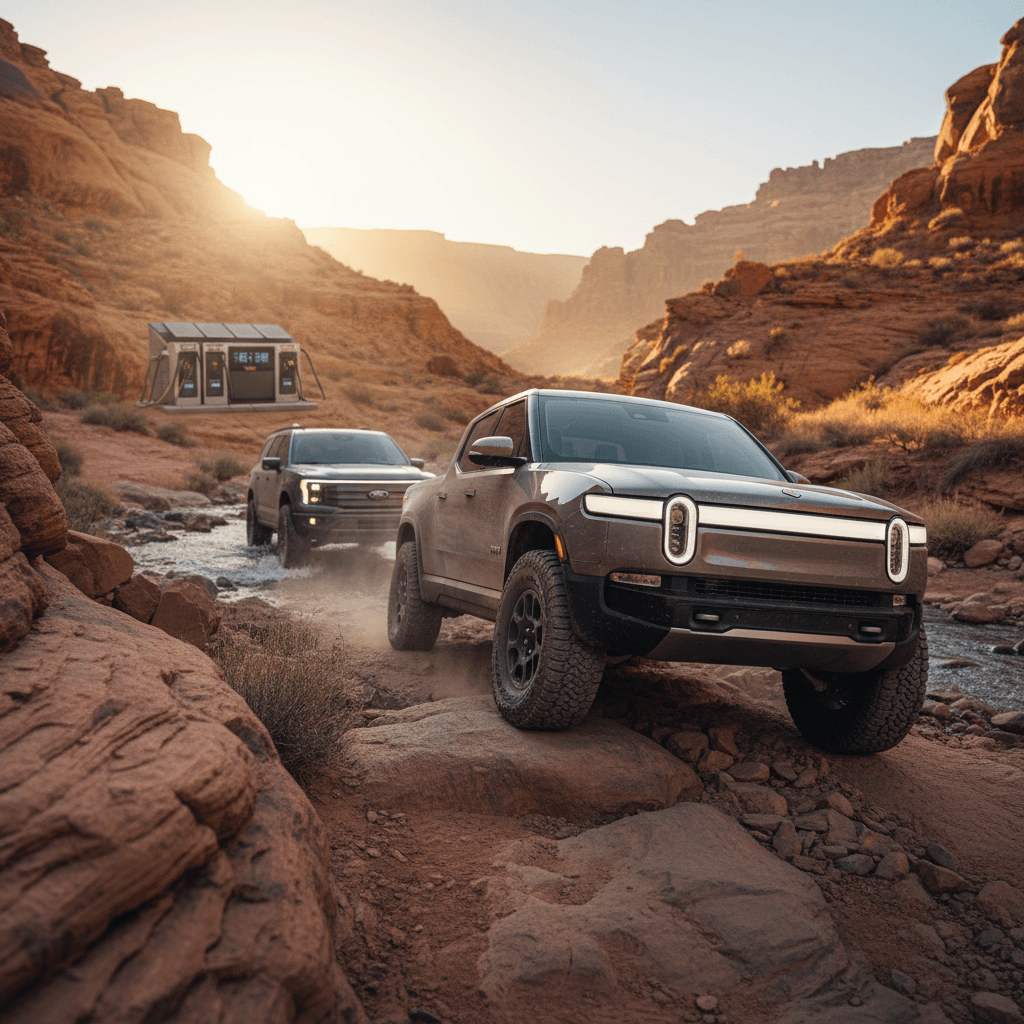
If you’re hunting for an EV for off‑road use, you’re no longer stuck choosing between a soft-roader crossover and a lifted golf cart. Over the last few years, purpose-built electric trucks and SUVs have arrived with real trail hardware, locking differentials, serious ground clearance, low‑speed crawl control, and rock‑ready tires. This guide walks through the most capable models, how EVs behave off‑road, and what to look for, especially if you’re considering a used off‑road EV.
Off‑road EVs are niche, but growing fast
Why off‑road EVs are finally real options
Early EVs were mostly city cars and family crossovers. Today, a growing slice of the market is aimed squarely at buyers who camp, tow and explore. Models like the GMC Hummer EV, Rivian R1T/R1S, and rugged new entries such as Toyota’s bZ Woodland and the upcoming Scout Terra are engineered with trails in mind, skid plates, underbody cameras, multi‑motor 4x4 systems and adaptive air suspensions that rival or beat their gas counterparts.
Off‑road EVs at a glance (2026 snapshot)
How EVs behave off‑road vs gas trucks
Where EVs shine off‑road
- Instant torque: Electric motors deliver full torque from zero rpm, which makes precise rock crawling and sand starts much smoother.
- Fine control: One‑pedal driving and advanced traction control let you place the truck exactly where you want it without riding the clutch or feathering the throttle.
- Low center of gravity: Heavy battery packs mounted in the floor keep the vehicle planted on off‑camber trails.
- Silent running: You can hear spotters and rocks under the tires, and you’re quieter for hikers and wildlife.
Where EVs are still challenged
- Range on trail: Low‑speed, high‑torque driving and elevation changes can eat range quickly, especially with mud‑terrain tires or roof‑top tents.
- Charging access: Once you leave interstate corridors, DC fast chargers thin out fast. Planning matters more than in a gas truck.
- Weight: Many off‑road EVs weigh 7,000–9,000 pounds. That affects braking, mud performance, and recovery risk.
- Thermal management: Long, slow climbs in heat can stress cooling systems; you’ll see some EVs manage power to protect components.
Don’t ignore vehicle weight
Key features to look for in an off‑road EV
Picking the right EV for off‑road use is less about badge and more about hardware. Here are the must‑have and nice‑to‑have features to prioritize when you compare capable models.
Trail hardware that matters on electric trucks and SUVs
Focus on these features before you get dazzled by screens and light bars.
Ground clearance & angles
Look for at least 8.5–9 inches of clearance for mild trails and more for rocks. Adjustable air suspension on models like the Hummer EV and Rivian adds several inches on demand, improving approach, departure, and breakover angles.
Dedicated off‑road modes
Modern off‑road EVs bundle rock, sand, mud and baja modes that adjust throttle mapping, traction control and suspension. Hummer’s Extract Mode, for example, raises the truck around 6 inches for obstacle clearance.
Lockers & traction aids
Mechanical or electronic locking differentials (or smart torque vectoring across dual motors) keep power flowing when a wheel is in the air. Some upcoming models like Scout Terra bake in front and rear lockers from the factory.
Underbody & 360° cameras
Systems like GMC’s UltraVision give you multiple underbody and surround views. On a tall, heavy EV, being able to see rocks and ledges under the floor is a real safety upgrade.
Multi‑motor AWD systems
Dual‑ and tri‑motor setups can shuffle torque instantly between axles, and sometimes wheels. That can act like virtual lockers while still playing nicely with stability control on‑road.
Skid plates & tires
Factory skid plates, rock rails and all‑terrain or mud‑terrain tires matter as much as software. They’re also expensive to add later, so prioritize builds that already include them.
5‑step checklist before you call a trail‑ready EV “the one”
1. Verify true ground clearance and angles
Spec sheets can quote multiple numbers. Focus on clearance in off‑road mode, plus approach/departure/breakover angles if you’ll see rocks or ledges.
2. Confirm AWD system type
Is it single‑motor with on‑demand rear drive, or dual/tri‑motor with full‑time all‑wheel drive? Frequent dirt and snow driving favors the latter.
3. Look for recovery points and payload
Stout front and rear recovery points, plus enough payload for passengers, gear, and accessories, are essential on an off‑road build.
4. Check tow rating and cooling
If you’ll tow campers or toys to the trailhead, make sure the cooling system and tow rating match your plans, especially in hot, hilly areas.
5. Plan for charging access
Map DC fast chargers around your favorite trailheads and consider whether you’ll need a portable Level 2 solution at base camp.
Most capable off‑road EVs you can buy now
Here’s a snapshot of leading off‑road capable EV models either on sale now or landing in the near term in the U.S. market, with an emphasis on genuine trail credentials rather than just tough styling.
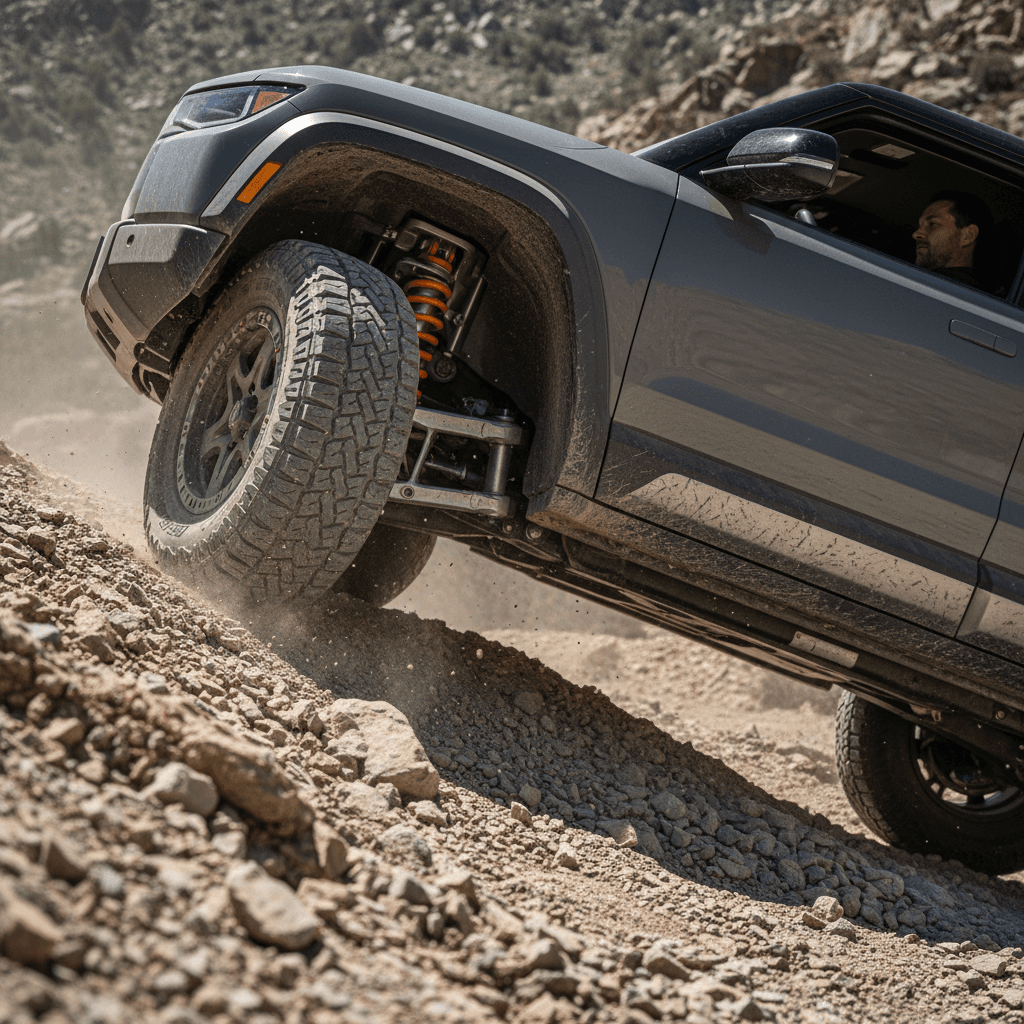
- GMC Hummer EV Pickup & SUV – The poster child for excess, but also for off‑road tech. Available Extreme Off‑Road Package brings 35‑inch tires, skid plates, rock sliders, underbody cameras (UltraVision), and front/rear e‑lockers. CrabWalk and Extract Mode add diagonal movement and roughly 6 inches of extra ride height for serious obstacles.
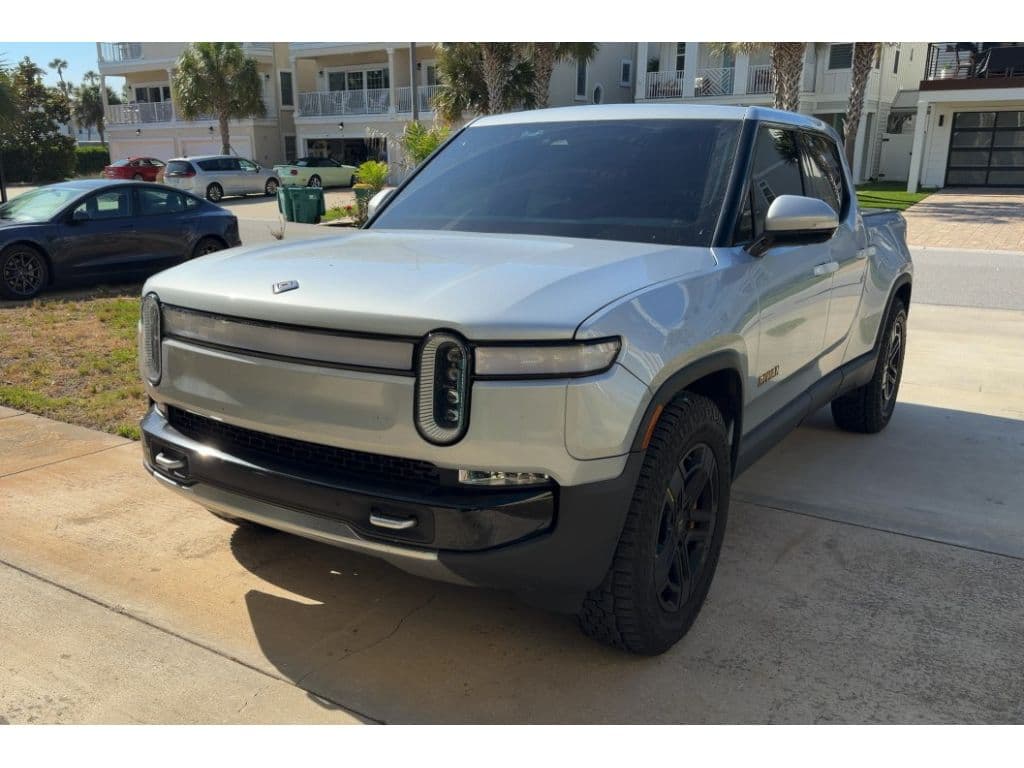
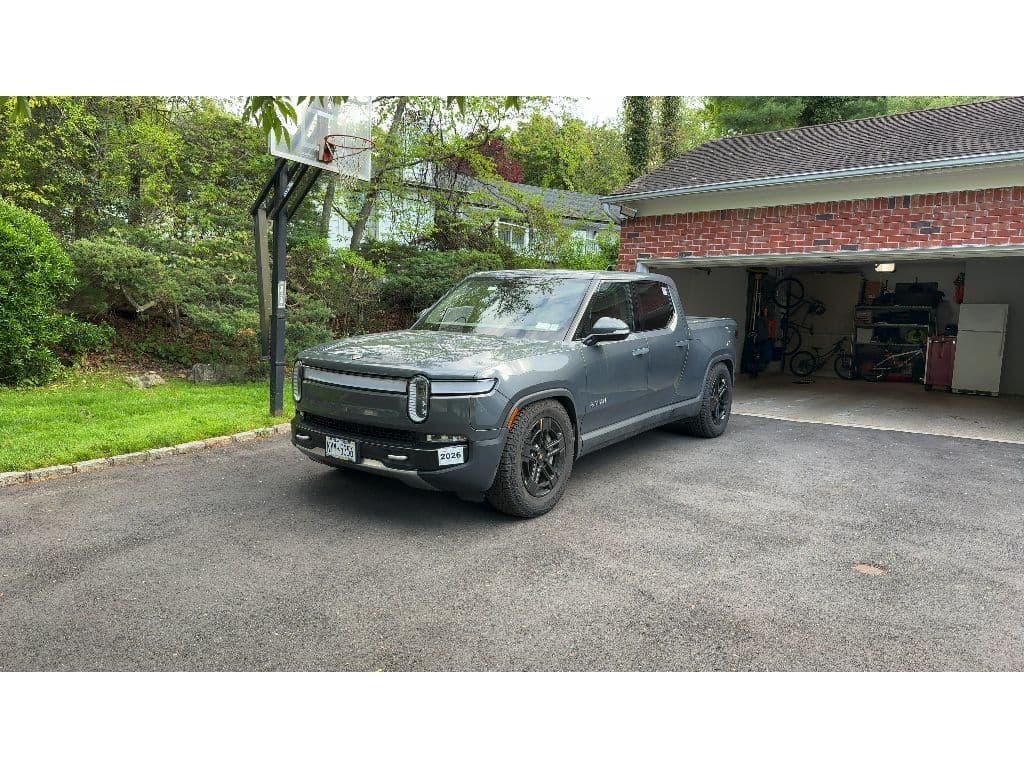
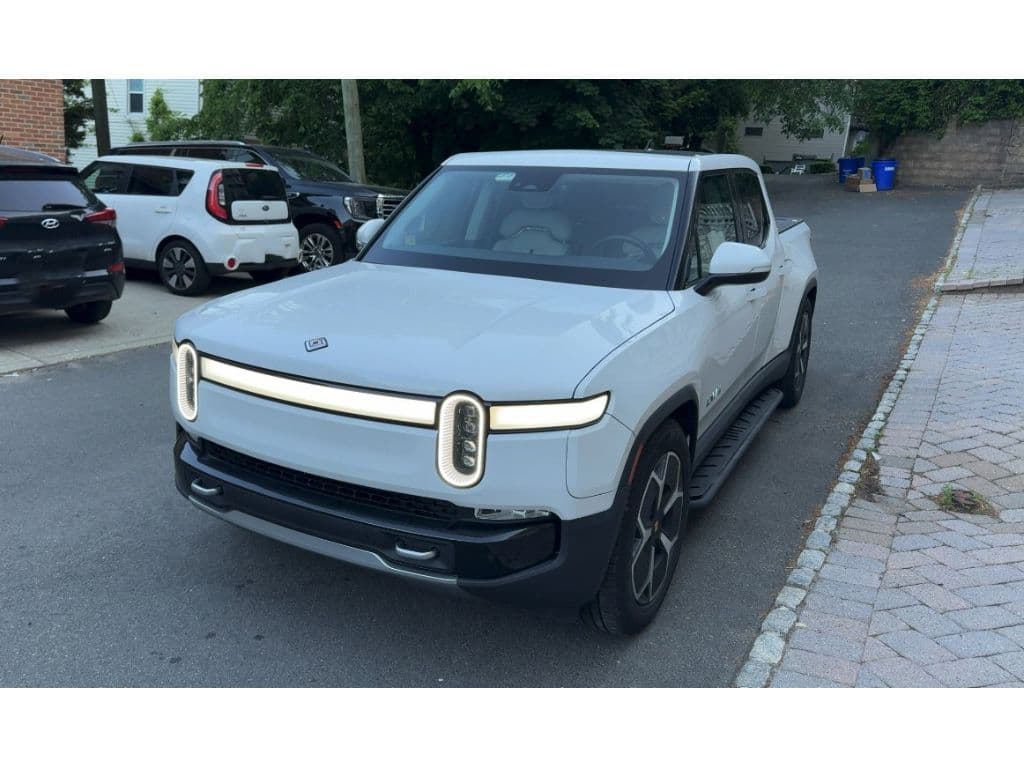
- Rivian R1T (pickup) and R1S (SUV) – Among the most balanced off‑road EVs: adaptive air suspension, up to around 14 inches of ground clearance in highest mode, multiple off‑road drive modes, available quad‑motor setups with precise torque vectoring, and thoughtful details like integrated gear tunnels and camp kitchens.
- Tesla Cybertruck – Love it or hate it, the Cybertruck offers stout off‑road specs: adaptive air suspension with significant height adjustment, angular approach/departure, and robust stainless‑steel bodywork. Software‑driven traction control and rear‑steer help on tight trails, though aftermarket support is still maturing.
- Ruggedized compact SUVs (Toyota bZ Woodland, Subaru’s EV variants, etc.) – Newer entries like Toyota’s bZ Woodland spin off existing crossovers with more ground clearance, all‑terrain tires, aluminum skid plates and roof rails. They’re better suited to forest roads, snow and light two‑tracks than hardcore rock gardens, but they’re a big step up from standard EV crossovers.
- Traditional SUVs going electric – Premium brands are adding off‑road‑oriented trims to electric SUVs, pairing air suspension, dual‑motor AWD and off‑road drive modes with more luxurious interiors. They’re ideal if your “trail” is mostly rutted access roads to cabins and trailheads.
Think about your real trails
Notable upcoming off‑road EVs worth watching
If you’re a planner, or you’re thinking a couple of years ahead for a used‑EV purchase, these upcoming models are shaping the next wave of off‑road‑ready EVs.
Rugged EVs on the horizon
These future models will expand the off‑road EV landscape and eventually feed the used market too.
Scout Terra & Traveler (expected around 2028)
Scout is returning as a dedicated off‑road brand with body‑on‑frame electric trucks like the Terra. Specs teased so far include standard all‑wheel drive, a solid rear axle, and front and rear locking differentials on EV models, plus an 800‑volt architecture and towing capability north of 10,000 pounds.
These are aimed squarely at people who might otherwise shop a Wrangler, Bronco or 4Runner, just electrified.
More ruggedized EV crossovers
Manufacturers are realizing that many shoppers don’t need a full‑size truck; they need a compact EV that can handle snow, gravel and camping trails. Expect more brawnier trims like Toyota’s bZ Woodland with extra clearance, dual‑motor AWD, and trail‑friendly tires arriving through the late 2020s.
Good news if you want adventure‑ready capability without a 7‑foot‑wide rig.
Quick comparison: off‑road EV trucks and SUVs
Exact specs change frequently, but this high‑level comparison shows how leading off‑road EVs stack up on the fundamentals that matter on the trail. Always confirm the latest numbers for the trim you’re considering.
Sample specs for off‑road‑oriented EVs
Approximate figures for popular or notable off‑road EVs. Use this as a starting point, not a final spec sheet.
| Model | Body Style | Approx. Max Ground Clearance (off‑road mode) | Driveline/Lockers | Best Use Case |
|---|---|---|---|---|
| GMC Hummer EV Pickup/SUV | Full‑size truck/SUV | ~15" (Extract Mode) | Tri‑motor, e‑lockers available | Extreme rock trails, sand, overlanding if you can live with the size |
| Rivian R1T | Midsize pickup | ~14" (highest air‑suspension setting) | Quad‑motor torque vectoring | Mixed highway + technical trails, camping, towing toys |
| Rivian R1S | 3‑row SUV | Similar to R1T | Quad‑ or dual‑motor, advanced traction control | Family road trips plus real trail use |
| Tesla Cybertruck | Full‑size pickup | ~16" reported max in off‑road settings | Dual/tri‑motor with rear steer and software‑based traction | Long‑range desert and back‑country exploring, high‑speed dirt |
| Toyota bZ Woodland | Compact SUV | ~8.4" | Dual‑motor AWD, advanced traction control | Forest roads, snow, camping access, light overlanding |
Key off‑road metrics: clearance, driveline, and intended use.
Shopping used: off‑road EVs and what to watch for
Buying a used off‑road EV is a little different from picking up a used commuter hatchback. Trail use adds unique wear points, on the suspension, underbody, and even the battery pack. At the same time, depreciation can make an off‑road‑ready EV dramatically more affordable than buying new.
Used off‑road EV inspection checklist
Look underneath for trail scars
Inspect skid plates, frame rails, battery‑pack shields and control arms for deep gouges or crushed metal. Light scrapes are normal; bent structure is not.
Check suspension and steering components
Off‑road miles can accelerate wear on ball joints, bushings, tie‑rods and air‑suspension components. Listen for clunks and make sure the truck holds its height evenly in all modes.
Review tire choices and age
Aggressive mud‑terrains look great but can hide sidewall damage and accelerate range loss. Check date codes and plan for a new set if they’re over 5–6 years old.
Ask about software updates and recalls
Off‑road features like drive modes, cameras and steering tricks (CrabWalk, rear steer, etc.) rely heavily on software. Make sure the vehicle is on current firmware and recall campaigns are complete.
Get objective battery health data
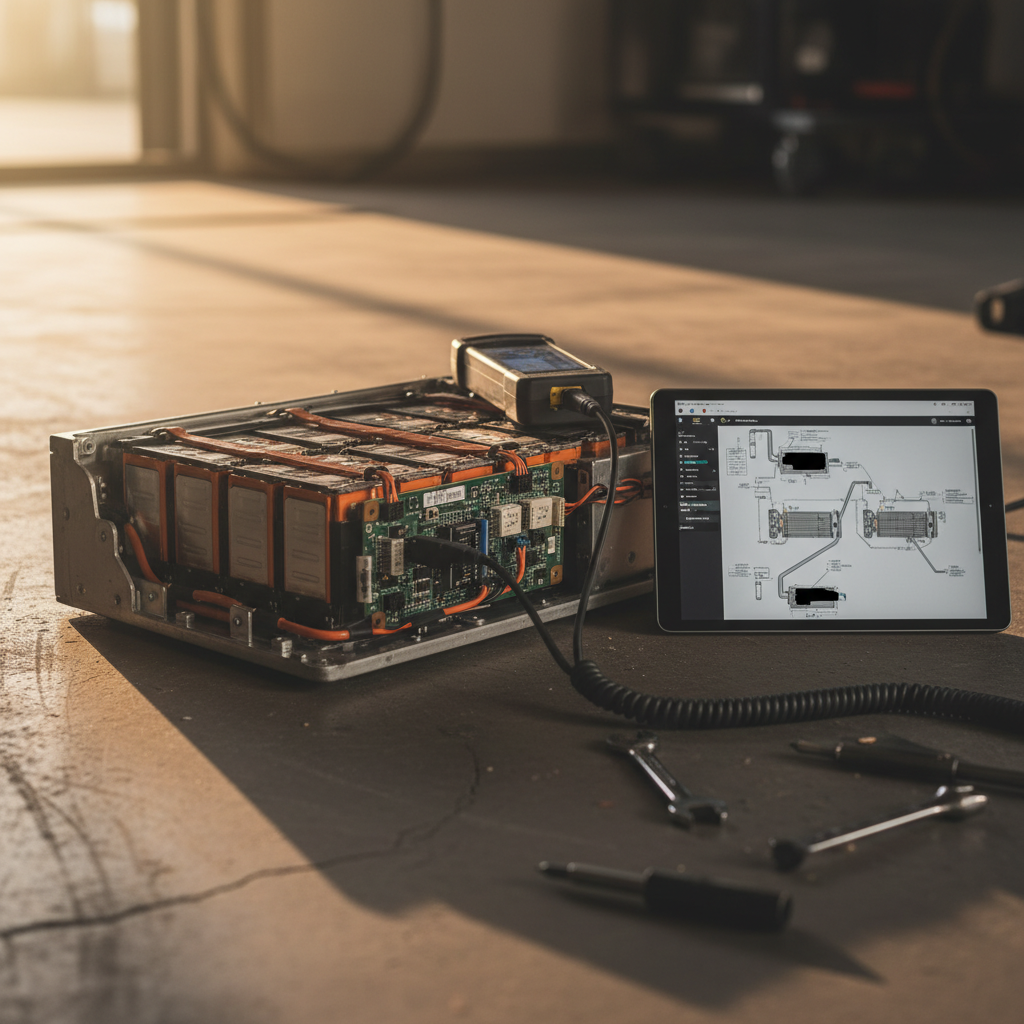
Battery degradation matters more if you’re regularly far from chargers. A third‑party battery‑health report, like the <strong>Recharged Score</strong> that comes with every vehicle on Recharged, gives you data instead of guesses.
Be wary of heavily lifted, heavily tuned trucks
Range reality: what trails do to your battery
EPA range numbers are useful, but they’re based on mixed on‑road driving. Spend all day in low‑speed sand, climb fire roads with a rooftop tent, or tow to a remote trailhead, and your real‑world range will shrink. That doesn’t make off‑road EVs unusable, it just means you need to plan with more margin.
Smart habits for off‑road EV range
- Start the trailhead near 80–90% SOC: Especially if you’re unsure how technical or slow the route will be.
- Use off‑road modes wisely: Highest suspension settings and most aggressive traction control add drag. Raise the truck only when you need the clearance.
- Watch elevation and weather: Long climbs and cold temps both hurt efficiency. Build that into your margin.
- Plan bail‑out options: Identify closer chargers or back‑roads that get you to DC fast charging if the day runs long.
When a plug‑in plan works best
- Basecamps near DC fast charging: Many popular trail towns now have at least one DC fast charger you can hit before or after a run.
- Portable Level 2 at camp: If your campsite has a 240‑volt outlet, an adjustable portable Level 2 charger can add meaningful range overnight.
- Hybrid trip planning: Use your off‑road EV for most weekends and rent a gas truck only for very remote expeditions.
Good news: day‑trip trails are easy
How Recharged fits into your off‑road EV search
If you’re leaning toward a used off‑road‑capable EV, the difference between a great deal and a mistake often comes down to information. That’s where a transparent marketplace helps.
Using Recharged to find the right trail‑ready EV
Data, diagnostics and EV‑savvy support can make off‑road ownership a lot less stressful.
Verified battery health
Every vehicle listed on Recharged includes a Recharged Score Report with independent battery‑health diagnostics. That’s critical if your trips regularly put you far from the nearest charger.
Off‑road‑friendly filters
You can prioritize EVs with dual‑ or tri‑motor AWD, higher ground clearance, tow ratings, and driver‑assist tech that matters on long drives to the trailhead.
Specialist support & flexible deals
Recharged offers EV‑focused financing, trade‑ins, instant offers or consignment, plus nationwide delivery and an in‑person Experience Center in Richmond, VA. If you have questions about using a particular model off‑road, EV specialists can walk you through real‑world experiences.
Ready to find your next EV?
Browse VehiclesOff‑road EV FAQ
Frequently asked questions about EVs for off‑road use
Off‑road‑capable EVs have moved from science‑project territory into real‑world tools. Whether you’re eyeing a Hummer EV for rock gardens, a Rivian for camping and snow, or a ruggedized compact SUV for forest roads, the key is matching hardware, and honest range expectations, to the trails you actually drive. If you’re shopping used, pay close attention to underbody condition, suspension health and battery diagnostics. With the right pick and a bit of planning, an electric truck or SUV can take you just as far into the wild as a gas 4x4, only quieter, cleaner, and with a very different kind of grin when the trail tilts uphill.