If you feel overwhelmed by today’s EV car options, you’re not alone. In 2025 you can pick from regular hybrids, plug‑in hybrids, fully electric cars, and almost every body style, from tiny crossovers to 3‑row SUVs and luxury sedans. This guide breaks down your choices in plain English so you can match the right EV to your budget, range needs, and daily life.
Why there are so many EV options now
EV car options in 2025: the big picture
Broadly, your EV options fall into two dimensions: how the car is powered (hybrid, plug‑in hybrid, or fully electric) and what kind of vehicle it is (sedan, SUV, pickup, luxury, etc.). The right combination depends on where you live, how far you drive, whether you can charge at home, and how much flexibility you want for road trips.
How common different EV options are in the U.S.
Don’t treat this as all‑or‑nothing
The 4 main EV powertrain types explained
How today’s electrified vehicle types differ
From light electrification to fully electric driving
1. Hybrid (HEV)
What it is: Gas engine plus small battery; the car can’t really drive far on electricity alone.
- Best for: Commuters who want high MPG but no charging.
- Examples: Toyota Prius, Honda CR‑V Hybrid, Lexus UX 300h.
- Fuel economy: Often 35–50+ mpg.
2. Plug‑in Hybrid (PHEV)
What it is: Larger battery you charge from the grid, plus a gas engine for backup.
- Best for: Households with mixed driving, short daily trips plus occasional long road trips.
- Electric range: Typically 25–60 miles on battery.
- Examples: Toyota RAV4 Prime, Hyundai Tucson Plug‑in Hybrid, Jeep Wrangler 4xe.
3. Battery Electric Vehicle (BEV)
What it is: 100% electric, no fuel tank, no tailpipe.
- Best for: Drivers who can reliably charge at home or work.
- Range: Commonly 230–330 miles; some models go farther.
- Examples: Hyundai Ioniq 5/6, Kia EV6, Chevrolet Equinox EV, Tesla Model 3/Y.
4. Extended‑range & range‑focused EVs
What it is: BEVs tuned for long‑distance or heavy‑duty use.
- Best for: Road‑trip families, towing, or business use.
- Range: Some newer SUVs and trucks target 350–450 miles.
- Examples: Rivian R1S, Cadillac Escalade IQ, Chevrolet Equinox EV higher‑range trims.
When people talk about “EVs,” they usually mean battery electric vehicles. But hybrids and plug‑in hybrids are absolutely part of the electrified landscape and may be a better fit if you can’t charge easily or regularly drive long distances in rural areas.
Watch out for terminology
Hybrid vs plug-in hybrid vs full EV: how they compare
Side‑by‑side: main EV powertrain options
Use this to align your driving pattern with the right technology.
| Type | Typical electric range | Gas usage | Home charging needed? | Best for | Main trade‑offs |
|---|---|---|---|---|---|
| Hybrid (HEV) | Very short or none | Yes, all driving uses some fuel | No | High‑mileage drivers, apartment dwellers | Great MPG but still relies on gasoline; no EV‑only experience |
| Plug‑in hybrid (PHEV) | 25–60 miles | Only when battery is empty or for hard acceleration | Strongly recommended to get full benefit | Mixed driving, no‑drama road trips | More complex powertrain, less cargo space, some maintenance/fuel costs |
| Battery EV (BEV) | 230–330+ miles | None | Yes, or reliable public charging | Drivers with home or workplace charging | Charging planning, cold‑weather range loss, charging stops on long trips |
Comparison of running costs, charging needs, and pros/cons for each electrified vehicle type.
Who hybrids are best for
- You drive 15,000+ miles a year but can’t charge at home.
- You live in an apartment or rely on street parking.
- You want higher MPG and lower emissions without changing habits.
Who full EVs are best for
- You can install or already have a Level 2 home charger.
- Your regular driving fits comfortably within a 200–250‑mile radius.
- You like low maintenance and want the quiet, instant‑torque EV feel.
Where plug‑in hybrids shine
EV car options by body style and lifestyle

Popular EV car options by life stage and use case
Not everyone needs a three‑row SUV, start with how you actually live.
Commuter & city drivers
- Compact EV hatchbacks & crossovers: Hyundai Kona Electric, Volvo EX30.
- Entry sedans: Hyundai Ioniq 6, Tesla Model 3.
- Easy to park, efficient, usually lower priced.
Families & cargo haulers
- 2‑row EV SUVs: Hyundai Ioniq 5, Kia EV6, Chevrolet Equinox EV.
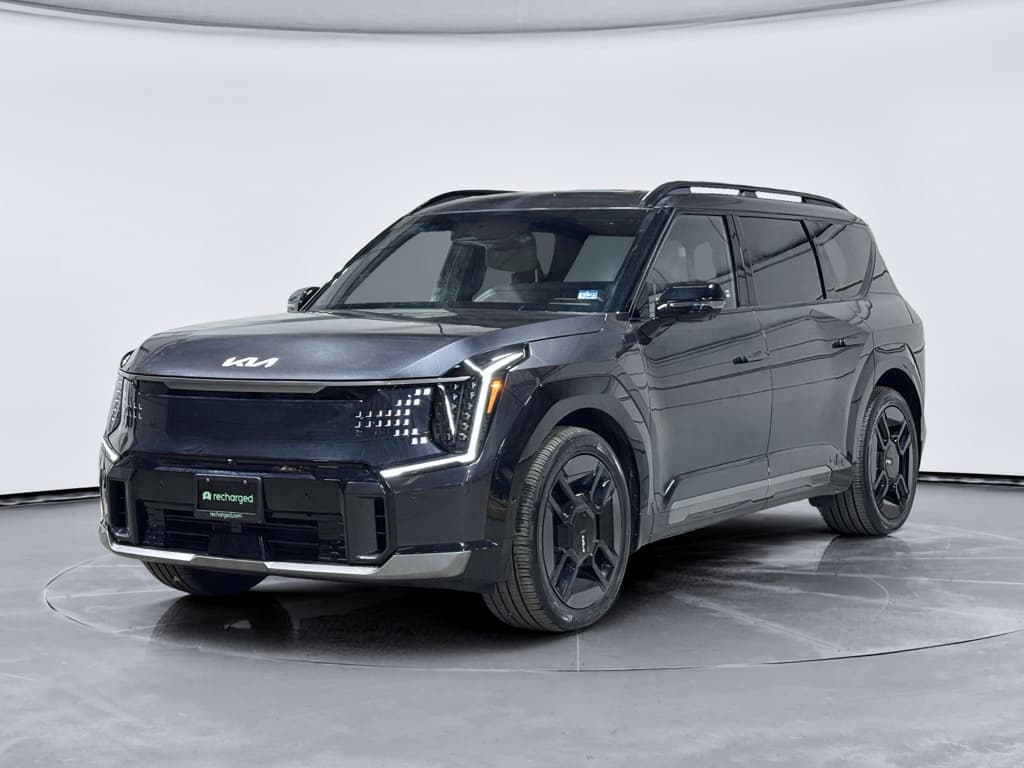
- 3‑row EV SUVs: Kia EV9, Rivian R1S, Cadillac Escalade IQ.
- Focus on rear seat space, cargo room, and DC fast‑charge speed.
Luxury & performance seekers
- Luxury SUVs: BMW iX, Mercedes EQE SUV, Polestar 3, Lucid Gravity.
- Performance sedans: Audi RS e‑tron GT, higher‑trim Tesla models.
- Expect high price tags but standout comfort and acceleration.
Even within one category, say, “electric SUV”, you’ll find very different personalities. A Chevrolet Equinox EV is aimed at mainstream families looking for an affordable compact crossover, while something like a Rivian R1S or Lucid Gravity targets buyers who want long range, off‑road capability, or high‑end luxury.
Think in use cases, not just labels
Budget check: what different EV options really cost
Sticker price is only one piece of the puzzle. Hybrids, plug‑in hybrids, and full EVs have different upfront prices, fuel/energy costs, maintenance needs, and incentives. Over 5–8 years, a slightly more expensive EV at purchase can still be cheaper to own than a gas car.
Approximate cost picture by vehicle type (U.S., 2025)
These are broad ballparks; individual models and local incentives vary.
| Type | New price band* | Used price band* | Fuel/energy costs | Maintenance | Notes |
|---|---|---|---|---|---|
| Hybrid (HEV) | ~$28k–$40k | ~$18k–$30k | Lower than comparable gas; still buying fuel | Similar to gas, but engine works less hard | Good step if you can’t charge; improves mpg without changing habits. |
| Plug‑in hybrid (PHEV) | ~$35k–$50k | ~$23k–$35k | Very low if you plug in; gas on long trips | More complex powertrain, but still familiar | Best when you can charge at home or work most days. |
| Battery EV (BEV) | ~$35k–$60k (mainstream) | ~$20k–$40k for many 2–5‑year‑old models | Lowest per‑mile cost if home charging is cheap | Fewer moving parts; no oil changes | Home charging equipment adds some upfront cost, but operating costs are typically lowest. |
Upfront price ranges and ownership notes by electrification type, focusing on mainstream vehicles rather than ultra‑luxury outliers.
Don’t ignore charging equipment costs
Used EV car options: smart buys and key risks
The rapid growth in EV sales over the last few years means the used EV market has finally matured. You can now find 3–5‑year‑old EVs with modern safety tech and 200‑plus miles of range at prices similar to a well‑equipped gas crossover. That said, buying used adds questions about battery health that you don’t face with a traditional car.
Where used EV car options shine, and where to be cautious
Opportunity on price, but only if you understand the battery.
Opportunities in used EVs
- Lower purchase prices: Early depreciation means a 3‑year‑old EV can cost far less than new.
- Modern tech features: Big touchscreens, advanced driver assists, over‑the‑air updates.
- Lower running costs: You still benefit from cheap electricity and minimal maintenance.
Risks to manage
- Battery health: Range can decline with age and fast‑charging habits.
- Warranty timing: Many EV batteries have 8‑year/100k‑mile warranties, know what’s left.
- Charging standards: Make sure ports and adapters fit the charging network you’ll use.
How Recharged helps with used EV options
- Look for vehicles with a clear charging history (ideally mostly home charging rather than constant DC fast charging).
- Check how the real‑world range today compares to the original EPA rating.
- Confirm that any remaining battery warranty will transfer to you.
- Ask for independent battery diagnostics, this is where tools like the Recharged Score are valuable.
Match your EV option to your charging and range needs
Before you fall in love with a particular model, take a hard look at where you’ll charge and how far you actually drive. These two questions usually narrow your EV car options more than price or styling.
Scenario A: Home charging hero
If you have a garage or driveway and can install a Level 2 charger, your world opens up:
- Almost any 230–300‑mile EV will feel effortless for daily use.
- You charge overnight at lower electricity rates.
- Road trips are the only time you really think about public charging.
In this case, prioritize comfort, range, and charging speed rather than worrying about gas backup.
Scenario B: Apartment or street parking
If home charging is tricky, your EV options change:
- Hybrid or plug‑in hybrid may be more practical if public chargers are scarce.
- If you choose a full EV, look for reliable workplace charging or dense fast‑charging networks nearby.
- Consider slightly longer‑range models to reduce how often you need to plug in.
Here, your charging access can matter more than the vehicle’s cool features list.
Factor in weather and terrain
Step-by-step checklist to choose the right EV
From abstract options to a short list of real cars
1. Map your real driving
Track a few weeks of driving (or review past rides) to see your longest regular day, typical commute, and how often you do 150‑mile‑plus trips.
2. Decide your “electrification level”
Choose whether a hybrid, plug‑in hybrid, or full BEV fits your lifestyle and charging reality today, not the one you wish you had.
3. Set a realistic total budget
Include taxes, registration, potential home charging installation, and insurance. Remember that fuel and maintenance will often be lower with electrified options.
4. Pick 1–2 body styles that actually fit your life
Be honest about what you haul, kids, dogs, sports gear, work tools, and choose between sedan, small SUV, or 3‑row SUV before fixating on a specific badge.
5. Shortlist 3–5 specific models
Use comparison tools to note range, charging speeds, warranty, and safety ratings. At this stage, you’re comparing concrete EV car options, not just powertrain types.
6. Decide new vs used
If you’re open to used, you’ll often find better‑equipped EVs for the same money. This is where a verified battery‑health report from Recharged can be a big advantage.
7. Test‑drive with your real life in mind
Bring car seats, strollers, luggage, or work gear to your test drive. Practice plugging in, using the charging apps, and checking how range and charging info is displayed.
8. Plan your first month of ownership
Before signing, identify your main charging location, backup options, and any long trips. Having a simple plan turns range anxiety into just another calendar entry.
FAQ: common questions about EV car options
Frequently asked questions about EV car options
Bottom line: how to move from options to a decision
The explosion of EV car options can feel confusing, but it’s ultimately good news. Whether you want a simple hybrid that just sips fuel, a plug‑in hybrid that covers most days on electricity, or a full battery EV with hundreds of miles of range, there’s now likely a model that matches your life instead of forcing you to change it.
Start with your driving pattern and charging reality, then layer on budget and body style. From there, you can narrow hundreds of electric and electrified models down to a handful that genuinely fit. If you’re considering the used route, tools like the Recharged Score Report, expert EV guidance, and flexible financing make it much easier to compare options side by side without worrying what’s hiding in the battery pack.
When you’re ready, explore used EV listings, book a virtual walk‑around, or visit an EV‑focused retailer like Recharged’s Experience Center in Richmond, VA. The right electric option is out there, you just need a clear framework and the right data to find it.