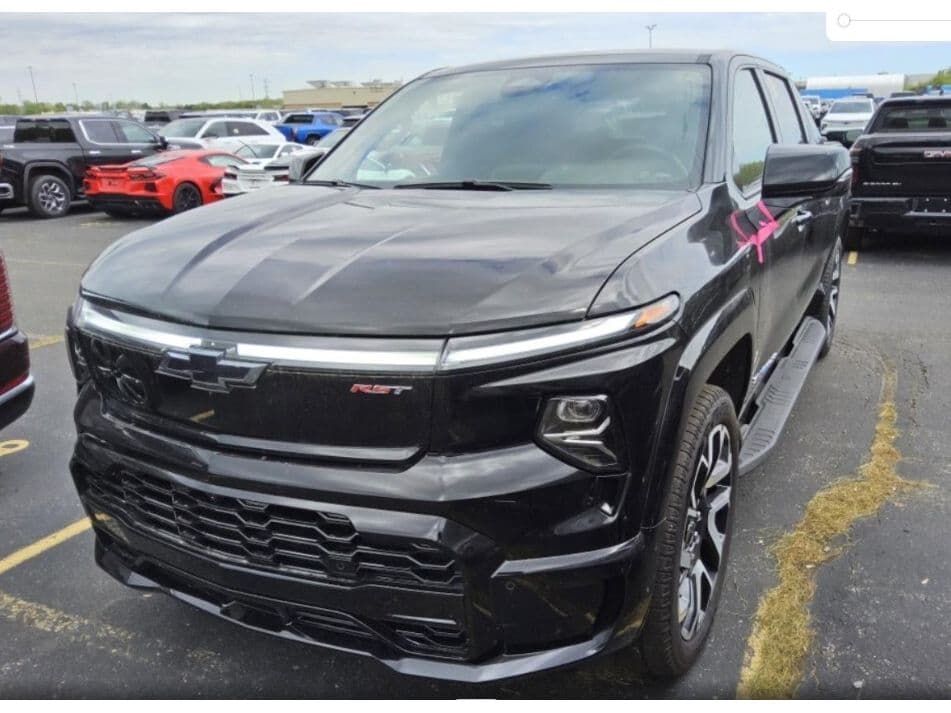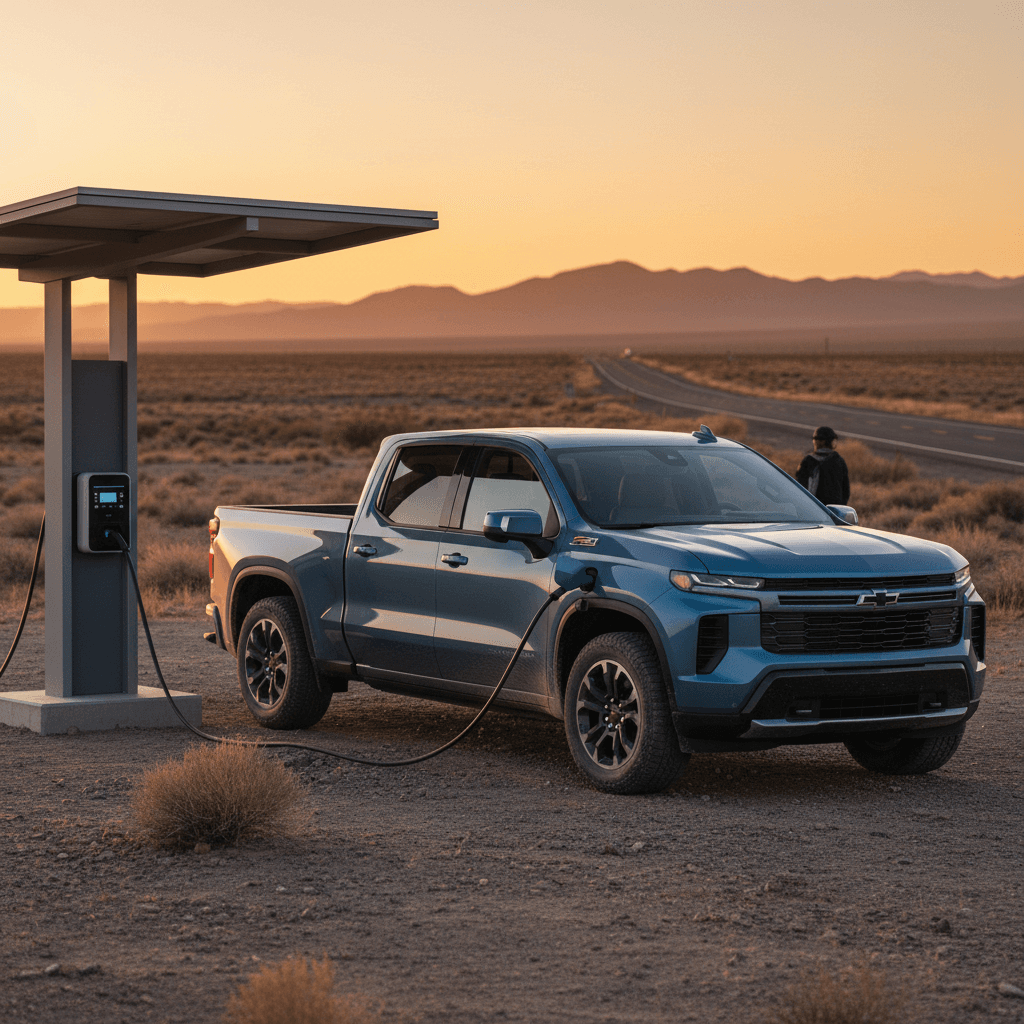
If you’re eyeing a Chevrolet Silverado EV for long-distance driving or already own one, you’ve picked one of the most capable road-trip EV trucks on the market. With available EPA ranges around the mid‑400s and even into the 490‑mile neighborhood, plus blisteringly quick DC fast‑charging, the Silverado EV can cover serious ground, if you plan and drive it the right way. This guide walks you through practical Chevrolet Silverado EV long distance driving tips so you can go farther, charge smarter, and arrive less stressed.
Big-picture Silverado EV range
Why the Silverado EV Is Built for Long-Distance Driving
Core strengths that help on long trips
What makes the Silverado EV different from many other electric trucks
Huge battery options
The Silverado EV’s Ultium packs are among the biggest in the segment (around 200 kWh on Max Range and WT variants), giving you more buffer for headwinds, cold weather, or towing.
Very fast DC charging
On a strong 350 kW DC fast charger, real‑world charging sessions can peak above 300 kW, meaning you can add hundreds of miles of range in well under an hour when conditions are right.
High-efficiency highway tuning
Owners and independent tests report that at reasonable highway speeds, the Silverado EV can rival or beat other full‑size electric pickups on long‑distance efficiency, especially with careful driving.
Of course, none of this matters if you simply set the cruise at 85 mph into a winter headwind with a tall trailer and then hope for the best. The rest of this guide focuses on the realistic, nuts‑and‑bolts habits that make those capabilities work for you on real highways, not just in spec sheets.
Know Your Silverado EV Range and Battery Options
Before any long-distance trip, you need to understand which Silverado EV you’re driving and what its realistic range looks like. Chevy has already rolled out multiple trims and battery configurations (WT, 3WT, 4WT, LT, RST, Max Range), and their range numbers aren’t identical.
Chevrolet Silverado EV: Approximate EPA Range by Configuration
Representative EPA or GM-estimated ranges for recent Silverado EV trims. Always verify your specific truck’s rating on its window sticker or online specs.
| Trim / Configuration | Battery | Drive | Approx. EPA Range* | Best Use Case |
|---|---|---|---|---|
| WT Standard Range | Smaller Ultium pack | 4WD | ~250–300 mi | Regional work, short trips, frequent DC fast charging |
| WT Max Range / 4WT | ~200 kWh Ultium | 4WD | ~440–492 mi | Long-distance fleet use, highway-heavy driving |
| LT / RST (large pack) | Large Ultium pack | 4WD | ~393–440 mi | Mixed personal use, road trips, light towing |
| Future / updated trims | Varies | Varies | Check current spec | Confirm on Chevy site or EPA label |
Use these numbers as a planning baseline, then apply real‑world adjustments for speed, weather, and towing.
Treat EPA range as “best case”
How far can you really go?
If you bought your truck used or you’re evaluating one, this is where a Recharged Score battery health report becomes valuable. It gives you verified insight into how much of that original battery capacity is still available, so your long‑distance plans rest on real numbers, not guesses.
Planning a Long Trip in Your Silverado EV
A good plan removes 80% of the stress from EV road trips. With the Silverado EV’s combination of big battery and fast charging, your main job is to place those big, high‑speed DC fast charges in the right spots and avoid running the pack down to single digits unless absolutely necessary.
Pre-trip route planning checklist
1. Confirm your truck’s exact range rating
Look up your trim’s official range on the Monroney label, in your owner’s manual, or on Chevy’s website. If you bought used, ask for documentation or a third‑party battery health report, like the Recharged Score.
2. Use multiple planning tools
Start with a route planner that understands EVs and heavy trucks (like A Better Routeplanner) and cross‑check with your Silverado’s built‑in navigation and the myChevrolet app’s Charge Assist feature.
3. Anchor your stops to high-speed chargers
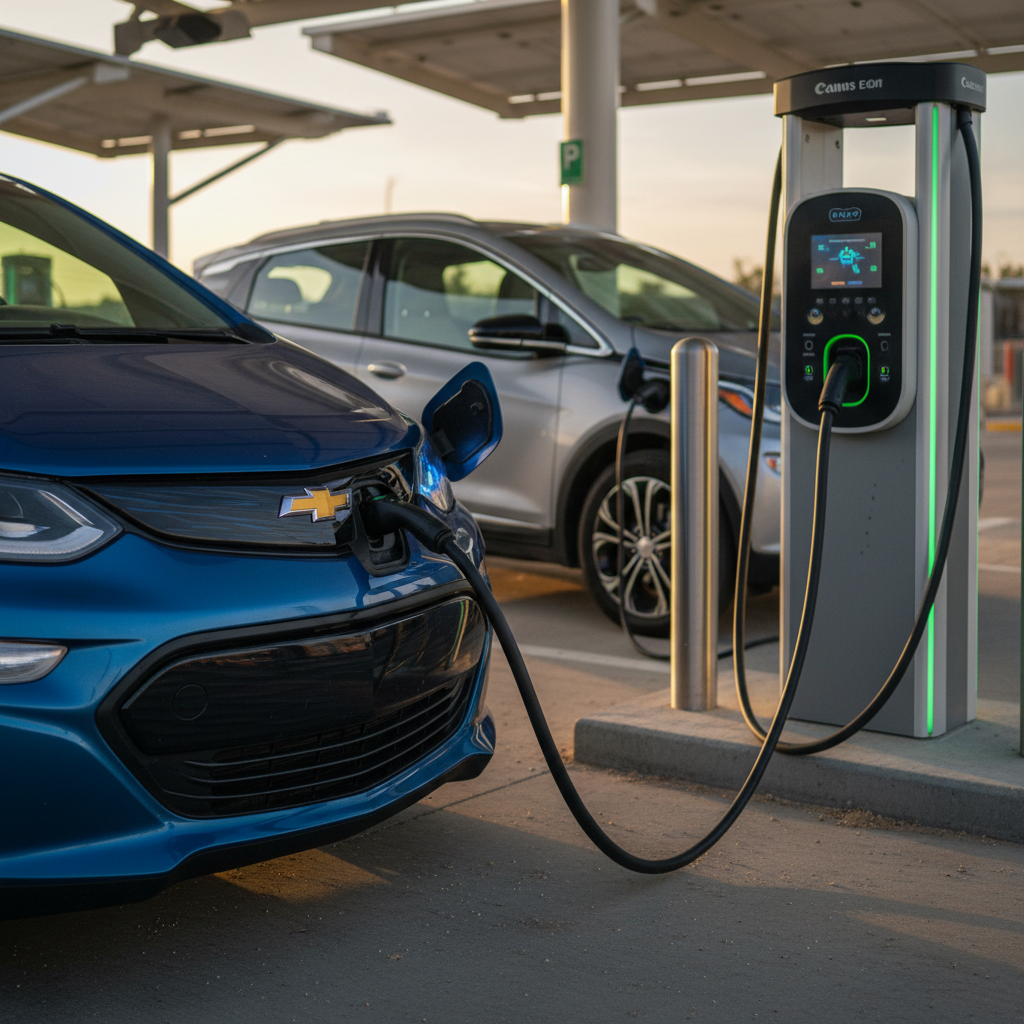
Prioritize 250–350 kW sites from networks like Electrify America, EVgo, Pilot/Flying J (GM Energy), or Ionna where available. These let the Silverado EV’s high DC charging capability really shine.
4. Aim for 10–20% arrival at chargers
Plan legs so you reach fast chargers with about 10–20% remaining. This is where your truck will charge fastest and gives you a buffer for detours, weather changes, or closed stations.
5. Book lodging with Level 2 charging
Whenever possible, choose hotels or campgrounds with 240V Level 2 charging. Waking up with a full (or nearly full) battery turns multi-day trips into a much smoother experience.
6. Have backup options
Save at least one alternate charger for each planned stop, ideally on a different network. If a station is full or a unit is down, you won’t be scrambling.
Let the truck help you
Smart DC Fast Charging Strategies for Long Drives
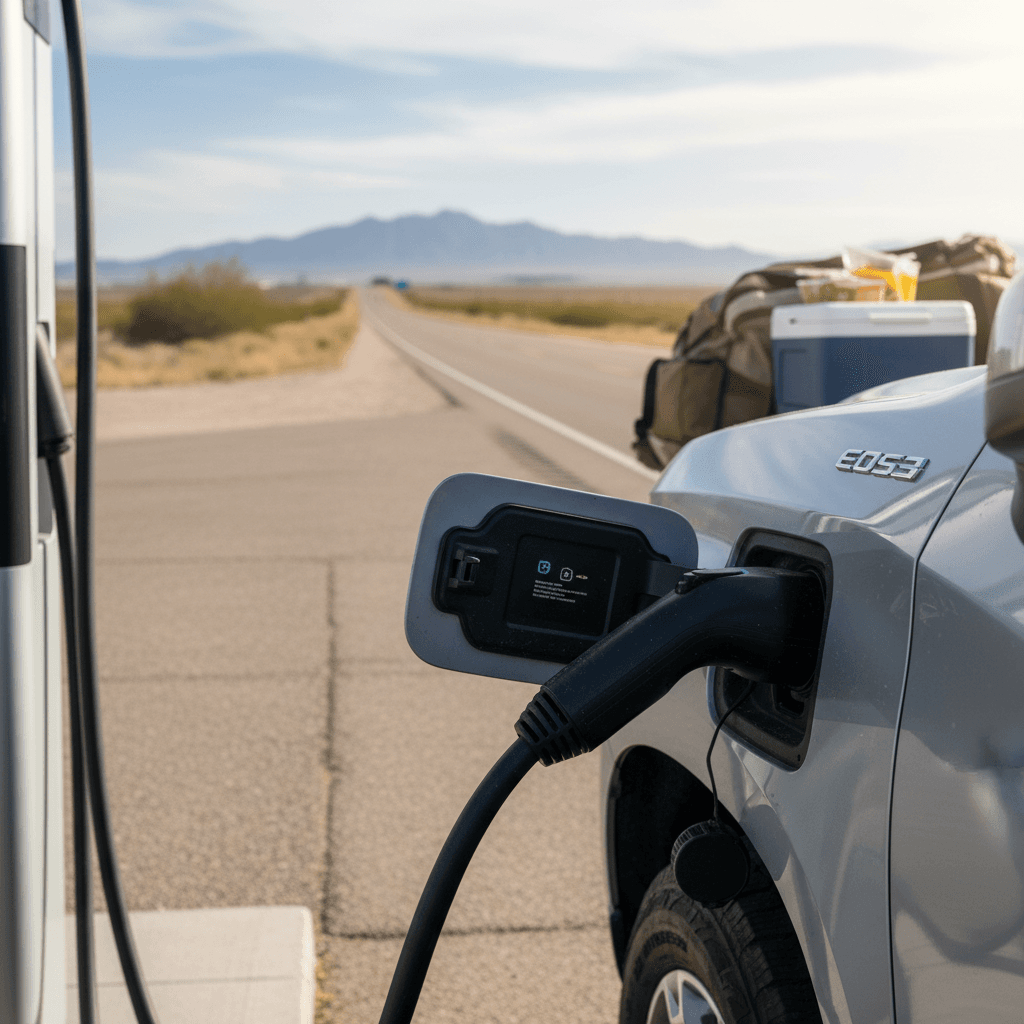
The Silverado EV’s Ultium platform can be a charging monster on the right hardware. That’s good news, but you still need a strategy. On long trips, the goal isn’t to hit 100%, it’s to pull into the right chargers at the right state of charge (SoC) and minimize time parked.
- Target a 10–80% charging window on road trips. Charging above ~80% slows dramatically; it’s usually faster to leave and charge again later.
- Use DC fast‑charge preconditioning whenever you can. If your truck or app lets you precondition the battery on the way to a charger, enable it, warm batteries accept power much faster.
- Favor 350 kW stations when available. Even though real‑world peaks vary, high‑capacity units give the Silverado EV room to reach its top charging speeds.
- Avoid hopping between low-powered DC stations. A 50 kW unit can feel painfully slow for a pack this large. It can be fine in a pinch, but don’t plan your trip around them.
- Monitor charging speed, not just time. If you see power tapering early (e.g., long before 60–70%), check battery or charger issues and decide whether to move on sooner.
Don’t arrive at chargers with near-zero battery on purpose
Highway Driving Techniques to Maximize Silverado EV Range
You don’t have to hypermile a big electric truck, but small choices on the highway add up. At 6,000+ pounds and with the frontal area of a billboard, aero drag is your biggest enemy at speed.
Simple driving habits that add real range
None of these are painful, but together they can mean one less charging stop in a day.
Set realistic cruise speeds
Above about 70 mph, energy use climbs quickly. Dropping from 78 mph to 70 mph can save a surprising amount of range over a few hundred miles, often more than 10–15% on a big pickup like the Silverado EV.
Reduce unnecessary aero drag
Remove roof racks and cargo boxes when you don’t need them. Secure bed loads below the cab line or use an efficient bed cover rather than leaving bulky gear sticking into the wind.
Use drive modes wisely
Choose efficiency‑oriented modes when you’re not towing or hauling heavy. Save sportier settings for when you actually need maximum response, not when you’re trying to stretch to the next charger.
Smooth inputs, fewer spikes
Gentle acceleration and anticipating traffic so you lift early reduces energy spikes and lets the truck recapture more energy via regenerative braking instead of using the friction brakes.
Dial in regen to your preference
Towing Long Distance with the Silverado EV
One of the Silverado EV’s big selling points is its towing capability. Properly equipped models can pull serious weight, but physics is physics: pushing a tall trailer through the air will eat into even a huge battery’s range. Long‑distance towing is absolutely doable, you just have to change how you think about legs and stops.
How towing affects Silverado EV long-distance range
Very rough planning figures for long-range and Max Range Silverado EV trims in moderate weather, assuming mid-size trailers and highway speeds.
| Scenario | Example Trailer | Planning Range per Charge | Notes |
|---|---|---|---|
| Light load | Open utility trailer, small cargo | ~60–70% of EPA | Relatively modest aero penalty; watch crosswinds. |
| Mid-weight travel trailer | 5,000–7,000 lb camper, ~9–11 ft tall | ~45–55% of EPA | Line up chargers every 120–180 miles on Max Range trucks. |
| Heavy / brick trailer | Tall enclosed trailer or large toy hauler | ~35–45% of EPA | Shorter legs, careful speed management, more frequent DC stops. |
Always validate your own numbers on a shakedown trip before committing to a tight towing schedule.
Towing-focused planning checklist
1. Do a shakedown loop close to home
Before a big trip, tow your typical trailer on a familiar highway loop (50–100 miles) to learn your actual consumption at realistic speeds and weather. Use that data instead of guesses.
2. Shorten your leg assumptions
If you’d normally plan 250–300‑mile legs without a trailer, pare that back significantly when towing. Think in 120–180‑mile chunks on big‑battery trucks and less on smaller packs.
3. Keep speeds conservative
Every 5 mph above 65 can take a painful bite out of range when towing a tall RV. If schedule matters, you’ll often arrive sooner by running a bit slower and making fewer charging stops.
4. Watch tongue weight and payload
Stay within the truck’s payload and tongue‑weight limits. Overloading not only affects safety and handling; it also hurts efficiency and can stress the battery and motors.
5. Favor big, easy-access chargers
When towing, prioritize stations at travel plazas and truck stops with pull‑through or easy back‑in access so you don’t have to drop the trailer for every charge.
Don’t learn towing range on day one of your vacation
Weather, Terrain, and Load: How Conditions Change Your Range
The Silverado EV’s massive battery gives you a lot of cushion, but conditions still matter. Long grades, cold snaps, and headwinds can all turn an easy leg into a nail‑biter if you didn’t look at the forecast or topography.
Cold and heat
- Cold weather thickens battery chemistry and adds cabin heating demand. Expect notable range loss below freezing, especially before the pack warms up.
- Precondition while plugged in whenever possible in winter so the truck uses grid power, not battery energy, to warm the cabin and battery.
- Use seat and wheel heaters instead of cranking cabin heat; they’re far more efficient.
Terrain, wind, and weight
- Long climbs can burn through range quickly, but you’ll gain some back on the descent thanks to regen, just not all of it.
- Headwinds and crosswinds increase aero drag, especially with bed racks or trailers. A strong headwind can feel like driving 10–15 mph faster than your actual speed.
- Payload has less impact than aero, but a fully loaded bed still costs range. Pack efficiently and secure loads low.
Use weather and elevation in your planner
Comfort, Cargo, and Cabin Settings for Road Trips
Long-distance driving isn’t just about watt‑hours and kilowatts, it’s also about how you feel at hour eight of day two. The Silverado EV’s quiet powertrain and spacious cabin already give you an advantage; a few tweaks make it even better for days on the road.
- Set up driver profiles and memory seats so switching drivers doesn’t turn into a science project at every stop.
- Use adaptive cruise control where available to reduce fatigue and smooth out speed variations that burn extra energy.
- Pack the cabin light and keep most heavy items low and between the axles for best ride and handling.
- Use the infotainment system to keep an eye on energy use by subsystem, HVAC, drivetrain, etc., so you spot any outliers early.
- If kids or pets are along, build in short walking breaks that line up with charging stops so everyone, not just the truck, gets recharged.
A quiet cabin changes how road trips feel
Charging at Home and at Your Destination
For truly painless long-distance travel, think beyond DC fast chargers. If you can leave home with a full battery and arrive most nights with Level 2 charging available, your days fall into a comfortable rhythm, drive all day, charge while you sleep, repeat.
Make the most of Level 2 charging
Slow and steady charging is your best friend off the highway.
Home base
A dedicated 240V Level 2 charger (or at least a 240V outlet with a capable mobile EVSE) lets you start every trip with a full pack. For many owners, that alone turns 300–400‑mile days into single‑charge legs.
Destinations and overnights
Look for hotels, vacation rentals, and RV parks that advertise EV charging. Even a few hours on a mid‑power Level 2 can replace what you used getting dinner, and an overnight charge often restores you to near‑full.
If you’re still shopping for a Silverado EV, or comparing used trucks, this is where Recharged can help you pair the right vehicle with your charging reality. Our EV specialists can talk through your home setup, typical trip patterns, and whether a Max Range or smaller‑pack truck makes the most sense.
Used Silverado EV Long-Distance Readiness Checklist
If you’re considering a used Silverado EV specifically for long-distance use, you’re wise to think beyond price and paint color. You’re buying not just a truck, but a battery, a charging experience, and a comfort level for your future road trips.
What to check before relying on a used Silverado EV for long trips
1. Battery health and history
Ask for a recent battery health report or capacity check. On Recharged, every truck comes with a Recharged Score report that quantifies usable battery health and charging behavior.
2. DC fast-charging behavior
If possible, do a test DC fast charge from ~20–30% to 60–70% and watch charging speed. You’re looking for strong, stable power on a capable charger, not an anemic curve that suggests issues.
3. Charging port and cable condition
Inspect the charge port door, connectors, and included charging cable for damage, corrosion, or missing caps, problems here can turn into big headaches when you’re hundreds of miles from home.
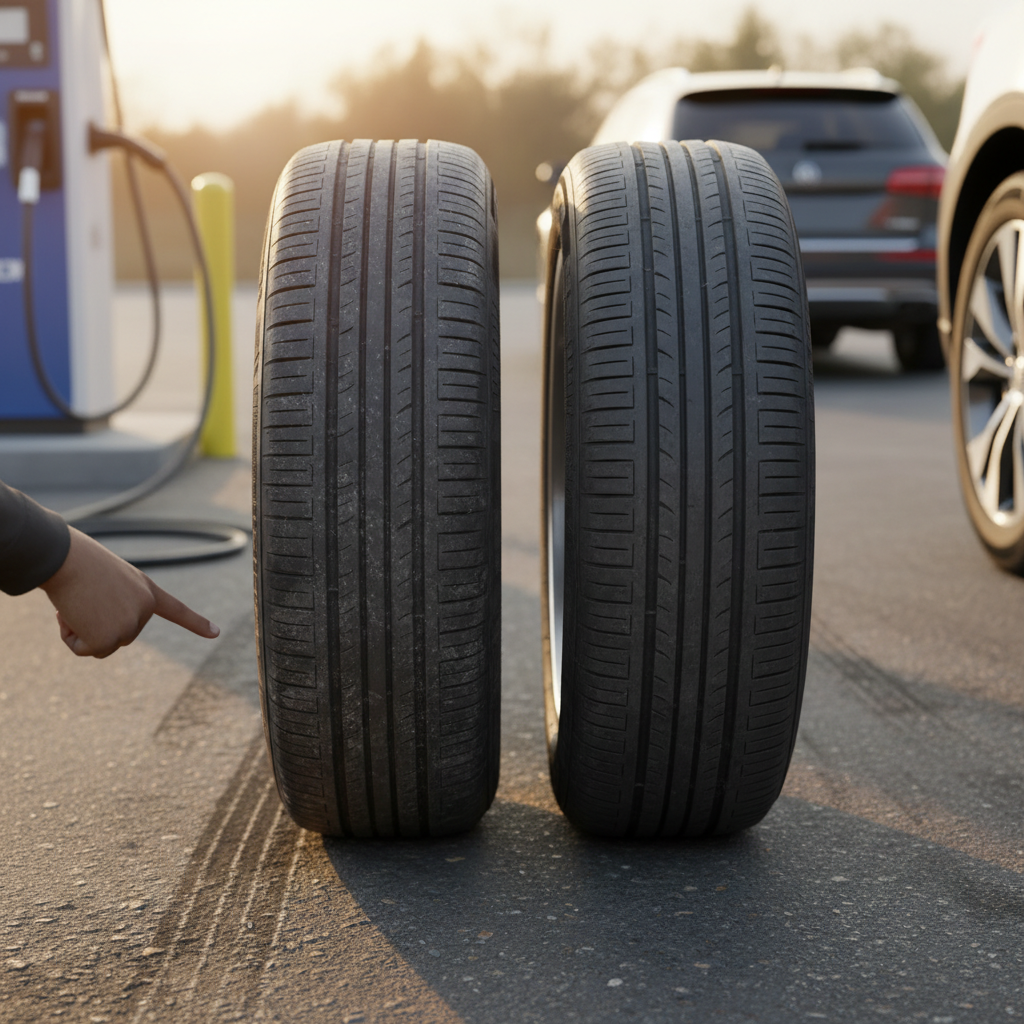
4. Tires and alignment
Uneven wear or low‑rolling‑resistance tires replaced with aggressive all‑terrains can both affect efficiency and handling. Factor that into your real‑world range expectations.
5. Software and navigation updates
Confirm that the infotainment system, navigation, and charging software are up to date so you have the latest route-planning and charger-location improvements.
6. Access to financing and delivery
If you’re sourcing a used Silverado EV from a distance, services like Recharged can help with EV‑savvy financing, trade‑in or consignment, and nationwide delivery so you’re not starting your road‑trip life with a complicated purchase logistics puzzle.
Chevrolet Silverado EV Long-Distance Driving FAQ
Frequently asked questions about long-distance driving in a Silverado EV
Key Takeaways for Long-Distance Silverado EV Driving
Long-distance driving in a Chevrolet Silverado EV isn’t a science experiment, it’s just a different rhythm than a gas truck. Start with honest assumptions about your trim’s real‑world range, anchor your day around strong DC fast chargers, keep highway speeds reasonable, and give extra respect to hills, weather, and trailers. Do that, and the Silverado EV’s enormous battery and rapid charging turn into real‑world advantages, not just brochure numbers.
If you’re still deciding which Silverado EV, or which used EV truck in general, fits your life, a transparent marketplace like Recharged can help. You’ll get verified battery health via the Recharged Score, EV‑savvy financing and trade‑in options, and nationwide delivery, plus experts who live and breathe questions like, “Will this truck really do my 600‑mile holiday trip without drama?” Get the right truck, plan smart, and your long‑distance drives can be quieter, cleaner, and more relaxing than they’ve ever been.