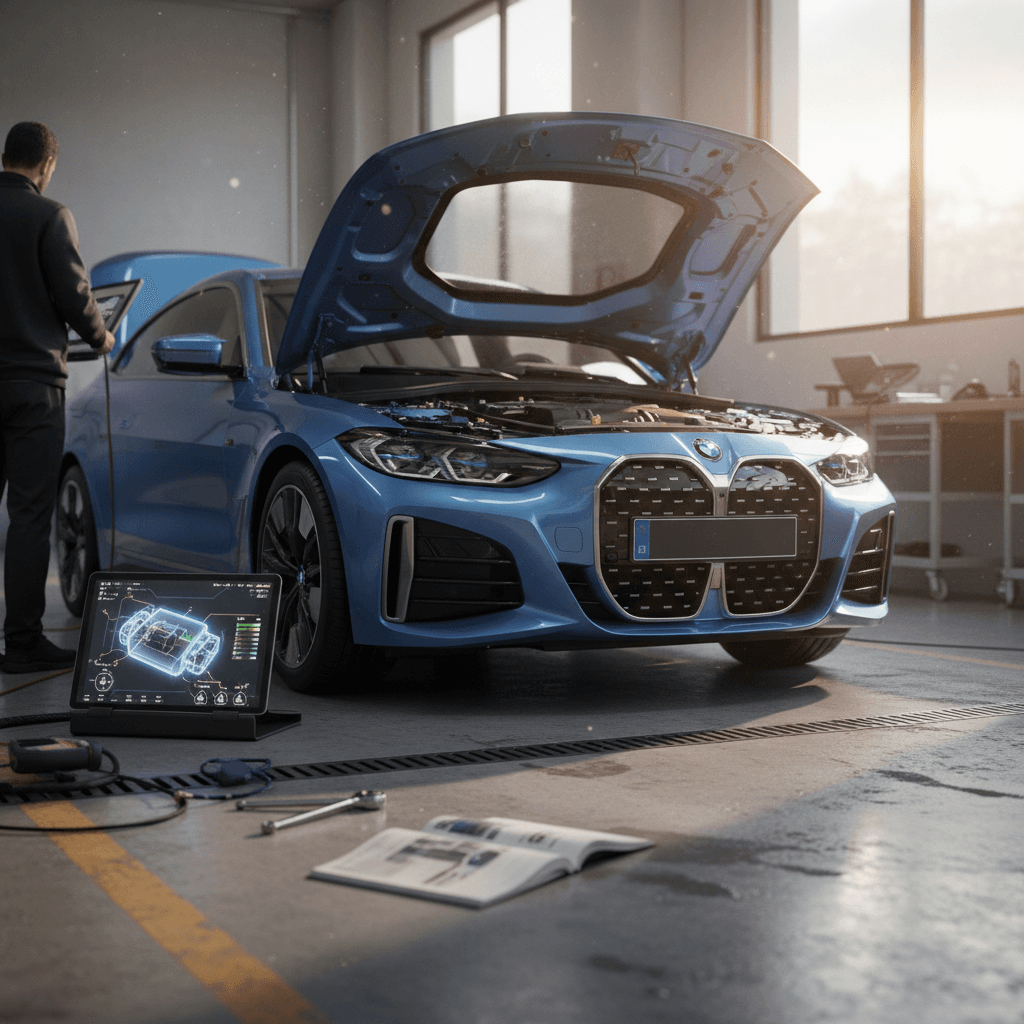
If you’re considering a BMW i4, or already own one, you’ve probably heard that EVs need less maintenance than gas cars. That’s true, but “less” doesn’t mean “none.” Understanding the BMW i4 maintenance schedule will help you budget realistically, avoid surprise repairs, and make smarter decisions if you’re shopping used.
BMW i4 maintenance in one sentence
BMW i4 maintenance overview
BMW doesn’t use a simple, fixed checklist for every EV. Instead, the i4 follows BMW’s Condition Based Service (CBS) logic: the car tracks mileage, time, and driving conditions, then tells you which services are due. The result is a mix of time-based items (like brake fluid) and wear-based items (like wipers, tires, and filters).
BMW i4 maintenance at a glance
In practice, most i4 owners see a visit about every 12–24 months for inspections and minor service, with tires and brakes being the largest long-term maintenance expenses. The battery and electric motor are largely “hands off” for routine service as long as you charge and drive sensibly.
How BMW i4 maintenance differs from gas BMWs
What the BMW i4 doesn’t need
- No engine oil or oil filters
- No spark plugs, ignition coils, or fuel filters
- No timing belt or timing chain service
- No exhaust system repairs (no mufflers, catalytic converters, O2 sensors)
- No transmission fluid changes for a complex multi-gear gearbox
What the BMW i4 still needs
- Brake fluid changes (time-based)
- Cabin air filter and, in some regions, HEPA/particle filters
- Tires, wheel alignments, and balancing
- Brake system inspections and occasional pad/rotor replacement
- Coolant for the battery and power electronics (long-interval service)
Think in systems, not just services
BMW i4 maintenance schedule by mileage
Exact intervals vary slightly by market and model year, and your i4’s CBS reminders always win. But the table below shows a realistic, conservative BMW i4 maintenance schedule you can use to plan ownership or evaluate a used car’s history.
Typical BMW i4 maintenance schedule
Approximate intervals assuming normal mixed driving. Always follow your car’s on-screen service reminders and local BMW documentation.
| Mileage / Time | Main Service Items | Notes for Owners |
|---|---|---|
| Every 10,000–12,000 miles or annually | Multi-point inspection, tire rotation (if applicable), software checks, wiper blades | Many owners combine this with seasonal tire swaps in four-season climates. |
| 20,000–25,000 miles or 2 years | Cabin air filter replacement, inspection, brake fluid change (time-based) | Brake fluid is typically due at 2-year intervals even with low mileage. |
| 30,000–40,000 miles | Deeper inspection of suspension, steering, brakes, and tires | Good checkpoint for alignment and tire wear patterns. |
| 60,000 miles or 4 years | Repeat cabin filter + brake fluid, detailed battery and cooling system check | Some markets schedule long-life coolant service around this window. |
| 80,000–100,000 miles | Tires (often second full set), potential brake pads/rotors, suspension bushings | Actual timing depends heavily on driving style and road conditions. |
| Every 2 years (time-based) | Brake fluid replacement | Even if you don’t drive much, moisture can degrade brake fluid over time. |
| As needed | Tires, wheel alignment, wiper blades, 12V auxiliary battery | Watch for uneven tire wear and warning messages for the 12V system. |
BMW i4 service items tend to be time-based (every 2 years) or mileage-based (every 10,000–30,000 miles).
Always confirm for your specific VIN
Key BMW i4 service items explained
Core BMW i4 maintenance items
What each service does, and why it matters on an EV
High-voltage battery checks
The i4’s traction battery is monitored continuously by onboard software. Routine service visits focus on diagnostics and cooling system checks rather than opening the pack or “topping off” fluids.
Abnormal behavior, like sudden range drops or repeated errors, should trigger a dealer or EV specialist inspection.
Brake fluid replacement
Even with regenerative braking doing most of the work, your hydraulic brakes still rely on fresh fluid. Moisture builds up over time, reducing braking performance and corroding components.
Most BMW schedules call for a brake fluid change every 2 years, regardless of mileage.
Cabin air & microfilters
The i4 uses cabin filters to trap dust, pollen, and in some markets, fine particles or odors. These typically need replacement around 20,000–25,000 miles or every 2 years.
A clogged filter can reduce HVAC performance and increase window fogging.
Battery & power electronics coolant
Coolant keeps the battery, inverter, and onboard charger in their ideal temperature range. The interval is long, often well beyond 60,000 miles, but it’s critical it be done correctly when due.
Coolant service is usually a dealer or EV-specialist job.
Tires, rotation & alignment
EV torque and weight can be tough on tires. Expect 20,000–30,000 miles from many OE performance tires, sometimes less with aggressive driving.
Regular rotations and periodic alignments reduce noise and extend tire life.
Brake pads & rotors
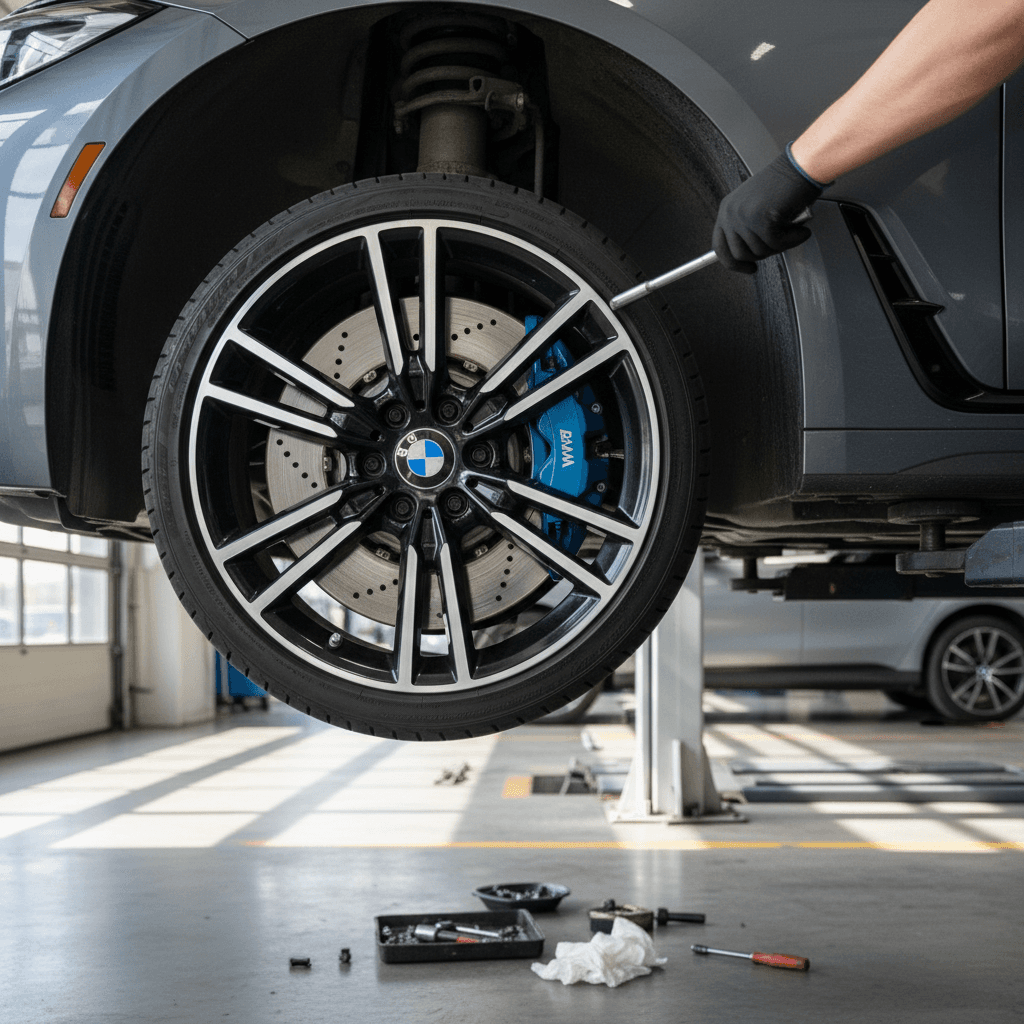
Regenerative braking means pads and rotors can last dramatically longer than on a gas BMW, 60,000+ miles isn’t unusual.
But if you drive mostly on highways or ride the brakes, they can still wear out much sooner. Inspections tell the real story.
Maintenance costs: BMW i4 vs gas models
When people cross-shop the i4 against a 3 Series or 4 Series Gran Coupe, long-term maintenance is one of the quiet advantages that doesn’t show up on a window sticker. You still have BMW-level parts pricing, but without an engine’s constant appetite for fluids and tune-ups.
Typical upkeep: BMW i4 vs comparable gas BMW
Broad, real-world ballpark ranges assuming ownership beyond warranty. Actual costs depend heavily on driving style, climate, and which shop you use.
| Item (multi-year view) | BMW i4 (EV) | Comparable gas BMW (3/4 Series) |
|---|---|---|
| Engine oil & filters | $0 | $600–$1,200 over ~60,000 miles |
| Spark plugs, coils, fuel system | $0 | $400–$1,000+ depending on mileage |
| Brake fluid (2x changes) | $250–$400 | $250–$400 |
| Tires (1–2 sets) | $900–$2,000+ | $900–$2,000+ |
| Brake pads/rotors (axle) | Often $0–$800 over 60k miles | $600–$1,200 over 60k miles |
| Cooling system service | $250–$600 (long interval) | $400–$800 including engine cooling |
| Total routine maintenance over ~5 yrs | Generally lower and more predictable | Generally higher and more variable |
EVs don’t make maintenance free, but they do shift spending away from engine work toward tires and time-based items.
The big-picture takeaway
BMW i4 maintenance checklist for used buyers
If you’re shopping for a used i4, the maintenance schedule becomes a due-diligence checklist. You’re not just asking, “Has it been serviced?” You’re asking, “Has it been serviced at the right times for an EV?” That’s exactly the kind of nuance Recharged’s diagnostics aim to capture.
Used BMW i4 buyer maintenance checklist
1. Pull the digital service history
Use the BMW i4’s iDrive menu or BMW app to review past service. Look for regular visits roughly every 12–24 months and verify that brake fluid and cabin filters have actually been done, not just “inspected.”
2. Confirm brake fluid service dates
On a 3–5-year-old i4, you should see at least one brake fluid change, ideally two if it’s older. If there’s no record, budget for an immediate flush.
3. Inspect tires and alignment wear
Uneven shoulders, feathering, or cupping can point to alignment issues or harsh use. New tires on a low-mile car can also be a clue, ask why they were replaced early.
4. Check brake pad and rotor thickness
Because EV brakes last so long, very worn pads at low mileage can hint at aggressive or stop-and-go driving. Have a technician measure remaining thickness on each axle.
5. Review any battery or HV system warnings
Scan for stored fault codes and ask about any past battery, charging, or drive-unit warnings. A clean history plus a healthy range estimate is what you want to see.
6. Verify software and recall status
BMW frequently improves EV behavior with software updates. Confirm the car is up to date and that any recalls or service campaigns have been completed.
Don’t ignore the 12V battery
Pro tips to extend your BMW i4’s component life
- Use Eco or Comfort modes in daily driving to reduce stress on tires and suspension.
- Enable or maximize regenerative braking where you’re comfortable to extend pad and rotor life.
- Avoid repeated full-throttle launches on cold tires or rough surfaces, great for TikTok, bad for tire life.
- Rotate tires on schedule, especially if you run staggered or performance setups.
- Don’t ignore subtle pulls or steering vibrations, early alignments are cheaper than new tires.
- Charge moderately when possible; you don’t need to baby the pack, but avoiding constant 0–100% swings is usually best for long-term health.
Think like a fleet manager
How Recharged helps with BMW i4 maintenance & ownership
When you’re buying a used BMW i4, the challenge isn’t just finding a good price, it’s separating the well-cared-for cars from the experiments. That’s where a transparent, EV-first process matters more than a shiny showroom.
Why a Recharged BMW i4 is easier to own
We build the maintenance story into the buying experience.
Recharged Score battery health report
Every vehicle at Recharged comes with a Recharged Score Report that includes verified battery health and system diagnostics. That gives you a clear view of how the i4’s pack and key components are aging, something a traditional maintenance stamp can’t show.
EV-specialist inspections
Our EV-focused technicians look for issues that matter on an i4: brake system condition, tire wear patterns, software status, and any early warning signs in the high-voltage system, not just whether someone changed oil that doesn’t exist.
Financing & trade-in support
Recharged offers financing, trade-in, instant offers, or consignment, along with nationwide delivery. That means you can roll expected maintenance into a clear ownership plan, not play guessing games.
Ready to find your next EV?
Browse VehiclesIf you prefer to see and feel an i4 before committing, Recharged also operates an Experience Center in Richmond, VA, where you can talk through maintenance questions with EV specialists in person while you compare vehicles.
BMW i4 maintenance FAQ
Frequently asked questions about BMW i4 maintenance
Wrap-up: Planning BMW i4 service with confidence
The BMW i4 trades traditional BMW engine upkeep for a simpler, more predictable maintenance pattern that revolves around inspections, time-based fluid changes, and wear items like tires and brakes. If you understand the BMW i4 maintenance schedule, and verify that a used car has followed it, you can enjoy the performance and refinement you’d expect from a BMW with fewer surprise shop visits.
If you’re looking at a used i4, Recharged builds this whole picture, battery health, service history, and likely future maintenance, into every Recharged Score Report. Combine that with EV-focused guidance, financing, trade-in support, and nationwide delivery, and you get something traditional dealers rarely offer: a clear, data-backed view of what BMW i4 ownership will actually look like over the next 5–10 years.