If you’re eyeing a used Hyundai IONIQ 5, you’re not alone. It’s one of the most desirable electric crossovers on the market. But like any first‑generation EV, some model years have more growing pains than others. Knowing the Hyundai IONIQ 5 worst year to avoid used can save you money, time in the shop, and a lot of stress.
At a glance
Overview: Hyundai IONIQ 5 reliability by year
Hyundai IONIQ 5 reliability snapshot by model year
Independent reliability tracking shows a clear pattern: 2022 and 2023 IONIQ 5s sit well below segment‑average reliability, with complaint clusters around the electrical system and powertrain. Later years move into the "mixed" range, still not bulletproof, but better bets if you want to minimize risk while taking advantage of the IONIQ 5’s fast charging, spacious interior, and strong efficiency.
New tech, early bugs
Hyundai IONIQ 5 worst years to avoid used
Hyundai IONIQ 5 years to avoid (and why)
How each model year stacks up for used‑car shoppers, based on complaint volume, recall history, and problem severity.
| Model year | Avoid / Caution / Recommend | Key concerns for used buyers | Typical mileage when issues show up* |
|---|---|---|---|
| 2022 | Avoid for most buyers | First model year, high rate of electrical failures (ICCU), sudden power loss, charging issues, multiple recalls. | 10,000–25,000 miles |
| 2023 | Caution | Many of the same ICCU and 12V issues, plus ongoing software and infotainment glitches. | 10,000–30,000 miles |
| 2024 | Recommend (with checks) | Improved reliability scores; still some electrical complaints but fewer catastrophic failures. | Under 20,000 miles so far |
| 2025 | Caution/Recommend | Mixed picture: fewer complaints overall but higher recall count, including performance N model braking software. | Too early for clear mileage pattern |
Focus on patterns, not perfection, an individual car’s condition still matters most.
From a pure data standpoint, the worst Hyundai IONIQ 5 year to avoid used is 2022. It carries the lowest reliability score, the highest complaint rate per vehicle sold, and the most concentrated pattern of serious issues like loss of motive power.
- 2022 IONIQ 5: Good if you find a great deal and a full paper trail, but risky as a daily driver unless major components (especially the ICCU) have already been replaced and updated.
- 2023 IONIQ 5: Slight improvement, but still more problems than you’d like in a nearly new EV. Treat as a "proceed with caution" year.
- 2024–2025 IONIQ 5: Better choices, especially if you want to keep the car past its basic warranty period. Still verify recall work and software updates.
Bottom line on worst years
Best Hyundai IONIQ 5 years to buy used
Best IONIQ 5 years if you want fewer headaches
Later isn’t just newer, it usually means important fixes have already landed.
2024: Sweet spot for many buyers
The 2024 Hyundai IONIQ 5 shows the best overall balance so far between price, features, and early reliability data.
- Improved reliability score versus 2022–2023.
- Over‑the‑air (OTA) update cadence is more mature.
- Many early‑run hardware issues addressed in production.
As 3‑year leases end, 2024s should start hitting the used market in meaningful numbers, often with warranty coverage left.
2025: Newest tech, but watch recalls
2025 models benefit from the longest remaining warranty and running changes to software and components.
- Updated infotainment and safety tech.
- More real‑world data on cold‑weather range and charging behavior.
- But: extra recalls, including for the high‑performance IONIQ 5 N’s braking software.
If you buy 2025 used, verify recall completion and ask for a fresh health report on the high‑voltage system.
For most shoppers, a used 2024 or 2025 IONIQ 5 is where you’ll find the best mix of price and peace of mind. They’re still young in EV years, parts availability is improving, and Hyundai has had time to react to the first wave of real‑world failures.
How Recharged helps you target the right years
Common Hyundai IONIQ 5 problems (and which years are most affected)
1. ICCU failures and sudden loss of power
The most serious pattern with early IONIQ 5s involves the Integrated Charging Control Unit (ICCU). When it fails, owners report:
- "Check power system" or similar warnings.
- Vehicle dropping into limp mode (limited to ~25 mph).
- Complete loss of power and roadside breakdowns.
This tends to show up between 10,000 and 30,000 miles, often on 2022–2023 models. Many of these failures also impact the 12‑volt system, leaving the car unable to start until components are replaced.
2. 12‑volt battery drain and electrical gremlins
Some owners of 2022 and 2023 IONIQ 5s have dealt with overnight 12‑volt battery drain related to infotainment or other modules not going to sleep properly. Symptoms include:
- Car won’t "wake up" in the morning.
- Multiple jump‑starts or tows to the dealer.
- Extended wait times for replacement parts.
Later model years appear less prone, but any used IONIQ 5 with unexplained low‑voltage issues deserves extra scrutiny.
- Charging and DC fast‑charge issues: Some early cars struggle to reach advertised fast‑charge speeds or see charging sessions cut short, often addressable with software updates or hardware replacements.
- Software and infotainment glitches: Frozen screens, Apple CarPlay/Android Auto dropouts, and buggy navigation are common but usually addressed via OTA updates under warranty.
- Suspension noises and brake feel: A minority of owners report clunks or knocks over bumps and inconsistent brake feel, worth checking on a test drive, but not year‑specific red flags.
What to ask the seller
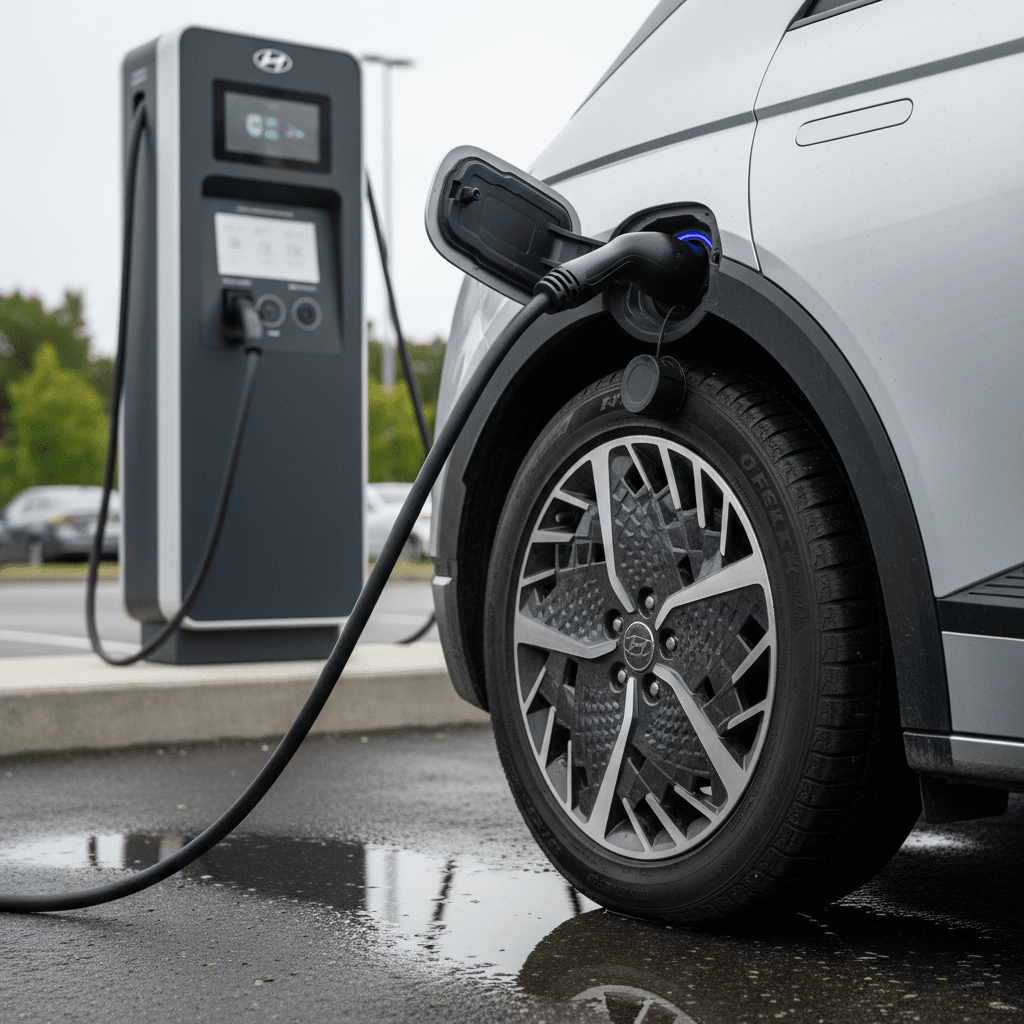
Recalls, software fixes, and warranty coverage
Every modern EV leans heavily on software, and the IONIQ 5 is no exception. The silver lining: many issues can be mitigated or fully fixed with software updates and targeted recalls, if they’ve actually been done on the car you’re buying.
Examples of Hyundai IONIQ 5 recall and campaign activity
Not a complete list, but a snapshot of the issues you should double‑check when shopping used.
| Issue type | Affected years (approx.) | What went wrong | What the fix looks like |
|---|---|---|---|
| ICCU / power system campaigns | Primarily 2022–2023 | Power system warnings, limp mode, loss of propulsion tied to ICCU and 12‑volt charging. | Hardware replacement plus updated software logic. |
| Instrument cluster / display software | 2025–2026 (select trims) | Cluster may fail to display critical info like speed and warning lights due to software errors. | OTA or dealer‑installed software update. |
| Performance IONIQ 5 N braking recall | 2025 (N variant) | Left‑Foot Braking feature software could reduce ABS performance and extend stopping distances on track. | Dealer software update to braking control logic. |
Always run the VIN through NHTSA (U.S.) and ask for a dealer printout of completed campaigns.
Don’t fear recalls, fear unknown histories
Warranty and coverage checklist for used IONIQ 5 shoppers
1. Confirm high‑voltage battery coverage
Hyundai typically backs the IONIQ 5’s high‑voltage battery for up to 8 years/100,000 miles. Verify the in‑service date and mileage so you know how much coverage you have left.
2. Look at basic and powertrain warranty windows
The bumper‑to‑bumper and powertrain warranties will expire much sooner than the battery coverage. A 2022 car, for example, may be close to (or past) its comprehensive coverage period already.
3. Ask for a dealer service history printout
This will show completed recalls, software campaigns, and major component replacements, critical on 2022–2023 cars with possible ICCU or 12‑volt issues.
4. Verify OTA update status
Have the owner show you the software version on the infotainment screen and confirm that OTA updates are enabled, or ask a dealer to scan for pending updates before purchase.
How to shop smart for a used Hyundai IONIQ 5
Knowing that 2022 and, to a lesser extent, 2023 are the Hyundai IONIQ 5 years to avoid (or at least treat carefully) is only half the battle. The other half is inspecting the specific car in front of you. Here’s how to reduce your risk, whether you’re buying from a dealer, private seller, or online marketplace.
Used Hyundai IONIQ 5 pre‑purchase checklist
1. Prioritize a full battery and charging health report
For any used EV, battery health matters more than almost any other metric. On IONIQ 5s, you want to see consistent DC fast‑charge behavior and no history of repeated charging failures. Vehicles sold through Recharged include a <strong>Recharged Score battery health diagnostic</strong> so you can see real data, not just a guess.
2. Test DC fast charging before you buy
If possible, meet at a public DC fast charger. Watch how quickly the car ramps up, whether it holds power, and if any warnings appear. Sudden disconnects or very low charge rates deserve further investigation.
3. Drive long enough to stress the system
Take at least a 20–30 minute mixed drive. Pay attention to warning lights, throttle response, brake feel, suspension noises, and whether any "check power system" message appears under load or after a quick stop.
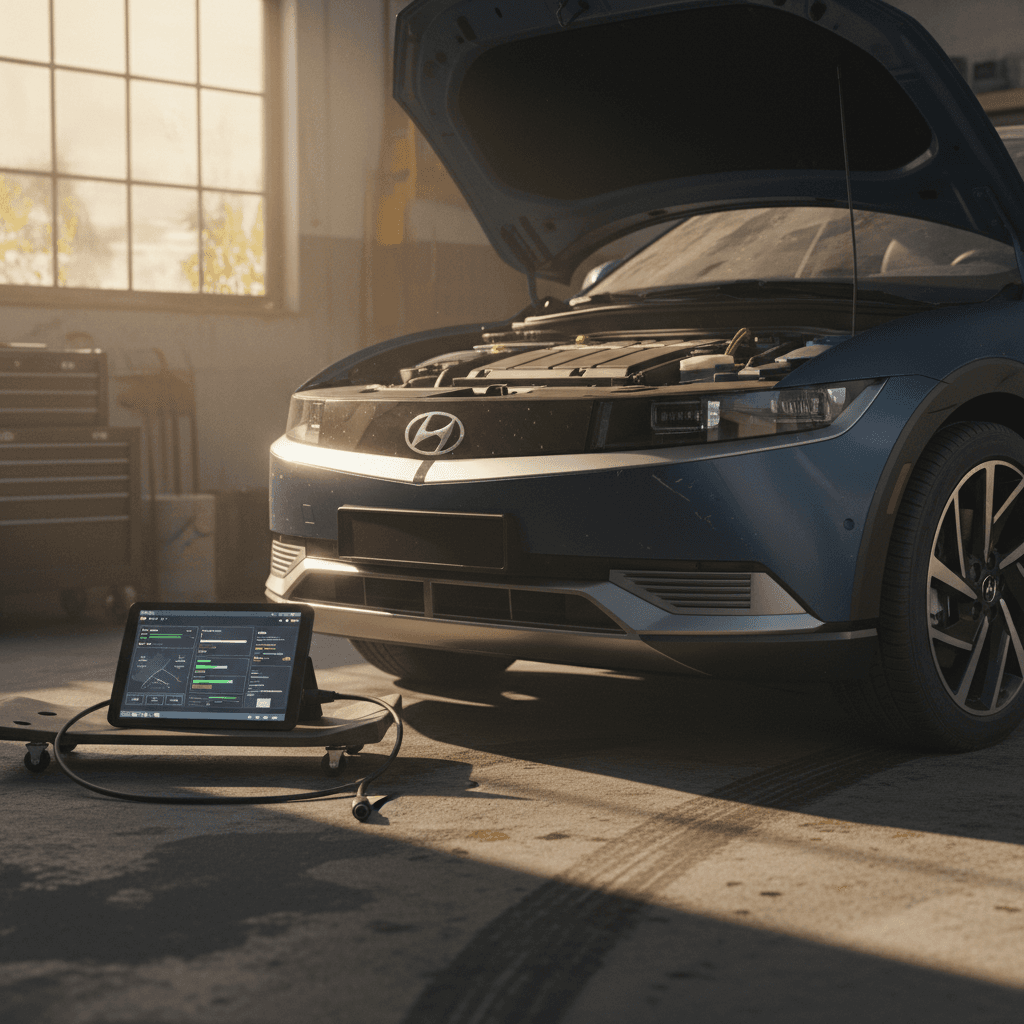
4. Scan for diagnostic trouble codes (DTCs)
A Hyundai dealer or EV‑savvy shop can scan the car for stored or pending codes, especially around the ICCU, on‑board charger, and high‑voltage system. This is money well spent on a 2022–2023 model.
5. Match the price to the risk
A cheap 2022 IONIQ 5 with patchy service history is priced that way for a reason. Build in a repair budget, or walk away if the discount doesn’t truly compensate you for the added risk.
Where Recharged fits in
How the IONIQ 5 compares to other used EVs
So how does a used Hyundai IONIQ 5 stack up against other popular used EVs like the Tesla Model Y, Ford Mustang Mach‑E, or Volkswagen ID.4?
Where the IONIQ 5 shines
- Ultra‑fast DC charging on 800‑volt architecture, especially on well‑maintained cars.
- Spacious, flexible interior that feels more like a midsize SUV than a compact crossover.
- Generous battery warranty and improving reliability in later years.
If you find a 2024–2025 model with clean history and strong battery health, the IONIQ 5 can be one of the better all‑around used EV buys on the market.
Where you should be cautious
- Early‑run reliability isn’t as solid as some rivals, particularly around power electronics.
- Parts and service delays for complex electrical components can sideline the car for weeks if something fails.
- Software‑heavy experience means your long‑term happiness depends on Hyundai’s update cadence and support.
If maximum simplicity is your priority, a more mature platform (or a plug‑in hybrid) might feel less risky.
"Early‑cycle reliability issues don’t make the IONIQ 5 a bad EV. They just mean you have to shop it like the high‑tech product it is, not like a ten‑year‑old gas crossover."
FAQ: Hyundai IONIQ 5 worst year to avoid used
Frequently asked questions about used Hyundai IONIQ 5 years to avoid
The Hyundai IONIQ 5 is one of the most interesting and capable used EVs you can buy right now, but only if you choose the right year and the right car. Treat 2022 as the Hyundai IONIQ 5 worst year to avoid used unless the price and documentation are truly compelling, approach 2023 with caution, and focus your search on 2024 and newer whenever possible. With solid battery health data, verified recall work, and an honest condition report, exactly what Recharged was built to provide, you can enjoy the IONIQ 5’s strengths without inheriting someone else’s early‑adopter headaches.