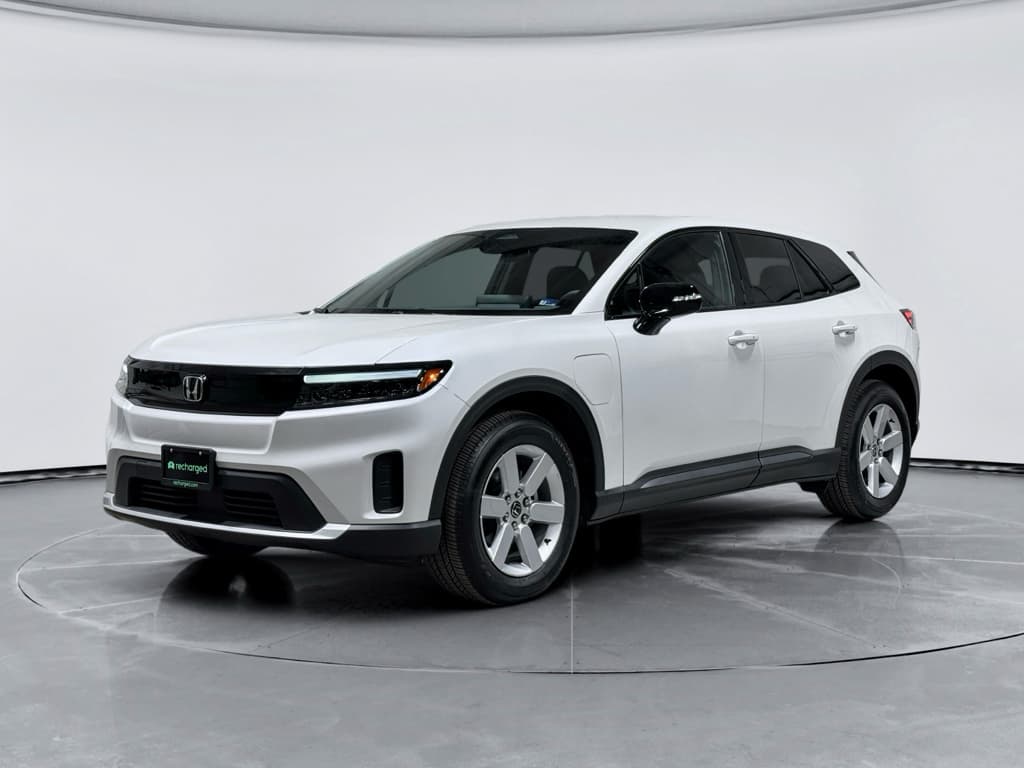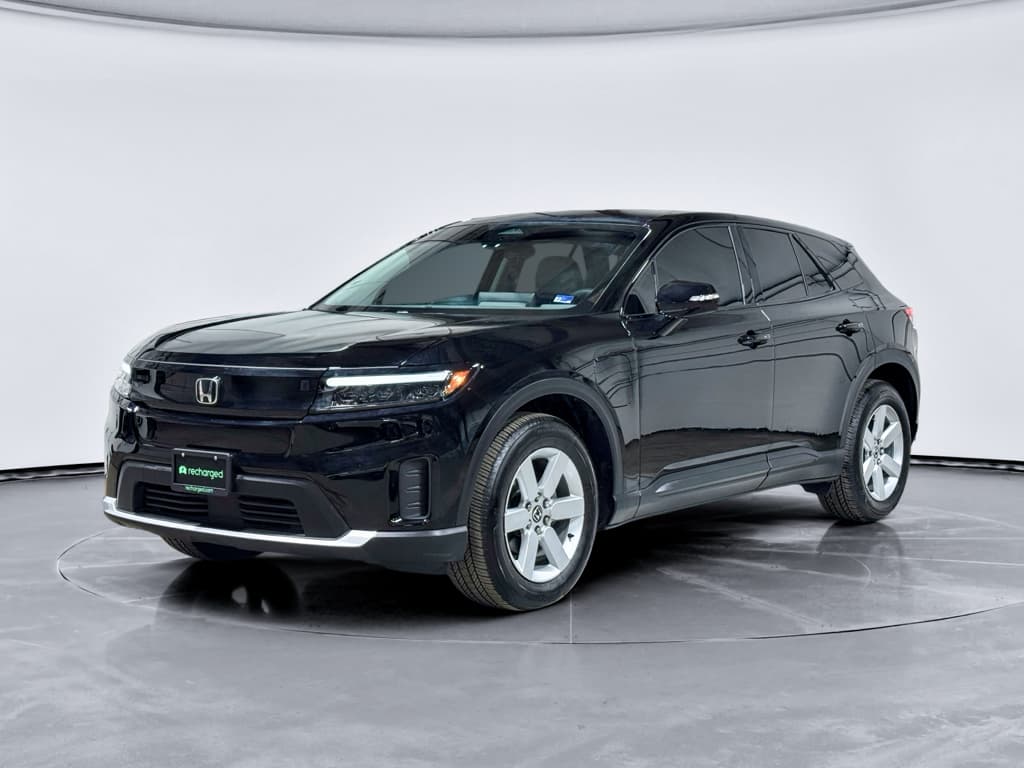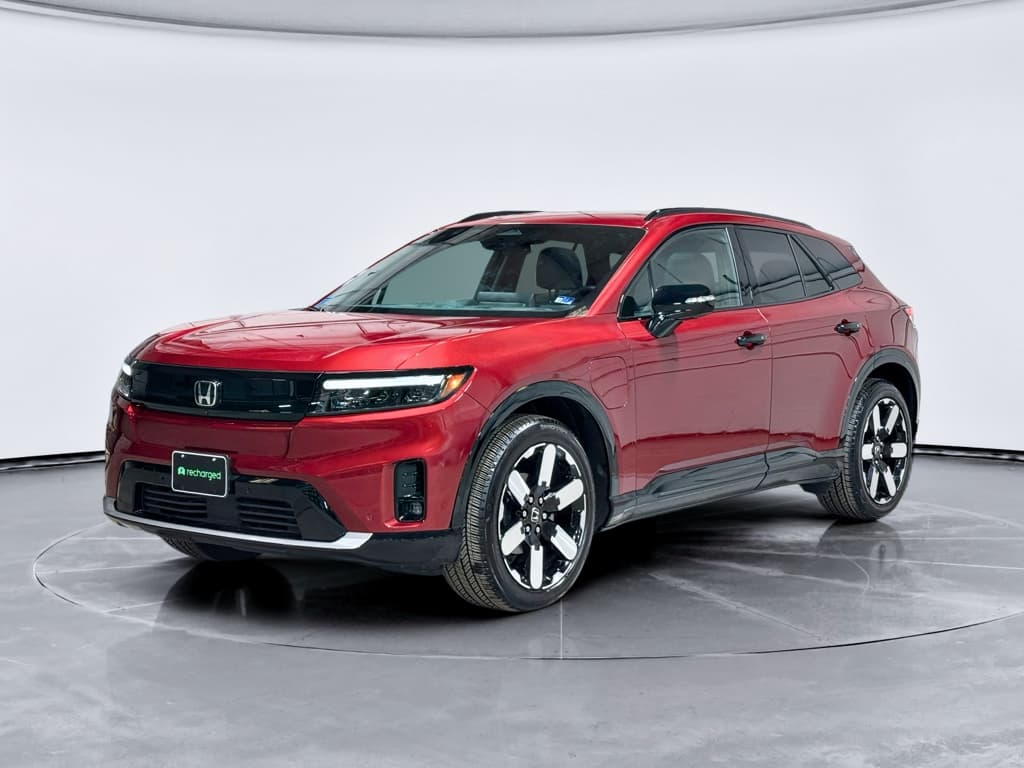
If you’re considering a Honda Prologue, or you just brought one home, the natural question is: how long does it take to charge a Honda Prologue? The honest answer is, “it depends.” Charger type, battery level, temperature, even your utility plan all play a role. This guide breaks down realistic charging times for home and road‑trip use so you can see how the Prologue will fit into your daily life.
Quick answer
Honda Prologue charging basics and key specs
Key Honda Prologue battery and charging specs
These numbers drive every charging‑time estimate you’ll see below.
Battery size
The Honda Prologue uses an 85 kWh lithium‑ion battery pack (about 83 kWh usable) across all trims. That’s right in the middle of today’s midsize EV SUV class.
Level 2 charging
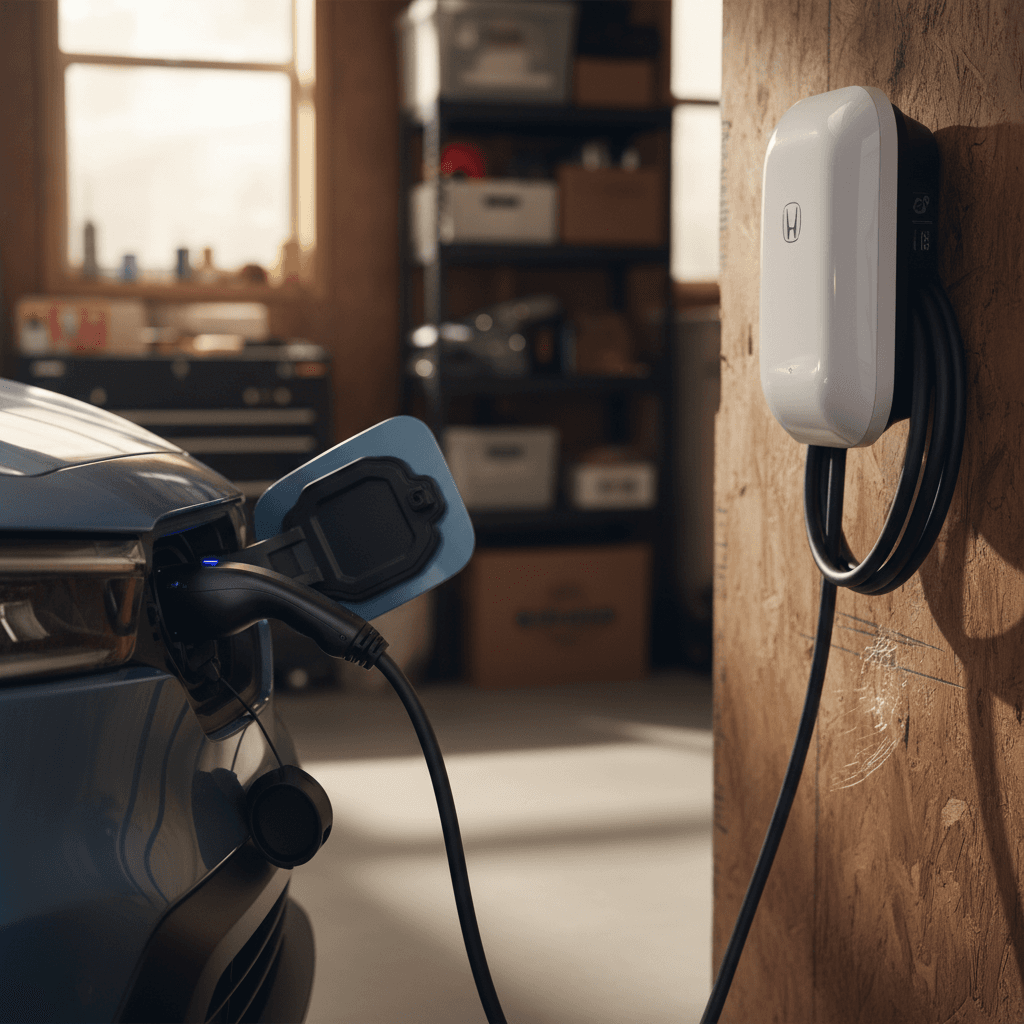
The onboard AC charger supports up to 11.5 kW on a 240V Level 2 connection. With a 48‑amp home wallbox, that’s roughly 30–33 miles of range per hour added.
DC fast charging
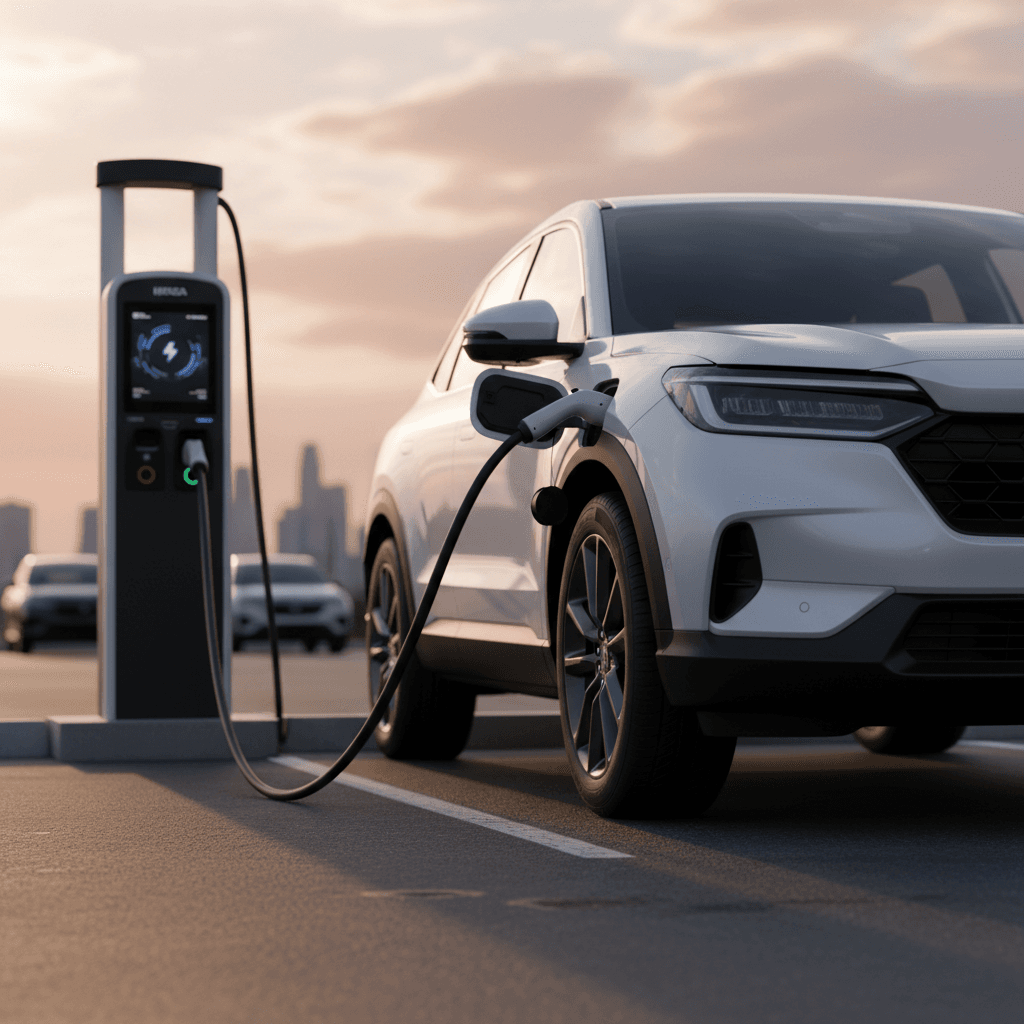
On DC fast charging (public "Level 3"), the Prologue peaks around 150–155 kW. Honda quotes roughly 65 miles of range in about 10 minutes under good conditions.
With those specs in mind, we can translate power (kW) into time for different charger types. Think of it this way: the higher the kilowatts, the shorter the stop, but the charger and the car both have a say in how much power actually flows.
How long to charge a Honda Prologue on Level 1
Level 1 is the plain old household outlet, 120 volts, using the portable cord that comes with the vehicle. It’s slow, but it will eventually get the job done if you’re patient and your driving is light.
Honda Prologue Level 1 charging time (approximate)
Estimates assume a typical 12‑amp Level 1 charge (about 1.3–1.4 kW) and average efficiency.
| Start state of charge | End state of charge | Energy added (kWh) | Estimated time | Approx. miles added* |
|---|---|---|---|---|
| 20% | 80% | ~50 kWh | ~36–40 hours | ~150–165 miles |
| 40% | 80% | ~34 kWh | ~24–26 hours | ~100–110 miles |
| 60% | 90% | ~25 kWh | ~18–20 hours | ~75–80 miles |
Use Level 1 as a backup or for very low daily mileage, not as your primary fuel source.
Reality check on Level 1
How long to charge a Honda Prologue on Level 2
Level 2 is where the Honda Prologue really makes sense as a daily driver. This is a 240‑volt circuit, either with a hard‑wired wallbox or a high‑amp plug‑in unit. The Prologue’s 11.5 kW onboard charger can take advantage of a 48‑amp home EVSE (on a 60‑amp breaker).
Honda Prologue Level 2 charging time estimates
Assumes a 48‑amp (11.5 kW) home charger and an efficiency of roughly 2.7–3.0 miles per kWh. Real‑world results will vary.
| Scenario | Start → End SOC | Energy added | Estimated time | What it feels like in daily life |
|---|---|---|---|---|
| Overnight top‑off | 30% → 80% | ~42 kWh | ~4 hours | Plug in after dinner, you’re ready before bed. |
| Deep daily use | 20% → 80% | ~50 kWh | ~4.5–5 hours | Enough to recover a long commute plus errands. |
| From low battery | 10% → 100% | ~76 kWh | ~7–8 hours | True overnight, set it and forget it. |
| Full road‑trip prep | 50% → 100% | ~42 kWh | ~4 hours | Perfect if you come home low and want 100% by morning. |
Most owners treat Level 2 like a nightly “top‑off,” not a full empty‑to‑full refill.
Think in “hours parked,” not “hours charging”
Honda Prologue DC fast charging time: 20–80%
On a road trip, you won’t sit around waiting for 100%. The Honda Prologue, like most modern EVs, is optimized for 20–80% fast charges, where the battery can accept high power without too much stress.
Honda Prologue DC fast charging at a glance
Honda Prologue DC fast charging time examples
These are ballpark figures using a capable 150 kW+ charger, warm battery, and highway driving efficiency.
| Start SOC | End SOC | Energy added (approx.) | Time on a good DC fast charger | Approx. miles added |
|---|---|---|---|---|
| 10% | 60% | ~42 kWh | ~25–30 minutes | ~115–125 miles |
| 20% | 80% | ~50 kWh | ~30–35 minutes | ~140–160 miles |
| 30% | 80% | ~42 kWh | ~25–30 minutes | ~115–125 miles |
| 20% | 90% | ~59 kWh | ~40–45+ minutes | ~165–180 miles (slower above 80%) |
Think of DC fast charging as your road‑trip tool, not your everyday fuel source.
Why your stop might not match the brochure
Real‑world Honda Prologue charging time examples
Scenario 1: Suburban commuter
You drive 35–40 miles a day, mostly surface streets and some freeway, and you have a 48‑amp Level 2 charger at home.
- You plug in most nights around 40–60% state of charge.
- The car is scheduled to charge after midnight when rates are lower.
- By 5–6 a.m., it’s usually back at your target, say 80%.
In practice, you’re only adding 15–25 kWh per night, so actual charging time is often just 1.5–3 hours, even though the car is parked much longer.
Scenario 2: Road‑trip weekend
You leave town with your Prologue at 95–100%, drive a couple hundred miles, and arrive at a DC fast charger with about 20% remaining.
- Plug in, start the session, and walk inside for a restroom break and a snack.
- In roughly 30–35 minutes, you’re back near 80%.
- You’ve added about 140–160 miles of usable highway range.
That’s enough to leapfrog to the next charger without feeling like you’re living in the parking lot.
Scenario 3: Apartment dweller
You don’t have home charging, but you have Level 2 at work or nearby public stations.
- Charging two or three times a week from around 30% to 80% on Level 2 takes 3–4 hours per session.
- If those sessions happen while you’re at work, the time cost to you is effectively zero.
Here, the Prologue’s modest but solid DC fast‑charging performance is your road‑trip backup, not your daily lifeline.
Scenario 4: Occasional Level 1 only
Maybe you’re visiting family, charging from a wall outlet, and driving just a few miles a day.
- At ~1.4 kW, you’ll recover 15–30 miles of range overnight.
- It works fine for a short stay, but you wouldn’t want to live like this permanently with a big‑battery SUV.
Don’t let Level 1 scare you off the Prologue; just think of it as an emergency trickle, not your everyday plan.
4 big factors that change your charge time
- Battery temperature. A cold battery accepts charge slowly, especially on DC fast chargers. The Prologue can pre‑condition its pack if you set a fast‑charge destination in the nav or turn on the “fast charge prep” setting before you arrive.
- State of charge when you plug in. Charging from 10–20% up to 60–70% is where you’ll see the highest speeds. Above about 80%, the car deliberately slows charging to protect the battery.
- Charger capability. A 50 kW DC fast charger simply can’t feed the Prologue at 150 kW, no matter what the car can accept. Likewise, a 32‑amp home charger tops out well below the car’s 11.5 kW potential.
- Utility and wiring limits. Undersized wiring, voltage sag, or a shared circuit can all shave a bit off your maximum power, stretching charge times compared with perfect‑world specs.
Specs vs. reality
Practical tips to charge your Prologue faster and smarter
Simple ways to get the best charging times
1. Install a proper Level 2 at home
If you own your home, a 40–48 amp Level 2 charger on a dedicated 240V circuit is the single best upgrade you can make. It turns the Prologue into a “full tank every morning” SUV.
2. Use scheduled charging
Most utilities offer cheaper overnight rates. Set a charge schedule in the Honda app or the car so it charges when power is cheapest, and you still wake up to your target state of charge.
3. Aim for 20–80% on road trips
On DC fast charging, think in hops. It’s usually faster overall to stop more often and charge from 20% to 70–80% than to push one long session up to 95–100%.
4. Pre‑condition before fast charging in cold weather
In winter, tell the navigation system you’re headed to a DC fast charger or use the fast‑charge prep setting. Warming the battery can cut your stop time dramatically.
5. Check charger ratings before you plug in
If you have a choice of 50 kW and 150 kW stations, the faster unit wins every time. Charger power sets the ceiling; the Prologue can’t pull more than the station can deliver.
6. Don’t obsess over 100% unless you need it
For daily use, target 70–90% instead. You’ll charge faster, treat the battery more gently, and still have plenty of range for commuting and errands.
Charging time vs. battery health: what’s safe to do often?
Honda built the Prologue on GM’s Ultium platform with an 85 kWh liquid‑cooled pack, and they expect you to use it. DC fast charging from time to time is not going to ruin your battery, especially if you mostly live on Level 2 at home.
Good habits for daily driving
- Use Level 2 at home or work as your primary charging source.
- Keep your typical charge window between 20% and 80–90%.
- Use scheduled charging so the car finishes shortly before you leave, instead of sitting at a high state of charge for many hours.
These habits barely cost you any time, and they’re great for long‑term battery health.
When frequent fast charging is okay
- On a long trip, using DC fast charging all day is normal EV life.
- If you routinely road‑trip for work, try to mix in some Level 2 stops at destinations.
- Watch for charging‑speed drops or unusual behavior; that’s the cue to have things checked.
The Prologue’s 20–80% in ~35 minutes isn’t class‑leading, but it’s perfectly workable for vacations and weekend getaways.
Where Recharged fits into this picture
Ready to find your next EV?
Browse VehiclesIs the Honda Prologue’s charging speed right for you?
On paper, the Honda Prologue isn’t trying to win any charging‑speed drag races. A ~35‑minute 20–80% fast charge and 7–8 hours for a deep Level 2 refill place it squarely in the middle of today’s EV SUV pack. In real life, that’s good news: if you have a decent Level 2 setup at home or work, the Prologue quietly fits into your routine. You plug in, go about your evening, and wake up ready to drive.
Where it pays to think ahead is if you’re living on public charging or routinely driving very long distances. In those cases, its “good, not great” fast‑charge curve means you’ll want to plan stops smartly and favor higher‑powered stations. If that sounds like your life, it’s worth comparing the Prologue with other midsize EVs, or browsing our in‑depth Prologue review to see how it stacks up.
If you’re curious how a used Prologue, or any used EV, might work with your home setup, Recharged can help you shop by range, budget, and charging needs, plus arrange financing, trade‑in, and delivery in one place. Once you understand the charging times, the question usually stops being “Can I live with this?” and becomes “Which one fits my life best?”