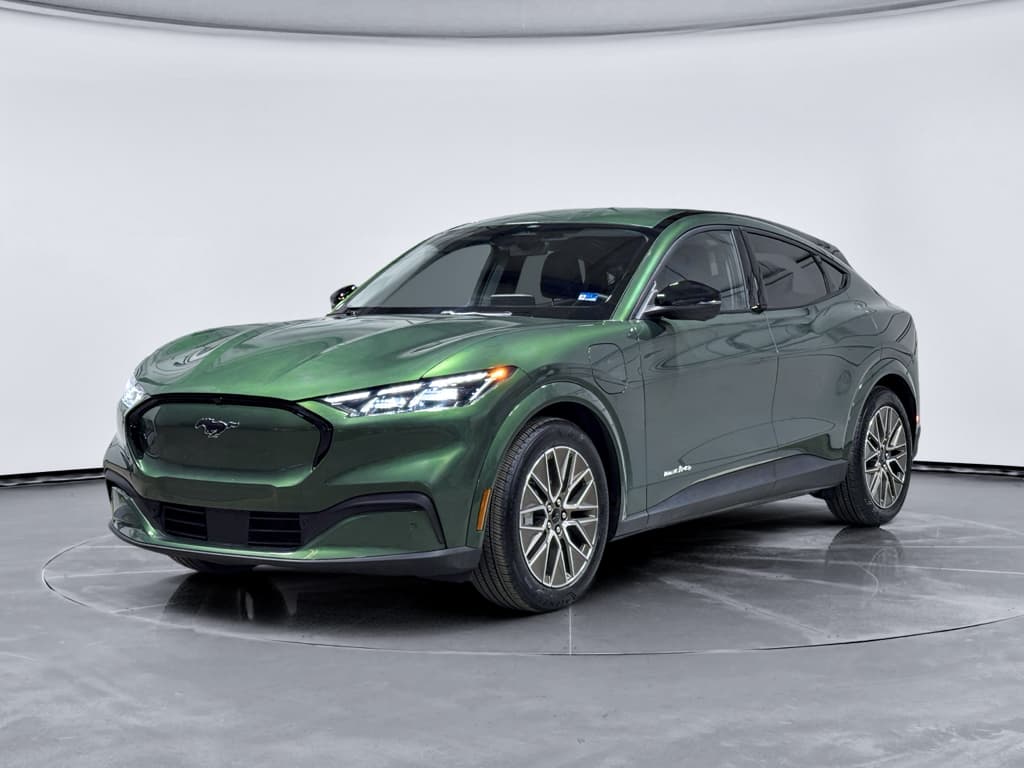
If you’re driving, or shopping for, a 2026 Ford Mustang Mach-E, you’ve probably heard about recalls for rollaway risk, door latches, and even earlier battery issues. The 2026 Ford Mustang Mach-E recalls list isn’t long yet, but it connects directly to problems dating back to the 2021 launch. Let’s walk through what’s actually been recalled, how it affects 2026 models, and what you should do before you buy or drive one home.
Recall basics in one minute
Overview: Why 2026 Mach-E recalls matter
By 2026, the Mustang Mach-E has several model years under its belt and a track record of software-heavy safety fixes. That’s the upside of an EV designed around over-the-air (OTA) updates: some issues can be repaired in your driveway instead of a waiting room. The downside is that recalls can look more confusing, with mix-and-match combinations of software updates and dealer work across different model years.
For 2026 specifically, the headline recall is a rollaway risk tied to the Integrated Park Module (IPM), part of a broader campaign that also covers certain F-150 Lightning and Maverick models. But if you’re buying a used Mach-E, you also inherit the history: door latch issues that could trap passengers, earlier high-voltage battery contactor recalls, and camera or software glitches that affect visibility and driver-assistance features.
Good news for shoppers
Mustang Mach-E recalls at a glance (all years)
Quick 2026 Ford Mustang Mach-E recalls list
Here’s a simplified owner-focused 2026 Ford Mustang Mach-E recalls list. Exact coverage depends on build date, trim, and drivetrain, so always confirm by VIN, but this gives you the big picture:
Key recalls impacting 2026 Mustang Mach-E owners and shoppers
This table focuses on recalls that either directly include 2026 model-year Mach-E SUVs or earlier campaigns that still matter when you shop used.
| Recall focus | Approx. model years impacted | Includes 2026? | Primary risk / symptom | Typical fix |
|---|---|---|---|---|
| Integrated Park Module (rollaway risk) | 2024–2026 Mach-E | Yes | Vehicle may not remain securely in Park, increasing rollaway risk | Software update to the Integrated Park Module, usually via dealer; some vehicles may get OTA prep updates. |
| Rear door latch / 12V battery interaction | 2021–2025 Mach-E | Indirect (for used shoppers) | Rear doors may not open from inside if the 12V system is low, potentially trapping occupants | Revised latch components and/or software; confirmation needed by VIN. |
| High-voltage battery main contactors overheating | 2021–2022 Mach-E (extended-range focus), follow-up work in later years | No, but relevant history | Possible sudden loss of motive power under hard acceleration or repeated DC fast charging | Software limits on contactor stress, hardware replacement on some vehicles. |
| Rearview camera / software glitches | 2021–2023 Mach-E primarily, with broader Ford campaign touching various models | Unclear for 2026 as of early 2026 | Rearview camera image can delay, freeze, or fail to display while reversing | Software update, sometimes OTA, sometimes at dealer. |
| Misc. OTA-related safety campaigns | Selected 2021–2024 Mach-E builds | Background for used buyers | Certain OTA updates affecting ABS/ESC, driver-assist, or warning behavior | Dealer-performed module updates, sometimes paired with OTA re-flash. |
Always verify recall status by VIN through Ford or NHTSA before purchasing a used Mach-E.
Model-year vs. build-date trap
Rollaway risk: 2024–2026 Mach-E Integrated Park Module recall
The most important recall actually naming 2026 Mustang Mach-E models involves the Integrated Park Module (IPM), which helps keep the vehicle stationary when you select Park. Regulators flagged a defect that can prevent the system from reliably holding the vehicle, creating a rollaway risk if the parking brake isn’t set or the wheels aren’t fully chocked on an incline.
The recall notice covers a wide group of vehicles, including certain 2022–2026 F‑150 Lightning, 2024–2026 Mustang Mach‑E, and 2025–2026 Maverick. For Mach‑E owners, the key concern is simple: if the Park system doesn’t fully engage, the vehicle can move unexpectedly after you think you’ve secured it.
- Affected vehicles: selected 2024–2026 Mustang Mach-E SUVs, identified by VIN.
- Primary symptom: risk of unintended vehicle movement after shifting to Park, especially on slopes.
- Status indicator: you may see warnings in the cluster or in FordPass about park system or powertrain software.
- Repair status: Ford is rolling out a dedicated software update for the Integrated Park Module; some owners receive an OTA update ahead of a dealer visit.
Don’t ignore rollaway recalls
Door latch recall (2021–2025 Mach-E) and impact on 2026 buyers
In 2025, Ford launched a large recall, roughly 197,000 Mustang Mach-E SUVs from 2021–2025, around door latches and the 12‑volt battery system. In certain conditions, especially if the low-voltage battery drops, the rear doors may remain locked and can’t be opened from inside, raising the risk that rear-seat passengers could be trapped during an emergency.
While 2026 Mach-E production benefits from what Ford learned here, this recall still matters a lot if you’re shopping used. Many 2024 and 2025 models on dealer lots in 2026 were built before the fix was rolled into production, and early 2025 builds can sit unsold for months. That means a 2026 buyer can easily end up in a 2024–2025 Mach‑E that still has an open door-latch recall if nobody checked.
How the Mach‑E door latch recall shows up in real life
Three ways this issue can affect you as an owner or shopper
Passenger entrapment risk
If the 12V system goes low and you have rear passengers, they may not be able to open the doors from inside in an emergency.
Pre-delivery delays
Some 2024–2025 Mach‑E deliveries were held at dealers while they waited for parts or final software to complete this recall.
Used-car uncertainty
A used Mach‑E might have recall letters in its past but no clear documentation that the work was actually done. That’s where a thorough history check becomes critical.
What to ask the seller
Rearview camera and software glitch recalls
Ford has also been involved in massive software-related recalls covering rearview cameras and driver-assistance systems across multiple models. Mach‑E doesn’t always get named in the biggest headline numbers, but 2021–2023 Mach‑E SUVs are specifically called out in at least one large rear-camera recall for image delays, frozen screens, or blacked‑out views while reversing.
For a modern EV, losing your camera image is more than an annoyance. It’s part of how many drivers judge distance in tight parking lots and crowded driveways, and it feeds some driver-assistance features. The fix is usually a software update to the camera and infotainment modules, sometimes delivered OTA and sometimes done at the dealer depending on your build and prior update history.
How this affects 2026 buyers
- Many earlier‑year Mach‑Es have already had this update; you may never notice there was a recall.
- A used Mach‑E that’s sat for months with a dead 12V or skipped OTAs might still be on old software.
- A quick reverse‑camera test drive, backing into a spot, shifting repeatedly, can reveal glitchy behavior.
Owner to‑do list
- Check Ford’s online recall tool by VIN for open camera or software campaigns.
- If the camera image freezes or lags more than a second or two, schedule a software inspection.
- Keep the vehicle connected to Wi‑Fi in your garage so Ford Power‑Up OTAs can install overnight.
Software recall ≠ normal OTA
High-voltage battery contactor and other battery-related recalls
The earliest headline‑grabbing Mustang Mach‑E recall came from the high‑voltage battery side. Certain 2021–2022 Mach‑E models with the extended‑range battery were recalled because the main high‑voltage contactors could overheat, especially after DC fast charging and repeated wide‑open‑throttle acceleration. In the worst case, that could lead to sudden loss of motive power while driving.
Ford’s fix combined software limits on how hard the contactors are pushed and, in some cases, hardware replacement. Follow‑up investigations and additional recalls targeted vehicles that had received incomplete or incorrect repairs the first time. By 2026, this issue is largely a historical footnote, but if you’re buying an early Mach‑E as a budget entry into EV ownership, it’s one you absolutely want to see closed out.
- If you’re considering a 2021–2022 extended‑range Mach‑E, verify all high‑voltage battery recalls show as "Completed" by VIN.
- On the test drive, pay attention to any warning messages after fast charging or hard acceleration, and to any sudden drops into limited‑power mode.
- A clean history here doesn’t just mean fewer breakdowns; it also suggests the battery and power electronics have lived a relatively low‑stress life.
How Recharged looks at Mach‑E battery recalls
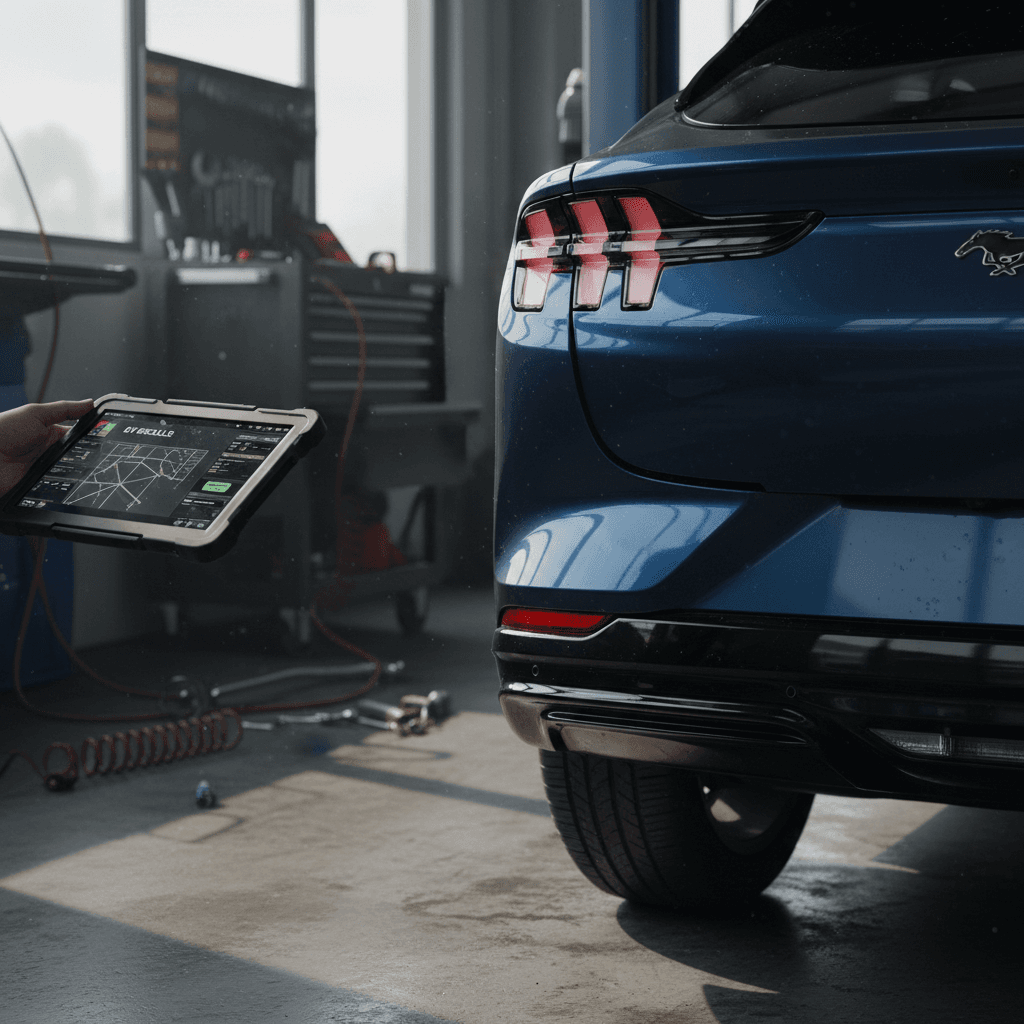
How to check if a 2026 Mustang Mach-E has outstanding recalls
The nice thing about recalls is that you don’t have to guess. Between Ford and NHTSA, you can look up any Mustang Mach‑E by its unique VIN and see which campaigns are open, completed, or not applicable. Here’s the simple way to handle it before you sign on the dotted line.
Step-by-step: check recall status on a Mach‑E
1. Grab the full 17‑digit VIN
You’ll find it on the dashboard at the base of the windshield, on the driver’s door jamb sticker, or in digital paperwork. For an online listing, ask the seller to share it up front.
2. Run it through NHTSA’s lookup
Use the federal recall lookup tool and enter the VIN. It will show <strong>unrepaired safety recalls</strong>; items listed as "No open recalls" either never applied or have already been fixed.
3. Double‑check with Ford’s own tool
Ford’s recall site can show additional detail about software campaigns, customer satisfaction programs, and exact repair actions, again tied to your VIN.
4. Ask for paperwork or service history
If a recall shows as completed, ask for <strong>repair orders or dealer invoices</strong> confirming the work. This is standard practice for serious shoppers and helps avoid misunderstandings later.
5. On Recharged, review the Score Report
When you shop on Recharged, the <strong>Recharged Score Report</strong> rolls these checks into a single view, so you can see recall status, battery health, and pricing fairness all in one place.
What 2026 Mach-E owners should do, step by step
Already own a 2026 Mustang Mach‑E, or about to pick one up from a dealer? The playbook is straightforward: confirm status, get repairs done, and set yourself up so future OTAs don’t get ignored.
Owner action plan for 2026 Mach‑E recalls
Handle today’s recall and prevent headaches with the next one
Confirm your contact info
Make sure Ford and your selling dealer have the correct email, address, and phone, and that your Mach‑E is registered in FordPass. That’s how recall notices and OTA prompts reach you.
Schedule recall work quickly
As soon as you receive a rollaway or other safety recall notice, get on the dealer’s schedule. Software‑only fixes are often quick, but early callers get the best time slots.
Enable OTA updates at home
Park where your Mach‑E can connect to a stable Wi‑Fi network, and opt into automatic Ford Power‑Up updates. That way, your car is more likely to have the latest safety calibrations when a recall hits.
Safety is free, but valuable
Shopping used 2021–2026 Mach-E: how recalls affect value
If you’re hunting for a deal on a used Mustang Mach‑E, you’re shopping in the middle of this recall story, not at the end of it. That’s actually an opportunity, if you’re methodical. Many buyers get nervous as soon as they hear "battery" or "door latch" in a headline and walk away from otherwise solid cars.
How recalls can work in your favor
- Completed recalls are a plus: A vehicle with documentation of recent recall fixes has effectively received free upgrades.
- Open recalls can be leverage: If a seller hasn’t taken care of an easy software recall, that’s a negotiation point if you’re willing to schedule it yourself.
- Service history tells a story: A Mach‑E that’s been in regularly for updates and recall work is often owned by someone who pays attention to maintenance.
When recalls should scare you away
- Multiple serious recalls still showing as open, especially high‑voltage or rollaway items.
- Sellers who minimize or refuse to discuss recall history, or can’t provide any paperwork.
- Test drives that reveal warning lights, limp‑mode behavior, or glitchy cameras and door locks even after the seller claims everything is "taken care of."
Use data, not just your gut
FAQ: 2026 Ford Mustang Mach-E recalls
Common questions about the 2026 Mustang Mach‑E recalls list
Bottom line on 2026 Mustang Mach-E recalls
The 2026 Ford Mustang Mach-E recalls list is dominated by one big theme, rollaway risk from the Integrated Park Module, backed by a supporting cast of earlier door-latch, camera, and battery‑contactor issues from prior years. On their own, none of these make the Mach‑E a bad EV. What matters is whether each vehicle you’re looking at has been properly updated and documented.
If you already own a 2026 Mach‑E, keep FordPass handy, stay on top of OTA updates, and treat recall notices as must‑do appointments. If you’re shopping used from 2021–2026, insist on VIN‑based recall checks, paperwork, and, ideally, a third‑party battery health and safety assessment. At Recharged, every used Mach‑E listing comes with a Recharged Score Report that rolls recall completeness, battery diagnostics, and fair market pricing into one clear picture, so you can enjoy the drive without worrying about what the headlines left out.