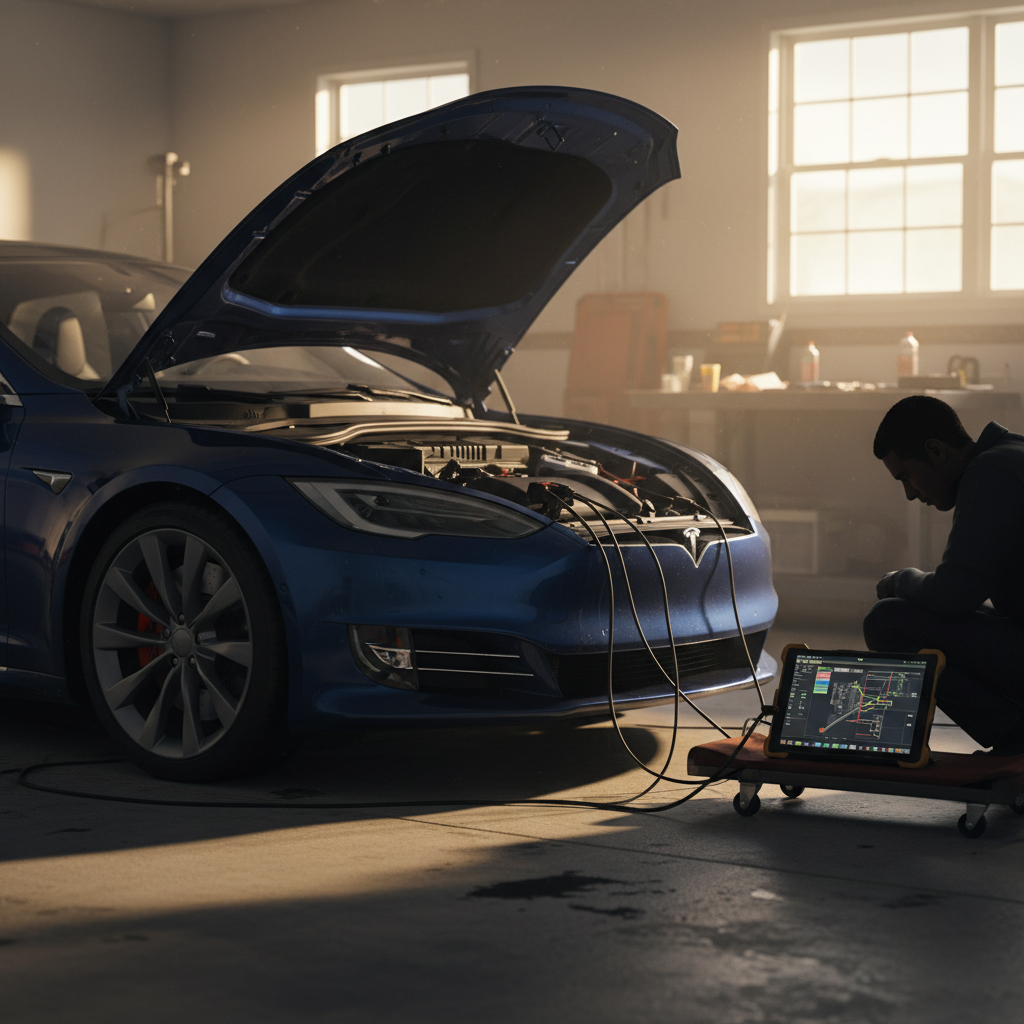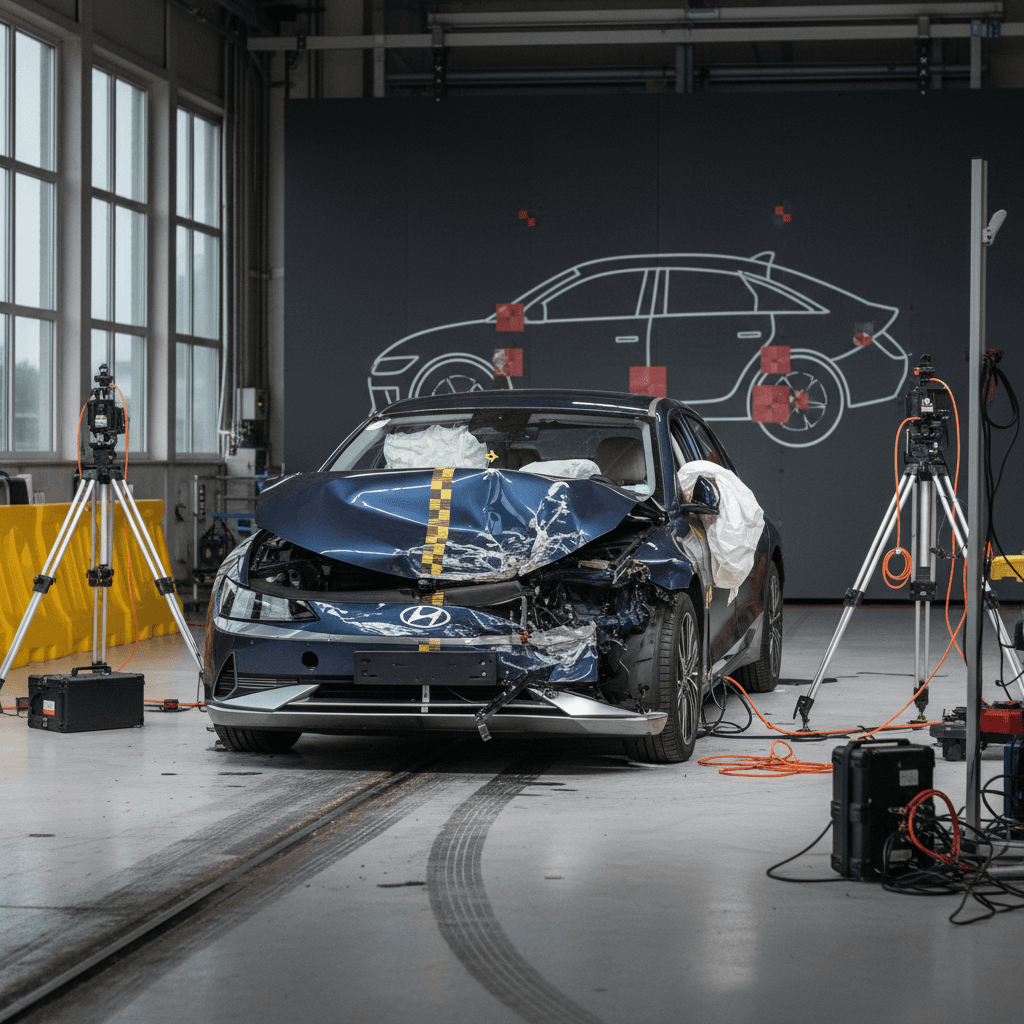
If you’re considering a Chevy Equinox EV, you’re probably asking a very reasonable question: **how safe is it really**, and where do official crash-test ratings stand today? The short answer is that the Chevy Equinox EV safety rating and crash test data are still evolving, but we already know a lot from its gas-powered sibling, its Ultium platform, and the safety tech Chevy builds in as standard.
Quick takeaway
Chevy Equinox EV safety overview
The Chevy Equinox EV is Chevy’s volume compact electric crossover, on sale since mid‑2024 and built on GM’s Ultium battery platform. It’s aimed squarely at families who might otherwise buy a gas Equinox, CR‑V, RAV4, or Hyundai Ioniq 5. That means crash safety, child-seat friendliness, and driver-assistance tech aren’t just checkboxes, they’re core to the product.
What we know about Equinox EV safety context
Because the Equinox EV is closely related, structurally and electronically, to other Ultium-based GM vehicles that have already done well in safety evaluations, many of the **fundamental crash structures, restraint systems, and software** have already been through the wringer. The EV is not simply a gas Equinox with a battery stuffed underneath, but GM clearly leveraged lessons from the long-running Equinox nameplate and its crash-performance history.
Have official crash tests been completed yet?
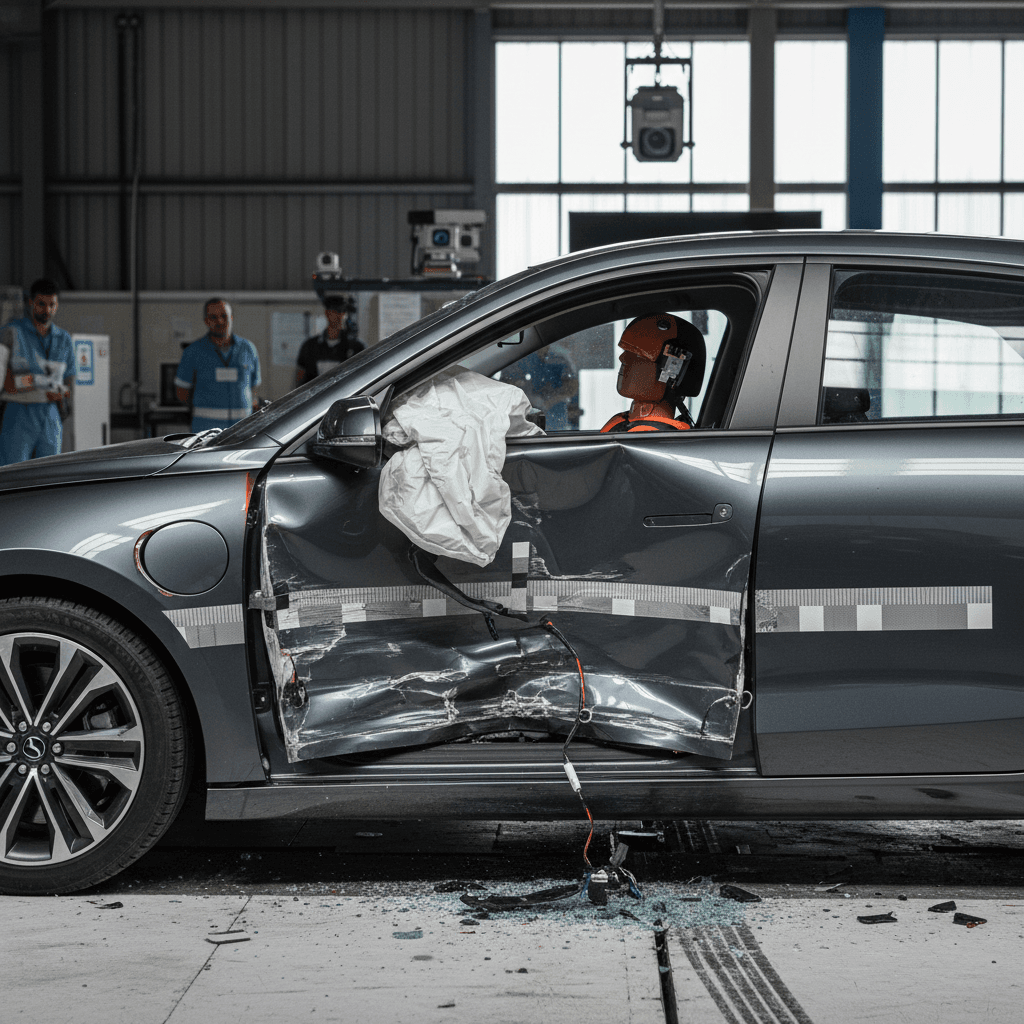
When shoppers search for a Chevy Equinox EV safety rating or crash test, they’re usually looking for two sources: **NHTSA’s 5‑Star Safety Ratings** and **IIHS crash-test scores**. As of February 2026, here’s where things stand.
Equinox EV crash-test & safety rating status
How far along are official agencies?
NHTSA (5‑Star Ratings)
Equinox EV: NHTSA has publicly listed the related gas 2025 Chevrolet Equinox for full 5‑Star testing and advanced driver-assistance verification, reflecting how important this platform is in the family-SUV market.
However, a dedicated, published 5‑Star sheet for the Equinox EV itself has not yet appeared in NHTSA’s online ratings tool. Expect that to follow after enough production volume and data are in place.
IIHS (Top Safety Pick)
IIHS has long tested the gas-powered Equinox, which earns strong scores in most legacy crash tests but more mixed results in the newest, tougher evaluations.
So far there is no public IIHS rating page specifically for the Equinox EV. That’s not unusual for newer, lower‑volume EVs: IIHS tends to prioritize high‑volume models and then expand testing as sales grow.
Don’t confuse gas and EV ratings
The key point is that while **formal, EV‑specific ratings are still catching up**, both NHTSA and IIHS are already scrutinizing this size class and this GM platform. That’s precisely what you want to see if you care about safety longevity and parts availability over a 10‑ to 15‑year ownership window, or if you’re shopping the Equinox EV used.
Equinox EV vs gas Equinox: safety carryover and differences
What carries over from the gas Equinox?
- Crash philosophy: The Equinox nameplate is designed as a family hauler first, with conservative suspension tuning and mainstream tire sizes aimed at stability more than sharp handling.
- Airbag and restraint thinking: Column-mounted side airbags, curtain airbags, and belt pre‑tensioners are tuned around typical two‑row SUV use with kids and cargo.
- Family‑friendly packaging: Two full sets of LATCH anchors, wide‑opening rear doors, and a relatively upright roofline help with child seats and head‑clearance in both gas and EV versions.
Where the Equinox EV is different
- Ultium skateboard chassis: The battery pack lives in a rigid structure under the floor, which can improve side-impact behavior and rollover resistance but changes how energy is managed in severe crashes.
- Low center of gravity: The EV is heavier but sits lower, which can reduce rollover risk versus the gas SUV.
- Updated electronics: The EV uses GM’s newer Global B electrical architecture, enabling more sophisticated driver-assistance software and over‑the‑air updates than many legacy GM products.
Heavier isn’t automatically safer
Standard safety features on the Equinox EV
One of the biggest advantages the Equinox EV has over the earlier generations of gas Equinox is that Chevy made a wide suite of safety features standard equipment, not expensive add‑ons. That’s crucial if you’re shopping used in a few years, when it’s easy to lose track of option packages.
Key standard safety features on Equinox EV
What every trim should have from the factory
Chevy Safety Assist
- Automatic Emergency Braking with forward collision alert
- Front Pedestrian Braking
- Following Distance Indicator
- Lane Keep Assist with Lane Departure Warning
- IntelliBeam automatic high beams
Situational awareness
- Rear Park Assist
- Rear Cross Traffic Braking
- Blind Zone Steering Assist
- HD Surround Vision (on many trims)
- Safety Alert Seat haptic warnings
Family-focused protections
- Full‑length side curtain airbags
- Front side-impact airbags
- Driver knee airbag (on most trims)
- Two full sets of lower LATCH anchors
- Rear seat reminder and child‑lock hardware
Trim check when buying used
Advanced driver assistance and Super Cruise
Beyond the basics, higher‑trim Equinox EVs can be equipped with **GM’s Super Cruise hands‑free driving system**, along with upgraded camera and radar hardware. That’s a big part of the Equinox EV’s value proposition for commuters who spend a lot of time on divided highways.
Equinox EV driver-assistance tech: what it does
Not all systems are meant to let you relax, many are designed to keep you engaged at the right moments.
| Feature | Type | Primary benefit | Notes for shoppers |
|---|---|---|---|
| Automatic Emergency Braking | Crash avoidance | Helps slow or stop the car if you fail to brake for a vehicle ahead. | Standard on all Equinox EVs; sensitivity is usually adjustable in the settings menu. |
| Front Pedestrian Braking | Crash avoidance | Detects pedestrians ahead and can apply brakes to reduce or avoid impact. | Especially valuable in urban and school‑zone driving. |
| Lane Keep Assist | Lane support | Gently nudges the car back toward lane center when you drift without signaling. | Meant as assistance, not as an autopilot; hands should stay on the wheel. |
| Adaptive Cruise Control | Speed & distance control | Maintains a set gap to the car ahead on the highway, adjusting speed automatically. | Available or standard on many trims. Great for long drives but still requires attention. |
| Super Cruise | Hands‑free assistance | Allows hands‑free driving on mapped divided highways while monitoring your attention. | Optional on some trims. Only works on compatible roads and still requires eyes on the road. |
Exact equipment varies by trim and option package; always verify on the individual vehicle.
Super Cruise is not a self‑driving system
Battery and crash safety on GM’s Ultium platform
The Equinox EV rides on GM’s **Ultium EV platform**, which underpins a growing family of electric Chevys and Cadillacs. From a safety perspective, that brings a predictable set of engineering choices that matter if you’re worried about battery fires, underbody impacts, or high‑voltage exposure after a crash.
- A rigid, sealed battery enclosure integrated into the floor structure to resist intrusion in moderate crashes.
- Multiple high‑voltage contactors and pyrofuses designed to disconnect the pack in severe impacts, reducing post‑crash shock and fire risk.
- Reinforced rocker panels and sills to protect the pack in side impacts or curb strikes.
- Software monitoring of cell temperatures and pack health, with the ability to limit power or shut down charging if something looks abnormal.
What EV fire stories get wrong
Real-world safety, recalls, and issues so far
No vehicle launches without some teething issues, and the Equinox EV is no exception. The good news is that what we’ve seen so far has been relatively straightforward, and the very fact that problems are being caught early is an indicator that GM and regulators are paying attention.
Early Equinox EV safety-related issues
What’s surfaced so far and what it means for you
Tire recall on some 2025–2026 EVs
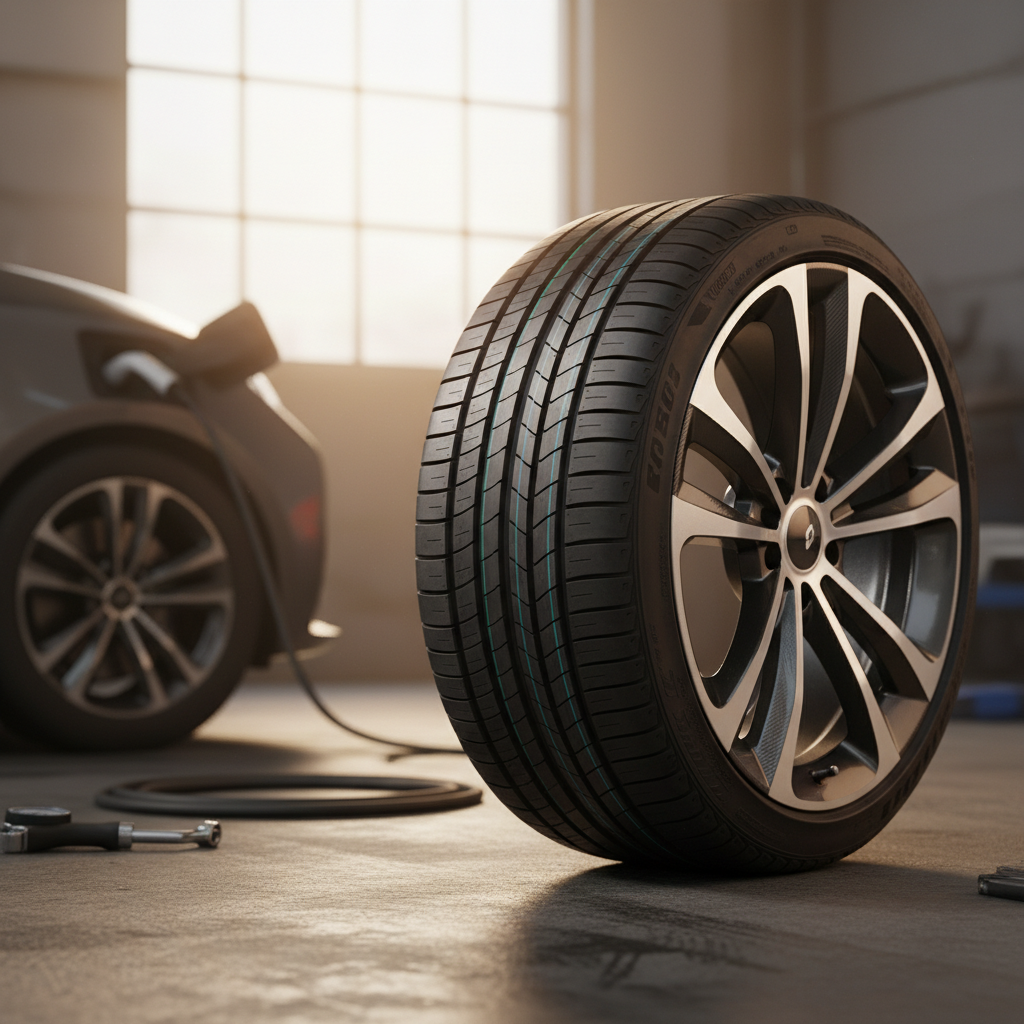
GM has recalled thousands of 2025–2026 Equinox EVs for nonconforming Continental tires that could suffer tread separation at highway speeds. While no injuries were reported at the time of the recall, a tread failure at speed can obviously lead to loss of control.
If you’re buying used, run the VIN through the NHTSA recall lookup and confirm that any affected tires were replaced with updated stock.
Software & drivability updates
Like most Ultium‑based EVs, early Equinox EVs have seen over‑the‑air software updates for things like charging behavior, driver display warnings, and stability‑control tuning.
These aren’t inherently safety defects, but keeping software current ensures that warning thresholds and ABS/ESC calibrations match GM’s latest validation data.
Always run a recall check
What to look for on a used Equinox EV
Because the Equinox EV is still relatively new, early used examples will typically be coming off short leases, demo duty, or the first owner’s trade‑in. That’s an opportunity if you care about safety: you can cherry‑pick well‑equipped builds and avoid early-production quirks, if you know where to look.
Used Equinox EV safety checklist
1. Verify recalls and tire replacements
Use the VIN to confirm that any open recalls, including the Continental tire issue on certain 2025–2026 models, have been completed. Ask for invoices or dealer printouts as proof.
2. Confirm advanced safety equipment
Physically check for cameras and radar behind the windshield and in the grille, and verify that features like Automatic Emergency Braking, Lane Keep Assist, and Blind Zone Steering Assist show up in the infotainment menus.
3. Inspect wheels and suspension for damage
Curb strikes can compromise alignment and suspension components, which matters more on a heavy EV. Uneven tire wear on a test drive is a red flag that the car needs an alignment or deeper inspection.
4. Test driver-assistance behavior
On a safe, lightly trafficked road, gently test Lane Keep Assist, Adaptive Cruise Control, and Automatic Emergency Braking warnings. You’re not trying to trigger a crash, just verifying that warnings and steering nudges behave as expected.
5. Check child-seat fit and rear access
If this is a family car, bring your actual child seats. Make sure you can reach the LATCH anchors easily, that your seats install securely, and that kids have enough legroom behind your typical driving position.
6. Review vehicle history and battery health
Look for prior accidents, especially structural or airbag deployments. At Recharged, every used EV comes with a <strong>Recharged Score battery health report</strong>, so you can see how usable range stacks up to when the car was new.
How Recharged helps you de‑risk a used Equinox EV
Ready to find your next EV?
Browse VehiclesFAQ: Chevy Equinox EV safety ratings & crash tests
Common questions about Equinox EV safety
Bottom line: is the Chevy Equinox EV a safe choice?
Viewed in the broader EV landscape, the **Chevy Equinox EV is shaping up as a solidly engineered, safety‑forward compact crossover**, even if its official crash‑test scorecards are still a work in progress. You’re getting modern Ultium crash engineering, a generous standard suite of active safety features, and the option of Super Cruise for highway driving.
If you’re buying new, your best move is to **monitor NHTSA and IIHS for updated ratings** as more test results go public. If you’re buying used, focus on recall completion, tire status, driver-assistance functionality, and battery health rather than obsessing over a single star rating. That’s exactly the work Recharged does for you behind the scenes, combining safety, battery diagnostics, and transparent pricing into one report, so you can choose an Equinox EV that fits your risk tolerance, your family, and your budget with eyes wide open.