If you’re eyeing a 2025 Porsche Taycan, you’re probably asking a simple question with a complicated answer: **is it actually reliable**? The Taycan has world‑class performance and now far better range, but earlier model years had their share of software bugs, charging gremlins and eyebrow‑raising recalls. The 2025 Porsche Taycan reliability story is better than it used to be, but it’s still not as drama‑free as a Toyota hybrid. Let’s unpack what the data and real owners are saying so you can decide with open eyes, especially if you’re shopping used.
Quick take
2025 Porsche Taycan reliability at a glance
Taycan reliability snapshot (all years, 2025 data where available)
Key context
How reliable is the Porsche Taycan overall?
Start with the headline: **the Taycan isn’t a disaster, but it’s not a Camry either**. On the macro data side, J.D. Power pegs the 2025 Taycan around **75/100 for quality & reliability** and roughly **80/100 overall**, with especially strong scores for driving experience and dealer treatment. That puts it in the broad “average” zone, better than some flashy newcomers, not as bulletproof as the best luxury brands.
Independent lists built from **Consumer Reports** reliability data place the Taycan about mid‑pack among EVs, with a score just under 50/100 in recent compiled rankings. That might sound low until you remember that **many modern EVs score poorly**, especially complex, high‑performance ones. In that context, a middle‑of‑the‑road Taycan is actually doing *okay* for a 5000‑pound electron torpedo.
Owner surveys and used‑car reliability reports add nuance. In a major UK reliability survey, about **46% of Taycan owners reported at least one issue**, predominantly with **air‑conditioning and infotainment**. In most cases, repairs were completed free under warranty, but roughly **two‑thirds of affected cars were off the road for more than a week** while dealers sorted software and parts. That gives you the real story in one sentence: the Taycan usually keeps driving beautifully, but when it does hiccup, it can disappear into the dealership for a while.
The good news
What changed for 2025, and why it matters for reliability
The 2025 Taycan is more than a mild refresh. Porsche reworked **battery capacity, cell chemistry, cooling and software**, and the car saw **huge range and efficiency gains** in independent testing. Real‑world 75‑mph highway tests now show up to **360 miles for the rear‑drive car and 330 miles for the 4S**, versus 280 and 220 miles before. That’s not directly a reliability metric, but it tells you the **hardware has meaningfully evolved**.
- New, larger batteries (about 89 kWh and 105 kWh gross, depending on pack) with improved energy density.
- Revised rear‑axle motor and efficiency tweaks that reduce stress on the drivetrain for a given performance level.
- Upgraded cooling hardware: more robust cooling plates and better thermal management for repeated fast charging.
- Refined software, including battery preconditioning and charging control logic, building on several years of real‑world data.
Porsche’s own battery research arm says the **second‑generation Taycan cells are designed for higher currents and better temperature control**, with passive cooling built into the modules and improved busbars for current flow. They’ve also trimmed fast‑charge time from **around 21.5 minutes to about 18 minutes for a 10–80% charge**, while actually increasing capacity. That combination, **faster charging with less thermal stress**, is exactly what you want to see when you’re thinking long‑term durability.
Why this matters to you
Battery life and degradation in the Taycan
Battery anxiety is the ghost at the feast for any used‑EV shopper, and the Taycan’s pack is a very expensive guest. Officially, Porsche warranties the **high‑voltage battery for 8 years or 100,000 miles** in the U.S., covering excessive capacity loss and defects. We now have several years of first‑generation Taycans in the wild, and the picture is more reassuring than the tabloids would have you believe.
Independent owner reports and dealer tech anecdotes suggest that **most Taycan packs are aging normally**, losing a manageable slice of capacity over the first 3–5 years, especially when owners use DC fast charging regularly but not obsessively. Some drivers report range dropping from, say, 260 to 230 miles after ~80–100k miles; noticeable, sure, but not catastrophic. The more dramatic horror stories ("red ring of death," bricked packs) appear to be **edge cases, often tied to software or isolated hardware issues** that get handled under warranty.
About those battery‑fire headlines
- Porsche’s lab testing now simulates **160,000–300,000 km** worth of charge cycles on current cells to validate durability.
- Newer packs use enhanced cooling plates (up to ~10 kW thermal capacity) and lower minimum fast‑charge temperatures, which reduce hot‑soak stress on the chemistry.
- The 2025 car can still hammer down absurd power, but it doesn’t have to work the pack as hard to deliver a given range figure, which is good for longevity.
In practical terms, if you **fast‑charge frequently, keep the car at 100% for days at a time, or live in extreme heat**, you will see more degradation over time, just as you would in any EV. But the Taycan’s latest pack is engineered with those realities front‑of‑mind, and the emerging data doesn’t show systematic early pack death.
Charging system and fast‑charging reliability
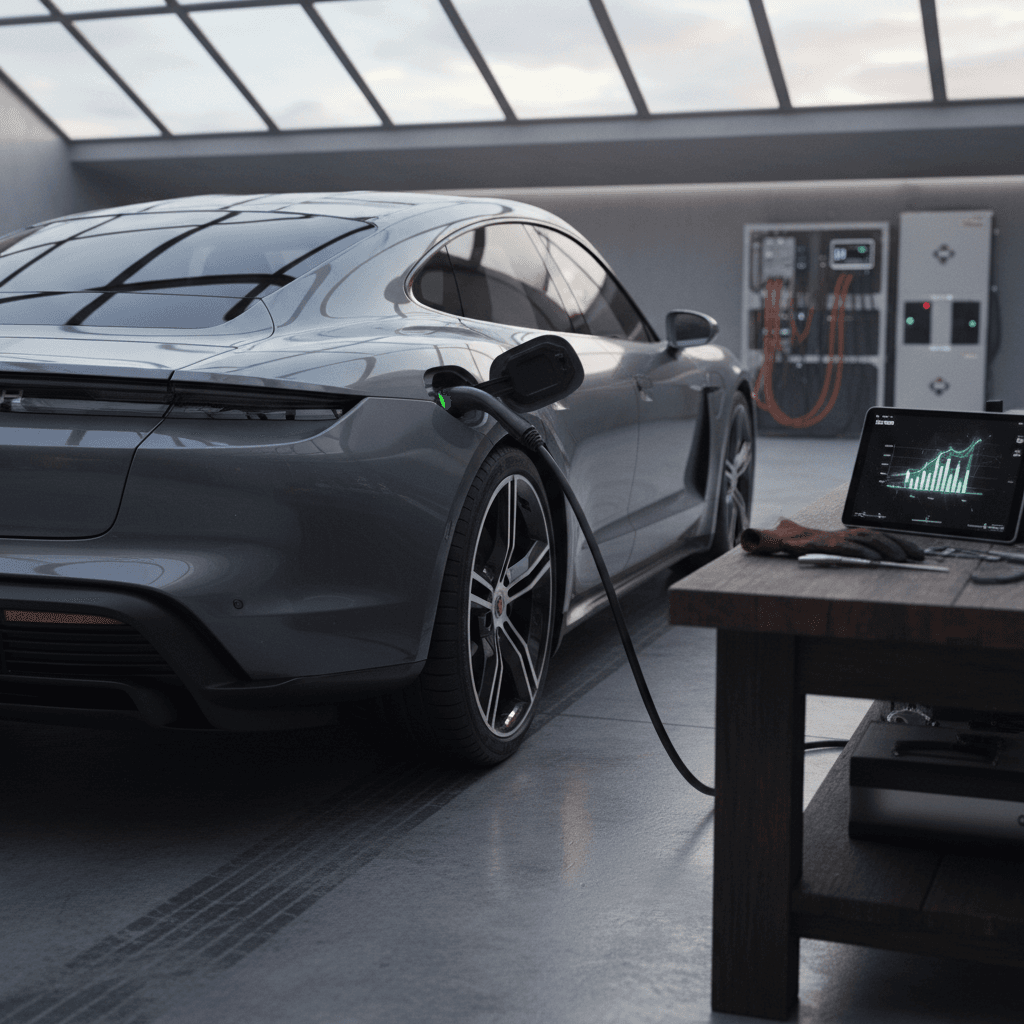
If the Taycan has a party trick beyond Nürburgring lap times, it’s **fast charging**. In independent tests, the 2025 Taycan Turbo GT averaged over **200 kW** from 10–90%, peaking above **300 kW** and hitting 90% in about **24 minutes**. For mere mortals in non‑GT trims, Porsche quotes roughly **18 minutes for 10–80%** in ideal conditions. That’s among the very best in the business.
The flip side: any system that moves that much current, that quickly, is **complex**. Early Taycans saw a noticeable number of complaints about **charging‑session failures, DC fast chargers dropping out, or cars refusing to handshake** with particular stations. In many cases, the culprit was network‑side (the charger, not the car), but owners don’t really care whose fault it is, they just see "Charging error" and a line of cars behind them.
How to keep Taycan charging drama low
AC home charging
- Generally very reliable once properly installed.
- Some early chatter about onboard AC chargers and low‑power (7 kW) AC issues hasn’t translated into a clear recall wave.
- Use a **properly wired 240V circuit** and an EV‑grade wallbox to avoid nuisance faults.
DC fast charging
- Incredible performance, among the quickest 10–80% times of any EV.
- More sensitive to software bugs, temperature and charger quality.
- Newer 2023+ software has improved station compatibility and charging‑curve stability.
Common issues Taycan owners report
Strip out the Reddit horror threads and YouTube clickbait, and a clearer pattern emerges. **Most Taycan problems live in the software and comfort‑feature stack, not the battery or motors.** Here’s what bubbles up again and again in survey data and owner forums:
Most frequent Taycan problem areas
Based on owner surveys, used‑car reports and forum patterns
Infotainment & software
- System freezes or reboots while driving.
- Navigation or CarPlay/Android Auto glitches.
- Over‑the‑air updates taking cars out of service for a day or more.
HVAC & comfort
- Air‑conditioning faults, weak heat in cold climates.
- Seat heaters or ventilated seats intermittently failing.
- Occasional issues with climate controls not responding.
Cameras & sensors
- Backup camera image not displaying (tied to recent recalls).
- Parking sensors or surround‑view misbehaving.
- Occasional ADAS warning lights that require software resets.
It’s worth noting that **many owners report trouble‑free experiences**, especially with 2023+ cars that shipped with more mature software. But the spread is wide: for every driver who’s had zero problems in 50,000 miles, there’s another who’s collected a punch card of dealer visits for minor but irritating issues.
“We had a 2020 Taycan up to about 100k miles. Around 95k, the heater went out and a few minor things started to crop up, but it never left us stranded. We traded into a newer Taycan right after.”
2025 recalls and software updates
No discussion of 2025 Porsche Taycan reliability is complete without talking about **recalls**. Like most modern, software‑heavy cars, the Taycan has had a string of them, some genuinely safety‑critical, others more of a regulatory box‑check.
Recent Taycan‑related recall themes
Not exhaustive, but these are the big‑ticket reliability and safety campaigns that matter to 2020–2025 owners.
| Issue | Model years affected (approx.) | Symptom | Remedy |
|---|---|---|---|
| Rearview camera image can fail to display | 2020–2025 | Backup camera intermittently blank when reversing | Dealer software update for camera control unit; no‑cost fix. |
| Passenger airbag deactivation due to seat heating mat fault | 2022–2023 | Airbag warning, possible non‑deployment for front passenger | Seat cushion replaced free of charge. |
| Earlier software/charging glitches | 2020–2022 | Charging interruptions, random warning lights, range display errors | Multiple software campaigns and updates over time. |
Always run a VIN check with a Porsche dealer or NHTSA to see which recalls apply to your specific car.
If you’re buying used
Cost of ownership when things do go wrong
Reliability isn’t just about how often a car breaks; it’s about **how painful it is when it does**. On that score, the Taycan is very much a Porsche. According to cost‑of‑ownership analyses, you can easily clear **six figures in total five‑year ownership costs** when you factor in depreciation, insurance, tires, and maintenance on a new example. That’s table stakes in this class.
- Out‑of‑warranty infotainment or control‑unit replacements can run into the **thousands of dollars**, not hundreds.
- HVAC repairs, especially anything that touches the high‑voltage heater, heat pump or refrigerant system, tend to be pricey due to labor and packaging complexity.
- Brakes and suspension wear slowly thanks to regen, but when they do need work, **Porsche‑grade parts and labor** apply.
- Tires and wheels are consumables on performance EVs; heavy curb weights and big torque mean **shorter tire life** than you might expect coming from a compact ICE sedan.
Warranty is your friend
Used Porsche Taycan reliability: what to watch for
If you’re shopping a used Taycan, especially an early‑build 2020–2022 car, you’re inheriting not just a sports sedan but **the first draft of Porsche’s EV learning curve**. That doesn’t make them bad cars, but it does mean you should scrutinize them differently from, say, a used Camry Hybrid.
Used Taycan reliability checklist
1. Verify software and recall history
Ask for documentation showing that **all major software updates and recalls** have been completed. Early cars that never saw a dealer for campaigns are more likely to be glitchy.
2. Get a true battery‑health report
Don’t settle for a range screenshot. You want a **proper battery diagnostic** showing state of health (SoH), fast‑charge history and any logged battery faults.
3. Test every comfort and tech feature
Spend time checking **HVAC, heated/ventilated seats, cameras, parking sensors, driver‑assist features and all screens**. These are the most common problem points.
4. Inspect charging behavior
Do both an AC and a DC charging session if possible. Watch for handshake failures, error codes or unusual noises from the battery/thermal system.
5. Look for water intrusion and underbody damage
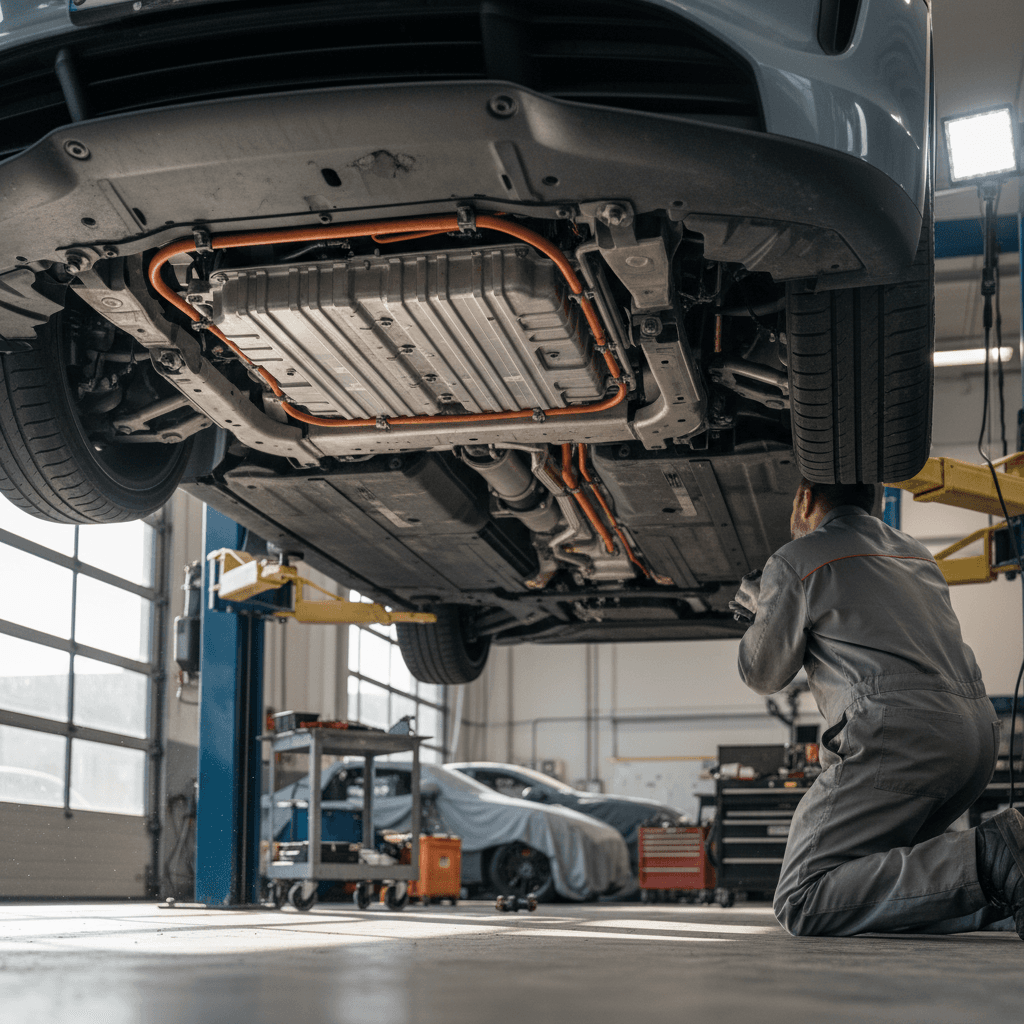
The Taycan rides low. Inspect the **underbody panels, high‑voltage orange cabling, and wheel wells** for signs of impact or poor repairs that could cause future issues.
6. Review service history and downtime
A thick folder of service visits for small issues is not necessarily a red flag, but you want to know **what was fixed, how often, and whether problems recurred**.
Aim for late‑build or lightly used
How Recharged evaluates a used Taycan
A Taycan is not the kind of EV you buy on a whim from a parking lot. At Recharged, every Porsche Taycan that makes it onto our marketplace goes through **EV‑specific diagnostics** that go far beyond a basic pre‑purchase inspection.
Inside a Recharged Taycan evaluation
How we de‑risk a complex luxury EV for used buyers
Recharged Score battery health test
Full systems & recall audit
Ready to find your next EV?
Browse VehiclesIf you decide a Taycan is right for you, Recharged can help with **financing, trade‑in, nationwide delivery**, and even **consignment** if you’re later ready to move into something else. The goal is simple: you get the drama and performance of a Porsche EV, without gambling blindly on a six‑figure science experiment.
FAQ: 2025 Porsche Taycan reliability
Frequently asked questions about Taycan reliability
Bottom line: should you trust a 2025 Taycan?
If your definition of reliability is “never think about the car, ever,” the 2025 Porsche Taycan is probably not your soulmate. It’s a **complex, high‑performance luxury EV** with more software modules than a small airliner, and the data shows more than its share of tech‑side annoyances and dealer visits. On the other hand, if you can tolerate the occasional software update, a recall appointment and the costs that come with the badge, the Taycan rewards you with **genuinely world‑class performance, charging and now range**, without a trail of blown motors and dead packs behind it.
For new buyers, strong warranties make the 2025 Taycan a **reasonably safe bet** so long as you understand the stakes. For used‑car shoppers, the car can be an incredible value, but only if you buy **the right example**, with documented updates and a clean bill of health from its battery and electronics. That’s where platforms like Recharged come in: by pairing **transparent battery diagnostics, fair pricing and EV‑specialist support**, we help you enjoy the Taycan for what it is, a thrilling electric Porsche, without turning reliability into a guessing game.