“What is Level 1, Level 2, Level 3 charging?” is the EV equivalent of, “So… what kind of gas does this thing take?” The jargon sounds technical, but it’s really just three different ways of getting electricity into your battery, slow, medium, and fast, each with a very different impact on your daily life.
Levels are about *how* you charge, not *what* you drive
EV charging levels at a glance
How fast are Level 1, Level 2 and Level 3?
In plain English: **Level 1 is overnight drip charging**, **Level 2 is the daily-driver sweet spot**, and **Level 3 (DC fast) is the road-trip turbo button**. Let’s break down what each level actually is, what it costs, and how to decide which mix makes sense for you.

What is Level 1 charging?
Level 1 charging is the simplest form of EV charging: you plug the portable cord that came with your car into a **standard 120‑volt household outlet**. No special equipment, no electrician, just the same outlet you’d use for a lamp or laptop, ideally on its own dedicated circuit.
- Voltage: 120V AC (standard U.S. outlet)
- Typical power: about 1.4–1.9 kW
- Typical speed: roughly 3–5 miles of range per hour of charging
- Time for a full charge: often 20–40+ hours from low battery, depending on the pack size
- Hardware: portable cord (EVSE) that usually comes with the car
When Level 1 actually works well
Where Level 1 starts to fall apart is when your **daily mileage climbs** or you can’t leave the car parked for long stretches. If you regularly do back‑to‑back trips, school run, commute, errands, sports practice, Level 1 simply doesn’t put miles back into the battery fast enough.
Extension cords and Level 1
What is Level 2 charging?
Level 2 charging uses a **240‑volt circuit**, the same kind of power your electric dryer or oven uses. This can be a dedicated wallbox charger or a plug‑in unit connected to a 240V outlet like a NEMA 14‑50. Level 2 is what most EV owners graduate to once they realize Level 1 feels like watching paint dry.
Level 2 charging: the daily-driver sweet spot
Fast enough for real life, simple enough for home
Power & speed
Most Level 2 chargers deliver 3.3–11.5 kW at home, with some going up to 19.2 kW on larger circuits.
In real terms, that’s about 15–40 miles of range per hour for typical EVs.
Home & workplace
Level 2 is ideal for **overnight home charging** and workplace or destination charging.
For many drivers, 6–8 hours on Level 2 easily covers a full week of commuting.
Costs & install
Hardware can run a few hundred dollars, and installation, depending on your panel and wiring, often lands in the **$500–$2,000** range, sometimes more for complex jobs.
From a quality‑of‑life perspective, Level 2 is transformative. Instead of thinking about charging every day, you simply **plug in when you get home and wake up to a full “tank.”** The car becomes like your phone: charging is something that happens in the background while you’re asleep.
The quiet truth: Level 2 does 90% of the work
What is Level 3 DC fast charging?
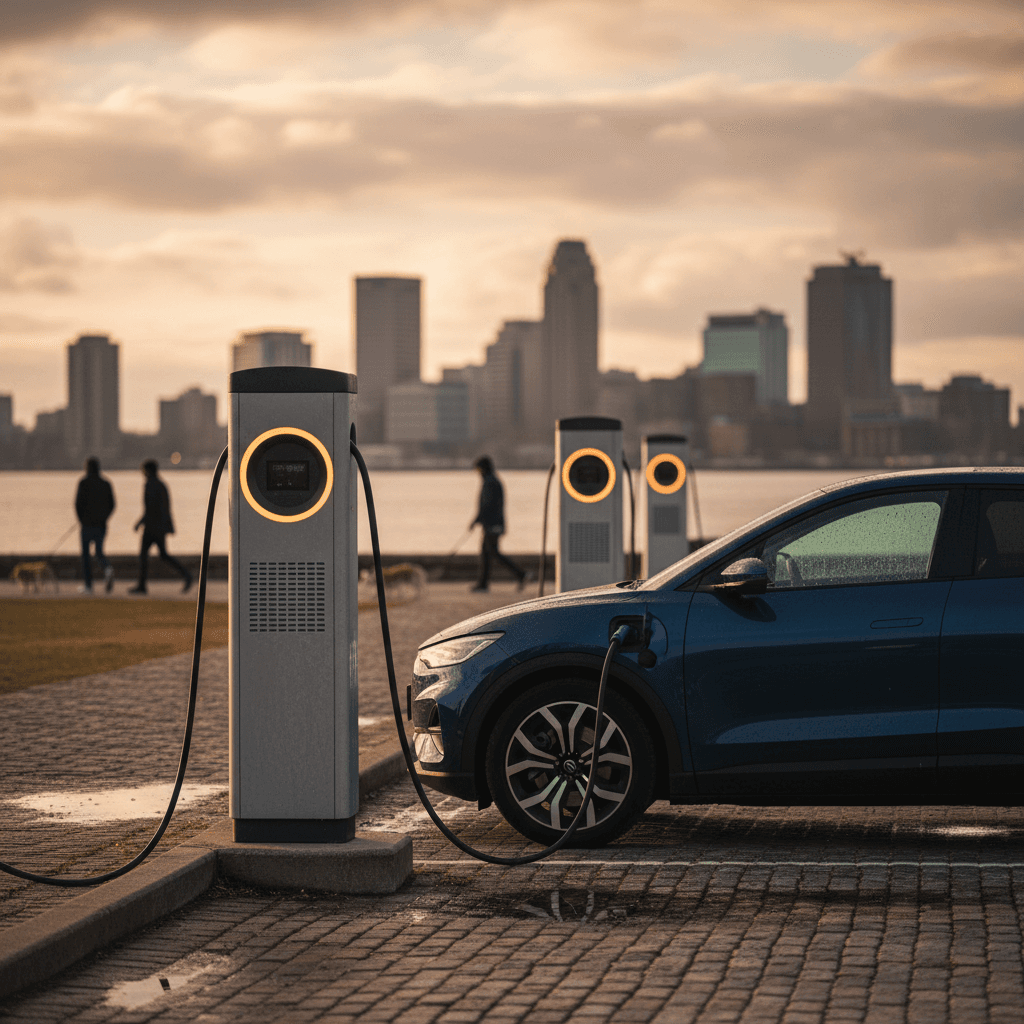
Level 3 is commonly called **DC fast charging** (DCFC). Instead of feeding AC power into your car’s onboard charger like Levels 1 and 2, a DC fast charger sends **direct current straight to the battery**, at much higher power levels, typically **50–350+ kW** at modern U.S. stations.
- Voltage: high‑voltage DC (roughly 400–800V systems, depending on station and vehicle)
- Typical power: 50–350+ kW
- Typical speed: roughly 100–300+ miles of range in about 30 minutes, depending on the car
- Best use case: road trips and long‑distance travel, or quick top‑ups when you’re away from home
- Installation: rarely at single‑family homes; usually found on highways, in cities, and at high‑traffic locations
Fast doesn’t mean full, watch the charging curve
Think of Level 3 as a **pit stop**, not a refueling lifestyle. It’s brilliant on the interstate, less charming if you’re depending on it every week because you have no home charging. Public networks are expanding fast, but reliability and pricing are still very much a work in progress.
Side-by-side comparison of Levels 1, 2 and 3
EV charging levels compared
Key differences between Level 1, Level 2, and Level 3 (DC fast) charging for everyday drivers.
| Feature | Level 1 | Level 2 | Level 3 (DC fast) |
|---|---|---|---|
| Typical location | Home outlets | Home, work, public | Highways, major corridors |
| Voltage | 120V AC | 208–240V AC | High‑voltage DC |
| Power output | ~1.4–1.9 kW | ~3.3–11.5+ kW | 50–350+ kW |
| Speed | 3–5 mi/hr | 15–40 mi/hr | 100–300+ mi/30 min |
| Full charge time | 20–40+ hrs | 4–8 hrs | ~20–45 min (to ~80%) |
| Best for | Light daily use, backups | Daily driving, overnight charging | Road trips, quick top‑ups |
| Home use | Yes | Yes (with 240V circuit) | Almost never |
| Install cost | Minimal/none | Moderate | Very high (commercial only) |
Real‑world numbers will vary by vehicle, weather, and battery size, but this table shows the ballpark differences that matter when you’re planning how to live with an EV.
Which charging level do you actually need?
Instead of memorizing wattages and acronyms, start with your **life pattern**. How far do you drive, and where does the car sleep?
Match charging levels to your lifestyle
1. Daily miles under ~30?
If you usually drive **under 30–40 miles per day** and have off‑street parking, Level 1 might be enough, especially if you can occasionally supplement with public Level 2. You’ll plug in most nights, but you won’t be living at chargers.
2. Daily miles 40–80+?
If your commute plus errands often top **40–80 miles a day**, Level 2 at home (or at work) will make your life dramatically easier. You’ll recover a full day’s driving in just a couple of hours.
3. Apartment or street parking only
If you can’t install a charger where you park, look for reliable **Level 2 or DC fast options near home and work**. Many EV owners in cities treat a weekly Level 3 stop like a grocery run, but this demands better planning and tolerance for the current state of public infrastructure.
4. Frequent road trips
If you road‑trip often, kids in travel teams, regular long‑distance drives, then **Level 3 coverage on your routes** matters. Look at fast‑charging maps before you buy, and prefer EVs that charge quickly at DC fast stations.
5. Budget and electrical panel
Some homes can add Level 2 with minor work; others need expensive panel upgrades. Before you pick an EV, it’s smart to **have an electrician assess your panel** and give a ballpark cost for a 240V circuit.
Plan your charging, then pick your EV
Home vs public charging: how the levels fit together
Home charging: the backbone
If you can charge at home, that’s your **primary fuel station**. Whether it’s Level 1 or Level 2, home charging is almost always cheaper and more convenient than public options.
- Level 1 at home: workable for low‑mileage drivers and plug‑in hybrids.
- Level 2 at home: the gold standard for most EV owners; set it and forget it.
Your car spends most of its life parked. Home charging takes advantage of that.
Public charging: the supporting cast
Public Level 2 and Level 3 fill the gaps:
- Level 2 public: great while you’re shopping, at work, at hotels, or at attractions.
- Level 3 DC fast: best for long‑distance travel and occasional emergency top‑ups.
In an ideal world, you use public chargers when it’s convenient anyway, during a meal, a movie, or an overnight stay, instead of sitting in your car staring at a progress bar.
Reality check on public charging
Charging levels and used EV shopping
If you’re eyeing a used EV, understanding charging levels isn’t trivia, it’s part of figuring out whether that particular car will work for your lifestyle and your home’s electrical reality.
What to check about charging on a used EV
Not all EVs charge the same, especially on Level 3
Max AC charging rate
Different EVs top out at different speeds on Level 2, often 6.6, 7.2, 9.6, or 11 kW. If the car can only accept 6.6 kW, buying a 19.2 kW home charger won’t make it charge faster.
DC fast capability
Some older or budget EVs either can’t DC fast charge at all, or are limited to relatively low power levels (e.g., 50–75 kW). That’s fine if you rarely road‑trip, but it matters if you do.
Battery health
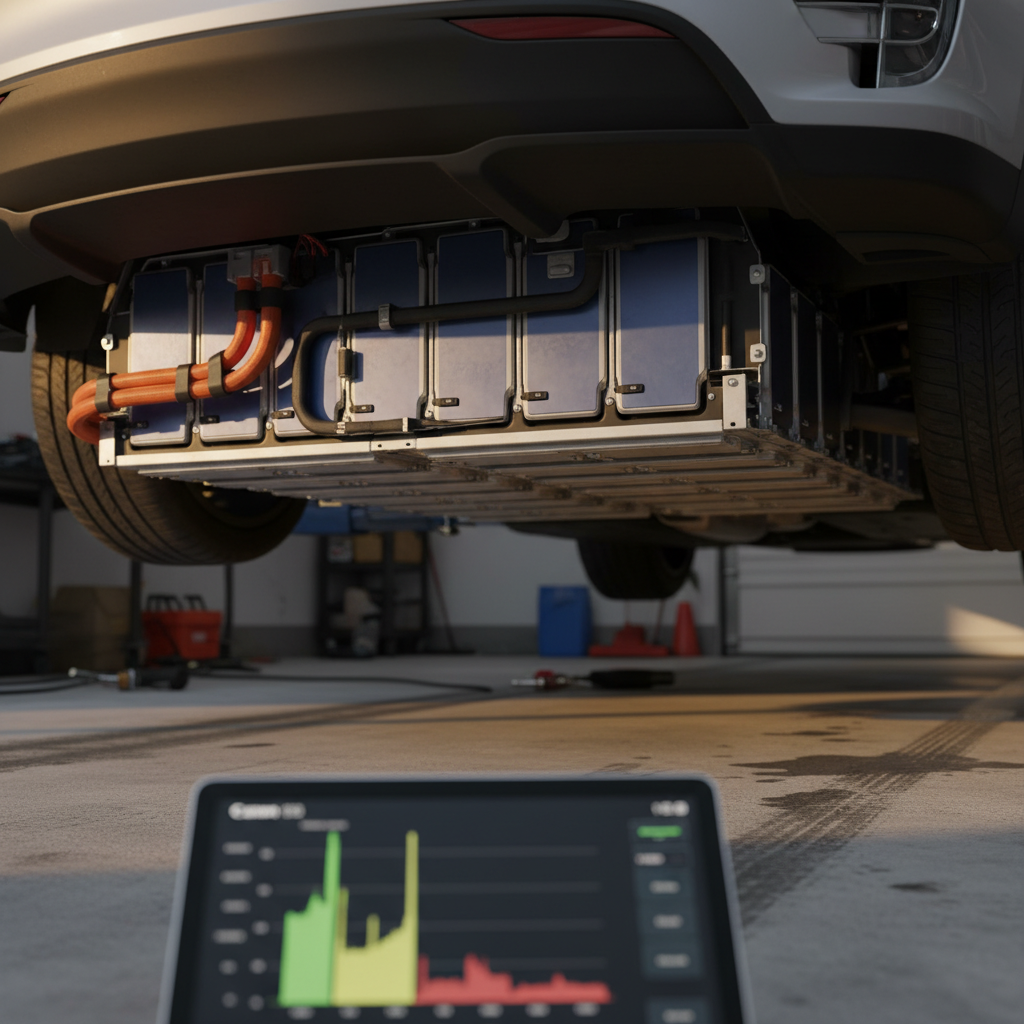
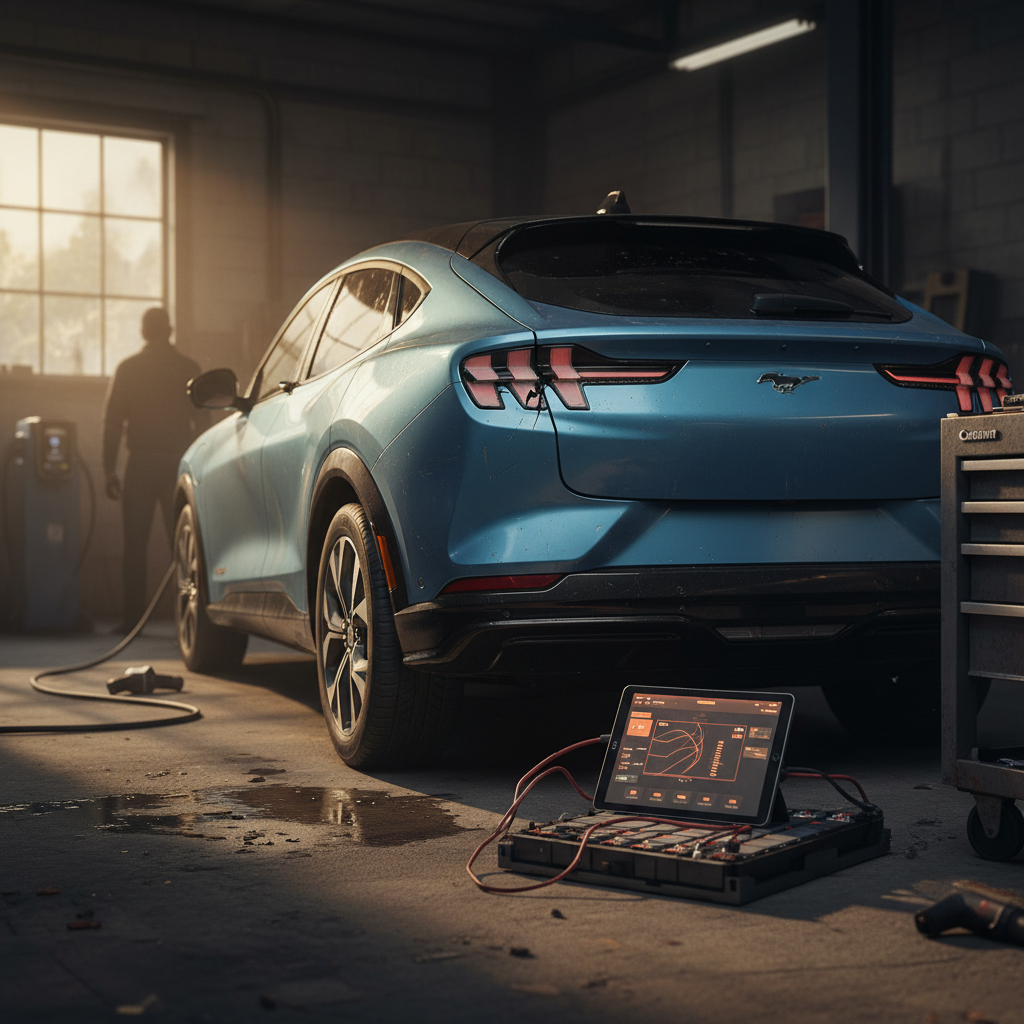
Charging speed and range both depend on battery health. With Recharged, every used EV comes with a Recharged Score Report that includes verified battery diagnostics, so you know how the pack is holding up before you buy.
Recharged was built around this exact anxiety: buying a used EV shouldn’t feel like betting on an invisible battery and an unknown charging future. With our **Recharged Score**, fair‑market pricing, and EV‑specialist support, you can shop for a car that actually fits your home charging reality, whether that’s humble Level 1 or a freshly installed Level 2 in the garage.
Safety, cost and practical tips by level
Key tips for Level 1, Level 2 and Level 3
Level 1: treat it like a serious appliance
Use a dedicated, grounded outlet in good condition. Avoid daisy‑chained power strips or sharing the circuit with space heaters or other heavy loads. If breakers trip or outlets feel warm, stop and call an electrician.
Level 2: involve a pro electrician
Have a licensed electrician evaluate your panel, available amperage, and ideal charger location. Oversizing the circuit slightly (within code) can give you flexibility if your next EV charges faster.
Level 2: think about cable length & parking
Before installing, literally park the car, pop the charge port, and measure the distance. It’s amazing how many people discover too late that their 18‑foot cable can’t comfortably reach when they back into the driveway.
Level 3: watch pricing and idle fees
DC fast charging is usually more expensive per kWh than home charging, and many networks add **idle fees** if you stay parked after charging is complete. Set a timer on your phone so you’re not paying to store electrons you already have.
General: use the apps
Most major networks and mapping apps show charger status, speed, and pricing. Before you count on a Level 3 stop, check recent user check‑ins to avoid arriving at a dead or blocked station.
General: baby the battery
For day‑to‑day use, it’s healthier to keep the battery between roughly **20% and 80%** and save 100% charges for road trips or special situations. The car’s manual will spell out its preferred habits.
Don’t try to DIY a Level 3 fantasy at home
Frequently asked questions about EV charging levels
EV charging levels: common questions
Bottom line: how to think about Level 1, 2, 3
If you strip away the jargon, **Level 1, Level 2, and Level 3 charging are just three answers to the question, “How fast do you actually need this car to refill?”** For most people with a driveway or garage, a sensible Level 2 install turns an EV into the easiest “fueling” experience you’ve ever had. Level 1 is a workable slow lane for light drivers, and Level 3 is the high‑speed lane you merge into when the road trip demands it.
Where Recharged comes in is matching the **right used EV** to that charging picture. We back every car with a Recharged Score Report so you know the battery’s true condition, pair that with fair‑market pricing, and give you EV‑specialist guidance from your first question to delivery at your door. Figure out your charging levels first, then find the car that fits, and let the infrastructure drama fade into the background where it belongs.