If you’re researching Ford Mustang Mach-E common problems in 2026, you’re probably trying to separate internet horror stories from issues that actually matter, especially if you’re considering a used Mach‑E. The short version: the Mach‑E has had its share of recalls and software drama, but by 2026 it’s also a much more mature product. The key is understanding which problems are serious, which are mostly annoyances, and how to spot a well‑sorted car.
Model years covered
Overview: How the Mustang Mach-E is Aging by 2026
Mustang Mach-E Reliability Snapshot (as of 2026)
The Mustang Mach‑E sits at the intersection of two shifts: Ford’s learning curve on high‑volume EVs and the broader transition to software‑defined vehicles. That means many of the “common problems” you read about, stuck over‑the‑air (OTA) updates, weird 12‑volt behavior, glitchy cameras, are really software and systems‑integration issues, not fundamental battery or motor failures. Still, there are a few hard mechanical and safety issues you absolutely need to know about.
Big-Picture Reliability: Is the Mach-E a Problem Child?
Owner surveys and reliability data through the 2025 model year paint a consistent picture. Early 2021–2022 cars had more teething problems, especially around battery contactors, 12‑volt battery drain, and build quality. By 2024–2025, Ford had ironed out many of the rough edges, and the Cuautitlán plant in Mexico was putting out cleaner builds with fewer assembly‑related complaints.
- Strengths: Solid motor/drive unit reliability, generally healthy high‑voltage batteries, strong performance, mature by 2024–2025.
- Weak spots: Recall history around high‑voltage contactors, software gremlins, 12‑volt quirks, and some door latch and camera issues.
- Variation by trim/year: First‑year 2021 cars and heavily DC‑fast‑charged performance trims (GT, extended‑range) deserve closer scrutiny.
How Recharged fits in
High-Voltage Battery Contactor & Sudden Power Loss
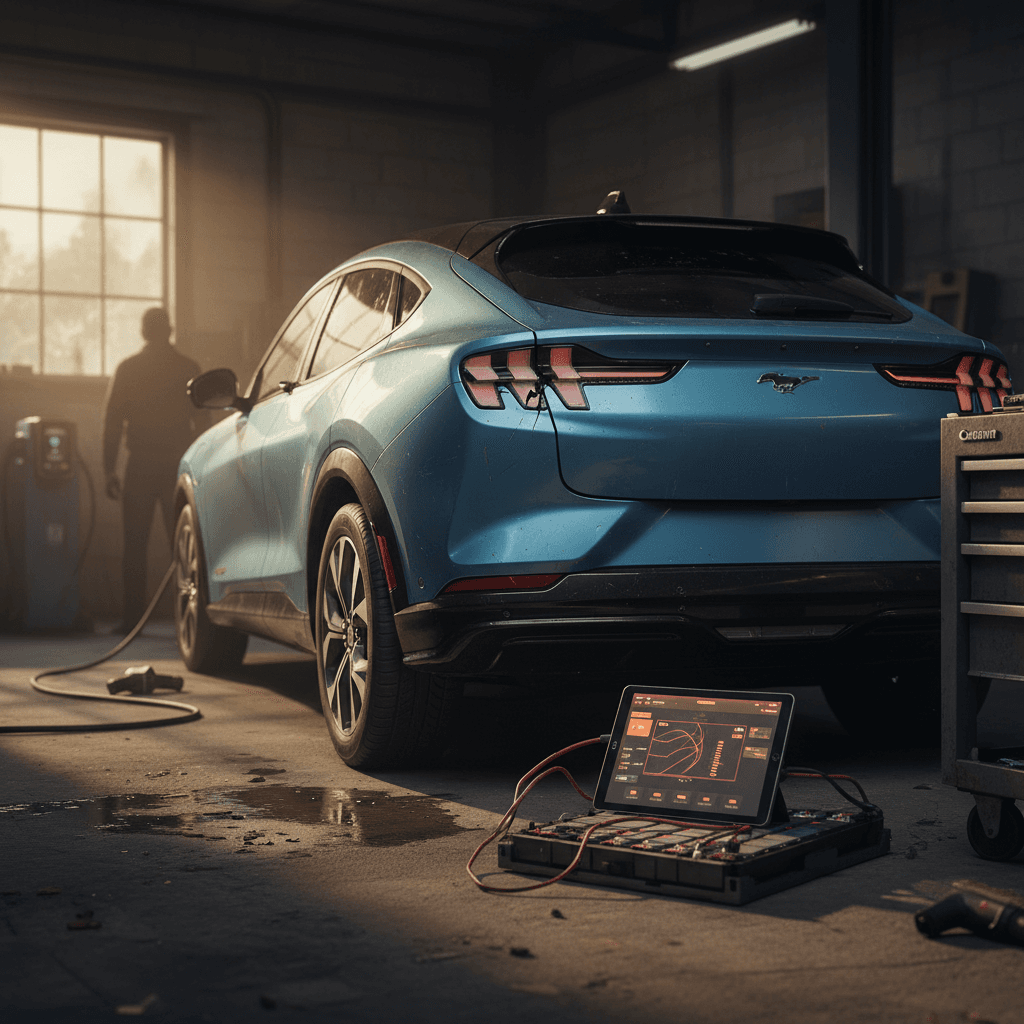
The most serious Mustang Mach‑E “common problem” you’ll see referenced is the high‑voltage battery main contactor overheating. The contactor is basically a heavy‑duty switch that connects the big drive battery to the rest of the car. On some 2021–2022 extended‑range and GT models, repeated DC fast‑charging or hard acceleration could overheat the contactor, leading to cracked or welded contact surfaces and, worst case, a sudden loss of drive power.
- Ford has issued multiple recalls and service campaigns for 2021–2022 Mach‑E models to address contactor overheating and related high‑voltage junction box issues.
- Early fixes included software that limited power if the system detected overheating; later campaigns focused on replacing hardware that was incorrectly repaired or still at risk.
- By 2024–2025, the underlying design and repair procedures had been updated, but some vehicles may still be driving around with incomplete or improperly performed fixes.
Why this matters
Higher-Risk Scenarios
- 2021–2022 extended‑range or GT models
- Vehicles frequently DC fast‑charged on road trips
- Cars with history of power‑loss warnings or reduced power messages
Lower-Risk Scenarios
- Later 2023–2025 builds with updated hardware
- Cars mostly charged on home Level 2
- Full recall history documented in Ford’s system
12‑Volt Battery & OTA Update Headaches
If there’s one issue that unites Mach‑E owners across forums in 2026, it’s 12‑volt battery behavior. Like most modern EVs, the Mach‑E uses a small conventional 12‑volt battery to power accessories, control modules, locks, and the handoff between the big pack and the rest of the car. Ford’s charging strategy and OTA‑update requirements have made that little battery a big source of headaches.
- Owners frequently see OTA updates fail or postpone with a vague “battery too low” message, even when the high‑voltage pack is at a healthy state of charge.
- Ford’s body control modules tend to slow‑charge the 12‑volt, so short drives and lots of accessory use can leave it below the hidden state‑of‑charge threshold required for updates.
- In some cases, a weak 12‑volt can trigger random warning lights, charging interruptions, or make the car appear “dead” even though the main battery is fine.
2025–2026 12‑volt related recalls
How to keep Mach‑E 12‑volt problems in check
1. Ask about recent 12‑volt replacement
On an older Mach‑E, a 12‑volt battery that’s still original is on borrowed time. A documented replacement is a positive sign.
2. Drive long enough to recharge
If you mostly take short trips, schedule an occasional 45–60 minute drive to give the car time to top up the 12‑volt battery.
3. Don’t ignore failed OTA updates
Repeated “update postponed” messages can be an early sign of 12‑volt issues. Have the system scanned before it strands you.
4. Verify 12‑volt related recalls
Ask a dealer, or a retailer like <strong>Recharged</strong>, to pull a full recall history and confirm that all 12‑volt and door‑lock campaigns have been performed.
Door Latch & Lock Problems (Passenger Entrapment Risk)
Another high‑profile Mustang Mach‑E problem in 2026 is around electronic door latches and locks. With no traditional interior handle in the rear doors and electronic buttons up front, the Mach‑E relies heavily on powered latches and the 12‑volt system to let people in and out.
A major recall covers nearly 200,000 2021–2025 Mach‑E SUVs where a low 12‑volt battery could leave the electronic door latches locked after the driver exits, potentially trapping rear‑seat passengers who can’t operate the emergency releases. The fix involves updated software and, in some cases, changes to how latch power is managed so critical functions can fall back to the main battery.
Used buyers: test every door
Software Bugs: Infotainment, Cameras & Driver-Assist
Like most early software‑heavy EVs, the Mach‑E’s infotainment and driver‑assist systems have had their share of glitches. Ford has pushed a steady drumbeat of OTA updates since 2021, some of which fixed problems, some of which introduced new ones.
- Rear camera glitches: A broad Ford recall in 2025 targets a software bug that can cause the rearview camera image to freeze, delay, or fail to appear when reversing, obviously a safety concern.
- SYNC 4A lag and freezes: Owners report occasional slow boot times, black screens, and frozen Apple CarPlay/Android Auto sessions. Most resolve with a soft reset, but chronic issues may require updated modules.
- BlueCruise / Co‑Pilot360 quirks: Lane‑keeping and adaptive cruise can be sensitive to poor lane markings, weather, or dirty cameras. Complaints tend to fade as software matures, but some owners still find the system less polished than Tesla or Hyundai/Kia rivals.
Reality check on OTA updates
Charging Issues: Home Charging and DC Fast Charging
Most Mach‑E owners charge at home on Level 2 without drama. But among the common 2026 complaints, you’ll still see a few familiar themes: inconsistent public‑charging behavior, session dropouts, and confusing communication between the car and some DC fast‑charging networks.
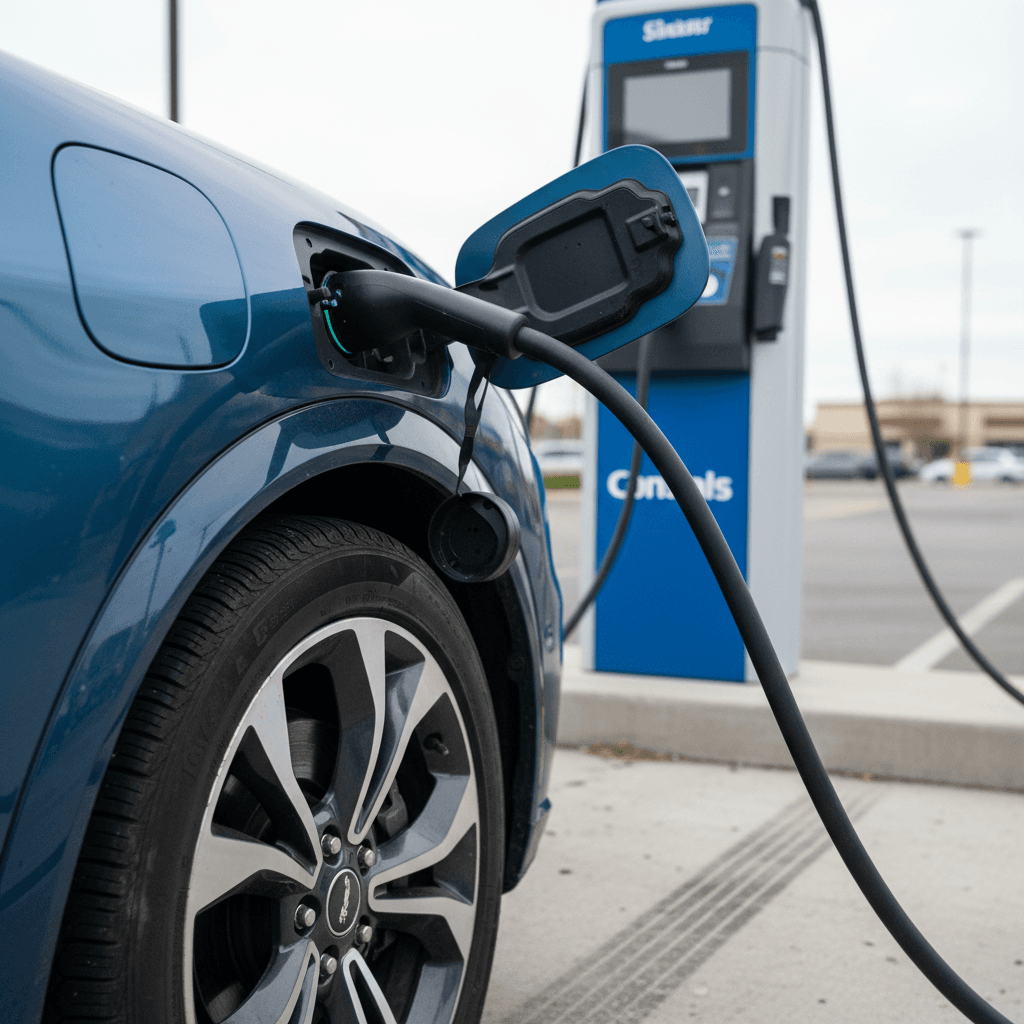
- DC fast‑charging throttling: Mach‑E charge curves are conservative compared with some newer EVs. Add in heat‑management to protect that high‑voltage contactor, and real‑world highway fast‑charging can be slower than spec sheet numbers suggest.
- Charge session errors: Owners sometimes see “charger fault” or “charging stopped” messages that are as much about station firmware as the car. However, a Mach‑E that fails repeatedly at multiple different stations should be inspected.
- Home charging quirks: A small subset of owners report the car refusing to charge on certain Level 2 units or tripping household breakers. Often this traces back to wiring or the EVSE, but the Mach‑E’s onboard charger should still be checked.
Plan for NACS and adapters
Build Quality, Noise & Weather-Related Quirks
Early Mach‑E builds drew criticism for inconsistent panel gaps, wind noise, and minor water leaks. By 2024, Ford’s factory processes had improved, and many of the most visible panel and glass bonding issues were much less common, but they still show up in the used pool.
Common Day-to-Day Annoyances (Not Deal-Breakers)
These are more about livability than safety or major repair costs.
Wind & Road Noise
Weather Sensitivity
Trim & Rattles
Cold-weather buyers
Recall Landscape: Key Mustang Mach-E Campaigns Through 2026
By 2026, the Mach‑E has accumulated a long recall list, but a recall history isn’t inherently a deal‑breaker. What matters is whether those recalls were performed correctly. Here are the big buckets you should ask about:
Major Mustang Mach-E Recall Themes (2021–2025 Builds)
Always verify recall completion by VIN with Ford or a trusted retailer before buying used.
| Issue | Typical Model Years | Symptom/Risk | Typical Remedy |
|---|---|---|---|
| High-voltage battery contactor overheating | 2021–2022 (some 2023) | Loss of drive power, warnings, limp mode | Software limits plus hardware replacement of contactor or junction box |
| Electronic door latches / 12‑V dependency | 2021–2025 | Doors may remain locked, risk of passengers unable to exit | Software re‑map of door power supply; updated modules |
| Rear camera software glitch | 2021–2023 Mach‑E among broader Ford recall | Frozen, delayed, or missing rear camera image | Camera software patch via OTA or dealer |
| Integrated park module / roll‑away risk | 2024–2026 Mach‑E among other Ford EVs | Vehicle may fail to hold in Park under certain conditions | Park module software update at dealer |
| Misc. software & module updates | Various | Warning lights, charging communication issues, driver‑assist quirks | ECU reprogramming via OTA or dealer service |
Recall names and numbers vary; focus on whether the underlying issue has been corrected on the specific vehicle you’re considering.
How Recharged handles recalls
Shopping a Used Mustang Mach-E in 2026: Checklist
Because the Mach‑E’s common problems in 2026 tilt heavily toward software, electronics, and recall history, a test drive and inspection need to go beyond a quick spin around the block. Here’s a focused checklist to help you separate the gems from the projects.
Used 2021–2025 Mach-E Inspection Checklist
1. Pull the full recall and service history
Ask for a printout of all completed and open recalls, plus any high‑voltage battery or contactor work. If you’re buying through <strong>Recharged</strong>, this is built into the Recharged Score report.
2. Run both home-style and DC charging tests
If possible, plug into a Level 2 charger and a DC fast charger. Watch for abrupt stops, error messages, or unusually slow rates compared with what the station advertises.
3. Check 12‑volt behavior and OTA status
Verify the car is on a current software version, ask if OTA updates have been failing, and look for signs of a weak 12‑volt (slow wake‑up, repeated warnings, strange electrical behavior).
4. Exercise every door, window, and lock
Open and close every door from inside and outside, lock/unlock with the key fob, door keypad (if equipped), and app. Confirm rear passengers can easily exit without workarounds.
5. Inspect for build-quality issues
Look for uneven panel gaps, signs of windshield or glass reinstallation, water marks in the headliner, and listen for rattles on rough pavement at various speeds.
6. Drive it hard enough to stress the system
On a safe stretch of road, briefly accelerate firmly and then cruise at highway speeds. Watch for warning lights, reduced‑power messages, or unusual noises that only appear under load.
FAQ: Ford Mustang Mach-E Common Problems in 2026
Frequently Asked Questions
Bottom Line: Should Mach-E Problems Scare You Off?
The honest answer on Ford Mustang Mach‑E common problems in 2026 is that this is a very modern EV: much of what can go wrong lives at the intersection of software, electronics, and edge‑case use patterns. The mechanical bits, motors, reduction gearsets, and battery cells, have held up reasonably well. The real risks center on high‑voltage contactor recalls, 12‑volt behavior, and how diligently past owners kept up with updates and service campaigns.
If you’re willing to do a bit of homework, verifying recall status by VIN, checking 12‑volt health, making sure the software isn’t years out of date, a well‑sorted Mach‑E can be a smart, engaging EV choice in 2026. And if you’d rather not shoulder that homework alone, working with an EV‑focused retailer like Recharged, which surfaces battery health, recall history, and real‑world condition in a single report, can turn a potentially risky used‑EV buy into a much more transparent decision.