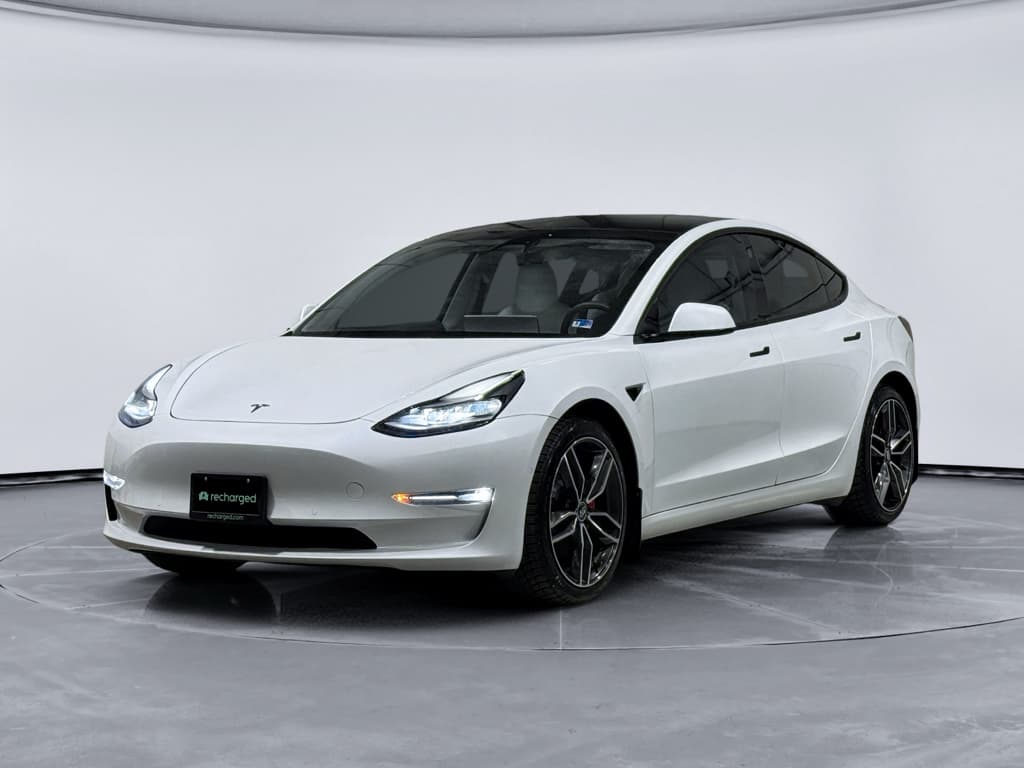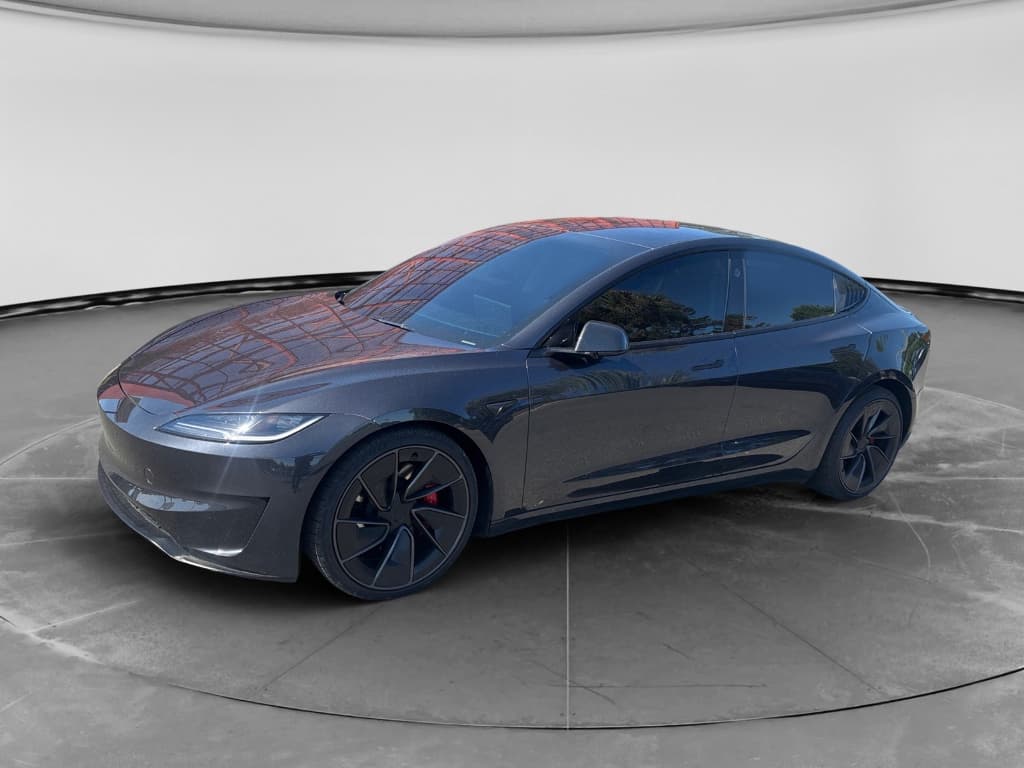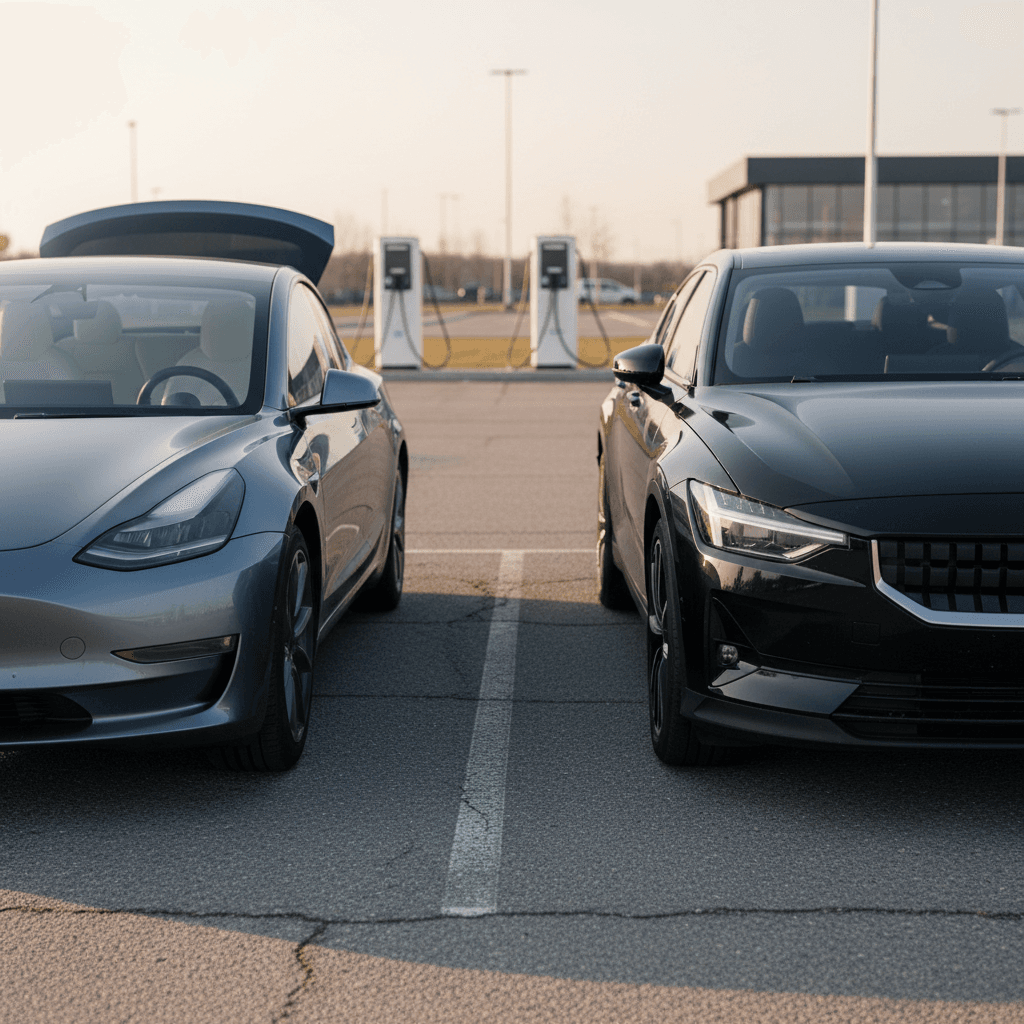
Shopping for a used Tesla Model 3 vs used Polestar 2 under $25,000 is a little like choosing between two different futures. One is the mass‑market EV that changed everything; the other is a Scandinavian design object with a conscience. Both can be brilliant buys at this price if you understand the trade‑offs, and the traps.
The short version
Who this comparison is really for
If you have around $20,000–$25,000 to spend and want a truly usable EV, something that can commute, road‑trip occasionally, and not feel like a science experiment, these two keep bubbling to the top of search results. You’re probably cross‑shopping them against used Chevy Bolts, Nissan Leafs, maybe a Hyundai Kona Electric, but it’s the Tesla and the Polestar that feel like aspirational choices.
- You want at least ~230 miles of realistic highway range, not just optimistic city numbers.
- You care about charging access, especially on long trips in the U.S.
- You’re open to higher miles if the battery checks out.
- You’re trying to avoid luxury‑brand repair bills but still want something that feels special.
How Recharged can help
Can you actually find a used Model 3 or Polestar 2 under $25,000?
Yes, but the details matter. The Tesla Model 3 has been on sale since 2017 in the U.S., which means a deep used pool and plenty of cars sliding under $25k. The Polestar 2 arrived later and in smaller numbers, so deals exist, but you have to hunt harder and accept compromises on miles, options, or history.
Availability reality check under $25k
What you’re most likely to see in U.S. listings today
Used Tesla Model 3 under $25k
- Common: 2017–2019 Long Range RWD/AWD with 60k–120k+ miles.
- Occasional: Early 2020 cars or higher‑mile Standard Range/Standard Range Plus.
- Sub‑$20k: Often salvage, high‑mileage, or with cosmetic/accident histories.
Used Polestar 2 under $25k
- More limited inventory overall; mostly 2021–2022 cars as of 2026.
- Sub‑$25k cars usually have higher mileage, are base spec, or come from smaller independent dealers.
- Certified Pre‑Owned Polestar 2s usually sit above this price point.
Watch out for “too good to be true” pricing
Used Tesla Model 3 vs Polestar 2: quick specs at a glance
Core specs for realistic sub‑$25k candidates
Representative trims you’re likely to see around $20k–$25k in the U.S. used market.
| Typical Year/Trim | EPA Range New (mi) | Battery (approx. kWh usable) | Drivetrain | 0–60 mph (approx.) | |
|---|---|---|---|---|---|
| Tesla Model 3 Long Range RWD | 2017–2018 Long Range RWD | ~310 | ~75 | RWD | 4.8 s |
| Tesla Model 3 Standard Range/Plus | 2019–2020 SR / SR+ | ~220–250 | ~50–55 | RWD | 5.3–5.6 s |
| Polestar 2 Long Range Single Motor | 2022–2023 LR Single Motor | 270 | ~75–78 | FWD (later RWD) | 6.9–7.0 s |
| Polestar 2 Long Range Dual Motor | 2021–2023 LR Dual Motor | ~260–270 (varies by year) | ~75–78 | AWD | 4.3–4.5 s |
Exact specs vary by year and options; always verify the specific VIN.
Why EPA range isn’t the whole story
Range, battery and real-world efficiency
If you live somewhere spacious, Texas, the Mountain West, pretty much all of California, range is freedom. It’s the difference between stopping when you want to and stopping when you have to. On paper, the Model 3 and Polestar 2 overlap, but their priorities are different.
Tesla Model 3: range champ on a budget
- Early Long Range cars were rated around 310 miles EPA when new.
- Standard Range and Standard Range Plus cars landed closer to 220–250 miles EPA.
- Tesla’s in‑house powertrain and aggressive aero make the Model 3 one of the most efficient EVs of its generation.
On the road, many owners still see highway ranges in the low‑200s miles even after several years, provided the battery hasn’t been abused.
Polestar 2: solid numbers, heavier appetite
- The sweet‑spot Long Range Single Motor variant is rated around 270 miles EPA in 2022–2023 form.
- Dual‑motor versions typically rate a bit lower but still in the 260‑mile neighborhood when new.
- Real‑world highway tests often land in the 220–245 mile window on a full charge, depending on wheels and weather.
Polestar 2 is heavier and boxier than the Model 3, so at 75 mph you’ll usually burn a little more energy per mile.
Battery chemistry and degradation
Typical real-world highway range (good-condition examples)
Range verdict
Charging experience and road-trip readiness
Range is half the story. The other half is how pain‑free it is to add that range back on a random Thursday night in Amarillo. Here the Tesla heritage shows, but the Polestar 2 has some under‑appreciated strengths if your habits are mostly home and local public charging.
Charging: Tesla Model 3 vs Polestar 2
How they plug into your life day to day
Tesla Model 3
- Native access to the vast Supercharger network with a seamless in‑car experience.
- DC fast charging typically up to ~170–250 kW depending on model year and pack.
- Home charging via Tesla Wall Connector or J1772 Level 2 with an adapter.
- Some public CCS sites require additional adapters and more fiddling.
Polestar 2
- Uses the CCS standard, works natively with Electrify America, EVgo, ChargePoint DC, and most public networks.
- DC fast charging peak around ~150 kW for Long Range variants.
- Home charging with any standard Level 2 (J1772) unit.
- Access to Tesla Superchargers depends on the ongoing NACS/adapter rollout and local availability.
Home charging parity
Road-trip reality check
Interior, tech and driving feel
This is where the two cars stop being abstract spreadsheets and start being places you live your life. You’re not just buying kilowatt‑hours; you’re buying seat time, steering feel, and the way your brain relaxes, or doesn’t, on a dark freeway.
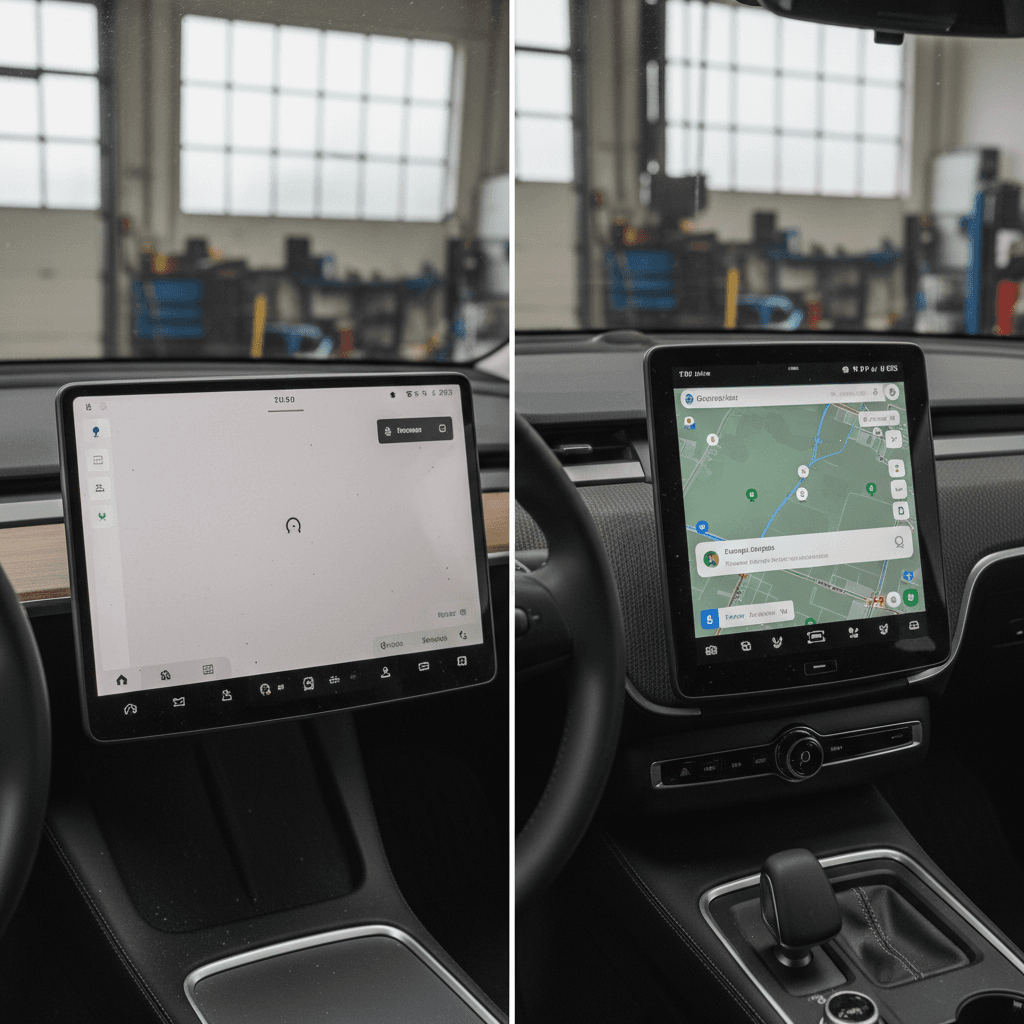
Tesla Model 3: minimalist and software‑centric
- Ultra‑minimal cabin with virtually all controls on the single center screen.
- Software updates can meaningfully change the driving and ownership experience over time.
- Cabin materials improved over the years but early cars can feel a bit sparse and noisy compared with premium rivals.
- Steering is quick, the car feels light on its feet, and even base models have that instant‑torque snap.
If you enjoy living on the bleeding edge of software and don’t mind the learning curve, the Model 3 still feels like the future.
Polestar 2: Scandinavian living room on wheels
- More conventional cockpit with a driver display, central portrait screen, and actual physical switchgear where it matters.
- Interior materials and seats generally feel more premium and supportive, especially on longer drives.
- Built‑in Google apps (Maps, Assistant) integrate nicely; the UX feels familiar if you live in Android’s universe.
- Chassis tuning is mature and confidence‑inspiring, especially in Dual Motor form, with a more “European” ride/handling balance.
If you want an EV that still feels like a refined compact luxury car rather than a rolling tablet, Polestar 2 hits that note.
Comfort & livability verdict
Ownership costs, reliability and resale
Both cars are fundamentally simpler than their gasoline peers, no oil changes, no exhaust, no transmission in the traditional sense. But their cost curves look different over time, and the market treats their badges differently when you go to sell or trade in.
Ownership snapshot: used Model 3 vs Polestar 2
How the two stack up once you’ve paid the purchase price.
| Factor | Used Tesla Model 3 | Used Polestar 2 |
|---|---|---|
| Depreciation | Heavier early drops but strong demand; resale still among the best for used EVs. | Depreciation has been steeper; attractive used pricing but softer resale later. |
| Battery warranty | 8‑year / 100k–120k mile HV battery warranty depending on model. | 8‑year / ~100k mile HV battery warranty typical on U.S. cars. |
| Service network | Large and growing Tesla service footprint, but wait times can vary by region. | Smaller Polestar service network; often routes through Volvo dealers in the U.S. |
| Parts & repairs | Some unique parts can be pricey, especially outside warranty; lots of third‑party support emerging. | Less volume in the field; body and trim parts can involve longer waits, but mainstream components often shared with Volvo. |
| Insurance | Generally mid‑to‑high for an EV sedan; rates vary widely by state and history. | Similar or slightly higher than Model 3 in some markets due to lower parts commonality and smaller repair network. |
Assumes out‑of‑warranty ownership for several more years.
The big swing factor: battery health
Which used EV under $25k is right for you?
If you’re expecting a universal winner here, you’re going to be disappointed, and that’s a good thing. It means you actually have a choice. The right answer depends on whether you’re chasing charging convenience, interior ambiance, or long‑term value.
Choose your fighter: who should buy what?
Match the car to the life, not the other way around.
The highway commuter / road‑tripper
Best fit: Healthy Long Range Tesla Model 3
- Want the least stressful cross‑country experience.
- Value the Supercharger network and efficient aero.
- Okay with a slightly simpler interior if the car just works.
The design‑snob city dweller
Best fit: Polestar 2 Long Range Single Motor
- Mostly urban/suburban miles with reliable Level 2 charging.
- Care a lot about interior ambience, seats, and tactile quality.
- Prefer a cockpit that feels more like a modern Volvo than a spaceship.
The pragmatist deal‑hunter
Best fit: The better individual car
- Will happily drive either badge if the battery, history, and price line up.
- Shopping across multiple states or online marketplaces.
- Uses objective tools like the Recharged Score to compare apples to apples.
If you forced a verdict…
Checklist: how to shop a used Model 3 or Polestar 2 smartly
10 checks before you send a wire transfer
1. Start with the battery, not the paint
Use a proper battery‑health report, like the <strong>Recharged Score</strong>, to see usable capacity, fast‑charge history, and estimated real‑world range. A perfect paint job can hide a tired pack.
2. Decode the trim and pack
Confirm whether you’re looking at Standard Range, Long Range, Single Motor, or Dual Motor. EPA range and battery size vary significantly by trim and year; don’t rely on a vague listing title.
3. Check remaining factory HV battery warranty
Look at in‑service date, mileage, and the manufacturer’s battery‑warranty terms. A car with 2–3 years of HV coverage left is a safer bet than one just outside that window at the same price.
4. Study charging history
Ask for data on fast‑charging vs. home charging where possible. A life spent mostly on DC fast chargers is harder on the pack than one lived between 20–80% on Level 2 at home.
5. Inspect tires and brakes
EVs are heavy and powerful; cheap tires or uneven wear can hint at hard use or alignment issues. Polestar 2 on worn 20s, in particular, can be noisy and harsh until you address rubber.
6. Scan for accident and repair history
Pull a vehicle‑history report, but don’t stop there. Look for mismatched paint, odd panel gaps, and aftermarket glass. Salvage or rebuilt titles may explain a suspiciously low price.
7. Test drive for noises and software gremlins
On the test drive, hunt for wind noise, suspension clunks, and squeaks from the interior. For the Model 3, verify Autopilot and connectivity features behave as advertised; on the Polestar 2, make sure all Google‑based services load quickly and consistently.
8. Confirm charging hardware and cables included
Make sure the car comes with the correct charging cable(s) and, for Teslas, the J1772 adapter at minimum. Replacing missing hardware can easily eat hundreds of dollars from your budget.
9. Price against the real market
Don’t anchor on original MSRP. Compare against similar year/mileage examples on multiple platforms. Tools used by Recharged benchmark each car against national and regional market data so you can see if a deal is actually good.
10. Plan your first year of ownership
Budget for tires, a potential brake service, floor mats, and a home Level 2 charger if you don’t already have one. A $1,000–$1,500 buffer turns surprises into minor inconveniences instead of crises.
FAQ: used Tesla Model 3 vs Polestar 2 under $25,000
Frequently asked questions
Under $25,000, both the used Tesla Model 3 and the used Polestar 2 are compelling ways to escape gas stations and daily range anxiety. The Tesla leans toward ruthless efficiency and charging convenience; the Polestar leans toward tactility, design, and a calmer daily drive. If you line up battery health, history, and price correctly, there’s no wrong answer, only the one that best matches your roads, your charging reality, and your taste. And if you’d like help cutting through the noise, Recharged was built precisely for this moment in the EV story.