If you own or are shopping for a Mercedes-Benz EQB, you’ve probably heard about recent EQB recalls tied to the high‑voltage battery and potential fire risk. This guide pulls together the key Mercedes EQB recalls list items from 2022 through early 2026, explains what each one actually means in plain English, and helps you decide what to do next, especially if you’re considering a used EQB.
Quick context
Mercedes EQB recalls at a glance
Key Mercedes EQB recall numbers (U.S.)
For EQB owners, the headline issue is the high‑voltage battery. Early cells from supplier Farasis Energy have shown reliability problems that can lead to internal short circuits, power loss, or, in worst‑case scenarios, thermal events (fires). Since late 2024, Mercedes has moved from cautionary software updates toward full battery replacements on certain vehicles as evidence accumulated that software alone wasn’t enough.
Critical safety note
Mercedes EQB recall timeline (2022–2026)
Major Mercedes EQB recalls by year (U.S.)
This simplified timeline focuses on the most important EQB campaigns that affect battery safety and drivability. Always verify details for your specific VIN.
| Approx. date filed | NHTSA campaign / type | Model years & trims | Main issue | Typical remedy |
|---|---|---|---|---|
| Early–mid 2024 | Battery management software update (voluntary safety recall) | 2022–2024 EQB 250 / 300 4MATIC / 350 4MATIC | Early‑production Farasis battery cells may be prone to internal failure at high state‑of‑charge, increasing fire risk. | Install updated battery management system (BMS) software and instruct owners to limit charge to 80% until updated. |
| Dec 2025 | 25V894000 – High‑voltage battery may catch fire | 2022–2023 EQB 300 4MATIC, EQB 350 4MATIC, and some 2023 EQB 250 | Internal battery failure can lead to a fire while parked or driving; closely tied to the earlier software‑only campaign. | Update BMS software; affected vehicles previously fixed under earlier campaign require rework. |
| Late 2025 | Additional EQB fire‑risk recall linked to software campaign | 2022–2024 EQB (subset with early cells) | Follow‑up after determining some vehicles needing updated software remained in the U.S.; interim instruction to cap charging at 80%. | Dealer BMS software update; clarifies and extends earlier coverage. |
| Feb 2026 | Expanded high‑voltage battery fire‑risk recall | 2022–2024 EQB 250+, EQB 300 4MATIC, EQB 350 4MATIC (approx. 12,000 units) | Supplier cell robustness issues at high state‑of‑charge can cause internal short circuits and battery fires in rare cases. | Full high‑voltage battery replacement with improved units, free of charge; owners advised to park outdoors and cap charge at 80% until repair. |
| Aug 2025 (separate campaign) | High‑voltage battery busbar screw issue | Limited 2022–2023 EQB 300 4MATIC / 350 4MATIC (about 660 units) | Improper busbar screw hardware can cause sudden loss of drive power and require battery replacement. | Dealer inspection and, if necessary, replacement of the high‑voltage battery assembly. |
Dates and campaign numbers are summarized for owner education and may omit smaller service actions or market‑specific bulletins.
This list isn’t every EQB campaign ever
High-voltage battery fire risk recalls (2025–2026)
By far the most serious Mercedes EQB recalls involve the high‑voltage battery pack and a risk of internal failure leading to fire. These campaigns build on one another: a first round of software fixes in 2024–2025, followed by a larger 2025 NHTSA campaign, and now a 2026 recall that moves decisively to full battery replacements.
How the EQB battery fire-risk recalls evolved
Understanding the progression from software patches to full pack replacements
1. Early cell defects emerge
Investigations traced rare but serious failures to early Farasis battery cells used in 2022–early 2024 EQBs. These cells weren’t as robust under stress, especially at high state‑of‑charge.
2. Software update as first response
Mercedes first tried a battery‑management software update to reduce stress on suspect cells. Owners were told to limit charging to 80% while the update rolled out.
3. Full battery replacement
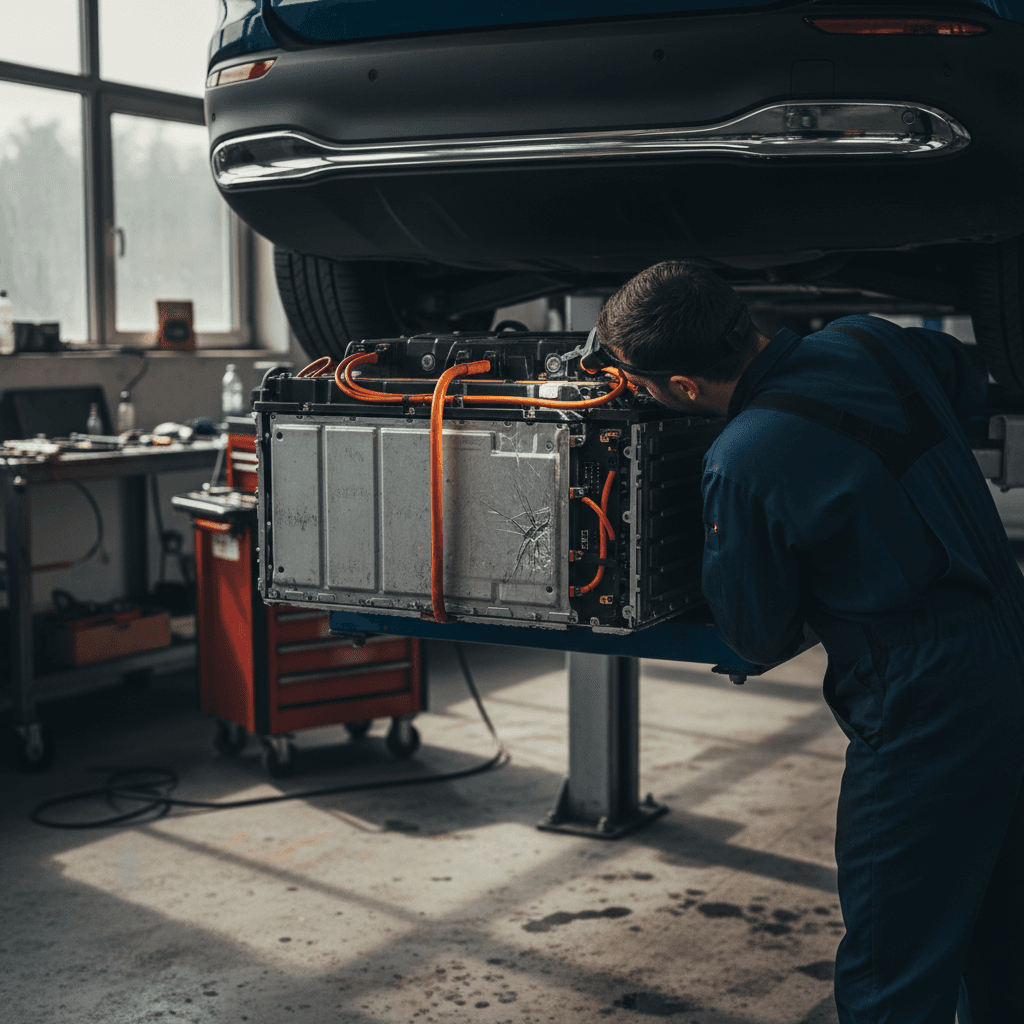
Once it was clear software didn’t fully remove the risk, and with confirmed fire incidents, Mercedes moved to replacing entire high‑voltage battery packs on roughly twelve thousand 2022–2024 EQBs.
Why parking outdoors matters
From an owner’s perspective, the positive news is that Mercedes has now committed to physically replacing weak battery packs rather than simply relying on software to work around defective hardware. In practice, that should leave a properly repaired EQB with a more robust battery than it had when new. The trade‑off is time: pack replacement is more disruptive than a software flash, and dealer capacity may be constrained while the campaign is in full swing.
Power loss and hardware-related EQB recalls
Separate from outright fire risk, at least one notable EQB recall has targeted a hardware defect in the high‑voltage battery’s busbar connection. In that campaign, a small run of 2022–2023 EQB 300 4MATIC and 350 4MATIC models was built with an unsuitable batch of screws on the internal busbar connection, supplied by Farasis.
- If the connection loosens or fails, the EQB can suffer a sudden loss of drive power, even at speed.
- Owners may see a warning message when the fault occurs, but there’s no early warning before the failure.
- Dealers inspect the battery and replace the entire pack if the suspect hardware is present.
- The affected population is relatively small (hundreds of vehicles), but the symptom, loss of propulsion, is serious enough to warrant immediate attention.
Don’t ignore sudden power warnings
Software-only campaigns on the EQB: what they actually fix
On paper, a software recall sounds much less alarming than a hardware defect, but on the EQB, some of the most important campaigns started as software‑only updates tied to managing weak cells. The risk is that owners assume “software” means optional or cosmetic when it’s really about safety margins in the battery pack.
Battery management system (BMS) updates
These campaigns adjust how the EQB charges and discharges the pack. They typically:
- Reduce stress on weak cells at high state‑of‑charge.
- Change how the car monitors for early signs of failure.
- May temporarily limit usable capacity or performance.
Skipping these updates can leave your EQB operating closer to the margins Mercedes now considers unsafe.
Full pack replacement campaigns
Once Mercedes and its suppliers concluded that software alone couldn’t fully mitigate the risk, campaigns escalated to complete high‑voltage battery replacements. These:
- Swap in newer‑generation packs with improved internal cell design.
- Restore full performance and range once complete.
- Take the car out of service for significantly longer than a software flash.
Ask specifically about software campaign history
How to check if your Mercedes EQB has an open recall
Because EQB recalls are VIN‑specific and some campaigns overlap, you should never assume your car is fine just because a particular model year is, or isn’t, mentioned online. Here’s how to get a definitive answer for your exact vehicle.
Step-by-step: confirm your EQB’s recall status
1. Locate your VIN
Your 17‑character VIN appears on the lower driver‑side windshield, on the driver‑door jamb, and on your registration or insurance documents. You’ll need it for every official recall lookup.
2. Run a search on NHTSA.gov
Go to the NHTSA recall lookup tool and enter your VIN. It will show all <strong>open safety recalls</strong> for U.S. vehicles, including EQB battery and power‑loss campaigns that still need to be completed.
3. Check Mercedes’ own recall portal
Mercedes-Benz USA also offers a VIN lookup on its website. This can surface brand‑specific service campaigns and confirm whether your car is included in voluntary or software‑only actions that might not yet appear as formal NHTSA recalls.
4. Call a Mercedes dealer with your VIN
Service advisors can pull a factory history showing completed and outstanding campaigns. Ask them to verify specifically whether all <strong>high‑voltage battery</strong> and <strong>power‑loss</strong> recalls have been addressed.
5. For used EQBs, request documentation
If you’re buying from a dealer or private party, ask for service records showing the recall work is complete, especially the later campaigns that add full battery replacement. Screenshots from the Mercedes system are ideal.
6. Re-check annually
New campaigns can appear years after a vehicle is built. Make a habit of running your VIN through NHTSA’s site at least once a year, or any time you hear about a new EQB recall in the news.
How Recharged handles recalls on used EQBs
What current EQB owners should do during a recall
If you already own an EQB, recall notices can be unnerving, especially when they mention fire risk. The key is to separate emotion from process and move methodically through a few basic steps.
- Read the official letter carefully. It will spell out the specific risk, affected model years, and interim guidance such as parking outdoors or charging to a lower maximum state‑of‑charge.
- Follow the interim instructions immediately, even if the risk is described as “rare.” The underlying defect is serious enough that Mercedes is willing to pay dealers to fix it nationwide.
- Call your preferred Mercedes dealer to schedule the remedy as soon as possible. For software updates this may be a short visit; for full battery replacements, expect more time and plan for a loaner or alternate transportation.
- Ask the service advisor what exact work is being done, software, hardware, or both, and request a copy of the repair order for your records once it’s complete.
- After the repair, monitor your EQB for any unusual warnings or behavior (slower than usual charging, unexpected range swings, or power‑train alerts) and report them promptly. Recalls fix known issues, but they also help Mercedes spot patterns if additional problems emerge.
A fully remedied EQB can be a stronger car
Buying a used Mercedes EQB? How recalls change the equation
With Mercedes planning to wind down EQB production and transition to newer models, used EQBs are becoming more common on the market. That can make them attractive value buys, if you go in with your eyes open about the recall history and battery story.
Upside: recalls can de‑risk early packs
- A used EQB that has already had its high‑voltage battery replaced under recall is running on a newer, more robust pack design.
- Software updates and later battery batches incorporate what Mercedes and Farasis learned from early failures.
- Completed campaigns can actually be a positive signal in a used‑EV context, provided the paperwork is clean.
Downside: uncertainty if history is incomplete
- An EQB with open fire‑risk or power‑loss recalls is effectively an unfinished product until the work is done.
- Gaps in service records can make it hard to know if software‑only campaigns were performed correctly.
- Dealer capacity during large battery replacement waves can create delays, which matter if you need the car for daily use.
How Recharged helps you shop smarter
Used EQB checklist for recall-savvy shoppers
Questions to ask before you sign anything
Completed recall documentation
Ask the seller for service records showing:
• Battery software updates
• Any high‑voltage battery replacement
• Power‑loss / busbar inspections
Battery health, not just warranty
Battery recall work doesn’t equal battery health. Look for an independent battery health report, like the Recharged Score, to see real‑world capacity and degradation.
Who owns the fix responsibility?
If an EQB still has open recalls, clarify in writing whether:
• The seller will complete the work before delivery, or
• You’ll handle it after purchase (and how that impacts price).
FAQ: Mercedes EQB recalls and used‑EV shopping
Frequently asked questions about Mercedes EQB recalls
The bottom line on the Mercedes EQB recalls list
The Mercedes EQB recalls list can look intimidating at first glance: multiple high‑voltage battery campaigns, at least one power‑loss issue, and a long tail of overlapping software updates. But step back, and a more nuanced picture emerges. Early‑production batteries turned out to be weaker than Mercedes and its suppliers expected, and the automaker has moved from software band‑aids toward full battery replacements to close the loop.
For current owners, the path forward is straightforward: confirm your VIN’s status, follow interim safety instructions if applicable, and get the remedy done as soon as your dealer can schedule it. For used‑EV shoppers, recalls are not a dealbreaker, but they’re a reason to demand documentation, independent battery health data, and transparent pricing. That’s exactly the gap Recharged aims to fill with tools like the Recharged Score, EV‑specialist support, and nationwide buying and selling options.
If you approach the EQB the way you should approach any early‑generation EV, with clear eyes, good data, and a willingness to walk away from questionable cars, it can still be a practical and compelling electric SUV. Recalls are part of that story, not the whole thing, and understanding them is your best leverage whether you’re protecting the EQB in your driveway or hunting for the right used one online.