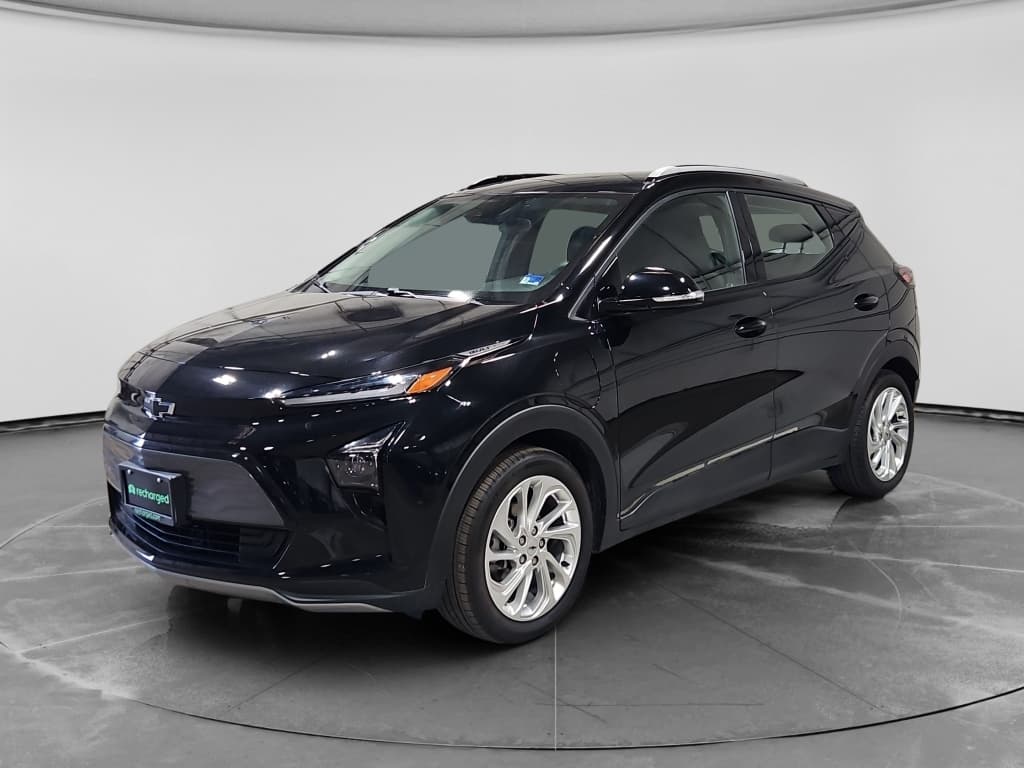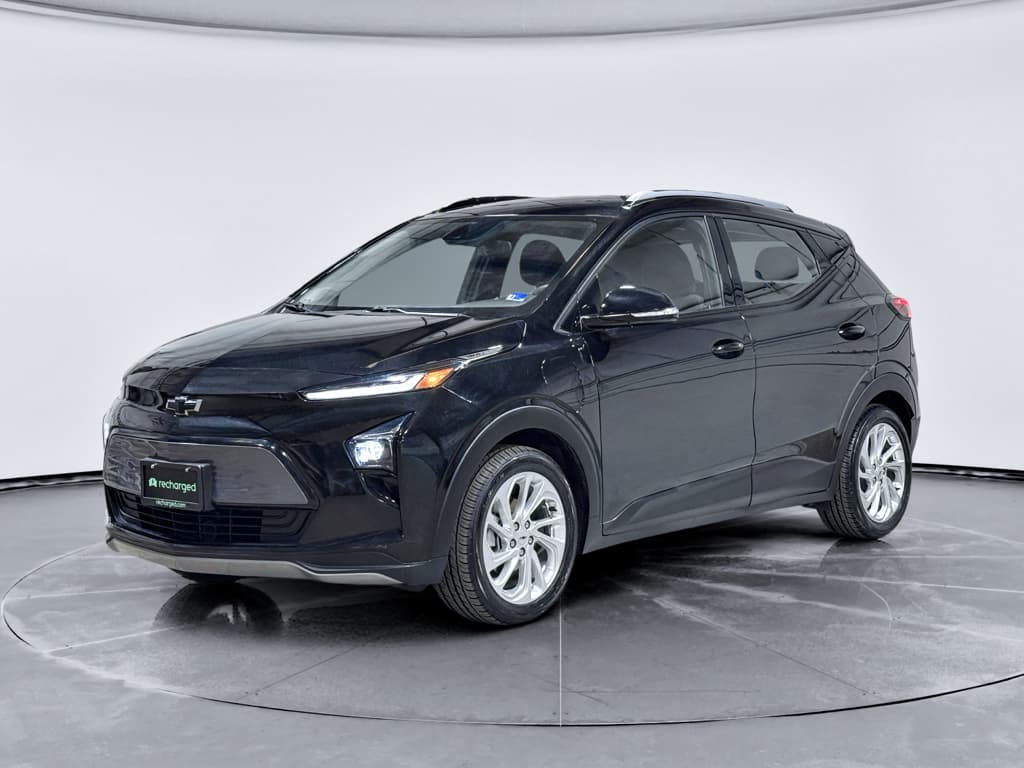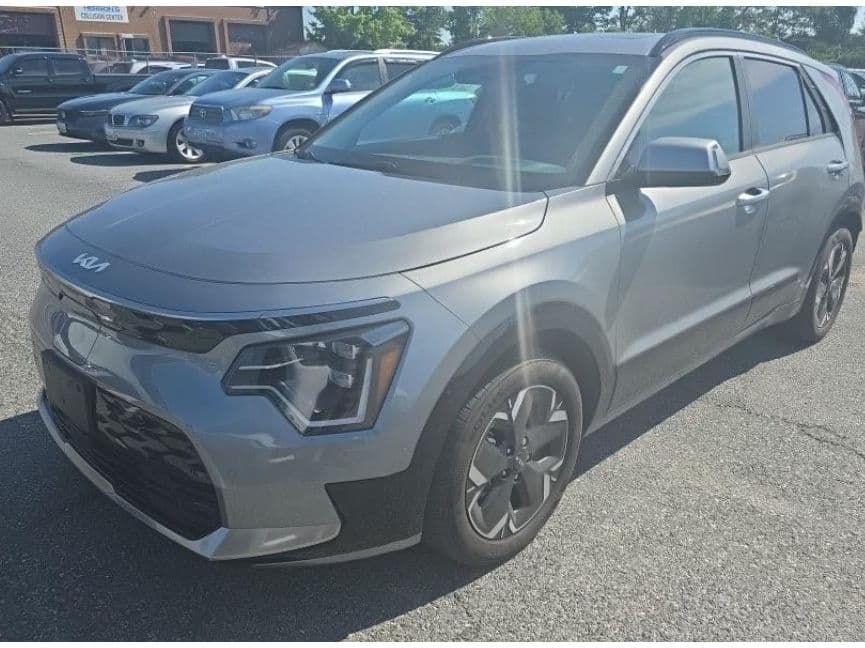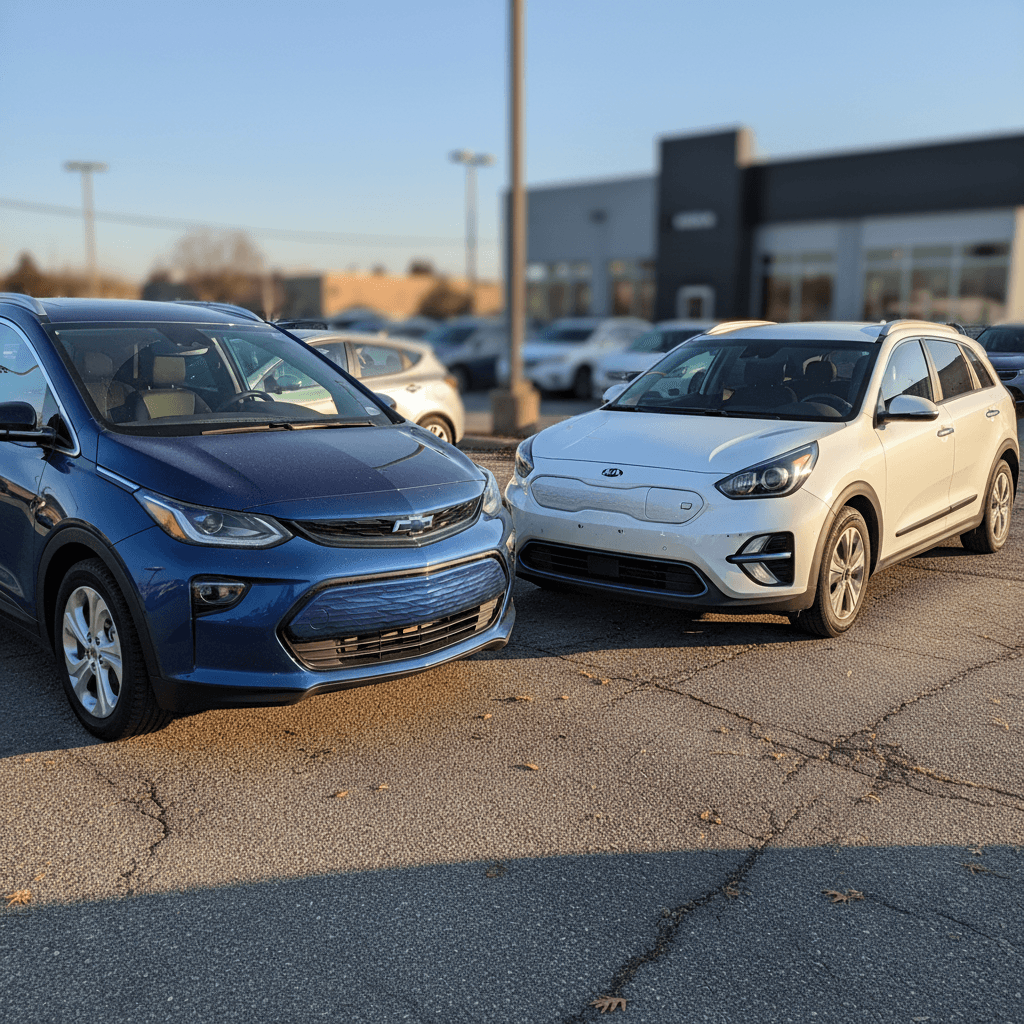
If you’re shopping for a used electric crossover in 2026, a used Chevrolet Bolt EUV vs Kia Niro EV comparison is a natural place to start. Both are compact, practical EVs with real‑world range, hatchback utility and far more approachable prices now that early‑EV hype has cooled. But they don’t fit the same needs, and the details around range, charging, recalls and depreciation matter a lot when you’re buying used.
Scope of this comparison
Overview: Bolt EUV vs Niro EV in the 2026 used market
Used Chevrolet Bolt EUV
- Model years: 2022–2023 (BEV2 platform)
- EPA range: ~247 miles
- Battery: ~65 kWh pack; subject to earlier Bolt recall history but newer packs and long warranties on replacements
- Body style: Subcompact crossover with a tall hatchback profile
- Key strengths: Excellent efficiency, value pricing, Super Cruise availability, compact size for city use
- Key watch‑outs: DC fast‑charging speed is modest, earlier Bolt family recall history means you want documentation, rear seat is only "okay" for adults
Kia Niro EV (2nd gen)
- Model years: 2023–2025 in current generation
- EPA range: about 253 miles for U.S. versions with 64.8 kWh battery
- Battery: 64.8 kWh pack, heat pump available, good cold‑weather tuning
- Body style: Compact crossover with slightly more family‑friendly footprint
- Key strengths: Roomier cabin, slightly more range, more conventional styling, long factory warranty
- Key watch‑outs: DC fast‑charging tops out around 85 kW, resale has been soft, and 2023–2025 Niro models are covered by a wiring‑related airbag recall you should verify has been done.
Quick rule of thumb
Key specs cheat sheet: range, charging, space
Chevy Bolt EUV vs Kia Niro EV: headline specs
Approximate specs for the most common U.S. variants you’ll see used in 2026. Always verify individual vehicle equipment and ratings.
| Spec | Used Chevy Bolt EUV (2022–2023) | Kia Niro EV (2023–2025) |
|---|---|---|
| Battery capacity (gross/usable) | ~65 kWh | 64.8 kWh |
| EPA range (official) | 247 miles | 253 miles |
| Real‑world mixed range | ~210–240 mi depending on conditions | ~210–240 mi depending on conditions |
| Max DC fast‑charge power | about 55 kW | up to ~85 kW |
| DC charge 10–80% (ideal conditions) | ~45–60 minutes | ~45 minutes on a strong DC charger |
| Onboard AC charger | 11 kW | ~11 kW |
| Drivetrain | FWD, single motor | FWD, single motor |
| 0–60 mph (approx.) | ~7.0–7.5 sec | ~7.5 sec |
| Cargo space (rear seats up) | Roughly mid‑teens cu ft, generous in practice | Competitive compact‑SUV cargo area |
| Seats | 5 | 5 |
EPA ratings and manufacturer specs vary slightly by model year and trim; use this as a directional starting point.
Efficiency and range at a glance
Driving experience and comfort
Bolt EUV: Nimble and efficient, but still a subcompact
The Chevy Bolt EUV feels like an eager hatchback that’s been given a slightly taller stance. Steering is light but accurate, and the instant torque makes city traffic easy. One‑pedal driving is well tuned, and the car’s tight footprint is great if you parallel park or deal with cramped urban garages.
The tradeoff is pure space. Taller adults in the back will notice the subcompact roots, and while cargo is better than the spec sheet suggests, it isn’t as flexible as a true compact SUV. Ride quality is acceptable but can feel busy on rough pavement, especially on the larger wheels found on some trims.
Niro EV: More grown‑up crossover feel
The Kia Niro EV leans more toward traditional compact‑SUV manners. The seating position is a bit higher, rear doors open wider, and the cabin feels airier, especially with lighter interior colors. Families will appreciate the extra shoulder room and easier child‑seat installation.
On the road, the Niro is tuned for comfort more than sport. It’s quiet, with a slightly softer ride than the Bolt EUV and a calmer highway demeanor. You don’t get hot‑rod performance, but for commuting and family duty, it feels more like a “normal car” that just happens to be electric.
Comfort verdict
Range and real‑world efficiency
On paper, the Kia Niro EV has a slight range edge over the Bolt EUV: about 253 miles vs 247 miles of EPA rated range for typical U.S. trims with roughly similar battery capacity. In real‑world driving, though, the gap is small enough that daily experience matters more than the spec sheet.
- In mild weather at mixed speeds, both cars commonly deliver in the 3.5–4.0 mi/kWh range, translating to roughly 210–240 miles between charges if you’re not pushing to 0%.
- The Niro’s available heat pump and battery conditioning can help preserve range in cold climates, especially if you precondition while plugged in.
- The Bolt EUV’s efficiency shines in city and suburban use; if you mostly drive under 55 mph, it can feel like it has more range than the number suggests.
Cold‑weather reality check
Charging speed and road‑trip viability
Both the used Bolt EUV and Niro EV can absolutely road‑trip, but neither was designed around ultra‑fast 250+ kW charging. If you’re used to modern 800‑volt EVs, you’ll need to adjust expectations. Understanding how each one charges is critical if you plan frequent highway travel.
How the Bolt EUV and Niro EV charge in the real world
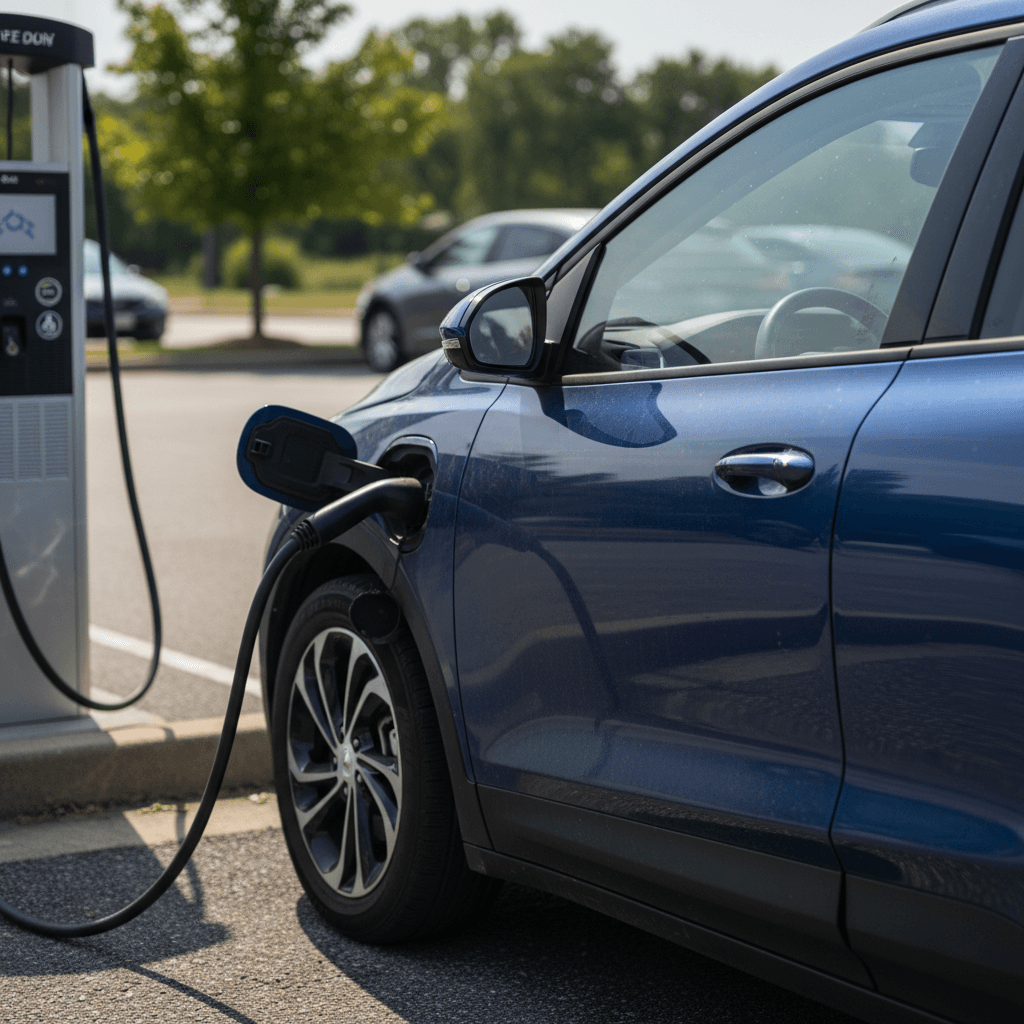
Home charging is easy on both; DC fast charging is where they differ most from newer EVs.
Home & workplace charging
- Both offer ~11 kW onboard AC charging, which means a full battery overnight on a 48‑amp Level 2 wall box.
- If you park at home and plug in most nights, either car will feel effortless for daily use.
- On 120V Level 1, expect very slow charging; plan for 240V if you can.
DC fast charging & road trips
- Bolt EUV: Tops out around the mid‑50 kW range on DC. That’s fine for adding ~100 miles during a coffee stop, but long drives require patience.
- Niro EV: Can reach around 80–85 kW peak on a strong charger and hold more power in the mid‑state‑of‑charge band.
- On paper the Niro EV is a bit better for road trips, but real‑world speeds still lag behind the latest EVs, charging strategy matters more than raw peak kW.
Plan around 20–80%
Reliability, battery health and recalls
Used EVs rise or fall on two things: battery health and recall history. Here, the Bolt EUV and Niro EV have very different stories, and it’s important to understand them before you commit.
Bolt EUV: Post‑recall era, but history matters
The broader Bolt family (Bolt EV and EUV) was at the center of a widely publicized battery‑fire recall earlier in the 2020s. By 2022–2023, GM was shipping vehicles with updated LG battery packs, and earlier cars received full pack replacements under warranty.
For a used 2022–2023 Bolt EUV, you want to verify two things:
- That all recall work is complete, with documentation.
- How many DC fast‑charge sessions and miles the car has seen, which can influence long‑term degradation.
On the upside, many replaced packs carry a fresh 8‑year/100,000‑mile battery warranty from the date of replacement, giving used buyers a longer protection window than you might expect.
Niro EV: Younger fleet, but emerging recalls
The second‑generation Niro EV (launched for 2023 in the U.S.) doesn’t have the same high‑profile battery‑fire history as the early Bolts. However, Kia announced a recall in 2025 for 2023–2025 Niro models (HEV, PHEV and EV) related to wiring beneath the passenger seat that can affect airbag and seat‑belt operation. Dealers inspect and reroute or replace wiring and add protective covers.
When shopping used, confirm that this wiring/airbag recall has been performed and documented. Otherwise, the Niro EV’s reputation so far is of solid day‑to‑day reliability, backed by Kia’s long powertrain and battery warranties.
Don’t skip a battery‑focused inspection
Depreciation, pricing and total cost in 2026
The used EV market in 2026 looks very different from the frenzy of 2021–2022. Newer, longer‑range models (including from Kia and GM themselves) and shifting federal incentives have pushed prices down, creating real bargains, but also confusing pricing signals, for both the Bolt EUV and Niro EV.
How value stacks up: Bolt EUV vs Niro EV
Exact numbers vary by trim, mileage and market, but the patterns are consistent.
Used Chevy Bolt EUV value profile
- Production for this generation ended after 2023, and GM positioned the Bolt family as an affordable EV, new and used.
- That, plus the recall history stigma, means used prices are often surprisingly low for the capability you get.
- For budget‑focused buyers, especially those who don’t road‑trip much, the Bolt EUV is one of the best cost‑per‑mile EVs you can buy.
Used Kia Niro EV depreciation
- The Niro EV launched with higher MSRPs and has seen steeper early‑years depreciation than many hybrids and trucks.
- By 2026, three‑year‑old Niro EVs can often be found far below original sticker, particularly as Kia’s own EV3/EV6 soak up attention.
- That’s bad news for first owners, but great news if you’re buying a 3–5 year old Niro EV today.
Operating costs: mostly a wash
Tech, safety and driver assistance
Neither the Bolt EUV nor the Niro EV is a luxury tech showcase, but both deliver the core safety and convenience features most shoppers want, and each has a couple of distinctive tricks.
Bolt EUV tech highlights
- Super Cruise (on some trims): Hands‑free highway driving on compatible roads, still a standout feature in this price range.
- Digital cluster and a central touchscreen with smartphone integration (Apple CarPlay/Android Auto).
- Standard advanced safety suite including automatic emergency braking and lane‑keeping assist on most trims.
- Interior design is functional more than flashy, but easy to use once you live with it.
Niro EV tech highlights
- Modern, curved display layout on higher trims, with Kia’s current‑gen infotainment UI.
- Available highway drive assist, adaptive cruise control, and a broad suite of driver aids.
- Strong feature content on many used examples: heated seats, ventilated seats, heat pump, power tailgate depending on trim.
- A mix of touch and capacitive controls; some people love the sleek look, others prefer the simplicity of physical buttons.
Check exact trim and options
Which used EV fits which type of driver?
Buyer profiles: Bolt EUV vs Niro EV
Urban commuter or first‑time EV buyer
Short to moderate daily mileage, home or workplace Level 2 charging.
Wants to minimize purchase price and monthly payment.
Occasional highway trips but not constant road‑trips.
<strong>Best fit:</strong> Usually the Bolt EUV, thanks to low prices and excellent efficiency.
Small family or rideshare driver
Regularly uses rear seats and cargo area for passengers or kids.
Values easy rear‑door access and more space behind the front seats.
Wants a familiar crossover feel for passengers.
<strong>Best fit:</strong> Kia Niro EV, which feels more like a traditional compact SUV.
Cold‑climate driver
Lives in a region with long, cold winters.
Wants features like a heat pump and battery heater.
Prioritizes range retention in bad weather over maximum efficiency in mild weather.
<strong>Best fit:</strong> Light edge to the Niro EV, especially if equipped with the cold‑weather package.
Highway commuter / light road‑tripper
Drives long highway stretches regularly, maybe 150–250 miles in a day.
Can plan around DC fast‑charging but doesn’t want to spend all day at chargers.
Open to rethinking routes around charging networks.
<strong>Best fit:</strong> Slight lean toward the Niro EV for its higher DC peak, but either can work if you keep expectations realistic.
Used EV shopping checklist specific to Bolt EUV and Niro EV
1. Pull full recall histories
Run the VIN for each candidate and confirm all relevant recalls are complete, especially the Bolt family battery campaign and the Niro EV’s 2023–2025 passenger‑seat wiring recall.
2. Get a real battery health reading
Ask for a state‑of‑health (SoH) report rather than relying on the dash guess‑o‑meter. On Recharged, this is included in the <strong>Recharged Score</strong> for every vehicle.
3. Ask about DC fast‑charge use
Light DC use is fine, but a car that’s lived on highway fast‑charging might show more battery wear. It’s not a deal breaker, but it should be reflected in price.
4. Verify charging equipment
Confirm the car comes with the correct Level 1 or Level 2 portable EVSE, and budget for a home wall box if you don’t already have one.
5. Test your daily route mentally
Map your typical week: commute, errands, weekend trips. See how often each car would actually need public charging. Many buyers discover both models provide ample cushion.
6. Compare total cost, not just sticker
Include sales tax, registration, insurance quotes and any local used‑EV incentives. A slightly higher purchase price Niro EV may make sense if it saves you money elsewhere, or vice versa.
How Recharged helps you compare and buy confidently
Cross‑shopping a used Chevrolet Bolt EUV vs Kia Niro EV is exactly the kind of problem Recharged was built to solve. Instead of bouncing between dealer sites and classifieds with incomplete information, you get a consistent, EV‑specific view of every car you’re considering.
Why shop Bolt EUVs and Niro EVs on Recharged?
Transparent battery data and expert guidance are especially valuable with these two models.
Recharged Score battery health
Recall & condition transparency
Financing, trade‑in and delivery
Ready to find your next EV?
Browse VehiclesFAQ: Used Bolt EUV vs Kia Niro EV
Frequently asked questions
Bottom line: Should you pick the Bolt EUV or Niro EV?
If your priority is maximizing value and efficiency for mostly local driving, a well‑vetted used Chevrolet Bolt EUV is hard to beat in 2026. Its pricing, compact footprint and mature EV drivetrain make it a compelling choice, provided you verify recall work and battery health. If you want a roomier, more conventional crossover with a slight edge in range, DC charging and family friendliness, a used Kia Niro EV from the 2023–2025 generation is more likely to keep everyone happy on the daily grind.
Either way, your decision shouldn’t come down to guessing. With Recharged, you can compare used Bolt EUVs and Niro EVs side by side, see objective battery‑health data, confirm recall status, line up financing or a trade‑in, and even have the car delivered to your driveway. That’s how a used EV purchase in 2026 should work: transparent, data‑driven, and tailored to how you actually drive.