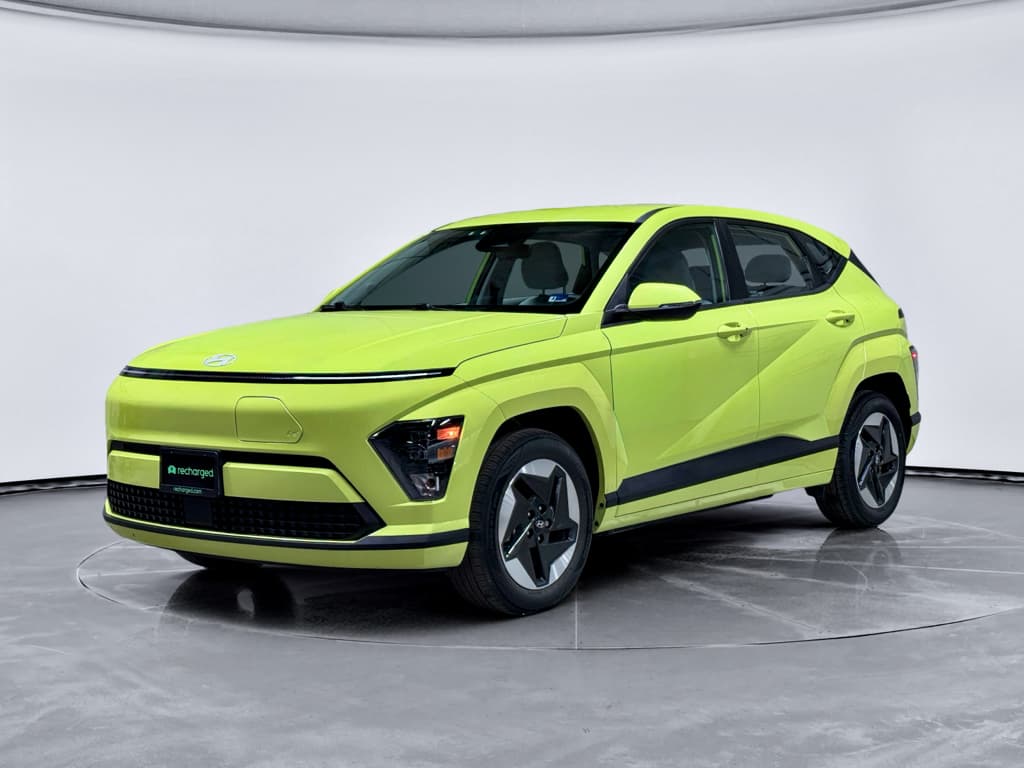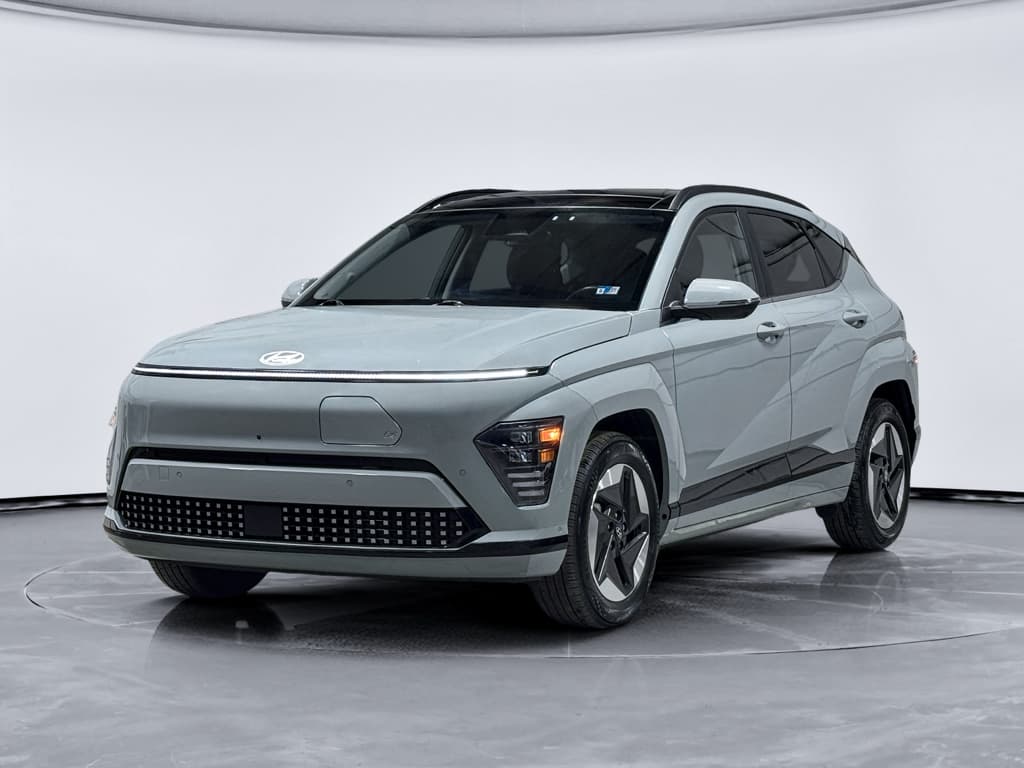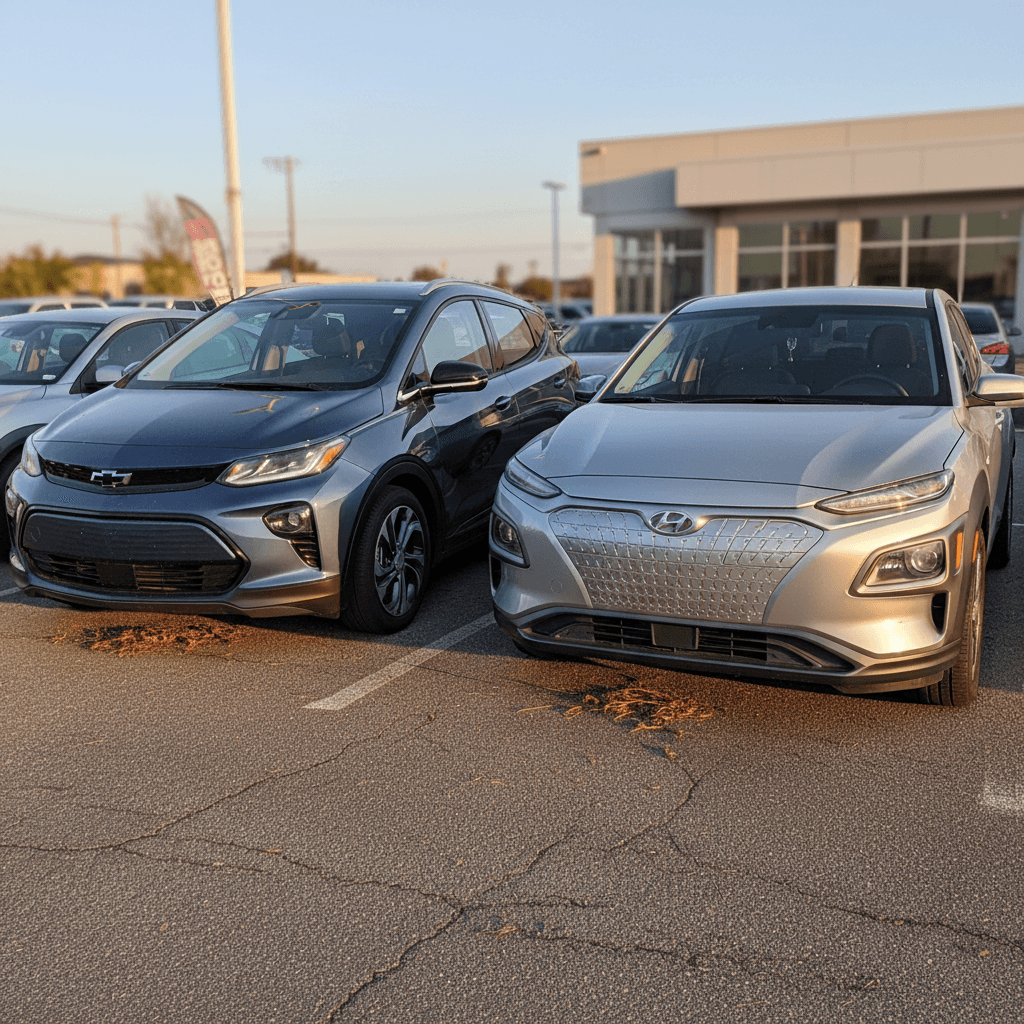
If you’re shopping for a small used electric SUV in 2026, the **Chevrolet Bolt EUV** and **Hyundai Kona Electric** will pop up again and again. Both are compact, efficient, and relatively affordable – but the details around range, charging, space, and long‑term battery health make them feel very different to live with day to day.
Model years covered here
Why this used EV comparison matters in 2026
Back in 2020, small EV crossovers were rare and expensive. By **2026**, you’ve got a lot more choice – but that also means more confusion. The Bolt EUV and Kona Electric sit in a sweet spot: they’re cheaper than newer long‑range crossovers yet offer enough range for most daily driving and even the occasional road trip, if you understand their charging quirks.
- Both deliver roughly **240–260 miles of real‑world range** when new, depending on wheels, climate, and driving style.
- DC fast charging on both is **"good enough" rather than great** – fine for occasional road trips, not ideal if you fast‑charge constantly.
- As of 2026, both are among the **best value used EVs** in the U.S., especially as federal and state incentives tilt demand toward newer models.
- Battery recalls, software updates, and warranty terms differ – and on the used market, those details matter more than the brochure specs.
Quick verdict if you’re in a hurry
Bolt EUV vs Kona Electric at a glance
Core specs: used Chevy Bolt EUV vs Hyundai Kona Electric
Key specs for common U.S. used‑market trims as they were sold new.
| Spec | Chevy Bolt EUV (2022–2023) | Hyundai Kona Electric (2019–2023, 64 kWh) |
|---|---|---|
| Battery capacity (usable) | ~65 kWh | ~64 kWh |
| EPA range (most trims) | 247 mi | 258 mi |
| Typical highway real‑world range | 200–220 mi | 210–230 mi |
| DC fast‑charge peak | ~55 kW CCS | ~70–77 kW CCS (on 100 kW+ charger) |
| 10–80% DC charge time (ideal conditions) | ~45–60 min | ~40–45 min |
| Onboard AC charger | 11.5 kW (2022–23) | Up to 11 kW (most trims) |
| Drive layout | FWD | FWD |
| Horsepower | 200 hp | 201 hp |
| Seating | 5 | 5 |
| Cargo behind 2nd row | ~16.3 cu ft | ~19.2 cu ft |
Figures are approximate EPA ratings for U.S. models when new. Real‑world range will vary with age, climate, and driving style.
Specs vs used reality
Why these two dominate the 2026 used‑EV value conversation
Range and efficiency: commuter-friendly champs
For most used‑EV shoppers, **range anxiety** is still the first concern. The good news is that both the Bolt EUV and Kona Electric punch above their weight in efficiency, which is why they’ve stuck around in so many “most efficient EVs” lists through 2025 and into 2026.
Range and efficiency: how they differ in the real world
On paper they’re close, but small differences may matter to you.
Chevy Bolt EUV range profile
- EPA: ~247 miles on a full charge for 2022–2023 models.
- Real‑world highway at 70 mph: often 200–215 miles when new.
- Excellent city and suburban efficiency; owners frequently see **4.0+ mi/kWh** in mixed driving.
- Slightly taller and boxier than the Bolt EV, which trims range a bit vs the hatchback but still keeps energy use low.
Hyundai Kona Electric range profile
- EPA: ~258 miles for most 64 kWh first‑gen U.S. models.
- Real‑world highway: more like 210–230 miles in fair conditions.
- Frequently tests at or above **4.2–4.3 mi/kWh**, making it one of the most efficient EVs on sale, even in 2025.
- Smaller frontal area and slippery shape help squeeze more miles from a similar‑size pack.
Range takeaway
Charging performance on road trips
Charging is where these two small crossovers diverge more clearly. Both are **fine for occasional road trips**, but neither is in the same league as newer 800‑volt EVs when it comes to minimizing time spent at fast chargers.
Chevy Bolt EUV charging behavior
- Uses CCS1 for DC fast charging; peak power is around 55 kW on a capable station.
- From ~10% to 80%, you’ll usually see 45–60 minutes in good conditions.
- The charging curve is fairly flat but modest – great for battery longevity, less great when you’re staring at a charger on a 400‑mile day.
- Level 2 at home: up to **11.5 kW** on 2022–23 models, which means a near‑empty‑to‑full charge overnight on a 48‑amp home station.
Hyundai Kona Electric charging behavior
- Also CCS1; can hit roughly 70–77 kW peak on a 100 kW+ DC fast charger in ideal conditions.
- Common guidance is roughly 10–80% in ~40–45 minutes, shaving a few precious minutes off each stop compared with the Bolt EUV.
- Charging curve is more aggressive early, then tapers; planning around 10–80% windows works well.
- Level 2: an **11 kW onboard charger** on most trims makes overnight charging similarly painless if you have a 240V circuit.
Planning trips with modest fast‑charging EVs
Space, comfort, and tech feel
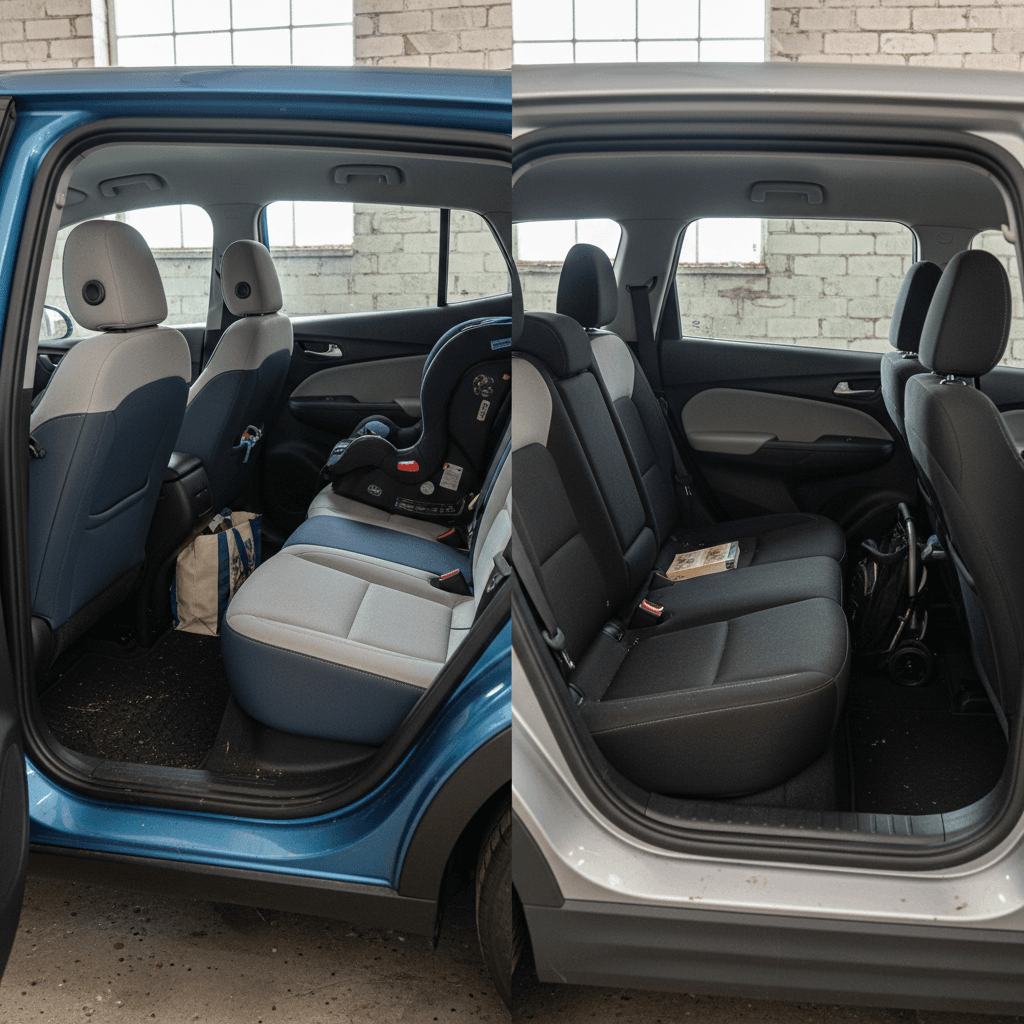
On paper, these are both “sub‑compact crossovers.” In practice, they feel quite different inside. The Bolt EUV leans into a tall‑hatch vibe with excellent rear legroom, while the Kona Electric feels more like a conventional small crossover with a bit more cargo flexibility.
Interior space and comfort: where they diverge most
Think about who you carry and how often before you decide.
Chevy Bolt EUV: surprisingly adult‑friendly
- Stretched wheelbase vs the Bolt EV gives **much better rear legroom** – adults fit behind adults without negotiation.
- Front seats are a known pain point for some: earlier Bolts had narrow, firm seats; the EUV improves them but they’re still not universally loved.
- Cargo: ~16 cu ft behind the second row – fine for grocery runs and carry‑on luggage, tighter for strollers or big dogs.
- Cabin materials are straightforward but functional; the big central screen and clear UI help it feel modern enough in 2026, if not flashy.
Hyundai Kona Electric: more cargo, tighter back seat
- Rear legroom is **tighter**; taller adults will notice on longer rides.
- Cargo: ~19 cu ft behind the second row and more depth when you fold seats, making it the better choice for bulky stuff.
- Ride quality tends to be firmer; some drivers like the more “European” feel, others find it busy on broken pavement.
- Interior design and ergonomics are classic Hyundai: lots of physical buttons, straightforward climate controls, and generally comfortable seats.
Parking and maneuverability
Battery health and long-term durability
On a used EV, the single most important “hidden spec” is **battery health**. Both the Bolt EUV and Kona Electric use liquid‑cooled packs and have proven to be efficient and resilient in daily use, but each has its own history and quirks you should understand.
Chevy Bolt EUV battery story
- Shares the broader **Bolt battery recall heritage**, though most EUVs were built after the peak of the recall saga.
- Many packs have had **modules or full packs replaced under GM’s battery recall programs**, which can be a plus if verified.
- DC fast‑charge rates are modest, which can be gentler on cells over the long run.
- Warranty when new: typically **8 years / 100,000 miles** on the high‑voltage battery (verify exact terms by VIN).
- The catch: used shoppers need to confirm **recall completion, software updates, and true state‑of‑health (SoH)** rather than assuming every Bolt‑family car is identical.
Hyundai Kona Electric battery story
- Also went through a **global battery recall** affecting certain early‑build cars; many U.S. vehicles received new or reworked packs.
- Generally excellent efficiency suggests a well‑engineered powertrain; many owners report **low degradation** when charged primarily on Level 2.
- As with the Bolt, documentation matters: recall work and pack replacements should be visible in service records.
- Hyundai’s usual EV battery warranty is **10 years / 100,000 miles** on the traction battery for original owners; coverage may differ for second owners depending on state and model year.
Don’t buy blind on battery condition
Used‑EV battery health checklist for Bolt EUV and Kona Electric
1. Verify all recalls and software campaigns
Ask for documentation (or run a VIN check) to confirm that battery recalls and key software updates have been completed. This is especially important for early‑build Konas and any Bolt‑family vehicle.
2. Get an actual state‑of‑health (SoH) reading
A proper scan or diagnostic report can estimate remaining usable capacity. A **Recharged Score** report, for example, uses data‑driven diagnostics rather than guesswork from the trip computer.
3. Compare rated vs observed range
On a full charge at 100%, compare what the car estimates vs what the original EPA rating was. A gap of a few percent is normal; larger gaps deserve deeper investigation.
4. Ask about fast‑charging habits
An owner who DC fast‑charged daily from 5% to 100% will usually see more wear than one who mostly charged to 70–80% on Level 2. You don’t need a perfect history, but patterns matter.
5. Inspect tires and alignment
Odd tire wear or cheap, mismatched tires can hint at alignment issues or abuse, which indirectly affect efficiency and range estimates.
Used pricing and total cost in 2026
By **April 2026**, used EV pricing is a moving target, influenced by new‑EV incentives, regional demand, and charging‑network rollout. Still, a few patterns are clear when you shop Bolt EUVs and Kona Electrics side by side.
Typical 2026 U.S. used‑market pricing bands
Approximate retail asking‑price ranges for clean‑title, average‑mileage vehicles sold by dealers or EV specialists.
| Model & years | Approx. mileage range | Typical asking range (USD) | Notes |
|---|---|---|---|
| 2022–2023 Chevy Bolt EUV | 15k–50k miles | $16,000–$23,000 | Often undercuts Kona Electric; value improves further if battery pack was recently replaced under warranty. |
| 2019–2021 Hyundai Kona Electric (64 kWh) | 25k–70k miles | $15,000–$21,000 | Early years can be very attractively priced but watch for recall status and older infotainment tech. |
| 2022–2023 Hyundai Kona Electric (64 kWh) | 10k–45k miles | $19,000–$25,000 | Newer software, fresher packs, and remaining warranty often command a premium over Bolt EUV. |
Actual pricing will vary with mileage, condition, options, and regional incentives. Use these as directional bands, not hard rules.
What tends to be cheaper?
Other ownership‑cost factors to weigh
It’s not just the sticker price that matters.
Insurance
Rates vary by state, but both tend to be modestly priced compared with luxury EVs. The Kona’s higher original MSRP and some repair‑cost assumptions can push its premiums slightly higher in certain ZIP codes.
Maintenance
Both are simple, front‑drive EVs with few wear items beyond tires, wipers, and brake fluid. Expect low routine maintenance costs; focus on tire quality and alignment to protect range and ride.
Home charging costs
Because both are very efficient, your electricity bill for 10,000 miles per year is often **well under $500** in many U.S. markets, assuming off‑peak rates. Efficiency differences between the two will be drowned out by local kWh pricing.
Which used EV fits which type of driver?
Match the car to your driving pattern
Urban and suburban commuter
You drive **20–60 miles per day** with occasional weekend trips.
You value easy parking and nimble handling.
Both cars work, but the **Bolt EUV’s compact footprint** and strong efficiency make it a great fit.
Buy on price, condition, and battery health; the small range differences won’t matter much.
Frequent highway traveler (200–300 mile days)
You take regular regional trips and care about total travel time.
Fast‑charging curve matters more than absolute EPA range.
The **Kona Electric’s higher DC peak and shorter 10–80% times** make it the smarter choice here.
If you pick a Bolt EUV instead, plan for slightly longer stops and more conservative route planning.
Small family with car seats
You regularly carry kids and gear, sometimes with another adult in back.
Rear‑seat space and comfort are more important than outright cargo volume.
The **Bolt EUV’s better rear legroom** often wins here, especially for rear‑facing seats or tall front‑seat occupants.
If your cargo demands are heavier (strollers, camping gear), the Kona’s extra trunk depth still has appeal.
Budget‑maximizer chasing value
Your priority is the **lowest cost per mile** from a reputable, safe EV.
You’re willing to drive an "older"‑feeling interior if it saves thousands.
Well‑vetted Bolt EUVs with good battery health often deliver the **best mix of price, range, and efficiency** in 2026.
That said, a high‑mileage Kona with a fresh recall‑replacement pack can be an equally compelling deal.
Simple rule of thumb
How Recharged helps you shop these used EVs
With any used EV – and especially with models that have a recall history – the difference between a bargain and a headache is **transparent data**. That’s where a specialist marketplace like Recharged can tilt the odds in your favor.
Why shop used Bolt EUVs and Konas through Recharged
Built to make used EV ownership simple and transparent.
Recharged Score battery diagnostics
Every vehicle on Recharged includes a **Recharged Score Report** with verified battery health. Instead of guessing from the dash, you see data‑driven estimates of remaining capacity and range, plus how that compares with similar vehicles.
Pricing that tracks the real market
Recharged benchmarks each listing against current used‑EV trends so you’re looking at **fair, market‑aligned pricing**, not just a dealer’s wishful thinking. That’s especially helpful when comparing a cheaper Bolt EUV to a slightly pricier Kona Electric.
End‑to‑end EV‑specialist support
From trade‑in or instant offer to financing and **nationwide delivery**, Recharged’s EV‑savvy team can walk you through questions like, “Is this recall done?” or “How does this battery’s health compare to average for its age?”
Ready to find your next EV?
Browse VehiclesDigital buying, real‑world reassurance
FAQ: used Chevy Bolt EUV vs Hyundai Kona Electric
Frequently asked questions
Bottom line: Bolt EUV or Kona Electric?
If you strip away the marketing language, the **used Chevy Bolt EUV and Hyundai Kona Electric are both efficient, sensible, compact EVs** that happen to make slightly different tradeoffs. The Kona Electric rewards you with marginally better highway charging performance and cargo volume, plus a reputation for standout efficiency. The Bolt EUV counters with more usable rear‑seat space, city‑friendly maneuverability, and, in many markets, a **more attractive purchase price** for similar range.
Your choice should come down to how you drive and which specific used example you’re evaluating. A **Kona Electric with a fresh recall‑replacement pack and strong battery health** can absolutely justify costing more than a tired Bolt EUV – and vice versa. That’s why, in 2026, the smart move isn’t to chase the “perfect” spec sheet, but to insist on **transparent battery diagnostics, verified recall history, and market‑aligned pricing**.
Shop that way – ideally through an EV‑focused platform like **Recharged**, with tools like the **Recharged Score Report**, EV‑savvy support, financing, trade‑in options, and nationwide delivery – and either the **Bolt EUV** or **Kona Electric** can be a quietly excellent used EV that fits your life rather than your anxiety.