If you’re searching for “used batteries near me”, you’re probably trying to save money, keep something running a little longer, or do the right thing and avoid tossing a heavy, toxic battery in the trash. The catch is that batteries are one place where the wrong bargain can be unsafe, illegal, or just a flat‑out waste of cash. This guide walks you through when it makes sense to buy used, how to sell or recycle what you have, and what to know about EV packs, hybrid batteries, and everyday 12‑volt car batteries.
Quick takeaway
Why people search for “used batteries near me”
Three common reasons you’re hunting for used batteries
Each calls for a different strategy and safety level
Your gas car’s 12‑volt battery died
You just need the car to start without spending top dollar.
- Used or refurbished can work if it’s tested.
- Local parts stores and salvage yards are your best bet.
You have a hybrid or EV with a battery issue
Now you’re looking at high‑voltage packs worth thousands of dollars.
- Used modules and packs can be dangerous if mishandled.
- This is usually a job for specialists, not DIY.
You just want to get rid of an old battery
The battery might be junk, but it still has value.
- Most stores pay a core or recycling credit.
- Dropping it at a landfill is illegal in many states.
Before you start calling every listing that promises “cheap used batteries near me,” it pays to know which type of battery you’re dealing with. The rules are very different for a 12‑volt lead‑acid car battery versus a 400‑volt EV pack under the floor of a crossover.
Types of used batteries, and which ones you should actually buy
Common vehicle battery types and used‑buying advice
Not all used batteries are created equal. Here’s how they stack up for the typical driver in the U.S.
| Battery type | Where you see it | Good used purchase? | Who should handle it |
|---|---|---|---|
| 12‑volt lead‑acid | Gas, hybrid, and EV accessory systems | Sometimes, if tested and warrantied | DIY possible, or any repair shop |
| Hybrid traction battery | Toyota Prius, Ford Escape Hybrid, etc. | Only via specialist shop, not classifieds | Hybrid battery specialist or dealer |
| EV traction pack | Battery‑electric vehicles (BEVs) | Generally no as a loose pack | OEM, certified EV shop, or recycler |
| 12‑volt AGM or deep‑cycle | Start‑stop vehicles, RVs, boats | Sometimes via marine/RV shops | DIY possible with proper handling |
Focus on safety, total cost, and who is doing the testing.
Rule of thumb
Where to find used 12‑volt car batteries near you
Let’s start with the simplest case: a conventional 12‑volt car battery. When you search for “used car battery near me”, what you usually find are refurbished or tested take‑out batteries. These are pulled from totaled vehicles or returned cores that still have life left in them.
- Local auto‑parts stores – Many chains test returned cores and sell the good ones as budget batteries with a short warranty.
- Independent mechanics – Some shops keep a rack of known‑good used batteries they’ve taken out during other repairs.
- Salvage and junk yards – You can pull a battery from a relatively new wreck, but you’ll likely get little or no warranty.
- Online classifieds and marketplaces – Use extreme caution; if it’s cash‑only, no testing, and no receipt, assume it’s scrap.
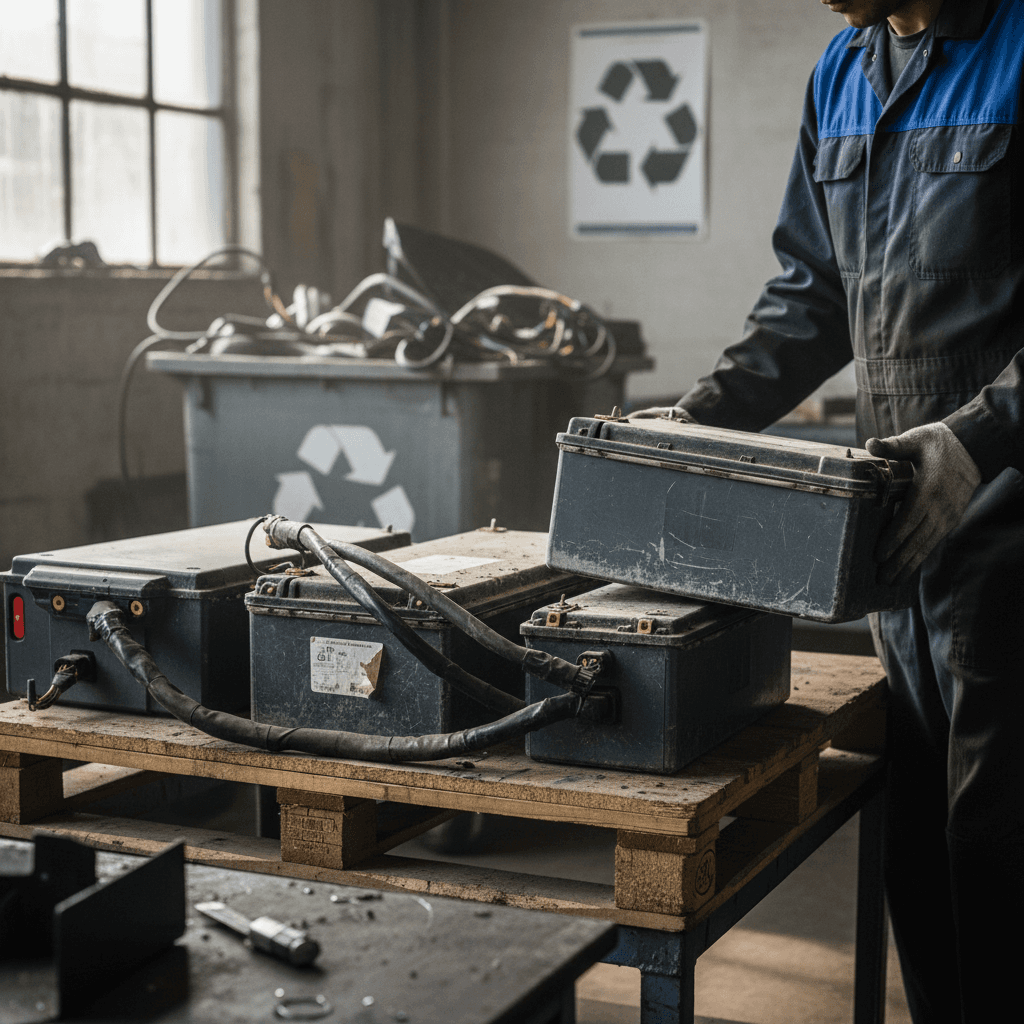
Watch for these red flags
Used EV battery packs: second life vs. scrap
With EVs, a search for “used EV battery near me” opens a very different conversation. Modern lithium‑ion packs are complex, high‑voltage systems that can still hold 50–80% of their capacity even when they’re no longer ideal for driving. In 2025, companies like Redwood Materials and other recyclers are taking in tens of thousands of packs each year, deciding which are safe for a second life in stationary energy storage and which should be shredded and recycled for raw materials.
The bigger picture for used EV batteries in 2025
A handful of specialized companies buy used EV packs, test every module, and either integrate them into industrial battery banks or send them straight to recycling. That’s not something a typical household can replicate in a garage. For most drivers, the smart move is to let professionals handle the pack and focus your money on the overall vehicle, not on sourcing a mystery pack on your own.
When a used EV pack can make sense
- You’re working with a reputable EV specialist who provides diagnostics and a written warranty.
- The pack’s history (mileage, age, prior repairs) is documented.
- You’re replacing like‑for‑like in a popular model with accessible service information.
When it’s safer to walk away
- The seller can’t provide state of health, only “it holds a charge.”
- You’re expected to install or ship a high‑voltage pack yourself.
- The price looks too good to be true and there’s no paperwork.
How to safely sell or trade in your old battery
Even if your battery is completely worn out, it still has value, either as a core (for lead‑acid) or as recyclable material (for EV and hybrid packs). Here’s how to turn that into money or at least free, legal disposal.
Best ways to get value from an old battery
From a dead 12‑volt to a tired EV pack
Core return at parts stores
When you buy a new 12‑volt battery, most U.S. retailers charge a core deposit. Bring back your old one and you get that deposit refunded.
Scrap yards & metal recyclers
Lead‑acid batteries are worth money as scrap. Legitimate yards will pay by weight and handle the hazardous materials correctly.
EV/hybrid specialists & dealers
High‑voltage packs should go through OEMs, certified EV repair shops, or recyclers. Many automakers partner directly with recyclers and will handle logistics if you replace the pack at a dealer.
Good news for EV owners
Pricing: what used batteries are really worth
The gap between what a used battery is worth as a working part and what it’s worth as scrap is huge. Understanding that gap helps you avoid overpaying for a “deal” and helps you negotiate fair value for the batteries you’re turning in.
Typical value ranges for used vehicle batteries (U.S., 2025)
These are ballpark figures; actual prices vary by region, metal prices, and brand.
| Battery type & condition | Where it’s sold | Typical value range | Notes |
|---|---|---|---|
| Dead 12‑volt lead‑acid | Core return at parts store | $10–$25 credit | You usually see this as a refunded core charge on your receipt. |
| Good used 12‑volt, tested | Independent shop or salvage yard | $40–$90 | Short warranty; make sure they’ve load‑tested it. |
| Hybrid battery modules (loose) | Online marketplace | Highly variable; often risky | Buyer beware, difficult to verify health and balance. |
| End‑of‑life EV pack | Recycling or OEM take‑back | Scrap value only, handled by specialist | Material value is significant, but rarely paid directly to individuals. |
| Healthy EV pack still in vehicle | As part of a used EV sale | Thousands of dollars in retained value | A strong battery health report supports a higher vehicle price. |
Always use current quotes from local shops and recyclers, metal markets move quickly.
Think in cost per year, not sticker price
Safety and legal risks with used batteries
Vehicle batteries pack a lot of energy and, in the case of lead‑acid units, toxic materials. States and the federal government treat them as hazardous waste when they’re not handled correctly. That’s why reputable outlets have you sign paperwork and why many states outright ban throwing them away with normal trash.
- Lead‑acid batteries – Contain lead and corrosive acid. If they crack or leak, you’re dealing with a serious environmental and health issue.
- EV and hybrid packs – High‑voltage systems can deliver a fatal shock or start a fire if they’re damaged, shorted, or opened by an untrained person.
- Shipping restrictions – Many carriers treat lithium‑ion batteries as hazardous materials; shipping a loose EV pack without proper handling can violate both carrier rules and federal regulations.
- Improper disposal penalties – Dumping batteries illegally can result in fines and cleanup liability. It’s not worth the risk.
Don’t DIY high‑voltage
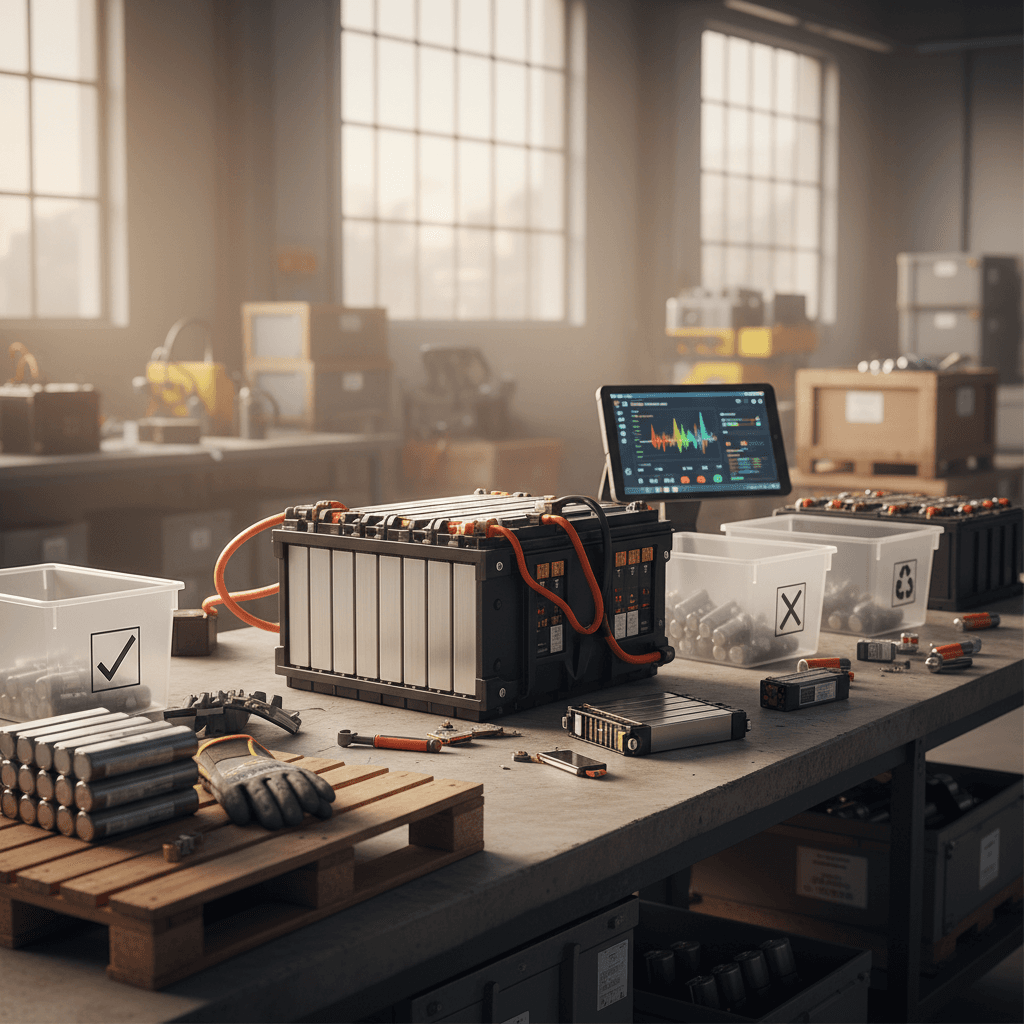
How EV and car-battery recycling actually works in 2025
Behind that simple “battery recycling” symbol on the parts‑store counter is a serious industrial process. On the 12‑volt side, the U.S. has had a well‑oiled loop for decades, lead‑acid batteries are among the most‑recycled consumer products. On the EV side, a newer generation of companies is scaling up facilities to process tens of thousands of tons of lithium‑ion packs.
Lead‑acid car batteries
- Batteries are collected via core returns and recycling centers.
- Specialized facilities break them down, separating plastic, lead, and acid.
- Recovered lead and plastic go right back into new batteries.
That’s why core credits exist: your “junk” battery is actually feedstock for the next one.
EV and hybrid packs
- Packs are discharged, opened by trained technicians or automated systems, and shredded or disassembled.
- Processes recover valuable materials like lithium, nickel, cobalt, and copper.
- Some intact modules with remaining life are diverted into second‑life storage before eventual recycling.
As EV adoption grows, this loop becomes a key source of critical battery materials in North America.
The most reliable money in a dead battery isn’t in the sticker price, it’s in the metals that can be used again.
Checklist before you buy any used battery
Quick checklist for evaluating a used battery
1. Confirm the exact type and size
Match group size, voltage, and technology (flooded, AGM, lithium) to your vehicle’s requirements. Your owner’s manual or under‑hood label will spell this out.
2. Ask for test results
For 12‑volt batteries, ask for a recent load test or printout. For EV or hybrid packs, state‑of‑health (SoH) and diagnostics should come from professional equipment, not guesses.
3. Inspect the case and terminals
Walk away from any battery with bulges, cracks, leaks, or heavily corroded posts. Cosmetic dirt is fine; structural damage is not.
4. Get a written warranty or return window
Even a 30–90 day limited warranty on a used 12‑volt battery is better than a handshake. For high‑voltage packs, insist on clear terms in writing from a specialist.
5. Factor in installation and towing
If the battery fails early, will you need a tow? Will you have to pay for installation twice? Add those potential costs to the equation before choosing a bargain.
6. Compare against the cost of a better vehicle
For older hybrids and EVs, a replacement pack can cost more than the vehicle is worth. Sometimes the smarter move is to upgrade to a newer, healthier used EV instead.
Common questions about “used batteries near me”
Frequently asked questions about used batteries
Should you buy a used EV instead of a used battery?
If your search for “used batteries near me” started with a dead starter battery in your driveway, a tested used 12‑volt unit from a reputable shop can be a practical, low‑risk fix. But once you’re talking about high‑voltage hybrid and EV packs, the equation changes. The technical risk, safety stakes, and shipping costs often make a loose used battery the wrong tool for the job.
In many cases, especially with older electrified vehicles, the smarter move is to step back and ask whether it’s time to upgrade the car instead of the battery. At Recharged, every used EV comes with a Recharged Score battery health report, transparent pricing, and EV‑specialist support so you know exactly what you’re getting before you sign anything. That way you’re investing in years of reliable driving, not gambling on the remaining life inside a mysterious used pack.