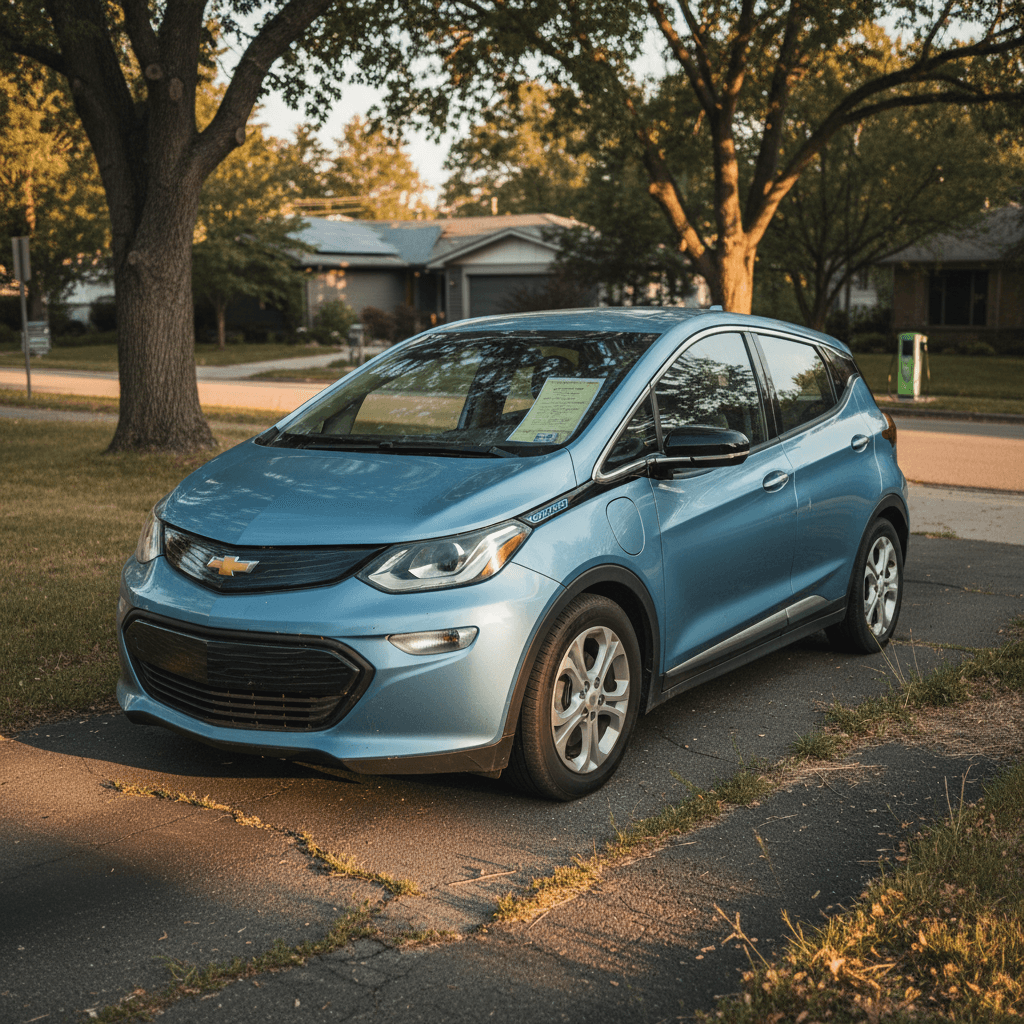
If you own a Chevrolet Bolt EV or you’re shopping used, the big question is simple: what is a Chevrolet Bolt EV worth after 3 years? Because EV pricing moves fast and incentives, recalls, and new models all ripple through the market, you can’t just guess based on old rules of thumb. You need to understand how the Bolt actually depreciates, how its battery holds up, and what a fair price looks like in 2026.
Context: 3 Years Means Different Model Years
Why 3‑Year Chevrolet Bolt EV Value Matters
Three years into ownership is when depreciation and battery health start to diverge from the new‑car sticker, but the car is still young enough to command serious money on the used market. If you’re an owner, this is often when you consider trading up, coming off a lease, or deciding whether to keep the car long‑term. If you’re a buyer, 3‑year‑old Bolts can be a sweet spot: most of the steep early depreciation has already happened, but you still get modern tech, fresh batteries, and a lot of warranty left.
Chevy Bolt EV Value Benchmarks Around Year 3
How Much Is a 3‑Year‑Old Chevy Bolt EV Worth Today?
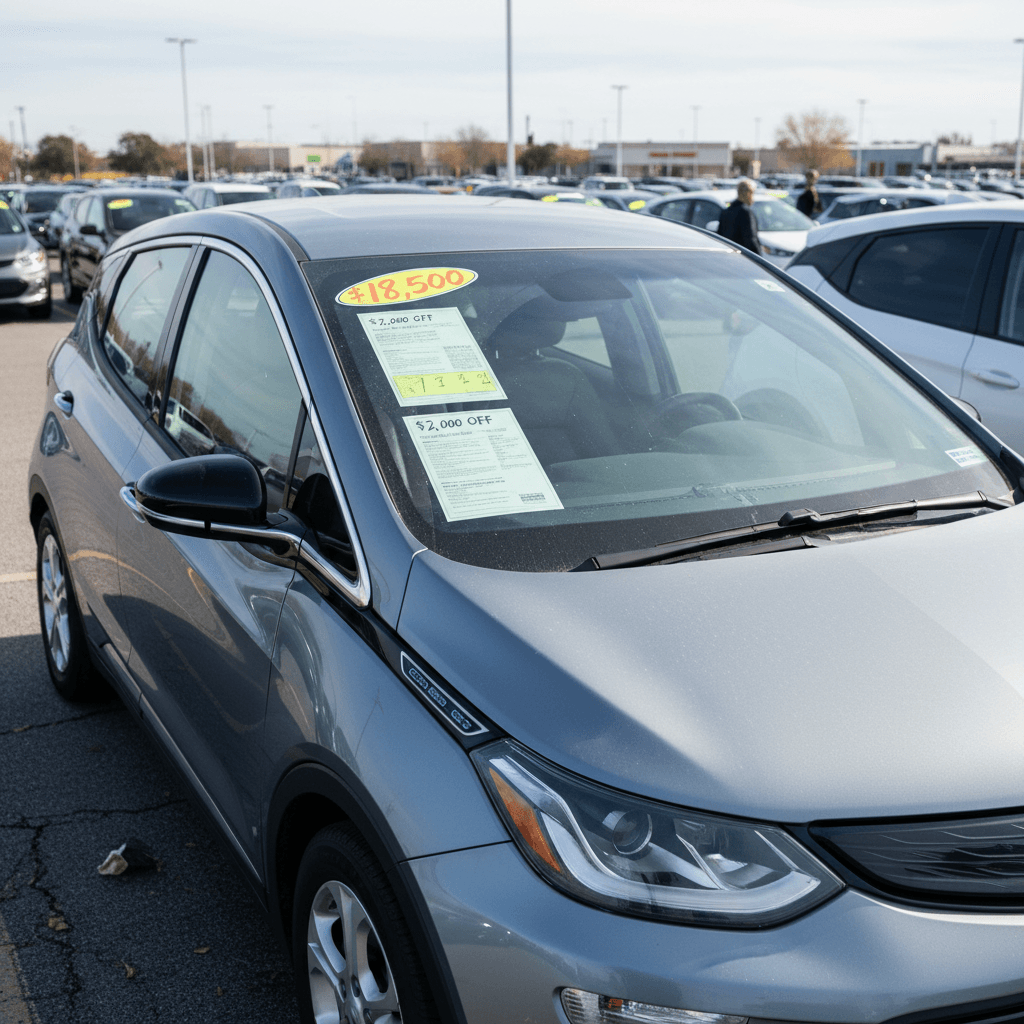
Let’s translate percentages into real numbers. By 3 years, many Chevrolet Bolt EVs have already taken roughly 45–55% depreciation from original MSRP, which is steeper than the average compact gasoline car over the same period. For mainstream EVs like the Bolt and Nissan Leaf, 3‑year depreciation closer to 50% is common, while premium models like a Tesla Model 3 tend to hold value better.
Approximate 3‑Year Chevrolet Bolt EV Values (Early 2026, U.S.)
Illustrative retail asking prices for common 3‑year‑old Bolt EV scenarios. Actual values depend on options, region, and condition.
| Model year (approx. 3 yrs old) | Typical miles | Original MSRP range* | Likely retail asking price | Rough depreciation |
|---|---|---|---|---|
| 2021 Bolt EV | 30k–45k | $36,000–$40,000 | $14,000–$18,000 | ≈50–60% from MSRP |
| 2022 Bolt EV | 25k–40k | $31,000–$34,000 (after Chevy price cuts) | $15,000–$19,000 | ≈40–50% from MSRP |
| 2023 Bolt EV/EUV | 20k–35k | $27,500–$33,000 (final‑year low pricing) | $17,000–$21,000 | ≈35–45% from MSRP |
These ranges assume clean titles, no major accidents, and dealer or well‑documented private sales.
Important Disclaimer on Pricing
One nuance with the Bolt: Chevrolet slashed new‑car MSRPs in 2022–2023. For those final‑year cars, used prices didn’t fall as far in dollars, but percentage depreciation looks different because the starting point was lower. That’s why a 2023 Bolt can sometimes be worth almost as much as a 2021, even though it’s newer.
What Drives Chevrolet Bolt EV Depreciation in the First 3 Years?
Key Drivers of 3‑Year Chevrolet Bolt EV Value
More than age: incentives, tech, and headlines all matter.
1. Original MSRP & Incentives
Bolts sold new with big discounts or tax credits tend to show steeper percentage depreciation even if the dollar drop is similar. A 2021 Bolt bought near MSRP will look like it lost more than a 2023 that started cheaper.
2. Miles and Use Pattern
A 3‑year‑old Bolt with 20,000 miles prices very differently from one with 60,000. Daily DC fast‑charging, rideshare use, and harsh climates can all push values down versus a gently‑driven commuter.
3. Brand Perception & Recalls
The Bolt’s LG battery recall and early fire headlines hurt resale in the short term, but many affected cars now carry brand‑new packs. Buyers who understand that nuance often see those cars as a value opportunity.
4. Tech & Safety Features
Features like DC fast‑charge capability, Driver Confidence packages, and newer infotainment help a 3‑year‑old Bolt compete with newer EVs. A bare‑bones base car won’t hold value as well as a well‑optioned one.
5. Gas Prices & Incentives
Higher gasoline prices or new EV incentives in your state can suddenly make a 3‑year‑old Bolt more desirable, supporting stronger pricing. The reverse is also true if gas gets cheaper or incentives shrink.
6. Competing EV Supply
A wave of discounted used Leafs, Kona EVs, or Model 3s in your local market can cap what shoppers are willing to pay for a 3‑year‑old Bolt, even if the fundamentals look good.
Trim and DC Fast Charging Matter
Battery Health: The Silent Driver of 3‑Year Bolt EV Value
The good news for owners is that the Chevy Bolt EV’s battery has aged better than many people expected. Between liquid cooling and widespread recall replacements, most 2017–2023 packs show modest, manageable degradation even after several years and tens of thousands of miles. Many owners report only a few percent loss of usable capacity, especially on updated batteries.
- Typical real‑world reports: roughly 5–10% capacity loss after several years of normal use, often front‑loaded in the first year or two, then flattening out.
- The LG battery recall replaced packs in many 2017–2022 cars, effectively resetting the “age” of those batteries and boosting resale when documented properly.
- GM’s 8‑year/100,000‑mile high‑voltage battery warranty still covers most 3‑year‑old Bolts, which reassures used buyers and supports stronger pricing.
How Recharged Quantifies Battery Health
Ready to find your next EV?
Browse Vehicles3‑Year Chevrolet Bolt EV Value vs Other Popular EVs
Chevy Bolt EV vs Nissan Leaf
In the first three years, both cars see relatively steep depreciation compared with gasoline compacts or a Tesla Model 3. But the Leaf’s early reputation for weak battery management and rapid degradation still spooks some buyers, while the Bolt’s liquid‑cooled pack and recall replacements have improved confidence.
Outcome: in many markets a 3‑year‑old Bolt EV commands a premium over a comparable Leaf, especially when DC fast‑charge equipment and range are similar.
Chevy Bolt EV vs Tesla Model 3
Tesla’s Model 3 tends to retain value better in the first three years, with depreciation closer to the low‑30% range thanks to brand strength, software features, and the Supercharger network. A 3‑year‑old Model 3 will usually cost more than a similarly aged Bolt EV, sometimes much more.
Outcome: the Bolt EV often sits in a value sweet spot, cheaper to buy than a 3‑year‑old Model 3, but with more range and faster charging than many used Leafs or older compliance EVs.
Why the Market Is Warming to 3‑Year‑Old Bolts
Real‑World Examples: 3‑Year Bolt EV Values by Trim, Miles, and Condition
To make this more tangible, here are simplified scenarios you’ll actually see when you shop or price your own car. These are directional examples, not formal appraisals.
Sample 3‑Year Chevrolet Bolt EV Scenarios
How miles, options, and battery documentation change what a 3‑year‑old Bolt is realistically worth.
| Scenario | Example details | Indicative value range |
|---|---|---|
| “Lightly used commuter” | 2023 Bolt EV 2LT, 22,000 miles, DC fast‑charge, clean history, documented recall pack, strong battery health report. | $18,500–$21,000 |
| “High‑mileage road warrior” | 2022 Bolt EV 1LT, 55,000 miles, frequent DC fast‑charging, cosmetic wear, unknown battery history. | $13,000–$16,000 |
| “Recall battery bonus” | 2021 Bolt EV with replacement pack installed in 2024, 40,000 chassis miles, 8,000 miles on new battery, good records. | $16,000–$19,000 |
| “Base, no DCFC” | 2021 Bolt EV base, 35,000 miles, no DC fast‑charge option, otherwise clean. | $13,000–$15,500 |
Values assume clean titles and no serious accidents; private‑party numbers may be slightly lower than dealer retail.
Paperwork That Adds Real Dollars
How to Protect Your Bolt EV’s Value in the First 3 Years
Practical Ways to Reduce Depreciation Pain
1. Keep fast‑charging reasonable
Occasional DC fast‑charging is fine, but treating your Bolt like a gas car, full to empty on DCFC multiple times a week, can accelerate battery wear and scare future buyers. Aim to use Level 2 at home for most charging.
2. Stay on top of recalls and software updates
For a Bolt, recall and software compliance is a value signal. Make sure the LG battery recall and other campaigns are completed, and keep proof. Buyers and appraisers look for this.
3. Document battery health early
Get a baseline battery health report while the car is still young, then repeat every year or two. A clean trend line gives buyers confidence when that 3‑year mark arrives.
4. Protect the interior from hard use
Rideshare duty, heavily worn seats, and missing cargo covers all drag value down. Simple things like seat covers and regular cleaning preserve that “lightly used” impression.
5. Avoid major aftermarket mods
Wild wheel/tire changes, suspension tweaks, or hard‑wired accessories can make buyers nervous about range and reliability. If you modify, keep the stock parts and be ready to revert.
6. Track real‑world efficiency
Keeping records of your typical mi/kWh and highway range helps you prove the car still delivers healthy real‑world performance, especially if someone is cross‑shopping a Leaf or older EV.
What Hurts Value Fast
Selling or Trading In Your 3‑Year‑Old Bolt EV: Getting Top Dollar
Once you understand what a 3‑year‑old Chevrolet Bolt EV is worth, the next question is how to actually realize that value. Whether you trade, sell outright, or leverage a marketplace model like Recharged will change how much you see in your bank account and how much work you do yourself.
Trading in at a dealer
A traditional trade‑in is fast and simple: you hand over the keys and roll your equity into the next car. The downside is that dealers must leave room for reconditioning and profit, which usually means less than retail market value, especially on niche products like EVs where not every dealer wants to be long on inventory.
For a 3‑year‑old Bolt EV, a typical dealer offer may sit closer to wholesale auction values, not the retail prices you see online.
Selling or consigning with Recharged
Recharged takes a different approach. Because we specialize in EVs, we underwrite the value of your Bolt based on verified battery health, real‑time market data, and our Recharged Score Report rather than generic book values.
You can request an instant offer, trade your Bolt toward another used EV, or use a consignment model where we list and sell it on your behalf, often capturing more of that true 3‑year market value while we handle marketing, buyer questions, paperwork, and even nationwide delivery.
Checklist: Maximizing Your 3‑Year Bolt EV Sale Price
1. Pull a fresh battery health report
If you work with Recharged, this is built into the Recharged Score. If not, arrange a third‑party test. A clean report is one of the strongest value levers for any used EV.
2. Gather every service and recall record
Print or download proof of the LG battery recall (if applicable), software updates, tire rotations, and any warranty work. Put it all in a single folder or PDF for prospective buyers.
3. Fix low‑cost cosmetic issues
Touch up curb rash, repair small windshield chips, replace missing floor mats, and address odor issues. These repairs are cheap compared to how much they change buyer perception.
4. Photograph like a pro
Shoot the car clean and in good light, including close‑ups of the charge port, tires, driver display, and charging screen at 100%. Online buyers make decisions from photos first.
5. Price against real comparables
Look for <strong>same‑year, similar‑mileage Bolts</strong> with comparable options in your region. Adjust for battery documentation and DC fast‑charge capability rather than just averaging everything together.
How Recharged Helps You Capture True Market Value
FAQ: Chevrolet Bolt EV Value After 3 Years
Frequently Asked Questions About 3‑Year Bolt EV Value
Key Takeaways on Chevrolet Bolt EV Value After 3 Years
By the 3‑year mark, a Chevrolet Bolt EV has usually shed roughly half of its original MSRP, but that headline hides a lot of nuance. Mileage bands, DC fast‑charge hardware, recall documentation, and, most importantly, battery health can swing real‑world prices by thousands of dollars either way. Compared with many other mainstream EVs, the Bolt’s combination of solid battery longevity, replacement packs, and aggressive original pricing makes 3‑year‑old cars a surprisingly strong value for both buyers and sellers.
If you’re thinking about selling or trading your 3‑year‑old Bolt EV, or you’re shopping for one, a generic book value isn’t enough. You need a view into actual market transactions and real battery data. That’s exactly what the Recharged platform, and every Recharged Score Report, was built for, helping you buy, sell, or trade a used Bolt EV with more confidence and fewer surprises.