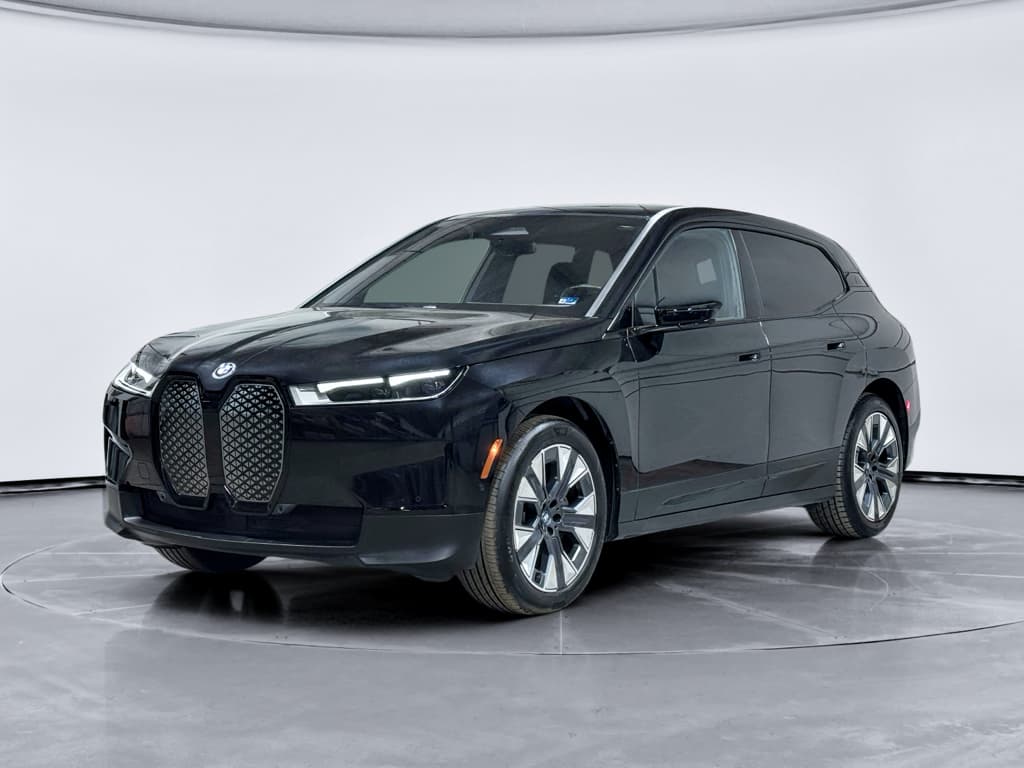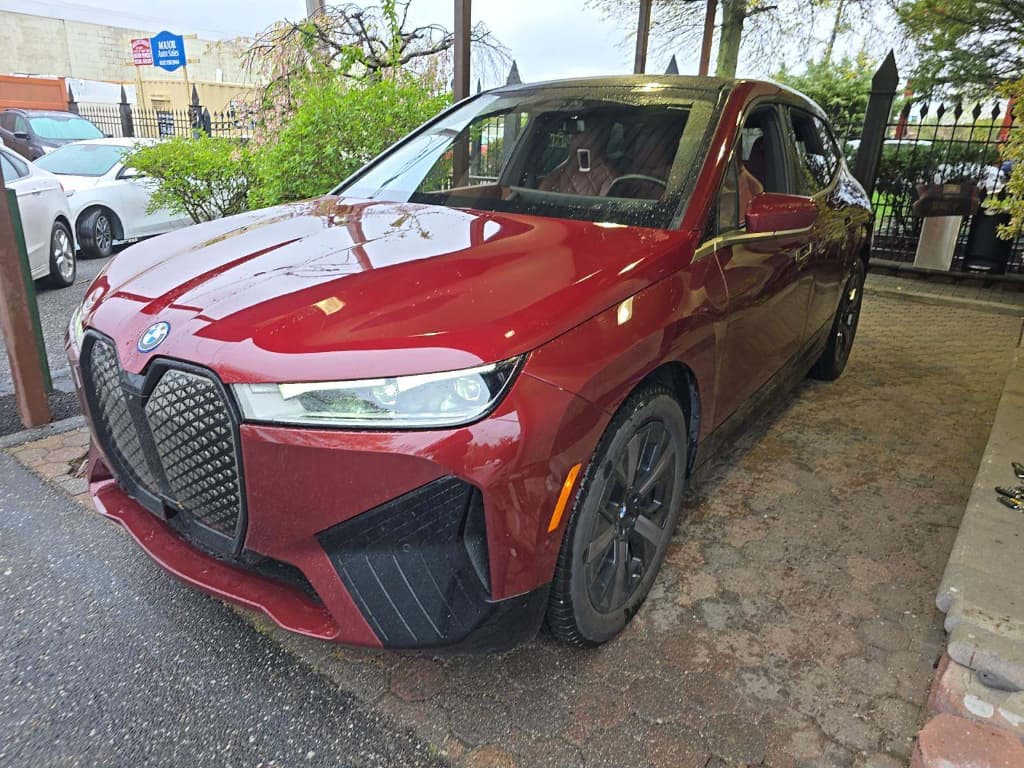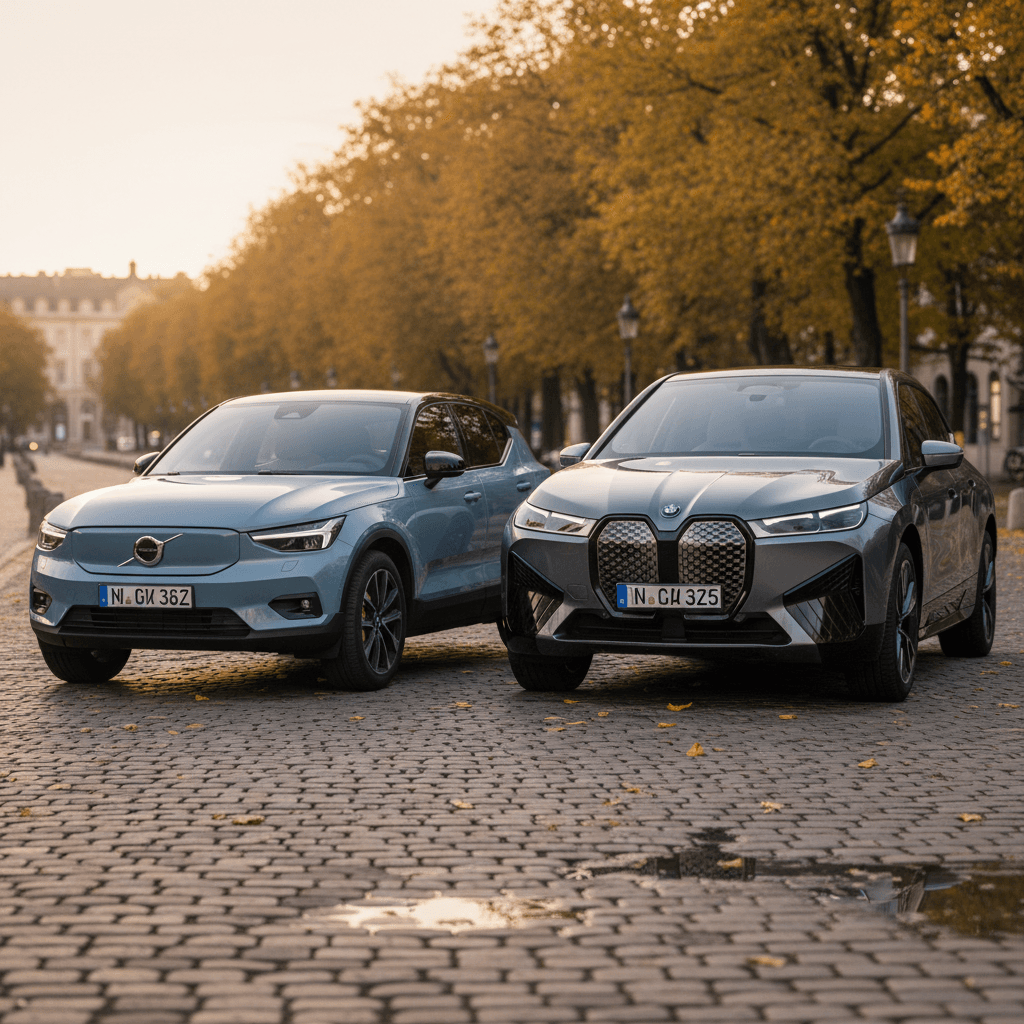
If you’re cross-shopping the Volvo EX30 vs BMW iX, you’re really deciding between two very different visions of an electric SUV. One is a compact, entry-lux EV aimed at urban drivers; the other is a full-size, tech-heavy flagship that rivals high-end gas SUVs on comfort and price. Understanding how they differ in size, range, charging, and long‑term costs is the key to choosing the right one, or to finding the smart play on the used market.
Two EVs, two totally different missions
Volvo EX30 vs BMW iX: who each SUV is for
Who the Volvo EX30 fits best
- City and suburban drivers who value small size and easy parking.
- Buyers stepping into their first EV and watching the budget.
- Singles, couples, or small families that don’t need a huge cargo hold.
- Drivers who want modern safety tech and a Scandinavian design vibe in a compact package.
Who the BMW iX fits best
- Families and road‑trippers who want real adult‑friendly rear seats and big cargo space.
- Shoppers used to X5, Q7, or GLE money and comfort levels.
- Drivers who care about quiet, long‑range cruising more than nimble city maneuvering.
- Buyers planning to keep the vehicle longer and willing to pay for the iX’s bigger battery and richer cabin.
Price, trims & value: starter EV vs flagship luxury
Volvo EX30 vs BMW iX pricing snapshot (new and used)
Approximate U.S. pricing as of early 2026. Exact numbers vary by options, incentives, and local market conditions.
| Model | Market position | Typical new MSRP (US) | Typical used asking (US, early 2026) | Battery size (usable kWh, approx.) |
|---|---|---|---|---|
| Volvo EX30 Single Motor Extended Range | Entry‑lux subcompact EV SUV | $36,000–$45,000 | Still rare used; expect high‑$20Ks to mid‑$30Ks as supply grows | ~64 kWh |
| Volvo EX30 Twin Motor Performance | Performance variant | Low‑$50Ks with options | Limited data; performance models tend to hold a premium | ~64 kWh |
| BMW iX xDrive50 | Core luxury trim | $87,000+ when new | Often $55,000–$70,000 depending on miles/condition | ~105–111 kWh |
| BMW iX M60 | High‑performance trim | $110,000+ when new | Commonly $75,000–$90,000 used | ~105–111 kWh |
Think of the EX30 as a high‑content compact EV and the iX as a full‑fat luxury SUV with a price to match.
Remember the tax credits and local incentives
If you’re buying new, the EX30 plays in roughly the $35,000–$50,000 space depending on trim and options, competing more with Hyundai Kona Electric and Tesla Model Y base trims than with the iX. The BMW iX, by contrast, is a six‑figure proposition when fully loaded, even if transaction prices vary. Where things get interesting is the used market: early iX models have already taken a steep depreciation hit, while the EX30 is still fresh enough that used examples are scarce and often priced aggressively. For value‑seekers, a carefully vetted used iX can sometimes overlap with a higher‑trim new EX30.
Size, space & practicality
Footprint and space: pocket EV vs big SUV
Their exterior footprints tell you almost everything about how they live day‑to‑day.
Exterior size
Volvo EX30: Subcompact SUV length of around 166 in, closer to a Mini Countryman than a traditional family SUV.
BMW iX: About 195 in long, roughly BMW X5‑sized, with a wide stance and presence to match.
Interior room
EX30: Front feels airy; rear is fine for kids or shorter adults. Adults fit, but tall passengers will notice the compact dimensions.
iX: Genuinely spacious, with limo‑like rear legroom and a flat floor that makes three‑across more realistic.
Cargo & practicality
EX30: Enough space for grocery runs, strollers, and weekend bags, but big‑box store runs will push its limits.
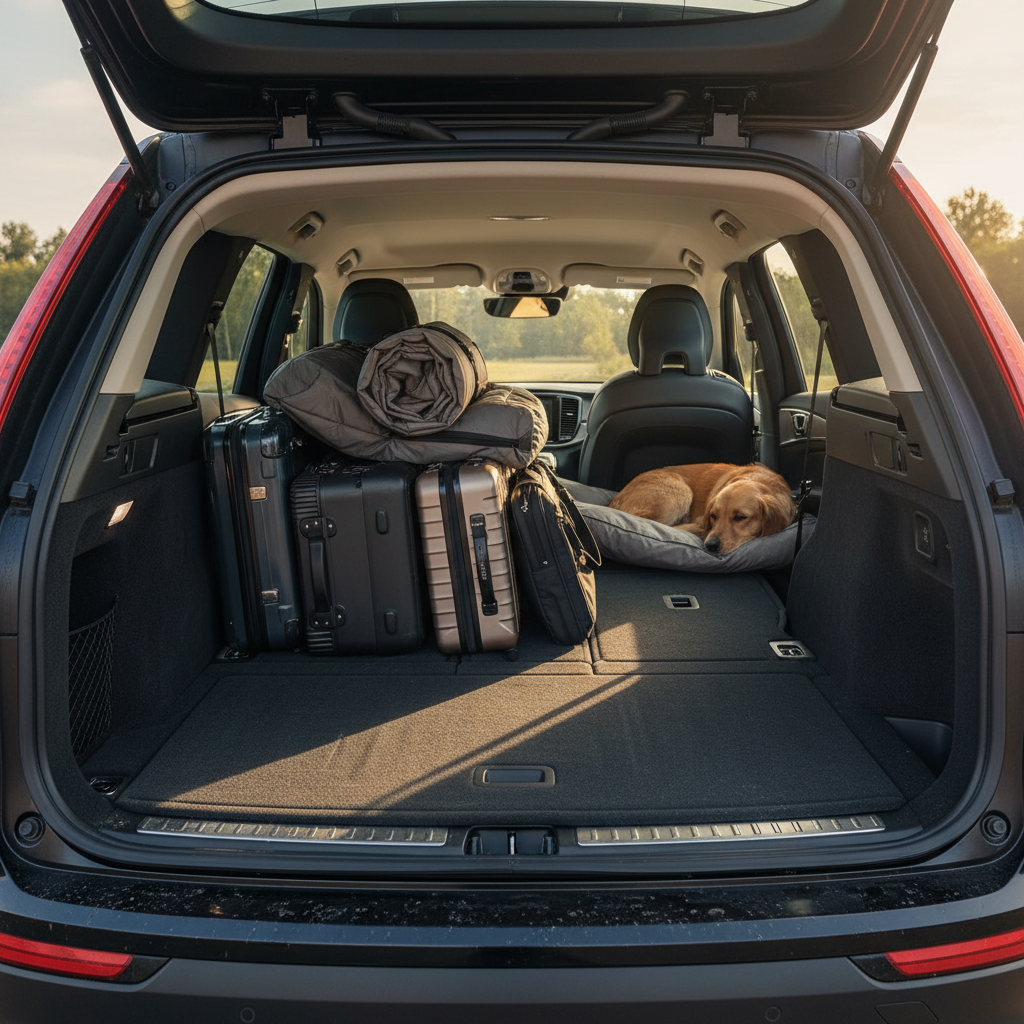
iX: Comparable to other midsize luxury SUVs, ready for family road trips, dog crates, and bulky gear.
Parking and maneuvering matter more than you think
Choosing between these two is as much about your physical environment as anything on the spec sheet. The EX30 behaves more like a slightly tall hatchback, easy to slot into tight parallel spaces and garages that were never designed for modern SUVs. The iX, meanwhile, earns its place as a primary family car, with the seating comfort and cargo flexibility that make long trips relaxing instead of cramped. If you’re replacing an X5 or Q7, the EX30 may feel like a big downgrade in space; if you’re coming from a Golf or Civic, the iX can feel almost comically large.
Performance, comfort & driving character
Performance highlights: Volvo EX30 vs BMW iX
Key performance metrics for popular trims. Exact figures vary slightly by wheel/tire choice and model year.
| Model | Drivetrain | Power (approx.) | 0–60 mph (approx.) | Ride & handling character |
|---|---|---|---|---|
| Volvo EX30 Single Motor Extended Range | RWD | ~268 hp | ~5.1 seconds | Light, tossable, firm but not punishing; tuned more for city agility than plush cruising. |
| Volvo EX30 Twin Motor Performance | AWD | ~422 hp | ~3.4 seconds | Seriously quick launches; still a small, upright SUV, so it can feel busy on broken pavement. |
| BMW iX xDrive50 | Dual‑motor AWD | ~516 hp | Low‑4‑second range | Calm, isolated, and heavy; prioritizes quiet comfort with confident but not sporty handling. |
| BMW iX M60 | Dual‑motor AWD | ~610 hp | Low‑3‑second range | Feels like an electric rocket ship in a lounge; still more grand‑tourer than track toy. |
Both are quick; how they deliver that speed feels very different.
Real‑world takeaway on performance
In daily driving, the EX30 feels eager and almost mischievous. Even the single‑motor model has more than enough power for highway merges, and the Twin Motor Performance can surprise sports cars from stoplights. But it’s still a short‑wheelbase, relatively tall crossover, so big wheels and rough roads can make it feel busier than a larger EV. The iX takes the opposite approach: substantial weight, long wheelbase, and extensive sound insulation combine for a quiet, relaxed ride that shrugs off rough pavement. Even when you use full power in an iX M60, what stands out is how composed and unflustered it feels.
Range and charging: specs vs real life
Headline range and charging numbers
Real‑world range is almost always lower than the sticker
Volvo EX30 vs BMW iX: range & charging comparison
Approximate U.S. EPA figures and typical DC fast‑charging behavior. Always check your specific model, wheel size, and year.
| Model | EPA range (approx., mi) | Battery (usable kWh, approx.) | DC fast‑charge peak | Typical fast‑charge pattern |
|---|---|---|---|---|
| Volvo EX30 Single Motor Extended Range | Up to ~260 | ~64 | ~150 kW | Small pack fills quickly; best to charge between ~10–70% on road trips to keep sessions short. |
| Volvo EX30 Twin Motor Performance | Low‑to‑mid‑250s | ~64 | ~150 kW | Extra power and AWD eat into real‑world range; plan more frequent, shorter stops. |
| BMW iX xDrive50 | ~300–325 (wheel‑dependent) | ~105–111 | Up to ~200 kW | Holds strong power up to ~40–50% before taper; ideal for 10–60% or 10–70% “splash‑and‑go” stops. |
| BMW iX M60 | High‑200s to ~300 | ~105–111 | Up to ~200 kW | Performance focus shaves some range, but big battery keeps highway legs longer than EX30. |
The iX wins on absolute range; the EX30 claws back time on shorter sessions thanks to its smaller battery.
How to think about range on each SUV
If most of your driving is local, the EX30’s real‑world range is perfectly workable, and its smaller battery means faster full charges when you do hit a DC fast charger. The downside is that in winter or at 75–80 mph, those EPA numbers fall quickly. The iX’s excess battery isn’t just about bragging rights: it gives you more usable range margin for weather, detours, or arriving home with a healthy buffer, especially if you regularly drive long interstate stretches.
Tech, safety & user experience
Screens, software, and safety: where Volvo and BMW differ
Both SUVs are packed with tech, but the flavor is very different.
Infotainment & controls
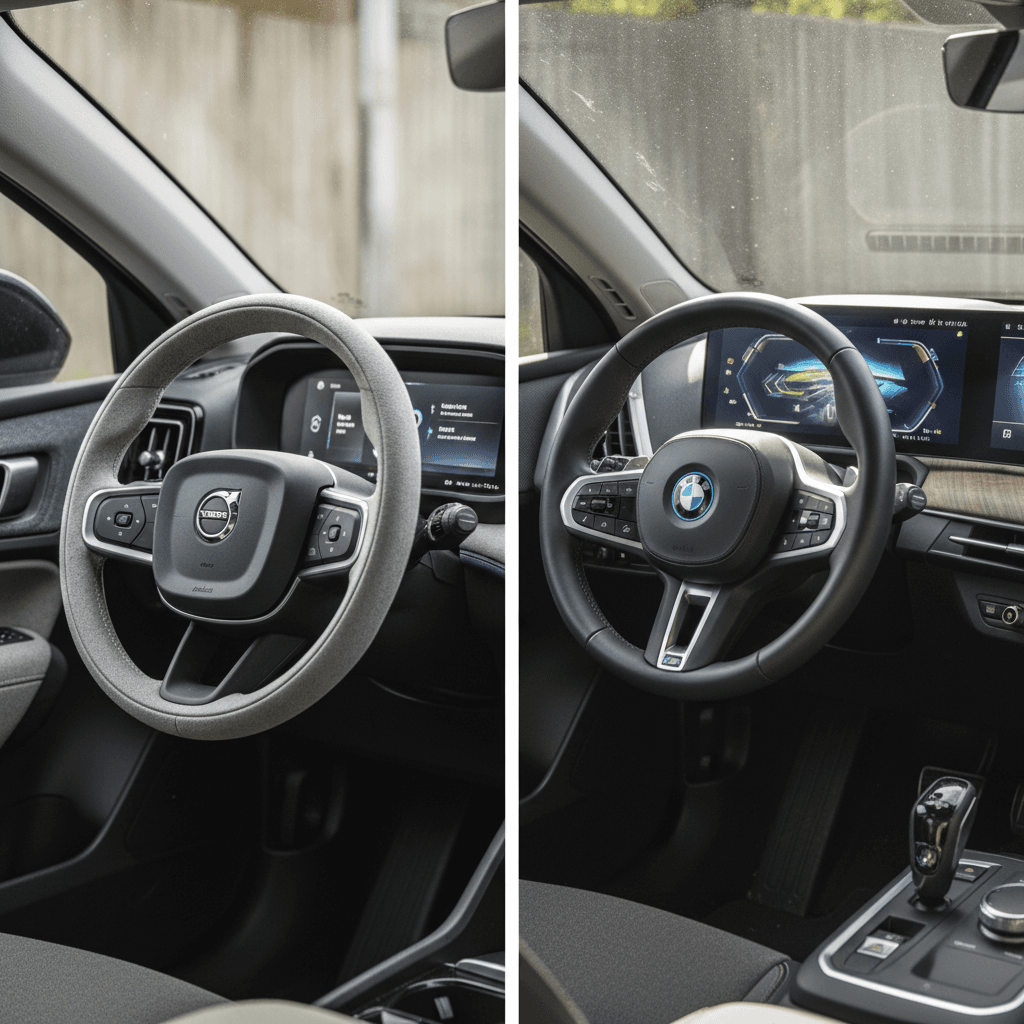
Volvo EX30: Central portrait touchscreen running Google‑based software, with very few physical buttons. Clean and modern but can feel menu‑heavy for basic tasks.
BMW iX: Wide curved display with a mix of touchscreen, voice, and iDrive controller. More complex overall, but easier to use by feel once you’ve learned it.
Driver assistance & safety
EX30: Volvo’s usual emphasis on crash safety plus lane keeping, adaptive cruise, and available Pilot Assist. Strong on core safety but not chasing gimmicks.
iX: Extensive ADAS suite with adaptive cruise, lane‑centering, parking aids, and highway‑driving assistants. When properly calibrated, it makes long drives genuinely less tiring.
Software updates & learning curves
You’ll notice the philosophical split as soon as you sit down. The EX30 leans into Playstation‑chic minimalism, with pastel color themes, playful materials, and one main screen that does almost everything. It’s fun and fresh, but if you prefer dedicated knobs and buttons, there’s an adjustment period. The iX, meanwhile, is BMW at its most futuristic: crystal‑like controls on some trims, a floating center console, and a big curved display that still works well with the traditional iDrive controller. Both can feel overwhelming at first; the big difference is that the iX’s cabin genuinely feels like a luxury lounge, while the EX30 feels like a stylish studio apartment on wheels.
Ownership costs & used-market reality
Key cost factors to compare before you buy
1. Depreciation curve
The EX30 is too new in the U.S. to have a well‑defined depreciation pattern, but small premium EVs historically soften faster once supply catches up. The iX has already taken a big first‑owner hit, which can make a used iX surprisingly attainable if you’re comfortable with higher running costs.
2. Insurance & tires
Insuring a six‑figure luxury SUV with huge wheels and expensive bodywork will almost always cost more than insuring a compact EV. The iX’s wide, heavy chassis also eats through large, costly tires faster than an EX30 driven in similar conditions.
3. Charging behavior & electricity costs
Because the iX carries such a large battery, you’ll often be pulling more kWh per session. That’s fine at home on off‑peak rates, but frequent DC fast charging on pricey networks adds up. The EX30 uses fewer kWh per week for the same commute, though its efficiency isn’t best‑in‑class either.
4. Battery health and warranty
Both Volvo and BMW offer 8‑year / ~100k–160k‑mile battery warranties, but abuse, fast‑charging habits, and climate still matter. When you shop used through a platform like Recharged, you get a <strong>Recharged Score Report</strong> with verified battery diagnostics so you’re not gambling on pack health.
How Recharged helps de‑risk a used EX30 or iX
If you’re shopping used, the iX sits at an interesting crossroads. Early buyers paid luxury‑SUV money; you may be looking at something closer to a loaded Model Y or Kia EV9 in today’s used prices. But repairs, tires, and insurance will still scale with what the car is, not what you paid for it. The EX30, once it appears on the used market in volume, is likely to be friendlier on monthly costs and more attractive to first‑time EV buyers, but it won’t deliver the same long‑range comfort or space. Deciding between them is less about raw affordability and more about how you want to allocate your EV budget: toward luxury and range, or toward compact practicality and lower overhead.
Which should you choose: Volvo EX30 or BMW iX?
Choose the Volvo EX30 if…
- You live in a city or inner suburb and rarely drive more than 150–180 miles in a day.
- You want something easy to park, stylish, and modern without six‑figure sticker shock.
- Your household already has a bigger road‑trip vehicle, or you mostly fly for long journeys.
- Low running costs and simpler daily use matter more to you than maximum quiet and space.
- You’re moving from a hatchback or compact crossover and don’t want a huge size jump.
Choose the BMW iX if…
- You regularly do 200–300‑mile highway runs and want to arrive relaxed, not range‑stressed.
- Your family needs adult‑friendly rear seats, real cargo space, and top‑tier comfort.
- You’re comfortable with higher insurance, tire, and maintenance costs in exchange for a flagship‑level experience.
- You’re shopping used and can take advantage of the iX’s early depreciation curve.
- You care as much about ride quality and quiet as you do about straight‑line speed.
A simple rule of thumb
Ready to find your next EV?
Browse VehiclesViewed through a spec‑sheet lens, the Volvo EX30 vs BMW iX matchup looks lopsided: the iX has more range, more space, and more of basically everything. But that’s exactly the point. The EX30 works because it doesn’t try to be all things to all people, it aims squarely at urban and near‑urban drivers who want an attainable, stylish EV with decent range and modern safety tech. The iX justifies its size and cost when you actually use what it offers: long‑legged comfort, family‑friendly packaging, and the kind of quiet, effortless cruising that makes you forget about engines entirely. If you’re still unsure which path fits your life, talking it through with an EV‑specialist advisor and getting a battery‑health‑verified option from Recharged can turn this from an abstract comparison into a confident, informed decision.
Volvo EX30 vs BMW iX FAQ
Frequently asked questions: Volvo EX30 vs BMW iX
The smartest EV choice isn’t the one with the longest range or the wildest 0–60 time, it’s the one that actually fits how and where you drive, at a price that makes sense for how long you’ll keep it.