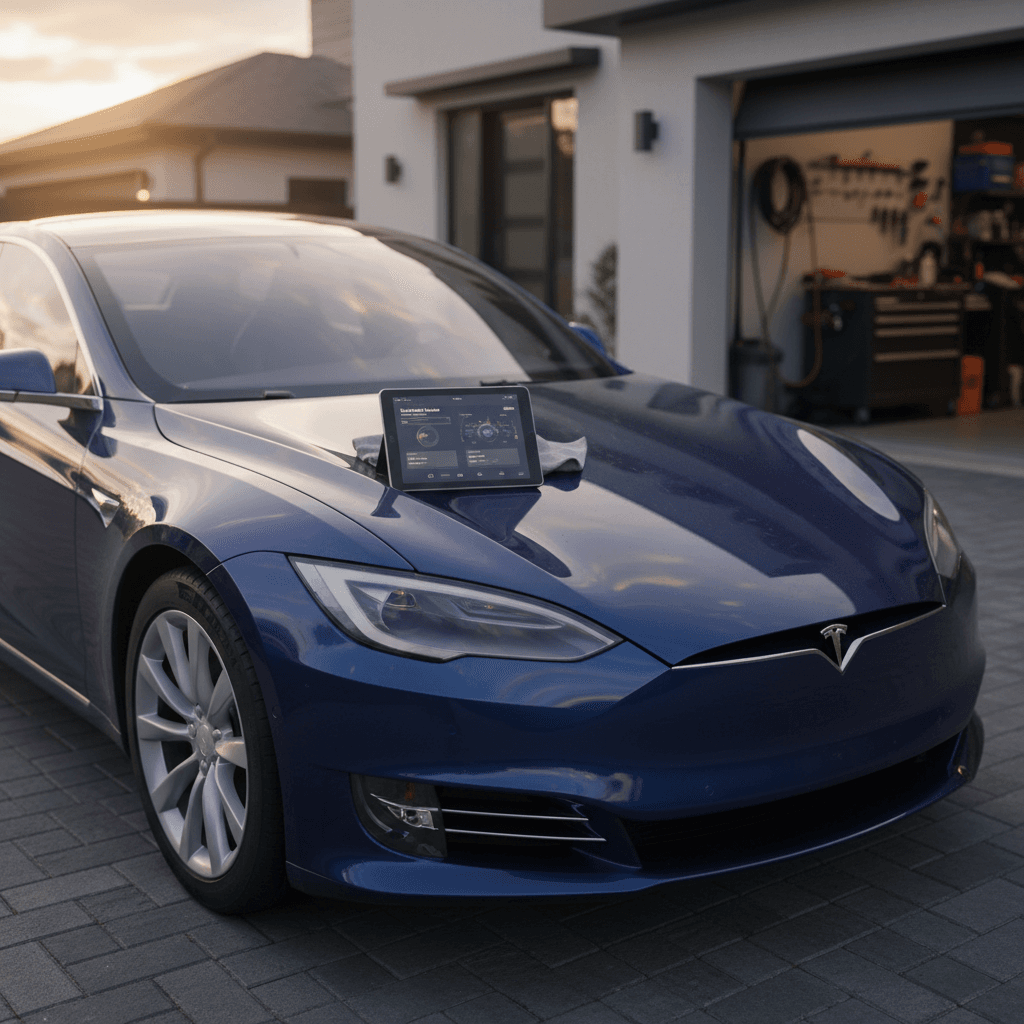
If you’re looking for tips for selling a Tesla Model S, you’re in a very particular corner of the market. The Model S has seen huge price swings and heavy depreciation in recent years, but demand for clean, well‑optioned cars is still strong, especially now that Tesla has paused new Model S sales in North America. The way you prepare, price, and present your car can easily mean a difference of several thousand dollars in your pocket.
Quick takeaway
Why selling a Tesla Model S feels different
Unlike most luxury sedans, a Model S is software‑defined and deeply connected. Buyers aren’t just looking at paint and leather, they’re asking about battery degradation, charging speeds, Autopilot features, software version, and even whether the car can still get premium connectivity. At the same time, multiple studies show that a five‑year‑old Model S has lost well over half of its original value, which creates anxiety for sellers but real opportunity for used buyers.
- Battery health and range matter more than horsepower or chrome trim.
- Over‑the‑air software updates and option changes (like Autopilot and FSD) affect value.
- Rapid Tesla price cuts in 2023–2024 pulled used values down, then a 2025–2026 rebound caught some sellers off‑guard.
- The pool of serious Model S buyers is smaller but well‑informed.
Mindset check
1. Understand what your Model S is worth today
Before you decide where to list or whether to trade in, you need a realistic view of what your car can bring in today’s market. Over the past few years, Model S values have been volatile: heavy depreciation early on, followed by a modest bounce as new supply tightened and Tesla paused S production. A well‑optioned, clean car can still command a premium, but only if the price lines up with what shoppers are seeing elsewhere.
Tesla Model S value snapshot (early 2026)
How to set a realistic asking price
1. Start with multiple valuation tools
Use several sources, Tesla’s own trade‑in estimate, Kelley Blue Book, CarEdge, Edmunds, and marketplace listings. Don’t fixate on a single number; look for a reasonable range based on mileage and condition.
2. Compare to similar Model S listings
Search by year, trim (Long Range vs Plaid vs older 75D/100D), mileage, and equipment in your region. Focus on cars that actually sell, not just optimistic asking prices that sit for weeks.
3. Adjust for mileage and condition
A very clean, lower‑mile car with fresh tires and no accidents deserves to be near the top of the range. High miles, curb rash, or any warning lights mean you should aim lower, or fix issues first.
4. Be honest about color and options
Desirable colors, upgraded wheels, premium interior, and hardware‑based Autopilot/FSD can support a stronger price. Less popular colors or base wheels might require more flexibility.
Don’t anchor to what you paid
2. Decide how to sell: private, trade‑in, or marketplace
For a Model S, your choice of sales channel can easily swing your outcome by several thousand dollars. Each route, private sale, Tesla or dealer trade‑in, instant online offer, or a specialist EV marketplace, comes with its own balance of price, speed, and hassle.
Which way should you sell your Model S?
Match the method to your priorities: money vs time vs effort
Private sale
Best for maximizing price, especially on newer or well‑equipped cars.
- You manage photos, listing, test drives, and paperwork.
- Often brings $2k–$5k more than wholesale offers.
- Requires your time, patience, and comfort dealing with strangers.
Trade‑in / instant offer
Best for speed and simplicity.
- Lower offers, but one‑stop transaction when buying your next car.
- Trade‑in can reduce sales tax on your new purchase in many states.
- Great if your Model S has cosmetic issues you don’t want to fix.
Specialist EV marketplace
Best balance of price and convenience.
- Platforms like Recharged focus on used EVs.
- Battery diagnostics, pricing guidance, and nationwide buyers.
- Options for instant offer or higher‑value consignment.
When a private sale makes sense
- Your Model S is clean, well‑maintained, and largely stock.
- You’re not in a rush and can meet buyers on evenings/weekends.
- You’re comfortable screening inquiries and going on test drives.
When to consider Recharged or a trade‑in
- You value certainty and safety over squeezing every last dollar.
- You want help explaining battery health and EV features to buyers.
- You’re buying another EV and want to roll everything into one transaction.
3. Get your battery and service history in order
For most Model S buyers, battery health and charging behavior are the big unknowns. You’ll gain a serious edge if you can prove that your car has been well‑cared‑for and still delivers solid range. That matters even more on higher‑mileage 2012–2018 cars and early Plaid/refresh models that have lived on Superchargers.
Battery and history: what to gather before listing
Document typical usable range
Take photos of the center screen at 80% and 100% state of charge on a warm day. Compare to the original rated range for your trim so buyers can see real‑world degradation.
Print or export service records
If you’ve used Tesla Service or reputable independent shops, gather invoices showing routine maintenance, drive unit or battery work, and any warranty repairs. Organized paperwork builds confidence.
Note charging habits honestly
Be ready to explain how often you Supercharged vs. home Level 2 charging. A car that lived mostly on home charging with occasional road trips is more attractive than a daily DC‑fast‑charged commuter.
Consider a third‑party battery health report
Services like the <strong>Recharged Score</strong> perform battery diagnostics and translate data into an easy‑to‑read health rating. That can reassure buyers who aren’t EV experts.
Why buyers love Recharged Score
4. Prep the car like a buyer will see it
You don’t need to spend thousands reconditioning a Model S, but modest investments in cosmetics pay off. The EV audience tends to be tech‑savvy and detail‑oriented. They notice sticky door handles, curb‑rashed Turbine wheels, and worn bolsters in ways many mainstream shoppers do not.
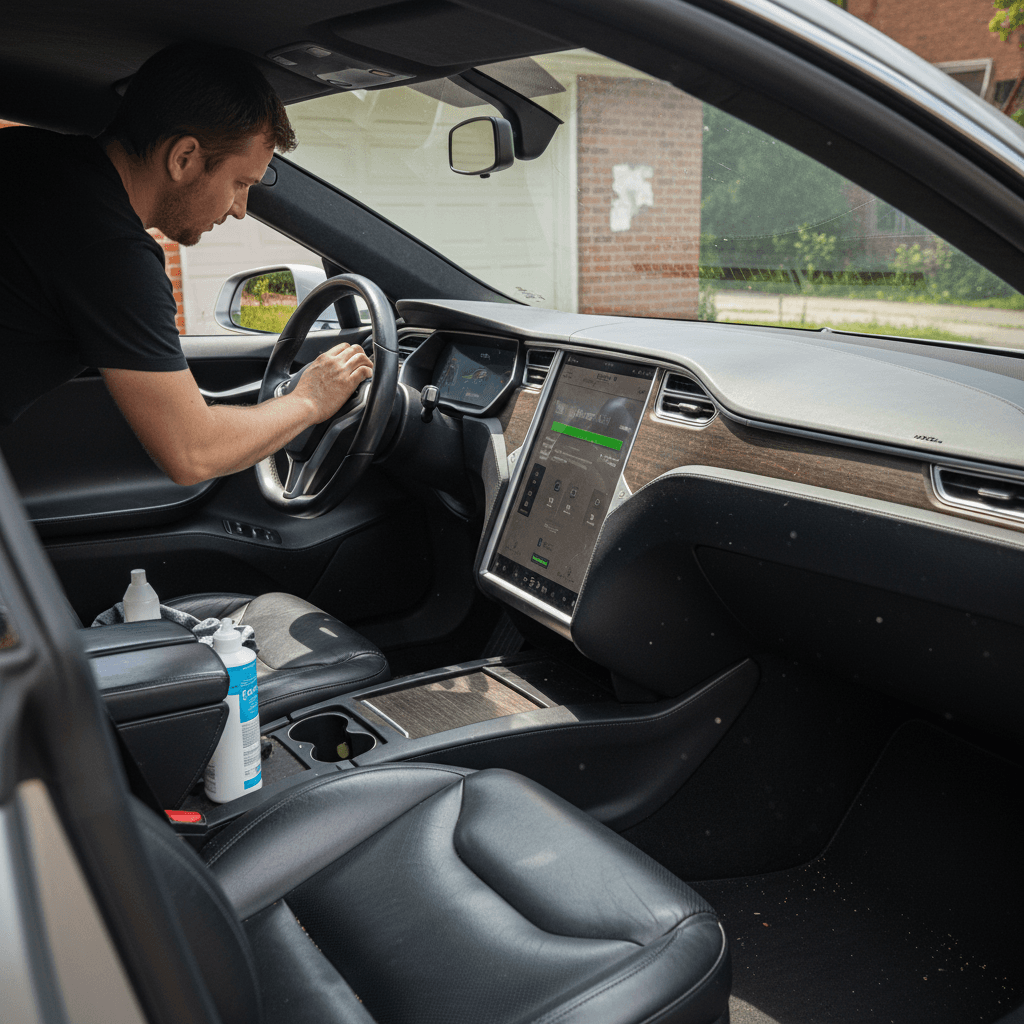
- Have the car professionally detailed, inside and out. Pay special attention to the touchscreen, glass roof, and light‑colored interiors.
- Fix inexpensive items: wiper blades, burned‑out bulbs, filthy cabin air filters, and small interior trim pieces.
- Consider repairing a few obvious curb rashes or paint chips; you don’t need perfection, but you should avoid “project car” vibes.
- Ensure all key cards/fobs are present and working, and that door handles, trunk/hood latches, and charge port operate smoothly.
- Remove personal items, stickers, and unusual wraps that narrow your buyer pool, unless they clearly add value (for example, high‑quality paint‑protection film).
Budget wisely
5. Create a listing that actually sells
Most used‑car listings read like they were written in a hurry. With a Model S, a clear, honest description and strong photos can be the difference between a car that moves in a week and one that sits for a month while you chase low offers.
Must‑have elements of a great Model S listing
Buyers are deciding in seconds whether to click or scroll past
High‑quality photos
- Front, rear, and both sides in good light.
- Interior, seats, and cargo areas.
- Close‑ups of wheels, tires, and any flaws.
- Center screen with range and software info visible.
Transparent description
- Year, trim, drivetrain (Dual Motor, Plaid, etc.).
- Exact mileage and ownership history.
- Charging habits and typical range.
- Accidents, paintwork, or notable repairs disclosed upfront.
Tech & options list
- Autopilot / Enhanced Autopilot / FSD status.
- Free or paid Supercharging (if still applicable).
- Wheels, audio upgrades, interior color.
- Included accessories: mobile connector, winter wheels, mats.
Headline formula that works
6. Handle Autopilot, FSD, and subscriptions smartly
On a Model S, software features can meaningfully change value, but only if you describe them accurately. Tesla has re‑packaged Autopilot and Full Self‑Driving (Supervised) multiple times, and buyers have learned to be skeptical of vague claims.
- Verify exactly what your car has via the center screen and Tesla account: basic Autopilot, Enhanced Autopilot, or Full Self‑Driving (Supervised).
- Make it clear whether FSD is purchased (it generally follows the car) or a subscription (which will not transfer when you cancel).
- Avoid promising future capabilities; stick to what the car can do today, traffic‑aware cruise, lane keeping, Navigate on Autopilot, etc., depending on your package.
- Don’t rely on old window stickers alone; over‑the‑air changes and prior owners may have added or removed options.
Be precise, or risk disputes
7. Protect your data: factory reset and account steps
A Tesla isn’t just a car; it’s a rolling device full of your addresses, phone contacts, Spotify and Netflix accounts, and garage codes. One of the most important tips for selling a Tesla Model S is to wipe your data correctly while keeping the car ready for the next owner to add to their account.
Data‑safety steps before handing over the keys
Sign out of entertainment and browser logins
Log out of streaming services (Spotify, Netflix, YouTube), remove phone keys, and clear any saved passwords in the browser.
Delete navigation history and Home/Work
Remove favorite locations, Home and Work addresses, and any frequent destinations from the navigation system.
Factory reset the car
On most Model S vehicles, go to <strong>Controls > Service > Factory Reset</strong>. This removes personal profiles, paired devices, and settings, but does not affect the car’s ownership status with Tesla.
Remove vehicle from your Tesla account at the right time
Once payment and paperwork are complete, remove the car from your Tesla account or work with Tesla support if transferring to a dealer. Make sure the buyer knows how to request ownership transfer.
Don’t skip the reset
8. Time your sale and be flexible on price
Timing matters with any used car, but especially with an EV whose value can move quickly when new prices or incentives change. In 2023–2024, aggressive Tesla price cuts triggered sharp drops in used values. In late 2025 and early 2026, a combination of reduced new‑car availability and renewed interest in premium EVs helped pull some Model S prices back up.
Better times to sell
- Late spring through early fall, when road‑trip season and tax refunds create more shoppers.
- Right after you’ve completed needed maintenance or installed fresh tires.
- When local inventory of similar Model S cars is thin, watch your region’s listings.
When to temper expectations
- Right after big Tesla price changes on new S or big EV incentives that make new cars relatively cheaper.
- In the depth of winter in cold‑weather regions, when range anxiety peaks and demand softens.
- When macro headlines around EV demand are negative; buyers become pickier, not absent.
Build room for negotiation
9. Avoid common mistakes when selling a Model S
Most disappointing Tesla sales trace back to the same handful of missteps: unrealistic pricing, poor communication, or ignoring what EV buyers actually worry about. Understanding these hazards puts you ahead of many private sellers and even some dealers.
- Overpricing based on what you owe on the loan, not what the car is worth today.
- Hiding battery or charging issues instead of addressing them or pricing accordingly.
- Writing vague ads with no range information, no mention of Autopilot status, and only a few dimly lit photos.
- Letting the car stay dirty or cluttered during showings, buyers assume what they can see is how you treated what they can’t.
- Being hard to reach or slow to respond; serious buyers move on quickly in a national used‑EV market.
Don’t ignore small warning lights
10. How Recharged can help you sell your Model S
If you like the idea of a strong sale price but don’t want to be a full‑time salesperson, a specialist EV partner can bridge the gap. That’s where Recharged comes in. We’re built specifically around used EVs like the Tesla Model S, with tools to make the process both transparent and low‑stress.
Why many Model S owners choose Recharged
Keep more of your car’s value without doing all the work yourself
Recharged Score battery report
Every vehicle includes a Recharged Score Report with verified battery health, fast‑charge behavior, and fair‑market pricing benchmarks. That gives buyers objective, third‑party data instead of guesswork.
Digital, guided selling experience
From your couch, you can get an instant offer, explore higher‑value consignment options, arrange nationwide delivery for the buyer, and lean on EV‑specialist support for questions along the way.
Trade‑in & flexible sale options
Already shopping for your next EV? Recharged can help with trade‑ins, financing, and instant offers or consignment, so you’re not juggling multiple dealers or listing sites on your own.
Ready to find your next EV?
Browse VehiclesWhether you sell privately, trade in, or partner with an EV‑focused marketplace, the fundamentals are the same: know what your Tesla Model S is worth, prepare it carefully, prove its battery health, and communicate clearly. Do that, and you won’t just move on from your car, you’ll capture the value you’ve built into it over the years.