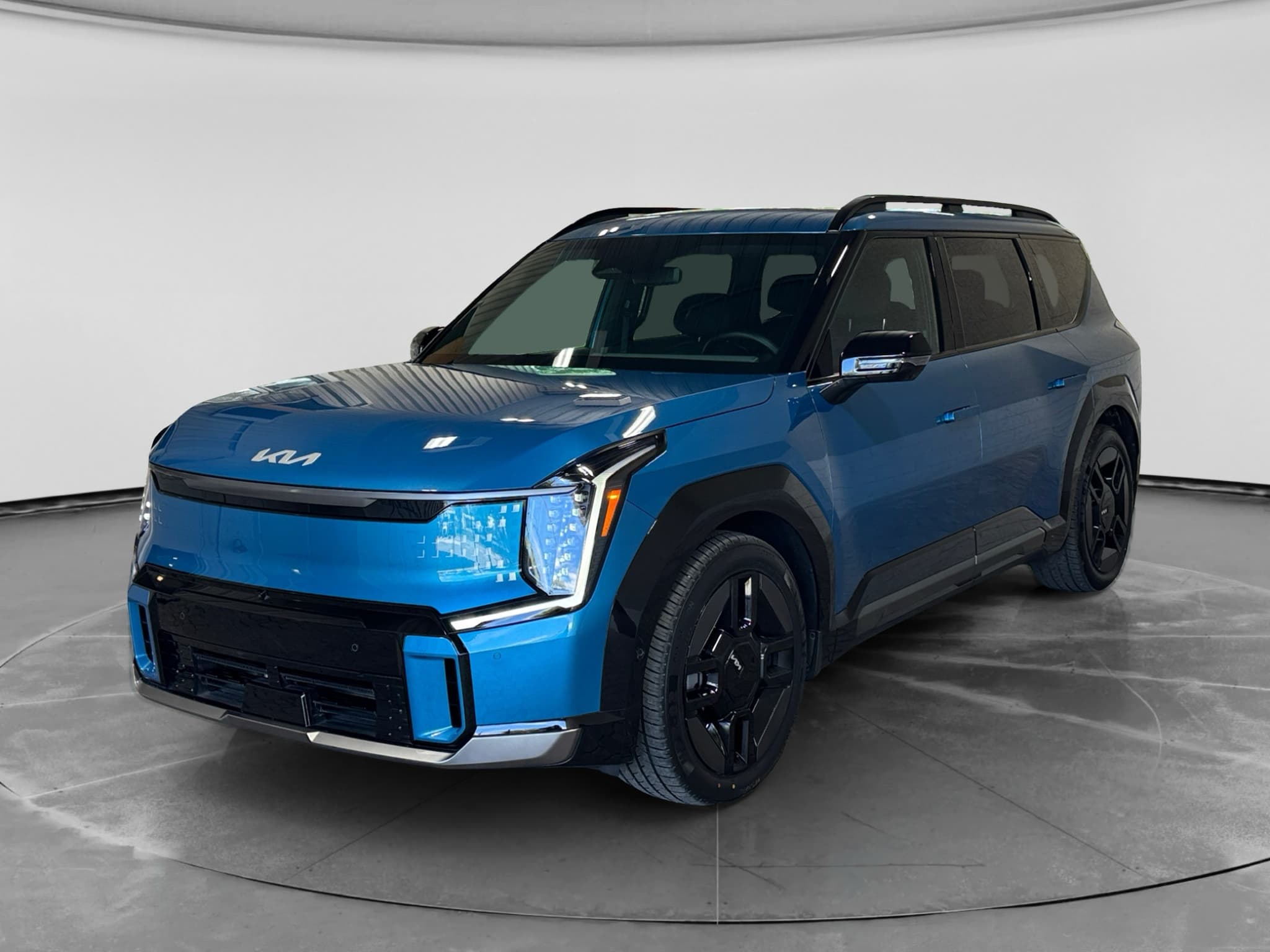
A third row only adds value when your passengers can reach it comfortably and you still have enough room for their belongings. That makes seat count just the beginning: you should evaluate the cabin with every row in use, confirm that the vehicle can handle your regular routes, and inspect the battery in the individual used EV. If you’re new to the process, start with a broader used electric car buying guide before comparing specific models.
Five three-row EVs belong on the shortlist
A practical shortlist of 3 row electric vehicles includes four SUVs, the Rivian R1S, Tesla Model X, Volvo EX90, and Lucid Gravity, plus the van-style Volkswagen ID. Buzz. The right starting point depends less on a universal ranking and more on whether you prefer an SUV or van layout, how often you’ll use every seat, and what service and charging options are convenient where you live. Availability and seating configuration can differ, so verify the exact vehicle rather than relying on the model name alone.
A practical first-pass comparison
Use these models to build a test-drive list, then verify the exact vehicle’s seating, battery, charging setup, and condition.
| Vehicle | Format | Start here if | Verify before buying |
|---|---|---|---|
| Rivian R1S | SUV | Broad family use | Third-row and cargo fit |
| Tesla Model X | SUV | You prefer Tesla | Controls and seat access |
| Volvo EX90 | SUV | You prefer Volvo | Software and local service |
| Lucid Gravity | SUV | You prefer Lucid | Service availability |
| Volkswagen ID. Buzz | Van | You want van space | Exact seat configuration |
Shortlist of three-row electric vehicles mentioned in Recharged team discussions.
When our team ran a rapid-fire series of EV comparisons, the R1S kept coming out on top. That makes it a natural first test drive, but your passengers, cargo, routes, and budget still determine the right answer.
Treat the table as a test-drive order, not a final ranking. An appealing vehicle can fall off your list quickly if the third row is awkward to reach, the cargo area is too small with every seat raised, or service access doesn’t work for your location. Compare each candidate under the conditions in which you’ll actually use it.

What matters more than the badge?
The most important comparison is how well the vehicle handles your real passenger, cargo, and charging routine. Bring the people who will use the third row, install any child seats you expect to carry, and load the items that normally travel with you. Range should be considered alongside your longest common trip and access to charging, not as an isolated number. For home charging, Level 2 means a 240-volt setup that generally offers more practical overnight charging than a standard household outlet; see Recharged’s home EV charging guide for planning considerations.
Test these five things before choosing
Third-row access
Enter and exit without assistance, then repeat the test with child seats or second-row passengers in place.
Passenger fit
Check headroom, legroom, visibility, climate vents, and comfort in every seating position you expect to use.
Cargo with seats raised
Load your normal stroller, luggage, sports equipment, or groceries while the third row remains in use.
Charging routine
Confirm home-charging feasibility and map the public charging stops required for your recurring longer trips.
Battery condition
Review tested remaining capacity and estimated real-world range for the individual used vehicle, not just its advertised specification.
Confirm the exact seating configuration
What Recharged data says about used-EV condition and price
Recharged’s broad fleet data shows why battery condition should be measured rather than inferred from age or odometer mileage. Across 2,242 Recharged Score inspections, the average tested remaining battery capacity was 93.9% of original capacity and the median was 94.9%; tested real-world range averaged 266 miles and had a 268-mile median. These results cover the wider inspected EV fleet, not only three-row vehicles, so use them as market context and insist on the specific vehicle’s diagnostic results.
Recharged retail sales also show that the wider used-EV market spans far more than one price point. Over the trailing 12 months, buyers paid an average retail price of $29,901 and a median retail price of $27,297 across 1,796 EVs sold by Recharged. Those figures are not three-row model price estimates, but they show why you should compare a vehicle’s asking price with its age, mileage, condition, battery report, features, and current market supply.
The takeaway is straightforward: fleet averages can help set context, but they cannot tell you whether one R1S, Model X, EX90, Gravity, or ID. Buzz is the right buy. Every used EV sold by Recharged includes a Recharged Score battery-health report, giving you verified information for the actual vehicle under consideration. That vehicle-level evidence is more useful than assuming all examples of the same model have aged identically.
Recharged data
Used EV battery health
94%
avg remaining capacity
From Recharged battery inspections, not manufacturer estimates.
- Lowest
- 63%
- Median
- 95%
- Highest
- 100%
- Est. range
- 266 mi avg
- Cell balance pass
- 100%
- Quick charges
- 18 avg
- Slow charges
- 65 avg
Average cell imbalance: 7.3 mV
Based on vehicles Recharged tested
Recharged data
Recent EV sold prices
$27,297
median sold price
What buyers actually paid through Recharged, not list price.
- Lowest
- $500
- Average
- $29,901
- Highest
- $129,998
Monthly median sold price
Based on Recharged sales in the last 12 months
Every EV is battery-tested with a Recharged Score. Nationwide delivery.
How should you inspect a used three-row EV?
Inspect a used three-row EV as both an electric vehicle and a high-use family vehicle. Start with verified battery health, but also operate every seat, door, screen, climate control, charging port, and driver-assistance feature available on the vehicle. Look for interior wear in all rows, check tire condition, and confirm what warranty or service coverage remains. Finally, compare the total financed cost and any delivery expense rather than focusing only on a monthly payment.
Used three-row EV inspection steps
Read the battery report
Review tested remaining capacity and estimated real-world range for the specific vehicle.
Operate every seat
Fold, slide, raise, and lower each seat while checking latches, tracks, and access paths.
Check high-touch equipment
Test doors, displays, cameras, climate controls, charging equipment, and every supplied key.
Inspect wear items
Review tires, wheels, glass, upholstery, and cargo-area trim for condition and replacement needs.
Confirm support
Identify convenient service options and understand the warranty coverage included with that particular vehicle.
Price the complete purchase
Include financing, registration, delivery, charging equipment, insurance, and near-term maintenance in your comparison.
Instant offer, trade-in, or consignment. Pickup available.
Frequently asked questions
Choose around your passengers and routine
The right three-row EV is the one that carries your real passengers and cargo without making charging, service, or longer trips unnecessarily difficult. Begin with the R1S, Model X, EX90, Gravity, and ID. Buzz, then narrow the field through hands-on seating and cargo tests. When you move to used examples, prioritize a vehicle-level battery diagnostic, complete condition review, and fair market pricing; you can also browse Recharged’s guide to electric SUVs for additional shopping context.