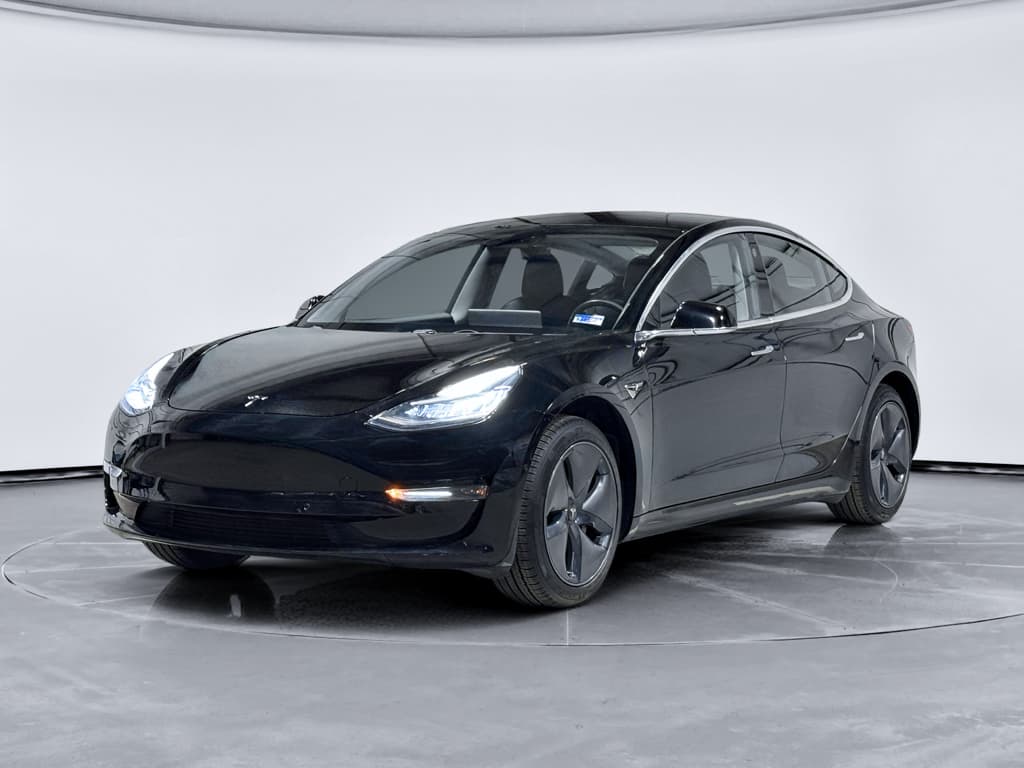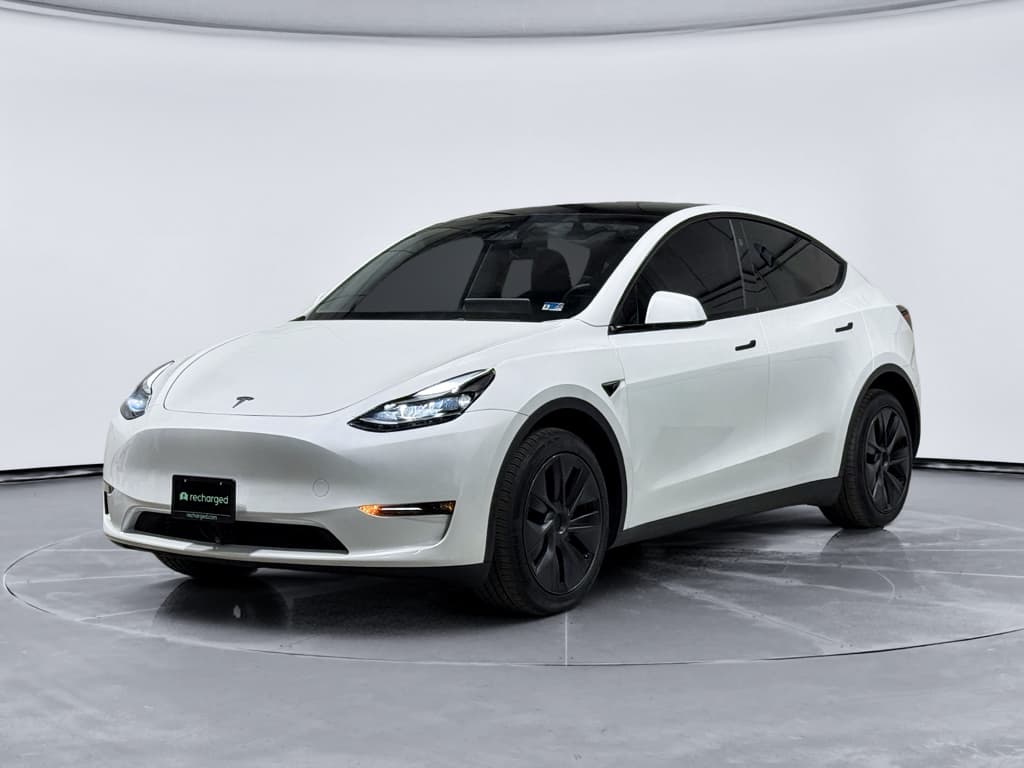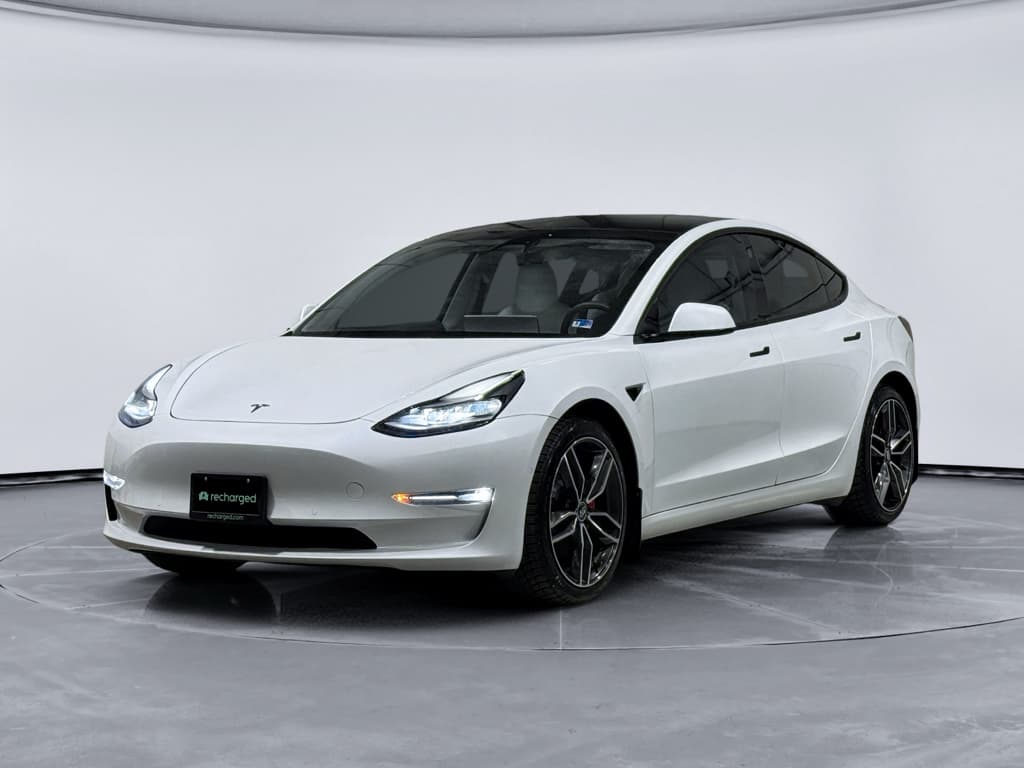
If you own a Tesla in the Puget Sound region, you’ve probably already discovered that finding the right Tesla repair shop in Seattle isn’t quite as simple as dropping a gas car at the corner garage. Service capacity, EV-specific tooling, body repair approvals, and battery expertise all matter a lot more than they used to.
Seattle’s Tesla ecosystem is maturing
Tesla repair in Seattle: what to expect in 2025
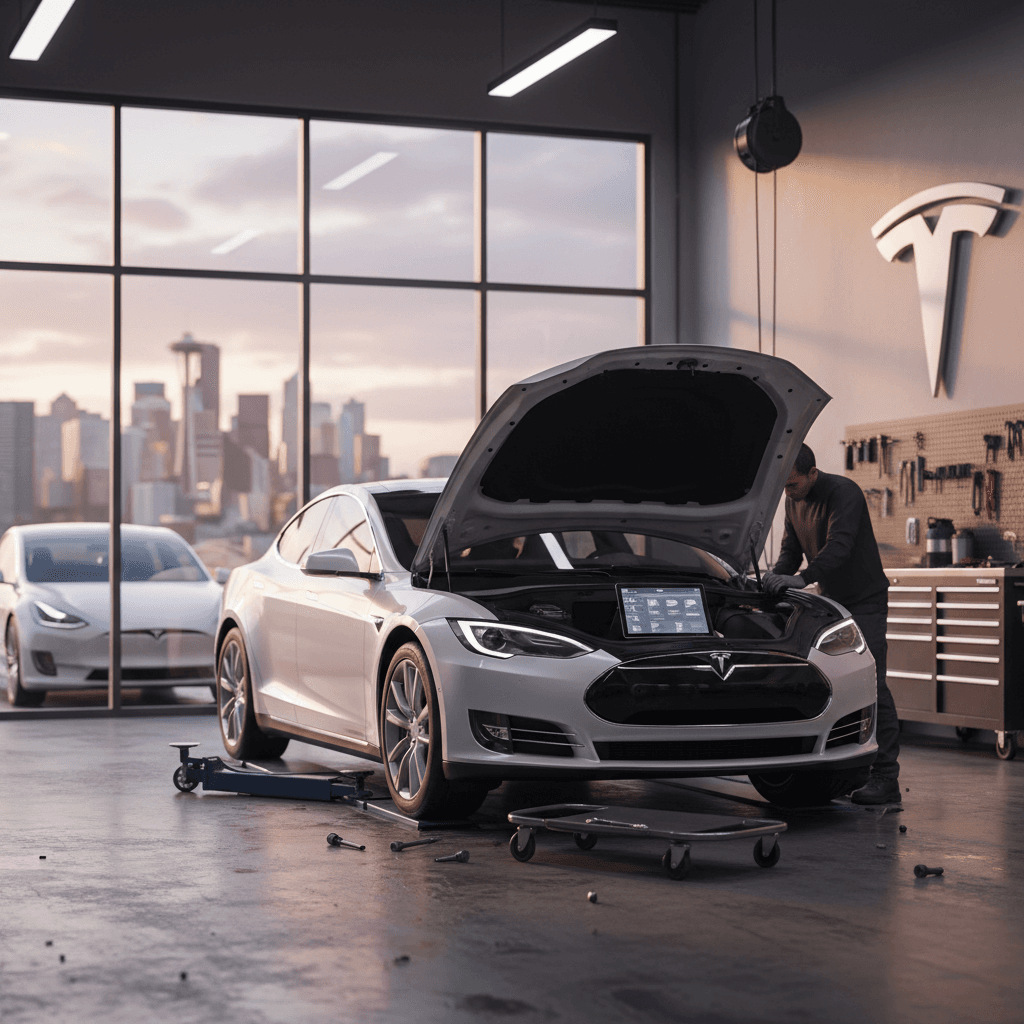
Seattle is a high-adoption EV market, which means demand for Tesla service is consistently strong. Tesla’s own Seattle–SoDo Service Center handles most warranty and complex work, while additional Tesla facilities in Renton and Lynnwood broaden the coverage for the metro area. Independent shops are slowly catching up with the high-voltage skills, but not every mechanic advertising EV repair is truly ready for a Model S or Model Y battery pull.
Why Seattle Tesla repair shops stay busy
Expect scheduling friction
Official Tesla service centers near Seattle
For warranty repairs, recalls, software-related diagnostics, and major high-voltage work, your safest bet is still an official Tesla Service Center. In the Seattle area, the anchor location is the Tesla Service Seattle–SoDo facility at 2200 6th Ave S, with additional Tesla service capacity in Renton and Lynnwood for Eastside and north-end owners.
Key Tesla service locations for Seattle owners
Use the Tesla app to confirm availability and schedule before you drive in.
Seattle–SoDo Service Center
Address: 2200 6th Ave S, Seattle, WA 98134
Focus: Factory service, delivery, and store in one complex.
Best for: Warranty work, complex diagnostics, high-voltage repairs, and software-related issues.
Renton Store & Service
Address: S Grady Way, Renton (Southcenter area)
Best for: South-end and Eastside owners needing official service without heading into SoDo traffic.
Lynnwood Service Center
Address: Hwy 99 corridor, Lynnwood
Best for: North Seattle, Shoreline, Edmonds, and Everett-area owners who want to avoid downtown.
Always start with the Tesla app
Independent EV and Tesla specialist shops in Seattle
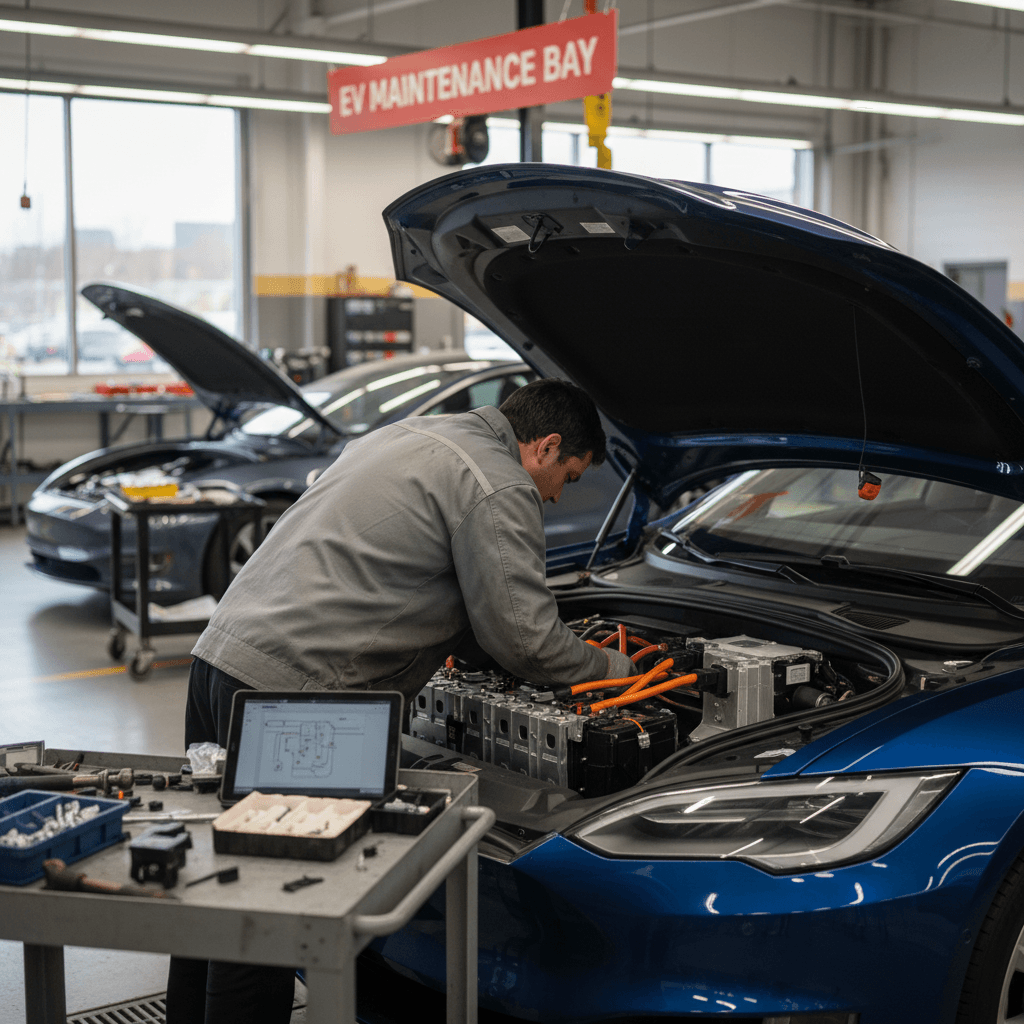
Tesla’s vertical integration means that, for years, independent options were thin on the ground. By 2025, however, the Seattle metro has a small but growing set of independent EV repair shops. These are typically started by former dealer technicians or early EV adopters and focus on items like suspension, brakes, tires, cosmetic repairs, and out-of-warranty troubleshooting.
What independents usually handle well
- Tires, brakes, and suspension – The hardware is familiar to any good shop; EV weight and regen just tweak the details.
- HVAC and 12V systems – Cabin air filters, blower motors, and low-voltage electronics are well within scope.
- Minor interiors & trim – Rattles, broken clips, and worn seat components.
- Cosmetic upgrades – Wraps, paint protection film, aftermarket wheels, and similar work.
When to stay with Tesla or a certified specialist
- High-voltage battery or drive unit – Opening a battery pack isn’t something you want a general mechanic learning on your car.
- Airbag and safety systems – Requires OEM-level calibration and testing.
- ADAS & Autopilot sensors – Cameras and radar need precise calibration after repairs.
- Structural collision repairs – Aluminum and mixed-material body repairs must follow Tesla procedures.
Be wary of generic “EV-capable” claims
Common Tesla repairs and realistic costs
Repair pricing will vary by shop and parts availability, but most Seattle Tesla owners see a similar pattern: routine services cluster in the low hundreds, moderate repairs land in the high hundreds to low thousands, and major battery or structural work jumps well beyond that. Here’s a rough sense of where typical jobs land out of warranty.
Typical out-of-warranty Tesla repair costs (Seattle region)
These are ballpark ranges for guidance only, always confirm quotes with your chosen Tesla repair shop in Seattle.
| Repair type | Where it’s usually done | Typical cost range | Notes |
|---|---|---|---|
| Tire replacement (set of 4) | Tesla or independent | $900–$1,600 | EV-rated tires, 18–21" wheels; alignment extra. |
| Brake service (pads/rotors) | Independent or Tesla | $400–$1,000 | Infrequent on Teslas due to regen, but corrosion and low use can still require service. |
| 12V battery replacement | Tesla or specialist | $250–$450 | Common on older Model S/X and early Model 3s. |
| Minor suspension repair (control arm, links) | Tesla or independent | $600–$1,500 | Seattle potholes and heavier EV weight make this a recurring theme. |
| HVAC & heat pump fixes | Tesla | $700–$2,000 | Can involve refrigerant work and complex plumbing on heat-pump cars. |
| Door handles, seals, window regulators | Tesla or independent | $300–$900 | Model S handles and frameless windows are known wear items as cars age. |
| Minor collision repair (bumper, small panel) | Tesla-certified body shop | $1,500–$4,000 | Modern sensors and paint systems push even small jobs up. |
| Major structural or battery-adjacent collision | Tesla-certified body shop | $8,000+ | Heavily dependent on parts availability and damage location. |
| Battery or drive unit replacement | Tesla Service Center | $10,000+ | Rare, but this is where pack health and warranty status really matter. |
Use this table as a starting point when budgeting out-of-warranty Tesla repairs in the Seattle area.
Good news: catastrophic failures are rare
How to choose the right Tesla repair shop in Seattle
7 steps to pick the right shop for your Tesla
1. Match the shop to the job
Use official Tesla Service Centers for warranty, high-voltage, or Autopilot-related work. For tires, brakes, and non-structural repairs, a well-reviewed independent EV shop can save time and money.
2. Ask about Tesla-specific experience
Don’t just ask, “Do you work on EVs?” Ask how many Teslas they’ve serviced in the past year, which models, and what kinds of repairs they’ve done.
3. Confirm high-voltage safety training
Any shop touching battery or drive components should have documented high-voltage training and proper protective equipment. If they can’t describe their safety procedures, walk away.
4. Check parts sourcing and warranties
Clarify whether the shop uses new OEM Tesla parts, refurbished components, or aftermarket alternatives, and how long their work and parts are warranted.
5. Look at scheduling reality, not promises
In the Seattle area, next-day appointments for serious Tesla work are rare. Be skeptical of a shop that can take you immediately but can’t explain how they manage workflow.
6. Read EV-specific reviews
Dig into reviews that specifically mention Tesla or other EVs. General five-star praise is nice, but you want to see evidence they understand high-voltage vehicles.
7. Get a written estimate and plan
A solid shop will give you a written estimate, outline possible contingencies, and explain what happens if they discover additional issues mid-repair.
Leverage mobile service when possible
Tesla collision and body repair around Seattle
Collision repair is its own world with Teslas. The combination of aluminum, high-strength steel, adhesives, and embedded sensors means not every body shop is qualified, or even allowed, to work on a damaged Tesla. Tesla maintains a network of Tesla-Approved Body Shops that meet its training and equipment standards; you’ll find several across the greater Seattle area.
- For bumper covers and light cosmetic work, many high-end body shops can handle Teslas as long as they avoid structural components and high-voltage areas.
- For frame or battery-adjacent damage, insist on a Tesla-approved facility; improper repairs here can affect crash performance and future insurability.
- Always coordinate with your insurer, but know that you’re typically allowed to choose the shop, as long as it meets safety and certification requirements.
- Expect longer cycle times than you might be used to; parts allocation and calibration steps add days or weeks to many Tesla body repairs.
Don’t ignore sensor and camera calibration
How to keep Tesla repair bills down over time
You can’t control Seattle traffic or parking-lot door dings, but you have more influence over long-term Tesla repair costs than it might feel at first. Think of it as a mix of preventative maintenance, smart driving habits, and informed planning.
Practical ways to reduce long‑term Tesla repair costs
These apply whether you drive a new lease or a high‑mileage used Tesla.
Drive like your suspension is paying the bill
Seattle’s potholes and steep driveways are hard on heavy EVs. Slowing down over broken pavement and taking angled approaches to ramps can meaningfully extend the life of control arms, bushings, and wheels.
Monitor tires and alignment closely
Teslas tend to wear inner tread first if alignment is off. Regular rotations and annual alignments are cheap compared with a premature set of performance tires.
Be battery‑friendly
For daily driving, staying roughly between 20–80% state of charge and avoiding repeated high‑power DC fast charging when you don’t need it can support long‑term battery health.
Keep software and recalls current
Software updates and recall campaigns often address early‑life component issues or calibration problems. Don’t sleep on those notifications in your Tesla app.
Price out repairs before you panic
Use tables like the one above and get multiple quotes when possible. A noisy suspension or warning light doesn’t automatically equal a five‑figure repair.
Consider total cost when you buy
A cheaper Tesla with unknown history can become expensive quickly. Paying a little more for a car with a clean service record and verified battery health is often the better deal.
Where Recharged fits in
Repair considerations when buying a used Tesla
Shopping the used market is where repair costs can really make or break the value proposition. Two otherwise similar Model 3s can have wildly different risk profiles depending on how they’ve been driven, charged, and repaired.
Questions to ask before you buy a used Tesla
- Battery health: What’s the estimated remaining capacity vs original? Has the pack ever been opened or replaced?
- Charging history: Was the car primarily Supercharged, or mostly Level 2 at home or work?
- Accident history: Any structural repairs, airbag deployments, or salvage title history?
- Service records: Can the seller document suspension, brake, and tire work, or are you inheriting deferred maintenance?
How Recharged can reduce uncertainty
Because EVs are so dependent on battery and high‑voltage health, Recharged built its entire marketplace around verified diagnostics. Every vehicle comes with:
- A Recharged Score that benchmarks battery health against similar vehicles.
- Verified odometer and service records where available.
- Transparent, data‑driven pricing so you can budget realistically for future repairs.
- EV‑specialist support to help you interpret the report before you commit.
Think beyond the sticker price
FAQ: Tesla repair shops in Seattle
Frequently asked questions about Tesla repair in Seattle
Seattle is a fantastic place to own a Tesla, dense charging coverage, strong EV adoption, and multiple service options all work in your favor. The trade‑off is that the region’s service network runs busy and the cars themselves demand more specialized repair expertise than a typical gas sedan. If you match the job to the right shop, plan ahead for scheduling, and go into any used Tesla purchase with clear battery and repair data, you can keep ownership costs predictable and enjoy the part that actually matters: driving.