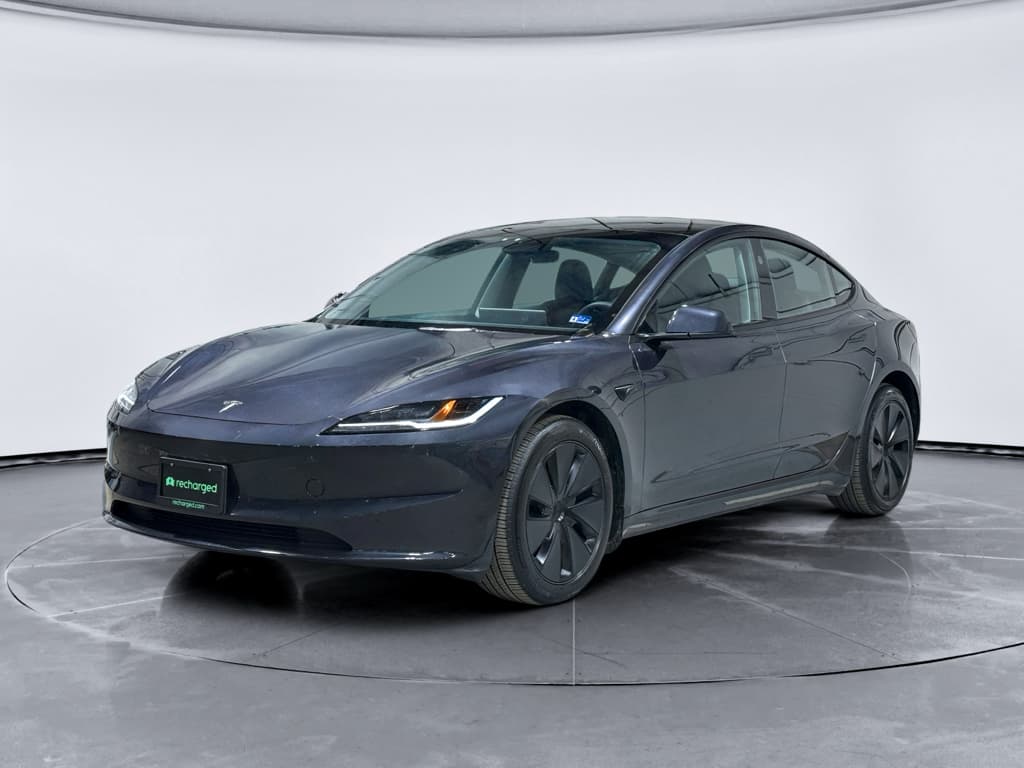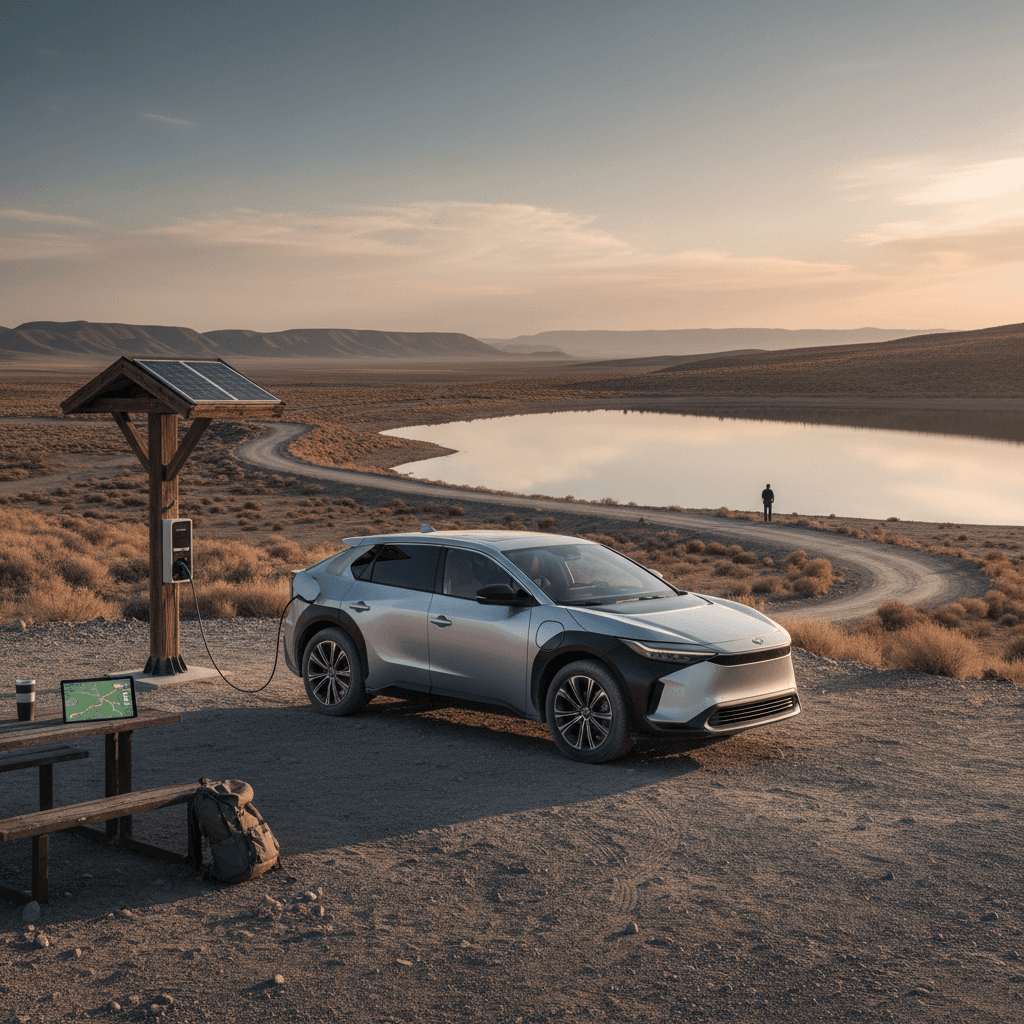
The Toyota bZ4X is a deeply sensible compact electric SUV: quiet, roomy enough, thoroughly Toyota in its manners. But this is a Toyota bZ4X road trip review, which means we’re not talking about school runs or Trader Joe’s. We’re talking 75 mph interstates, questionable motel chargers, kids in the back, and how many times you’re going to stare at a DC fast charger wondering why the numbers aren’t moving faster.
What this review focuses on
Toyota bZ4X at a Glance for Road Trips
Key Road-Trip Numbers (U.S.-spec bZ4X)
On paper, the bZ4X sits right in the thick of the compact EV‑SUV crowd: a lithium‑ion battery (around 57–73 kWh depending on year and drivetrain), 201 hp and FWD or 214 hp and AWD, and EPA range up to about 252 miles for front‑drive models. The trouble starts once you point its blunt nose at the interstate and run it at American speeds.
The headline for road-trippers
Range and Efficiency: Real World vs. Window Sticker
EPA ratings vs. highway reality
Toyota’s own numbers are respectable: up to roughly 252 miles EPA for FWD bZ4X models, dipping into the low 220s for AWD trims. In mixed driving those estimates are achievable. The problem is that road trips aren’t “mixed.” They’re long, fast, and usually loaded with people and stuff.
Run a bZ4X Limited AWD at a steady 70–75 mph, and real‑world tests have seen usable range drop to around 160 miles between stops. That’s one of the lowest highway figures among modern EVs, on par with older short‑range models. FWD versions do better, but you should still budget a healthy margin under the EPA rating on any all‑interstate day.
- Expect roughly 65–70% of the EPA number at 70–75 mph, especially in colder weather.
- FWD trims stretch the distance a bit farther than AWD, thanks to lower weight and drag.
- Carrying two adults, kids, and luggage has a noticeable impact, plan conservatively.
A simple rule-of-thumb
Year-to-year changes and the upcoming “bZ” refresh
Toyota has been quietly massaging the bZ4X since its 2023 launch, tweaks to software, battery options and efficiency, but the broad story for 2024–2025 models is the same: mid‑200s EPA, lower in real‑world highway use. For 2026, Toyota is rebranding the bZ4X as simply “bZ” and promising more range and performance plus adoption of the NACS charging port for access to Tesla Superchargers. If you’re shopping used today, you’re dealing with the current‑generation hardware and CCS port; if you’re thinking long‑term road‑trip use, keep that coming NACS support in your mental bookkeeping.
Charging Performance: The bZ4X’s Weak Spot
Range you can plan around. Charging speed you can’t fix. This is where the Toyota bZ4X shows its age compared with Kia, Hyundai, and even some newer U.S. and European entries.
DC fast-charging in the real world
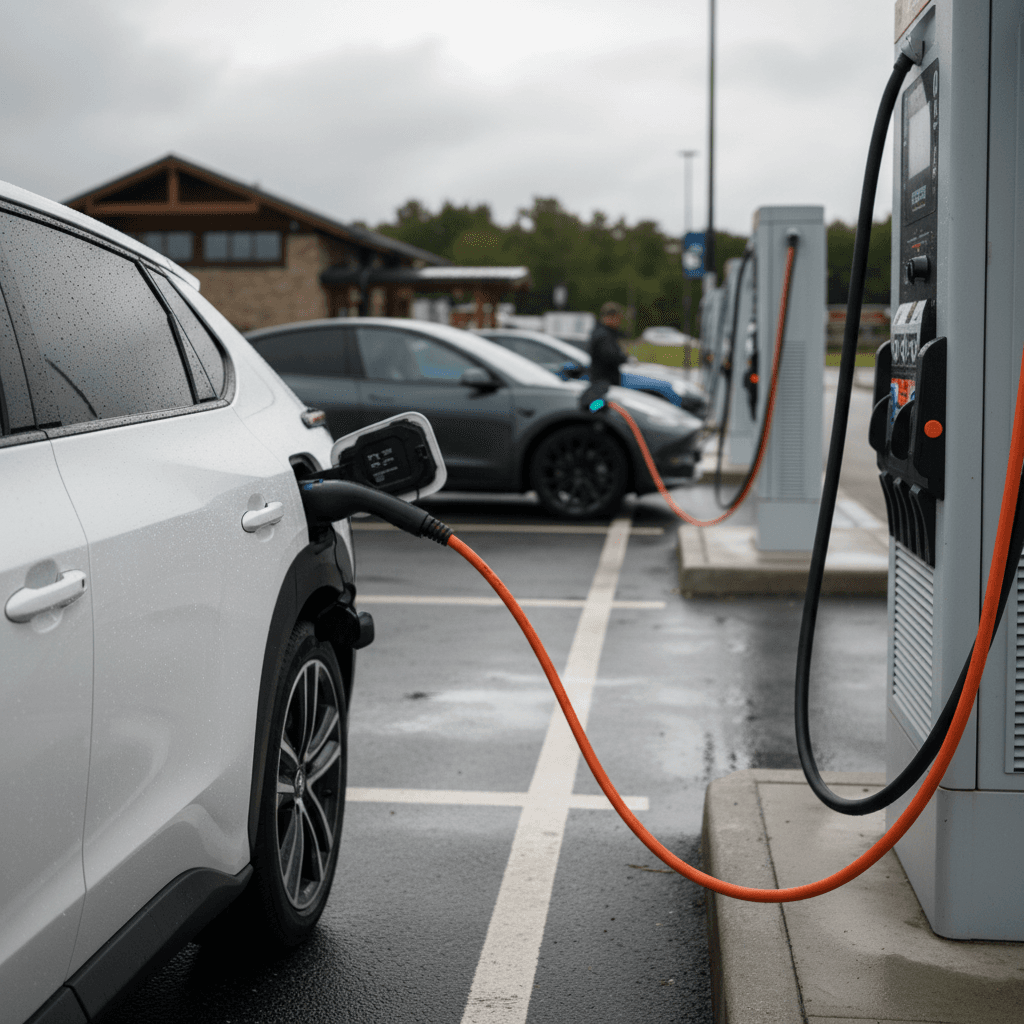
Toyota quotes DC fast‑charge peaks of up to around 150 kW for FWD models and about 100 kW for AWD, with a 10–80% session taking “under an hour” in ideal conditions. Out on the road, that looks like this:
Typical DC Fast-Charging Experience (Approximate)
How a Toyota bZ4X fast‑charges compared with popular rivals on a road trip, assuming good conditions and low starting state of charge.
| Model | Peak DC rate | 10–80% time | Typical highway gap between stops |
|---|---|---|---|
| Toyota bZ4X FWD | Up to ~150 kW | ~35–45 min | 130–170 miles |
| Toyota bZ4X AWD | Up to ~100 kW | ~40–55 min | 120–160 miles |
| Hyundai Ioniq 5 (77 kWh) | Up to ~235 kW | ~18–25 min | 190–230 miles |
| Tesla Model Y Long Range | Up to ~250 kW | ~20–30 min | 210–260 miles |
Real road trips live and die not only on range, but on how fast you can refill it.
Cold weather caveat
Networks and plug types: CCS now, NACS later
Current U.S.‑spec bZ4X models use the CCS DC fast‑charging standard, so on a road trip you’re primarily looking at Electrify America, EVgo, ChargePoint, and regional networks. Station density has improved, but uptime and power levels are still uneven compared with Tesla’s Supercharger network.
Looking ahead, Toyota will adopt the North American Charging Standard (NACS), Tesla’s inlet, opening direct access to Superchargers for new models and, via adapters, some existing owners. If road‑trips are your main use case and you’re shopping used, it’s worth asking how and when that support will apply to the specific bZ4X model year you’re considering.
Highway Comfort: Noise, Ride and Seats
If the bZ4X is under‑whelming at the plug, it’s much more convincing from the driver’s seat. The ride is supple by EV‑SUV standards, more Camry than track toy, and the cabin settles into a quiet, low‑drama thrum at 70 mph. You feel the battery’s mass as a kind of reassuring, low‑centered stability rather than dead weight.
- Noise levels: Wind and road noise are well‑managed; there’s some tire roar on coarse pavement, but conversations in the second row don’t require shouting.
- Seats: Toyota knows seats. The front chairs are soft‑firm in the right ways, with enough adjustment to keep you happy across 500‑mile days, though larger drivers may wish for more thigh support.
- Driving position: The steering wheel/instrument cluster arrangement is slightly unconventional but quickly feels natural, especially on long cruises.
- Power: 201–214 hp is enough for easy two‑lane passes; you won’t mistake it for a performance EV, but it never feels wheezy.
Comfort verdict
Space, Practicality and Family Duty
Road trips are about bodies and baggage. Here the bZ4X is right down the middle of the compact SUV fairway: similar footprint to a RAV4, but with the packaging advantages of an EV skateboard platform.
How the bZ4X Handles People and Stuff
Practical strengths and weaknesses for family road trips.
Passenger space
Two adults up front, two in back, and everyone keeps their knees. The flat floor makes the middle rear seat reasonably usable for short hops, though three‑across adults will feel close.
Cargo & storage
Cargo volume is competitive with other compact EV SUVs. A low load floor and wide opening make suitcases easy; under‑floor storage swallows charging cables and road‑trip debris.
Kids & car seats
Wide rear doors and clearly marked LATCH anchors make child‑seat duty straightforward. Rear‑facing seats fit without front‑row sacrifices in most cases, depending on your height.
Cabin tech & power
Plenty of USB ports, a decent infotainment system, and the usual Toyota ergonomics: nothing flashy, mostly intuitive. Wireless phone mirroring on newer model years helps minimize fiddling.
Pack with charging in mind
Winter Weather and Mountain Driving
Toyota’s available AWD with X‑MODE gives the bZ4X honest foul‑weather competence. With proper winter tires, it feels sure‑footed in snow and slush, and hill‑descent control plus clever traction logic make ski‑town parking lots less of an adventure.
- AWD models are confidence‑inspiring in snow, though they sacrifice some range compared with FWD.
- Regenerative braking is well‑tuned and predictable, even on slick surfaces.
- Long mountain descents let you claw back a noticeable chunk of range via regen, offsetting some of the uphill penalty.
Winter road-trip reality
How the bZ4X Compares to Rivals on Road Trips
Kia EV6 / Hyundai Ioniq 5
- Pros vs bZ4X: Much faster 800‑volt DC charging, stronger highway range, more dramatic styling and performance.
- Cons vs bZ4X: Ride can be firmer, interior design more polarizing, warranty excellent but brand reputation doesn’t yet match Toyota’s for long‑term simplicity.
Tesla Model Y
- Pros vs bZ4X: Longer range, faster Supercharger network with dense coverage, very strong efficiency.
- Cons vs bZ4X: Firmer ride, minimalist cabin not to everyone’s taste, build‑quality consistency still variable.
Volkswagen ID.4
- Pros vs bZ4X: Gentle ride, good space, improving charging performance.
- Cons vs bZ4X: Software still a work in progress; long‑term reliability story not as established as Toyota’s.
Subaru Solterra
- Pros vs bZ4X: Essentially the same platform with a Subaru badge, tuned more toward outdoorsy buyers.
- Cons vs bZ4X: Similar charging and range limitations; Toyota’s dealer network and resale reputation are often stronger.
The positioning problem
Planning a Road Trip in a bZ4X: Step-by-Step
Plan a bZ4X Road Trip Without Range Drama
1. Use a conservative range target
Plan each leg around 65–70% of your rated range, especially in winter or at 70–75 mph. For an AWD bZ4X rated around 222 miles, that means thinking in 140–160 mile chunks.
2. Build your route around chargers, not destinations
Use apps like A Better Routeplanner, PlugShare, or your charging‑network app to string together reliable CCS fast‑chargers. Favor sites with multiple stalls and amenities.
3. Aim to arrive with 10–20% battery
Arriving nearly empty shortens charging time by keeping you in the fast part of the charging curve. Don’t obsess over 0%; plan safe buffers, especially in rural areas.
4. Charge to 70–80%, not 100%, when you can
The last 20–30% of the pack fills slowly. On multi‑stop days, it’s often faster overall to make more frequent, shorter 20–70% or 10–80% charges than to fill all the way up.
5. Plan for meals and breaks around slow charging
Because the bZ4X is not a fast charger by modern standards, sync your lunch/dinner and long rest stops with your longest charging sessions so they feel less like waiting.
6. Have a home base for Level 2 charging
If your trip includes overnights with Level 2 (hotel, rental, family driveway), you erase most of the bZ4X’s charging disadvantage. A full battery every morning is the great equalizer.
Buying a Used bZ4X for Road Trips
Where the Toyota bZ4X gets interesting is not as a brand‑new, full‑price proposition, but as a used EV. Because it’s been dinged in the press for slow charging and modest range, resale values can be softer than you’d expect for a Toyota. That’s frustrating for first owners, and an opportunity for you.
On the used market, a bZ4X that’s a little cheaper than faster‑charging rivals suddenly makes more sense. For many households, road trips are a few times a year, while school, work, and errands are every day. If 90% of your miles are around town with Level 2 charging at home, the bZ4X’s disadvantages mostly show up on those occasional long hauls.
How Recharged can help
Ready to find your next EV?
Browse VehiclesWhat to prioritize in a used bZ4X
- Health of the high‑voltage battery (capacity and DC fast‑charge history).
- FWD vs AWD depending on your climate and road‑trip plans.
- Updated software and recall campaigns completed, especially for early cars.
- Included charging cables and any Level 2 equipment.
When a bZ4X is the wrong tool
- You regularly drive 200+ mile legs with limited CCS infrastructure.
- You want the quickest possible DC charging, think 15–25 minutes per stop.
- Your winter road trips happen in very cold regions without pre‑conditioning or warm garages.
If you’re comparing multiple used EVs, say, a bZ4X, a VW ID.4 and a Hyundai Ioniq 5, Recharged’s experts can walk you through how each behaves on road trips and help you pick the one that fits your actual travel patterns, not just the brochure.
Toyota bZ4X Road Trip FAQ
Common Questions About Road‑Tripping in a bZ4X
Verdict: Is the Toyota bZ4X a Good Road-Trip EV?
Viewed purely through the road‑trip lens, the Toyota bZ4X is a second‑tier player. Its highway range is merely adequate, its fast‑charging is workmanlike at best, and future NACS access arrives on a schedule only Toyota and the calendar truly understand. If you want to cannonball interstates with 220‑mile stints and 18‑minute stops, buy something else.
But most people don’t live their lives in cross‑country cannonball runs. Day to day, the bZ4X is civilized, easy‑going, and reassuring in that deeply Toyota way. As a used buy, priced right, battery health verified, expectations calibrated, it can be a smart choice for drivers who do occasional road trips, not constant ones.
If that sounds like you, and you’d like to see how a specific bZ4X stacks up against your routes and routines, Recharged can pair you with an EV specialist, walk you through its battery‑health report, and help you decide whether this understated Toyota is the right long‑distance companion, or whether another used EV will make your next road trip feel a lot shorter.