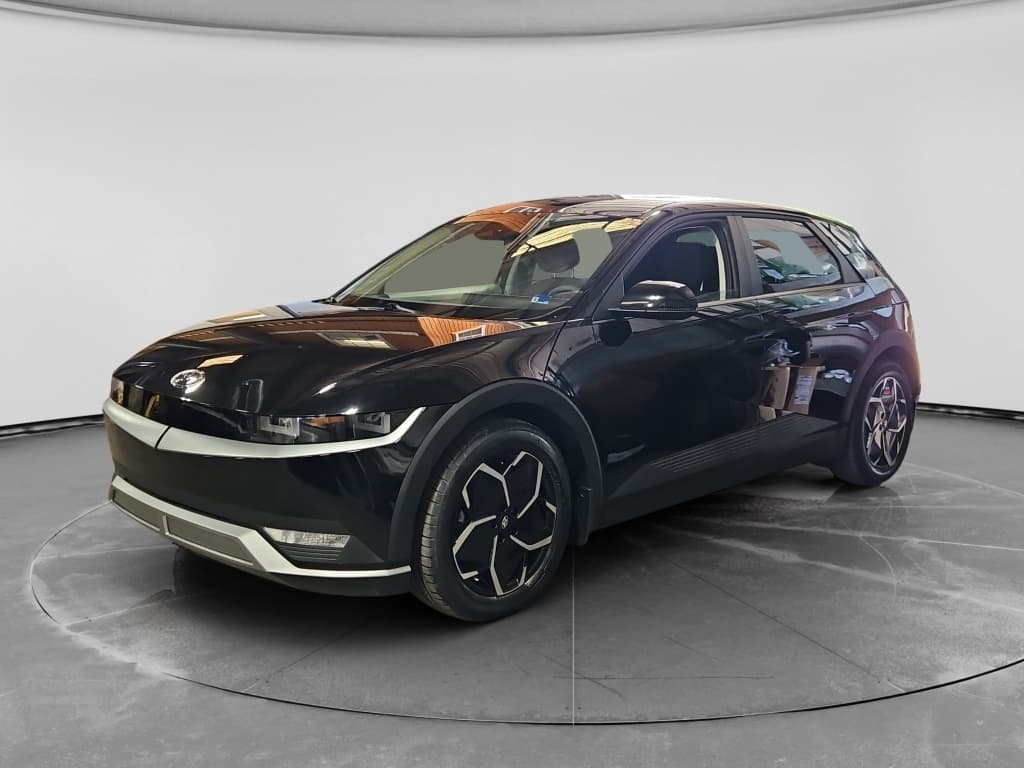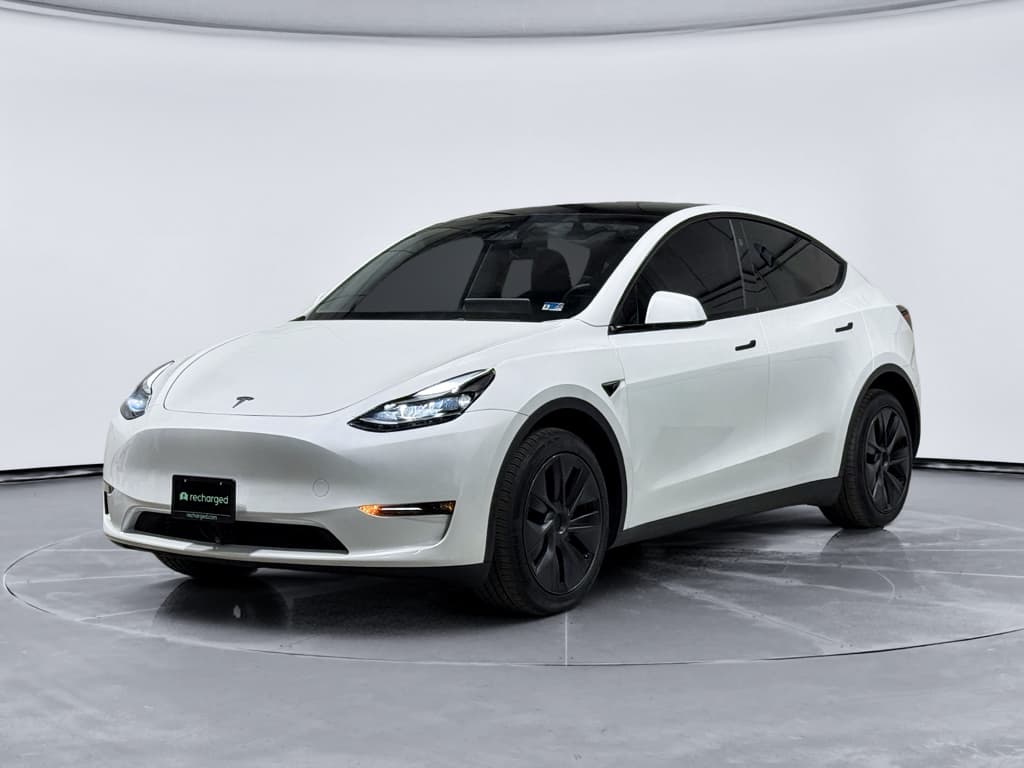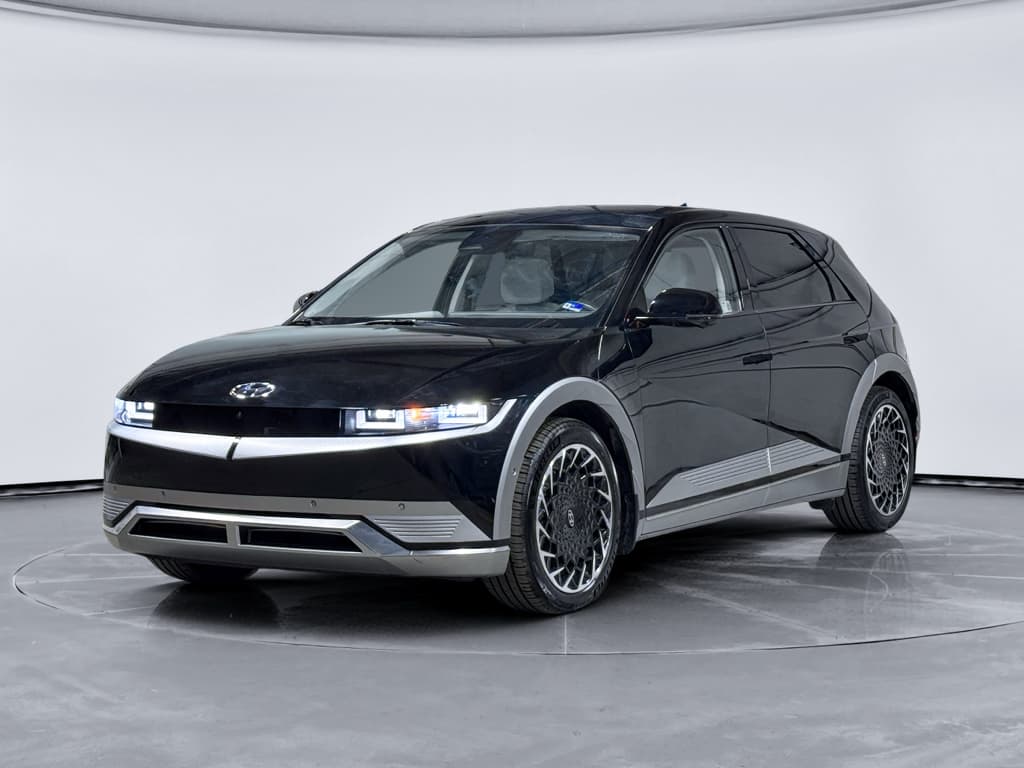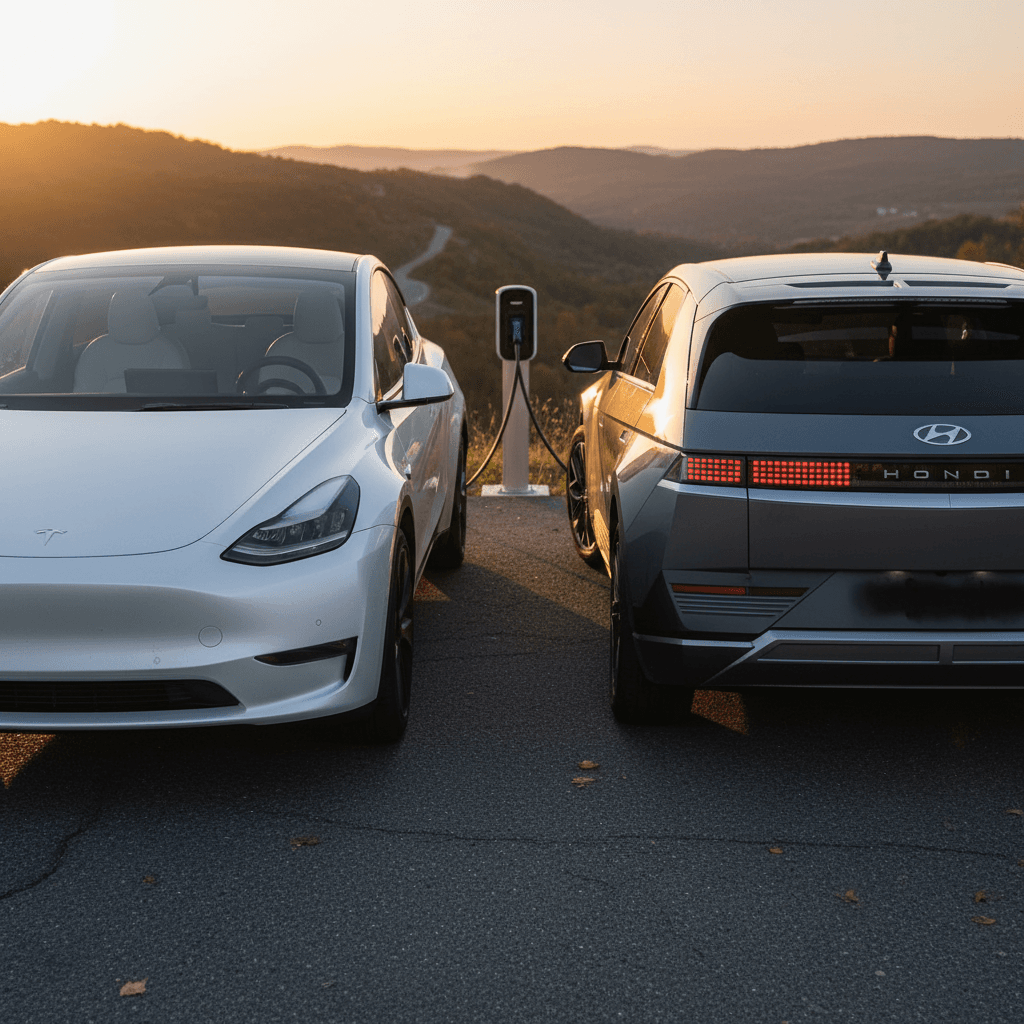
If you’re cross-shopping the Tesla Model Y vs Hyundai Ioniq 5, you’re looking at two of the strongest electric SUVs on sale right now. They’re roughly the same size and price, but they deliver very different experiences: Tesla leans into efficiency, software and the Supercharger network, while Hyundai counters with ultra-fast charging, a roomier rear seat and a more traditional ownership experience. So which is better for you, especially if you’re thinking about a used EV?
Headline verdict (spoiler)
Model Y vs Ioniq 5: quick overview
How the Tesla Model Y and Hyundai Ioniq 5 differ at a glance
Same mission, very different personalities
Tesla Model Y
- Strengths: Excellent efficiency and range, mature Supercharger network, strong software and driver-assistance, lively performance.
- Weaknesses: Sparse interior with single screen, mixed ride comfort, build quality can be hit-or-miss, more expensive repair ecosystem.
Hyundai Ioniq 5
- Strengths: Super-quick DC fast charging, very roomy back seat, intuitive buttons and knobs, competitive warranty and dealer support.
- Weaknesses: Slightly less range on paper, fewer brand-owned fast chargers today, infotainment not as slick as Tesla’s.
Newer twist: NACS ports
Core specs: Tesla Model Y vs Hyundai Ioniq 5
Typical U.S. trims: Tesla Model Y vs Hyundai Ioniq 5
Numbers vary slightly by model year and wheel size; this table focuses on common 2024–2025-style configurations you’re likely to see new or used in the U.S.
| Spec | Tesla Model Y Long Range AWD | Hyundai Ioniq 5 SE/SEL RWD (84 kWh) | Hyundai Ioniq 5 Limited AWD (84 kWh) |
|---|---|---|---|
| EPA range (approx.) | 300–330 miles | 305–320 miles | 260–280 miles |
| Battery capacity (usable est.) | ~75–80 kWh | 84 kWh | 84 kWh |
| Drivetrain | Dual-motor AWD | Single-motor RWD | Dual-motor AWD |
| 0–60 mph (approx.) | 4.5–4.8 sec | 7+ sec | ~5 sec |
| Max DC fast charge rate | Up to ~250 kW | Up to ~235–240 kW | Up to ~235–240 kW |
| Onboard AC charger | 11.5 kW | ~10.5–11 kW | ~10.5–11 kW |
| Seating | 5 (optional 7 on some years) | 5 | 5 |
| Cargo space (behind 2nd row) | ~30 cu ft + frunk | ~27 cu ft | ~27 cu ft |
Always confirm exact specs for the specific VIN you’re considering, especially battery size and drive layout.
On paper, the Model Y and Ioniq 5 trade punches: the Tesla tends to go a bit farther on a charge, while the Hyundai packs a slightly larger battery and charges extremely quickly on 800‑volt hardware. Performance-oriented drivers will lean toward the Model Y; comfort-first shoppers may prefer the Hyundai.
Range and charging: who goes farther, who charges faster
Real-world range
- Model Y: In U.S. trims like Long Range AWD, you’re typically looking at an EPA rating around the low 300‑mile mark. In independent tests, Teslas often come close to, or match, those estimates when driven reasonably.
- Ioniq 5: Long-range rear-wheel-drive versions commonly land just north of 300 miles. Dual‑motor AWD models drop into the 260–280‑mile ballpark. Still plenty for daily use, but a bit less buffer on long days.
Because Tesla obsessively optimizes aerodynamics and software, the Model Y usually squeezes more miles per kWh than the Ioniq 5, even when the Hyundai carries a slightly bigger battery.
Fast charging and road trips
- Ioniq 5: Built on an 800‑volt platform, it’s one of the quickest-charging EVs you can buy. On a strong DC fast charger, going from about 10% to 80% can take as little as 18–20 minutes when conditions are right.
- Model Y: Tesla’s 400‑volt system doesn’t hit quite the same peak numbers on paper, but paired with a dense Supercharger network, it’s extremely convenient in practice. Add in automatic route planning and battery pre‑conditioning and road‑tripping is straightforward.
Early 2025+ Ioniq 5s in North America gain a native NACS port, letting you plug directly into many Tesla Superchargers. That’s a big equalizer if you’re buying new or late‑model used.
Watch the fine print on fast charging
Range and charging at a glance
Interior space, comfort and practicality
If you regularly haul people or cargo, the way these SUVs use their space may matter more than a few kWh of battery. Both are roomy, but they feel different once you climb in.
Cabin experience: minimalist vs lounge-like
Which interior better fits your daily life?
Tesla Model Y interior
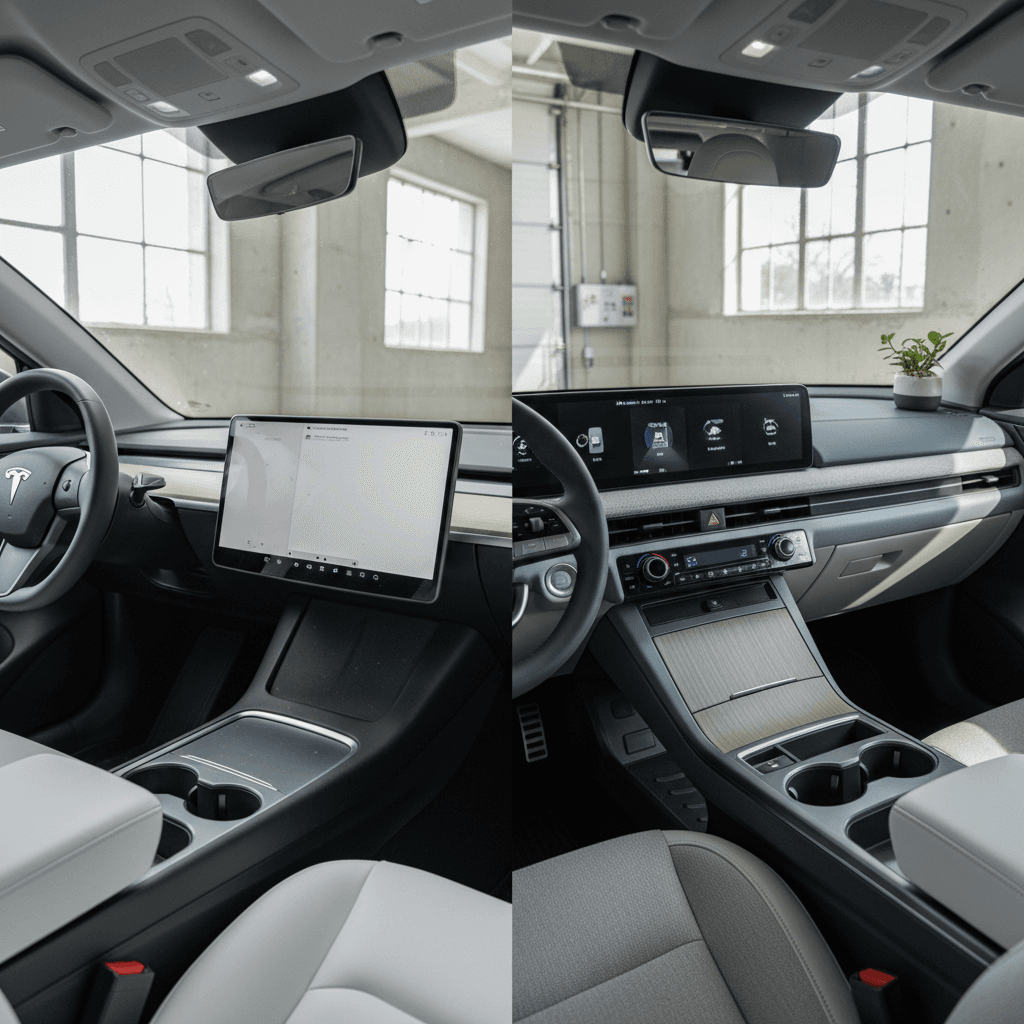
- Design: Extremely minimalist. Nearly everything, navigation, climate, driving data, lives on a single 15-inch center touchscreen.
- Space: Plenty of head- and legroom up front; rear legroom is good but not best-in-class. Optional third row on some years is tight and best for kids.
- Cargo: Large rear hatch, split-fold rear seats, plus a useful front trunk (frunk). Strong choice if you prioritize cargo over rear-seat lounging.
Hyundai Ioniq 5 interior
- Design: Retro‑modern with a living‑room vibe. Dual screens for instruments and infotainment, plus real buttons and knobs for common functions.
- Space: Exceptionally generous rear legroom thanks to a long wheelbase and flat floor. Adults will notice the difference on longer trips.
- Flexibility: Sliding rear bench and reclining rear seats on many trims. It’s an easy-going family space that feels more conventional, and more intuitive, to many first-time EV owners.
Dimensions are similar, feel is not
Tech, safety and driving experience
Infotainment and controls
- Model Y: The giant touchscreen is powerful and frequently updated over the air. You get built‑in trip planning, streaming apps and robust mobile‑app integration. The trade-off is that basic tasks, like adjusting wipers or vents, live in menus, which some drivers find distracting.
- Ioniq 5: Dual screens give you a digital gauge cluster plus a central infotainment display. You still get navigation, EV routing and phone mirroring, but with more traditional buttons for climate and audio. It’s less flashy than Tesla but easier to learn for many households.
Driving feel and safety tech
- Model Y: Quick acceleration in nearly every trim and a firm, sometimes busy ride. Steering is light but responsive. Tesla’s Autopilot and available supervised Full Self‑Driving can reduce fatigue on highways when used properly.
- Ioniq 5: Softer, more compliant ride and quiet cabin. It’s not as quick in base trims, but dual‑motor models are plenty punchy. Hyundai’s Highway Driving Assist bundles adaptive cruise and lane centering in a way that feels familiar to drivers coming from traditional brands.
- Safety: Both earn strong crash-test scores and pack in advanced driver-assistance features like automatic emergency braking and blind‑spot monitoring (Hyundai often includes blind‑spot cameras, which Tesla does not).
"Both SUVs are deeply competent. The right choice comes down less to raw performance and more to whether you prefer Tesla’s software-forward approach or Hyundai’s familiar controls and dealership support."
Ownership costs, incentives and charging access
In the U.S., what you pay, and what you save, depends not just on MSRP, but also on tax credits, electricity rates and how often you fast‑charge. Here’s how the Model Y and Ioniq 5 stack up when you look past the window sticker.
Key cost questions to ask yourself
1. Will you qualify for tax credits?
New-vehicle federal EV credits have shifted toward cars built in North America or sold under qualifying price and battery rules. The Model Y has often qualified in certain trims; U.S.-built Ioniq 5s are beginning to enter that conversation as Hyundai’s Georgia plant ramps up. For used EVs, there’s a separate federal credit cap and income limits, worth checking before you shop.
2. How often will you DC fast-charge?
Frequent fast charging can increase your energy costs and may accelerate battery wear over many years. If most of your miles are on home Level 2 charging, your monthly energy bill will matter more than which SUV can add 150 miles in 15 minutes.
3. Do you prefer a dealer network or direct sales?
Tesla sells direct and handles most service through its own centers and mobile techs. Hyundai leans on a nationwide dealer network. If you like face‑to‑face support and loaner cars, the Ioniq 5’s dealer model can be a plus; if you’d rather do everything in an app, the Model Y fits that mindset.
4. Insurance and repair costs in your area
Insurance premiums for EVs can swing widely by ZIP code. Teslas can sometimes be pricier to insure and repair due to parts and labor rates. Hyundai’s broader parts network can help, but the Ioniq 5 is still a relatively new, sophisticated EV.
Where a used EV retailer fits in
Ready to find your next EV?
Browse VehiclesUsed-market reality and resale value
Both the Model Y and Ioniq 5 are showing up in meaningful numbers on the used market now, which opens up real opportunity, if you understand how depreciation and battery health play out for each.
What we’re seeing in the used market
High-level trends from dealership lots and online marketplaces
Tesla Model Y used trends
- Resale strength: Historically strong resale values, though broader EV price drops since 2023 have softened premiums.
- Selection: Lots of inventory in many U.S. markets, including ex‑lease cars and high‑mileage commuter vehicles.
- Battery health: Many owners report moderate degradation with high miles, but the pack chemistry has been resilient overall when charged and stored sensibly.
Hyundai Ioniq 5 used trends
- Resale: Slightly steeper early depreciation than Tesla in many markets, which can favor used buyers.
- Selection: Fewer units overall than Model Y, often clustered around larger metro areas and Sun Belt states.
- Warranty: Hyundai’s EV battery warranty is competitive, and younger Ioniq 5s may still carry ample factory coverage, which is appealing if you’re buying 2–4 years old.
Why a battery health report matters
Which is better for you? Real-world scenarios
Model Y vs Ioniq 5: best fit by driver type
Daily commuter with occasional road trips
<strong>Better fit: Tesla Model Y</strong> if you regularly drive long interstate stretches where Superchargers are common.
You’ll appreciate Tesla’s efficient drivetrain and integrated trip planning that routes you through fast chargers automatically.
A used Long Range AWD Model Y can deliver a comfortable buffer for 200‑mile days, even in winter.
Suburban family with kids and car seats
<strong>Better fit: Hyundai Ioniq 5</strong> if rear-seat comfort is king.
The sliding, reclining rear bench and flat floor make it easier to manage car seats and growing kids.
Physical buttons for climate and audio are easier for non‑techy family members to live with.
First-time EV buyer coming from a gas SUV
<strong>Lean Ioniq 5</strong> if you’re nervous about full touch-only controls and want a traditional dealership safety net.
Hyundai’s learning curve for controls is gentler, and the cabin feels familiar on day one.
However, if you’re comfortable with apps and screens, the Model Y’s ecosystem (app, software updates, trip planning) can quickly win you over.
Enthusiast driver who loves tech
<strong>Lean Model Y</strong> for stronger straight-line performance and a more connected software experience.
Tesla’s frequent over‑the‑air updates and robust app ecosystem keep the car feeling fresh.
If you want a spicier Hyundai, watch for performance‑oriented Ioniq 5 N variants, but expect higher prices and limited availability.
How to choose: a simple checklist
Decision checklist: Tesla Model Y vs Hyundai Ioniq 5
1. Map your charging reality
Look at a map of fast chargers near your home and along your regular long‑distance routes. If Tesla Superchargers dominate the map today, the Model Y still holds an edge, though a NACS‑equipped Ioniq 5 narrows it considerably.
2. Decide how much range buffer you need
Add up your longest realistic day of driving. If that number is under 200 miles, either SUV is overkill. If you frequently push 250+ miles between stops in all weather, the Model Y’s efficiency and range can be reassuring.
3. Sit in both back seats
If you can, physically compare the rear seating. Families often prefer the Ioniq 5’s lounge‑like space and sliding bench; those prioritizing cargo flexibility and a frunk may prefer the Tesla.
4. Test the tech and controls
Try a short drive or at least a sit‑through of common tasks: adjusting mirrors, climate, wipers, navigation. Some shoppers love Tesla’s clean interface; others quickly gravitate to Hyundai’s mix of screens and buttons.
5. Compare total cost of ownership
Price out insurance quotes, home-charging installation, and any available tax credits for the specific VINs you’re considering. A slightly cheaper purchase price can be outweighed by higher insurance or energy costs over several years.
6. For used EVs, insist on battery transparency
Ask for battery health data, service history and any remaining factory warranty. With Recharged, the Recharged Score and battery health diagnostics are built into every listing, so you don’t have to guess.
FAQ: Tesla Model Y vs Hyundai Ioniq 5
Frequently asked questions
Bottom line: Tesla Model Y vs Hyundai Ioniq 5
If you mainly road-trip long distances or want the most mature EV ecosystem today, the Tesla Model Y still edges ahead for a lot of U.S. buyers. Its range, efficiency and Supercharger access are hard to beat, especially in Long Range trims. If your priority is comfort, intuitive controls and incredibly fast DC charging in a fresh design, the Hyundai Ioniq 5 is a standout that sacrifices little in everyday use.
For shoppers in the used market, the more important question isn’t just “Tesla Model Y vs Hyundai Ioniq 5, which is better?” It’s which specific car in front of you is healthier, fairly priced and right for your routes. That’s where tools like the Recharged Score battery health diagnostics, transparent pricing and EV‑specialist guidance become critical. Start with the SUV that best fits your lifestyle, then let data, not guesses, decide which individual vehicle earns a spot in your driveway.