If you’re looking at a 2025 Mercedes EQB, or you already own one, you’ve probably heard about battery recalls, software updates that cut range, and mixed reliability reviews. This guide walks through the most common 2025 Mercedes EQB problems and fixes so you can decide whether the EQB fits your life, and what to watch for if you’re buying one used.
Key Takeaway
Overview: How Reliable is the 2025 Mercedes EQB?
2025 EQB at a Glance
Broadly, the EQB drives well, offers a practical cabin, and gives you that Mercedes badge. Where 2025 owners tend to run into trouble is electrical and software‑related issues rather than traditional mechanical failures. The headline concern is a series of high‑voltage battery recalls tied to fire risk and subsequent updates that can shrink usable range and slow DC fast‑charging. On top of that, some owners report infotainment glitches, odd noises, and frustrating dealer experiences.
Model Year Nuance
The Big Issue: High‑Voltage Battery Recalls
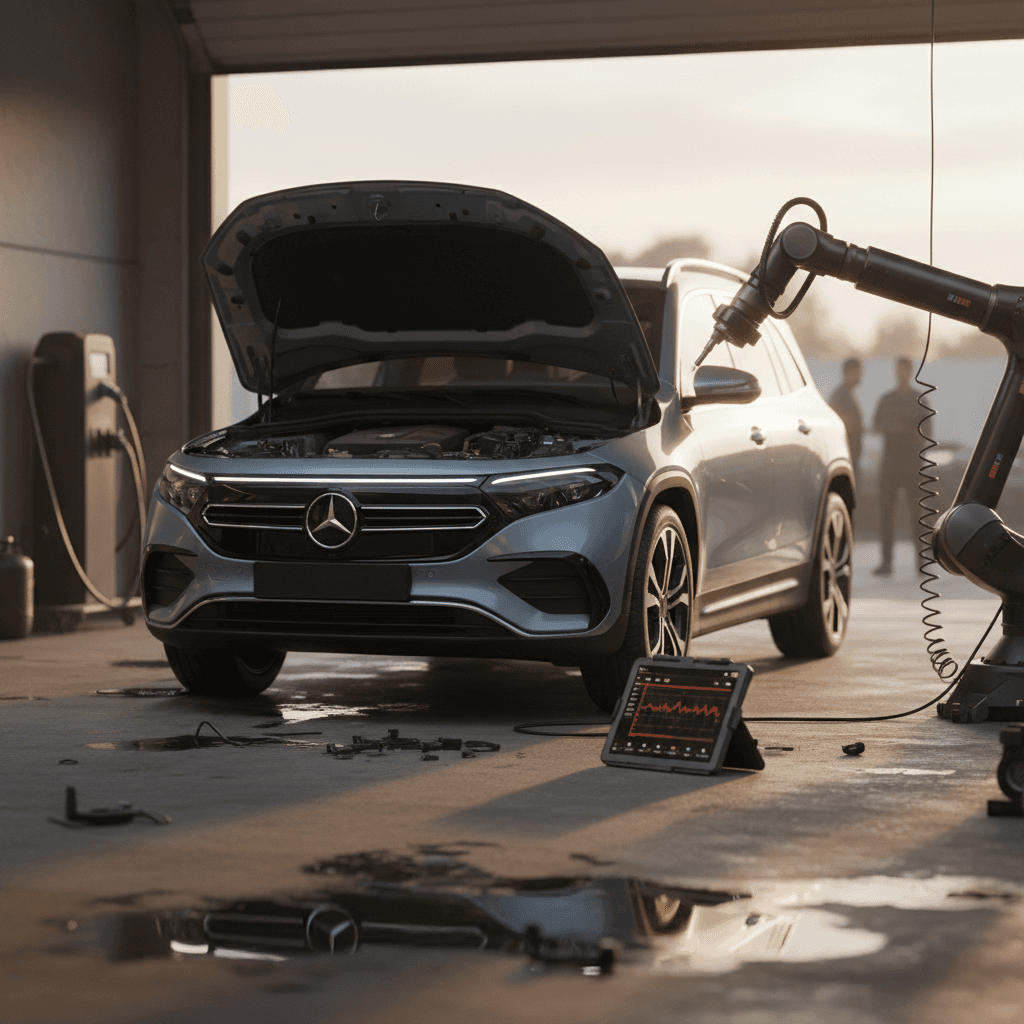
The most serious 2025 EQB problem isn’t a squeak or a glitch, it’s the high‑voltage battery safety recalls. In certain 2022–2025 EQB SUVs, internal defects in battery cells can cause a short circuit that, in rare cases, may lead to a fire while parked or driving. Regulators in multiple markets have required Mercedes to act.
- Owners of affected EQBs are told to park outside and away from structures.
- You may be instructed to limit charging to 80% state‑of‑charge until the fix is performed.
- Early waves of the campaign relied on a battery management software update that reduced usable capacity and charging performance.
- Later campaigns in some regions move toward full high‑voltage battery replacement on defective packs.
Safety First
For U.S.‑market 2025 EQBs, the most common remedy is still a dealer‑installed software update to the battery management system (BMS). In some regions, regulators are pushing Mercedes toward replacing suspect packs outright. Which path your EQB follows depends on production date, specific battery supplier, and how Mercedes and regulators ultimately settle on a remedy.
Typical Symptoms Before Recall Work
- Warning messages about the high‑voltage system
- Charging capped below 100% or car advising 80% limit
- Inconsistent DC fast‑charging speeds
- Unusual fan noise while parked, even when “off”
What the Recall Fix Usually Involves
- Inspection and software update for the BMS
- Charging behavior changes (new limits or slower DC charging)
- In rare cases, complete high‑voltage battery replacement
- Updated guidance on how high you can safely charge
VIN Check Every Time
Range Loss and Slower Charging After Recall Updates
One of the most frustrating 2025 EQB problems owners talk about is what happens after the recall fix. Several EQB drivers report that once dealers install the BMS update, their displayed range at a given state‑of‑charge can drop by around 15–25%, and DC fast‑charging curves become noticeably flatter.
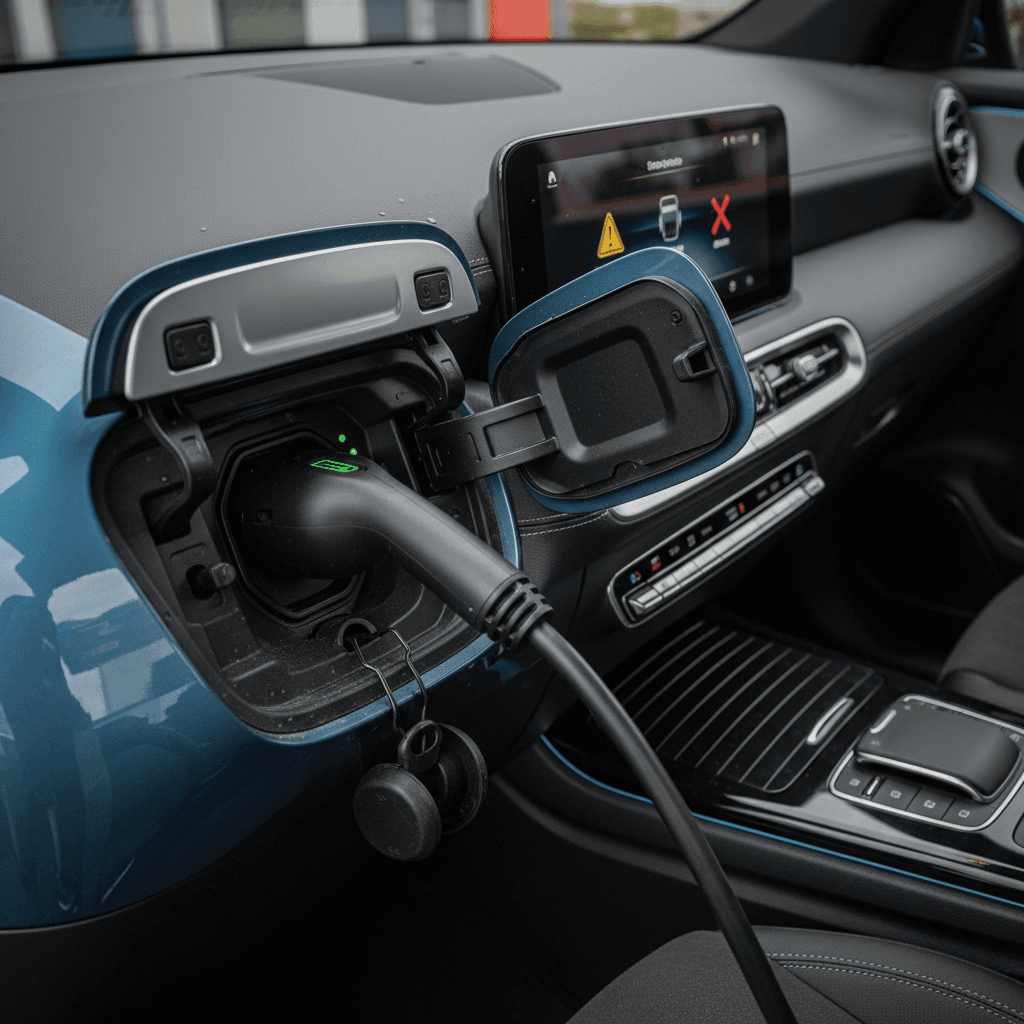
From a safety standpoint, the software update is designed to protect the pack by reducing the usable window of the battery and managing how aggressively it can be charged. But from a consumer standpoint, it feels like your EQB suddenly shrank its battery overnight. Some owners say the range display gradually climbs back up after a few full charge and discharge cycles; others report that the reduced range appears to be permanent.
What’s Actually Happening?
If Your 2025 EQB Loses Range After an Update
1. Document Before‑and‑After Data
Before the dealer visit, snap photos of your typical range at 80% and 100%. After the update, repeat under similar conditions so you have concrete evidence of any big change.
2. Re‑calibrate the BMS
Run the pack through a few controlled cycles: charge to 100%, drive down to 10–20%, then recharge to 100% again. Sometimes the range estimate improves after the system relearns your usage.
3. Compare Real‑World Consumption
Use the trip computer to track kWh/100 miles. If energy use hasn’t spiked but range is way down, the change is likely in software limits, not a failing battery.
4. Ask About Battery Replacement Criteria
Politely press your dealer to explain what thresholds trigger a full battery replacement under the recall or warranty. Get any promises in writing.
5. Open a Case With Mercedes
If the range hit is severe and permanent, escalate directly with Mercedes customer care. A paper trail helps if goodwill compensation or buyback discussions ever become necessary.
DC Fast‑Charging Problems on the EQB
Separate from range display issues, many EQB owners describe disappointing DC fast‑charging performance. On paper, the EQB’s peak fast‑charge rate is competitive for a compact luxury EV. In practice, charging sessions can be much slower than expected, especially after the recall‑driven BMS updates.
Common EQB DC Fast‑Charging Complaints
Some are station‑related, others are vehicle‑software choices.
Slow Charge Curve
Charge speeds ramp up briefly, then drop off and stay low, turning a 30‑minute stop into a 45–60 minute wait.
Early Tapering
Instead of holding peak power to 50–60%, the EQB may start tapering much earlier, even in mild weather.
Session Errors
Some owners see interrupted sessions or handshake errors, especially when starting charges via third‑party apps.
Golden Rule for Faster DC Charging
If your EQB is dramatically slower than peers at the same station, the first step is to isolate whether the problem is network‑side or vehicle‑side. Try multiple different DC fast‑charging networks, charge a second EV on the same plug if possible, and log your results. If your EQB remains the outlier, that’s when you talk to the dealer while the car is still under warranty.
Software, MBUX, and Connectivity Glitches
Like most modern luxury EVs, the 2025 EQB is as much rolling software as it is hardware. That opens the door to a familiar basket of MBUX infotainment and connectivity issues. Owners report things like laggy screens, frozen backup cameras, random restarts, and problems initiating charging sessions through the Mercedes‑branded apps at certain public networks.
- MBUX display freezing or rebooting, especially right after startup.
- Apple CarPlay or Android Auto disconnecting mid‑trip.
- Backup camera delay or failure to appear when shifting into Reverse.
- Charging sessions on certain networks failing to start when launched from the Mercedes app.
Why It Matters on an EV
Quick Fixes for EQB Software Glitches
1. Keep Software Current
Ask your dealer to confirm all control units, including MBUX and telematics, are on the latest versions. Some updates roll out over‑the‑air, others require a service visit.
2. Hard Reboot MBUX
If the screen locks up, use the vehicle’s documented reset procedure (often a long press of the power or home button) instead of simply killing the car’s main power.
3. Simplify Phone Connections
Delete old phones from the Bluetooth list, re‑pair your primary device, and verify your USB cable if you use wired CarPlay or Android Auto.
4. Test Charging Without the App
If network sessions fail via the Mercedes app, try starting the charge directly from the station or the network’s own app. That helps reveal whether the bottleneck is app‑side or vehicle‑side.
Noises, Vibrations, and Build‑Quality Complaints
A number of EQB owners, especially in earlier model years but some in 2025 as well, post about rattles, buzzes, and odd vibrations. Common complaints include dashboard creaks over rough pavement, a buzzing near the head‑up display, and wind noise at highway speeds that feels out of step with the Mercedes badge and sticker price.
Dealer May Call It “Normal”
Simple Owner Checks
- Empty the door pockets and cargo area before diagnosing rattles.
- Slide the rear seats and adjust the third row (if equipped) to see if noises change.
- Listen carefully around the HUD, mirror, and A‑pillars at 60–70 mph.
What a Good Dealer Should Do
- Road‑test with you to reproduce the issue.
- Check trim clips around the dash and windshield.
- Inspect door and window seals for gaps or misalignment.
To be fair, nearly every compact luxury SUV, electric or not, generates some noise on rough roads. The question is whether the sounds are consistent with other examples of the same model. When you’re cross‑shopping used EQBs at a place like Recharged, drive at highway speeds and pay attention. If one example is much louder than the rest, that’s a red flag.
Other Issues 2025 EQB Owners Report
Less Common, But Worth Watching
These don’t affect every EQB, but you’ll want to screen for them when shopping used.
Random Warning Lights
Some owners report sporadic alerts for driver‑assist systems or the 12‑volt system that clear on restart. Intermittent electrical glitches can be hard to reproduce but are worth documenting.
Lane‑Keep & Assist Behaving Oddly
Steering assist or lane‑keep that’s overly aggressive, inconsistent, or unavailable. Often improved with software updates and camera/radar calibrations after glass or body work.
Dealer Service Experience
A recurring theme is frustration with communication and timelines for parts, especially around battery‑related work. This varies widely by dealership.
None of these issues automatically disqualify the 2025 EQB, but together they explain why reliability scores and owner satisfaction are more mixed than you might expect from a Mercedes. The good news: most of these problems surface early in the vehicle’s life, often while it’s still covered by the original warranties.
Preventive Maintenance: How to Avoid Bigger Problems
EVs like the EQB don’t need oil changes, but that doesn’t mean they’re maintenance‑free. A few smart habits can reduce your risk of running into the worst 2025 EQB problems, and help protect the battery over the long term.
- Avoid charging to 100% every night; 60–80% is healthier for daily use unless you need full range.
- Keep DC fast‑charging for road trips and emergencies; rely on Level 2 home or workplace charging when you can.
- Stay on top of software updates, especially those tied to the high‑voltage system and driver‑assist features.
- Rotate tires and keep them properly inflated; heavy EVs punish under‑inflated tires and worn suspension components.
- Have the 12‑volt battery tested during regular service visits; a weak auxiliary battery can cause strange electronic behavior.
Battery Health, Made Concrete
Ready to find your next EV?
Browse VehiclesUsed 2025 EQB Buying Checklist
Because Mercedes has already announced the EQB will leave the U.S. lineup after the 2025 model year, you’re likely to see more of them on the used market in the next few years. That can create some good values, if you buy carefully. Here’s how to separate a solid 2025 EQB from a future headache.
2025 EQB Pre‑Purchase Checklist
1. Run a Full Recall and Campaign Check
Use the VIN with the official recall lookup and ask for a printout of all completed campaigns. Make sure any high‑voltage battery recalls and key software updates are closed, not just “recommended.”
2. Review Service History for Battery Notes
Look for repeated complaints about range loss, charging faults, or high‑voltage warnings. A single, resolved visit isn’t alarming. A pattern of returns without clear fixes is.
3. Confirm Remaining Battery Warranty
Verify in writing how many years and miles remain on the high‑voltage battery coverage. This is your safety net for major EV‑specific repairs.
4. Test DC Fast‑Charging Once
Before you sign, take the EQB to a reliable DC fast charger. Start a session at 20–40% state‑of‑charge and log the peak speed and time to 70–80%. You’re not chasing perfection, just making sure the car behaves reasonably.
5. Drive at Highway Speeds
A short city test drive hides a lot. Spend at least 10–15 minutes at 60–70 mph listening for wind noise, rattles, and feeling for vibration.
6. Inspect for Water Leaks and Odors
Check under the floor mats, around the rear hatch, and beneath the cargo floor for dampness or mildew smells, especially if the vehicle lived in a rainy or snowy climate.
7. Evaluate the Seller
Are you buying from a private party, a random dealer, or an EV‑focused retailer like <strong>Recharged</strong>? Sellers who routinely handle EVs tend to be more transparent about battery health and recalls.
When to Walk Away, or Negotiate Hard
Every used EV has some quirks, and the 2025 EQB is no exception. The key is knowing which issues are just part of the ownership experience and which ones should send you looking elsewhere, or, at minimum, back to the negotiating table.
2025 EQB Issues: Live With It, Fix It, or Leave It?
Use this as a quick gut‑check when you’re evaluating a specific EQB.
| Issue | Category | Owner Impact | Recommended Response |
|---|---|---|---|
| Open high‑voltage battery recall with no scheduled repair | Safety‑critical | High – fire risk, usage limits | Walk away or require completed repair before sale |
| Severe, permanent range loss after recall update | Major usability | High – may change your entire use‑case | Negotiate hard or move on; push for documentation of Mercedes’ response |
| Slow but consistent DC fast‑charging | Annoyance | Medium – adds time on trips | Factor into price; may be normal post‑update behavior |
| Occasional infotainment glitches | Annoyance | Low–Medium | Ask for latest software; not a deal‑breaker if rest of car is solid |
| Persistent rattles and wind noise | Quality of life | Medium – hurts perceived luxury | Use as leverage on price; compare against other EQBs |
| Thin or missing service history | Risk factor | High – unknown how it was treated | Only proceed at a meaningful discount or with independent inspection |
Not every problem is a deal‑breaker, but some should dramatically change what you’re willing to pay, or whether you buy the car at all.
Red Flags You Shouldn’t Ignore
The 2025 Mercedes EQB can be a comfortable, practical, and upscale compact EV, especially if you find a later‑build example with clean recall history and solid service records. But you can’t treat it like an ordinary used crossover. You need to pay close attention to battery campaigns, software behavior, charging performance, and build quality. If you’d rather not play detective, consider shopping through a specialist like Recharged, where every used EV comes with verified battery health, transparent pricing, financing, and EV‑savvy support from search to delivery.