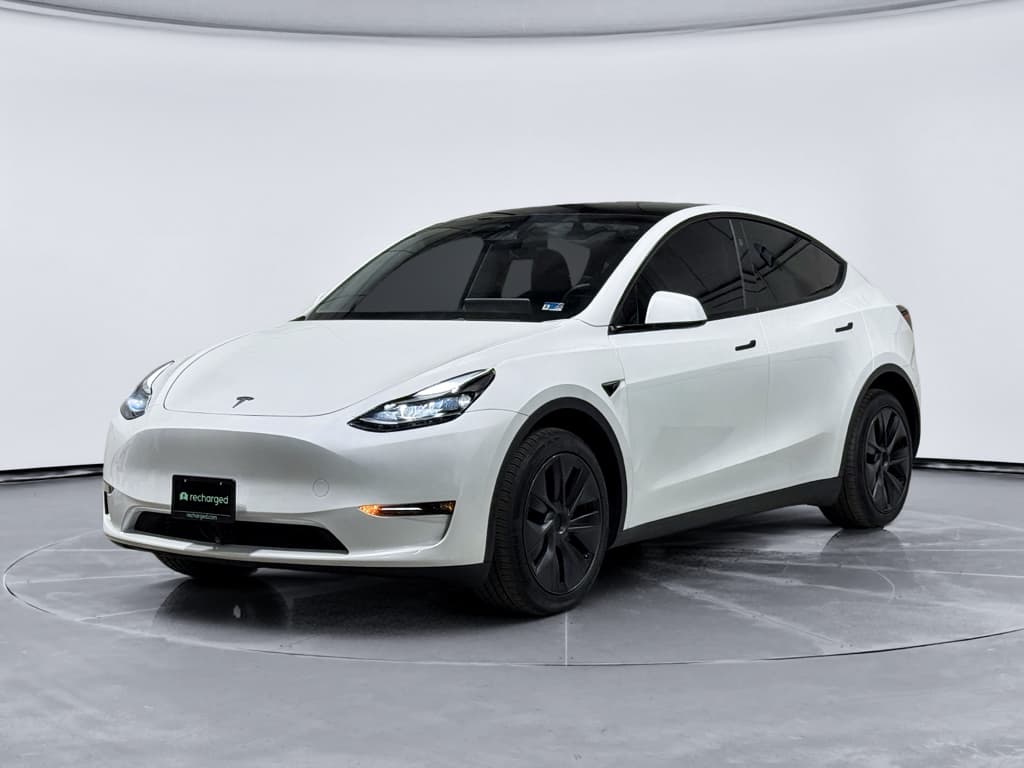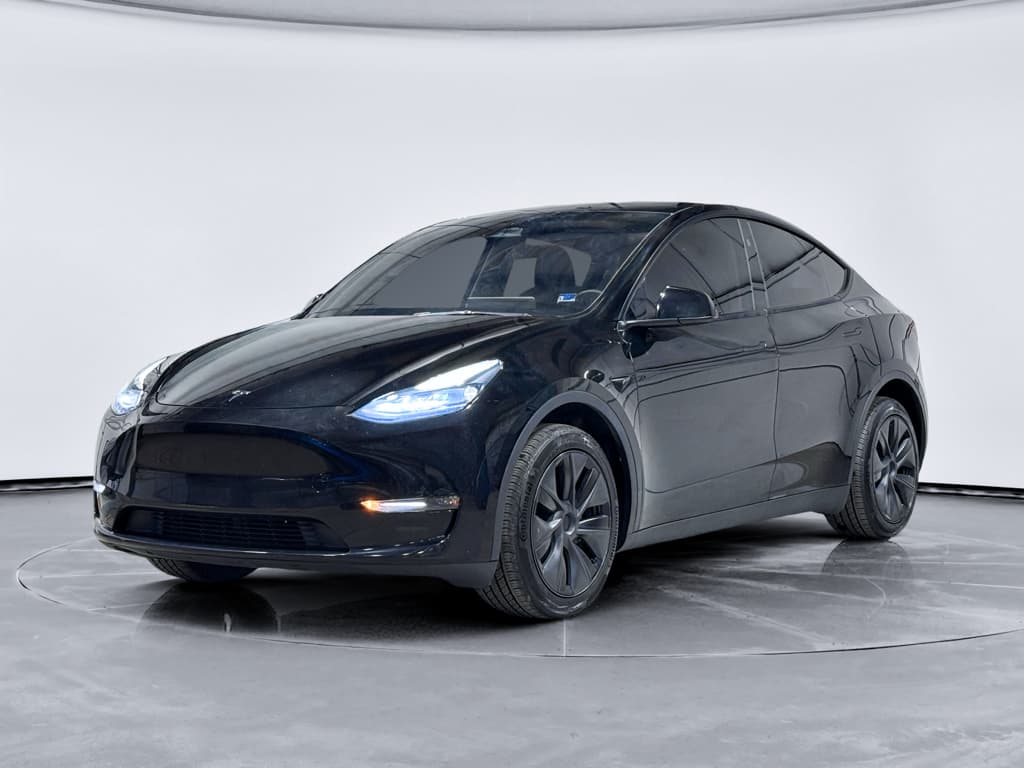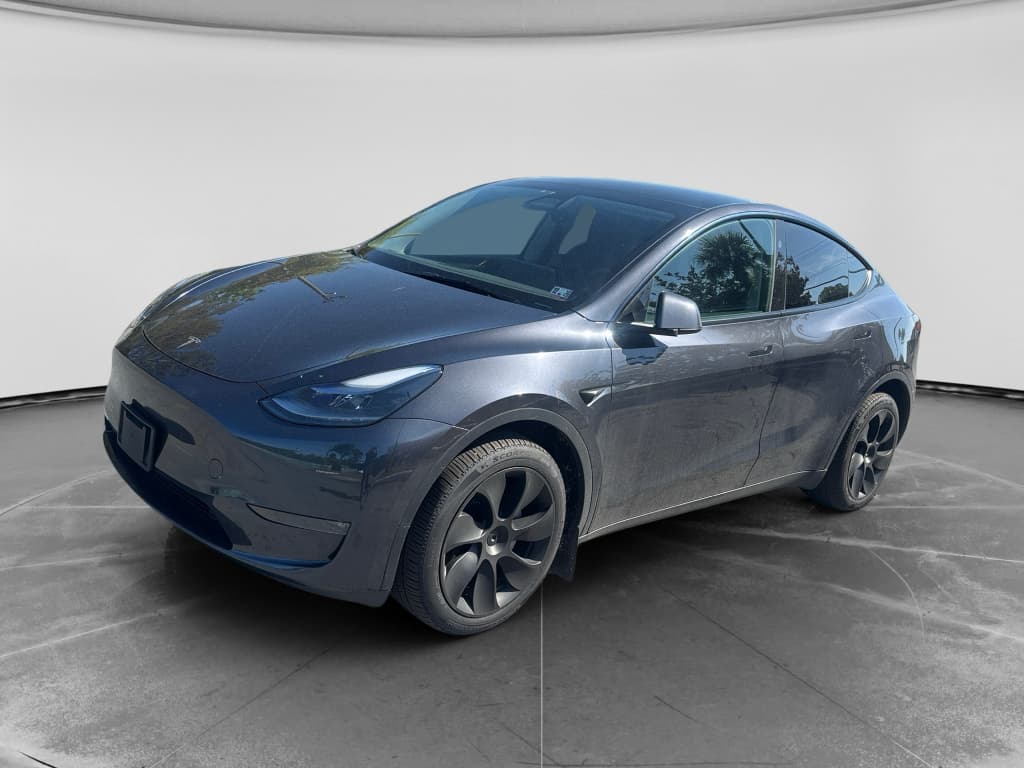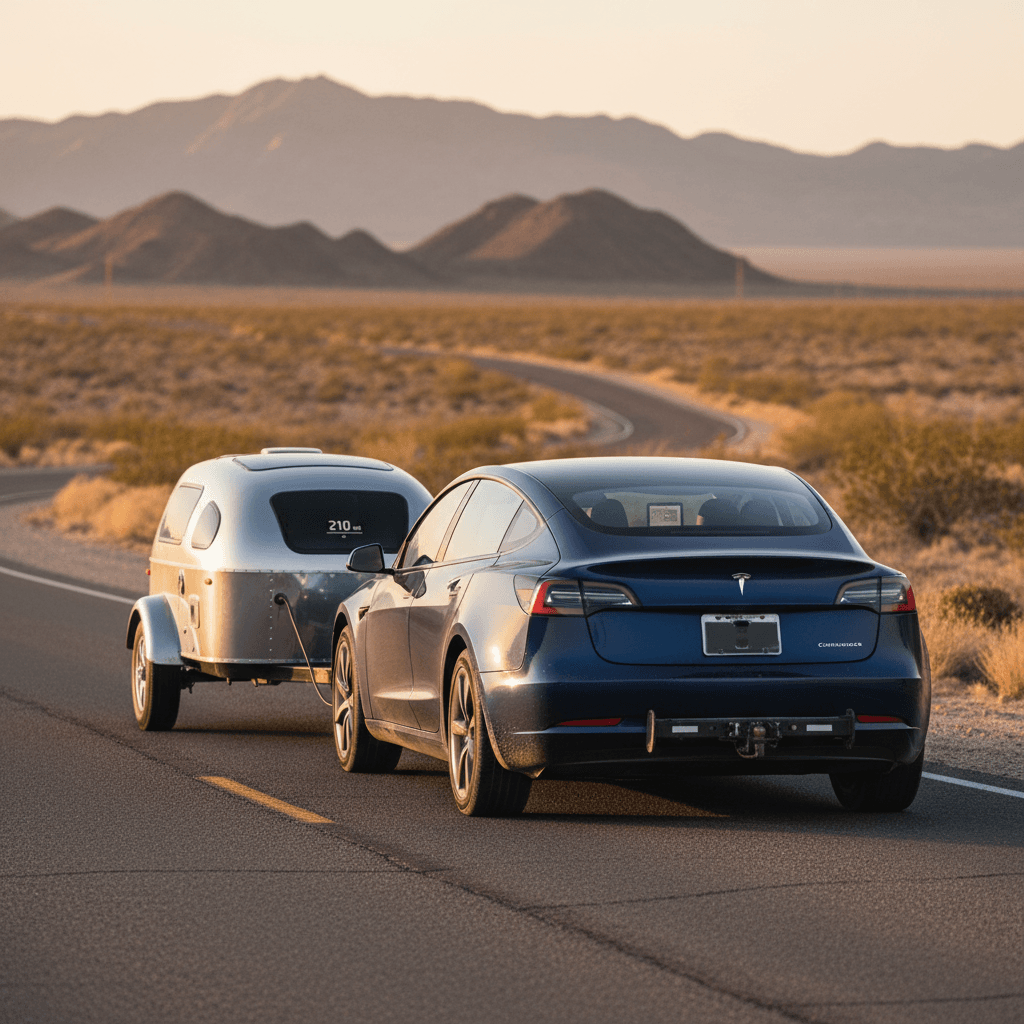
If you’re eyeing a Tesla Model Y as a do‑it‑all family hauler, you eventually hit the same question: how much can it actually tow, and how far will it go while towing? The brochure shows clean Scandinavian furnishings and impossible vistas; it does not show you stuck at a Supercharger with a U‑Haul, doing range math on your fingers. This guide cuts through the marketing and looks at the Tesla Model Y towing capacity and range the way you’ll experience them in the real world.
Quick answer
Tesla Model Y towing capacity: the short version
Tesla Model Y towing & range at a glance
Tesla has kept the Model Y’s tow ratings simple: when equipped with the factory tow package, U.S.‑spec Model Y vehicles are generally rated to tow up to 3,500 pounds (about 1,600 kg), with a maximum recommended tongue weight of 350 pounds. That applies across Long Range and Performance trims; the catch is that you must spec, or buy used with, the factory tow package. The base hitch‑free Model Y is not approved for towing even if you bolt on aftermarket hardware.
Tow rating vs. payload
Official Tesla Model Y towing capacity and limits
Tesla buries the useful towing chart deep in the Model Y owner’s manual, but once you unearth it, the story is straightforward: the headline number is 3,500 lbs, but it flexes with wheel size and passenger count.
Model Y factory towing ratings (U.S. owner’s manual)
How wheel size and passenger count change the Model Y’s maximum trailer weight.
| Wheel size | Passengers | Max trailer weight | Max tongue weight | Notes |
|---|---|---|---|---|
| 19", 20", 21" | Up to 3 | 3,500 lbs | 350 lbs | Full rated capacity |
| 19", 21" | 4–5 | 3,300 lbs | 350 lbs | Slight reduction with more passengers |
| 20" | 4–5 | 2,300 lbs | 230 lbs | Lower rating on 20" wheels when fully loaded |
| 19" (7‑seat) | 6–7 | 1,800 lbs | 200 lbs | Three‑row models with 19" wheels |
| 21" (7‑seat) | 6–7 | 1,200 lbs | 120 lbs | Three‑row models with 21" wheels |
| 20" (7‑seat) | 6–7 | Towing not permitted | , | Tesla does not approve towing in this configuration |
Values below assume the factory tow package and that you stay within GVWR.
How to find your exact rating
Outside North America, you’ll see the same story in metric: roughly 1,600 kg braked towing capacity for most configurations, again assuming the correct tow equipment. The takeaway is that the Model Y is comfortably in the small‑to‑medium SUV towing class: fine with utility trailers, small boats, and lightweight campers, not a substitute for a half‑ton pickup.
How towing affects Tesla Model Y range
If the tow rating is the number Tesla wants you to remember, the range hit while towing is the number owners actually feel. In everyday highway driving without a trailer, a current Long Range Model Y is rated around 300+ miles of EPA range, with 200–230 miles being a realistic freeway road‑trip figure in good weather. Hitch up a trailer, and the energy math gets grim fast.
Why towing chews through Model Y range
It’s not just the weight, it’s the aerodynamics and speed.
Drag wall
Highway speeds
Weather & terrain
In multiple owner tests and media road trips, towing with a Model Y has roughly doubled energy consumption on the highway, jumping from ~330–350 Wh/mi in normal use to 650–800 Wh/mi with a mid‑size trailer. Translate that into range, and a 310‑mile EPA rating starts behaving like 100–150 miles of usable towing range between charges.
The big mental adjustment
Real-world Model Y towing range examples
Lab numbers are one thing; white‑knuckling it to the next Supercharger with a trailer in tow is another. Here’s how the Tesla Model Y towing capacity and range play out in real use, stitched together from long‑term tests and owner reports.
Sample Tesla Model Y towing scenarios
Approximate numbers to show how different trailers change your range. Your results will vary with speed, temperature, terrain, and driving style.
| Trailer type | Trailer weight | Estimated energy use | Approx. highway range | Range vs. normal driving |
|---|---|---|---|---|
| No trailer (baseline) | , | ~330–350 Wh/mi | ~220–230 mi at 75 mph | 100% |
| Small utility trailer (5x8, lightly loaded) | ~1,000–1,300 lbs | ~650–700 Wh/mi | ~100–130 mi | ~45–60% |
| Mid‑size cargo/camper (6x10) | ~2,000–3,000 lbs | ~700–800 Wh/mi | ~90–120 mi | ~35–50% |
| Tall, heavy box trailer near max rating | ~3,000–3,500 lbs | 800+ Wh/mi | ~80–100 mi | ~30–40% |
Assumes a Long Range Model Y at highway speeds in mild weather.
A real 2,250‑lb trailer road trip
- Light, low trailers (small boat, teardrop camper, open utility) are your friend. They keep energy use closer to 600 Wh/mi and range in the 120–150‑mile window.
- Tall box trailers are the enemy; even when they’re light, they punch a huge hole in the air and crush range.
- Slowing from 70 mph to 60 mph can be the difference between arriving with 5–10% battery and calling for a flatbed. Speed is your main range lever while towing.
What the Model Y can realistically tow
On paper, 3,500 pounds sounds generous. In practice, a Model Y is happiest when you stay well under that limit, especially for longer trips. Think of the rating as the cliff edge, not the target.
Common trailer types in Model Y territory
Where the Tesla compact SUV shines, and where it struggles.
Small boats & PWC
Utility & cargo trailers
Compact campers & teardrops
Trailers that push the limits
- Full‑height RV travel trailers at or near 3,500 lbs gross. Range can drop toward 80–100 miles per charge.
- Enclosed car haulers or toy haulers. Even if technically within rating, they’re usually too tall and draggy.
- Heavily loaded three‑row Model Y + near‑max trailer; you may be over GVWR even if you’re under the tow rating.
Practical matching rules
- Keep gross trailer weight under 70% of max (≈2,400 lbs) for frequent towing.
- Favor trailers that sit no taller than the Model Y’s roofline.
- Aim for a 10–15% tongue weight and use a proper weight‑distribution setup if needed.
Always verify specific weights on the trailer’s VIN tag and stay within the Model Y’s published limits.
The sweet spot
Planning road trips with a trailer and a Model Y
The Model Y doesn’t stop being a great EV when you tow, but it does become a different kind of road‑trip experience. Instead of hammering 200‑mile stints, you’re stitching together a chain of shorter, more deliberate hops.
Step‑by‑step: Planning a towing trip in a Model Y
1. Start with brutal range assumptions
Take your usual comfortable highway leg, say 180 miles, and <strong>cut it in half</strong>. Use that number as your maximum towing leg, then give yourself another 15–20% buffer on top.
2. Map chargers that allow towing
Superchargers and other fast chargers are not all trailer‑friendly. On your route, star locations with <strong>pull‑through stalls</strong> or enough space to park and unhitch briefly. Apps and user photos are your friend here.
3. Plan conservative state‑of‑charge windows
Instead of arriving at 5% and leaving at 60%, think in terms of <strong>20% arrival, 80–90% departure</strong>. Towing leaves less room for error when the wind or weather changes.
4. Slow down on purpose
Every 5 mph you shave from your cruising speed is free range. With a trailer, <strong>60–65 mph is the new 75 mph</strong> in terms of time‑to‑destination when you factor in charging stops.
5. Watch Wh/mi, not just %
Keep the energy graph on screen. If you see consumption creeping toward 800+ Wh/mi, adjust speed or your next charging stop. Range estimates can lag reality when towing.
6. Build in more rest stops
With 80–120‑mile legs, you’ll stop more often, but also for shorter sessions. Treat it as enforced sanity: stretch, check straps, and inspect the hitch and tires every time.
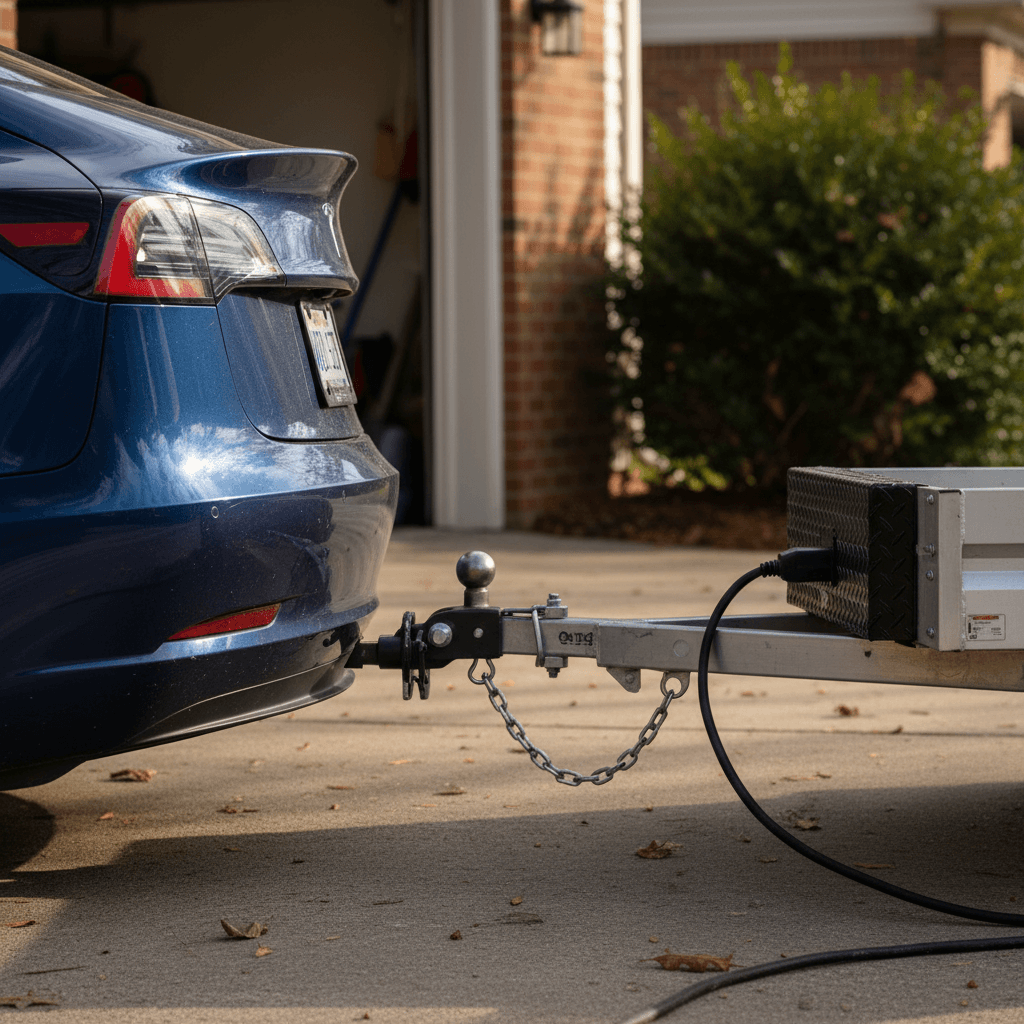
Use charging stops to check your setup
Does towing hurt Tesla battery health?
From the battery’s perspective, towing is just high, sustained load. That’s not automatically dangerous, Tesla engineered a lot of headroom into the pack and cooling system, but it does mean you’re spending more time in the stressful parts of the operating range: high discharge rates, heavy regen, and frequent DC fast charging.
What’s actually happening
- Towing boosts current draw, which heats the pack and motors; Tesla’s cooling system counters this, but it’s working harder.
- You’ll fast‑charge more often and to higher states of charge (80–90%) to preserve towing range.
- More weight means more brake and tire wear, though regen still does a lot of the work going downhill.
How to be kind to your battery
- Avoid sitting at 100% charge in hot weather before you depart with a trailer.
- On multi‑day trips, charge to 80–90% instead of 100% when your route allows.
- Dial back speed in extreme heat or cold to reduce both energy use and thermal stress.
Towing and long‑term degradation
Buying a used Tesla Model Y for towing: checklist
If you’re shopping the used market, the difference between a great towing companion and an expensive science experiment comes down to options and condition. This is exactly where a transparent marketplace like Recharged is trying to bend the curve in your favor.
Used Model Y towing buyer’s checklist
Confirm the factory tow package
Look for the removable hitch cover in the rear bumper, wiring connector near the hitch receiver, and a towing section in the car’s settings. Aftermarket hitches may not meet Tesla’s structural or cooling assumptions.
Check the towing history
Ask the seller directly how often they’ve towed and what kind of trailers. On <strong>Recharged</strong>, you can pair that story with the vehicle’s history and usage data to see if the numbers line up.
Review battery health, not just range estimate
A <strong>Recharged Score Report</strong> includes verified battery health, so you’re not guessing how a prior owner’s road‑tripping and fast‑charging habits have affected long‑term capacity.
Inspect tires, brakes, and suspension
Look for uneven tire wear, tired shocks, or overworked brakes, classic signs of a life spent at or near GVWR. A Model Y that’s done a lot of heavy towing will often show it here before anywhere else.
Match trim to your towing plans
The Performance trim can tow the same 3,500 lbs on paper, but its <strong>larger wheels and sportier tires</strong> can further nibble at range and comfort. For frequent towing, a Long Range on smaller wheels is usually the better tool.
Run the numbers on payload
Remember that kids, dogs, cargo, and tongue weight all count toward payload. If you’re using trade‑in or instant‑offer tools at Recharged, talk through your typical load with an EV specialist before you commit.
Leaning on an EV‑savvy seller
Tesla Model Y towing capacity & range FAQ
Frequently asked questions about Model Y towing
Bottom line: Is the Tesla Model Y good for towing?
Think of the Tesla Model Y as a very eager compact SUV that happens to run on electrons: it will happily tow small trailers, boats, and campers, but it is not a miracle worker. The 3,500‑lb tow rating is real, yet the more relevant number is the 90–150 miles of realistic highway range you can expect when you’re out there in the right lane with a boxy profile in your mirrors.
If you can live inside that envelope, shorter legs, smarter routing, smaller trailers, the Model Y becomes a sharp, quiet, low‑maintenance tow vehicle that’s surprisingly good at threading families and gear through daily life. If you routinely drag big RVs across entire states, you’re shopping in the wrong aisle.
And if you’re exploring a used Tesla Model Y specifically for towing, the details matter: tow package, battery health, wheel size, and prior use. That’s where a transparent marketplace like Recharged earns its keep, with verified battery diagnostics, fair pricing, and EV‑savvy guidance so you know exactly what you’re hitching your weekend plans to.