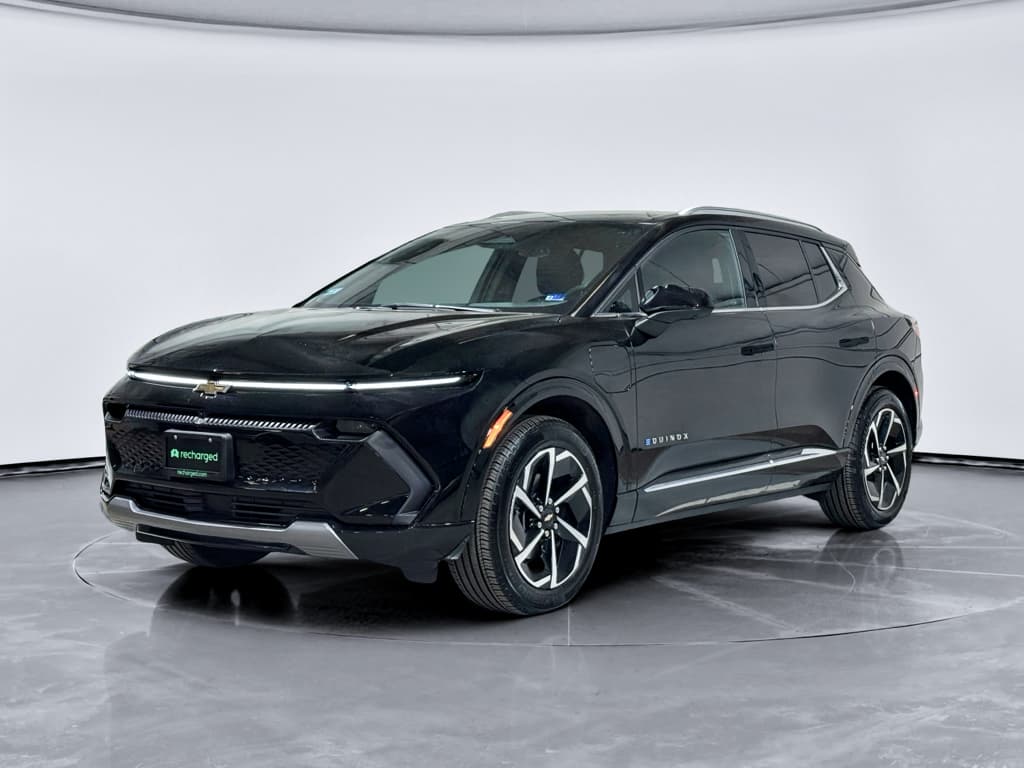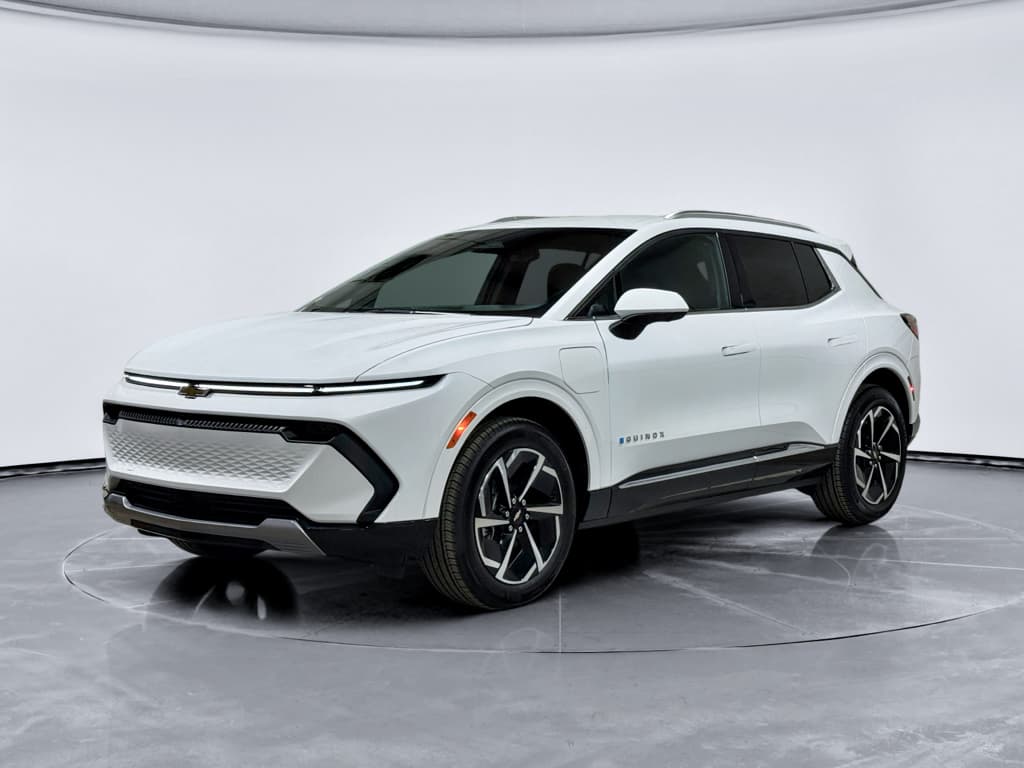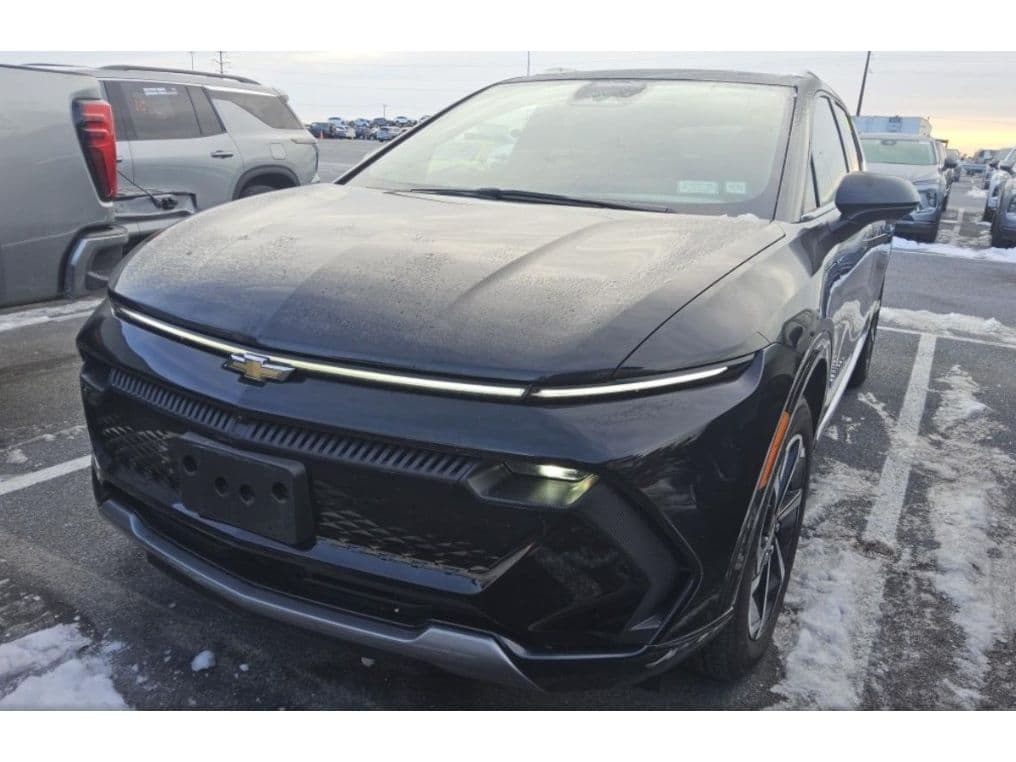
If you’re cross‑shopping a Honda CR‑V against the upcoming Chevrolet Equinox EV, you’re probably not just wondering which one drives better. You want to know which one will quietly drain, or protect, your bank account over the next five to ten years. This guide walks through Honda CR‑V vs Chevrolet Equinox EV total cost of ownership with realistic U.S. numbers so you can see where an EV truly pays off, and where a familiar gas SUV still makes sense.
Gas vs EV, not brand vs brand
Why comparing CR‑V vs Equinox EV ownership costs matters
The Honda CR‑V is one of America’s favorite compact SUVs: roomy, efficient, and usually near the top of reliability charts. The Chevrolet Equinox EV aims straight at the same buyer but swaps the gas tank for a battery pack. On paper, the Equinox EV promises lower running costs, but the sticker price and charging questions can make you hesitate. Looking at total cost of ownership (TCO), purchase price, fuel or electricity, maintenance, insurance, and depreciation, gives you a far clearer answer than focusing on MSRP alone.
Quick 5‑year cost snapshot (typical U.S. driver)
These numbers are estimates
Which CR‑V and Equinox EV are we really comparing?
To make this Honda CR‑V vs Chevrolet Equinox EV total cost of ownership comparison useful, we’ll stick to mainstream trims and realistic assumptions. Think of an average U.S. household, not a hyper‑miler or a road‑warrior sales rep.
Key assumptions for this comparison
A baseline set of assumptions lets you tweak numbers for your own situation.
| Category | Assumption we use | Why it’s reasonable |
|---|---|---|
| Annual mileage | 12,000 miles/year | Close to the U.S. average and common for suburban families |
| Ownership period | 5 years (with notes on 10 years) | Captures depreciation and major running costs without guessing forever |
| Gas price | $3.50 per gallon | Recent U.S. average; adjust up or down for your region |
| Home electricity | $0.15 per kWh | Rough national residential average |
| Public DC fast charging | $0.35 per kWh | Typical for major networks before memberships or promos |
| Driving mix | 80% home charging, 20% DC fast charging for Equinox EV | Common pattern for owners with a driveway or garage |
| Purchase type | New, financed over 5–6 years | Most buyers finance; used EVs can reduce TCO further |
You can plug your own mileage, energy prices and ownership length into these same buckets to personalize the math.
Honda CR‑V baseline
- Popular trims: EX, EX‑L or Sport (gas or hybrid)
- Real‑world combined fuel economy: roughly 30–35 mpg for gas, closer to 37–40 mpg for the hybrid.
- Conventional maintenance: oil changes, transmission service, belts, exhaust, more moving parts.
Chevrolet Equinox EV baseline
- Compact electric SUV with single‑motor FWD or dual‑motor AWD.
- Targeted EPA range roughly in the 270–300‑mile ballpark for mainstream trims.
- No engine, no transmission, far fewer wear items, brakes last longer thanks to regen.
Hybrid CR‑V vs Equinox EV
Purchase price, incentives and financing
Start with the painful part: what you pay to get the keys. The CR‑V’s big advantage is a lower sticker price. The Equinox EV counters with potential federal and state EV incentives that effectively trim thousands off the top if you qualify.
Typical new purchase price comparison
Approximate transaction prices before incentives; actual dealer pricing will vary.
| Model | Approx. transaction price | Possible incentives | Effective price if you qualify |
|---|---|---|---|
| Honda CR‑V (gas) | $33,000 | Usually none beyond dealer offers | $33,000 |
| Honda CR‑V Hybrid | $35,000 | Usually none beyond dealer offers | $35,000 |
| Chevrolet Equinox EV | $39,000–$42,000 | Up to $7,500 federal credit plus possible state rebates | Low‑to‑mid‑$30Ks if stacked effectively |
The Equinox EV’s headline MSRP may look higher, but EV tax credits and rebates can quickly tighten the gap.
Financing and interest
Fuel vs charging: where most of your savings hide
For a commuter‑family SUV, fuel or energy is usually the single biggest ongoing cost after depreciation. Here’s where the Equinox EV can quietly claw back much of its higher sticker price, especially if you can charge at home overnight.
Energy cost head‑to‑head: CR‑V vs Equinox EV
Same 12,000 miles per year, very different bills.
Honda CR‑V fuel costs
Assumptions:
- Fuel economy: 32 mpg combined (gas model)
- Annual miles: 12,000
- Gas price: $3.50/gal
Math: 12,000 ÷ 32 = 375 gallons/year. 375 × $3.50 ≈ $1,310 per year, or about $6,550 over 5 years if prices stay flat.
Equinox EV charging costs
Assumptions:
- Efficiency: 3.0 mi/kWh (moderate, mixed driving)
- Annual miles: 12,000
- Energy mix: 80% home @ $0.15/kWh, 20% DC fast @ $0.35/kWh
Math: 12,000 ÷ 3.0 ≈ 4,000 kWh/year. Blended energy cost ≈ $0.19/kWh. 4,000 × $0.19 ≈ $760 per year, or about $3,800 over 5 years.
Energy savings in plain English
If you’re comparing against a CR‑V hybrid instead of the gas model, its fuel bill might drop to around $1,000 per year. That still leaves the Equinox EV ahead on energy, just by a smaller margin, call it $250–$300 a year instead of $550.
When the CR‑V can look cheaper on fuel
Maintenance and repairs: gas complexity vs EV simplicity
The CR‑V’s reputation for reliability is well earned. But even a bulletproof gas SUV needs regular fluid changes and parts you’ll simply never find on an Equinox EV. Over time, that adds up in both money and weekends sitting in dealership waiting rooms.
What you maintain, and what you skip
Honda CR‑V routine needs
Oil and filter changes every 5,000–10,000 miles, transmission fluid services, coolant changes, spark plugs, exhaust components, fuel system, and more frequent brake jobs. None of these are exotic or ruinous on a CR‑V, but they are recurring checks you pay for.
Equinox EV routine needs
No oil changes, no spark plugs, no exhaust, no timing belts. You’ll still do tire rotations, cabin air filters, brake fluid every few years, and occasional coolant service for the battery/thermal system. Regenerative braking typically stretches brake pad life dramatically.
Unexpected repairs
Out‑of‑warranty repairs on either SUV can sting, think air‑conditioning systems, suspension parts or electronics. EVs dodge engine‑related failures but add high‑voltage components; the good news is that EV drivetrains tend to have fewer moving parts to break in the first place.
Maintenance cost reality check (5‑year window)
Battery replacement fears
Insurance, taxes and fees
Insurance and registration won’t make or break this comparison, but they do round out your ownership budget. Here, the advantage can swing either way depending on where you live.
- Insurance: The Equinox EV’s higher MSRP and newer technology can push premiums slightly higher than a CR‑V’s, but strong crash‑test performance and active safety tech help. Budget for the EV to be maybe 5–15% pricier to insure, though this varies wildly by driver profile.
- Registration and taxes: Some states charge extra EV registration fees, while others discount them or offer property‑tax breaks. The CR‑V doesn’t tap into EV‑specific penalties or perks, but you also don’t get rebates.
- Local perks: EV‑friendly regions may offer carpool‑lane access, reduced tolls or workplace charging, small line items that can have a big impact on your daily stress level.
Call your insurer before you decide
Depreciation and resale value
Depreciation, the silent cost of a vehicle getting older, is where many shoppers underestimate EVs. The CR‑V has historically held value brilliantly. Early EVs, on the other hand, took big hits as technology moved quickly and new incentives made brand‑new electric cars surprisingly affordable.
Honda CR‑V depreciation profile
- Strong demand on the used market thanks to Honda’s brand and CR‑V’s reputation.
- After five years, it’s common for a CR‑V to retain 50–60% of its original value, depending on mileage and condition.
- Gas prices and new‑car incentives have some influence, but the CR‑V’s resale is typically a safe bet.
Equinox EV depreciation profile
- EV values depend heavily on battery health, range competitiveness and charging access.
- Tax credits effectively lower the new‑car price, which can pull down used values for early owners.
- A modern EV like the Equinox EV with decent range and fast‑charging capability is better positioned than older short‑range EVs, especially if battery health stays strong.
The used‑EV wildcard
Five‑year total cost summary: CR‑V vs Equinox EV
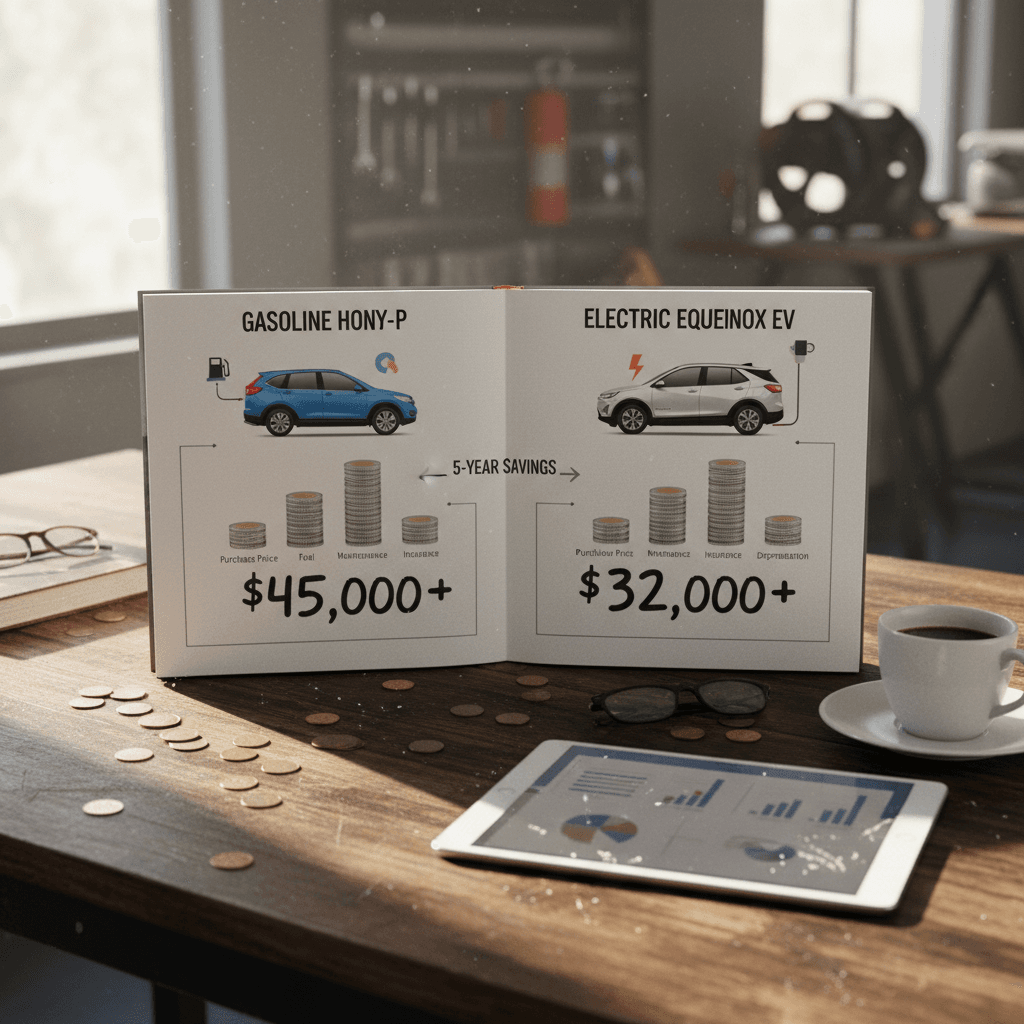
Let’s put all of this into a simple five‑year picture. These aren’t exact quotes; they’re a way to see the relative weight of each cost category for a typical driver choosing between a new CR‑V and a new Equinox EV.
Illustrative 5‑year total cost of ownership
Approximate totals for a new CR‑V and a new Equinox EV, 12,000 miles/year, U.S. averages.
| Cost category (5 years) | Honda CR‑V (gas) | Chevrolet Equinox EV |
|---|---|---|
| Purchase & financing (net of incentives) | $33,000–$35,000 | $34,000–$37,000 after EV tax credit and typical incentives |
| Fuel or electricity | ≈ $6,500 | ≈ $3,800 |
| Maintenance & repairs (out of warranty items) | ≈ $3,000 | ≈ $1,500–$2,000 |
| Insurance, taxes, fees | ≈ $8,000 | ≈ $8,500 (slightly higher insurance, potential EV fees) |
| Depreciation (lost value over 5 yrs) | ≈ $15,000–$17,000 | ≈ $17,000–$19,000 (early‑tech EV penalty) |
| Estimated 5‑year total | ≈ $48,000–$51,000 | ≈ $47,000–$50,000 |
Numbers are rounded for clarity and will vary, but they highlight how purchase, fuel, maintenance and resale interplay over five years.
On balance, the Equinox EV edges ahead, or at least keeps pace
Looking out 10 years: who wins the long game?
Stretch your horizon to 10 years and 120,000+ miles, and the EV’s low running costs start to dominate the story, as long as battery health holds up and you’re not on the hook for a major high‑voltage repair out of warranty.
- CR‑V over 10 years: You’ll likely spend well into the low‑five figures on gasoline alone, plus several thousand dollars on maintenance and repairs as the vehicle ages. Depreciation slows down but never stops entirely.
- Equinox EV over 10 years: Energy savings continue to pile up, especially if gas prices rise, and the simpler drivetrain generally keeps maintenance predictable. Depreciation curves are harder to predict as EV tech and incentives change, but a battery‑healthy, 10‑year‑old EV with usable range will still have value, particularly in EV‑savvy markets.
- Break‑even point: For many drivers who put 12,000–15,000 miles a year on their vehicles, the Equinox EV’s cumulative fuel and maintenance savings tend to overtake any depreciation disadvantage somewhere between years 6 and 8. Drive more miles and the EV can pull ahead sooner.
10‑year ownership and battery warranties
Charging, range and lifestyle fit
Pure dollars are only half the story. If the Equinox EV doesn’t fit your daily life, those theoretical fuel savings won’t matter, you’ll just be annoyed. The CR‑V, by contrast, fits into almost any fueling pattern because gas stations are everywhere.
Will an Equinox EV actually work for you?
Answer these questions honestly before you chase fuel savings.
Do you have home charging?
What’s your real daily mileage?
How often do you road‑trip?
Think in ‘days at home’ vs ‘days on the road’
How Recharged can help you shop smart for an Equinox EV or other used EV
The Honda CR‑V vs Chevrolet Equinox EV comparison gets especially interesting once you open the door to used EVs. A lightly used Equinox EV or similar electric SUV can combine a much lower purchase price with all the fuel and maintenance benefits we’ve walked through, if you’re confident about the battery.
Know the battery, not just the odometer
Every EV listed on Recharged comes with a Recharged Score battery‑health report. Instead of guessing how much range the car still has, you see objective diagnostics on pack health, fast‑charging history and more. That clarity is the missing puzzle piece in most used‑EV TCO calculations.
End‑to‑end EV ownership support
Recharged is built to make EV ownership simple and transparent:
- EV‑specialist support to help you compare models like Equinox EV, Blazer EV, IONIQ 5 and more.
- Financing options and trade‑in or instant offer on your current vehicle.
- Nationwide delivery and a digital‑first buying experience, plus an Experience Center in Richmond, VA if you’d rather talk EVs in person.
Stack your savings
Ready to find your next EV?
Browse VehiclesFrequently asked questions: Honda CR‑V vs Chevrolet Equinox EV TCO
CR‑V vs Equinox EV cost questions, answered
Step back from all the line items and the Honda CR‑V vs Chevrolet Equinox EV total cost of ownership comparison becomes less about a winner and more about which pattern of spending fits your life. The CR‑V asks for less up front and pays you back with bulletproof familiarity. The Equinox EV may ask for more attention at purchase, reworking incentives, planning charging, but then quietly chips away at your monthly costs for years with cheap energy and simpler maintenance. If you’re willing to think beyond the sticker and your driveway can host a charger, an electric compact SUV like the Equinox EV is no longer a science‑project gamble, it’s a very real contender for both your wallet and your daily routine.