If you’re eyeing a Tesla Model X, you already know it’s not a cheap SUV to buy. The next question is the one that really matters long‑term: what does it cost per mile to drive a Tesla Model X? Let’s put real 2026 U.S. electricity prices and real‑world efficiency numbers to work so you can see whether a Model X makes financial sense for your commute, your family trips, or as a used‑EV upgrade.
Quick answer
Overview: What does it cost per mile to drive a Model X?
Tesla Model X cost per mile at a glance (U.S. 2026)
Combine efficiency with U.S. electricity rates and you get these ballpark numbers for a 2024–2026 Tesla Model X Long Range or Plaid:
- Typical home charging: $0.06–$0.09 per mile (about $6–$9 per 100 miles)
- Typical Supercharger fast charging: $0.11–$0.15 per mile (about $11–$15 per 100 miles)
- Comparable gas luxury SUV (18–22 MPG, $3.50–$4.00/gal): $0.18–$0.25 per mile (about $18–$25 per 100 miles)
Rule of thumb
How we calculate Tesla Model X cost per mile
Before we get lost in decimals, it helps to understand the basic formula. Cost per mile for any EV is simply:
- How much energy the vehicle uses per mile (kWh per mile).
- Multiplied by what you pay for electricity (dollars per kWh).
The EPA and independent testing peg the current Tesla Model X around 34 kWh per 100 miles in mixed driving, or about 0.34 kWh per mile when driven reasonably. Real owners often see something in the high‑200s to low‑300s Wh/mi, which lines up with that estimate in everyday use.
For electricity prices, we’ll use three realistic scenarios so you can see the spread:
Key assumptions in this guide
Typical U.S. rates and efficiency used to estimate cost per mile for a Tesla Model X.
| Scenario | Energy use | Electricity price | What it represents | Cost per 100 miles |
|---|---|---|---|---|
| Efficient commuter | 0.30 kWh/mi | $0.15/kWh | Mild climate, gentle driving, fairly cheap power | $4.50 |
| Typical driver | 0.34 kWh/mi | $0.17/kWh | Average efficiency with near‑average U.S. rates | $5.78 |
| Aggressive / winter | 0.40 kWh/mi | $0.26/kWh | Fast driving or cold climate with high rates | $10.40 |
Your exact numbers will vary, but these inputs keep the math grounded in 2024–2026 U.S. data.
Cold weather can double your cost per mile
Home charging: Model X cost per mile
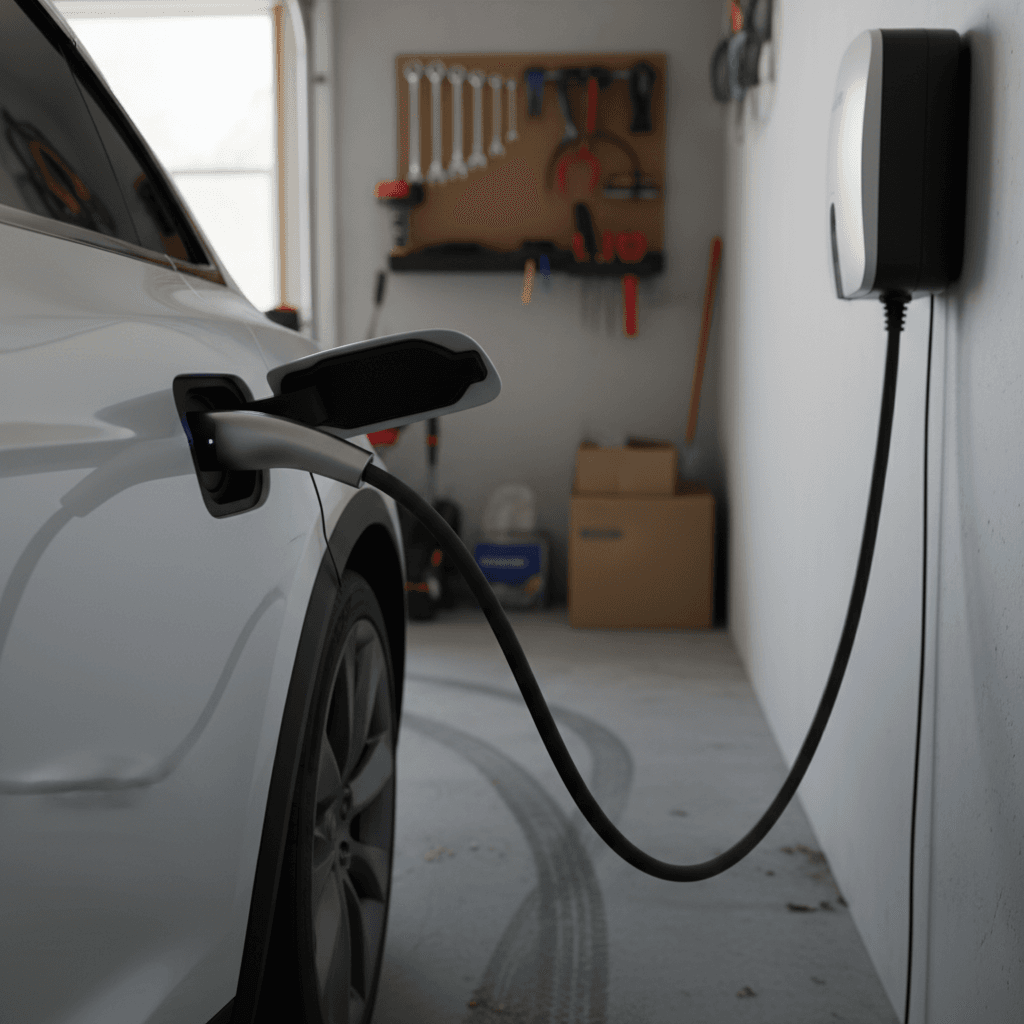
Home charging is where the Tesla Model X really earns its keep. The U.S. residential average has been hovering in the high‑teens cents per kWh, though some states are much lower and others, much higher. Let’s run the math with a few realistic examples.
Home charging examples for a Tesla Model X
Three common U.S. scenarios, same SUV, different electric bills
Lower‑cost power state
Example: Midwest or South (around $0.13/kWh)
- Assume 0.34 kWh/mi
- Cost per mile ≈ $0.04
- Cost per 1,000 miles ≈ $40
Near U.S. average
Example: many U.S. states (around $0.17/kWh)
- Assume 0.34 kWh/mi
- Cost per mile ≈ $0.06
- Cost per 1,000 miles ≈ $58
High‑cost power state
Example: coastal California, Northeast (around $0.26/kWh)
- Assume 0.34 kWh/mi
- Cost per mile ≈ $0.09
- Cost per 1,000 miles ≈ $88
Use off‑peak rates when you can
Supercharger use: cost per mile on road trips
On the road, you’re paying Tesla for both electricity and incredibly fast, convenient charging locations. In early 2026, many U.S. Superchargers fall in the $0.35–$0.50 per kWh range, depending on location, demand, and time of day.
Typical Supercharger math
Use our same 0.34 kWh per mile estimate and a mid‑range Supercharger price.
- Energy use: 0.34 kWh/mi
- Price: $0.40/kWh (example)
- Cost per mile: 0.34 × 0.40 ≈ $0.14
- Cost per 100 miles: ≈ $14
Even if you round up for higher speeds and less‑than‑ideal weather, you’re usually in the $0.11–$0.15 per mile window.
Compare that to gas on a trip
Take a 6‑seat luxury SUV rated at 20 MPG on a $3.75/gallon road trip:
- Fuel cost per mile: 3.75 ÷ 20 ≈ $0.19
- Cost per 100 miles: ≈ $19
That means a Model X on Superchargers often costs 25–40% less per mile than a gas SUV on the same route, and significantly less if gas prices spike.
Road‑trip reality check
Regional electricity prices and your true cost
Talking about a single “U.S. average” hides the story. In 2025–2026, residential electricity ranges from well under $0.15/kWh in some states to $0.30+ in others. That spread alone can double the cost per mile in a Tesla Model X, before we even touch driving style or weather.
Example Model X cost per mile by region (home charging)
Illustrative numbers using typical residential rates in different parts of the U.S.
| Region example | Typical home rate | Assumed efficiency | Estimated cost per mile | Cost per 1,000 miles |
|---|---|---|---|---|
| Low‑cost state (parts of South/Midwest) | $0.13/kWh | 0.34 kWh/mi | ≈ $0.04 | ≈ $44 |
| Near national average | $0.17/kWh | 0.34 kWh/mi | ≈ $0.06 | ≈ $58 |
| High‑cost coastal state | $0.26/kWh | 0.34 kWh/mi | ≈ $0.09 | ≈ $88 |
| Very high rate + winter driving | $0.30/kWh | 0.40 kWh/mi | ≈ $0.12 | ≈ $120 |
Rates are rounded examples, but they show why a Model X is cheap as a Corolla to “fuel” in one state and closer to a mid‑size SUV in another.
Don’t forget fees and taxes
Tesla Model X vs gas SUV: cost per mile comparison
Putting EV numbers next to gas makes the story clearer. The Model X is a big, quick SUV, its natural rivals are three‑row luxury crossovers and performance SUVs, not economy cars. Think BMW X7, Mercedes GLS, Audi Q7, or a loaded Tahoe/Suburban.
Tesla Model X vs gas SUV: rough cost per mile
Fuel only. This doesn’t include insurance, tires, or maintenance, just the cost to move the vehicle one mile.
| Vehicle type | Energy assumption | Fuel price | Fuel cost per mile | Fuel cost per 1,000 miles |
|---|---|---|---|---|
| Tesla Model X (home charging, average state) | 0.34 kWh/mi | $0.17/kWh | ≈ $0.06 | ≈ $58 |
| Tesla Model X (Supercharger road trip) | 0.34 kWh/mi | $0.40/kWh | ≈ $0.14 | ≈ $140 |
| Luxury gas SUV (20 MPG) | , | $3.75/gal | ≈ $0.19 | ≈ $187 |
| Performance gas SUV (16 MPG) | , | $3.75/gal | ≈ $0.23 | ≈ $234 |
Gas examples assume $3.75/gallon; if your local price is higher, the gap widens in the Model X’s favor.
Where the savings add up
Real‑world factors that change your cost per mile
No one drives a spreadsheet. Real life nudges your Model X cost per mile up and down all year long. Here are the levers that matter most.
5 things that quietly change your Model X cost per mile
Most of them are under your control
Climate & seasons
Speed & driving style
Trip length
When you charge
Where you charge
Vehicle load & accessories
Towing changes the math entirely
Used Tesla Model X: cost per mile & battery health
If you’re shopping used, you’re probably wondering whether an older battery will wreck the Model X’s cost advantage. The good news: degradation tends to hurt range more than it hurts efficiency. You’ll stop a bit more often on a road trip, but your Wh/mi around town usually won’t skyrocket just because the pack has a few years on it.
How degradation affects cost per mile
- If a battery has, for example, 8–12% less usable capacity than new, the SUV simply can’t go quite as far on a charge.
- The energy needed to move the vehicle one mile stays in the same ballpark, assuming similar driving conditions.
- Your electricity cost per mile stays roughly the same; it’s your convenience (more frequent charging stops) that changes.
Where a used Model X can save you more
- Lower purchase price plus the same low cost per mile can make a used Model X one of the least expensive ways to run a luxury family hauler.
- What matters is buying a car with known battery health, not just a pretty paint job.
Every Model X sold through Recharged includes a Recharged Score battery health report, so you’re not guessing about the most expensive component on the car.
Why battery health still matters
Checklist: Estimating your own Model X cost per mile
Build a realistic cost‑per‑mile estimate for your life
1. Grab your electricity rate
Look at your most recent electric bill for the line that shows <strong>$ per kWh</strong>. If you’re on time‑of‑use, note both off‑peak and peak rates.
2. Pull your Wh/mi from the Tesla screen
On the Model X’s energy or trip display, note your average Wh/mi over the last 30 days. Divide by 1,000 to convert to kWh per mile (e.g., 320 Wh/mi = 0.32 kWh/mi).
3. Multiply to get cost per mile
Cost per mile = (kWh per mile) × (your electricity price). For example, 0.32 kWh/mi × $0.17/kWh ≈ <strong>$0.054 per mile</strong>.
4. Separate home vs Supercharger miles
Estimate what share of your annual miles are home‑charged vs fast‑charged on the road. Do the same cost‑per‑mile math with a realistic Supercharger rate and blend the two.
5. Adjust for season and driving style
If most of your miles happen in winter, or you drive at 80 mph daily, use a slightly higher kWh‑per‑mile number to avoid underestimating costs.
6. Compare to your current vehicle
Take your current gas SUV or crossover: divide your local price per gallon by your real‑world MPG. That’s your current fuel cost per mile, now you can see exactly how a Model X stacks up.
FAQ: Tesla Model X cost per mile to drive
Frequently asked questions about Model X cost per mile
Bottom line: Is a Tesla Model X cheap to drive?
The Tesla Model X will never be a cheap vehicle to buy, but it can be surprisingly cheap to run. For a big, quick, three‑row luxury SUV, landing in the $0.06–$0.09‑per‑mile range on home charging is something gas vehicles simply can’t match. Even when you lean on Superchargers for road trips, you’re often spending less per mile than you would in a comparable gas SUV.
Your personal result depends on where you live, how you drive, and how you charge. That’s why it pays to look beyond the window sticker and into the numbers that will follow you for years. If you’re exploring a used Tesla Model X, a transparent battery‑health report, like the Recharged Score included with every vehicle on Recharged, turns “What will this cost me per mile?” from a guess into a calculation.
Run the math with your own power rates, look honestly at your driving, and the story comes into focus: for many households, a Model X is a way to enjoy unapologetically big‑SUV space and performance, while quietly cutting the fuel bill down to something closer to a compact commuter’s.