Yes, under the right conditions, an electric car can power your house. Thanks to vehicle-to-home (V2H) technology and bidirectional chargers, certain EVs can now keep your lights on during outages and even help lower your electric bill. But it’s not as simple as plugging into a wall outlet, and only a minority of EVs on the road today support it.
Quick answer
Can an electric car really power your house?
If you’re used to gas generators, the idea that a car can silently run your home feels a little sci‑fi. But modern EVs carry big batteries, often 60–130 kWh of usable energy. A typical U.S. home averages about 20–30 kWh per day, so in raw capacity, many EVs have more than enough juice to cover one or several days of normal use.
EVs as home backup: fast facts for 2026
The catch is that you can’t safely back‑feed your house through a dryer outlet or an extension cord, please don’t try that. To actually let your electric car power your house, you need three things to line up: 1. A vehicle that supports bidirectional power 2. A compatible bidirectional charger 3. A properly installed home integration system or transfer switch Once those are in place, your EV effectively becomes a very large, very quiet home battery.
How EV home backup actually works (V2H in plain English)
One-way vs. two-way charging
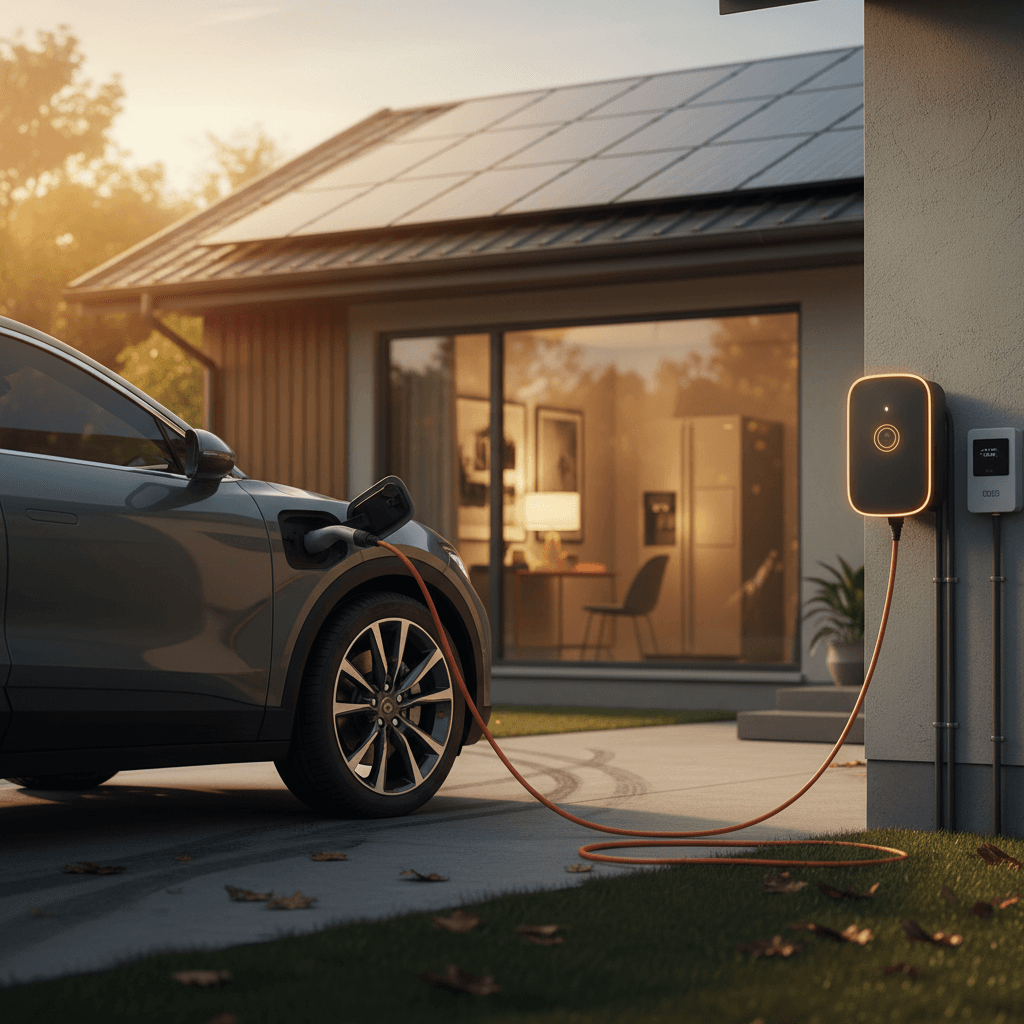
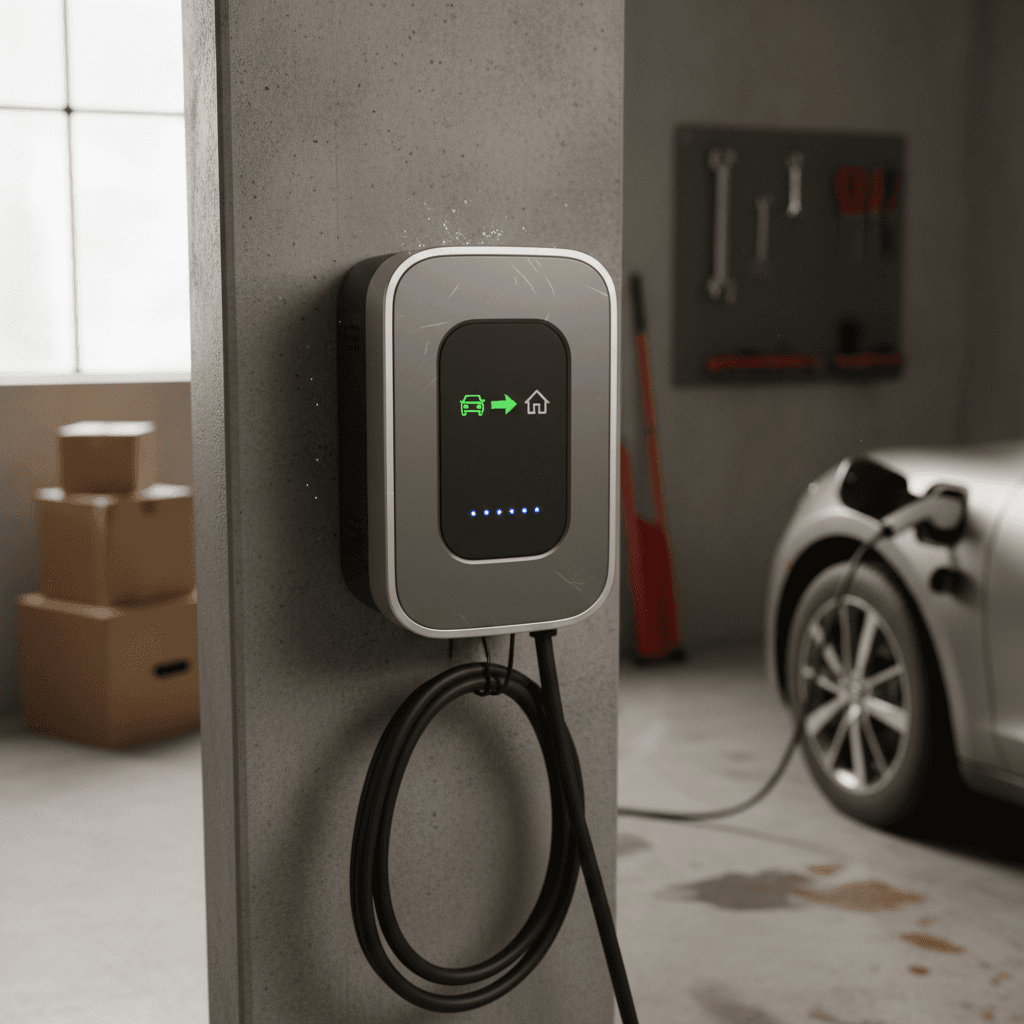
Most home chargers are one-way: electricity flows from the grid to your EV. With vehicle-to-home (V2H), power can also flow back from the EV to your house. That requires a special bidirectional charger and EV electronics designed to reverse the flow safely.
What happens in an outage
When grid power goes down, a smart transfer switch or home integration system disconnects your house from the grid and switches to the EV as the source. Critical loads, like lights, fridge, Wi‑Fi, and outlets, keep running off the car’s battery until grid power returns or you tell the system to stop.
- Your EV’s battery stores energy (from the grid or your solar panels).
- A bidirectional charger converts that DC energy into AC power your home can use.
- A smart transfer switch or home integration system isolates your home from the grid and routes power from the EV into your main panel or a critical‑loads subpanel.
- Software in the car, charger, or an app manages how much energy you use so you don’t fully drain your battery.
V2H vs. V2L vs. V2G
Which EVs can power a house today?
Most EVs on the road still don’t support V2H, but that’s changing fast. Automakers are positioning home backup as a flagship feature on trucks and SUVs, then rolling it down the lineup. Here are some of the key players if you want an electric car that can power your house:
EVs with notable V2H or home-backup features
Always confirm exact features and compatibility for your model year before you buy, especially on the used market.
Ford F‑150 Lightning
Ford’s electric pickup set the tone with Intelligent Backup Power. With the right hardware (Ford Charge Station Pro and Home Integration System), Ford says a fully charged Lightning can power an average home for up to three days, or up to ten with careful energy use.
Kia EV9
The Kia EV9 supports vehicle-to-home using the Wallbox Quasar 2 bidirectional charger and a Power Recovery Unit. Quasar 2 can supply up to about 12 kW, enough to run most homes, and integrates with solar to manage where your energy comes from.
GM Ultium-based EVs
GM is rolling out V2H across its Ultium lineup, think Cadillac Lyriq/Escalade IQ, Chevy Blazer EV, and others, through GM Energy home systems. In some markets, GM is piloting programs with utilities like PG&E that let these vehicles power homes and, eventually, help support the grid.
Hyundai & Kia V2H/V2X
Hyundai Motor Group (Hyundai and Kia) is expanding Vehicle-to-Everything services, including V2H in the U.S. Initially, high‑end models like the Kia EV9 and future Hyundai IONIQ models will get full home‑backup features, with more vehicles slated to follow.
Model and market specifics matter
How long can an EV power a house?
How long your electric car can power your house depends on four main factors: battery size, how much of it you’re willing to use, your home’s energy draw, and whether you’re running at full power or in “essential loads only” mode.
Illustrative runtime examples for EV home backup
Approximate runtimes assume you’re using only part of the battery for backup, so you still have enough charge to drive when the power returns.
| Example EV & mode | Usable battery for backup | Home draw | Estimated runtime |
|---|---|---|---|
| Mid-size SUV (75 kWh pack), conservative use | 45 kWh | 1.5 kW (lights, fridge, Wi‑Fi, some outlets) | ~30 hours (~1.25 days) |
| Ford F‑150 Lightning, normal use | 80 kWh | 3 kW (most of the house, no central AC) | ~26 hours (~1 day+) |
| Kia EV9 with V2H, essential loads | 50 kWh | 1 kW (critical loads only) | ~50 hours (~2 days+) |
| Large Ultium SUV, whole‑home backup | 100 kWh | 4 kW (larger home, some AC) | ~25 hours (~1 day+) |
These examples are for planning only, real‑world results depend on weather, appliances, and how carefully you conserve.
Manufacturer guidance
Hardware you need to let an EV power your house
Even if you already own a capable EV, you’ll need additional equipment before your electric car can safely power your house. Here’s what a typical setup includes:
Core components of an EV-to-home backup system
1. A bidirectional-capable EV
Your vehicle needs built‑in support for sending power back out through its charge port. This is a hardware and software feature, most EVs on the road today are still “charge‑only.” Check your owner’s manual or manufacturer site for V2H or bidirectional support.
2. Bidirectional home charger
Unlike a standard Level 2 charger, bidirectional chargers such as Ford’s Charge Station Pro or Wallbox Quasar 2 can both charge the car and draw power from it. They typically operate around 9–12 kW and are designed to talk to your EV’s battery management system.
3. Home integration system or transfer switch
This hardware connects the charger to your home’s main panel or a critical‑loads subpanel and, crucially, isolates your house from the utility grid during an outage. That keeps lineworkers safe and ensures you meet electrical code and utility requirements.
4. Adequate electrical service
Many V2H setups require a 200‑amp service panel and enough physical space for new breakers and equipment. Older 100‑amp panels may need an upgrade before you can safely run your home from an EV.
5. Professional installation & permits
V2H is not a DIY project. You’ll need a licensed electrician, and in many areas your utility must approve the interconnection so the system complies with local codes and anti‑backfeed requirements.
Do NOT backfeed through a dryer outlet
What it costs (and how incentives & financing help)
Using an electric car to power your house is still early‑adopter territory, and the hardware is priced accordingly. Expect the full package, bidirectional charger, integration system, panel work, and labor, to cost several thousand dollars. The upside is that federal and some state incentives can offset part of that, and financing options are emerging.
Typical cost buckets for an EV home-backup setup
Real‑world numbers vary widely by home and utility; think of these as ballpark ranges, not quotes.
Bidirectional charger
High‑end bidirectional chargers like the Wallbox Quasar 2 retail in the mid‑four‑figure range before incentives, more than a standard Level 2 charger, but they replace both a charger and a stationary home battery in one device.
Home integration & panel work
Costs depend on whether you’re simply adding a transfer switch or upgrading to a 200‑amp panel. Some homes are plug‑and‑play; others need substantial electrical work.
Incentives & financing
The federal EV charger tax credit (currently scheduled to run through June 30, 2026) can cover up to 30% of hardware and installation costs for qualifying home EV charging equipment, including many bidirectional units. Some utilities also offer V2H or demand‑response rebates.
Stretching your budget with used EVs
If you’d rather preserve cash, pairing a used V2H‑capable EV with financing for the hardware can be more affordable than installing a whole‑home stationary battery system. Recharged offers EV‑friendly financing and can help you compare total ownership costs between a V2H‑ready EV and other home backup options.
Is it safe to use an EV as a home generator?
When installed correctly, a V2H system is designed to be at least as safe as a traditional standby generator, and in several ways, it’s safer. There’s no exhaust, no gasoline storage, and far less routine maintenance. That said, you do need to respect the electrical side of things.
- Use only manufacturer‑approved chargers and integration hardware.
- Have everything installed and permitted by a licensed electrician.
- Make sure there’s an automatic transfer mechanism that disconnects your home from the grid during backup operation.
- Set a reserve level in the EV or app so you don’t unintentionally drain the battery to 0%.
- Keep firmware and apps updated so safety features and communication between the car and charger remain current.
Think about your driving needs
When using an EV to power your house makes sense
V2H isn’t right for everyone. For some households, a portable gas generator or traditional standby system still makes more sense. But if you fit into one or more of these scenarios, letting an electric car power your house can be compelling.
Best-fit scenarios for EV home backup
If you recognize yourself in one of these, V2H deserves a close look.
Frequent or lengthy outages
You live in an area with wildfire shutoffs, hurricanes, or fragile infrastructure. Multi‑day outages are common, and you’d value quiet, low‑maintenance backup power that doesn’t depend on fuel deliveries.
Home solar owner
You already have rooftop solar or are planning it. A bidirectional EV charger can let your car soak up excess solar during the day and feed it back to your house at night, boosting self‑consumption and potentially reducing your bill.
High electric rates or time-of-use pricing
Your utility charges more during peak hours. Some V2H systems can arbitrage by charging your EV off‑peak and powering your home during on‑peak windows, trimming your monthly bill.
You already plan to own an EV long-term
If you’re buying an EV anyway, paying extra for V2H capability can be more cost‑effective than buying both a car and a dedicated home battery. You get transportation and backup power from one big battery.
Good news for future buyers
Buying a used EV with V2H in mind
If you’re shopping used and you like the idea of your electric car powering your house, you’ll want to look beyond range and price. Here’s how to evaluate candidates for home‑backup duty.
Used EV shopping checklist for home-backup buyers
Confirm true bidirectional support
Search for your exact model year and trim with terms like “vehicle‑to‑home,” “bidirectional charging,” or “home backup power.” Don’t assume every Ford Lightning, EV9, or Ultium EV is equipped the same way.
Check required hardware and bundles
Some automakers tie V2H to specific chargers or integration kits (for example, Ford’s Home Integration System, or Kia’s partnership with Wallbox). Confirm those products are available in your area and what they cost.
Evaluate battery health
Backup power is only as good as your battery’s usable capacity. A degraded pack may still be fine for commuting but offer much shorter runtime in an outage. A <strong>battery health report</strong> is extremely valuable here.
Understand your home’s electrical limits
Before you rely on V2H, make sure your panel and service can support it. A quick consult with an electrician can tell you whether you’ll need a panel upgrade or just a transfer switch.
Plan your financing holistically
Think about the EV and the home hardware together. Rolling both into a single financing plan, or pairing a used EV with a lower‑cost installation, can make V2H more accessible than you’d expect.
How Recharged can help
FAQ: EVs powering your house
Frequently asked questions about using an EV to power your home
Bottom line: should your next EV power your home?
Letting an electric car power your house is no longer a science‑project idea, it’s a real feature on an expanding list of EVs. If you live with frequent outages, already have or plan to install solar, or simply like the idea of getting more value from the battery you’re already paying for, choosing a V2H‑capable EV and building a path to home integration can be smart, future‑proof thinking.
If you’re exploring used options, that’s where Recharged shines. We combine verified battery diagnostics, fair pricing, financing, trade‑in support, and nationwide delivery to help you find an EV that fits your daily driving, and your resilience plans. Whether you’re just EV‑curious or already mapping out a full home‑backup system, starting with the right vehicle puts you miles ahead.