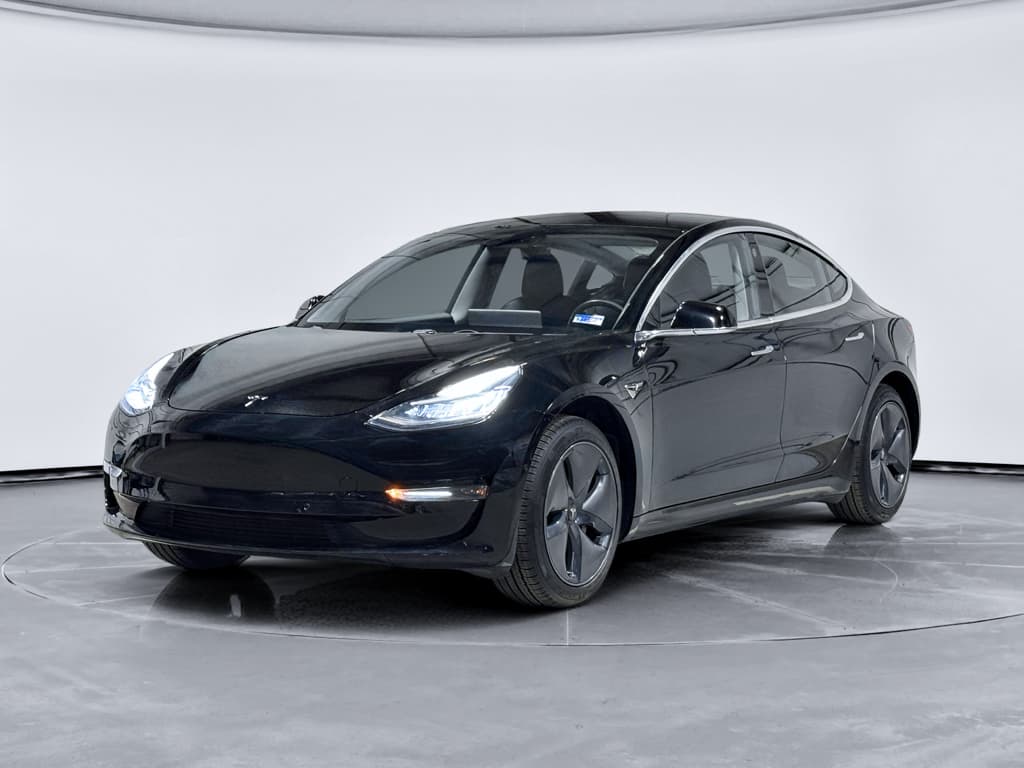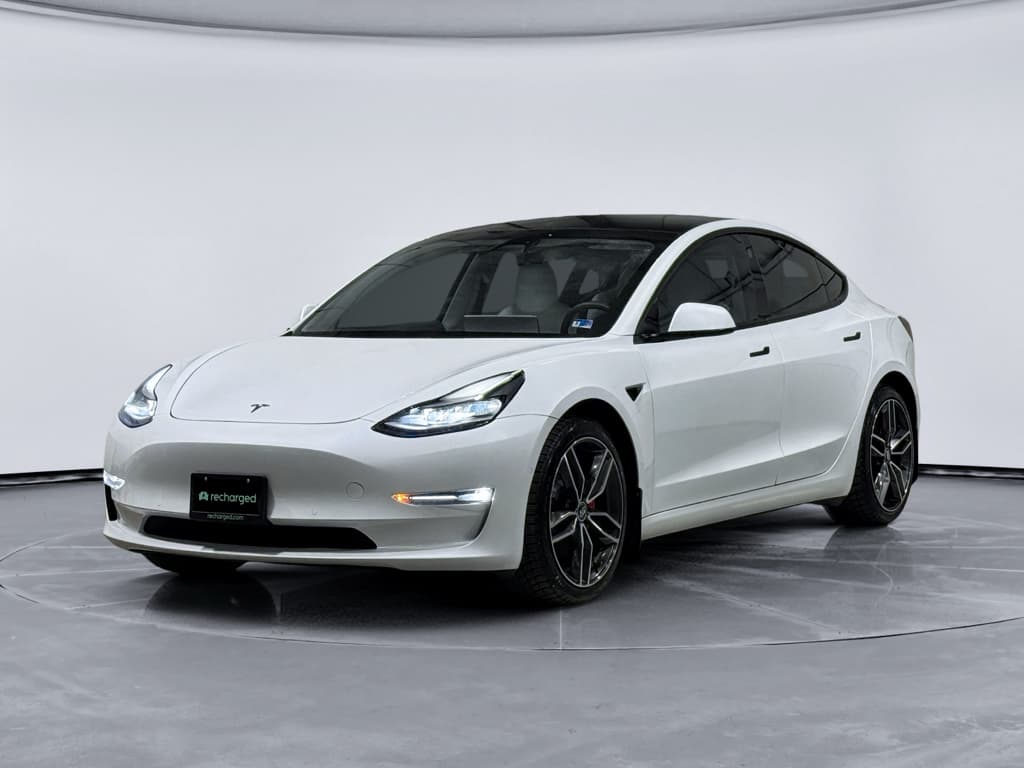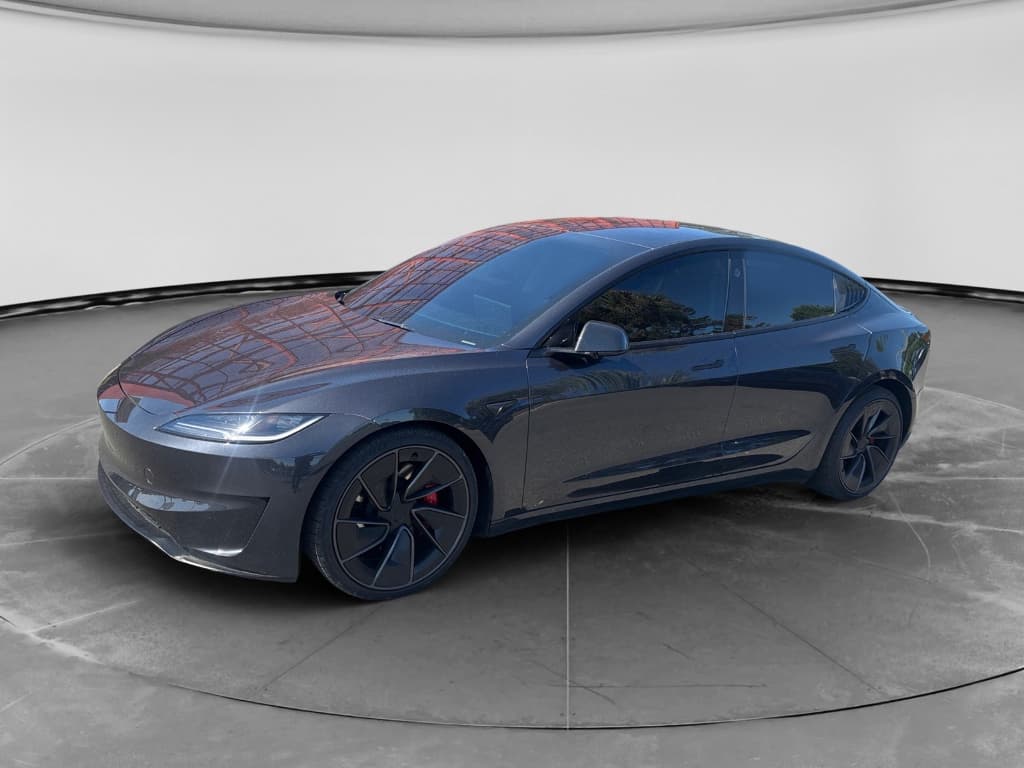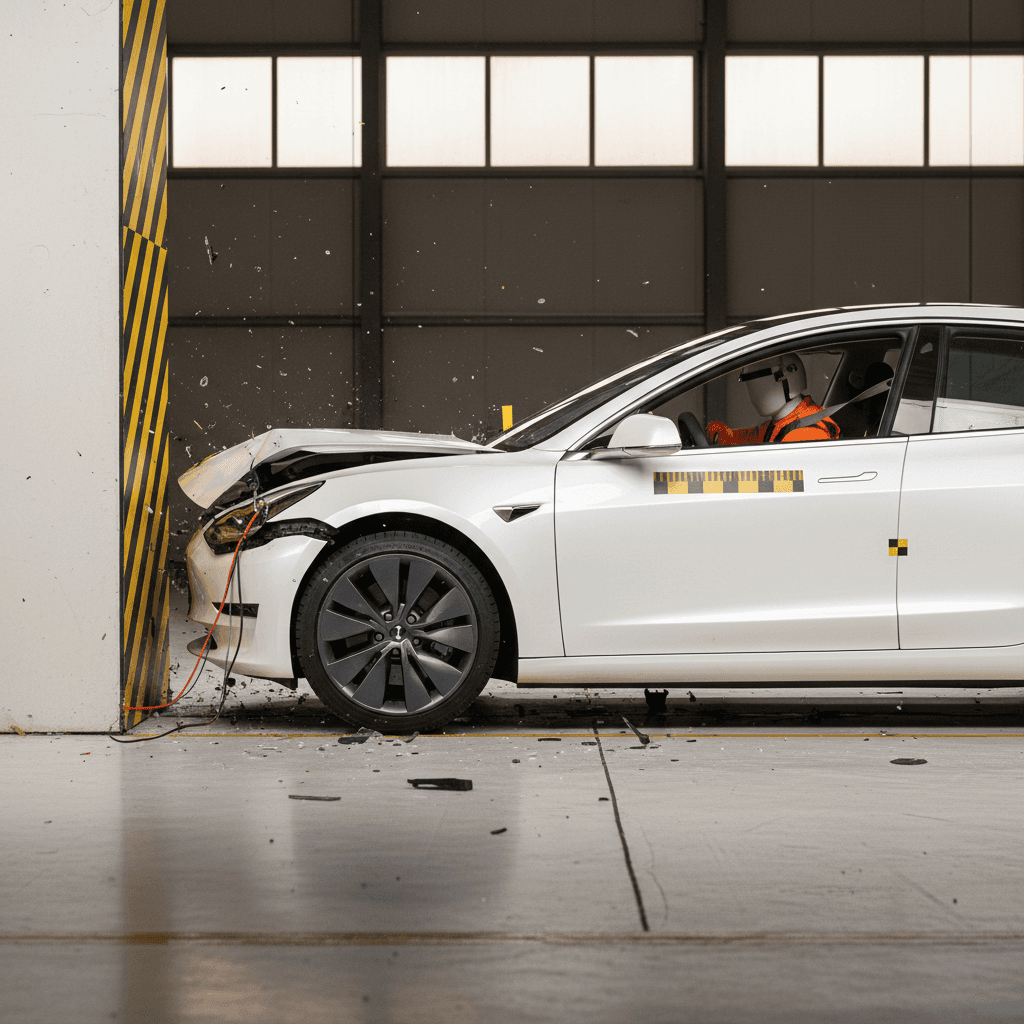
The Tesla Model 3 has worn its crash-test scores like a designer suit since the car debuted. If you’re trying to decode terms like "Top Safety Pick," "5‑Star Overall," and those slow-motion Tesla Model 3 safety rating crash test clips on YouTube, you’re in the right place. Let’s unpack what the latest safety data actually says about the Model 3, and what it means if you’re shopping new or used in 2026.
Quick takeaway
Overview: How Safe Is the Tesla Model 3?
Tesla Model 3 Safety at a Glance (2025–2026)
Here’s the short version: in a traditional crash-test sense, how the structure holds up, how the airbags deploy, how likely you are to walk away, the Model 3 is very, very good. It behaves like a rolling crash helmet. Where the story gets more nuanced is in rear-passenger chest protection in some tests, seat-belt reminder strictness, and the human factor: how drivers actually use Tesla’s advanced driver-assistance features.
Crash Test Programs Explained: IIHS vs. NHTSA
IIHS: The Insurance-Industry Torture Chamber
The Insurance Institute for Highway Safety (IIHS) is funded by the insurance industry and tends to be the harsher grader. Its tests include:
- Small-overlap and updated moderate-overlap front crashes
- Updated side-impact test with a heavier, faster barrier
- Pedestrian front-crash prevention and headlight quality
- LATCH child-seat usability and seat-belt reminders
IIHS hands out Top Safety Pick and Top Safety Pick+ awards based on how a car performs across this whole battery of exams.
NHTSA: The Government’s 5-Star System
The National Highway Traffic Safety Administration (NHTSA) runs the familiar 5-star crash tests you see in TV ads. It focuses on:
- Frontal crash performance
- Side-impact performance, including pole tests
- Rollover resistance
NHTSA then rolls that into a single Overall 5-Star Safety Rating. Historically, the Model 3 has earned 5 stars overall and in each subcategory, making it one of the strongest performers in the program.
How to read the ratings
IIHS Crash Test Ratings for the Tesla Model 3 (2024–2026)
The 2024 refresh of the Tesla Model 3 brought design and hardware changes, so IIHS re-ran key tests and now lists the 2025–2026 Model 3 as a redesigned vehicle. The results are a blend of glowing praise and nitpicks that matter mainly to child-seat engineers and very cautious parents, precisely the nitpicks you want in a safety lab.
IIHS Ratings for 2025–2026 Tesla Model 3
Summary of core crashworthiness and crash-avoidance scores for the latest Model 3 generation.
| Category | Subtest / Detail | Rating (2025–2026) | Notes |
|---|---|---|---|
| Crashworthiness | Moderate overlap front (updated) | Acceptable | Structure and safety cage rated Good; rear-passenger chest protection scored Marginal, pulling overall down to Acceptable. |
| Crashworthiness | Side impact (updated) | Good | Strong structure and side-curtain coverage; some elevated forces to driver torso and pelvis but still in Good/Acceptable band. |
| Crash avoidance | Front crash prevention: vehicle-to-vehicle | Good | Standard Collision Avoidance Assist avoided collisions in all IIHS closing-speed scenarios. |
| Crash avoidance | Front crash prevention: pedestrian | Good | Avoided or substantially reduced speed in day and night tests with both high and low beams. |
| Equipment | Headlights | Acceptable | LED projectors with curve-adaptive tech scored Acceptable due to less-than-ideal low-beam reach in some situations. |
| Child safety | LATCH ease of use | Acceptable | Lower anchors are present and usable but access could be more straightforward. |
| Occupant reminders | Seat-belt reminders | Marginal | Reminders work but don’t meet the latest, stricter IIHS ideal for loudness and duration. |
G = Good, A = Acceptable, M = Marginal, P = Poor.
The rear-passenger chest note
NHTSA 5-Star Safety Ratings for the Tesla Model 3
On the U.S. government side, the Tesla Model 3 has historically been a 5‑Star Overall Safety Rating car in NHTSA testing, scoring five stars in frontal crash, side crash, and rollover categories. NHTSA is still in the process of cycling through the newest model years as of early 2026, but given the structural continuity and IIHS results, there’s every reason to expect the latest Model 3 to continue performing at or near the top of the class.
- Frontal crash: historically 5 stars for both driver and passenger in 35‑mph barrier test.
- Side crash: historically 5 stars in both moving barrier and pole tests, with low injury metrics.
- Rollover: historically 5 stars, helped by the Model 3’s low center of gravity from the floor-mounted battery pack.
Why the Model 3 rolls so well by not rolling
What the Crash Tests Actually Reveal in a Model 3 Crash
Front Crashes: The Big Battery Skateboard Wins
In the IIHS moderate-overlap and NHTSA frontal crash tests, the Model 3’s rigid passenger cell and lack of a heavy engine block up front work in your favor. In severe frontal impacts:
- The front trunk and crash structure absorb energy progressively.
- There’s minimal footwell intrusion and low risk of leg injuries.
- Airbags and seat belts keep both driver and front passenger well-contained.
The front seats are the safest real estate in the cabin, which is typical for modern cars, but especially true in the Model 3.
Side Impacts: Curtain Airbags Doing Their Ballet
Side impacts are harder: there’s less real estate between you and the intruding object. In the updated IIHS side test, the Model 3’s reinforced sill, pillars, and side curtains keep the barrier at a respectful distance.
- Driver and rear passenger heads stay protected by the curtain airbags.
- Torso and pelvis forces creep up but remain in Good/Acceptable territory.
- The door and B‑pillar deform, but the safety cage remains intact.
Translation: if a tall crossover plows into your Model 3’s side, you’d rather be in this Tesla than many older compact sedans.
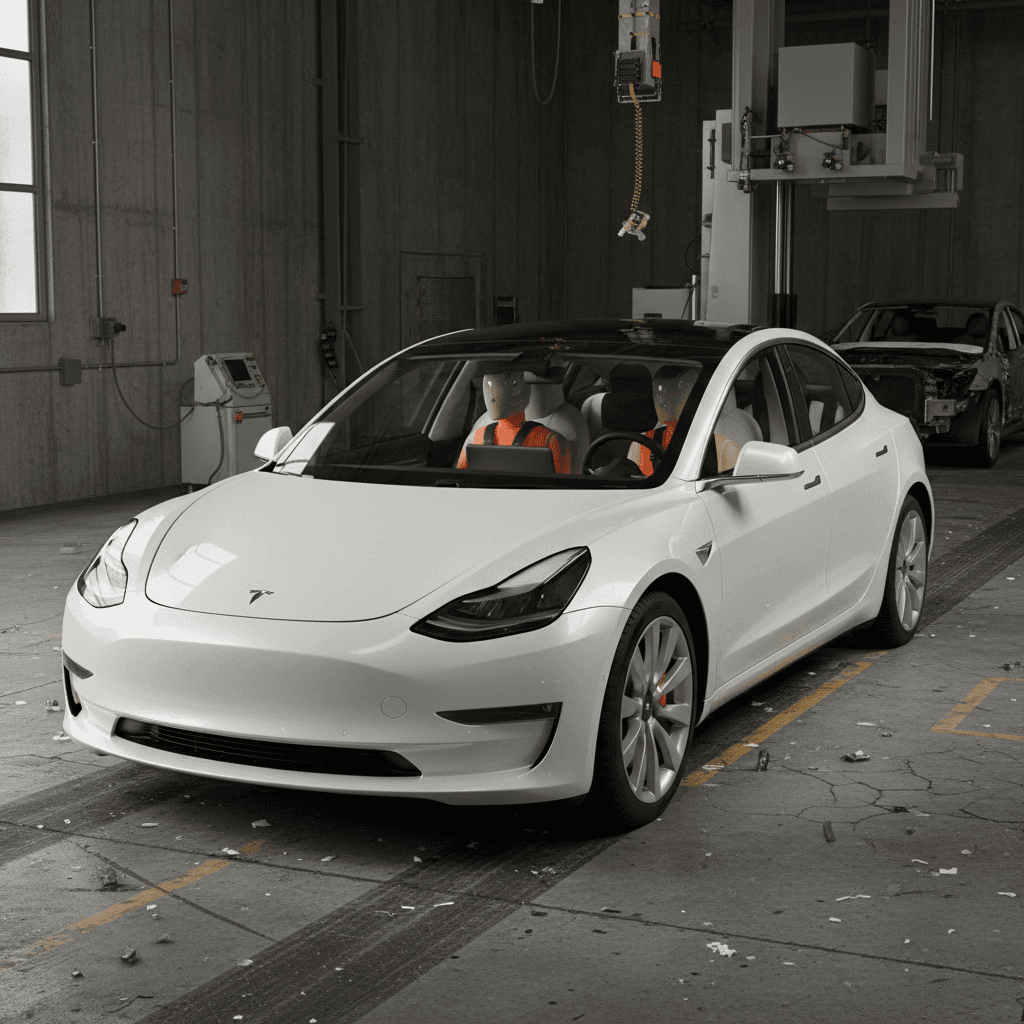
Crash tests aren’t the whole story
Active Safety & Driver Assistance: Beyond the Crash Wall
Tesla has always leaned hard on the idea that the best crash is the one that never happens. Every Model 3 comes with a standard suite of active safety features: automatic emergency braking, lane departure warning and prevention, blind-spot monitoring, and Traffic-Aware Cruise Control. Those systems are what help the car earn strong IIHS ratings for front crash prevention against vehicles and pedestrians.
Key Tesla Model 3 Active Safety Systems
Standard on all trims, regardless of whether you pay for FSD (Supervised).
Automatic Emergency Braking
Monitors for vehicles and pedestrians ahead and can apply the brakes if you don’t react in time. This is a major reason the Model 3 scores well in IIHS pedestrian tests.
Lane Keeping & Departure Prevention
Uses cameras to read lane markings and gently nudge you back if you drift. It’s a lane-keeping coach, not an excuse to text.
Traffic-Aware Cruise Control
Maintains following distance to the car ahead, easing highway fatigue. As of 2026, more advanced Autosteer-style functions require a subscription to Full Self-Driving (Supervised).
About Autopilot, FSD and reality
From a safety-rating perspective, these advanced systems show up only indirectly, in the crash-avoidance scores. For you as a driver, they’re best thought of as backup singers. Helpful, talented, occasionally off-key, but the lead vocal is still you.
Used Tesla Model 3 Safety: Year-by-Year Differences
If you’re shopping a used Model 3, very likely why you’re here on Recharged, the good news is that every model year has strong core crash performance. The differences are in the details: headlights, structure tweaks, driver-assistance hardware, and how the rating agencies have toughened their tests over time.
Tesla Model 3 Safety Snapshot by Model Year
High-level view for shoppers considering different generations of used Model 3 sedans.
| Model Years | IIHS / NHTSA Highlights | What Stands Out for Safety |
|---|---|---|
| 2017–2020 | Early cars that helped establish the Model 3’s 5‑star NHTSA reputation and strong IIHS results. | Excellent structural performance; some cars have older Autopilot hardware and earlier implementations of driver assistance. |
| 2021–2023 | Incremental updates, including tweaks to active safety and headlights; still strong crash performance. | Refinements to cameras and software; some improvements in headlight performance versus earliest cars. |
| 2024 (refresh) | Styling and interior changes; IIHS treats 2024–up as redesigned for crash testing. | Structure remains robust; crash performance continues strong as test protocols evolve. |
| 2025–2026 (latest IIHS data) | Updated moderate-overlap test Acceptable overall, side impact Good, crash-avoidance systems Good. | Rear-passenger chest metrics and seat-belt reminders keep it from absolute top marks, but overall safety remains excellent for the class. |
Exact equipment may vary by trim and market; always verify on the specific car.
Where Recharged fits in
How to Evaluate Safety When Buying a Used Model 3
7-Step Safety Checklist for a Used Tesla Model 3
1. Check the exact model year and build date
The difference between a late-2023 and an early-2024 Model 3 is more than just trim: you’re straddling a refresh that affects headlights, cameras, and eligibility for the latest software and safety tests.
2. Verify active safety features
On the center screen, confirm that automatic emergency braking, lane departure warning/prevention, blind-spot monitoring, and Traffic-Aware Cruise Control are present and enabled. Software changes can hide or rename features.
3. Look for crash repairs the right way
Inspect Carfax/AutoCheck and service records for prior accidents. A well-repaired front or rear hit isn’t necessarily a deal-breaker, but badly repaired structural or side damage can compromise crash performance.
4. Inspect glass and airbags
Make sure the windshield and windows are free of large cracks and that there are no airbag warning lights. Ask specifically whether any airbags have deployed and who performed the repairs.
5. Evaluate tires and brakes
Good crash performance assumes healthy tires and brakes. Check tread depth, age codes on the sidewalls, and whether the car tracks straight on a test drive. Safety ratings don’t account for bald tires.
6. Confirm driver-assistance subscription status
As of 2026, Full Self-Driving (Supervised) is a subscription. Ask whether the car’s hardware is FSD-capable and budget for (or ignore) the subscription according to your appetite for driver-assistance complexity.
7. Review the Recharged Score Report
If you’re buying through Recharged, use the Score Report to verify battery health, prior damage, and equipment. It’s like having your own safety engineer and used-car detective rolled into one PDF.
Why buy a used Model 3 from Recharged?
Ready to find your next EV?
Browse VehiclesFAQ: Tesla Model 3 Safety Ratings & Crash Tests
Frequently Asked Questions
Bottom Line: Should Safety Steer You Toward a Model 3?
If your question is whether the Tesla Model 3 safety rating and crash test results justify all those YouTube slow-mos, the answer is yes, with fine print. Structurally, the Model 3 behaves like a modern safety overachiever: strong occupant cell, low rollover risk, effective airbags and belts, and excellent crash-avoidance tech. The criticisms, rear-passenger chest metrics, seat-belt reminder strictness, headlight nuance, are the problems of a car already playing at the top of the league.
For a shopper in 2026 choosing a used EV, that makes the Model 3 an easy car to recommend on safety grounds, provided you match the right model year, hardware, and budget. If you want help threading that needle, Recharged can line up battery health, pricing, and safety equipment in one view so you can focus on the only test that really matters: how confident you feel putting your family in the car.